Category: branding | 品牌推廣 | 브랜드 마케팅 | ブランディング

The dictionary definition of branding is the promotion of a particular product or company by means of advertising and distinctive design.

I have covered many different things in branding including:

  • Genesis – the luxury Korean automotive brand
  • Life Bread – the iconic Hong Kong bread brand that would be equivalent of wonder loaf in the US
  • Virgil Abloh and the brand collaborations that he was involved in
  • Luxury streetwear brands
  • Burger King campaigns with Crispin Porter Bogusky
  • Dettol #washtocare and ‘back to work’ campaigns
  • Volkswagen ‘see the unseen’ campaign for its Taureg off road vehicle
  • SAS Airline – What is truly Scandinavian?
  • Brand advertising during Chinese New Year (across China, Hong Kong, Singapore and Malaysia)
  • Lovemarks as a perspective on branding
  • BMW NEXTGen event and Legend of Old McLanden campaign
  • Procter & Gamble’s Gillette toxic masculinity ads
  • Kraft Mother’s Day campaign
  • Kraft Heinz brand destruction
  • Porsche Design in the smartphone space
  • Ermenegildo Zegna
  • Nike’s work with Colin Kaepernick
  • Counterfeit brands on Instagram, Alibaba and Amazon
  • Gaytime Indonesian ice cream
  • Western Digital
  • Louis Vuitton collaboration with Supreme
  • Nokia
  • Nike Korea’s ‘Be Heard’ campaign
  • Mercedes SLS coupe campaign
  • Brand collaborations in Hong Kong
  • Beats headphones
  • Apple
  • Henrion Ludlow Schmidt’s considerations of branding
  • Cathay Pacific
  • Bosch
  • Mitt Romney’s failed presidential bid
  • Microsoft Surface launch
  • Oreo Korean campaign
  • Chain coffee shop brands and branding
  • Samsung’s corporate brand
  • North Face’s brand overeach in South Korea
  • Mr Pizza Korean pizza restaurant and delivery service brand
  • Amoy Hong Kong food brand
  • Chevrolet Corvette ‘roar’ campaign promoting a build your own car service
  • Have we reached peak streetwear?

    At the end of January I wrote a blog post about the landmark luxe streetwear collection by Louis Vuitton and Supreme.

    I delved into the history of streetwear and the deep connection it shared with luxury brands. This linkage came from counterfeit products, brand and design language appropriation.

    This all came from a place of individuality and self expression of the wearer.
    obey

    I reposted it from my blog on to LinkedIn. I got a comment from a friend of mine which percolated some of the ideas I’d been thinking about. The comment crystalised some of my fears as a long-time streetwear aficionado.

    This is from Andy Jephson who works as a director for consumer brand agency Exposure:

    The roots of street and lux that you point to seem to be all about individuality and self expression and for me this is what many modern collabs are missing. To me they seem to be about ostentatious showmanship. I love a collaboration that sees partners sharing their expertise and craft to create something original. The current obsession with creating hype however is creating a badging culture that produces products that could have been made in one of the knock-off factories that you mention. Some collabs that just produce new colourways and hybrid styles can be amazing, reflecting the interests of their audience. But far too many seem gratuitous and are completely unobtainable for the brand fans on one side of the collaborative partnership.

    The streetwear business is mad money

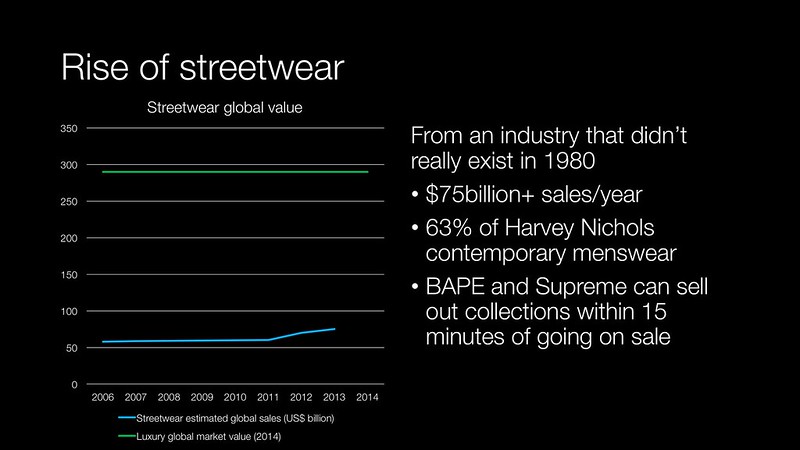
    From Stüssy in 1980, streetwear has grown into a multi-billion dollar global industry. Streetwear sales are worth more than 75 billion dollars per year.

    By comparison the UK government spent about 44.1 billion on defence in 2016. Streetwear sales are more than three times the estimated market value of Snap Inc. Snap Inc., is the owner of Snapchat.
    Rise of Streetwear

    It is still about one third the size of the luxury industry. Streetwear accounts for the majority of menswear stocked in luxury department stores. Harvey Nichols claimed that 63% of the their contemporary menswear was streetwear. Many luxury brands off-the-peg men’s items blur the boundary between luxe and streetwear.

    The industry has spawned some technology start-ups acting as niche secondary markets including:

    • Kixify
    • K’LEKT
    • THRONE
    • StockX
    • SneakerDon
    • GOAT

    Large parts of the streetwear industry has become lazy and mercenary. You can see this in:

    • The attention to detail and quality of product isn’t what it used to be. I have vintage Stüssy pieces that are very well-made. I can’t say the same of many newer streetwear brands
    • Colour-ways just for the sake of it. I think Nike’s Jordan brand is a key offender. Because it has continually expands numbers of derivative designs and combinations. New Balance* have lost much of their mojo. Especially when you look at the product their Super Team 33 in Maine came up with over the years. The fish, fanzine or the element packs were both strong creative offerings. By comparison recent collections felt weak
    • The trivial nature of some of the collaborations. This week Supreme sold branded Metro Cards for the New York subway
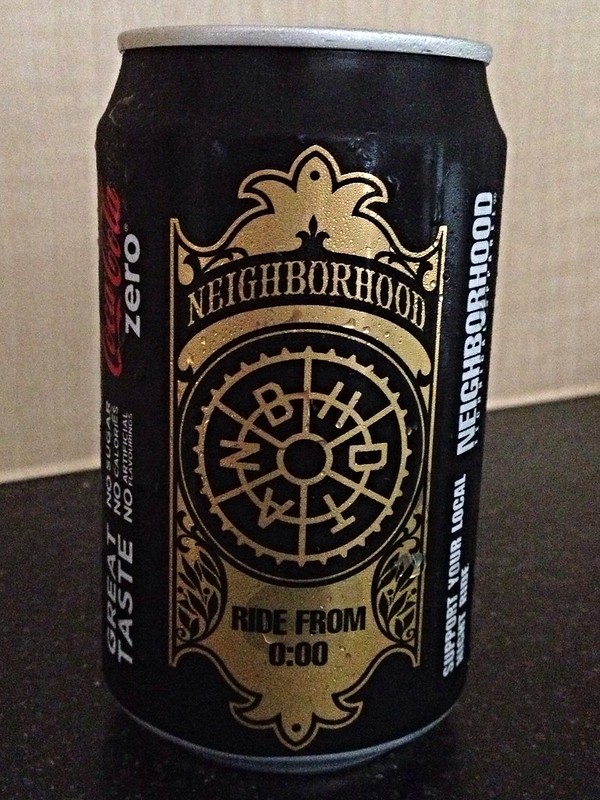
    • Streetwear brands that sold out to fast moving consumer products. This diluted their own brand values. While working in Hong Kong, I did a Neighborhood Coke Zero collaboration. The idea which had some tie-in to local cycling culture and nightscape. Aape – the second-brand of BAPE did a deal wrapping Pepsi cans in the iconic camouflage

    Hong Kong brand Chocoolate did three questionable collaborations over the past 18 months:

    • Vitaminwater
    • Nissin (instant noodles)
    • Dreyer’s (ice cream)

    By comparison, Stüssy has a reputation in the industry for careful business management. The idea was to never become too big, too fast. The Sinatra family kept up quality and selective distribution seeing off Mossimo, FUBU and Triple Five Soul. Yes, they’ve done collaborations, but they were canny compared to newer brands:

    “The business has grown in a crazy way the past couple of years,” says Sinatra. “We reluctantly did over $50 million last year.”

    Reluctant because, according to Sinatra, the company is currently trying to cut back and stay small. “It was probably one of our biggest years ever — and it was an accident.”

    Sinatra characterises Stüssy’s third act as having a “brand-first, revenue second” philosophy, in order to avoid becoming “this big monstrosity that doesn’t stand for anything.”

    The Evolution of Streetwear. The newfound reality of Streetwear and its luxury-like management academic study uncovered careful brand custodianship.

    It’s not clothing; it’s an asset class

    Part of the bubble feel within the streetwear industry is due to customer behaviour. For many people, street wear is no longer a wardrobe staple. Instead it becomes an alternative investment instrument. Supreme items and tier zero Nike releases are resold for profit like a day trader on the stock market.

    Many of the start-ups supported by the community play to this ‘day trader’ archetype. It is only a matter of time for the likes of Bonham’s and Sotherby’s get in on the act.

    A key problem with the market is that trainers aren’t like a Swiss watch or a classic car. They become unusable in less than a decade as the soles degrade and adhesive breaks down.

    There is the apocryphal story of a Wall Street stock broker getting out before the great stock market crash. The indicator to pull his money out was a taxi driver or a shoe shine boy giving stock tips.

    Streetwear is at a similar stage with school-age teenagers dealing must-have items as a business. What would a reset look like in the streetwear industry? What would be the knock-on effect for the luxury sector?

    More information
    USA Streetwear Market Research Report 2015 | WeConnectFashion
    Louis Vuitton, Supreme and the tangled relationship between streetwear and luxury brands | renaissance chambara
    New Balance Super Team 33 – Elements Collection | High Snobriety
    New Balance ST33 – The Fanzine Collection | High Snobriety
    1400 Super Team 33 (ST33) trio | New Balance blog – the infamous fish pack
    How Stüssy Became a $50 Million Global Streetwear Brand Without Selling Out | BoF (Business of Fashion)
    The Evolution of Streetwear. The newfound reality of Streetwear and its luxury-like management by de Macedo & Machado, Universidade Católica Portuguesa (2015) – PDF

    * in the interest of full disclosure, New Balance is a former client.
  • Snoopers charter + more news

    Snoopers Charter

    UK Snoopers Charter gagging order drafted for London Internet Exchange directors • The Register – the original snoopers charter aka the Interception Modernisation Programme was proposed by the last Labour administration and was opposed vociferously by the Conservatives and the other opposition parties. Now you have the Conservatives who pushed through the near identical snoopers charter Communications Capabilities Development Programme, and then legislated the Investigatory Powers Act 2016 – which was also nicknamed the snoopers charger. When you combine this snoopers charter gag order with the new espionage act going through the UK government system and things look exceptionally dark

    Finance

    The Facts-Based Survey of Mobile Money Globally Focusing on the Reality and Numbers – Ignores totally the noise around Apple Pay, Bitcoins and Paypal. The rise of buy now, pay later services such as Klarna will likely change the landscape more. Though I worry about ballooning unsecured consumer debt

    Marketing

    Global Restructuring at TBWAMedia Arts Lab as Apple Shifts Toward Digital, Regional Work | Ad Week – interesting move with their evolving relationship with Apple. I can’t say that I feel impressed by anything l’ve seen out of Apple in a while – given more creative was driven out of in-house. This move will see things going more digital, rather than just digital expressions of TV-orientated creative

    Media

    Video formats by position | Facebook Marketing Partners – (PDF)

    Building Global Community | Facebook – Zuck on reshaping Facebook’s direction

    Online

    Once poverty-stricken, China’s “Taobao villages” have found a lifeline making trinkets for the internet — Quartz – also allows marketing of locally grown produce. How scalable and sustainable this all is, is another question entirely

    Wireless

    Exclusive: SoftBank willing to cede control of Sprint to entice T-Mobile – sources | Reuters – guess India’s no longer as big a focus since Nikesh Arora’s big bets lost them 350 million dollars?

  • Louis Vuitton, Supreme: streetwear & luxury brands

    The recent collaboration between New York’s Supreme and Louis Vuitton seems like a natural fit.  The reality is that luxury and streetwear have been dancing around each other for a good while.

    Snide started it all

    Snide was slang in the 1980s for fake or counterfeit. Hip Hop and the Caribbean-influenced Buffalo movement in the UK each used counterfeit and real luxury in their own way.

    Daniel Day, better known as Dapper Dan was a was a Harlem-based craftsman and business man who dressed a lot of New York based artists from the golden age of hip hop. Dan’s first hip hop client was LL Cool J back in 1985. Dan’s style was luxe, the finest silks and furs were standard issue – think Puff Daddy before Puff Daddy. They went for customised outfits with their branding on which Dan provided. As the scene took off Dan incorporated suit lining material (which replicated the likes of the Fendi, Bally  or MCM brands) and Gucci or Louis Vuitton branded vinyl to make one-off products.

    He customised trainers, clothing and even car interiors. Dan’s own Jeep Wrangler had an interior retrimmed in MCM branded vinyl.

    Much of the luxury branding Dan used was coming in from Korean factories which at that time supplied the fake trade. Now similar products would have come out of China. I took a trip to the South China City complex in 2010 where fabric suppliers would offer Louis Vuitton labels and Supreme tags side-by-side.  I can only imagine that the Korean suppliers of the 1980s  had similar markets in textile industry centres like Deagu. Outside of hip hop, Dan was the go-to tailor for all the hustlers in Harlem – so you can see how he could have got the hook-up into the counterfeit suppliers.

    At the time hip hop culture was not in a relationship with brands who where concerned about how it might affect them. LL Cool J was the first artist to get a deal with Le Coq Sportif. Run DMC got a long term deal with Adidas after their single ‘My Adidas’ became successful. But these were the exceptions to the rule.  So with Dan’s help they co-opted the brands to try and demonstrate success.

    Over in the UK, the Buffalo collective of stylists, artists and photographers including Ray Petri, Jamie Morgan, Barry Kamen (who modelled for Petri), Mark Lebon and Cameron McVey. Buffalo was known as an attitude, which threw contrasting styles together and filtered into fashion shoots and influenced the collections of major designers including Yohji Yamamoto, Jean Paul Gaultier and Comme des Garçons. Even if you didn’t know what Buffalo was, you would have recognised the aesthetic from the likes of i-D, Blitz, New Musical Express and Arena. 

    Buffalo mixed Armani jackets with Doctor Martens work boots, or a Puma bobble hat. Petri used music to sound track his process and this was pretty similar to the kind of stuff that influenced street wear pioneer Shawn Stussy over in California. Motown and hip-hop to dub reggae was the sound which explains the Feeling Irie t-shirts created by the white surfboard maker.

    If you thought Bros looked cool in their MA-1 bomber jackets and stone washed Levi’s 501 jeans – there was a direct stylistic line back to Buffalo – rehabilitating the items from their link to skinhead culture.

    Buffalo permeated into the street style of the decade; influencing the likes of Soul II Soul. Meanwhile over in Bristol The Wild Bunch were yet to morph into Massive Attack. Two members headed to London; producer Nelle Hooper and Miles Johnson (aka DJ Milo who went on to work in New York and Japan). A shoot was organised by i-D magazine and they turned up wearing their street clothes alongside DJ Dave Dorrell and model / stylist Barnsley. At the time, it was considered to be ‘very Buffalo’ in feel, but Dave Dorrell admitted in an interview that they had just came as they were. Dorrell wore his t-shirt as ‘advertising’ for it.

    buffalo

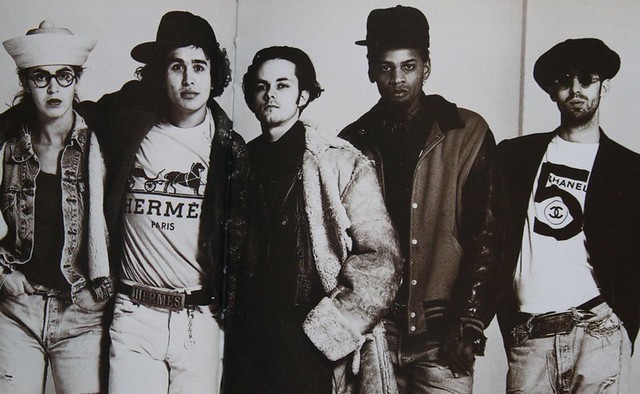
    The Hermes t-shirt and belt were snide, the Chanel Number 5 t-shirt sported by Dave Dorrell were being knocked out by a group of friends. Young people in London co-opted brands just like the hip-hop artists heading to Dapper Dan’s in Harlem.

    Homage

    From 1980, surfer Shawn Stussy had been growing an clothing empire of what we would now recognise as streetwear. Stussy had originally came up with the t-shirts as an adjunct and advertisement of his main business – selling surfboards. But the clothing hit emerging culture: skating, punk, hip-hop and took on a life of its own. It went global through Stussy’s ‘tribe’ of friends that he made along the way.

    Stussy is known for his eclectic influences and mixing media: old photographs alongside his own typography. In a way that was unheard of in brand circles at the time, Stussy manifested his brands in lots of different ways. The back to back SS logo inside a circle was a straight rip from Chanel; the repeating logo motif that appeared in other designs was a nod to MCM and Louis Vuitton.

    All of this went into the cultural melting pot of world cities like Tokyo, New York, London and Los Angeles. Stussy went on to do collaborations from a specially designed party t-shirt for i-D magazine’s birthday party to the cover art of Malcolm Maclaren records. Collaboration with mundane and high-end brands is baked into streetwear’s DNA.

    Coke Zero x Neighborhood limited edition cans

    (Neighborhood x Coke Zero was something I was involved with during my time in Hong Kong.)

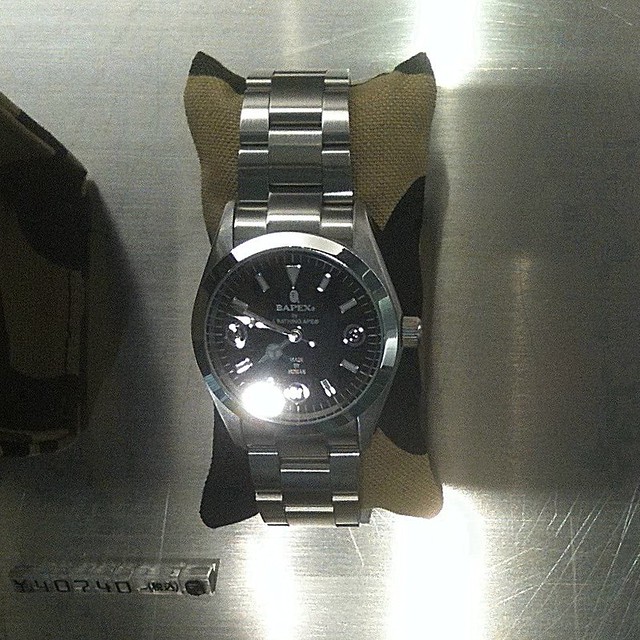
    Japan with its engrained sense of quality and wabisabi took the Buffalo mix-and-match approach to the next level. Japan’s own streetwear labels like Visivim, Neighborhood, W-Taps, The Real McCoy and A Bathing Ape (BAPE) took streetwear product quality, exclusivity and price points into luxury brand territory. That didn’t stop BAPE from making a snide versions of various Rolex models under the ‘Bapex’ brand.

    Bapex

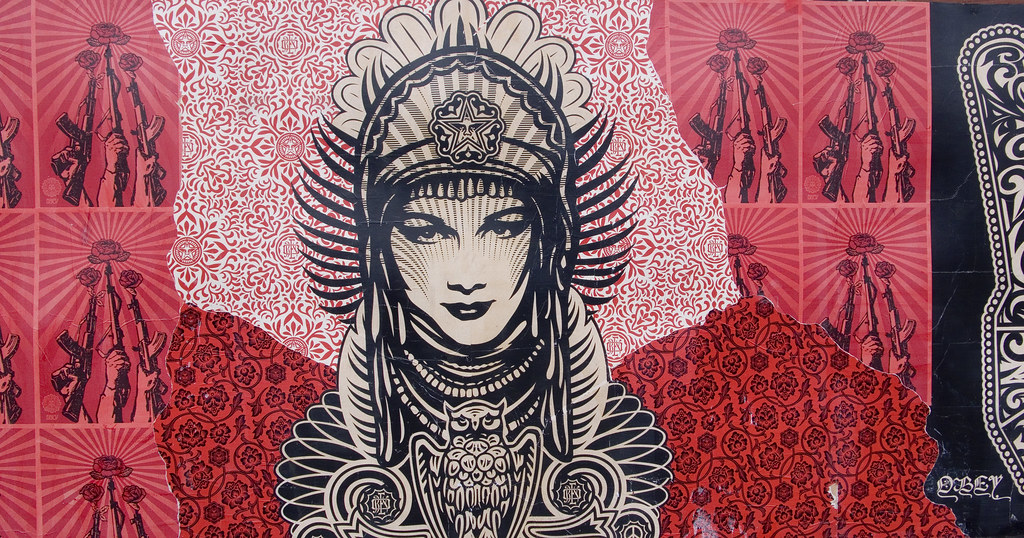
    Some two decades later Supreme came up in New York. The brand takes design appropriation and homage to a new level. Every piece Supreme seems to do is a reference to something else. The famous box logo rips from Barbara Kruger’s piece ‘I shop therefore I am’. From taking a snide swipe at consumerism to ending up in the belly of the beast took Supreme a relatively short time. This heritage of appropriation didn’t stop Supreme from using legal means against people it felt had appropriated its ‘look’.

    In an ironic twist of fate, Supreme was sued by Louis Vuitton in 2000 and yet the 2017 collaboration looks exceptionally similar to the offending items…

    The last time I shared this story the page was just at 2k followers. With the collaboration officially announced today- and the page having 40k more followers since then- I figure it’s time to re-share. The year was 2000, and a 6 year old Supreme took their hands at referencing a high fashion brand as they did early on (Burberry, Gucci,) this time with Louis Vuitton. Box Logo tees (and stickers), beanies, 5 panels, bucket hats, and skateboard decks all featured the Supreme Monogram logo (pictured right). Within two weeks, Vuitton sends in a cease and desist and apparently, ordered Supreme to burn the remaining available stock. Clearly, many of the products from 2000 are still in the resell market, circulating today. Now we arrive at today’s FW Louis Vuitton fashion show. As most everyone is aware by now, Supreme is in fact collaborating with the luxury brand for a July- into fall collection. I’ve seen quite a few pieces from the collaboration (20+, check @supreme__hustle @supreme_access and @supreme_leaks_news for more pics) and it’s panning out to be Supremes largest collaboration to date. It’s interesting to see the references of both brands within the collaboration- from old Dapper Dan bootleg Louis pieces, to authentic ones, to Supremes monogram box logo and skateboard desks (pictured left). 17 years later and @mrkimjones proves that time can mend all wounds (amongst other things). Excited to see what all will release alongside this legendary collaboration. #supremeforsale #supreme4sale

    A photo posted by Supreme (@supreme_copies) on

    The new customers

    North East Asia’s fast growing economies had been borne out of learning from developed market expertise, state directed focus on exports and ruthless weeding out of weaker businesses. Intellectual property was cast aside at various points. Korea, Hong Kong, Japan and China went from making knock-off products to displacing Europe and the US as the leading luxury markets.

    Asian luxury consumers, particularly those second generation rich in China were younger than the typical customer luxury brands cater too. These consumers bought product as they travelled taking in style influences as they went. First from nearby markets like Japan, Hong Kong and Singapore and then Korea. This drew from a melange of hip hop, streetwear, Buffalo styling and contemporary western designers like Vivienne Westwood – as well as the more matronly styles of the traditional European luxury houses.

    The luxury brands had to adapt. They brought in new designers who themselves were drawing from similar influences.  These designers also collaborated with sportswear brands like Alexander McQueen and Puma or Jeremy Scott and Raf Simons for Adidas.

    Luxury brands got seriously into new product categories making luxe versions of training shoes that could be charitably called a homage to the like of Nike’s Air Force 1.

    Bringing things full circle

    As the supreme_copies Instagram account notes the collaboration with Supreme and Louis Vuitton brings things full circle with the pieces having a nod to Dapper Dan’s custom work as well as Supreme’s own ‘homage’.  Luxury brand MCM (Michael Cromer München), which Dan borrowed from extensively in the 1980s was restructured in 1997 with shops and brand being sold separately. The brand was eventually acquired eight years later by the Korean Sungjoo Group. Korea now has its own fast developing luxury fashion and cosmetics brand industry. Textile city Deagu which was the likely source of Dapper Dan’s fabric is now a fashion and luxury business hub in its own right. The Korean entertainment industry is a trend setter throughout Asia. For instance, Hallyu drama My Love From A Star drove breakout sales for the Jimmy Choo ‘Abel’ shoe.

    The only question I still have is why did a move like Louis Vuitton’s collaboration with Supreme take so long? The luxury brands spend a lot on customer insight, they were using social listening far longer than they had been on social media. They know that a customer wearing their jacket could have a Visivim backpack slung over the shoulder and a pair of Adidas Stan Smiths on their feet. Customers mix-and-match Buffalo style for all but the most formal occasions. For streetwear brands, collaboration is in their DNA and they get an additional leg-up in the quality stakes. More luxury related posts here.

    More information

    Ray Petri
    How Buffalo shaped the landscape of 80s fashion – Dazed
    Dave Dorrell interview part one | Test Pressing
    Dapper Dan
    Barbara Kruger Responds to Supreme’s Lawsuit: ‘A Ridiculous Clusterf**k of Totally Uncool Jokers’ | Complex
    Volume and wealth make Chinese millennials a lucrative target market: GfK | Luxury Daily
    Just why are Louis Vuitton and other high-end retailers abandoning China? | South China Morning Post – although Chinese shoppers consumed 46 per cent of luxury goods around the world, their purchases in their home market accounted for only 10 per cent of global sales, falling from 11 per cent in 2012 and 13 per cent in 2013
    How a Jimmy Choo Shoe Became a Global Best Seller – WSJ

  • Madrid + more things

    Madrid

    The order on things being written and posted on this blog has been scrambled up a bit and I ended up spent some time in Madrid with nothing to show for it as my SD card from my camera disappeared, I have no ideas where I mislaid it. In Madrid, the Prado museum is unparalleled, Mandarin Oriental’s Hotel Ritz is nice.  Madrid’s Museo Naval is not on the usual tourist trail, but well worth a visit.

    Munich airport

    Red Bull and Jason Paul put together a film with Munich Airport that owes as much to Harold Lloyd as the cool of free running

    Concrete truck

    I was stunned by the simplicity of Benedetto Bufalino’s ready-mix concrete truck as disco ball. This wasn’t for a brand but a crazy piece of art. I expect this to be to inspire experiental and and advertising agency creative at some point in the future.

    Monki

    With a lack of an iPod, I have been listening to Monki’s bootleg bundle a lot. Its a great mix of tracks, many of which I wasn’t familiar with. I can also recommend her mix for the Fabric Live series which combines oldies like the FPI Project through to upfront house tracks.

    More things

    I haven’t bothered with football videos over the past year, but this one from Nike shows why they do so well. Great concept and storytelling in the film. Just the kind of creative that one would expect from Nike and done by W+K

    Maurice Lévy sent Publicis Groupe employees his last Christmas message as CEO. Publicis has had a tradition of humorous personal videos from Lévy that demonstrated the company’s creativity in terms of script writing and production. This is in sharp contrast to WPP’s emails from Martin Sorrell, which were more like a missive from a Goldman Sachs analyst.

  • Porsche + more things

    Porsche pronunciation – the iconic German car company want to stop the peculiarly British mangling of their name. The British tend to assume that the end e is silent, while the correct pronouncation is Porsch-e. More on the video below.

    More on Porsche here.

    Creative agency ZAK created a parody of 1980s toy advert as a comment on the political upsets of 2016. The A.S.S. Squad features a parody version of Donald Trump and Kim Jung Un alongside Barbie.

    A Polish ad, that schools John Lewis on how to make the signature Christmas ad. This advert manages to bring in great storytelling and emotion into play. The bit that most surprised me is that it was for language learning software. Rosetta Stone will need to improve the quality of their own advertising assets.

    Japan’s love for acid house, from adverts to anime | Dazed Digital – some of this is nuts, but in a good way. Japanese producers have been mixing acid house elements into idol band productions. Imagine if Simon Cowell was producing X Factor artists using production elements found by rifling through the back catalogue of Detroit techno artists and managing to somehow not make a pigs ear of it all. They way that this is done is very clever and other worldly all at the same time.

    FCB Seoul used ASMR (autonomous sensory meridian response) to emphasise the experience of eating the Ritz crackers. ASMR is becoming a well worn tool for marketers doing online video. But I thought Ritz’ particular execution was really well done in this advert. Korean society and culture has fads that ripples through it online and offline. Its one of the reasons why consumer boycotts get wide scale adoption there. Getting on board with ASMR was a smart move given this nature of Korean consumer behaviour.

    More on FMCG here.