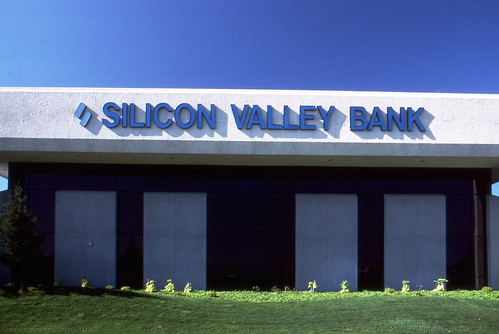
Category: business | 商業 | 상업 | ビジネス

My interest in business or commercial activity first started when a work friend of my Mum visited our family. She brought a book on commerce which is what business studies would have been called decades earlier. I read the book and that piqued my interest.

At the end of your third year in secondary school you are allowed to pick optional classes that you will take exams in. this is supposed to be something that you’re free to chose.

I was interested in business studies (partly because my friend Joe was doing it). But the school decided that they wanted me to do physics and chemistry instead and they did the same for my advanced level exams because I had done well in the normal level ones. School had a lot to answer for, but fortunately I managed to get back on track with college.

Eventually I finally managed to do pass a foundational course at night school whilst working in industry. I used that to then help me go and study for a degree in marketing.

I work in advertising now. And had previously worked in petrochemicals, plastics and optical fibre manfacture. All of which revolve around business. That’s why you find a business section here on my blog.

Business tends to cover a wide range of sectors that catch my eye over time. Business usually covers sectors that I don’t write about that much, but that have an outside impact on wider economics. So real estate would have been on my radar during the 2008 recession.

  • Patagonia vest recession

    The Patagonia vest recession was a phrase that I first heard touted by Scott Galloway to encapsulate the economy in 2022. In most recessions, the first sectors to go under are construction, retailing and manufacturing – blue and pink collar working class people suffer the blunt of lay-offs and site closures due to recession.

    The kind of vest thought of when one talks about a Patagonia vest recession. It is called a Better Sweater vest and was popular with media firms, technology companies and investment banks as employee schwag.

    Chart House Restaurant
    Taken by soq

    What’s a recession?

    recession, in economics, a downward trend in the business cycle characterized by a decline in production and employment, which in turn causes the incomes and spending of households to decline.

    (December 5, 2022) Recession. United Kingdom: Encyclopaedia Britannica

    A recession generally isn’t felt uniformly across the economy. It doesn’t affect all households. In the past, the middle class might be affected but not as severely affected as working class people. My Dad had managed to move off the shop floor and into an office job in the shipyard as a planner. He was made redundant because he worked in heavy industry and he was in a minority compared to the thousands of other blue collar workers let go.

    Not all businesses experience actual declines in income, for instance accountancy firms, business consultancies and change management firms may find a high demand for their services. However, there is a general expectation about the future being less certain during a recession. This causes businesses to delay making large purchases or investments and possibly look to reduce costs to conserve cash.

    In recessions, the output decline can be traced to a reduction in purchases of durable household goods such as computers and washing machines by consumers. This drives a corresponding decline in corporate purchases of machinery and other equipment.

    If the companies aren’t already running ‘just-in-time’ there reduction in additions of goods to stocks or inventories. Where ‘just-in-time’ is in place, the client reduces their forecast demand to their supply chain driving a similar effect. The greatest effect is likely on inventory; businesses stop adding to their existing inventories and become more willing to draw on them to fill production orders. Inventory declines thus have a double impact on production volume as it filters through the supply chain like a Mexican wave.

    So what happened?

    But the Patagonia vest recession was different. A number of things happened:

    • Technology stocks and start-ups had been swept up in a decade of irrational exuberance in terms of business values
    • Funding suddenly declined for startups. This was partly due to interest rates and a realisation that crypto-currencies weren’t worth what many investors had assumed. This led to a raft of redundancies
    • Crypto companies started falling one after the other. Prominent exchange FTX and related investment fund Alameda Research go under with allegations of fraud. Their rival Binance is ensnared in legal issues too
    • Cloud software firms suddenly find that their pay-as-you-go model can result in sharp cash flow declines which affect their profits
    • Big technology companies had staffed up to meet the COVID-19 related demand, found themselves with an employee overhang. This particularly affected e-tailing and cloud services business. They cut back on staff as they release poor financial results. BUT, the amount of people cut as a percentage was still below the proportion of head count Microsoft would have let go back when it practiced stack ranking. The mainstream media focus on the big numbers rather than the small overall proportion of lay-offs. Secondly those getting made redundant are finding it a reasonable market to get work outside the technology sector
    • Activist investors object to what they consider to be more indulgent projects like Meta’s deep investment in the future metaverse, which is a very long term bet
    • Meanwhile, services and manufacturing industry kept ramping up to meet supply-chain related challenges and meet latent demand. But had problems getting staff. You have restaurants that open up limited hours due to their problems hiring. Manufacturing businesses have been hoarding staff, because they know how hard it is for them to recruit
    • Inflation in the US is starting to come under control as supply chains started to balance out

    Of course, all of this doesn’t mean that the Patagonia vest recession won’t bleed on to Main Street, but at the start it looked very different.

    The Patagonia vest boom prior to the Patagonia vest recession

    To the general public, awareness of the Patagonia vest as an emblematic garment of class came from the press photos taken at the Sun Valley conference hosted by private investment firm Allen & Co. which built up a bit of a reputation in terms of ‘speed dating’ for mergers and acquisitions deals. Media titans like the Murdoch family met Silicon Valley CEOs and Jeff Bezos of Amazon. Telecommunications was represented primarily through the cable TV company executives who attended.

    Amazon founder Jeff Bezos decided to buy the Washington Post when he was at Sun Valley. It was also where the Time Warner | AOL merger was cooked up.

    Cameras aren’t allowed inside the conference which operates in a Chatham House-style arrangement. So press photographers could only take pictures when people were arriving or leaving the conference centre. Sun Valley sat at the nexus of a media and technology sector boom over almost two decades. The bulk of the media photos showed people walking cropped at the knees or their grotch, which focused readers attention on the tops that they were wearing. And a uniform emerged to the general public. The uniform was the Patagonia vest to deal with the cool early morning and early evenings of Sun Valley. These vests were given out some years by Allen & Co.; but the Patagonia vest has extended itself far beyond Sun Valley.

    It became such a cultural touchstone that the Sun Valley conference complete with vests was lampooned in a story arch of Succession.

    Why a Patagonia vest recession?

    Why is this a Patagonia vest recession rather than a North Face vest recession or a Columbia Sportswear vest recession?

    From working with dot com clients to when I worked at Yahoo!, Silicon Valley fashion was bifurcated in nature. The reality of Silicon Valley couture is that many people wore a t-shirt jeans and layers like hoodies. Footwear would vary somewhere between sneakers and trekking sandals.

    Men's Monterey Brown Teva Sandals With Socks

    But the ‘MBA class’ of professional managers tended to wear collared shirts, ‘smart’ jeans or chinos. They may have worn a sleeveless pullover or fleece vest. Their venture capital counterparts who where probably their MBA class colleagues wore a similar uniform, with a bit more of lean towards Ralph Lauren country club friendly shirts or polo shirts.

    Corporate branded wear started with bags. I had my share of corporate branded Timbuk 2 bags. Different engineering projects would have celebratory t-shirts for things like hack days. Eventually we started to see branded corporate wear, from the cringeworthy chambray or scratchy polo shirts issued to booth staff at an exhibition to hoodies and fleeces. I knew engineers who bragged about being dressed almost head to toe (sweatshirt material top, t-shirt, boxers and socks) in schwag that they had picked up for free as an anti-fashion statement.

    You can see these dual styles in the TV show Silicon Valley. Coming from a creative agency background, I felt more at home in the hoodie wearing crowd.

    Secondly, there was a cargo cult amongst try-hards in the early to mid-2000s there was a move towards turtle necks with Silicon Valley types looking suspiciously like architects as they tried to ape Steve Jobs. There has been a similar buzz has surrounded Allbirds sports shoes

    The finance sector had its own transformation. Early dot com era west coast-based tech focused investment bank financiers such as Frank Quattrone mirrored the east coast convention of the tailored business suit, usually in grey with a conservative tie and pocket square. This would be paired with a set of brown shoes, usually loafers. You could buy the look at Armani, Barneys or Brooks Brothers depending on your budget.

    Frank Quattrone
    Frank Quattrone by JD Lasica

    The 2008 Great Recession hit the finance centre like a shockwave. There was a need to dress down. A few things drove this:

    • An Armani suit is an obvious target when you have Occupy Wall Street camped outside your place of work
    • Wall Street had to modernise and attract new types of talent and competed against tech firms
    • The need to mirror the look of the hedge funds and technology companies that investment bankers wanted to do business with. They already stood out with their east coast vibe, the outfits communicated that ‘actually we’re just like you’ with varying degrees of success

    The look has morphed into a relaxed yet sophisticated uniform that drew on preppyness, or the Ivy League look and the country club vibe evoked by Silicon Valley VCs. This resulted in a grey or navy fleece vest paired with a button-down, chino pants, and maybe even leather sneakers. It fitted in with weekend wear in more high class neighbourhoods and didn’t scream privilege in the same way that traditional Wall Street did.

    However this became a power validation all of its own, dubbed the “Midtown Uniform” by many for its popularity throughout Midtown Manhattan as the business casual look rolled across the cultural wallpaper of Wall Street.

    Expired?

    Patagonia haven’t enjoyed their vests being the punchline of a joke. They are a mission led company that looks to be sustainable and environmentally friendly. They’ve been described as the conscience of the outdoor industry. Patagonia doesn’t want its products sold on Amazon, not because it’s luxurious and exclusive. But because Patagonia believes that Amazon encourages thoughtless consumption and is bad for the environment. Being seen as the uniform of the privileged didn’t go down well. So in April 2019, Patagonia announced that it wouldn’t provided corporate branded clothing to financial institutions or fintech companies, preferring to focus on mission-led environmental businesses instead. Given its iconic status within these sectors, the news was given the kind of coverage that would usually be reserved for an uncharacteristically large drop in the S&P 500 index.

    The case against fintech businesses is down to their rapidly expanding energy footprint, which I have covered in depth elsewhere.

    While a clear successor to the Patagonia vest hasn’t become apparent yet, there are brands looking to take their crown such as

    • Cotopaxi – who are environmentally friendly, but also corporate friendly
    • North Face – have been doing some interesting work in more environmentally friendly materials and already well known in the corporate branding space
    • SCOTTeVest – famous for being traveller-friendly. It comes with routing for your headphone cables, a plethora of pockets and charging wires. Their CEO called the Patagonia stance PR BS

    Grandfathered in

    Secondly, Patagonia decided that it wouldn’t leave long term customers in the lurch, which probably means that your favourite investment bank or big tech firm is safe from the customer purge.

    According to Corley Kenna, senior director of global communications at Patagonia, customers and the press had inquired as to “whether we’re leaving ‘bros out in the cold.’” Kenna confirmed again that long-term customers would be grandfathered in.

    (April 5, 2019) Are Bankers and Venture Capitalists Really Getting Fleeced by Patagonia? United States: New York Times

    And those left in the economic cold can still enjoy a Patagonia vest recession. I am thankful that it wasn’t called the Carhartt or Chore coat recession signalling a creative class layoff-led recession.

    More information

    Starbucks, Airpods, and the Fleece Vest: The Rise of Wall Street’s Greatest Fixture | California Review

    Patagonia suggests finance bros aren’t a fit for its fleece vests | Quartz

    Patagonia distances itself from tech bros with new branded vest policy | Guardian

    Patagonia Is Refusing To Sell Its Iconic Power Vests To Some Financial Firms | Buzzfeed News

    The finance bro uniform is officially dead as Patagonia stops adding corporate logos to its ubiquitous fleece vests | Business Insider

    How to dress tech bro | Financial Times

    I Wore A Fleece Vest To Work To See If I Felt Like A Tech Bro | Buzzfeed News

    Patagonia will no longer sell vests with finance firm logos on them | CBS News

    Will Patagonia’s New Corporate Gifting Policy Affect the Event Industry? | BizBash

    Moguls, Deals And Patagonia Vests: A Look Inside ‘Summer Camp For Billionaires’ | WBUR

    Shock, horror: Patagonia bans sale of corporate branded vests to fintech and Wall Street firms | City AM

  • Nepotism + more things

    Nepotism in the creative industries

    Is nepotism really that bad? | LinkedIn – Jed Hallam wrote an essay on nepotism and the effects that he perceives it as having on inequality. Jed tries to steer a line on nepotism somewhere between recognising that the people may have an interest and talent, whilst pointing out inequality related issues derived from nepotism. Nepotism itself is widespread, whether its impact is small or large.

    Jed is concerned that nepotism can actively remove opportunities for less conventional candidates that may do better if assessed solely in merit.

    Social, cultural and economic barriers

    Even if nepotism disappeared, our unconscious desire to hire people more like us, can mean that candidates face challenges in social, cultural and economic realms. I don’t drink, don’t have an interest in rugby union or football. I knew no one down here and sold my car to pay my first month’s rent when I moved to London. The analogy of a viking burning his boat behind him would be apt. I didn’t, and couldn’t if I wanted to, move to London earlier than my late 20s. I had to put myself through university and build up a modest amount of money to back myself as my parents didn’t have any.

    One aspect of Jed’s essay on nepotism particularly surprised me:

    “the proportion of people from working-class backgrounds operating in the creative industries has more than halved since the 1970s–falling from 16.4 percent to just 7.9 percent”

    The problem with nepotism is that its hard to define and work out the difference between good and bad nepotism. For instance:

    • I line managed some one who had gone to Harrow and had found it harder to get into a creative agency because he was considered to be too posh by interviewees. He since went on to work successfully for other agencies, inhouse at a well loved brand and now runs his own shop
    • Would someone following on into the family profession be a case of nepotism? A classic example from the creative industry would be Thomas Bangalter of Daft Punk, whose father is disco producer ‘Daniel Vangarde’ aka Daniel Bangalter. One could imagine how being exposed to music and a studio environment from an early age made Thomas the kind of producer he was.
    • Or the Arnault children taking roles in LVMH? European business often rely on intergenerational family ownership and management

    Nepotism is more obvious when you have events like the recent US college scandal. The problem with debate about any hot subject like nepotism is the lack of room for nuance and good judgement. A second aspect to it is making people feel like victims of nepotism and inequality, rather than encouraging striving. Admittedly that is even made harder to do when inequality that underpins nepotism has become much more extreme.

    People look for easy solves and clear lines for issues like nepotism, when what we really need are better decision making and good judgement.

    Nepotism unresolved

    There will always be people who feel hard done by, it wasn’t them it was X external factor. Sometimes it isn’t your time, or you didn’t make clear how good you were. Equal opportunity doesn’t equate to equal outcomes, the case in point that nepotism can learn from is currently going through the US Supreme Court. In an age of algorithmically filtered CVs I can see nepotism become attenuated rather than resolved.

    Beauty

    A Look into the World of Cosmetic Clinics – Healthcare Business Today 

    Westfield London confirmed as Sephora’s first London store : The British Beauty Council 

    Facial masks: Amp up skincare beyond the glow | mintel 

    Business

    Indian Car-Services Company GoMechanic Inflated Revenue, to Fire 70% Staff – Bloombergsimilar to problems that others have had in India and China with startups

    How Apple tied its fortunes to China | Financial Times – the comments to this article are well worth reading and represent a huge political and shareholder related problem for Apple to overcome, alongside better supply chain resilience and getting its innovation mojo back and How Apple Tied its Fortunes to China and Moving its Supply Chain may be Close to Impossible – Patently Apple 

    China

    China’s precarious path forward – insights from the MERICS China Forecast 2023 | Mericsinteresting bit of our survey of 880 China watchers suggests the country’s course is most unpredictable – except that it will continue to stand by Moscow and accept EU-China relations fraying.

    What it would take for Apple to disentangle itself from China | Financial Times and Semiconductor Stories of the Year | ChinaTalk 

    China’s population falls in historic shift | Financial Times 

    Big Tech in CPPCC: Baidu’s Robin Li, NetEase’s Ding Lei no longer delegates of China’s top political advisory body | South China Morning Post – interesting when you combine this with the golden share that the Chinese government is taking in each of the large technology companies

    V Shanshan, “Why are you Forcing me to Embrace Solidarity?” – Reading the China DreamWeibo post from someone whose uncle had died from complications from covid the previous day, writing to express his anger and bitterness at the hectoring calls in China’s official media to “come together” and “look to the future” as China decides to live—and die—with covid.  That such calls ring hollow for many Chinese makes perfect sense, since China’s mighty messaging machine seems to have turned on a dime, suddenly arguing that Omicron is no big deal and that “everyone is responsible for their own health” after insisting for years that the virus is deadly and that collective behavior was the only way to control it

    Consumer behaviour

    Mintel research explores esports trends in Thailand | Mintel.com 

    A Place for Fire – The Paris Review – the primal draw of fire in the home. This reminded me of the central role of the turf and wood fuelled range in the Irish farmhouse where I spent a good deal of my childhood

    How E-girl influencers are trying to get Gen Z into the military | Dazed – this feels anime made real by white girls

    Project MUSE – The Surge of Nationalist Sentiment among Chinese Youth during the COVID-19 PandemicSince 2012, Beijing has been promoting a strain of populist nationalism which underscores both the institutional superiority of the ruling party and the cultural superiority of being Chinese. At the international level, however, the image of both the regime and the Chinese has been marred due to the coronavirus (COVID-19) outbreak in Wuhan (December 2019–January 2020). This study examines the extent and the form that the surge in nationalist sentiment of Chinese young people has taken during the COVID-19 pandemic. Based on a questionnaire survey of 1,200 students from a sample of 20 colleges/universities in China (June–July 2020), this study shows that the respondents express high satisfaction with the state’s performance in tackling the pandemic, and that there is a substantial surge of nationalist sentiment with a high level of hostility towards other nations (e.g. the United States). Such nationalist sentiment, however, is found to express a bifurcated pattern in that young Chinese also tend to embrace the opportunity to work and study in the Western societies they ostensibly dislike – yeah, is it smart to let them in though, given Chinese laws obligating them to cooperate with the MSS if requested?

    Project MUSE – Living with the State-Led Order: Practical Acceptance and Unawareness of the Chinese Middle ClassChina’s expanding middle class is often found to support the regime and lack democratic aspirations. We find that one section of the middle class depends upon the state for jobs and other material benefits, and the other works for the private and foreign sectors of the country’s economy. Once separated as such, we found that the non-state middle class clearly shows lower support for the regime. Furthermore, unlike the state middle class, which registers lower democratic support, the non-state middle class shows a similar level of democratic support as other social classes. In general, however, while only pragmatically accepting the current order, both middle class groups nonetheless appear lacking practical knowledge and understanding of liberal democratic institutions such as free media and multiparty elections. The unforthcoming attitudes toward democracy might also derive from a general sense of fearing the loss of order and the other related uncertainties

    Economics

    The true priorities of the global elite – by Judd LegumThe New York Times’ Peter Goodman, author of “Davos Man” — a blistering criticism of the WEF and its neoliberal ideology — recently offered this brief description: The World Economic Forum is not a secret government or organized conspiracy. It is a giant business meeting, a chance for the heads of multinational oil giants to sit opposite Persian Gulf potentates — fronted by the performance art of earnest panel discussions aimed at solving the problems of the day. More than anything, Davos is a prophylactic against change, an elaborate reinforcement of the status quo served up as the pursuit of human progress. Tuesday’s WEF program included a panel with Senators Kyrsten Sinema (I-AZ) and Joe Manchin (D-WV). The pair shared an on-stage high-five in celebration of the filibuster, which has been used to block increases in the minimum wage, protections for voting rights, and efforts to maintain access to reproductive health care. 

    Norway fund chief warns at Davos of ‘very, very low’ returns for stocks | Financial Times 

    Consumer confidence sees a small New Year bounce as outlook for household finances improves | YouGov 

    Covid and Price Gouging – Reading the China Dream 

    Energy

    The Collapse of the UK’s Electric Vehicle Champion | WIRED and Britishvolt collapses into administration as rescue talks fail | Financial Times 

    Alexander Brown on how industrial policy adds momentum to China’s push into hydrogen | Merics 

    GE to develop ‘immortal’ battery with self-healing metals | EE Times 

    FMCG

    The sweet and bitter flavour of the Chinese chocolate market: what do Chinese expect chocolate to be like? 

    Gadget

    Apple (AAPL) Revives Larger HomePod Smart Speaker Priced at $299 – Bloomberg 

    Germany

    BASF/Russia: ending Faustian pact creates recurring costs for Germany | Financial Times 

    German tank manufacturer’s warning puts pressure on Ukraine’s allies | Ukraine | The GuardianBattle tanks from German industrial reserves wanted by Ukraine will not be ready to be delivered until 2024, the arms manufacturer Rheinmetall has warned, increasing pressure on Nato allies to support Ukraine with armoured vehicles in active service instead, ahead of a key meeting this week. “Even if the decision to send our Leopard tanks to Kyiv came tomorrow, the delivery would take until the start of next year,” Rheinmetall’s chief executive, Armin Papperger, told the Bild am Sonntag newspaper. Rheinmetall, which manufactures the battle vehicle’s gun, has 22 Leopard 2 and 88 older Leopard 1 tanks in its stocks. Getting the Leopard tanks ready for battle, however, would take several months and cost hundreds of millions of euros the company could not put up until the order was confirmed

    Health

    4 Ways AI is Revolutionizing The Field of Surgery in 2023 

    Performance of ChatGPT on USMLE: Potential for AI-Assisted Medical Education Using Large Language Models | medRxiv – managed to scrape a pass of all three parts of the U.S. Medical Licensing Examination

    PneumoWave raises £7.5m for wireless respiratory biosensor | EE Times 

    How Startups Are Combatting America’s Obesity Epidemic | Digital Native 

    Hong Kong

    Macau gaming: Chau’s jail term warns punters and investors alike | Financial Times – It is worthwhile considering this in part of the wider picture of how China is trying deal with capital flight. It also chimes with efforts to move Hong Kong from being about ‘wealth management’ i.e. schemes to allow capital flight out of the mainland to the west to trying to pull in western money to invest in Chinese businesses. Macau was part of that process too.

    • Chau is essentially ‘killing the chicken to scare the monkey’ – Macau ‘junket king’ Alvin Chau sentenced to 18 years in prison | Financial Times 
    • Expect a clampdown on insurance policy sales people. At the moment a lot of them sell these things via WeChat with a view to providing financial services to mainlanders in a similar way to what daigou do with luxury goods from abroad. I know work at home mums that do this for Prudential as a side hustle
    • Auction houses have expanded like crazy in Hong Kong during the pandemic and I would expect the authorities to look at how they can shut this off or use to only import items into China rather than having them leave again. I wouldn’t be surprised if they are strongly encouraged to shutdown in Hong Kong and up up in Sanya on Hainan island instead so they stay inside the yuan firewall
    • Expect pressure on foreign banks on wealth management / capital flight vehicles. There maybe some latitude through mainland banks where the government can monitor the flow through back-end access into their systems
    • Ultimately, Singapore will be the new Hong Kong – which is happening already due to ‘run culture’ and a plethora of wealth management and family office services being provided.

    Seriously – what would anyone spy on in today’s HK? | Big Lychee – expect investment through to competitive landscape audits become much more difficult as everything comes under state interest aspect of National Security Law

    China’s emigration ‘run philosophy’ results in surge for Hong Kong visas amid city’s top talent hunt | South China Morning PostHong Kong launched its Top Talent Pass Scheme at the end of last year to attract experienced high-fliers and graduates from the world’s top universities. There has also been a ‘surge’ in inquiries from citizens in mainland China for the city’s Quality Migrant Admission Scheme – Hong Kong will be the ‘colon’ through which mainlanders will leave for foreign countries

    Hong Kong’s financial hub is at a crossroads | Financial TimesLook for a senior job in Hong Kong these days on LinkedIn and you’re unlikely to find any openings unless you’re a speaker of Cantonese or Mandarin, or both. “That’s a big change,” confides a longtime British expat in the territory. “It’s understandable. But it’s a big change.” The evolving jobs market is just one of the visible signs of the tilt to mainland China that promises to redefine Hong Kong’s role as a global financial centre. Beijing’s growing influence on the former British colony — evident in four years of security crackdowns and tough Covid lockdowns — has raised existential questions about the sustainability of the territory’s role as Asia’s unparalleled bridgehead to global finance – yeah soon even the finance bros will go

    Ex-Hong Kong leader Tung Chee-hwa to step down from China’s top political advisory body as vice-chairman, but no seat for Carrie Lam | South China Morning Post – interesting when taken into account alongside the hardliners that Beijing has appointed to ‘guide’ chief executive John Lee

    Hong Kong national security police arrest 6 for producing allegedly seditious books on 2019 protests, selling them at fair | South China Morning Post – they were being sold at a small Chinese New Year fair

    Hong Kong housewife allegedly ran HK$6 billion money-laundering syndicate, arrested with 8 others in record customs bust | South China Morning Post 

    Stand News accidentally published an op-ed comparing Hong Kong protest and Irish War of Independence, court hears – Hong Kong Free Press HKFP – I would have said that it was closer to the events surrounding the 1916 Easter Rising if you were going to use the Irish struggle for independence as an analogue….

    Ideas

    Documenting History: The Paper Legacy Project – Yale University Press 

    Hope, Trust, and Religious Faith | Quillette 

    Opiates of the Masses? Deaths of Despair and the Decline of American Religion | NBER 

    A World Without Affirmative Action | Quillette 

    Indonesia

    Tesla, Hyundai Finalizing Deals to Invest in Indonesia’s Electric Car Industry – Bloomberg – this is because of Indonesia’s industrial potential as one of the most populous countries in Asia, anything but China supply chains and regulations around its abundant supply of critical materials like nickel

    Innovation

    NASA Issues Award for Greener, More Fuel-Efficient Airliner of Future | NASA 

    Former UMC chairman & CEO Jackson Hu: Taiwan cannot afford to miss out quantum era | DigiTimes 

    How Futurists Envisioned the Future in the 1920s: Moving Walkways, Personal Helicopters, Glass-Domed Cities, Dream Recorders & More | Open Culture 

    Japan

    Japan was the future but it’s stuck in the past – BBC NewsJapan had emerged from the destruction of World War Two and conquered global manufacturing. The money poured back into the country, driving a property boom where people bought anything they could get their hands on, even chunks of forest. By the mid-1980s, the joke was that the grounds of the imperial palace in Tokyo were worth the same as all of California. The Japanese call it the “Baburu Jidai” or the bubble era. Then in 1991 the bubble burst. The Tokyo stock market collapsed. Property prices fell off a cliff. They are yet to recover. A friend was recently negotiating to buy several hectares of forest. The owner wanted $20 per square metre. “I told him forest land is only worth $2 a square metre,” my friend said. “But he insisted he needed $20 a square metre, because that’s what he’d paid for it in the 1970s.” Think of Japan’s sleek bullet trains, or Toyota’s “just-in-time” marvel of assembly-line manufacturing – and you could be forgiven for thinking Japan is a poster child for efficiency. It is not. Rather the bureaucracy can be terrifying, while huge amounts of public money are spent on activities of dubious utility – this says more about the persons values than about Japan. Also coming from Britain’s public broadcast service, it is ironic that Japan is at the centre of many critical global supply chains and Britain is being stripped out of them. A bit of introspection is required

    Korea

    Samsung, India Disagree on Production-Linked Incentives for Phones – Bloomberg 

    South Korea Is Now Home To The Biggest Spenders For Luxury Goods – Robb Report 

    Luxury Brands Beware: Angered Chinese Tourists Are Avoiding Japan And South Korea | Jing DailySouth Korea issued yellow tags for China’s inbound travelers to wear at its airports, and Japan followed suit, giving red tags to passengers coming from the country. The initiative has elicited outrage online. On Weibo, the hashtag “Japan issues red tags to mark Chinese travelers” has gathered 200 million views, becoming the fourth most trending topic at one point.  Many Chinese travelers complained that they not only had to pay for COVID tests and potential quarantines in subpar conditions upon entering South Korea but also had to wear a yellow tag on their necks to identify themselves as coming from China for special inspection at airports. The tags, along with South Korean reporters snapping photos at them, made them feel like they were criminals being transferred

    Luxury

    Musk vs Arnault: the tale of two tycoons | Financial Times 

    Marketing

    “This Is Smart Business, Not Woke Delusion”: Edelman Defends Brand ActivismBusiness leaders cannot afford to be cowed by political backlash to their efforts to address critical societal issues, said Richard Edelman as his firm launched its 23rd Trust Barometer in Davos this morning. “This is smart business, not woke delusion,” said Edelman and The world’s biggest PR firm claims to be an expert on trust – but is it? | The Guardian 

    Materials

    Good to see that we’re finally beyond the 3D printing hype bubble and its true benefits can be appreciated. This article is a good run down of the pros and cons of 3D printing in an industrial setting. In some ways it reminds me of the ‘manufacturing cells’ concept were a computer controlled machine tool with switchable tool faces would do multiple jobs and process multiple types of products in small batches.

    Not all manufacturing is true Fordian production lines. Just in the same way that digital printing has been good for small run books and catalogues or printing on demand; yet ‘traditional printing’ is still used for bigger print runs – additive manufacturing will be alongside traditional manufacturing processes.

    Media

    Klick Wire | Ad benchmarks 

    Online

    Eurasia Group | Weapons of Mass Disruption: Eurasia Group’s #3 Top Risk of 2023 

    Is the net closing in on TikTok? to be read alongside TikTok’s E-Commerce Management Structure Undercuts Claims of Autonomy From China | The Information and TikTok banned from University of Texas campus on cybersecurity concerns raised by governor and US government 

    HKU Legal Scholarship Blog: Julien Chaisse & Jamieson Kirkwood on Taxing the Future: Digital Stateless Income, Business Organisation, and the Search for a New Regulatory Paradigm (Singapore Journal of Legal Studies) 

    Chinese Celebrities’ Political Signalling on Sina Weibo | The China Quarterly | Cambridge CoreRecent studies have revealed how the state disciplines and co-opts celebrities to promote patriotism, foster traditional values and spread political propaganda. However, how do celebrities adapt to the changing political environment? Focusing on political signalling on the social media platform Sina Weibo, we analyse a novel dataset and find that the vast majority of top celebrities repost from official accounts of government agencies and state media outlets, though there are variations. Younger celebrities with more followers tend to repost from official accounts more often. Celebrities from Taiwan tend to repost less than those from the mainland and Hong Kong, despite being subject to the same rules. However, the frequent political signalling by the most influential celebrities among younger generations suggests that the state has co-opted celebrity influence on social media to broadly promote its political objectives

    Security

    Seven trends for the security industry in 2023 | EE Times 

    Spyware and the Press | Knight First Amendment Institute 

    Industrial espionage: How China sneaks out America’s technology secrets – BBC News 

    The FBI Identified a Tor User – Schneier on Security 

    Emerging Technologies: Is the West Ready for Competition with China? | Royal United Services Institute 

    The Bad News Bundeswehr: An Examination of the Truly Dire State of Germany’s Military – DER SPIEGEL 

    Hacked Cellebrite and MSAB Software Released – Schneier on Security 

    T95 Android TV Box sold on Amazon hides sophisticated malware 

    Pentagon’s annual weapon test report reverses classification, details major program challenges – Breaking Defense

    Singapore

    The lure of Singapore: Chinese flock to ‘Asia’s Switzerland’ | Financial Times – this will have unforeseen consequences and tensions for Singapore

    Software

    China’s court AI reaches every corner of justice system, advising judges and streamlining punishment | South China Morning Post – Chinese courts using the similar kind of rules based technologies that the financial sector have used for decades to automate decision making and even trading models

    Automating the Automators: Shift Change in the Robot Factory – O’Reilly 

    Style

    Berlin fashion spoof causes chaos as Adidas denies involvement | Fashion industry | The Guardian – adidas is having a bad year

    Taiwan

    Beijing ‘should be wary’ as US, Taiwan seek closer economic ties | South China Morning Post 

    Technology

    Three books about the technology wars – by Noah Smith 

    Microfluidics and the Elusive Lab-on-a-Chip – by Jon Y 

    Intel’s Gelsinger vows investment for long-term, but urges funding to show up soon 

    TSMC 3nm capacity ramp-up to benefit Gudeng and other equipment makers | DigiTimes 

    Apple reveal M2 Pro & Max chips | Sound on Sound. All Apple’s M2 Pro and M2 Max news in pictures | Apple Must and Apple Releases M2 Pro and M2 Max: 20 Percent Faster, Up to 19 GPU Cores | Tom’s Hardware  

    Macs In the Enterprise: A Cisco Case Study – Creative StrategiesDespite extremely high desire from employees to use Macs (66% according to a study we did last year), most IT organizations keep the Mac users in their organization at arm’s length. Offering true platform of choice matters when it comes to employee experience and employee satisfaction with their workplace, tools, and IT departments. This is exactly what Cisco found when they studied internal employees. A Cisco report on IT satisfaction of employees found satisfaction to be significantly lower when employees were not offered their platform of choice in a laptop – this bullshit has been going on my entire career, HR departments are a major issue as well

    Web of no web

    Apple delays AR glasses, plans cheaper mixed-reality headset 

    Tech Products I loved in 2022 and Predictions for 2023 – Creative Strategies worthwhile reading alongside Working out Meta Kinks – Creative Strategies and Three Fundamental Problems Still Plaguing Meta’s Enterprise XR Ambitions – Creative Strategies

    Microsoft Is Shutting Down Its Social VR Platform AltspaceVR – CNET 

    Deep Tech – 3D & wireless power – Radio Free Mobile 

    Wireless

    Huawei remains a 5G force in the UK after govt backpedaling | Light Reading 

    Global smartphone market shrinks 17% in 4Q22, says Canalys | DigiTimes 

  • CES 2023

    25 years thinking about tech and CES 2023

    CES 2023 marks the 25th year since I first started working in agency life. Back then I was working in what was the exciting world of technology. I had nascent internet clients, networking / telecoms clients and Palm, who were leaders in the personal digital assistant market. Things were just hinting at the convergence of the technology and consumer electronics world.

    CES Unveiled crowds

    Over the next 19 years, I was involved in or kept up with a succession of product appearances and launches at the GSMA’s Mobile World Congress, CeBIT, (Network &) InterOp, ITU’s World Telecom / World Digital events in Geneva, IFA and CeBIT. At a personal level, trade shows can be a hellish experience and I did my best to avoid being on the ground if possible.

    Like most trade shows CES 2023 works on two levels. The bit that’s in the media that helps people like me understand manufacturer led product and service trends. Some of the trends went well, like LCD televisions and some did badly like 3D television screens. The bit that wasn’t seen was the sales meetings that fuel much of the global trade in finished electronics products. 100s of billions of dollars in sales were agreed through CES Los Vegas each year and CES 2023 was likely to be similar to other years in this respect.

    China at CES 2023

    China had about half the companies that attended CES pre-COVID pandemic. This was a mix of:

    • Washington Entity list. Large technology players including DJI, ZTE and Huawei are barred from doing business with American partners. So turning up to CES 2023 would have a limited utility for them even if they were allowed to have a booth
    • COVID-disruption. Large swathes were locked down, something that the country has only recently opened up
    • Economic head winds at home

    Finally, government focus on the right kind of business development with a tiered funding model

    Bankers and experts said that the CSRC was trying to funnel money towards sectors it deemed strategically important as the country pushed for technological self-reliance and economic growth. The regulator’s move to refresh the listings guidance underscores Beijing’s efforts to make the country’s equity exchanges serve its national agenda, said analysts. “The Chinese government doesn’t want a market-based stock market,” said Larry Hu, an economist at Macquarie Group in Hong Kong. “It wants one that helps the authority carry out industry policy.”

    Yu, S. Leng, C. (January 9, 2023) Beijing blocks listings of ‘red light’ companies to steer funding to strategic sectors. United Kingdom: Financial Times.

    Rethinking screens

    A plethora of projector companies made a pitch to replace the TV set with 8K resolution projectors.

    The physical nature of TV sets is considered to be a ‘problem’ that manufacturers are trying to solve. A second way to do this was through wireless technology. LG separated its TV set from its HDMI and other connectors, instead having the cables to go into a hub that then wirelessly connected to the TV.

    If I was to make a guess as to why this was happening, I would partly credit the pandemic and the way some consumers looked to change their living space during that time. Another TV which seemed to capture lots of TV news overage of the show was the Displace wireless TV set. It completely dispensed with a power cable due to being powered by TV sized lithium batteries and was held up with a suction cup.

    Descriptors used included comparisons to it being a ‘giant iPad’ which wasn’t really true as its not really a tablet computer. This probably says more about the iPad being co-opted as a media consumption device. Secondly, just because it grabs attention doesn’t mean that it has a consumer use case.

    IoT (internet of things)

    IoT is often called smart home or home automation. Like most technology ideas it actually goes back several decades. In the case of home automation, the pre-internet communications protocol was X10, invented by a Scottish technology start-up in the 1970s. My 1978, X10 enabled products were on sale in the Sears department store (then the US’ largest retailer) and Radio Shack (for UK people of a certain age: Tandy).

    Use of IP protocol has allowed for much more functionality and use cases. It is even parodied with the Internet of Shit.

    According to veteran analyst Tim Bajarin, a decade ago IoT the way we now think of it didn’t have its own section at CES, five years ago it suddenly did. CES 2023 didn’t necessarily present solutions to IoTs myriad of problems, such as cybersecurity and personal security.

    It’s still a very important trend, despite the decline in Chinese vendors turning up with weird new products this year.

    The underlying of technology has inspired new applications in

    • Health technology
    • Food technology
    • Sports technology

    All of which now have their sections at CES 2023.

    Health technology

    Healthcare monitoring has been a big area of growth. The reasons for this are many-fold:

    • Consumers increased focus on their own health, from the quantified self to the rise of smart watches like the Apple Watch
    • Organisations like US healthcare provider Kaiser Permanente who have pioneered a focus on preventative health and maintenance rather than waiting for people to get sick
    • People are increasingly living with co-morbidities such as diabetes

    You now have traditional big pharmacy companies like Abbott appearing at CES 2023 with their health monitoring solutions

    This surge in healthcare technology has been enabled by smart sensors and machine learning powering hardware and software solutions enable it. Some technologies like accelerometers have moved along in leaps and bounds alongside other silicon MEMS chips. However as we have seen with high profile cases such as Theranos, there often isn’t the miraculous leaps forward in technology that we might expect in other areas due to the likes of Moore’s Law.

    Some analysts have speculated that pet health and activity tracking will be the next growth areas after their humans have digitised their own health regimes.

    Adaptive technology that could be considered to fit within the health technology space can reduce the cost of care in a similar way to self monitoring, or can be an exercise in ‘brand purpose’ like L’Oreal’s robotic lipstick applicator. In L’Oreal’s case, brand purpose and cynical PR stunt seem to be interchangeable.

    For someone who grew up with personal stereos and iPods, I can understand how there would be a demand for a set of headphones that sit somewhere between the Apple AirPod and a hearing aid. Sennheiser have introduced the Conversation Clear Plus and Jabra have a similar offering.

    Advertising technology

    A good deal of hardware technology is supplied to the consumer on razor thin margins and innovation allows greater data collection. This has meant that ad technology was an area of discussion at CES 2023. Experian were there to sell products that allow advertisers to deal with ‘pesky’ issues like consumer privacy, regulatory requirements and data deprecation. Your internet connected TV and streaming hardware are target advertising platforms and are snitching on your viewing habits.

    As someone who works in the advertising industry, I can understand the rationale; as a consumer I detest the invasion of my privacy.

    Metaverse

    The metaverse had its own sections and both hardware and software companies were noted as having some innovative products.

    I think that there is a wider question over the health of the metaverse and related technologies such as Web 3.0 and VR. As CES was on, Microsoft got ready to shut down its virtual reality optimised social network Altspace which had a small but vibrant community on there.

    We’re at least a decade away from the open VR web-like metaverse imagined by technologists and the financial downturn isn’t helping with this.

    Some of the technology on show was also related to other trends such as the head-up displays rolling out on connected cars.

    Automobiles

    At the start of my career, car stereo head-units and DVD players may have got a look in at CES. For CES 2023, with the move towards electric vehicles, digital cockpits and a desire for more autonomous driving the car looks more like a computer system on four wheels.

    Gains in autonomous vehicles have been modest and this was apparent in the mature GPS based tilling programming for John Deere tractors and the simple shuttle service between halls provided by Tesla.

    The big thing this year was an upgradeable module to power the digital dashboard and in-car entertainment. This doesn’t sound much of an exciting product, until you realise that cars take longer to develop than gadgets and new cars can be relying on technology that is 10+ years old.

    If nothing else upgradeability would solve issues with trying to source obsolete micro-processors for car manufacturers. The automotive sector is sufficiently important to CES that agricultural equipment and ride on lawn mower maker John Deere gave a keynote at the show.

    CES 2023 Gadget Gap

    The Wall Street Journal walk around highlighted a number of issues at CES 2023. It noted that new product companies in the hardware space were finding a lack of funding, COVID-related development, manufacturing and logistics issues; together with consumer demand challenges would be here for the long haul. They quote a 50 precent drop in venture capital funding.

    vc funding

    This has implications for future years of the CES show. They even gave it a name the ‘Gadget Gap’.

    A lack of focus

    Reading this post on CES 2023, will make you aware of the lack of focus in the event. A good deal of CES is no longer products aimed a consumer end audience, the participation of Experian, John Deere and Caterpillar were a case in point. Yes, CES is still the world’s largest technology trade show, but what does it mean? It feels too broad to have a meaningful purpose. It feels to me like some dystopian digital skid stain across all aspects of modern life. This at odds with the excitement I felt over game changing technologies in previous years. Others like analyst and author Jonathan Goldberg noticed the lack of focus too.

    Combine the lack of focus with the broken globalisation model due to the US – China war means that CES needs to move on from CES 2023, or it will go the way of similar trade shows like CeBIT – nothing but a memory full of old news releases on technology company websites.

    More related content here.

  • Joy of ownership + more things

    Joy of ownership

    Visvim’s Toshiyuki Ueno in this film made in partnership with Porsche Japan, as we learn about the fundamental philosophy of ‘monozukuri’, or craftsmanship, behind the storied Japanese brand, as well as Ueno-san’s joy of ownership with long-lasting products.

    Ueno’s joy of ownership comes from products that are potential candidates of what I called on this blog ‘heirloom design‘. Something that might develop a patina, but manages to last a lifetime. EDC or everyday carry is a category of products designed around the joy of ownership. Products over engineered and made of easy to service parts, yet are used everyday.

    One can see this joy of ownership ethos in Visvim’s own products such as their iconic daypack. These look superficially like the classic Jansport design, but are over built in order ensure the bag outlasts the owner.

    The joy of ownership is at odds with many aspects of our modern world. People no longer have digital or music collections. Instead relying on play lists on streaming services to give them the right muzak for whatever they are doing at the time. Online business Rent The Runway does away with the joy of ownership and curation of your look, you no longer need a wardrobe beyond the basics. Luxury brands are now talking about a circular economy play where consumers are encouraged to only enjoy the joy of ownership for a short while and they might then be resold. At the other end, fast fashion from Shein and H&M.

    The much prescribed ethos of fast failure, agile methodologies and Facebook’s ‘move fast and break things’ are a world away from the philosophy behind the joy of ownership. This is the reason why Bang & Olufsen is a shadow of its former self, yet a vintage BeoSystem still provides the joy of ownership. More related content to the joy of ownership can be found here.

    China

    China scraps inbound quarantine rules in decisive break with zero-Covid regime | Financial Times and Coronavirus: could US restrictions on travellers from China raise tensions further? | South China Morning Post 

    Where is China’s Intelligentsia during the Covid Emergency? — re-reading Xu Zhiyong’s Letter to Xi Jinping – China Heritage 

    Financial trends: risky model will spawn new China crises | Financial Times 

    Xi Jinping shows his strength by muscling women away from power – Nikkei AsiaChina’s path toward becoming a modern socialist country, as officials describe their aim, has historically been framed as incorporating gender egalitarianism. “Genuine equality between the sexes can only be realized in the process of the socialist transformation of society as a whole,” Mao Zedong wrote in 1955. By this measure, one would expect the Chinese Communist Party to at least signal that it cares about women’s representation in 2022. But last month’s 20th National Congress of the Chinese Communist Party broke tradition by elevating 24 men and no women to the party’s Politburo, omitting its usual token female for the first time in 25 years. Women took just 11 of 205 seats on the new party Central Committee. Loyalty and utility to the top leader, above qualifications or affirmative action-style standards, are now the major determinants of officials’ prospects for promotion. Party leader Xi Jinping no longer feels any obligation to gesture toward gender equality – what this misses out on is that Mao Zedong’s public and private conduct were in sharp contrast. Mao was an avowed paedophile.

    Zhou Enlai’s posthumous triumph – Pearls and Irritations 

    China Evergrande crisis: world’s most indebted developer misses overhaul proposal deadline amid creditor talks 

    Economics

    Semiconductor Outlook 2023: Green Shoots – which has implications for only a short global recession as the semiconductor sector is the canary in the coal mine. This news from Infineon lends credence to the view point: Infineon ready to spend ‘billions’ on acquisitions, says CEO .| EE Times 

    TikTok ‘ghost mall’ indicator of problems with Malaysia’s failed Silicon Valley | South China Morning Post“It’s the only Malay-Muslim concept mall in Malaysia,” Abdul said, adding that he feels attached to the mall as “there is a brotherhood here.”While the mall didn’t have many customers, I was struck by the lively camaraderie among the staffers working there. Outside the mall, I found a singer performing for a small crowd. A couple meters away stood a unit where a popular Thai restaurant once operated. While it’s listed as operating on Google Reviews, one of Fadzil’s staff told me it has “closed down for good.” The restaurant appeared to once have good reviews online, with diners describing the food as “affordable” and “delicious.” The lot was padlocked and the tinted glass walls obscured what was inside, but my fat zoom lens captured an eerie image of the restaurant’s interior. Kitchen tools were piled in a corner and dozens of bottles of beverages stood packaged together, unused. It looked like a scene that had been quickly and hastily abandoned. – retail is tough at the best of times, but there is also a constant tale in Malaysia of expensive white elephants and failed economic policies once it had been decolonised

    Ethics

    Filmmaker Andrew Callaghan Says Cable News “Ramped People up” for Jan. 6I think that January 6th is much more of a riot than it is an insurrection. And I think that the mainstream media is endlessly focusing on it because it’s, it’s very good eye candy. It makes great news. It makes all conservatives look like absolute morons, and it’s good for selling ads. So it was a terrible thing, but there’s reasons they’re dragging it out, and they’ll continue to drag it out until the next major conservative fuck up like that. I don’t feel, necessarily, that the frontline brainwashed Capitol riot soldier is to blame for what happened. I think it’s the people who push them into action, particularly on the fringe as well. I think mainstream media and social media play a role in ramping up division, but I think it’s people like Alex [Jones] and Enrique [Tarrio] who really are primarily just merchandise salesmen. We have a serious problem with media echo chambers and informational literacy in this country. We have to take it upon ourselves to be more educated and think on a different level. So what’s in it for influencers like them? The “MAGA-sphere” allows for a ridiculous array of hustles and grifts. There’s Forgiato Blow, who built a rap career around the MAGA train. Enrique Tarrio runs the largest right-wing t-shirt shop on the Internet. Alex Jones makes millions of dollars selling brain pills, basically. There’s so many ways to make money in the MAGA world. It’s really appealing for someone trying to get their start as an entrepreneur or a politically active person – probably one of the smarter views that I have read on January 6.

    Machine learning and ethics: The AI “Revolution in Military Affairs”: What Would it Really Look Like? – Lawfare and Pulse joins the Mozilla family to help develop a new approach to machine learning 

    Finance

    DOJ divided over charging Binance for alleged crypto crimes, report says | Ars Technica – Binance has already been censured in Singapore

    Germany

    Siegfried Muller’s interview shows the complexity in modern German history. Muller was plied with alcohol and interviewed by East German interviewers who then put together this film (presumably with editing). For Muller, the threat of communism was real. You can read more on Muller here.

    The War in Ukraine Highlights European Rifts – Carnegie Endowment for International PeaceDespite the destruction Russia is wreaking on Ukraine, both Chancellor Olaf Scholz and sections of his Social Democratic Party and business lobbies hanker after the status quo ante. Herein lies the second rift. It is linked to EU member states’ varied historical experiences and the resulting threat perceptions. The EU as a peace project was finessed over the years without a voice from the Eastern or Central Europeans. They had to endure living under the dictatorship of the Soviet Union. Today, Western Europe, particularly France and Germany, considers a future European security architecture involving Russia in some form. For the East Europeans, security is about defending themselves against Russia. That is why the latter want Ukraine to win and Russia to be defeated. For them, Russia’s invasion of Ukraine threatens Europe’s stability and security—a threat that would be compounded if Russia were to win

    Health

    Race is on to develop new generation of weight-loss drugs | Financial Times – this looks like a Viagra like gold rush, on the plus side there is a lot of scientific progress being made. The biggest barriers are socio-cultural in nature. Disclosure, I worked on the global launch of Wegovy – the current category leading treatment

    The start-ups seeking a cure for old age | Financial Times 

    Cyberattack Shuts Down French Hospital 

    Palo Alto Networks Announces Medical IoT Security to Protect Connected Devices Critical to Patient Care 

    Hong Kong

    China Lets Hong Kong Leader Override Courts Over Jimmy Lai Lawyer – WSJ – what’s interesting is that the Hong Kong government had attempted to kick this over to Beijng after the courts ruled against them. National People’s Congress Standing Committee did not ban foreign lawyers as widely expected. Standing committee clarified two clauses of law after city’s top court upheld earlier ruling that allowed jailed tycoon Jimmy Lai to hire British barrister for his pending trial, National security law: Hong Kong to pass legislative amendment ‘in months’ to ban British lawyer from Jimmy Lai trial, after Beijing ruling | South China Morning PostCommittee for Safeguarding National Security, chaired by city leader, expected to call meeting and lay down framework for amendment. Country’s top legislative body had on Friday clarified two clauses of the Beijing-decreed legislation, stating the matter required chief executive’s input

    Hong Kong committee can bar foreign lawyers from national security cases: Beijing — Radio Free Asia – “Now the national security committee gets to decide what is and isn’t a matter of national security in all cases, not just national security cases, but in any other court cases and also in all matters of government policy, without being subject to judicial review,” he said. “They could claim that pandemic prevention was a matter of national security, or education,” Yam said. “It’s not just about the judicial system.” “It affects legislation and anything that takes place throughout the entire government system.” – Australian lawyer Kevin Yam points out the weakness that anyone using Hong Kong as a legal jurisdiction in contracts should be concerned about. Is the counter-party connected to the government, in a strategically important sector, government owned or supported by government loans? Do they employ mainland employees who might be affected by the contract. All of this could fall within the national security law. Another take by Hong Kong based legal scholar and former judge Henry Litton: HKU Legal Scholarship Blog: Henry Litton: Red Alert: Hong Kong Judicial Independence Under Existential Threat (Comment on the Admission of Owen KC). Samuel Bickett’s take on things here: Beijing’s New Year’s surprise: awarding itself broad new powers over Hong Kong and NPC Observer: Explainer: NPCSC’s Interpretation of Hong Kong National Security Law over Jimmy Lai’s Foreign Defense CounselBeyond the confines of Lai’s case and the specific issue it raised, the [NatSec] Committee’s seemingly broad and unreviewable power to “make [enforceable] judgments and decisions” on whether an issue of national security is involved, regardless of setting, could be cause for concern. It awaits to be seen whether and to what extent it would invoke this newly declared authority to deal with other situations in the future.

    Free Hong Kong’s Fiercest Defender by Chris Patten – Project Syndicate – Chris Patten on Jimmy Lai

    The Wolves and Sheep case HKU Legal Scholarship Blog: Johannes Chan: The Village of the Sheep Case (HKSAR v Lai Man-ling) which is just embarrassing for Hong Kong HKU Legal Scholarship Blog: Henry Litton on The Case of the Wolf and the Sheep in Hong Kong (Pearls and Irritations) and The case of the wolf and the sheep in Hong Kong – Pearls and Irritations 

    Ideas

    Steve Barrett summaries behavioural change hacks.

    Innovation

    Three ways Big Tech got it wrong | Financial TimesMost of Big Tech got rich on software, which is easily updatable and basically free to distribute at scale. Such online innovation rightly places a huge premium on “failing fast”: getting a product out quickly, building a following and fixing the bugs later. The same is simply not true for a car, a medicine or even a new flavour of packaged meat. They have to work correctly and meet regulatory standards right off the bat. Production facilities and distribution networks cannot be conjured out of thin air, or easily amended after the fact. In the physical realm, an innovator can see its lead evaporate in the face of competition from rivals with experience in production and distribution. Tesla is discovering this the hard way. Tesla’s share of the US electric vehicle market has dropped below 65 per cent from 79 per cent five years ago. S&P Global Mobility predicts it will fall below 20 per cent by 2025 as other makers bring out electric trucks and cheaper models faster than Tesla can build new factories

    India’s start-up dream sours for fired tech workers | Financial Times – a good deal of the blame can be laid at the feet of the team that Nikesh Arora built and led at Softbank, alongside the wider macro-economic factors currently happening

    Applied Materials expands in Singapore, US | EE Times 

    What Happened To Amazon’s Employees After AI Automated Their Work 

    Huawei patents EUV lithography tools used to make <10nm chips | TechSpot – patents are one thing, getting it to work is something else entirely

    Ireland

    Over a million passports issued in 2022 | RTÉ News 

    Japan

    A few things on this. I believe that hydrogen will play a far bigger role in the energy mix for transport. These cars are Toyota Mirai vehicles. Secondly, look at how easy it is for the workers to get the fit and finish right on the cars, which says a lot about the precision of their component manufacturers to get to Toyota’s legendary reliable, rattle-free vehicles.

    https://youtu.be/FpmaNakvQRM

    Korea

    KOSPI Ends Year with Lackluster Performance – The Chosun Ilbo (English Edition) – to be fair this has been the same around the world

    North Korean hackers once again exploit Internet Explorer’s leftover bits | Ars Technica – again a good deal of this is down to Korea’s historical reliance on Windows

    London

    William Davies · The Seductions of Declinism: Stagnation Nation · LRB 4 August 2022The claim that everything has been getting worse for decades is a gift to Thatcherites and Brexiters, who promise a dramatic turnaround in the fortunes of the nation, and would like to banish those who talk down Britain’s prospects. Edgerton went to considerable lengths in The Rise and Fall of the British Nation: A 20th-Century History to dispute the claim that the interwar and postwar British economy was a failure, or that it needed ‘reviving’ in the way Thatcher promised. For Edgerton (and the Resolution Foundation appears to agree), Britain’s current economic malaise began under Thatcher, when rent-seeking via the housing market, privatisation and financial ‘innovation’ became the basis of Britain’s economic growth. But even Edgerton would agree that we are now in a very bad way. The poor quality of the Tory leadership candidates and the unseriousness of the debate between them creates the impression of a country that can now only speak to itself in slogans, oaths and insults, and has no capacity to describe or explain its problems. Away from the theatre of the leadership contest, the signs are that Britain’s elites now intend to stake everything on another financial free-for-all. Inexplicably, the Bank of England recently abolished the regulations that impose affordability criteria on the sale of mortgages, meaning that lenders no longer need to check whether borrowers have the capacity to repay if interest rates rise further. A new Financial Services Bill, supported by Sunak and the current chancellor, Nadhim Zahawi, will challenge the power of the Bank of England to regulate financial services, with the aim of releasing the City of London to engage in greater risk-taking. The Brexiters’ ideology, according to which Britain remains restricted by its conformity to EU rules, may have one more hurrah, if it can liberate speculators for another few years before the Ponzi schemes finally collapse

    USA vs. England: Which one is more deranged? | Slate.com – guess that free trade deal won’t be a high priority….

    Extinction Rebellion abandons disruptive climate protests in UK | Financial Times – not terribly surprising, they managed to alienate rather than get allies

    Materials

    EU looks at ban on non-rechargeable batteries | EE Times 

    Trashed lithium-ion batteries caused three garbage truck fires in California | Ars Technica – recycling these batteries is going to be very dangerous

    How Li Ka-shing backed start-up Notpla plans to replace plastic with a sustainable seaweed alternative 

    Media

    Turning tables: the UK’s new vinyl manufacturer riding the music revival | The Guardian – the collecting bug underpinning vinyl records is another part of the joy of ownership for many people. A more ethereal version of the joy of ownership comes from the secondary markets in sports and streetwear.

    Hollywood talent agencies seek new deals tied to Netflix advertising model | Financial Times – its basically the TV model from the 1970s all over again

    Philippines

    Philippines’ new SIM card law could be abused by corrupt officials, critics say | South China Morning Post 

    Retailing

    Flink hits €400mn in sales as German grocery app seeks to narrow losses | Financial Times 

    Security

    PLA Blows Hot and Cold over U.S. Air Force’s Multirole Heavy Aircraft – Jamestown 

    Spying on Chinese Living Abroad: A Visit To the City Responsible for China’s Police Stations in Europe – DER SPIEGEL 

    Fake ‘Rothschild’ Was Chased by Russian Organized Crime When She Took Pictures With Trump at Mar-a-Lago – OCCRPthe self-confessed grifter was a Ukrainian immigrant tangled up with Russian organized crime, a joint investigation by the Pittsburgh Post-Gazette and OCCRP has found. OCCRP and the Post-Gazette revealed in August how Yashchyshyn gained access to Mar-a-Lago without any background checks, making at least four trips to the estate in two days. The investigation and an FBI action that same month to retrieve documents from Mar-a-Lago renewed questions about security at the private club that has hosted powerful U.S. and world leaders. Those questions will only grow with the new revelations that the fake Rothschild was being chased by a serious organized crime figure as she mingled with prominent club guests and the ex-president himself.

    Keeping your information secure on the road

    DHS secretary says US faces ‘a new kind of warfare’ | Cyberscoop 

    Effective, fast, and unrecoverable: Wiper malware is popping up everywhere | Ars Technica 

    Never-before-seen malware is nuking data in Russia’s courts and mayors’ offices | Ars Technica – this looks like it might be designed to affect Russia’s ability to draft population and might have been done by Russians inside, or outside the country

    Rackspace Incident Highlights How Disruptive Attacks on Cloud Providers Can Be 

    SiriusXM, MyHyundai Car Apps Showcase Next-Gen Car Hacking 

    Singapore

    Singapore redevelopment of its harbour in the early 1980s is fascinating. The area is now a mix of bars, cafes and restaurants. Among the buildings lost was a cinema built and owned by The Shaw Organisation – who were responsible for the post-war boom in kung fu martial arts films and even helped finance Blade Runner. The Shaws came out of a merchant background and were big in pre-war Shanghai as one of the big three film studios. They diversified into amusement parks over a decade before Disney did; though the Shaws were not as single-minded in their focus on ‘family-friendly’ experiences as their US counterpart.

    The limits of growth in Singapore, some of these factors feel very Brexity, partly due to neo-liberalism

    Taiwan

    An International Lifeline: Taiwan’s Parliamentary Outreach – Jamestown 

    Taiwan counts on military conscription reform to deter China invasion | Financial Times – in the 1960s Singapore worked with Israel to come up with a defence strategy. This exercise offers a lot of lessons for Taiwan today, along with the agile national guard forces of Ukraine

    Technology

    Server supply chain migrating to North America and Southeast Asia, according to DIGITIMES Research 

    Telecoms

    After bankruptcy and war, OneWeb turns to a competitor for help | Ars Technicaa batch of 40 satellites is due to launch on SpaceX’s Falcon 9 rocket from Launch Complex 39A in Florida. SpaceX, of course, is a competitor in satellite broadband Internet

    Interesting documentary on the AT&T Long Lines project. The closest AT&T has now is its disaster recovery and First Net services.

    Bell Labs did an explanatory film on the AT&T Long Lines microwave network

    Web of no web

    VR Shipments Declined by 12% in 2022, Casting Doubts on the Future of the Metaverse / Digital Information World and When it comes to the Metaverse, Brits don’t care about virtual environments – City Monitor 

    Gorillaz turn the world into a stage with augmented reality | Google Blog – a classic example of what William Gibson would call locative art

  • Valley of Genius by Adam Fisher

    Valley of Genius by Adam Fisher promises to be ‘the uncensored history of Silicon Valley’ based on stories that founders and programmers told to each other. All of which begs the question how much is myth making and how much is true?

    Valley of Genius
    Valley of Genius front cover

    Getting to the truth

    Having worked for Silicon Valley clients and in-house at Yahoo!; I recognise that the truth doesn’t get out there and the myth making is largely self-serving. There is also a big question about how far the collective memory actually goes back.

    Yahoo! star

    Secondly, the story of Silicon Valley has already been told a number of times, how will Valley of Genius compare to Dealers of Lightning, The Valley of Heart’s Delight, Where Wizards Stay Up Late or Accidental Empires in terms of telling the story of Silicon Valley?

    Finally, there is the challenge of how big tech companies have got so good at controlling their story in the wider world. Whether it was keeping close tabs on journalists like Fred Vogelstein found out while working at Wired magazine, through Frank X Shaw’s reputation for robust rebuttal, funded their own media outlets like Pando Daily and eventually disintermediated the media altogether.

    Adam Fisher

    Adam Fisher grew up in the Bay Area and became a journalist and later editor at Wired. He left there and freelanced for a number of publications, branching out from technology writing to other areas like travel and tourism.

    Style

    The most noticeable thing about Valley of Genius when you get into it is that there is no prose. It is all dialogue. Fisher has cut together segments of interviews to tell a story. Sometimes it feels like people around a table, other times it feels more disjointed.

    The book is described as an oral history and Fisher in his interviews describes the process as being like putting together documentary interviews.

    Fisher went out and interviewed many of the great and the good of Silicon Valley to get this material, however given some of the soundbites were things I had heard before such as Steve Jobs talking about a computer as a ‘bicycle of the mind’; I was not sure if these people like to self reference or if Fisher has interspersed his interviews with archival material. Right at the end of the book, Fisher comes a list of people by chapter and where he had to source secondhand quotes from.

    I’ve read a number of books on Silicon Valley over the years, so had a frame of reference and I had context, so I found Valley of Genius enjoyable to read. But for someone who is coming to the subject with just a cursory knowledge of Silicon Valley, there is benefits to having a guide. Reading the quotes without understanding the context, or having been to Silicon Valley still leaves you outside.

    I honestly don’t know if Fisher would have been a good guide, so him removing his voice from the book maybe less of a loss than we might think. But a new reader to the subject matter would benefit from a guide like Michael S. Malone or the insider snark of Robert X. Cringely (aka Mark Stephens). Fisher’s book Valley of Genius is a book for insiders and future academics who might be looking at the history of Silicon Valley in the future. According to Fisher, he managed to secure the last interview that Bob Taylor ever gave. Bob Taylor played key roles in moving Silicon Valley forward while in managerial positions at NASA, ARPA and XEROX PARC. In those interview quotes are more granular aspects of things, like Nolan Bushnell having a champagne party on the grass outside the offices of a recently bankrupt competitor, or that the video card to power the monitor used in Doug Engelbart measured about 3 foot by 4 foot in size.

    It’s also a very one dimensional view of Silicon Valley. It largely misses out hardware and hard innovation; which is problematic for a technology hub that is competing against China and India for that matter. There is no 3Com, Cisco or Juniper Networks. The hardware story is very much lacking, there is no Intel, AMD or Nvidia, Sun Microsystems or SGI. It is largely a consumer technology vision that writes out businesses like Oracle and Salesforce together with the characters that lead them.

    Plot line

    Valley of Genius ignores a good deal of early Silicon Valley, such as the the pre-war nature of Stanford, Varian, Bill Hewlett and David Packard’s garage start-up, Shockley Labs, the treacherous eight, defence contracting and the missile age.

    Mother of all demos

    Instead Valley of Genius history starts at 1968, when Dough Engelbart of Stanford Research Institute provides the Mother of all Demos to a mix of academics, government people from the likes of the department of defense and technologists.

    Engelbart talks about his developments in 1986

    He the talked about his career on the Google campus in 2007.

    Atari

    The story moves on to Atari and Nolan Bushnell. Bushnell was responsible for popularising computer games and arcade consoles. Bushnell was a bridge between the counter culture and Silicon Valley hustle. A few chapters later Valley of Genius also covers the acquisition and eventual (first) failure of Atari.

    Here’s Bushnell being interviewed for the 50th anniversary of Atari by IGN.

    Bushnell did a Google Talk a number of years ago as well.

    Xerox PARC

    PARC (Palo Alto Research Center) was a west coast R&D facility put together by Xerox to understand what the future of work would look like. They had already realised that it would be computerised. From PARC came modern computers, local area networks, file servers, laser printers and productivity software.

    Apple

    In separate chapters Valley of Genius covers Steve Jobs and Steve Wozniak’s commercialisation of phone hacking tools, and the evolution of the Apple computer line up from the Apple II to the Macintosh.

    Retailer High Technology did the first adverts featuring the Apple II computer

    Which was a far more budget affair than Apple’s own launch of the Machintosh.

    The book goes on to cover the return of CEO Steve Jobs and the rejuvenation of Apple as a business including the iPod, iPhone and iPad through to the death of Jobs.

    The hacker ethic, or hacker culture

    The hacker ethic or culture, a digital equivalent of the person who tinkers away with things in a shed or garage has their own section. The section is atemporal in nature, which I can understand to a certain extent. Steve Wozniak came out of hacker culture, as have many software developers over time.

    Fisher focuses on what hacker culture is, rather than what it means (both good and bad). I would recommend Steven Levy’s Hackers: Heroes of the computer revolution as a companion to this chapter in Valley of Genius. The copy I read years ago was published by Penguin, but O’Reilly have re-published it as the book this is part of myth-making and cultural norming in software development teams.

    The WeLL

    The WeLL was the proto-online community that is still going and features first generation digerati such as journalist Wendy Grossman, the founders of Wired magazine and cyberpunk author Bruce Sterling.

    Stewart Brand talked about the founding of The WeLL during a Google hosted talk

    The WeLL never scaled in the same way that we think about social networks now but it has quality discussions and is much kinder than Twitter or Reddit.

    VPL

    VPL was a failed start-up in the mid-1990s that set much of the expectations and tempo on VR to this day. You will most likely know it from the VR suit featured in The Lawnmower Man movie. I covered it in more depth in my metaverse discussion paper.

    General Magic

    Take a series of burnt out Apple employees and have them invent a predecessor of the net appliance or smartphone. That was General Magic and it was a glorious failure. Sarah Kerruish’s documentary on General Magic tells the story much better.

    Wired magazine

    Wired magazine gets its own chapter. it represented a way of melding culture and technology. I had read Wired before I had used the web, but it gave me a good idea of what to expect. But I don’t know if it is more important than ZDnet or other technology publishing houses. Valley of Genius goes on to celebrate Wired’s online endeavours including HotWired, Suck – a sarcastic version of Wired and Webmonkey – which taught a lot of people web development skills and probably doesn’t get the love it deserves in Valley of Genius. Mondo 2000, a rival to Wired in terms of setting the cultural zeitgeist for technologists also gets a chapter.

    Pixar

    Pixar as a Silicon Valley story is an accident due to two things

    • George Lucas’ Industrial Light & Magic being based in North California rather than in Los Angeles
    • Steve Jobs looking for a project post-Apple

    But it didn’t necessarily move Silicon Valley forward.

    Netscape

    The jump to Netscape as the first commercial browser makes sense. AOL, AT&T True Experience, CompuServe and Prodigy services were all driven by businesses outside the traditional Silicon Valley space.

    Bob Cringely, from what I guess was PBS’ Triumph of The Nerds

    At the time Netscape seemed as much about the crazy public valuation of the business which was emblematic of the dot com boom, as it was about the software that would kick off the open web. These kind of valuations re-emerged with businesses like Uber and WeWork.

    eBay

    eBay was the standout e-commerce play for Silicon Valley. Amazon was a Seattle company and so was an outsider in a similar way that Microsoft always had been. eBay was also founded by an ex-General Magic employee and so was part of Silicon Valley’s version of ‘Rock family trees‘. We see this even now with the ‘PayPal mafia’.

    Google

    Google changed the web experience that Silicon Valley had pioneered via Yahoo! and Excite. Brin and Page became a key point of focus in Valley of Genius. However, this ignores the complexity both around search and the development of foundational web technologies that other companies produced. If you are interested about the nature and history of Google, Steven Levy’s In The Plex is probably a better option to read.

    Google’s move to pay per click advertising gets its own chapter that greatly reduces the complexity of the real story.

    Napster

    Napster was the poster child of market value destruction and disruption that predated Uber and its ilk.

    Dot bomb

    The dot com boom can be charted from the last quarter of 1995 and reached its nadir in the last quarter of 2002.

    Eric Steiner tells his tale as the CEO of Inktomi through the dot com boom and bust

    Valley of Genius covers it in terms of its sociological impact on the Bay Area, as much as its economic impact. The reality is more complex, even the dot.com label attached to it is a misnomer. It encompassed telecoms, networking hardware, datacenters and more in terms of its impact rather than just e-businesses.

    Facebook

    While Facebook was an east coast invention, the movement of the company and its CEO Mark Zuckerberg west saw a cultural change in Silicon Valley that took it down a much darker patch. By comparison Twitter in its start-up phase looked more like Atari in terms of its counterculture influence.

    Future gazing

    At the end of the book there is a section on future gazing, which became what made Silicon Valley great. The business model was prioritised over innovation. Veteran journalist John Markoff even talked about how Salesforce had moved to a ‘vertical campus’ model with Salesforce tower. Which is how every other business in places like Singapore, Hong Kong and even Wall Street work anyway.

    There was a singular lack of reflection on challenges ahead or areas of introspection by the people telling these stories. If anything, that was what concerned me the most about the book. Innovation is at a technological, scientific and socio-cultural cross-roads and the inhabitants of the Valley of Genius apparently doesn’t have a clue. More on the book here. You can find more of my book reviews here.

    Extra content – Valley of Genius promotional tour interviews

    Panel hosted by Adam Fisher to promote the Valley of Genius book

    Leo LePort interviews Fisher on Valley of Genius at the time of its launch.