Category: business | 商業 | 상업 | ビジネス

My interest in business or commercial activity first started when a work friend of my Mum visited our family. She brought a book on commerce which is what business studies would have been called decades earlier. I read the book and that piqued my interest.

At the end of your third year in secondary school you are allowed to pick optional classes that you will take exams in. this is supposed to be something that you’re free to chose.

I was interested in business studies (partly because my friend Joe was doing it). But the school decided that they wanted me to do physics and chemistry instead and they did the same for my advanced level exams because I had done well in the normal level ones. School had a lot to answer for, but fortunately I managed to get back on track with college.

Eventually I finally managed to do pass a foundational course at night school whilst working in industry. I used that to then help me go and study for a degree in marketing.

I work in advertising now. And had previously worked in petrochemicals, plastics and optical fibre manfacture. All of which revolve around business. That’s why you find a business section here on my blog.

Business tends to cover a wide range of sectors that catch my eye over time. Business usually covers sectors that I don’t write about that much, but that have an outside impact on wider economics. So real estate would have been on my radar during the 2008 recession.

  • Marketers bookshelf recommendations

    Books

    My recommendations for a marketers bookshelf is based on my own reading. My own experience is very consumer, brand communications and behavioural change focused. Here’s some recommendations, they aren’t in a ranking or grouped in a particular order.

    Insights, planning and strategy

    Most marketing communications projects are trying to create some sort of behavioural change in the audience, so understanding more about persuasion has got to be a pretty handy thing right? Robert Cialdini  has two great works:

    How Brands Grow part 1 and part 2 – pretty much the modern marketers bible for B2C brands of various stripes. Byron Sharp distills down decades of evidence-based research that has been carried out by Ehrensberg-Bass Institute of Marketing Science attached to the University of South Australia. The research institute has got a who’s who of corporate sponsors supporting their work and using their data:

    • General Mills
    • Grupo Bimbo
    • Procter & Gamble
    • Red Bull
    • Unilever

    You get the idea. If the research is good enough for these brands, it’s good enough for you.

    A key part of planning is working out that insight which will speak to your target consumers. Trends books are sometimes a handy short cut to creating a first draft of a hypothesis. You can do worse than leave through pollster Mark Penn’s Microtrends, Microtrends Squared and Microtrends Cubed that he has built up. If you’re thinking about transformation then Kevin Kelly’s The Inevitable: Understanding the 12 Technological Forces That Will Shape Our Future is the Microtrends for digital transformation. Tom Doctoroff’s What Chinese Want: Culture, Communism, and China’s Modern Consumer – is a another great primer.

    The Long And the Short of It by Les Binet and Media in Focus: Marketing Effectiveness in the Digital Era. Binet is a respected communications planning expert, he is currently head of effectiveness at Adam & Eve DDB. He has published some of the best works on marketing effectiveness for the IPA.

    If you studied marketing in college David A. Aaker is probably a familiar name. His Strategic Marketing Management book is often an introductory core course text. It used to double as a doorstop in a lot of dorm rooms that I visited. If you want to refresh your memory on branding he has written an accessible primer to recharge long lost lecture memories: Aaker on Branding: 20 Principles That Drive Success.

    Truth, Lies and Advertising – Jon Steel’s work on account planning is that rare thinking; a very readable text book. I like to go back to it to boil things down to first principles and forget complexity.

    Inspiration

    When you’re looking for inspiration, there are two good approaches:

    • Go lateral. Brian Eno and Peter Schmidt’s Oblique Strategies isn’t a book, but a set of 100 cards. Eno periodically suffered writers block in the studio and these cards are a successful approach that he developed over time with collaborator Peter Schmidt. It also works for finding your way through planning
    • Look back into time. If you are looking back into time, I would recommend Sun Tzu’s The Art of War if you are looking for inspiration on strategic approach. Buy the cheapest copy that you can get in print. Mine is covered in post-it notes and scribbles in the margins. More expensive versions have ‘business thought leaders’ trying to reinterpret it for you and just end up muddying the water. Those 13 chapters are well worth visiting on a regular basis. Bill Bernbach’s Book is a source of inspiration; as is the better known Ogilvy on Advertising by David Ogilvy
    Communications

    How To Write A Thesis by Umberto Eco. I know what you’re thinking: ‘Ged have you lost your marbles, why would I care about writing a thesis?’ Eco’s book is a really good guide to collecting one’s thoughts and presenting facts gained through a comprehensive research process. As the old martial arts mantra goes: slow is smooth, smooth is fast. Whilst Professor Eco isn’t a marketing scholar he knows a lot about thinking and being cogent.

    What about the last book on the marketers bookshelf? You’ve distilled all the knowledge from the rest of the books in this list, along with desk and possibly primary search.  You are ready to present your killer ideas to the client, or internal decision makers. Jon Steel has got you covered. Perfect Pitch: The Art of Selling Ideas and Winning New Business is a great refresher that helps shake you’re presentation game up.

    What books would add to a marketers bookshelf? If you have additional recommendations, put them below in the comments section. More related content here.

  • Public relations role in the world

    I started thinking about public relations role in the world whilst listening to The Holmes Report podcast featuring Michael Frolich of Ogilvy UK. There was a particular focus on brand communications rather than corporate communications, public affairs or investor relations. It’s worthwhile going and having a listen; I will still be here when you come back. There were two themes that stuck out with me.

    • How PR compares to other marketing disciplines
    • The role of planning in PR

    I wrote some notes about each focusing on where my view differed from Michael.

    Public relations role and relationship to other disciplines

    Should the PR industry have hang-ups about its profession versus other marketing specialities? No public relations role in the marketing mix is clear and valid.

    In terms of account billings, public relations is still the junior profession compared to advertising, creative agencies and media agencies. The lower fees represent a greater degree of risk in outcomes for the brand than paid media.

    From a client relationship perspective, whether public relations role is as an equal discipline really depends what the client is trying to do. There is a propensity to use different marketing agency functions based on what the overall marketing strategy is looking to achieve.
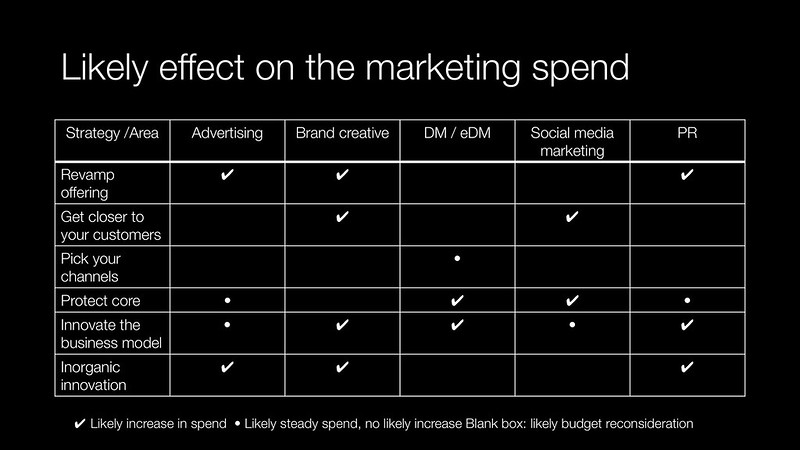
    Zero-Based Budgeting

    Public relations agencies are not the sole source of expertise in generating ‘PR coverage’. In some respects many marketing agencies already fulfil a public relations role, but won’t describe it in that way. It tends to be attached to their social teams and might be called something like influence, content marketing or earned media. This tends to be in some of the media agencies at least. Ad agency creative if sufficiently emotive can foster talkability and social sharing – which is another form of earned media that is usually considered to be also public relations role.

    Historically Japanese advertising agencies like Dentsu have sold public relations as an integrated part of their advertising led programmes. The perception by western agencies has been that PR was thrown in for free like a plastic toy in a box of breakfast cereal. In reality the Dentsu Way, called cross marketing –  is a holistic, tightly integrated approach, though public relations was definitely the junior discipline.

    It would would be wrong of the industry to assume that they are the only experts in this space. I also believe that public agencies should have more to offer than generation of earned media, more on that later.

    A lot of PR leaders I’ve met don’t understand public relations role in the client’s marketing strategy and when it will make the biggest difference. I’ve never heard an PR agency leader turn around to a client and say ‘advertising or direct response marketing is more suitable for your needs’. Clients tend to believe that they need to support each initiative that they get budget for, even if the contribution that their efforts make are marginal. It shows that they have an ‘A-grade’ team spirit, but is harder to justify from a strategic point-of-view and may even devalue the currency of marketing communications-orientated PR in the business.

    It would be great if the CIPR could mandate PR leaders to read Sharp.

    • To the best of my knowledge the PR industry has never published campaign effectiveness research on a mass scale similar to the IPA’s  ‘The long and the short of it’
    • I don’t know if Sabres, CIPR or PRCA award entries have solid enough data for this?

    It would be great if the CIPR, PRCA or PRSA could make this happen.

    Planning in PR

    Frolich starts to get some of the points right about the fraught relationship between planning as a discipline when embedded in PR agencies. I would be far more aggressive and say a lot of PR senior leaders aren’t ready for it. Part of this is the generalist nature of public relations roles and also business structure within clients and agencies.

    Many PR agencies are run on very little capital. They’ve always had an asset light model and just been pure operating expenses. From a knowledge perspective you are seeing new hires being brought in at a more junior level than the people that they replace which will have a knock on effect throughout the industry.

    Securing funding for any kind of tooling beyond media databases is really hard when you’re working agency side.  That it’s just the cost of doing business in the industry nowadays struggles with a culture that tries to bill these back to a specific client. Which also explains why PR often struggles to present its ideas.

    I’ve known agencies being reluctant to subscribe to publications where their clients might get coverage or media monitoring services. Justifying social listening or SEO tools is really painful. I know, I fought that battle trying to get social listening tools into the business. It is nigh on impossible trying to get a WARC subscription. PR agency clients tend to value and pay for direct action tasks and reporting, not thinking, analysis, strategy or measurement. Having worked as strategist who has worked in PR agencies and other disciplines I ended up having to pay for some reports out of my own pocket when I was agency side and building up my own library of reports and presentations over time.

    This sole focus on direct action tasks probably explains the earlier points I made about agency leaders not turning around to a client and pointing out the alternative approaches they should be taking instead of PR to address a particular marketing challenge.

    William Gibson in his Blue Ant trilogy of novels (Pattern Recognition, Spook Country and Zero History), discusses PR as part of the plot. He enlightenedly considers PR beyond media relations. Instead he talks about its role mediating relations between an organsiation and its public. PR is considered by him to have its finger on the pulse of the zeitgeist. That should mean that planning is a greater fit than it is in reality. So an opportunity is there, but whether the industry can really step up to it en masse is quite another matter.

    Data and insights sharing between agencies of different working on the same project needs to improve. Often PR plans are done in isolation of planning process and IF YOU’RE LUCKY then recut to incorporate insights.
     

  • Fall of Nokia & other things this week

    BBC 4 ran a great hour long documentary film: The Rise and Fall of Nokia is an oral history on the fall of Nokia from Nokia veterans. You can’t give a good comprehensive telling on the rise and fall of Nokia story in just one hour, but you can get a sense of what Nokia was. Some of the culture change that came with success  was really, really  dark. More on Nokia here.

    Danny Dyer nailed the zeitgeist on Brexit last week. Which led some the B3ta community to put together the Danny Dyer Presents: “Pwopa Nawty Noises!” (B3ta.com) – livens up conference calls no end.

    I was a big fan of HBO’s The Newsroom drama; it was more of the intelligent dramas over the past few years. The intro to the first episode seems even more prescient now

    I am very late to this but Techcrunch’s Bubbleproof drama from last year neatly skewers the current state of technology start-up culture (in the west at least).

    I’ll leave you with this amazing animated film from Hong Kong. It’s on KickStarter for funding and looks amazing with hints of traditional martial arts films, science fiction and psychedelia. More information on the film website.

  • Preparing to get a brand on social media

    Master TV Control Room 2

    In order to get a brand on social media it isn’t about dropping brand assets on social channels but thinking about what it actually means.

    Distillation of this process is likely to appear on a social media document:

    • It contextualises why social, there must be a business and brand reason to be there beyond ‘well everyone is on Facebook’ in order to get a brand on social media
    • An explanation of how to use the document. Those involved need to view the document as a ‘north star’ for social. It needs to be clear that the document is a set of guidelines, but not immutable
    • In order to get a brand on social media, you need to understand what what will look and sound like

    How the brand manifests itself on social:

    • What’s the brand’s tone of voice on social media channels. Does it want to want to sound like an everyman, does it want a bit of distance and gravitas,  does it want to be an authority on a given area?
    • What’s the personality? If it was a person, what kind of person would it be. This frames the content, what questions it will answer and the view point that it will take. It’s adding extra dimensions that won’t necessarily be applied in public relations, print or even TV advertising due to the nature of social channels
    • What are the content pillars? Think of this as the core messages. Every piece of content created and shared will demonstrate at least one pillar. These are typically things like organisation innovation, heritage, values, point of leadership (thought leadership, authority / expertise, style leadership etc)

    Cross channel rules:

    • How will you handle hashtags
    • How ill you handle localised domain names? (Will their be local domains?)
    • Who has the right to publish what first? For instance if you look at sports brands like Nike or New Balance; you’ll see that soccer related content first appears on their specialist football channels
    • Should local channels link back to ‘global accounts’?
    • Are there any sponsorship or IP-related watch outs? When I worked on New Balance; any club kit related content had to feature a minimum of three players. Otherwise there would be problems with the players other sponsors (notably their boot sponsors and their agents who would be looking for another pay day). Who needs to approve use of sponsorships and how long will approvals take? Can you do a flow diagram to provide insight into the process? How do you handle successes or set backs of partners?
    • How do you handle rumours and speculation? (New iPhone launch or renewal of sponsorship deal with Tiger Woods)
    • How do you handle images that might have a competitor brand in shot?
    • Do you ignore controversial news?
    • Will you share partner content? What channels and handles are legitimate partner content to share?
    • What kind of tools will you put in place? Large brands often use an intermediary platform like Percolate that provides measurement, asset management and an approvals workflow as needed. It even allows the localisation of content by the local brand team

    Social channel-specific rules

    • How often will you post on a  given channel? This might be dictated to you by the kind of account you have on some channels like WeChat. With most others it will be driven by audience content consumption. Twitter generally lends itself to more frequent posts than Instagram or Facebook
    • Specific channel aims over the coming year
    • How will the channel be used? Are there particular segments that it is good at reaching?
    • What kind of content can be published? Example content categories. Best practice executions from other (non-competing) brands to get best practice ideas

    Social crisis response

    • Crisis like accidents have an incident funnel marked by small events, the more of these that happen, the harder it is to climb out of the funnel.  The trick is to limit these before they take you down the funnel.
    • Have a clear workflow in place to handle negative criticism. The US Air Force had a really good workflow to borrow from.
    • Real-time monitoring should highlight things before they escalate. How is this intelligence distributed and to whom?
    • Who is going to be part of the decision group, you’ll likely need people from: customer services, product expert, public relations, management. How will you ensure that employees and the supply chain speak with one voice?
  • The influence post

    Mark Ritson wrote an op-ed over at Marketing Week on influence and influencers. Whilst it lacked nuance on the subject area, a lot of what it said is true. Go over and have a read; I’ll be waiting for when you come back.

    Whilst I disagree on the finer points, what Ritson wrote needed to be said. There needed to be a turning of the tide on influencers from boundless optimism to a greater degree of sobriety and critical analysis of the influencer opportunity.

    I first noticed this boundless optimism when I attended the In2 Innovation Summit in May last year.  Heather Mitchell on a panel. Mitchell worked at the time in Unilever’s haircare division where she is director, head of global PR, digital engagement and entertainment marketing. I asked the panel discussing influencer marketing about the impact of zero-based budgeting (ZBB) and the answer was ducked. ZBB requires a particular ROI on activity, something that (even paid for) influence marketing still struggles to do well.

    This was surprising given the scrutiny that other marketing channels were coming under, I couldn’t understand how influencer marketing merited that leap of faith.

    This time last year I noted:

    Substitute ‘buzz marketing’ for ‘influencer marketing’ and this could be 15 years ago. Don’t get me wrong I had great fun doing things like hijacking Harry Potter book launches when I worked at Yahoo!, but no idea how it really impacted brand or delivered in terms of RoI. Influencer marketing seems to be in a similar place.

    Just five years ago we had managed to get past the hype bubble of social and senior executives were prepared to critically examine social’s worth. In the meantime we have had a decline in organic reach and massive inflation in both ad inventory and influencer costs. What had changed in the marketers mentality?

    Onward with Mark Ritson’s main points.

    Ritson’s Three Circles of Bullshit

    A very loose reference to Dante Alighieri’s Divine Comedy trilogy; but for modern marketers

    The First Circle of Bullshit: Are the followers real?

    • Are they bots?
    • Are they stolen accounts?
    • Are the user accounts active any more?
    • Has the account holder padded their account with bought followers and engagement. Disclosure – I ran an experiment on my Twitter account and still have a substantial amount of fake followers. More on this experiment here.

    The Second Circle of Bullshit: Are influencers trusted?

    • Ritson did an unscientific test that showed (some) influencers would post anything for a bit of money

    The Final Circle of Bullshit: Do they have influence?

    • Some influencers are genuinely authoritative; but this is a minority of influencers out there
    • Ritson alludes to the lack of organic reach amongst an ‘influencers’ followers which is likely to be 2% reach or less
    Trends in influence

    I looked at Google Trends to see what could be learned in the rate of change in searches over time. Consider Google Trends to be an inexact but accessible measure of changes in interest over time.

    Global interest in influencers have been accelerating

    Influence: Google Trends

    There has been a corresponding rises in interest around paid influencer marketing

    Influence: Google Trends

    There hasn’t been the same interest peak in organic (PR-driven) influencer work

    Influence: Google Trends

    All of which supports the following hypotheses:

    • it’s become on-trend from the perspective of marketers, agencies and ‘influencers’
    • A significant amount of influencers are in it for the money – which brings into question their (long term authority and consumer trust)
    • A significant amount of influencers have an exceedingly good idea of their value (more likely overly-inflated)
    • Ego is less of a motivator for becoming an influencer than material gains
    What would influence look like?

    Propagation of the content by real people. Instagram, a particularly popular influencer channel, has made sharing posts difficult for followers historically. Re-gramming was a pain in the arse for the average Instagram user.

    Slide4

    If we look at the mainstream media and how it is shared on Facebook we see that only five media brands are consistently in the top ten most shared media properties. ‘Traditional’ influencer status isn’t necessarily a garrantor of consistent successful propagation either, if Newship’s data is to be believed.

    Attributed sales. Some luxury brands in China have had success collaborating with influencers and selling through their channels; the post child being Mr Bags collaboration with Longchamps.

    How is the best way to use influencers in marketing?

    Assuming that you are using influencers in the widest possible sense at the moment.

    Treat the majority of influencers as yet another advertising format

    That means that reach, the way the brand is presented, and repetition are all important – smart mass marketing following the playbook of Byron Sharp.

    • Viewing your influencer mention in that prism, it means estimating what the real reach would be (lets say 2% of the follower number as an estimate) and paying no more on a CPM rate than you would pay for a display advertising advert
    • Ensure that the brand is covered in the way that you want. Some luxury brands have managed to get around this by keeping control of the content; a good example of this is De Grisogono – a family-run high jewellery and luxury watch brand. They work with fashion bloggers that meet their high standards and invite them to events. De Grisogono provides them with high-quality photography of its pieces and the event. They get the  high standard of brand presentation which raises the quality of the placement
    • Get repetition with the audience by repeating the placement with other content that delivers the same message with the same high standard of production

    All of this might work for a luxury brand, IF you found that the amount of agency time and creative work made commercial sense. It is less likely to work for normal FMCG brands. What self-respecting influencer is going to be bossed around by a breakfast cereal?

    Thinking about micro influencers, probably the area that has had the most interest from marketers recently due to them appearing to be better value than macro influencers.

    Brown & Fiorella (2013) explanation of micro-influencers:

    Adequately identifying prospective customers, and further segmenting them based on situations and situational factors enables us to identify the people and businesses – or technologies an channels that are closest to them in each scenario. We call these micro-influencers and see them as the business’s opportunity to exert true influence over the customer’s decision-making process as opposed to macro-influencers who simply broadcast to a wider, more general audience.

    Brown & Fiorella focus on formal prospect detail capture and conversion.

    This approach is more likely to work in certain circumstances; where there is low friction to conversion (e-tailing for discretionary value items).

    It starts to fall apart when you deploy their approach to:

    • Consumer marketing
    • Mature product sectors
    • Mature brands

    You would also struggle with many B2B segments where social provides a small reach and little social interaction.

    Work with real influencers on long term collaborations
    • There is more likelihood of having audience trust if they can see and understand the long term relationship between a brand and its influencers
    • Better brand placement easier, with an influencer that ‘gets’ the brand
    • You’ve got a better chance of being able to get access and fully understand the underlying analytics of their accounts (which should be a prerequisite for long term relationship)
    • You can look at collaborations and attribution payment models that raise all boats
    • You can lock out rivals out of relationships
    More information

    Mark Ritson: How ‘influencers’ made my arse a work of art | Marketing Week
    Edelman Digital Trends Report – (PDF) makes some interesting reading
    Instagram Marketing: Does Influencer Size Matter? | Markerly Blog
    Influence Marketing: How to Create, Manage and Measure Brand Influencers in Social Media Marketing by Danny Brown & Sam Fiorella ISBN-13: 978-0789751041 (2013)
    Facebook Zero: Considering Life After the Demise of Organic Reach
    Quantifying the Invisible Audience in Social Networks – Stanford University and Facebook Data Science
    PLOS ONE: Detecting Emotional Contagion in Massive Social Networks by Lorenzo Coviello,Yunkyu Sohn, Adam D. I. Kramer,Cameron Marlow, Massimo Franceschetti, Nicholas A. Christakis, James H. Fowler
    Senior Execs Not Convinced About Social’s Worth | Marketing Charts
    Measuring User Influence in Twitter: The Million Follower Fallacy – Cha et al (2010) – (PDF)
    Visualizing Media Bias through Twitter. Jisun An. University of Cambridge. Meeyoung Cha. KAIST. Krishna P. Gummadi. MPI-SWS et al – (PDF)
    Mr. Bags x Longchamp: How to Make 5 Million RMB in Just Two Hours | Jing Daily
    It’s time that we talk about micro-influencers