Category: china | 中國 | 중국 | 中華

Ni hao – this category features any blog posts that relate to the People’s Republic of China, the Chinese communist party, Chinese citizens, consumer behaviour, business, and Chinese business abroad.

It is likely the post will also in other categories too.  For example a post about Tong Ren Tang might end up in the business section as well. Inevitably everything is inherently political in nature. At the moment, I don’t take suggestions for subject areas or comments on content for this category, it just isn’t worth the hassle.

Why have posts on China? I have been involved in projects there and had Chinese clients. China has some interesting things happening in art, advertising, architecture, design and manufacturing. I have managed to experience some great and not so great aspects of the country and its businesses.

Opinions have been managed by the omnipresent party and this has affected consumer behaviour. Lotte was boycotted and harassed out of the country. Toyota and Honda cars occasionally go through damage by consumer action during particularly high tensions with Japan.

I put stuff here to allow readers to make up their own  minds about the PRC. The size of the place makes things complicated and the only constants are change, death, taxes and the party. Things get even more complicated on the global stage.

The unique nature of the Chinese internet and sheltered business sectors means that interesting Galapagos syndrome type things happen.

I have separate sections for Taiwan and Hong Kong, for posts that are specific to them.

  • The One Device: The Secret History of the iPhone by Brian Merchant

    I bought The One Device when it came out in July and have gone back and forth reading it. I’d read books on Silicon Valley before; the Apple eulogy  Insanely Great by Steven Levy which told of the graft and hard work that went into the original Macintosh or Where Wizards Stay Up Late by Hafner & Lyon which discussed engineers working really long works. My favourite one is still Robert X Cringely’s Accidental Empires that portrays Gates as a coupon-clipping megalomaniac and Steve Jobs as a sociopath cut from the same cloth as Josef Stalin.

    Merchant’s The One Device is different. It doesn’t eulogise in the same way, but it also lacks immediacy as it feels detached from its subject matter. Unlike Levy’s work, Apple didn’t cooperate with Merchant at all. The book is broad in scope and sometimes loses its way, each one of the chapters could have been an interesting short book in their own right and this leaves it being faintly unsatisfactory.  I guess this is one of the reasons why it took me so long to read it.

    In the meantime the book stirred controversy over quotes attributed to Tony Fadell about then colleague Phil Schiller.  This made me cast a critical eye over some of Merchant’s adventures in the book. In particular inside the Foxconn industrial complex.

    On a more positive note, Merchant’s vision is grander than previous authors. One man’s mission to pull all the intellectual threads together on what made up the iPhone. The iPhone moves from becoming the child of an over-worked and under-appreciated Apple engineering team to being the totem of a global village.

    If you’ve read a quality newspaper you know what he’s going to say about the global supply chain. He also touches on the decades of software and technology development that led up to the iPhone.  How its multi-touch interface came out of a 1990s doctoral thesis. Ultimately the value of Merchant’s book many not be his writing, but instead becoming a new template for journalists writing on Silicon Valley to look beyond the David & Goliath mono-myth and instead dig into the tangled history of innovation. More book reviews here.

  • Out and about: Chasing the Dragon

    October has been amazing month of cinema releases for me. The last I am going to write about is Chasing The Dragon. Hong Kong cinema is considered to be in its death throws. There are small independent films of course, but its far from its hey day with production houses known around the world like Shaw Brothers, Golden Harvest or Media Asia.

    Mainland productions have the money and many technical experts and directors now work across the border. Korea has come on in leaps and bounds taking up the overseas arthouse audience.

    There aren’t many new stars coming through, even in Chasing the Dragon; character actors and main stars are largely industry veterans since the 1990s. However, Chasing the Dragon gives me some hope for the Hong Kong film. Its an unashamedly Hong Kong film focusing on the economic boom of the 1960s and mid-1970s. It is a technical tour-de-force. Much of the Hong Kong shown in the film from old Wan Chai to the Kowloon walled city only exist in fading photographs. So much of it was green screened in instead.

    https://www.youtube.com/watch?v=Adj5dtSKF8U

    It is probably too local for a mainland audience to fully appreciate the nuances and historical references. It shows a Hong Kong on the ascendancy, rather than suffering under a century of shame. It also holds up an unflinching view of British colonialism with its rampant individual corruption.

    A modern British audience would have very little idea of how serving British police officers at all levels and government officials were central cogs in the corruption. Eventually the stench got to much when chief superintendent Peter Godber was found to have over $600,000 US stashed away.

    Andy Lau plays ‘Lee Rock’ a clear analogue of Lui Mo Lok (呂慕樂) a corrupt policeman known as the The Five-Hundred-Million-Dollar Inspector by Hong Kong people. In some respects one can view Chasing The Dragon as a reboot of the 1991 film Lee Rock II where Lau played the same character through the same time period. Chasing the Dragon adds verve, detail and taunt storytelling to the mix.

    The film is being shown at the Odeon in Panton Street.


  • Thelonius Monk + other things

    Thelonius Monk

    The soundtrack to my week was this three hour programme on the music of jazz musician Thelonius Monk. Thelonius Monk has 99 albums to his name, excluding compilations, many of which were live concert performances rather than studio recordings. He was known for his improvisation and was one of the found fathers of bebop.

    KCRW put together a great tribute to Thelonius Monk that hits all of the high spots that I know of in his career, that was cut short at the age of 64 in 1982.

    Sailor Moon + syphilis – two concepts I never thought I would utter in the same sentence

    Only Japan could successfully leverage a much loved children’s TV and comic book character to try and reduce syphilis infections. It was interesting to hear that the creator of Sailor Moon was a pharmacist who saw the urgency and need. Quartz alludes to Shinjuku – the entertainment district being the epicentre. Japan like its neighbours has seen an increase in foreign sex tourism from other Asian markets.

    This is solely down to a larger Chinese middle class who visit prostitutes for bonding business relationships (sharing knowledge of each others transgressions builds trust). There is also macho posturing to reinforce hierarchies and subjugate the sex workers. They also go for pleasure when they’re on holiday. Basically, they’re absolute scum.

    Japanese hi-fi enthusiasts

    Great short film by the Wall Street Journal about obsessive Japanese Hi-Fi buffs. I love the extremes that they go to in order to get the best sounds.

    Uniqlo Danpan

    A Uniqlo campaign is always something that I look forward to and Uniqlo Danpan is no exception

    Volkswagen

    Interesting effort to move the discussion on around the Volkswagen brand from Dieselgate. The reality is that Dieselgate will be with us for years as it rolls through court cases and is cited with regards the need for electric cars.

  • Out and about: Blade Runner 2049

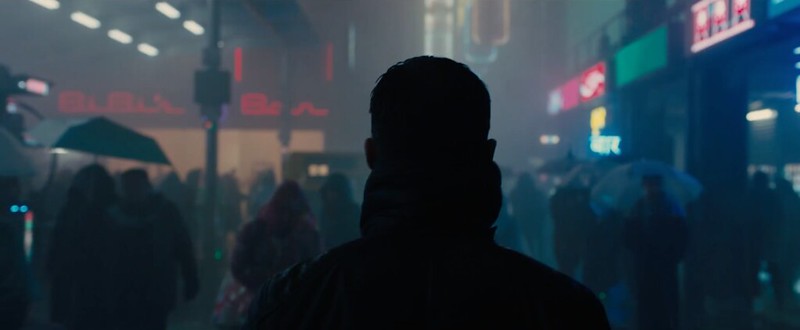
    *** No plot spoilers*** Where do you start when talking about Blade Runner 2049 – the most hyped film of the year?

    Blade Runner 2049 starts up some 20 years after the original film. It captures the visuals of the original film, moving it onwards.  The plot has a series of recursive sweeps that tightly knit both films together which at times feels a little forced, a bit like the devices used to join Jeremy Renner’s Bourne Legacy to the Matt Damon canon.

    Blade Runner 2049

    The 1982 film took the neon, rain and high density living of Hong Kong in the late summer and packaged it up for a western audience.  Ever since I first saw  it represented a darker, but more colourful future. I felt inspired, ready to embrace the future warts and all after seeing it for the first time.

    The new film is a darker greyer vision largely devoid of hope. You still see the Pan Am and Atari buildings of the first film, now joined with brands like Diageo. The police cars are now made by Peugeot. It also captures the visual language of the book, something that Scott hadn’t done in the original to the same extent. In the book, Dick (and the Dekkard character) obsess on how the depopulated world’s crumbling ephemera is rapidly becoming dust.

    Visually the film dials down its influences from Hong Kong, Tokyo or Singapore and instead borrows from the crumbling industrial relics of the west and third world scrap driven scavenging from e-waste in China and Ghana to the ship breaking yards of Bangladesh. The filthy smog and snow is like a lurid tabloid exposé of northern China’s choking pollution during the winter. It paints a vision more in tune with today. Automation and technology have disrupted society, but orphans are still exploited for unskilled labour and vice is rampant.

    Ryan Gosling and Harrison Ford do very capable performances. And they are supported by a great ensemble of cast members of great character actors at the top of their game. Dave Bautista, Robin Wright, Barkhad Abdi (Eye in The Sky) and David Dastmalchian (MacGyver, Antman, and The Dark Knight). The one let down is Jared Leto – who now seems to play the same character in every film since his career high point of Dallas Buyer’s Club – I suspect that this is as much a problem with casting as performance. I think he needs to be cast against type more.

    For a three-hour film it still manages to hold your attention and draw you in to its universe without feeling tired. It’s also a film that forces you to think, so if you are looking for visual wallpaper for the mind a la Marvel’s Avengers series of films it won’t be for you.

    SaveSave

    SaveSave

  • iPhone X launch + more things

    iPhone X launch

    In terms of the news agenda, the iPhone X launch dominated the news. I wrote about it here and here.  This image from the Chinese internet summed everything about the iPhone X launch up for me.

    Chinese reaction to iPhone X

    We’re in a place of innovation stuckness at the moment – we’re celebrating incremental improvements in user experiences on smartphones as transformational, they aren’t. This is a category challenge, not a vendor-specific one. Even infrastructure and component vendor Qualcomm is struggling to envision ways to move things on.

    I have been mostly listening to this playlist from this years Love International Festival

    And FIP Radio

    Japanese group meforyouforme combining traditional Japanese culture and dance with modern tap dancing FTW


    Hong Kong stars Donnie Yen and Andy Lau go back to the 1970s with Chasing the Dragon – a thriller based on real characters involved in drug smuggling and organised crime in the turbulent go-go economic boom of Hong Kong – Lee Rock (Lui Lok) was a corrupt policeman nicknamed 500 million dollar Inspector, who avoided corruption charges by moving to Canada and then Hong Kong. Crippled (or Limpy) Ho was a triad called Ng Sek-ho who rivalled the 14K triad group.  It is against the backdrop of the post-1967 riots economic boom which saw Hong Kong blow up in manufacturing and financial services. This brought rich pickings in corruption which led to the formation of the ICAC – the Independent Commission Against Corruption.