Culture was the central point of my reason to start this blog. I thought that there was so much to explore in Asian culture to try and understand the future.
Initially my interest was focused very much on Japan and Hong Kong. It’s ironic that before the Japanese government’s ‘Cool Japan’ initiative there was much more content out there about what was happening in Japan. Great and really missed publications like the Japan Trends blog and Ping magazine.
Hong Kong’s film industry had past its peak in the mid 1990s, but was still doing interesting stuff and the city was a great place to synthesise both eastern and western ideas to make them its own. Hong Kong because its so densely populated has served as a laboratory of sorts for the mobile industry.
Way before there was Uber Eats or Food Panda, Hong Kongers would send their order over WhatsApp before going over to pay for and pick up their food. Even my local McDonalds used to have a WhatsApp number that they gave out to regular customers. All of this worked because Hong Kong was a higher trust society than the UK or China. In many respects in terms of trust, its more like Japan.
Korea quickly became a country of interest as I caught the ‘Korean wave’ or hallyu on its way up. I also have discussed Chinese culture and how it has synthesised other cultures.
More recently, aspect of Chinese culture that I have covered has taken a darker turn due to a number of factors.
The two stand out films of the summer are Barbie and Oppenheimer . Oppenheimer is a biopic of scientist and Manhattan Project lead J. Robert Oppenheimer, based on the book American Prometheus: The Triumph and Tragedy of J. Robert Oppenheimer. Oppenheimer went on to lead the projects Los Alamos lab. Los Alamos National Laboratory has gone on to do scientific research on defence projects as well as health related projects. Casting of Cillian Murphy provides a good physical resemblance of Robert Oppenheimer.
J. Robert Oppenheimer biopic
Oppenheimer is a complex film with the story told in the form of flashbacks. It also tries to reinterpret Oppenheimer for the present day, with a sense of guilt that Oppenheimer never personally expressed. But Oppenheimer had been concerned about the nuclear arms race and weapons proliferation. He opposed the subsequent development of the hydrogen bomb. These positions along with his friendships with communist party members in the US, led to him losing his security clearance in 1954.
J. Robert Oppenheimer via the US Department of Energy
Barbie
Barbie looks to bring to life Mattel’s toy characters Barbie and Ken. Barbie was introduced in 1959 as a copy of a German fashion doll line. The fashion doll line came out of a cartoon strip in the Bild tabloid newspaper. Mattel went on to buy the German originator and shut it down. But by this time the German doll moulds were bought or copied by manufacturers in Hong Kong and Spain.
1990s vintage Barbie
The Barbie movie addresses head on the cultural and design legacy of Barbie alongside present-day culture wars
Barbie starts off in a matriarchal fantasy world; Ken is represented as a boy toy
Eventually Barbie and Ken end up in the real world. Barbie meet her owner who accuses her of setting unrealistic beauty standards
Ken learns about the male patriarchy, which means a battle of the sexes ensues when they both return to toyland
Barbeheimer
Both Barbie and Oppenheimer were released in the cinema at the same time going head-to-head with Mission Impossible: Dead Reckoning Part One. This led to cinema goers taking advantage and buying a ticket to see each film one after the other. The practice of watching Barbie and Oppenheimer as a double-bill became so common it was given its own name Barbenheimer, when then became a thing in the news, on podcasts and social media. It has been credited with listing the business performance of cinemas, while sit on the edge of a recession. In fact in the UK, for some of the weekend, both Picturehouse cinemas and Vue cinemas websites were having trouble handling customer traffic.
Google Tests A.I. Tool That Is Able to Write News Articles – The New York Times – One of the three people familiar with the product said that Google believed it could serve as a kind of personal assistant for journalists, automating some tasks to free up time for others, and that the company saw it as responsible technology that could help steer the publishing industry away from the pitfalls of generative A.I.
By the 1980s, radio dramas were in decline. This is in stark contrast to the first half of the century when famous literary and comic book characters had their own shows which covered everything from science fiction and fantasy to crime and horror. Famous names like Sherlock Holmes, Count Dracula, Batman, Superman, The Spirit, Buck Rogers, Flash Gordon, Philip Marlowe and Sam Spade all appeared on radio. The Star Wars radio dramas started as a project to fire interest in the genre.
An academic at the University of Southern California looked to respark interest in radio dramas, using the local campus radio station to rejuvenate NPR Playhouse – the umbrella vehicle for radio dramas on the US National Public Radio (NPR).
These aren’t the droids you are looking for by Scott Beale
The university students moved on from adapting short stories and suggested adapting Star Wars. Director George Lucas was an alumni of USC and helped the production licensing the music and sound effects for a nominal dollar fee. The BBC helped out in return for broadcasting rights in the UK and some of the original stars including Mark Hamill signed on as cast members.
USC went on to dramatise two out of the three films from the original Star Wars trilogy. While they were originally multi-part series, an enterprising YouTuber has put them all together.
Star Wars: Return Of The Jedi: originally 6 episodes (1996) – made by HighBridge Audio instead of NPR or USC. HighBridge had distributed the previous recordings as a recording box set and when NPR and USC couldn’t make the recordings, they stepped in to do it instead.
The Star Wars radio dramas, alongside vintage recordings are enjoying a second life on YouTube in parallel to the increased consumer interest in podcast documentary dramas and Audible’s rejuvenation of audio books.
Jack Ryan final season
Amazon Prime’s adaptation of Tom Clancy’s Jack Ryan franchise is probably the best adaptation that I have been. But all good things must come to an end and we are seeing the final season being rolled out. John Krasinski has arguably played the best version of the titular character and the writers have managed to modernise the show sympathetically. They have managed to make each season very relevant. This time Ryan is investigating a conspiracy of crime that might envelope the entire ‘black budget operations’ of the intelligence and defence communities.
The roads lead back to Myanmar via Shan State rebels and an NGO ostensibly set up to help victims of human trafficking. I look forward to seeing where the rabbit hole goes next.
Threads
I am on Threads – a new micro-blogging alternative to Twitter; so far it’s been underwhelming despite the rapid climb in new members. I am also on Mastadon and Post.News.
Godzilla Minus One
While American adaptions of Godzilla feel grandiose and bloated in nature, Japanese adaptions by Toho Pictures have managed to refresh and take an interesting new take on the titular character in Shin Godzilla. Godzilla Minus One changes things up by setting his rampage in a post-war Japan already devastated by the United States.
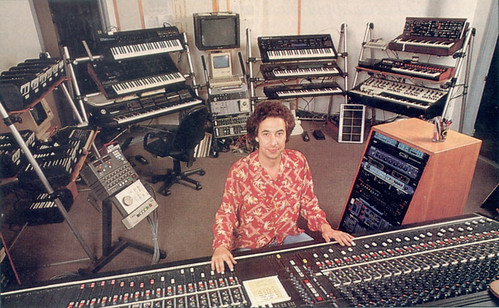
Synclavier Regen Synthesizer Introduction – Synthtopia – the old New England Digital Synclavier was a floor to ceiling rack full of equipment paired with a monitor mouse, computer keyboard and musical keyboard. Synclavier was an early digital synthesiser and then evolved to create the first digital audio workstation, featuring digital tapeless recording, digital effects, sequencing of instruments, sampling and synthesis. By 1980, the Synclavier 2 was launched. Then you started to increased adoption including Michael Jackson for this Thriller album and across the US film industry for sound effects work.
Producer Michael Hoenig circa 1987
The sampling and synthesis of Synclavier helped define the sound of 1980s record production for a wide range of groups from the era including
At the time there was concern that the digital synthesis and sampling of the Synclavier would put live music out of the business, so many concert halls in the US banned the use of the Synclavier.
Mirage FM: how patten created the first LP made entirely from AI sounds | Dazed – Pattern’s album brings synthesis forward to the present day. A mix of crude pads and textures hint at how machine learning can change synthesis over time. At the moment, record labels are looking to restrict the use of machine learning, which they view as a similar threat to the MP3 format of the early 2000s and digital sampling from the early 1990s. Like earlier technologies, they will eventually make their peace with machine learning based synthesis and use the opportunity to further gouge artists and creators
Three years of National Security Law in Hong Kong: Farewell “special status”? | Merics – the NSL has severely reduced the rule of law in Hong Kong by granting the government powers to circumvent the courts and thereby deny defendants a fair trial. The case of media entrepreneur Jimmy Lai illustrates how this presents a risk to businesses and their property rights. The Hong Kong government froze Lai’s majority of shares in his company Next Media, which led to its liquidation and the end of the pro-democracy newspaper Apple Daily. The case is highly political and does not reflect the situation of most businesses, but it does show the power the Hong Kong government can wield over business. – German think tank on the NSL
Edelman Cutting Roughly 240 Employees Amid Reorganization | Provoke Media – Edelman is just the canary in the coal mine. Beyond (part of Next Fifteen) is closing down its London office, smaller agencies have been going to the wall and another of my former agency alma mater WE are laying off just under 5 per cent of their headcount. I don’t remember this happening during the 2008 financial crisis. There are likely to be several factors blamed:
Rising interest rates combined with already lean cashflow has driven some agencies to the wall
Declining economic conditions has resulted in declining marketing budgets
Some agencies (Edelman being a case in point) bulked up on talent, expecting a fast exit from COVID driven decline
Brands are getting shaky on the commitment to brand purpose which will hit a lot of below the line agencies particularly hard
More marketing spend is being spent on innovation with an expectation of cost savings down the line (particularly in production and across B2B marketing)
MikroE welcomes back IrDA with Click board | EETimes – IrDA was first introduced in 1994 for consumer equipment but has since been used in areas such as power systems where a light-based system is safer or RF is problematic. It’s slow with data rates up to 115kbit/s at 1 metre. The reality is usually much slower. I used to use IrDA for transferring business cards of a few KB each which would take 30 seconds or more
The North America semiconductor corridor looks at Mexico, the US and Canada as a potential production capacity eco-system for the semiconductor industry. The North America semiconductor corridor is framed in terms of increasing resilience in security. At the moment the semiconductor industry for reasons of cost and supply chain ecosystem is focused on the US Pacific coast and Asian countries from Singapore to Korea that face on to the Pacific.
In the North America semiconductor corridor also has a political advantage bringing back more high value jobs across Canada, the US and Mexico. There are considerable challenges to the North American semiconductor corridor from talent to energy and water requirements. The US CHIPS and Science Act has looked to catalyse some of the change required.
Ancient monuments to the dead
The summer solstice on Wednesday reminded me of Ireland’s stone monuments. Some like Newgrange have a calendar type element, but most of them are solely monuments to the dead. The megaliths continue to guard their secrets well despite the educated deductive reasoning of archaeologists.
Wilkie Collins radio dramas
Wilkie Collins along with Arthur Conan Doyle invented what we now know as the detective genre. This stream of Wilkie Collins dramas is better than modern productions on BBC Radio 4.
Technics SL-DZ1200
Techmoan did a review of the Technics SL-DZ1200. I am a big fan of the DZ1200 over Pioneer’s CDJ devices and they did a good rundown of the device. Hopefully, the DZ1200 will come back in a new and improved form if Technics relaunch of the SL-1200 is sufficiently successful?
Microsoft Auto PC
Auto PC
Back when I worked agency side on Microsoft I never heard about the Microsoft Auto PC experiment which seems to be Microsoft’s abortive move into in-car entertainment and information systems. This seems to be alongside the more successful personal digital assistant and nascent smartphones. It’s fascinating to see technologies like voice recognition, iRDA, compact flash (but not as a music media) and USB being incorporated because these capabilities were being put into future PDA and smartphone products.
CES launch
It was launched at CES in 1998 according to the Microsoft corporate website. It’s interesting, I still have similar problems with voice recognition.
Directions
The rudimentary directions software was similar to the turn-by-turn direction print outs that I ordered from The AA Route Planner service. during the mid-to-late 1990s for long journeys – but on your stereo screen. A similar approach was also taken by Palm app Vindigo for pedestrians about the same time. Disclosure: I worked agency side on the launch of the Vindigo London guide alongside the work I was doing on Palm PDAs at the time.
(The AA Route Planner service still exists, but it is now online rather than something you ordered over the phone and received via the mail. However you can still print out turn-by-turn directions. It’s also likely to not send you on some of the interesting routes that modern navigation apps seem to manage.)
Clarion
I feel sorry for Clarion who were Microsoft’s only hardware partner. Clarion is now owned by Faurecia SE, a French headquartered auto parts manufacturer with Chinese car manufacturer DongFeng Motor Corporation who were the local partner to Peugeot, Nissan and Honda’s efforts in the Chinese market as a key minority shareholder.
I was sparked to lead this post based on footage that I watched about a priest in South India with regards a robotic elephant. Robots in religion have taken off in both Shinto and Hindu ceremonies.
Japan
Academics have widely talked about how the Shinto-based belief system have aided Japanese societal acceptance of robots, in comparison to western society. Secondly, Japanese authors have been exploring what it means to be human and what kind of dilemmas and opportunities do robots and AI bring in a future society. Robots in religion are a natural extension of robots in society.
Buddhism leads the way
What’s less commented on is that Japan’s buddhist temples have been leading robots in religion. The reality is that many Japanese see Shinto and Buddhism as complementary in nature and get involved in both beliefs.
Japan has some unique religious challenges that are interlinked. Temples are struggling as less people are active in their religious practice, the factors for this decline is multi-factorial in nature.
A second challenge that as the population shrinks roles need to be automated. What started in factories is now impacting the food and beverage sector (vending machines and restaurant robo-serving staff), so it was only a matter of time that robots in religion would supplement the clergy.
India
In India robots in religion is about kindness and de-risking religious ceremonies. In South India elephants take part in religious ceremonies. However the conditions that elephants are kept in can be cruel in nature and even result in death. Secondly, elephants can unintentionally kill or injure people involved in a religious celebration. This report on NHK World shows how robots in religion have been adapted to Hindu needs.
Finally, the elephant robot is used in celebrations over a large geographic area and is easily transported around. Robots in religion are likely to make even more sense as India urbanises even further, as the benefits are amplified in the denser environment.
How confucianism, communism (in particular Stalin’s take on Leninism) and an accident of history has led to the nationalistic, fragile, insecure Chinese state with imperial ambitions we know today.
China’s ‘trinket town’ at heart of push for renminbi trade | Financial Times – Yiwu was one of the first cities in China to allow individual merchants to settle larger cross-border deals in renminbi. Most cities have an annual cap of $50,000. Given Yiwu’s reputation for cheap goods and flexible terms, helped by the fact that wholesalers do not pay either corporate tax or market rent, exporters have sufficient bargaining power to request settlement in renminbi. “When you have only one place to go to purchase something, the seller sets the terms on how transactions are settled,” said James Wu, a Yiwu-based furniture exporter who began demanding renminbi payments from Middle Eastern clients last year – the last quote is a great example of
Interesting video from NHK World on how temples are adapting to a lack of new attendees and priests. I am not sure whether this is down to demographic change or the secularisation of society
A Pokémon-Card Crime Spree Jolts Japan – WSJ – Japan has been staggered by a Pokémon crime spree. Stores are now paying for banklike security to ward off villains who go to extraordinary lengths, even rappelling down the side of buildings, to plunder Pokémon. Hosaka was working in senior care when he had the idea of opening a cozy card shop in the suburb of Machida where customers could mingle at tables. Instead, he says, the little cards, “have become like Rolex watches, gold, silver, platinum or used cars.” – It makes sense when you think of the cards being ‘real life NFTs’
Criminal Rolex Gangs and Traveling with Watches, Part I – WOE – crime affecting luxury consumption. Interesting that London is a crime centre is prominently name checked alongside Johannesburg, South Africa. This will impact luxury retailers, luxury travel and hospitality and auction houses
Luxury
Bay Area Lawsuit Alleges Man Spent $220,000 To Get A Watch He Never Got – there’s also the added complexity of Shreve recently losing its status as a Patek AD. The lawsuit brings some ten causes of action against Shreve, including breach of contract, intentional and negligent misrepresentation, fraudulent concealment, false promise, and unfair business practices, pursuant to California’s Unfair Competition Law – this was only a matter of time. Its the same in the UK
Ad agencies and clients clash: tension over transparency in fees, services | Ad Age – a talent shortage has left agencies without enough senior executives to service accounts. Combined, such factors contribute to what marketers see as an increasing lack of transparency. One executive who leads procurement across marketing and content for a major consumer goods company said the discounts and rebates that media agencies, in particular, get from a media buy have always been “murky,” but one area agencies have always been transparent in is breaking down their fees. The brand executive said auditors, working on behalf of the marketers, have previously been able to get agencies to disclose their margins, overheads and salaries without protest—it’s standard practice and allows clients to know they are being charged a fair price. But that’s starting to change, they said, having run into issues with getting shops to break down their fees in the recent agency review their company underwent
Media
This Year Next Year: 2023 Global Mid-Year Forecast – GroupM – calls the end of radio’s global growth story. Even taking into account streaming, WPP says that, globally, ad-supported audio has peaked. It will grow just 0.3% this year, says GroupM then “remain roughly flat over the next five years”. It’s about to join newspapers, magazines and broadcast television in a downward trajectory. GroupM also tackles the impact of AI on the industry. It reckons that within five years, the portion of “AI-enabled” advertising revenue globally will be worth $800bn. What is impossible to quantify is whether any of that is new money. Most likely, none of it. What is also impossible to quantify is just how dramatic the AI-driven reductions in cost of production will be. That sounds a relatively benign question until one realises that all those reduced costs are human jobs. GroupM identifies five key themes: Regulation (particularly around data privacy); connected TV (and an annualised 10%+ growth in the segment)’; AI “is likely to inform, or touch in some way, at least half of all advertising revenue by the end of 2023”; retail media to overtake TV by 2028; and “new business growth” (which sounds like the sort of thing an agency person would put in their predictions). Most importantly though, the GroupM outlook points to a more more significant factor. We’re at the end of a cycle that was defined by shifts between advertising channels, and then the disruption of Covid. “We are at an inflection point where the secular drivers of advertising growth above and beyond GDP growth are maturing, the pandemic upheaval is receding and the dynamic rise of digital advertising has slowed. This is the basis of our underlying forecast of mid-single-digit advertising growth over the next five years. However, the pervasive impact of AI on the world of advertising could change that.”
AI at Work: What People Are Saying | BCG – leaders love it, workers don’t. Businesses have only addressed the needs of leaders, which probably dialled up the anxiety with a sense that AI is something that happens to you and your career rather like a bad car accident
Beeper — All your chats in one app. Yes, really. – clients like Adium became less useful as Google and other services went away from common protocols and the IM giants AOL, MSN and Yahoo! disappeared. Beeper are trying to address this