Category: design | 設計 | 예술과 디자인 | デザイン

Design was something that was important to me from the start of this blog, over different incarnations of the blog, I featured interesting design related news. Design is defined as a plan or drawing produced to show the look and function or workings of a building, garment, interfaces or other object before it is made.

But none of the definition really talks about what design really is in the way that Dieter Rams principles of good design do. His principles are:

  1. It is innovative
  2. It makes a product useful
  3. It is aesthetic
  4. It makes a product understandable
  5. It is unobtrusive
  6. It is honest
  7. It is long-lasting
  8. It is thorough down to the last detail
  9. It is environmentally-friendly – it can and must maintain its contribution towards protecting and sustaining the environment.
  10. It is as little design as possible

Bitcoin isn’t long lasting as a network, which is why people found the need to fork the blockchain and build other cryptocurrencies.

Bitcoin uses 91 terawatts of energy annually or about the entire energy consumption of Finland.

The Bitcoin network relies on thousands of miners running energy intensive machines 24/7 to verify and add transactions to the blockchain. This system is known as “proof-of-work.” Bitcoin’s energy usage depends on how many miners are operating on its network at any given time. – So Bitcoin is environmentally unfriendly by design.

On the other hand, Apple products, which are often claimed to be also influenced by Dieter Rams also fail his principles. They aren’t necessarily environmentally friendly as some like AirPods are impossible to repair or recycle.

  • Dual circulation strategy + more

    China’s inward-facing ‘dual circulation’ strategy leaves many wondering where domestic demand will come from | South China Morning Post – dual circulation faces an uphill struggle. some structural issues. Finances in China are designed to benefit the state and the uber rich. China’s Gini co-efficient shows an astonishing gap between rich and poor. COVID-19 has meant that Chinese consumers have even less money to spend. This means that the domestic demand aspect of the dual circulation strategy won’t work as desired. More on China here.

    Forget TikTok. China’s Powerhouse App Is WeChat. – The New York TimesIt has even extended Beijing’s reach beyond its borders. When secret police issue threats abroad, they often do so on WeChat. When military researchers working undercover in the United States needed to talk to China’s embassies, they used WeChat, according to court documents. The party coordinates via WeChat with members studying overseas – I loved the descriptor of WeChat as a super filter bubble. I am continually surprised by how nationalistic Chinese friends have become over my nine years using WeChat

    Jaron Lanier Thinks Things May Have Gotten Better, or Facebook ‘Might Have Won Already’ – Slashdot – interesting takeouts from an interview with GQ. This wouldn’t have made GQ five years ago, which goes to show how online privacy has become more important to the general public

    The True Story of Lee Kuan Yew’s Singapore | Palladium Magazine 

    The User Always Loses | Hacker News – fascinating Silicon Valley discussion on user-hostile companies

    How Did the Internet Get So Bad? | The Nation“Search strings used to be phrased like ingredients: ‘revolution AND french OR russian NOT american,’” McNeil writes. But in the past two decades, the language and tone of our search queries have become more baroque and confessional. “When I search for information now, I feel like I should add ‘please’ and ‘thank you’ to every request. There is no way around it, talking to the Google search bar like a human generates more relevant results.” This feels anecdotally true; I’ve certainly gotten into the habit of phrasing my searches, as McNeil notes, along the lines of “‘how do i download a printer driver for mac’ rather than ‘download printer driver mac.’” – one of my biggest frustrations is the lack of depth that ‘human language’ search allows versus the previous use of boolean terms

    ‘Is PR structurally ageist? Sadly, I think it is’ – PR leaders respond to Mark Read’s comments on age | PR Weekwhen the realisation you’re old hits you in PR, you have six options. You can set up your own shop (if you haven’t already). You can go in-house for breadth. You can run an agency (or help someone run theirs). You can become a functional ‘guru’ (a strategist, for example). You can fully embrace freelance consulting. Or you can go full side hustle and open a gin still

    Apple Watch Podcasts App Found to Falsely Inflate Listener Numbers – MacRumors – interesting, I wonder if this will change as we go ‘post-smartphone’?

    TikTok ads have pushed scams about apps, diet pills, other products, report says – CNET – to be fair most of Facebook and Instagram ads sourced from Chinese merchants and drop-shippers are just as bad. Given the continued export focus of China’s dual circulation strategy I can’t see TikTok changing this at all

    SoftBank unmasked as ‘Nasdaq whale’ that stoked tech rally | Financial Times – this almost sounds like a desperate gambler

    The Big Tesla Hack: A hacker gained control over the entire fleet, but fortunately he’s a good guy – Electrek – but what happens if its the GRU, the MSS or North Korea who find the next hack?

    ‘The Man in the White Suit’: What Will We Do When We’ve Nothing to Make? — Jim Carroll’s BlogShould science pursue innovation that improves people’s lives regardless of the impact it may have on industry and employment? How do we deal with the concentration of capital that results from such disruptive change? How do we accommodate the workers who have lost their jobs? What will we do when we’ve nothing to make?

    WePresent | Mong Tong are an ambient psychedelic group from Taipei – Taiwanese krautrock?

    Harrods’s bold new bet: Suburbia | Vogue Business – in Essex and Milton Keynes. Surprised at this, I would have thought branches in Singapore and Berlin would make more sense?

    Dive action hero: meet the new Rolex Submariner | Financial Times – still the cleanest design of dive watch. The 70-hour power reserve is impressive

    Hong Kong cardinal warns priests to ‘watch your language’ in homilies – Catholic HeraldThe priest, who asked not to be named because of concerns he could be prosecuted under the National Security Law, told CNA on Tuesday that many local Catholics were dismayed by Cardinal Tong’s actions. “The youth of the Church is for democracy, they simply are,” he told CNA. “They are looking for leadership, and I doubt you would find any Catholic under 35 here who is not angry and does not see the chancery as siding with the people tear-gassing them in the streets.”

    A TALE OF TWO NIKE ADS: MARKETING’S UNHEALTHY OBSESSION WITH “INSPIRATION” – BBH LabsGenerally speaking, ordinary folks are just much more chilled out than marketers. They are far less preoccupied with their careers, their personal fitness, keeping up with technology and looking at social media. They look for good deals and use coupons and loyalty programs but they are less likely to consult “expert opinion” before a purchase. They are much more interested in books and literature than they are in business. They are unashamed about their love of television. In fact they just love to be entertained.

    ‘We May Be Losing The Race’ For AI With China: Bob Work – US defence establishment think that they may be losing the race for AI with China.

  • Keyboard cover

    I have been using a keyboard cover on my Apple MacBook Pro. It’s easy to wipe clean and keeps oil, grease and debris from clogging the individual key mechanism. This is particularly important for Apple keyboards with their infamous butterfly key mechanism keyboards.

    I have been using keyboard covers by Mosiso. The first ones that I used were moulded silicone rubber. They fit like a glove and don’t affect your ‘feel’ as touch typer.

    Finite life of cover

    The big problem with the silicone cover is that it tends to change shape over time. It no longer neatly fits the keyboard and slides out of position. I have had two of them and they tend to last about five or six months.

    Here’s what a tired keyboard cover looks like. I seem to cause most of my keyboard cover wear on the lefthand side of the keyboard by the look of this picture.

    Worn Mosiso silicone rubber cover

    TPU

    Given that I seem to be wearing out my current covers at a rapid rate I chose to go with an alternative keyboard cover material this time. The current material I am using is TPU – thermoplastic polyurethane. Thermoplastics have the relative toughness of plastics, with rubber like qualities in terms of flexibility. So the keyboard cover is floppy rather than a rigid sheet.

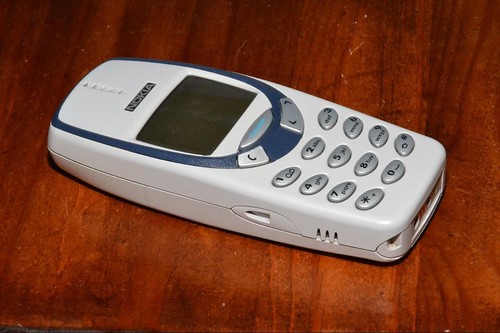
    TPU has a wide range of uses from high performing films to tough plastics, for instance the ‘indestructible’ Nokia 3310 phones had TPU moulded cases that would pop off to absorb some of the kinetic energy of a fall.

    Nokia
    Nokia 3310 by Thomas Kohler

    The caster wheels on your office chair will be predominantly TPU.

    What I’ve ended up with is a cover this is more form fitted to my keyboard than the silicone version, thinner and more transparent. It has all the original benefit of being able to be wiped clean and keeping debris away from my keyboard.

    It remains to be seen how hard wearing the keyboard cover will be.

    More about the original Mosiso silicon cover that I’ve been using here, and the TPU version that I am now using here.

    More on the Apple MacBook Pro keyboard here.

  • Podcasting + more things

    Listening in – Podcasting provides a space for free thought in China | China | The Economist – I suspect that podcasting will represent a new frontier in censorship for Chinese regulators. China has an eco-system that allows paid subscription via podcasting platforms for experts in different fields such as business or investing. More China-related content here.

    Mike Pompeo renews attack on HSBC as bank walks line between US and China | Financial Times – HSBC is about to get a lot of trouble coming its way. It has managed to make enemies of the Chinese government over Huawei, the US government over Hong Kong sanctions busting and the UK government over its support of the Hong Kong national security law. I don’t think that they will be able to wriggle out of the mess that they have got themselves into

    Chinese Diplomats Helped Military Scholars Visiting the U.S. Evade FBI Scrutiny, U.S. Says – WSJ – not terribly surprising

    Can virtual fit technology step up and replace fitting rooms? | Vogue Business – this could also accelerate the move to digital

    Alibaba wants American brands. The same ones as Amazon | Vogue Business – this could kill JD.com and Amazon China

    Rolls-Royce unveils “confident but quiet” rebrand by Pentagram – move away from skeuomorphic 3D branding lends itself better for apps online etc etc

    Are creatives better at creativity? | Contagious – While we’re always interested in the nature of creativity, it’s important to put experiments like these into perspective – there’s a lot more to being an agency creative than what was tested here. After all, being good at keep-ups doesn’t mean you can play professional football.

    Tech war chronicles: How a Silicon Valley chip pioneer landed in China  – Reuters – really interesting. MIPS, SPARC and RISC-V are arguably better architectures than ARM’s Core series of processors. MIPS has been ubiquitous in high performance computing to embedded electronics. It is very well understood, in terms of both design and writing software for it

    Wilderness of Mirrors – The Burning Shore – great meditation on the nature of conspiracy theories and culture

    KFC temporarily drops ‘finger lickin’ slogan in first global campaign – KFC believes its slogan is “inappropriate” at a time when hygiene is top of mind and so is dropping it temporarily, but is on the lookout for an interim replacement.

  • Facial recognition + more things

    This tool could protect your photos from facial recognition – TODAYonline – this kind of prevention of facial recognition from photographs is interesting. Presumably it can also be done to make sure facial recognition works for a ‘person’, even when their passport photo has subtle differences. This kind of facial recognition manipulation technology is probably something similar to what Mossad may have used in the killing of Mahmoud Al-Mabhouh in Dubai. Otherwise it would have lost the ‘effectiveness’ of 30-odd operatives. More on biometrics here.

    Waiting for Cyberpunk 2077? Here’s Cyberpunk 101 | Phoenix New Times – great list of material here

    Neal Stephenson Explains Silicon Valley’s Latest Obsession | Vanity Fair – interesting comments on the absorption of mobile devices, the way uncanny valley might have shifted and AR versus VR

    Brand Strategy 101 – Google Slides 

    Goldie is the latest contributor to the International Stüssy Tribe (IST) radio series. He has done two mixes, a light mix and a dark mix. This is the light mix.

    Chinese Hackers Have Pillaged Taiwan’s Semiconductor Industry | WIRED – interesting persistent hacking techniques. More on hacking here.

    Pepper robots can now call you out for not wearing a mask in public | Input Magazine – I love this

    The Truth Is Paywalled But The Lies Are Free ❧ Current Affairsthe New York Times, the New Yorker, the Washington Post, the New Republic, New York, Harper’s, the New York Review of Books, the Financial Times, and the London Times all have paywalls. Breitbart, Fox News, the Daily Wire, the Federalist, the Washington Examiner, InfoWars: free!

    Casual dining chains have ‘no future’, says former PizzaExpress entrepreneur | Financial Times Hugh Osmond, who with fellow entrepreneur Luke Johnson took PizzaExpress public and expanded the chain to more than 200 sites during the 1990s, said private equity firms buying casual dining businesses at risk of bankruptcy because of the Covid-19 crisis “fail to understand the business they are acquiring”. The model for midmarket branded restaurants was “absolutely broken”, he added, because of massive oversupply in the sector, high overhead costs and a decline in visitor numbers even before the pandemic.

  • Empathy delusion + more things

    Ian Murray of House 51 takes on some marketing sacred cows such as brand purpose in The Empathy Delusion. His presentation sets out to show how different marketing and agency folk are from the general public. Positive traits, like the gumption to move to London put a difference between them and the general public. This is just one aspect that Murray touches on when talking about The Empathy Delusion.

    I was recommended Economy Candy in New York. Their collection of vintage trading cards is a site to behold. The film tie-ins from Back To The Future and ET to Howard The Duck are tremendous.

    Local Hong Kong group StreetSignHK are featured on this video of the process that goes into saving Hong Kong’s neon signage. The biggest threat seems to be building regulation bureaucracy rather than technology.

    I loved the style of this 1980s vintage Mercedes sales training video, presumably for American dealerships.

    I was reminiscing about The Site. This used to run on CNBC Europe when I was in college and provided a window into the early net. Soledad O’Brien has gone on to produce documentaries. Leo Laporte who played the Dev Null* character is now better known for his technology podcasts. (Technically it should be /dev/null* for maximum geek humour.) The programme sat at a sweet spot. The web was small, but inaccessible to many of the viewers. AOL and CompuServe were just taking off. I had net access in college and used that to take a look at their online recommendations at the time.

    The Site pioneered virtual characters and offline integration of programming with its own site. Dev Null now has a kind of PlayStation 1 vibe to him. But this was all new stuff. Terminator 2 had been in the cinemas five years earlier and blow people away with its animation.

    The year after we had the virtual world of The Lawnmower man. Lawnmower Man brought to life the kind of virtual world on screen that had previously only existed in the works of authors like William Gibson and Vernor Vinge.

    Then in 1995, there was Hackers that tapped into gen-x youth culture (X-Games, Oakley T-wire glasses, the psychedelic side of rave culture) to create a connected world closer to our own now.

    This all explains the look and feel of The Site and its role in helping the general public to experience online. What I didn’t realise is that the show was run on one dial-up modem. This around about the time when I worked in my first agency with a 1MB T1 line – and that was hard enough. I am not sure how the programme researchers, broadcast production team and web producers managed on 1 dial-up line.

    More on online culture here.