Category: design | 設計 | 예술과 디자인 | デザイン

Design was something that was important to me from the start of this blog, over different incarnations of the blog, I featured interesting design related news. Design is defined as a plan or drawing produced to show the look and function or workings of a building, garment, interfaces or other object before it is made.

But none of the definition really talks about what design really is in the way that Dieter Rams principles of good design do. His principles are:

  1. It is innovative
  2. It makes a product useful
  3. It is aesthetic
  4. It makes a product understandable
  5. It is unobtrusive
  6. It is honest
  7. It is long-lasting
  8. It is thorough down to the last detail
  9. It is environmentally-friendly – it can and must maintain its contribution towards protecting and sustaining the environment.
  10. It is as little design as possible

Bitcoin isn’t long lasting as a network, which is why people found the need to fork the blockchain and build other cryptocurrencies.

Bitcoin uses 91 terawatts of energy annually or about the entire energy consumption of Finland.

The Bitcoin network relies on thousands of miners running energy intensive machines 24/7 to verify and add transactions to the blockchain. This system is known as “proof-of-work.” Bitcoin’s energy usage depends on how many miners are operating on its network at any given time. – So Bitcoin is environmentally unfriendly by design.

On the other hand, Apple products, which are often claimed to be also influenced by Dieter Rams also fail his principles. They aren’t necessarily environmentally friendly as some like AirPods are impossible to repair or recycle.

  • The Conveni & things from last week

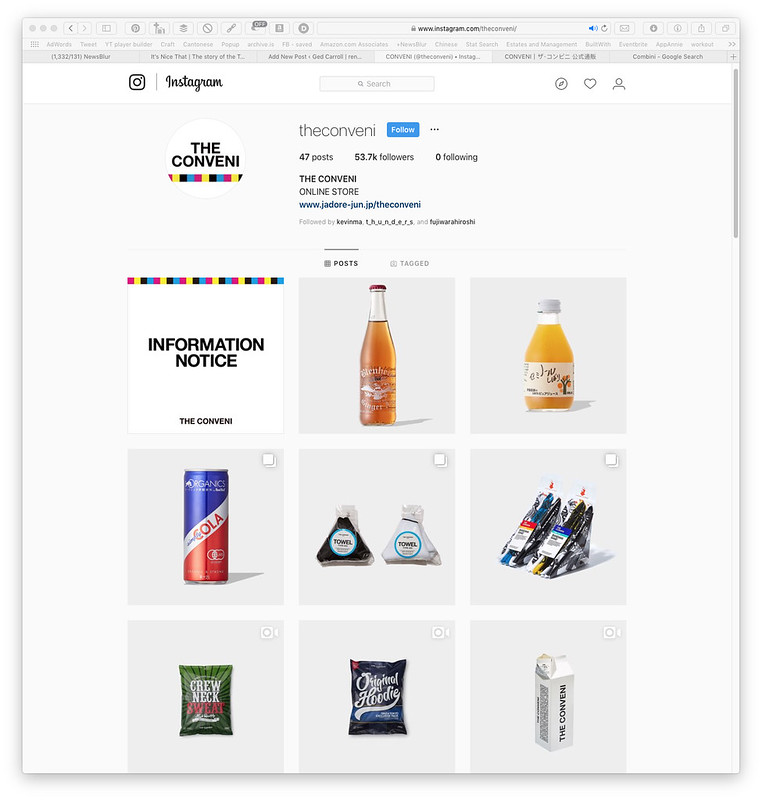
    The Conveni

    Its hard to understand The Conveni without understanding Japanese retail. In Japan, 24/7 convenience stores play a similar role to what supermarkets have in the west. They do groceries, allow utility and mobile payments and provide other services like faxing or photocopying. They offer free wi-fi and air conditioning in hot weather. There are an essential part of of Japanese life and there is a ‘combini-culture’ around them. Hiroshi Fujiwara’s Fragment Design has taken a good deal of influence from combini culture for ‘The Conveni’ retail concept. It includes processed food, bandanas in sandwich packs, towels packaged like onigiri rice balls and sweat shirts in snack packets.
    conveni

    If you can’t get to Tokyo, you can still look at their e-store.

    Michael Gove famously said that with regards to Brexit people were tired of experts. Obviously discussions between men in a pub is the antithesis of expert discussions. So here is a podcast with a couple of knowledgeable people in a pub

    https://youtu.be/Sx4AF-3Rd44

    https://youtu.be/sju9laLqeCo

    Lippincott were working on a Toys R Us rebrand that the company couldn’t implement. I don’t know if design could have saved Toys R Us, but the work is really nice.

    Aphex Twin launched a new EP; there were posters around the world and a fantastic video by Weirdcore. Warning the video will affect people with epilepsy

    Egyptian Lover picks his favourite Roland TR-808 songs – amazing listening. Some of this brought me back to my early teenage years.
  • The Internet of Stupid Things

    The internet of stupid things is a more charitable phrase for what many consumers call the Internet of Shit. Yes lots of products can be internet enabled, but should they be? There is a mix of challenges that result in products which fall into the following two categories:

    • Products that are internet enabled but shouldn’t be – the Happy Fork or the Griffin Smart Toaster being classic examples. I found the Griffin Smart Toaster particularly disappointing as the company’s products such as the PowerMate are generally really good. It doesn’t take the greatest imagination to see how a smart toaster could even be hacked; causing a fire – hence the internet of stupid things. Why do household appliances really need to be attached to technology. Teasmades woke you up and made a mug of tea for you to have first thing. This was a product that reached peak popularity in the 1960s and 1970s – well before cloud services.
    • Products that would be benefit from tech, but shouldn’t rely on the the cloud. I’d argue that Nest would fit in this category where cloud outages could have serious impacts on the consumer. American Nest customers have had some hard winter nights when their Nest control system went down due to cloud outages. There was no off-cloud or manual control mode that the Nest devices could take advantage of.

    It is interesting to see that Li & Fung (who are famous for global supply chain management provided to western brands and retailers) are involved in this video. It is also interesting that they are taking such a proactive view on experience design education.

    The qualitative design research Li & Fung did on skiing wearables for a client – made me wonder what value do Li & Fung’s clients bring to the table. More on design here.

  • Jane Pong & things from last week

    Check out these beautiful infographics by Jane Pong. She previously worked at the South China Morning Post. Jane Pong comes up with amazing ways to visualise information in an easy-to-digest format that works equally well in print and digital. More design related content here.

    How the ideogram structure and smartphones are affecting Chinese literacy. Chinese people learn thousands of characters as part of their literacy in their own language. But unlike alphabets in languages like English or Russian; you can’t guess at a lot of words. This is especially problematic because of the tonal nature of the languages as well.

    Electronic character input tries to get around this by suggesting characters based on pinyin or character auto-prediction. This means that if you haven’t written the character in a long time, due to auto suggestion in apps, they lose handwriting muscle memory.

    Trendwatching on the future of retail. What’s coming through this is the importance of retail in terms of culture and experience as well as consumption.

    Saul Bass on Why Man Creates via Jed Hallam’s newsletter. Bass made his reputation in developing branding design for US companies from the post war years, well into the 1980s. You might not know his name, but you will recognise his work.

    Movie posters for:

    • Vertigo
    • Psycho

    Movie title sequences for:

    • Broadcast News
    • Goodfellas
    • Cape Fear
    • Casino

    His logo designs include:

    • AT&T
    • Quaker Oats
    • United Airlines
    • Warner Communications
    • General Foods

    Saul Bass’ logo designs were seen as an unusually good investment for brands. The average life of a Saul Bass logo is more than 34 years. The logo was most often retired because the company was merged or disappeared. More here.

    Ogilvy Consulting on buyer behaviour

  • The Heat & more stuff

    The heat. At least in Hong Kong I lived with air conditioning, but there is no respite from the heat in London. In my area of London there hasn’t been much of a breeze either, the heat has been inescapable.  At least my music needed to be cool, and I reached back to nu-disco and space disco over the past few years. If there was one tune of the week it was this on

    Watch Kraftwerk Perform a Real-Time Duet with a German Astronaut Living on the International Space Station | Open Culture – literally out of this world. Kraftwerk pushing performance innovation after five decades.

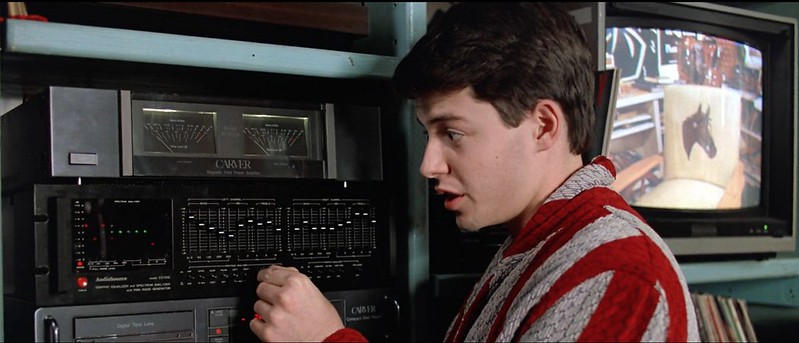
    Carver M-500t power amplifier at the top

    I still lust after Ferris Bueller’s Carver M-500t power amplifier (on the top in the screen shot above), E-mu Systems Emulator II sampler and his l33t maker skills. Check out this blog that collated all the immense taste that went into his bedroom design: TimLybarger.com: Ferris Bueller’s Bedroom

    Scooter is one of those guilty secrets with catchy melodies and nonsensical lyrics that confound comprehension for English speakers. It was unusual to hear ‘How Much Is The Fish ‘ played on the piano and its a pleasant surprise. Scheps is better known as a classical pianist in Germany and has brand sponsorship deals with Audi and Chopard – so a world away from the image of Scooter.

    Here is the original for comparison purposes….

    As a student of Silicon Valley history, I was aware of General Magic. It is now getting a well deserved documentary about it. General Magic tried to build the predecessor of the Palm PDA and modern smartphones, before the the internet wi-fi and very nascent cellular networks. I’d heard of some people using them as a desk phone replacement

    Here’s the trailer

    Here is the documentary’s website

    Here is a guide to their DataRover 840F. Check out the skeuomorphic interface that is reminiscent of Microsoft Bob. Stylistically the fonts, design details and Easter eggs reminded me of the early Macs that I used. This isn’t surprising as it was started by Mac veterans.  Why is General Magic important now? Like the later PayPal mafia the General Magic alumni have been all over Silicon Valley developing some the most successful products and services. More on technology here.

  • Kickstarter

    If you’re reading this blog, you will have heard of the crowdfunding platform Kickstarter. Kickstarter has become synonymous with crowdfunding and has become a verb. There are several crowd funding platforms out there including Indiegogo and China’s Demo Day but none seem to have caught the public imagination in the same way Kickstarter seems to have.

    Major companies like Sony have trialed offerings of products on crowdfunding platforms as a way of accessing market size and viability for new products. Bands from Public Enemy to unknown artists have financed their album recordings and production in a similar way

    Kickstarter failure rate

    I’ve personally subscribed to projects with very mixed results with Kickstarter projects that I have funded. My experience of my first couple of projects were very positive. My most recent experiences have been one of disappointment to the point that I no longer use it. They failed. There was production problems, the timelines over ran. And at least one of them looked as if they took the money and ran when the project seemed more difficult than they originally assessed it to be. 

    Therefore it was interesting to hear Kickstarter used in a different context, that reflects my experience with the platform.

    I like the Techmoan YouTube channel as a good deal of its content introduces retro technology, many of which is is equipment or media formats that I hadn’t come across previously.

    The channel host Mat used Kickstarter not as a brand, but as a verb to imply that a product was somehow inferior and lacking in quality. It has become synonymous with an amateurish effort. Just because technology and globalisation have democratised access to manufacturing; doesn’t necessarily mean better quality products. That can’t be good for the brand.

    This is on top of crowdfunding’s high degree of funding failures, product failures and increasing numbers of alleged fraud.