Finance is a really odd section for me to have. I don’t come from a finance background, I have no interest in fin-tech. Yet it makes its appearance here on this blog.
When thinking about this category, I decided to reflect on why its here. It’s usually where curated content sits, rather than my own ideas.
The reality of life in the west is that everything has become financialised. As I write this as people think about web 3.0, they are thinking about payment systems first and working about utility later. This implies that the open web we know won’t be part of the metaverse in terms of ideas or ethos.
Instead of economic growth consumer spending depends on different ways of creating credit. Its no accident that delayed payments finance company Klarna is the biggest thing in European e-commerce at the time of writing this page.
Back when I started writing we were heading into the financial crisis of 2008, the knock on effects of that could still be felt a dozen years later and was a contributing factor to Brexit and Trump victories. The ‘occupy’ movement was catalysed by the financial crisis and then turned into something else. For instance it became a pro-democracy movement in Hong Kong.
We had the implosion of financial brands like Lehman Brothers and the Royal Bank of Scotland. This created a lack of trust in business, the media and the government. We are still seeing that play out today, from cryptocurrency to conspiracy theories and a lack of trust by the public in experts.
MLM or multi-level marketing is where people who need to make money buy product from a company like Avon, Amway, Herbalife, Nu-Skin or Tupperware. Usually the franchisee doesn’t buy directly but through a contact. They may be a long way down in a chain of sellers, which means you end up with a pyramid scheme. Some have described the onboarding and seller communications as a cult. (Disclosure, I did a bit of agency work on Nu-Skin when I worked in Hong Kong, I got to see products, but not how they were sold).
Financial freedom
The real product of MLM seems to be hope. Discussing the downside of MLM at this time is important. Financial freedom is going to sound particularly appealing to struggling middle class households wrestling with the cost of living crisis and rising mortgage interest rates.
These videos by Sean Munger give a really good insight into Amway.
Ponzinomics
Robert Fitzpatrick’s self-published Ponzinomics seems to be the most cited book talking about the underbelly of MLM. Here’s an interview with him.
Soviet space programme
Enough time has gone buy for us to know how innovative the Soviet space programme was. Some of the innovations were dictated to them by limitations in production campacity. I came across these films about it.
And how Russian closed cycle rocket engines surprised NASA after the cold war.
I, Claudius
Robert Graves period drama novels I, Claudius and Claudius the God were remade in 1976 as a 13 part TV series. (The first two episodes are called 1a and 1b, presumably to avoid an episode 13, given that theatre as a whole is superstitious). In 1965, the BBC had done a documentary about the unfinished 1937 film version and had found bringing their version to television difficult due to production rights still tied into the 1937 production.
I, Claudius was considered to be a high water mark from point of view of audience viewership of more high brow material and latterly critics consider it to be one of the best TV programmes ever on British TV.
Hello Hong Kong
I received post from friends in Hong Kong and the package had a large sticker highlighting the Hello Hong Kong campaign which the government has been using to paper over the cracks left by its authoritarian pivot.
Hello Hong Kong mandatory sticker.
One part of me thought that ambient media such as the sticker might be a good side hustle for mail services everywhere. As I dug into it, I found out that the staff ‘had to’ put these stickers on the packaging and at least some of them were doing so reluctantly. At least some customers were reluctant for their packages to be ‘propaganda banners’ for the Beijing backed regime. Meanwhile 7/21 alleged government backed triad actions are still fresh in the mind of locals.
YKK
You don’t think about how YKK clothes zips work effortlessly, but this Asianometry documentary gives you insight into the Japanese zip manufacturer.
Starbucks Rewards as massive bank
I used to use the Starbucks pre-payment system back when I could use it in both the UK and Hong Kong, but a rupture came in when Starbucks removed its rewards scheme from stored value cards to an app. So I found this video by ColdFusion reframing the Rewards scheme as a large bank like pool of money more akin to PayPal’s float than Avios loyalty points.
Apollo project astronauts off the record
On everything from the context of Project Apollo through to their views on climate change.
Restaurant of mistaken orders
A Japanese pop-up retail project with restaurant servers who are suffering from dementia. I was sent the link by a friend of mine from Japan – the Restaurant of Mistaken Orders really brings the impact home.
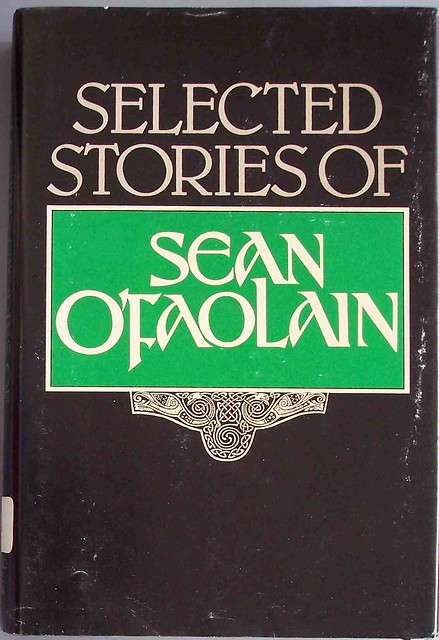
An interesting documentary from 1971 that explores the idea of ‘The Irish Race’ – it is one episode in a 10-part documentary series ‘We The Irish’. It features some of Ireland’s leading public thinkers at the time including Conor Cruise O’Brien and Seán Ó Faoláin. ‘Race’ as a term is more problematic now than back then as there were so few Irish people who weren’t white European looking as Ireland was a next exporter of people rather than welcoming inbound migrants until recent decades. Secondly, the Irish people were constantly having to establish their identity, culture, language and accomplishments in the shadow of their former colonial rulers.
Ó Faoláin an internationally famous short-story writer, a key part of the Irish arts establishment and a leading commentator and critic – a role played by the likes of Fintan O’Toole today.
The discussion about the Irish race was an essential part of decolonising the Irish identity; by emphasising Irish distinctiveness and salience rather than reinforcing racial superiority. A process that countries like Singapore and Malaysia would wrestle with in subsequent decades too.
Tracing The Irish Race
Ó Faoláin starts his discussion with the book Facts About Ireland that was published for over three decades by the Irish Government. The book itself is like a more in-depth version of the CIA World Fact Book profile on Ireland. It was available in souvenir shops up and down the country, my parents probably have my copy of the 1979 edition that I purchased from Salmon’s newsagent and post office in Portumna
O’Brien was part of the Irish elite. His father was a journalist for a Republican newspaper pre-independence and he married into the political establishment of the Irish Republic. But that shouldn’t take away from his achievements in the various facets of his career by turns was an Irish diplomat, politician, writer, historian and academic.
The series also marks a different kind of high brow factual television than we are used to seeing now.
The Case for a Hard Break With China | Foreign Affairs – U.S. theorists and policymakers ignored the potential risks of integration with an authoritarian peer. Globalization was predicated on liberal economic standards, democratic values, and U.S. cultural norms, all of which were taken for granted by economists and the foreign policy establishment – the arguments in the article are not new, what’s interesting is that they are being run in Foreign Affairs magazine and that should worry China
Tesla’s secret team to suppress thousands of driving range complaints | Reuters – Tesla years ago began exaggerating its vehicles’ potential driving distance – by rigging their range-estimating software. The company decided about a decade ago, for marketing purposes, to write algorithms for its range meter that would show drivers “rosy” projections for the distance it could travel on a full battery, according to a person familiar with an early design of the software for its in-dash readouts. Then, when the battery fell below 50% of its maximum charge, the algorithm would show drivers more realistic projections for their remaining driving range, this person said. To prevent drivers from getting stranded as their predicted range started declining more quickly, Teslas were designed with a “safety buffer,” allowing about 15 miles (24 km) of additional range even after the dash readout showed an empty battery, the source said – fundamentally dishonest
Six Bubble Tea Chains Plan IPOs in Bet on China Consumer Revival – Bloomberg – Firms with fast franchise growth not allowed to list onshore. Mixue, ChaBaiDao, GoodMe among firms weighing listings. Who is to say that these businesses won’t be like Luckin Coffee? If the Chinese government won’t allow them to list at home and they don’t want to list in Hong Kong, one has to wonder about the state of these businesses
A couple of things about this video. Major Australian TV network asked YouTuber ColdFusion to make this documentary. YouTubers are now competing against TV production houses for production briefs. Secondly, the video offers a positive take on how machine learning may impact healthcare.
JustoffJunction.co.uk – genius app for planning British motorway travel, the reason why you would care would be the inflated prices at motorway services stops
A story caught my eye in Hong Kong’s English language establishment paper related to Chinese bank risk. Goldman Sachs issued a report on (maybe) five Chinese banks, changing their ratings to neutral and sell. Eastmoney.com is a subsidiary of government newspaper People’s Daily, came out to stoutly defend the banks against concern about Chinese bank risk.
Ping An Bank and China Merchants Bank have the largest exposure to real estate, accounting for 8% and 6% of total assets which the report authors are flagging as a canary in the coal mine for Chinese bank risk
CMB real estate loans accounted for 5.61% of about of total loans and advances
Ping An Bank real estate-related business bearing credit risk totalled 322.093 billion yuan, also down from the end of the previous year, and if this is taken as the numerator and divided by its total assets of 5.456 trillion yuan, it yields a share of about 5.9% – interesting choice of wording
Overall, the non-performing rate of the mainland real estate industry is still in a period of accelerated exposure in 2022, and the overall non-performing rate of listed banks for public real estate continues to rise to over 4.3%
There was a reference to “Industrial Bank” that has “deteriorating assets and liabilities” – I think that this is Industrial and Commerce Bank of China better known as ICBC. ICBC is recognised as a systemically important bank
Systemically important bank means that Chinese bank risk becomes global economic risk. While it is state-owned (being one four original institutions that spun out of the Bank of China in 1979), it still exposes retail shareholders and bond holders around the world. Word on the grapevine is that a number of Goldman Sachs partners had long term holdings in ICBC for well over a decade, which explains the banks irrational exuberance for China AND means it would have been extremely hard for the analysts to name check ICBC in this kind of report. During the 2006 IPO, Goldman Sachs purchased a 5.75% stake for US$2.6 billion, this apparently was the largest sum Goldman Sachs has ever invested at the time.
ICBC. Foggy night. – QuantFoto released under a CC licence
Of course issuing this kind of report in China means that they can’t talk about associated Chinese bank risk. For instance:
Local governments depend on property development for their main source of revenue and have issued a lot of debt which they may now find harder to pay off resulting in further Chinese bank risk. Given that this is more directly linked to government, it may get less scrutiny
Finally China’s industrial and services economic growth seems to be an issue with youth unemployment running very high at 20%
Trying to get reliable economic data on China as the government data tends to ‘harmonised’. Part of the problem is the information that local governments provide the central government and part of it is central government choosing to ‘tell the best China story’.
Expect China to increase solar panel dumping due to massive over-capacity. In addition these panels seem to be of low quality with a lower than expected panel life. Given the challenges that the Chinese are experiencing recycling the materials, they represent an environmental problem with a substantial risk of pollution.
Beyond belt-tightening: How marketing can drive resiliency during uncertain times | McKinsey – interesting read that’s about 50 percent right, probably too much of a bottom funnel focus and a more critical consideration of the marketing technology stack McKinsey are about 50 percent right. One thing that they haven’t done is leverage the marketing science research supported by the Institute of Practitioners in Advertising on relative marketing spend and relative impact on market share. Also in-house agencies have serious problems due to cultural issues in clients.
The Eagles Announce ‘Final’ Tour Dates – Variety – following the lifecycle of their customer base. The Eagles attitude to covers, remixes and sampling always sat badly with me which is why I never bought any of their music new. I am sure this tour will keep them wealthy for the rest of their lives however
Interesting YouTube clip about how open source software is being used to extend the lives of Nissan Leaf electric cars. It raises interesting points for consideration about the right to repair debates that have been happening in areas like agricultural machinery through to Apple smartphones.
The devil is in the details of the claims and the research with regards ChatGPT driven trading. TL;DR ChatGPT didn’t trade any better and ChatGPT 4 did worse than earlier versions, implying random chance rather than ability
SCSI was a huge part of my early computer life. It was the way my Mac connected to external hard drives, printers, optical scanners and early optical drives.
Sun Microsystems computers used SCSI to and powered the dot com boom.
SCSI still lives on as a software layer in enterprise computer systems connecting storage together. It even exists within the USB mass storage device class.
SCSI is a reminder that technology is often build of layers of older technologies.
The slow death of downtown San Francisco | U.S. | EL PAÍS English – San Francisco’s problem is now as much reputational as it is economics now with the city labeled as being in a ‘doom loop’. Much of the blame seems to sit with the city administration under Mayor London Breed.
Great summary of the current state of rare earth metals processing. China appreciated the strategic nature of these materials before everyone else did and has been prepared to tolerate a high degrees of pollution in processing to build a monopoly.
Online
Skype was a thing in the early 2000s. I knew companies that used it in a similar way to FaceTime now. I used it for conference calls and video calls with friends around the world. I had completely forgot that eBay had bought Skype, I could only remember Silverlake acquired it and then sold it on to Microsoft.
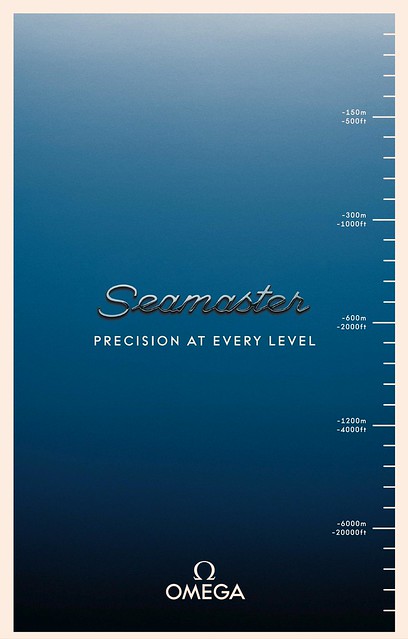
Plenty have already covered the OceanGate Titan implosion in more detail. I will not repeat that work but wanted to bring to wider attention how marketers have jumped on the bandwagon. The following advert appeared in the print edition of the Financial Times, placed by Omega watches promoting their Omega Seamaster Planet Ocean Ultra Deep series of watches.
‘Seamaster – Precision at every level’ next to a scale going beyond 6,000 metres.
Omega
I personally thought that the advert was too soon after the implosion for good taste. Although the watch community has seen a renewed interest in deep diving capable watches after the OceanGate Titan incident.
Young Japanese are craving fast fashion. What happened? | Vogue Business – it’s the economy stupid, luxury is less accessible. Secondly, much of the youth looks like Gyaru peaked in the early 2000s due to financial issues and things haven’t improved since. Shibuya subcultures were as dependent on the ability to spend as on youth creativity.