Over the space of 20 years, luxury changed enormously. The Japanese had been a set of new consumers for luxury, but in terms of numbers they hadn’t eclipsed the US as the biggest market for luxury.
China’s ascent into the WTO (World Trade Organisation) made a lot of business people and politicians a lot richer. China challenged the US in terms of luxury market size. On their rise, Chinese consumers changed a lot in their sophistication as they educated themselves on luxury consumption.
These new consumers picked up new traits such as wine drinking. This also meant that luxury goods became new asset classes as Chinese money looked to acquire only the best. Chinese culture in turn impacted luxury design. Chinese new year became more important than Christmas.
Then there was the second generation money. Young rather than old consumers. Consumers who were looking for something less formal, either because they didn’t wear anything but streetwear or they worked in the creative classes rather than the traditional professions and high finance.
The industry had traditionally avoided rap artists and R&B singers, now Jay Z and Beyonce are the face of Tiffanys and Fendi had collaborated with Rihanna.
They no longer wanted to have to wear a jacket and tie to have afternoon tea at the Mandarin. They took an eclectic look more attuned to the Buffalo Collective than Vogue Italia.
You had hybridisation with the street to create a new category of luxe streetwear in a way that also owes a debt to football casual terrace wear and the pain.
Now you have Zegna badge engineering approach shoes from alpine brand La Sportiva and Prada has done a similar thing with adidas’ iconic Stan Smith tennis shoes. Balenciaga with their Speed Sock looks like a mix between Nike’s flyknit football boots and the Nike Footscape sole.
Luxury has traditionally reflected status. Goods of a superior nature that the ‘wrong sort’ of people would never be able to afford. Luxury then became a symbol that you’d made it. In Asian markets, particularly China, luxury became a tool. People gifted luxury products to make relationships work better. It also signified that you are the kind of successful business person that partners could trust. You started to see factory managers with Gucci man bags and premium golfwear to signal their success. Then when the scions of these business people and figures in authority were adults, luxury has become about premium self expression.
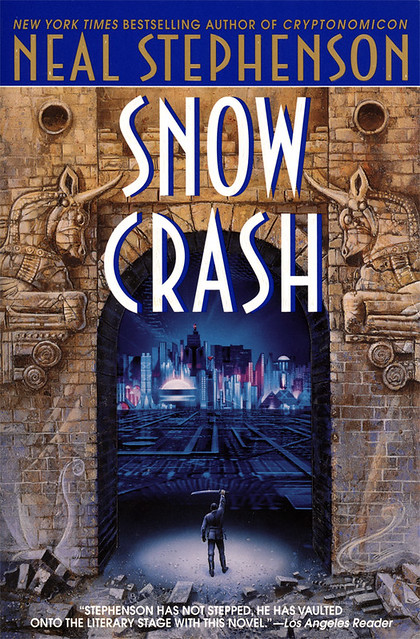
Hiro Protagonist is the main character of Neal Stephenson’s iconic novel Snow Crash. In the novel talks about the rise of the corporation to become a quasi-nation state, a winner takes all economy, a vision of a future metaverse, hacker culture and service hyper-competition with Uber-like employees.
Snow Crash by Neal Stephenson
Hiro Protagonist is a hacker who moonlights as a courier to make ends meet. The story starts with Hiro Protagonist trying to deliver a pizza at high speed. The idea is that the courier would deliver a pizza to any location, not just delivery to a building like getting pizza to work or home. Now we’re starting to see these kind of services being rolled out in real life, by building them into in-car systems and mapping applications. This will add more importance to dark kitchens over store fronts, but store fronts are important as they build brand experiences.
Quiller came out of the cold war. The Quiller series were written under the name Adam Hall by Elleston Trevor who had actually been born Trevor Dudley-Smith. Elleston Trevor like most of the other writers had either served in the second world war or in the national service afterwards. Quiller features in 19 novels written from the mid-1960s to the last one in the mid-1990s.
The books go into a lot of technical detail about spy craft. While he is a man of action, he doesn’t live the high life like James Bond, but has to worry about filing expenses and grim and grey atmosphere of London and Warsaw Pact countries. He has a nervous tick when under stress and has to deal with ‘office politics’ of difficult personalities.
Like Bond Quiller appeared on film, The Berlin Memorandum was re-made as the Quiller Memorandum. Quiller was also made into a TV series by the BBC in 1975 for one season. I knew nothing about it until YouTube.
Spy novel industry
There was a veritable industry of British spy writers. Ian Fleming had James Bond which has been continued like some bizarre literary science zombification experiment long after Fleming himself had died. Post-Fleming’s death there has been 32 new James Bond novels written.
Len Deighton had the unnamed protagonist of his first set of books (though they would be given the name Harry Palmer in the film adaptations):The IPCRESS File, Horse Under Water, Funeral in Berlin, An Expensive Place to Die, Spy Story, Yesterday’s Spy and Twinkle, Twinkle, Little Spy. As this wasn’t enough Deighton wrote ten books about the jaded intelligence protagonist Bernard Samson.
Anthony Price wrote 19 novels featuring Dr David Audley and, or Colonel Jack Butler.
All of these characters had more ‘derring do’ than John LeCarre‘s George Smiley. Deighton’s Bernard Samson’s character has the jaded aspect of Smiley. Anthony Price’s stories are best described as as somewhere between George Smiley and Robert Hannay with the past and ‘present’ woven together.
For the love of books
I picked up the bug of reading these books from my Dad. He used to go and buy these books along with Alistair McLean novels from a florid man in the local market. (Alistair McLean novels were basically the same book and same character with different names and locations).
My Dad left school at 13, he can’t spell but at that time he loved reading novels, engineering books and history. They were around the house at home, so usually after my Dad had read them, I started to read them myself. My childhood reading was a weird mix of ‘children’s books’, fantasy novels which were considered suitable for children (J.R.R. Tolkien and Ursula LeGuinn), spy novels, text books and classic science fiction. My Mum made sure that I had a smattering of Irish folklore books in the mix as well.
One person’s literature is another person’s trash
Nowadays, alongside the weighty tomes of James A. Michener, you would be hard pressed to get an Oxfam shop to take many of these books off your hands.
While Le Carre & Fleming have their dedicated followers, the Quiller books, Len Deighton and Anthony Price will be overlooked.
The war on terror didn’t fire the imagination in quite the same way, yet as we go into a new cold war we might see a renaissance in Quiller-type archetypes in escapist fiction of our current times. Mick Herron’s Slough House series ground us too much in reality sometimes.
Abbott curated this interesting discussion on sports health. In my lifetime we’ve gone from football coaches giving players Guinness to bulk them up to this detailed scientific approach which I previously would have only associated with serious bodybuilders like my college friend Carsten who looking for marginal advantages.
Hong Kong
Brain-drained HK workforce marks historic decline – Asia Times – a few things here. The Chinese visa applicants (less than 15,000) coming in won’t plug the gap: 95% of Hong Kong Talent Visa Approvals Are From China – Bloomberg. Though this might not cover mainland Chinese graduating from Hong Kong universities. Secondly, once growth takes off Hong Kong will lose its relative attractiveness for Chinese from an economic point of view. Secondly, the brain drain of teachers, medical staff, social workers and middle class professionals is starting to become significant from the Hong Kong government’s perspective; but a rounding error from Beijing’s viewpoint.
Japan
Repost: Weebs! – by Noah Smith – Noahpinion – While I was in Japan over the last two weeks, I asked some local startup founders, VCs, consultants, and random friends whether they had ever heard the word “weeb”. Not a single one had. I was pretty stunned, because Japanese cultural products have given rise to a whole worldwide subculture, and people in Japan itself are barely aware that that subculture even exists. It’s not like it’s a fringe thing, either — the latest volume of the anime Spy X Family was the bestselling book in North America this week, and soldiers at the front in Ukraine do Pikachu dances to relieve stress. Japan became a cultural superpower almost by accident – this was a new one on me. I thought otaku was still the label. NHK World on famous ‘Weeb’ Steve Jobs.
pearº – The World’s Biggest Social Experiment – Pear Ring – imagine if Match.com as well as extending into events for singles decided to allow people to have a badge that said ‘I’m single, date me’. That’s the premise of Pear, except that the badge is actually a ring that looks like fake jade…
Online bookseller Book Depository is closing down with some three weeks notice. It wasn’t a topic at work and barely made a ripple amongst British friends. The Hong Kong part of my social media bubble shared the news and were sad about it. The company had been owned by Amazon since 2011. I used it for a few reasons:
Free postage anywhere. I have friends around the world and Book Depository was a good way of sending a gift book. It made the process of international gifting so much easier. I bought a set of books there as recently as last week. Many of the upset people on social media were from Australasia, Latin America, Eastern Europe and Asia
Getting hold of English books when I lived in Hong Kong. At the time I lived in Hong Kong there were a couple of nice chains that did English language books, but if I wanted something for my professional life or esoteric interests, then online made more sense. Dymocks, Eslite and the various independent stores would only get you so far. For everything else Book Depository helped out. This was partly down to book shops being a ‘lifestyle’ in Hong Kong and other parts of Asia. They carefully curate fiction but aren’t necessarily like the university book shops I spent my teens and twenties in
Arbitrage. Despite being owned by Amazon, there were a number of items that I bought where there was a price difference between Book Depository and their parent company
You could find a particular edition or format, with Amazon it could be a bit of a lottery
It isn’t full of tat like Amazon. Amazon Marketplace has been both a blessing and a curse. Amazon hasn’t done a good enough job curating Marketplace. I found Marketplace useful at the beginning, rather like a fixed-price eBay. Now its a dystopian retail experience littered with a substantial minority of counterfeit products and sub-standard garbage
Their ask the author section provided some interesting reading.
The brand
I always had it in my mind as ‘The Book Depository’ rather than Book Depository. It’s always the way I discussed it with other people. I had to go back and edit stray ‘The’s that slipped into this post.
Book Depository home page
Diminished ambitions
Book Depository is being closed by Amazon as part of cost cutting across its book and device categories. There is a certain irony in Alexa being in full retreat just at the time when LLMs were about to turn up. Alexa skills are likely to get loss in the subsequent withdrawal and LLM expansion. Book Depository helped plug gaps on the map where Amazon didn’t have native businesses. The decline of Book Depository implies an upper limit to Amazon’s global retail expansion.
Beauty bots drive R&D at Unilever’s £68 million facility | Vogue Business – The world’s highest concentration of robots doing material chemistry can be found at Unilever’s lab in North West England. Vogue Business gets a behind-the-scenes peek at the facility, which develops innovative products for brands including Hourglass and Living Proof.
Is China’s New Rocket Really Coal Powered? Deep Space Updates – April 2nd – YouTube – yes kerosene made from the kind of coal hydrogenation process similar to what SASOL used in apartheid-era South Africa. The National Coal Board had a pilot plant doing something similar during the late 1980s at Point of Ayr under what was called a ‘coal liquefaction plant‘. I used to know a few of the guys that had worked there previously. The plant had a number of experienced oil refinery technicians on the staff when it was running. The site was subsequently taken over and was where BHP Petroleum built their sour gas facility and brought natural gas ashore from the Liverpool Bay oil and gas field in the early 1990s. It also probably tells you everything you need to know about China’s climate related decarbonisation goals.
How the new generation of weight-loss drugs work | The Economist – the potential benefits of such drugs go beyond their ability to promote weight loss in individuals. By showing that molecular mechanisms hinder people’s attempts to lose weight, they show that gluttony is not to blame when people remain obese. That should slowly help to eliminate the stigma. Both weight-loss surgery and drugs are useful tools in the fight against obesity. But by changing the conversation these new drugs may remind health-system leaders that they need to do much more to encourage healthy lifestyles.
Hong Kong
‘Fair price, fine quality’: Hong Kong fast-food chains become go-to place for mainland Chinese budget tours | South China Morning Post – Established eatery chain Café de Coral was among those capitalising on the trend as it offered advance bookings for the tour groups, which have increased after the city fully resumed cross-border travel with the mainland earlier in the year. A Post reporter at 11.45am on Monday observed two mainland tour groups of about 30 people each being guided from their coaches and taken to Grand Waterfront Plaza, a shopping centre in To Kwa Wan, where they dined at the site’s Café de Coral outlet.
Online trolls are taking a toll in China – BBC News – In collectivist cultures such as China, those perceived as going against the norm tend to be severely punished, experts say. What makes it worse, they add, is a pervasive culture of shame. “A strong sense of collectivism in China can mean that cyberbullying, when perpetrated as a symbolic act of violence or aggression towards another in a public setting, may lead to drastic measures, such as suicide, to escape that sense of humiliation,” says K Cohen Tan, a vice-provost at University of Nottingham Ningbo China
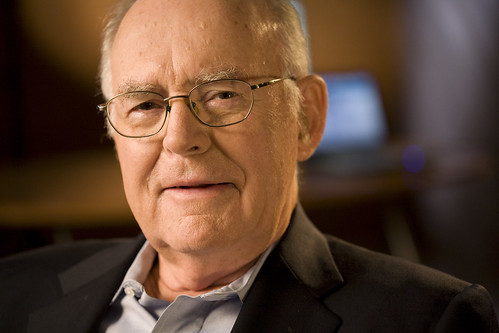
I was introduced to Gordon Moore and Moore’s Law through a college class on innovation taught by my friend Neil Keegan. I have also just read Michael Malone’s The Big Score; an account written in the early 1980s that Gordon Moore featured in as one of the co-founders of Intel.
Gordon Moore taken for an OnInnovation interview he was doing circa 2008 for the Henry Ford Museum of American Innovation
Gordon Moore was a San Franciscan by birth but educated at John Hopkins University, rather than Stanford University. He worked at Shockley and at Fairchild Semiconductor prior to co-founding Intel. In many respects Gordon Moore was more low-key than other Intel founders like Bob Noyce or Andy Grove – but the ideas behind Moore’s Law echoed around the world. The law has been interpreted and misinterpreted by technologists, economists, journalists and policy makers the world over.
Moore’s Law
Gordon Moore made an observation that was published in 1965 and became an immutable forecast for the rest of the 20th century that would guide the direction of the semiconductor industry and every industry that relied upon it.
It started off with an article that Gordon Moore had published in Electronics magazine on April 19, 1965. He observed that the number of transistors were doubling every year over a 10-year period. This relationship was widely known by people working in the field. But the semiconductor field was a small community and the name Moore’s Law eventually stuck.
The complexity for minimum component costs has increased at a rate of roughly a factor of two per year. Certainly over the short term this rate can be expected to continue, if not to increase. Over the longer term, the rate of increase is a bit more uncertain, although there is no reason to believe it will not remain nearly constant for at least 10 years.
Once, that had been proven correct in 1975, Gordon Moore went on to revise his model to assume a similar effect very two years. This was presented in a speech at the IEEE International Electron Devices Meeting that year.
All of this meant that technologists like those at the Computer Science Lab at Xerox PARC could spend large amounts of money building foundational technologies and know that the ability to commercially produce these items would catch up ten years hence. Robert X. Cringely posits that much of the dot com bust was down to an industry getting too ahead of itself in terms of what it estimated Moore’s Law could achieve in the mid-to-late 1990s.
Integrated circuits started finding their way into everyday products and facilitating new product categories such as laptops, smartphones and the modern web.
China detains staff, raids office of US due diligence firm Mintz Group | Reuters – “Red alerts should be going off in all boardrooms right now about risks in China,” the source, who did not wish to be identified due to the sensitive nature of the matter, said. China has said it welcomes foreign trade and investment but stressed that security comes before development. U.S. businesses operating in China are increasingly pessimistic about their prospects in the world’s second-largest economy, according to a survey released this month by the American Chamber of Commerce in China. Two-thirds of the respondents cited rising U.S.-China tensions as the top business challenge. Western due diligence companies have got into trouble with Chinese authorities before. British corporate investigator Peter Humphrey and his American wife Yu Yingzeng, who ran risk consultancy ChinaWhys, were detained in 2013 following work they did for British pharmaceuticals group GSK. Humphrey, who spent two years in jail for allegedly acquiring personal information by illegal means, which he denied, told Reuters that providing due diligence in China was even harder now because of a “massive tightening in access to information.” – Ok a bit of context. If Gordon Moore hadn’t died this post would have been Mintz Group + more things – this is how big this is. The Mintz Group is a respected due diligence research company. If you are looking to:
Buy a business and want to know if its real, or what the states of the assets are
Want to ensure that you are not doing business with legally sanctioned entities
If you are a finance firm and want to ensure that the people you are considering to invest in are who they say they are and the business actually exists and works in the way they claim
If you are trying to find out if your supplier is conducting themselves in an honest manner with you
The more opaque China becomes, the less tenable it becomes to conduct work there, do business with Chinese companies or invest in Chinese companies and the Chinese economy. The timing is less likely to be intentionally symbolic than happenstance, but either way it isn’t good news.
Apple ‘Porn’ Filter | Techrights – a disturbing development that opens a Pandora’s box of possible censorship and authoritarian measures in the wrong hands – which its likely to fall given the global ubquity of Apple’s technology
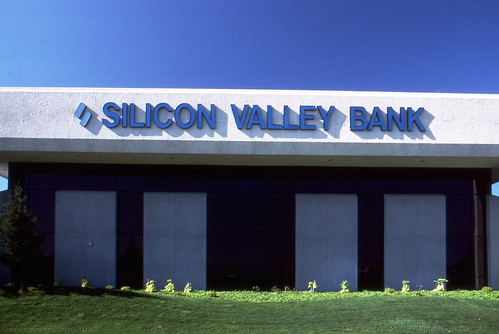
Silicon Valley Bank funded this documentary about their history from their founding in 1983 to 2003. It’s now preserved by the Computer History Museum in Mountain View – one of the towns that make up Silicon Valley.
Bloomberg have done a programme explaining about what happened with Silicon Valley Bank and how it went under so quickly. Silicon Valley Bank had problems due to raising interest rates, issues with their risk management and an abnormally high amount of customers withdrawing funds. However there was also an issue about the way Silicon Valley Bank communicated with the market, which in turn created a crisis in depositor confidence.
Health
Alphabet’s keynote and plans for the health industries. Usual nod to privacy (hahahaha), cloud computing, consumer devices and AI.
Chinese tourists unwilling to pay extra for sustainable travel options even as concern about climate change on the rise, McKinsey and Trip.com report says | South China Morning Post – Chinese travellers are increasingly concerned about climate change and are aware of their environmental footprint, but are still not ready to pay extra for sustainable travel, according to a recent report by consulting firm McKinsey & Company and Chinese travel services provider Trip.com Group. Data from McKinsey, which surveyed a total of 5,457 respondents from 13 countries including China, the United States, India and Saudi Arabia, showed that more than 60 per cent of Chinese travellers were worried about climate change and believed that commercial aviation should become carbon neutral in the future, putting China near the top among the countries surveyed. A separate survey conducted by Trip.com last year showed that almost 85 per cent of Chinese travellers rated sustainable travel as important or very important. However, compared to travellers from other countries, Chinese tourists are reluctant to pay a premium for sustainable travel. Only 20 per cent of surveyed Chinese tourists said they would pay 2 per cent extra for carbon-neutral airline tickets, ranking near the bottom among the countries surveyed – well what would you expect when you have been repeatedly told by your government and media that the west and the United States is to blame for it all anyway? Secondly, civil society like Greenpeace or the Sierra Club can’t operate in China which will also affect awareness
More on the serious issue of violent crime for luxury watches in London. I wrote recently about the ‘London Watch‘ where watch wearers have an empty wrist when going around central London. This is going to negatively impact everything from luxury sales to hospitality and tourism in the UK at a time when the economy can ill-afford to turn down business.