Over the space of 20 years, luxury changed enormously. The Japanese had been a set of new consumers for luxury, but in terms of numbers they hadn’t eclipsed the US as the biggest market for luxury.
China’s ascent into the WTO (World Trade Organisation) made a lot of business people and politicians a lot richer. China challenged the US in terms of luxury market size. On their rise, Chinese consumers changed a lot in their sophistication as they educated themselves on luxury consumption.
These new consumers picked up new traits such as wine drinking. This also meant that luxury goods became new asset classes as Chinese money looked to acquire only the best. Chinese culture in turn impacted luxury design. Chinese new year became more important than Christmas.
Then there was the second generation money. Young rather than old consumers. Consumers who were looking for something less formal, either because they didn’t wear anything but streetwear or they worked in the creative classes rather than the traditional professions and high finance.
The industry had traditionally avoided rap artists and R&B singers, now Jay Z and Beyonce are the face of Tiffanys and Fendi had collaborated with Rihanna.
They no longer wanted to have to wear a jacket and tie to have afternoon tea at the Mandarin. They took an eclectic look more attuned to the Buffalo Collective than Vogue Italia.
You had hybridisation with the street to create a new category of luxe streetwear in a way that also owes a debt to football casual terrace wear and the pain.
Now you have Zegna badge engineering approach shoes from alpine brand La Sportiva and Prada has done a similar thing with adidas’ iconic Stan Smith tennis shoes. Balenciaga with their Speed Sock looks like a mix between Nike’s flyknit football boots and the Nike Footscape sole.
Luxury has traditionally reflected status. Goods of a superior nature that the ‘wrong sort’ of people would never be able to afford. Luxury then became a symbol that you’d made it. In Asian markets, particularly China, luxury became a tool. People gifted luxury products to make relationships work better. It also signified that you are the kind of successful business person that partners could trust. You started to see factory managers with Gucci man bags and premium golfwear to signal their success. Then when the scions of these business people and figures in authority were adults, luxury has become about premium self expression.
Suzume no Tojimari is the latest anime from Makoto Shinkai. Suzume no Tojimari seems to share the same universe as some of Shinkai-san’s other films: Your Name and Weathering with You. Suzume no Tojimari goes from a rural town in the South, through the modern ruins that punctuate modern Japan.
Everyday footage of Japan in the 1990s
One of the great things about Japan being at the forefront of high-definition video standards is that you get a good deal of high quality footage of what everyday looked like in the 1980s and 1990s covering the bubble era and the immediate aftermath.
This seems to be footage for a demonstration recording, that I presume was commissioned by Sony. (Mainly because none of the other consumer electronics manufacturers would feature the Sony buildings front and centre in the footage of the opening shot). I suspect that the shots might be relatively short due to storage considerations on the cameras being used.
By contrast, here is a modern constant stream of street life in present day Tokyo, Japan.
https://youtu.be/S_bxc_AFUZU
Original jungle samples
I have been fascinated by the YouTube channel original jungle samples for a while. They track down the constituent samples that made up many drum and bass tracks, putting the original sources up against their use so you can see how they were transformed. This one profiling M-Beat is a great example of the work that they do.
Obesity science
BBC’s current affairs programme Panorama scratched the surface on the public health challenge of obesity. I know a fair bit about the subject area as I have been working on a global launch for Novo Nordisk’s obesity franchise. What quickly becomes apparent from the programme is the misalignment between scientific understanding of obesity as a complex chronic condition, current treatment techniques and government policy.
Song Lim Shoemaking
I am a big fan of videos that show how something is made. This is a video of how hiking boots are made as a bespoke process by Song Lim Shoemaking.
Creativity. Its what makes us
I am a big fan of going to see exhibitions and museums. It refreshes me and helps me have a clean slate in terms of thinking. It is interesting to see the V&A lean into this with a two minute film to get creatives back into museum visits.
Steroids as a popular drug
Vice digs into why steroids has become popular. It comes back to visions of modern masculinity and self image. Maybe because I came up in Liverpool during the late 1980s and early 1990s steroids were a common thing back then, rather than the more recent development that Vice seems to think that it is.
Will supply chain technology facilitate problematic global supply chain management?
Investors Are Piling Into Supply-Chain Technology – WSJ – Newly minted unicorns, or companies that exceed $1 billion valuations, in the logistics sector in 2021 include e-commerce fulfillment specialist ShipBob Inc., digital warehouse and distribution provider Stord Inc. and Flock Freight, a platform that matches shipper loads to trucks and is backed by a venture arm of Japan-based conglomerate SoftBank Group Corp. Backers including big investment funds are pumping money into logistics technology at a rapid pace, driving up valuations for digital-focused ventures across freight, delivery and warehousing. The influx of cash is giving startups in a once-overlooked sector expanded access to capital to build out their businesses, particularly for the top companies that have already developed their core products, according to venture-capital executives who focus on logistics and supply chains. Supply-chain technology startups raised $24.3 billion in venture funding in the first three quarters of 2021, 58% more than the full-year total for 2020, according to analytics firm PitchBook Data Inc. Besides venture-capital firms, backers included global investment managers like Tiger Global Management LLC and Coatue Management LLC and the venture arms of large corporations such as shipping giant A.P. Moller-Maersk A/S and Koch Industries Inc. And then you have Venture capitalists chase industrial tech start-ups as supply shocks widen | CNBC – this reminds me of the B2B dot com frenzy around companies like GoIndustry, i2 Technologies and JDA Software / Blue Yonder.
Supply chain technology underpins supply chain management (SCM). SCM as a term sprang out of management consultancy Booz Allen Hamilton in 1982. But the originals of supply chain technology go back much further. Railway companies were experimenting with barcode type readers with British Rail having a system that read the codes on trains passing at 100mph error free. This system was eventually shut down when British Rail was privatised. In the US they were using KarTrak in the late 1960s, but that was later abandoned. The codes were incorporated into the computer software used to schedule freight rail transport. Shipping containers sprung out of work done for the US military and were proved successful in Korea. The standards for the ‘intermodal’ container where hammered out from 1968 through 1972 covering everything from the containers themselves to safe handling. So you had a standard box and a method of tracking it, which is at the core of supply chain technology.
Containers did a number of things:
It helped prevent ‘shrinkage’. Seiko no longer had to worry about shrinkage due to dockers kicking in the corner of a crate to steal a watch or ten and sell them down the pub.
It encouraged automation of docks and handling, reducing the amount of unskilled labour required
Simplified freight forwarding and handling through standardisation
Facilitated easier global supply chains. Goodyear would know how many tractor tyres it could fit in a 40 foot trailer and ship from Singapore. The ports of Singapore and Hong Kong managed to parlay their use of logistics management software to move containers faster, which proved to be a competitive advantage for a number of years, even after Hong Kong deindustrialised with the mainland opening up
Once logistics management was in place, attention could be turned to sourcing, procurement and the integration of enterprise resource planning to provide an end-to-end picture through supply chain technology. The Japanese developed a lot of management practices designed to master supply chain management and these practices drove a wider demand for supply chain technology.
Packet network infrastructure provided a way to connect systems from channel partners, intermediaries and third party suppliers with a company through a standard interface for supply chain technology to work. What is called EDI or electronic data interchange. The rise of the web made it even easier which is why you had a plethora of supply chain technology companies to simplified the process of EDI. They democratised supply chain technology.
It also allowed retailers like Tesco to use supply chain technology to become vertically integrated from upstream suppliers and downstream customers.
Divergent views on China’s investment landscape | Financial Times – JPMorgan last month called China’s internet sector, once an engine of growth, “uninvestable”. Many big investors have headed for the exits. This week we revealed that Weijian Shan, the chair of PAG, a $50bn fund and one of Asia’s biggest investors, has diversified away from China.
The age taboo in workplaces means we miss out on talent | Financial Times – Research by two Harvard psychologists, Tessa Charlesworth and Mahzarin Banaji, suggests that negative stereotypes of ageing are actually more persistent than those about race and gender. Drawing on data from more than 4mn tests of conscious and unconscious bias, they have found that attitudes to sexual orientation, race and skin tone have improved during the past decade, compared to stubborn biases about age and disability, and increasing negativity about people who are overweight. Charlesworth and Banaji predict that anti-gay bias could reach “neutrality” in 20 years’ time, but that on current trends it will take 150 years for the same to happen to ageism. The raw reality is that older workers tend to be more expensive than younger ones, and are more vulnerable to cuts to middle management. But it may be a false economy to lower initial salary costs by hiring the young, if familiarity with procedures and teamwork are lost
FMCG
Investigating the Pink Tax: Evidence Against a Systematic Price Premium for Women in CPG by Sarah Moshary, Anna Tuchman, Natasha Bhatia :: SSRN – We find that women’s products are more expensive in some categories (e.g., deodorant) but less expensive in others (e.g., razors). Further, in an apples-to-apples comparison of women’s and men’s products with similar ingredients, the women’s variant is less expensive in three out of five categories. Our results call into question the need for and efficacy of recently proposed and enacted legislation mandating price parity across gendered products. – so there is actually a ‘blue tax’ rather than a pink tax
British Historian Antony Beevor: “Putin Wants to Be Feared – Like Stalin and Hitler” – DER SPIEGEL – the liberal West is now facing a decline, and even possibly a collapse, in confidence in parliamentary democracy. The heroic resistance of Ukraine is perhaps the only hope that we will recognize in time the dangers of the general slide towards authoritarianism in an increasingly Manichaean world – that is to say, a new dualism of two power blocs confronting each other: one with a free and liberal stance, and one without.
The cognitive dissonance of corporate life | Financial Times – employers’ efforts to drag people back into the office by offering them “perks” from free snacks to company swag. One particularly eager (and rich) organisation offered workers who were willing to trek back in the chance to win a Tesla. But Spiers, like me, isn’t biting. “I’ve come to think of these corporate toys and rewards as the work equivalent of the cheap prizes you win at a carnival after emptying your wallet to play the games,” she writes. “The difference is that the point of the carnival is to have fun and the prizes are incidental. In the workplace, this is just a laughably terrible trade-off. Who wants to give up the two hours a day they gain by not commuting for a free coffee mug? – interesting challenge that probably only a recession will right
Indonesia’s new law removes redtapes for foreign investors | DigiTimes – With abundant natural resources and young labor, Indonesia attracts – and needs – more foreign investment. The three largest foreign investors in Indonesia are Singapore, China (including Hong Kong), and Japan. Data provided by Indonesia’s Ministry of Investment (BKPM) showed that in the first three quarters of 2021, Singapore accounted for 32% of the total foreign investment, Hong Kong 13.8%, China 10%, and Japan 7.7%. – its also a great option for the move away from Chinese manufacturing
Crypto crackdown stifles China’s ability to offshore cash | Financial Times – With the government applying more scrutiny to digital asset transactions, one of the oldest and most conventional methods to bypass capital controls is gaining popularity: the luxury collectible trade. While it’s difficult to bring suitcases filled with cash through customs, a Tang dynasty-era vase or a couple of Patek Philippe watches can easily pass as personal belongings. Rich buyers can purchase them in China and resell outside the country. Indeed, demand for designer time pieces is taking off, high-end watch sellers in China told the FT. One wealthy Chinese heir also told the FT about another existing loophole, in which Chinese developers building condo projects in Thailand or Malaysia market them at home, and accept renminbi. Once properties are purchased, they can be sold locally into currencies that can be more easily exchanged into dollars – this probably explains why auction houses Sotheby’s and Phillips have expanded their Hong Kong operations
RupertMurdoch’s Sky realised that you could buy football rights for far more than anyone had ever thought of paying before, and you could make your money back by selling the games on subscription instead of pay-per-view or advertising, and you would be able to deliver that subscription using encrypted satellite channels. This was a big deal, both for Sky and for the UK Premiership league, and it was the beginning of something much bigger.
Skyused technology as a crowbar to build a new TV business. Everything about how it executed that technology had to be good, and by and large it was. The box was good, the UI was good, the truck-rolls were good, and the customer service and experience were good. Unlike American cable subscribers, Sky subscribers in the UK are generally pretty happy with the tech. The tech has to be good – but, it’s still all about the TV. If Sky had been showing reruns of MASH and I Love Lucy no-one would have signed up. Sky used tech as a crowbar, and the crowbar had to be good, but it’s actually a TV company.
I look at Netflix in very much the same way today. Netflix realised that you could spend far more moneyon far more hours of scripted drama than anyone had ever spent before, and you could (hopefully) make your money back by selling it on subscription directly to consumers instead of going through aggregators, using a new technology, broadband internet, that both gave you that access and made it possible for people to browse that vast selection of shows – and this: Ads are coming to Netflix: What do top media buyers and analysts think? – It’s plausible that Netflix will play a key role in driving the roll out of hybrid AVOD/SVOD around the world. Today, such models are mostly found in the U.S. and in Asia, but should Netflix add this on a global basis, it could be the next big thing. It’d force others to move beyond pure paid-for streaming models. I’ve long argued that it is unsustainable to expect customers to buy more than five SVOD services — so hybrid models are part of the solution as it eases the pressure on consumerwallets.
Ad agencies have persistently asked Netflix over the last few years to start running ads on the service. But they’ve been firmly against this until now. However, as Netflix management said on the investor call, what has changed is that this is a proven model that works: Hulu, HBO Max and Disney+ are doing it, so ofcourse
Singaporeans must benefit’: expats fleeing Hong Kong meet rising resentment | Financial Times – Chia is not alone in holding anti-expat beliefs. Over the past decade, perceptions that international employers have discriminated against locals have placed increasing pressure on the government to clamp down on immigration. While some anger has been directed towards manual labourers from elsewhere in Asia, Singaporeans are also frustrated by the significant proportion of westerners that make up the city’s elite workforce. After the recession triggered by the coronavirus pandemic refocused attention on employment and inequality in Singapore, the discontent has intensified. Experts warned that an influx of white-collar staff from Hong Kong risked deepening tensions, complicating Singapore’s bid to attract foreign money and talent. – Singapore’s answer to populism?
The military race for low Earth orbit satellites – and why China is behind | South China Morning Post – LEO satellite broadband projects going on in addition to Elon Musk’s StarLink – In Europe, Germany-based Airbus Defence and Space has teamed up with satellite internet firm OneWeb to provide services to the military. Canadian firm Telesat, partly funded by Ottawa, is eyeing the US Defence Department as a customer for its global LEO internet service, which is expected to start in 2024. Amazon’s Kuiper project also has been approved to launch 3,236 satellites but has been tight-lipped on its plans in the defence market. In China, LEO satellite internet is a fledgling industry working to connect remote parts of China and countries involved in the Belt and Road Initiative. GalaxySpace, a private start-up in a field of state-owned giants, launched China’s first LEO broadband constellation comprising six satellites in March. But state media reports have described them as commercial and made no reference to military services. Separate state-owned enterprises also launched test satellites for the Hongyun and Hongyan LEO broadband projects in 2018 but little has been said publicly about them since. Another state-owned company, China Satellite Network Group, aims to create a Chinese version of Starlink but was only formed last year
Naked power politics is a challenge to the post cold war consensus. Russia’s invasion in Ukraine, like Ethiopia’s invasion of Tigray are two examples of naked power politics in action. Russia’s naked power politics approach isn’t new and was something that the Financial Times and others had been talking about for at least a decade and certainly since the invasion of Crimea.
In the case of Russia, uniting the west and drawing both Finland and Sweden into NATO shows that naked power politics can be counter-productive. Ethiopia seems to have fought itself to a stalemate after invading Tigray and then getting beaten back to Addis Ababa. Only close air support using drone from gulf states helped stave off a military collapse.
But naked power politics is also playing out in the uneven relationship between China and the European Union; despite the EU’s market power.
Even more so we can see naked power politics in China’s approach to Australia through trade.
Is Marcus Rashford working class? The answer depends on your age – New Statesman – “Younger people appear to identify membership of the upper class with power and social impact,” he said. “This reflects the social media which prioritises celebrity coverage by attention capital, rather than accent, schooling or parental occupation.” The findings also suggest that “class hierarchy is perceived by young people in the present tense, ie, the media and social media time that people have now: the more media time, the higher the class position,” Rojek added. “The historical relationship of class to ancestry may be waning. A ‘now perspective’, based in power, social impact and online recognisability, seems to be growing in importance.” This trend has been a long time in the making, he observed. “For many years, it has been evident to me that for most of my students ‘social media’ is ‘society’, ie, a source of belonging, community, identity and aspiration.” – this might be age related rather than cohort related
When Saying Gay Isn’t Good Enough | Adweek – The Walt Disney Company has been singled out by Florida Gov. Ron DeSantis for its opposition to Florida’s House Bill 1557, the so-called “Don’t Say Gay” bill. Recently signed into law, the measure prohibits discussion of sexual orientation and gender identity from kindergarten through third grade. The governor has vowed to revisit—and possibly rescind—Disney’s privileges and autonomy in the state. But even LGBTQ allies and activists haven’t been happy with how the entertainment giant has handled anti-LGBTQ legislation in Florida. – which brings the question of what is the role of brands in societal norming?
Xi Focus: Xi orders building world-leading spacecraft launch site-Xinhua – “Xi noted that Wenchang is the launch site of China’s new-generation high thrust carrier rockets and the bridgehead of the country’s deep space exploration. The launch site should continue to eye the frontier of global space development and the major strategic needs of China’s space industry, and comprehensively improve its modern space launch capabilities, said Xi. China is scheduled to complete the construction of its space station this year. Tianzhou-4 and Tianzhou-5 cargo crafts, as well as Wentian and Mengtian lab modules will be launched from Wenchang. Xi said the launch site should make meticulous efforts to ensure the missions’ full success.”
Old Enough: Netflix show sparks global debate on parenting and child safety | Sora News – its interesting because it shows how much of a high trust society Japan is versus the rest of the world and how far we have moved away from the ‘latch key‘ generations in the west that allowed women to go out to work. Although my Mum was a homemaker, I was still expected to look after myself if she had to go out or was visiting a friend. As an only child I was very comfortable in this trust being put in me. It was also the same for many of my school friends. The show is unbelievably cute. Read the explanation of Japanese culture on children before watching the hyper judgemental TV segment below.
The Death of Streetwear Culture is a Class Issue | High Sobriety – in its ‘80s and ‘90s heyday, by and large streetwear culture was driven by the kids from low-income neighborhoods in major American cities. The very term “streetwear” bears that notion—it’s a style born in the streets, in schoolyards, on handball and basketball courts, and on brownstone stoops. More often than not, streetwear heroes—athletes and rappers—came from the working class
Warner Bros. censors gay dialogue in Harry Potter movie for China release – CNN – the irony of this is that the Chinese internet is filled with homoerotic and even a lot of graphic homosexual content based around fan fiction from Sherlock to Harry Potter and even adaptions of Chinese literary classics where sword play takes on a vastly different meaning
In honor of Ramadan, meals appear on Tesco billboards after sunset – To mark the month of Ramadan — when Muslims refrain from eating and drinking between dawn and dusk — British supermarket Tesco turned to dynamic billboards. During the day, screens show four hands and a large number of empty plates and platters. Once the sun sets, food appears on the plates, just as Muslims start breaking their fast with an iftar meal. – nice bit of work by BBH that takes advantage of dynamic digital out of home advertising technology
REWE’s unmanned mini-marts bring daily groceries to rural Germany – German retail giant REWE is launching a new concept: nahkauf BOX. Operating under REWE’s nahkauf brand of neighborhood stores, nahkauf BOX is an unmanned, standalone convenience store that’s open 24/7. – this is similar to China’s automated convenience stores, but interesting that its aimed at rural villages lacking stores. I could see this shaking up rural Ireland as well
Security
Pentagon to meet top arms makers to discuss stepping up aid to Ukraine | Financial Times – fascinating detail from this. Ukraine has already had four years production worth of Javelin missiles or about a third of the US stocks. They had sent a quarter of their stock of Stinger missiles or about five years worth of production. The challenge will be scaling component manufacture, supply chain and system assembly
The Electronic Sheep Company was one of the startups that came and went during the last ‘metaverse boom’ or what was then called ‘virtual worlds’ back in the mid-2000s and early 2010s epitomised by Second Life.
I am a sucker for a manufacturing assembly process video. Over time I have shared videos showcasing Nokia’s largely automated smartphone manufacturing lines that they had before the Microsoft disaster and old time metalworking archive footage as assembly process videos. So I had to share this timelapse assembly process video for the Porsche 911 GT3. This Porsche 911 GT3 I am reliably informed is the car that petrolheads most want to own out of the 911 range due to it being available with a manual gearbox. It is almost as fast as the top of the range 911 Turbo S, has worse fuel economy and emissions.
Around the 23 second mark you can see the start of the chassis assembly using a manufacturing cell of four robotic assembly arms. Then an assembled floor pan is placed into a jig for welding to begin. The jig fits upside down to allow welding on both sides of the car. What’s less clear if these are seam or spot welds. In the assembly process video we can see the modular nature of the manufacturing line that would allow it to be restructured relatively easy to match different production requirements. The classic give away is modular protective partition walling around the robots.
A good deal of the movement that the robot arms are doing is checking and measuring the existing parts before additional assembly happens. At 50 seconds in the assembly process video, the car starts to look like a Porsche as the floorpan and front chassis are connected to the roof and rear quarter chassis. You can see only spot welds happening at this stage. It was interesting to see the doors go on before painting. Just before the first minute in the assembly process video we start to see the first human welders doing hard to get joints on the interior front bulkheads and where the roof pillars join the body. The door set up is resolved before the front wings are fitted to the car.
The whole front end of the chassis isn’t shown being attached to the car and suddenly appears as the front wings are fitted to the car. The assembly line seems to move from station-to-station every four minutes or so. We don’t see the chassis being galvanised, but we do see the chassis being dipped in primer paint as part to the assembly process video. Automated spray booths are no common in car manufacturing. It was interesting to see how important inspectors running their hands over the paint work were to the process. I presume if there was a problem the car would be taken off the line and paint problems fixed manually. The front of the the chassis is not painted beyond primer by the robots in the assembly process video, yet suddenly seems to be painted when we get to 2:16 in the assembly process video.
The engine, transmission drive train and suspension come on a jig and are mounted to the chassis in one operation. The assembly process video shows the wheels being put on manually. I suspect this is about industrial safety, not mixing up human and robot workstations. The doors are re-hung on the car during final assembly.
Air Max Day
Digital outdoor advertising that wraps itself around the corner of a building lends itself to fantastic 3D ad campaigns. The build of these boards seem to be in Asia. I know of ones in Malaysia, Japan, Korea and China. This advert for Nike Japan on Air Max day makes really good use of the format.
A word of thanks
Cathay Pacific has seen its brand battered by the Hong Kong government, so it did a nice bit of content showcasing the important work that its staff have been doing during the COVID-19 crisis in Hong Kong. I suspect that this is aimed at both internal as well as external audiences.
Yuen Long
To an external observer, one would believe that the triads only really exist in movies now rather than on the street in Hong Kong. Up until the 1970s criminality and corruption were a part of daily life. The Peter Godber scandal forced the British government to act, cleaning up the government and business and then launching anti-triad operations with the OCT department of what was then the Royal Hong Kong Police.
By the 1990s and 1990s Hong Kong was less corrupt but criminals were connected with business life such as the Carrian Group financial scandal which saw a visiting Malaysian bank auditor killed and buried in a banana tree field and lawyer John Wimbush who apparently committed suicide by tying himself to the grate at the bottom of a full swimming pool.
Criminals like Big Spender were robbing jewellery stores with AK assault rifles and you saw scenes like something out of the movie Heat playing out on Hong Kong streets. Kidnappings by the likes of Big Spender encouraged Hong Kong oligarchs to get closer to the Chinese government and invest in the pre-WTO China.
In recent years Hong Kong criminals tended to only appear at times convenient to the government to intimidate and assault critics. This was escalated in 2019, when they came out in force in Yuen Long to beat commuters returning from college, work and democracy protests. This became known as the 721 incident.
Its interesting to see Vice News covering this story three years later, I guess later is better than never.
Rumination
I am a bit late with this due to the Moviedrome taking so long to put together. Producer and analogue synth maker put together this 60 minute piece of music that reminded me a bit of Autechre and Phillip Glass.
60 minutes of Ambient Drone at 60 BPM with all oscillators tuned to multiples of 60Hz.
This piece was recorded to celebrate the 60th anniversary of the National Autistic Society in the UK and World Autism Acceptance Week 2022.
Amazing animated video telling of the love for Heinz Baked Beans. Animation is ideal for FMCG brands like Heinz because if a different voiceover it can transcend cultures. This is something that we looked to do when I was involved with the plant based relaunch of Flora margarine prior to its sale by Unilever.
Windows 95 launch
I watched this and was reminded of my old employers Waggener Edstrom, whose claim to fame was orchestrating this launch, but this was way before my time with them. This was way before my time. At the time Jay Leno was a big time TV host rather than that car guy. The internet wasn’t really on Microsoft’s radar either, though you could get Internet Explorer 1 with a ‘Plus’ pack of more powerful multimedia features. This was peak Microsoft. What people tend to remember less was that Windows 95 was less stable than what had gone before until at least the first service pack launched a year later. We are starting to see echoes of this old Microsoft coming back with the bundling of Microsoft Teams with Office 365 to combat Slack and bundling of security products.
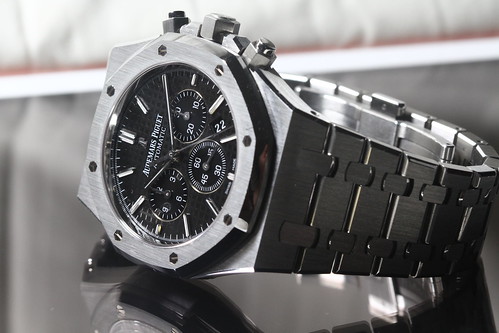
Russia Seized Millions of Dollars of Swiss Luxury Watches in Moscow – Russian customs service agents took millions of dollars of Audemars Piguet watches. Audemars Piguet had closed its boutique in Moscow. The Russians allege that Audemars Piguet was in breach of customs regulations. The reality is that its retaliation for Switzerland joining other countries in levying sanctions on Russia. In this respect its similar to the state-sanctioned theft of aircraft from Irish aircraft leasing companies. There are a few problems with these Audemars Piguet watches. The Russian market for Swiss watches in 2021, accounting for 260m Swiss francs (£212m) of shipments, according to the Federation of the Swiss Watch Industry; which puts the country in the top 20 acquirers of Swiss watches.
Audemars Piguet Offshore models are long sought after by watch collectors. The problem that Russia will have with the watches is the inability of them to be serviced. The company will have a record of the serial numbers involved and won’t service them when they come up for maintenance in a few years time. AP watches have a reputation for being great watches, but aren’t robust like say a Rolex in terms of their need to be serviced.
Russia seems to be pretty determined to have western sanctions on the country for a long time to come yet.
Geely questions future in Russia despite opening for China’s carmakers | Financial Times – Tu Le, managing director of Sino Auto Insights, noted that the Chinese carmakers are relatively inexperienced when it comes to maintaining a brand’s reputation in western markets. “They’ve never had to deal with these kinds of external pressures in how they were perceived by foreign consumers,” he said. “A lot of these companies, they’re going to have to do business in Europe, or they’re going to have to do business in the United States. If they seem too eager to fill that void [in Russia], I will bet you money it is going to have some backlash in those regions.”
Judy Asks: Are Europeans Ready to Pay the Price for Ukraine’s Sovereignty? – Carnegie Europe – Carnegie Endowment for International Peace – The grim truth is that many in the West would be ready to accept compromises over Ukraine’s sovereignty in order to stop the war. In countries neighboring Russia, there is a strong understanding that such compromises would seriously weaken our security, hence they are ready to pay a high price to avoid them. However, among Western experts and policymakers, assessments of the balance between different interests seem to vary. The thinking that some degree of accommodation of Russia’s interests might be needed to reach stability has not disappeared. This is a dangerous and misguided logic
Lanvin Group plans New York IPO in SPAC deal | Vogue Business – Lanvin Group, the fashion arm of Chinese conglomerate Fosun International which includes the French heritage label Lanvin, plans to list in New York in a SPAC deal, the second high-profile fashion firm to make the move since Ermenegildo Zegna late last year. Lanvin Group announced Tuesday it is combining with special-purpose acquisition company Primavera Capital Acquisition Corporation in a deal that values the group at $1.5 billion, according to an emailed statement. Lanvin Group expects to raise up to $544 million from the deal and from existing investors, and will use the funds to expand its portfolio, including future luxury acquisitions
A Chinese Nickel Market Mystery – WSJ – Market ructions amid war aren’t unusual. But the London Metal Exchange’s retroactive cancellation of nickel trades this month appears to be unprecedented. One question is whether the Hong Kong-owned exchange intervened to rescue a Chinese nickel tycoon. – the exchange is owned by the Hong Kong Stock Exchange