Category: marketing | 營銷 | 마케팅 | マーケティング

According to the AMA – Marketing is the activity, set of institutions, and processes for creating, communicating, delivering, and exchanging offerings that have value for customers, clients, partners, and society at large. This has contained a wide range of content as a section over the years including

  • Super Bowl advertising
  • Spanx
  • Content marketing
  • Fake product reviews on Amazon
  • Fear of finding out
  • Genesis the Korean luxury car brand
  • Guo chao – Chinese national pride
  • Harmony Korine’s creative work for 7-Eleven
  • Advertising legend Bill Bernbach
  • Japanese consumer insights
  • Chinese New Year adverts from China, Hong Kong, Malaysia and Singapore
  • Doughnutism
  • Consumer Electronics Show (CES)
  • Influencer promotions
  • A media diary
  • Luxe streetwear
  • Consumerology by marketing behaviour expert Phil Graves
  • Payola
  • Dettol’s back to work advertising campaign
  • Eat Your Greens edited by Wiemer Snijders
  • Dove #washtocare advertising campaign
  • The fallacy of generations such as gen-z
  • Cultural marketing with Stüssy
  • How Brands Grow Part 2 by Jenni Romaniuk and Byron Sharp
  • Facebook’s misleading ad metrics
  • The role of salience in advertising
  • SAS – What is truly Scandinavian? advertising campaign
  • Brand winter
  • Treasure hunt as defined by NPD is the process of consumers bargain hunting
  • Lovemarks
  • How Louis Vuitton has re-engineered its business to handle the modern luxury consumer’s needs and tastes
  • Korean TV shopping celebrity Choi Hyun woo
  • qCPM
  • Planning and communications
  • The Jeremy Renner store
  • Cashierless stores
  • BMW NEXTGen
  • Creativity in data event that I spoke at
  • Beauty marketing trends
  • Kraft Mothers Day marketing
  • RESIST – counter disinformation tool
  • Facebook pivots to WeChat’s business model
  • Smartphone launches
  • COSCO Shipping + more things

    COSCO SHIPPING Lines | Customer advisory on network breakdown within America Regions – Customer statement on how their business IT systems were (allegedly hacked and) shut down. COSCO is one of China’s state shipping companies. COSCO is also one of the largest owners of containers in the world. COSCO also owns OCS, the Hong Kong shipping line. More security related content here.

    ITV Self Serve – this could be the equivalent of 1980s era slideshow style cinema ads for your local Indian restaurant. I could see the benefits for estate agent chains, car supermarkets and local hotels. All of which will be reliant on powerful expensive intermediaries (rightmove, autotrader and booking.com respectively)

    Facebook Added Several Creative Tools to Its Ads Manager App – Adweek – reminds me a fair bit of percolate’s editing features

    Hollywood Marketing Firm Ant Farm Is Shuttering | Hollywood Reporter  – Omnicom, an advertising and media holdings conglomerate, is seeking to shed any venture that doesn’t have a substantial return on investment, or a 25 percent margin. “Omnicom is having a tough go, and they didn’t think they [Ant Farm] was core to their strategy,” said one insider.

    Why Monocle shuns social media in favour of going swimming with its readers | The Drum – contrarian strategy in action

    Resilient Anonymous Communication for Everyone (RACE) – Federal Business Opportunities: Opportunities – interesting project, there is a tension between this and the US law enforcement community’s concern about ‘going dark’

    China economic analysis by Martin Wolff | FT – mix of rising debt, slower growth and lower than needed domestic consumption

    Facebook stock plummets after warning of slower revenue growth – Axios – most of the growth now must be in the developing world

    Apple Is in Danger of Abandoning Creative Pros – ExtremeTech“You will see us do more in the pro area,” CEO Tim Cook said back in early 2017 at a shareholder meeting, in a response to a question about the Mac Pro. “The pro area is very important to us. The creative area is very important to us in particular.” I still don’t doubt the company’s commitment. But I’m certainly disturbed by its inability to execute lately.

    Molecular clock chip promises improved smartphone navigation | eeNews Europe – huge for navigation and time stamped applications

    The man who invented the self-driving car (in 1986) – POLITICO – interesting reflection on where machine learning has been before

    There is no precedent—a president sides with America’s enemies – interesting if optimistic take on the rise of China. I think that the west’s beliefs have been shown to be malleable over the past couple of decades

    Understanding multimodality: An analysis of early JUMP users – drives overall app use, cannibalises short distance drives

    Before scooter shares, The Sharper Image was selling Razors to tech workers — Quartz – circular innovation in action. I remember the first person I saw with a micro-scooter was a German freelancer that we had in the office. It made him look like a knob as he tried to ride it through Covent Garden during the dot com boom. When working on Genie (a still birth mobile internet product that was extended out of a trial proof of concept) we had lots of them all over the office. The bag that the scooter came in was a solid cotton canvas duffle that I still have. As far as I remember I only took the bag and there was a load of these scooters sitting folded up and unloved in a cupboard in the back of the office when I left a year or so later

    WPP courts Chinese tech giants‎ Alibaba and Tencent over $2.5bn deal – if they wait until Brexit drops, Alibaba and Tencent could push through a tricky purchase easily

    The Chinese Communist party entangles big tech | Financial Times – there’s some antitrust arguments the west can easily make

    Multinational brands predict higher spend on influencer marketing | PR Week – not sure why at the moment, where is the business case?

    Amazon advertising is working directly with brands now, cutting out ad agencies – Digiday – this is similar to what Baidu, Sina and Tencent do in China.
  • Overlord & things from last week

    Overlord is an amazing genre mashing film. It’s not probably the best film, but does look like lots of fun. Overlord is named after operation Overlord, the allied codename for the battle of Normandy during the second world war. This immediately places Overlord in the hard fought battle to go inland from the beachheads.

    Prior to working in marketing I spent a brief time in the chemical and petrochemical industries. It was a time of my life when I was disenchanted with a scientist future in deindustrialising Britain. Instead I sought to try and work out what I wanted to do with my life beyond DJ’ing and living for the weekend. I worked on materials that were three times as strong as kevlar. Yet even now kevlar, Dyneema (that I worked on) or engineering plastic PEEK are still far from the mainstream applications. We don’t have everyday lightweight composite family cars. Yet materials hype like that around graphene assume that the material will be immediately transformational. This is a great video on graphene hype.

    If you are tech-orientated this video by Dr Kaizhong where he talks about his concept of the digital universe is interesting. More ideas related content here.

    I got this via Matt’s great Web Curios newsletter. It is not everyday that you see a western pop video shot in a middle class neighbourhood and apartment of Beijing.

    https://youtu.be/lGAhjnHvrNE

    Ogilvy put together a summary of what they thought were key themes from Cannes.

    I am not a big fan of deadmau5′ overly compressed pop sounding blend of dance music, but this video is mental. If you are watching Tomorrowland festival’s live stream over the weekend, you might think that the artist is thumbing his nose at his fan base. The video seems to parody archetypes of his fan base.

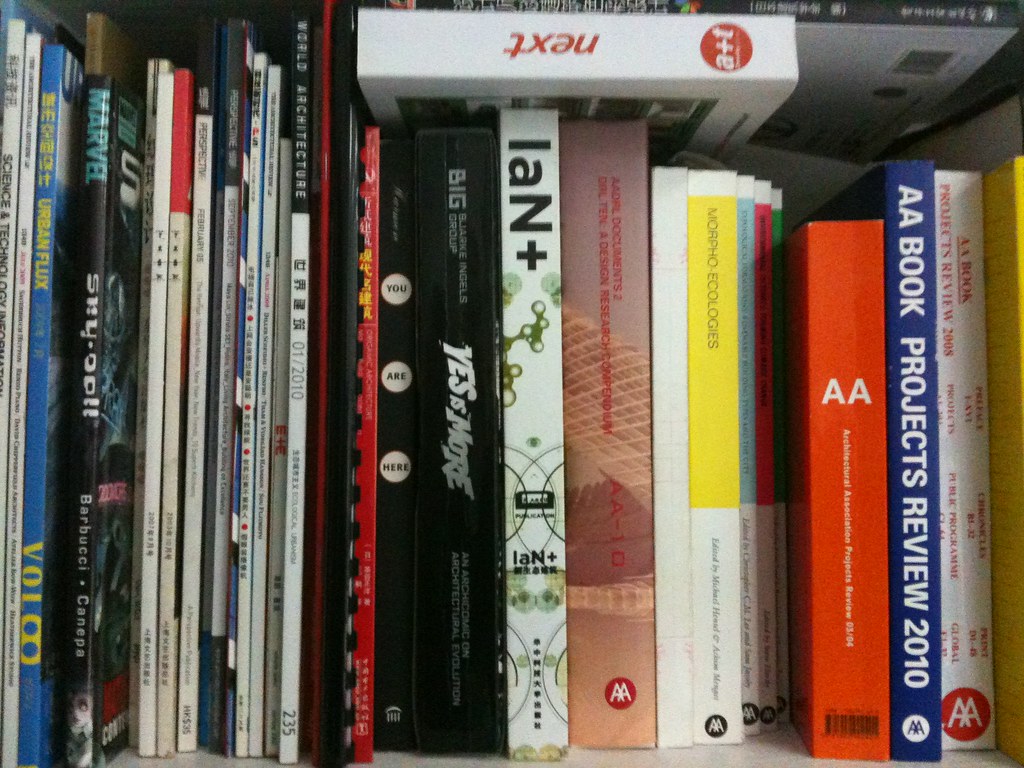
  • Marketers bookshelf recommendations

    Books

    My recommendations for a marketers bookshelf is based on my own reading. My own experience is very consumer, brand communications and behavioural change focused. Here’s some recommendations, they aren’t in a ranking or grouped in a particular order.

    Insights, planning and strategy

    Most marketing communications projects are trying to create some sort of behavioural change in the audience, so understanding more about persuasion has got to be a pretty handy thing right? Robert Cialdini  has two great works:

    How Brands Grow part 1 and part 2 – pretty much the modern marketers bible for B2C brands of various stripes. Byron Sharp distills down decades of evidence-based research that has been carried out by Ehrensberg-Bass Institute of Marketing Science attached to the University of South Australia. The research institute has got a who’s who of corporate sponsors supporting their work and using their data:

    • General Mills
    • Grupo Bimbo
    • Procter & Gamble
    • Red Bull
    • Unilever

    You get the idea. If the research is good enough for these brands, it’s good enough for you.

    A key part of planning is working out that insight which will speak to your target consumers. Trends books are sometimes a handy short cut to creating a first draft of a hypothesis. You can do worse than leave through pollster Mark Penn’s Microtrends, Microtrends Squared and Microtrends Cubed that he has built up. If you’re thinking about transformation then Kevin Kelly’s The Inevitable: Understanding the 12 Technological Forces That Will Shape Our Future is the Microtrends for digital transformation. Tom Doctoroff’s What Chinese Want: Culture, Communism, and China’s Modern Consumer – is a another great primer.

    The Long And the Short of It by Les Binet and Media in Focus: Marketing Effectiveness in the Digital Era. Binet is a respected communications planning expert, he is currently head of effectiveness at Adam & Eve DDB. He has published some of the best works on marketing effectiveness for the IPA.

    If you studied marketing in college David A. Aaker is probably a familiar name. His Strategic Marketing Management book is often an introductory core course text. It used to double as a doorstop in a lot of dorm rooms that I visited. If you want to refresh your memory on branding he has written an accessible primer to recharge long lost lecture memories: Aaker on Branding: 20 Principles That Drive Success.

    Truth, Lies and Advertising – Jon Steel’s work on account planning is that rare thinking; a very readable text book. I like to go back to it to boil things down to first principles and forget complexity.

    Inspiration

    When you’re looking for inspiration, there are two good approaches:

    • Go lateral. Brian Eno and Peter Schmidt’s Oblique Strategies isn’t a book, but a set of 100 cards. Eno periodically suffered writers block in the studio and these cards are a successful approach that he developed over time with collaborator Peter Schmidt. It also works for finding your way through planning
    • Look back into time. If you are looking back into time, I would recommend Sun Tzu’s The Art of War if you are looking for inspiration on strategic approach. Buy the cheapest copy that you can get in print. Mine is covered in post-it notes and scribbles in the margins. More expensive versions have ‘business thought leaders’ trying to reinterpret it for you and just end up muddying the water. Those 13 chapters are well worth visiting on a regular basis. Bill Bernbach’s Book is a source of inspiration; as is the better known Ogilvy on Advertising by David Ogilvy
    Communications

    How To Write A Thesis by Umberto Eco. I know what you’re thinking: ‘Ged have you lost your marbles, why would I care about writing a thesis?’ Eco’s book is a really good guide to collecting one’s thoughts and presenting facts gained through a comprehensive research process. As the old martial arts mantra goes: slow is smooth, smooth is fast. Whilst Professor Eco isn’t a marketing scholar he knows a lot about thinking and being cogent.

    What about the last book on the marketers bookshelf? You’ve distilled all the knowledge from the rest of the books in this list, along with desk and possibly primary search.  You are ready to present your killer ideas to the client, or internal decision makers. Jon Steel has got you covered. Perfect Pitch: The Art of Selling Ideas and Winning New Business is a great refresher that helps shake you’re presentation game up.

    What books would add to a marketers bookshelf? If you have additional recommendations, put them below in the comments section. More related content here.

  • Arsenal defrauded + more things

    Arsenal and 30 ad agencies ensnared in alleged BYD fraudulent misrepresentation case | Marketing | Campaign AsiaMore than 30 domestic agencies are crying foul after Chinese electric-car brand BYD absolved itself of payment obligations for RMB1.1 billion (US$16.4 million) worth of advertising production and roadshow fees last week. The automaker claimed these agencies have been dealing with a fake employee from an “illegal” entity carrying out marketing activities on behalf of BYD by “forging” the company’s seal. BYD made statements on its website (English) and Weibo account (Mandarin), naming a “criminal suspect” Liki Li (李娟) who managed to engineer a potentially sham sponsorship deal with football club Arsenal in April 2018, and has since been detained by the Chinese public security bureau. “Hereby we reiterate that BYD was never involved in and is not responsible for any fraud issues,” read one statement. “Please make sure to report to the authority responsible whenever you find yourself a victim.” The 30+ agencies suffering in this legal quagmire certainly see themselves as victims, with many raising objections to how BYD is handling the case so irresponsibly. The exposé party was begun by Jingzhi PR (上海竞智广告) three days ago, posting an ugly narrative on its WeChat account of how three years of creative design and test-drive execution for BYD was suddenly invalidated in this about-turn – not particularly surprised that this happened. I am surprised that it happened to Arsenal. Sports teams like Arsenal have historically been savvy in navigating the Chinese media ecosystem.

    I’m not DTF, OKCupid – Hacker Noon – great analysis of pandering advertising

    Amazon’s Curious Case of the $2,630.52 Used Paperback – The New York Times – is it merchants trying to pretend something is more rare than it is, or machine driven automated pricing errors? (paywall)

    Google Maps API Becomes ‘More Difficult and Expensive’ | Slashdot – so much that you can say about this. Google is Alphabet’s cash cow, with changes like this it’s losing developer hearts and minds. I think its part of a wider trend away from “Don’t Be Evil” to “Greed is good”. The economics of cloud services should surely be going in the opposite direction to Google’s pricing changes?

    Jackie Chan tried to replace Bruce Lee after he died, and so did Bruce Li – screen name of a Taiwanese actor behind slew of Lee rip-offs | South China Morning Post – great article on how the Hong Kong film industry coped with the death of Bruce Lee as a box office draw. I just couldn’t see Jackie Chain as a Bruce Lee analogue – thankfully he found his own way

    China’s ‘red education’ history tours and the rise of communist cosplay | South China Morning Post – from opening up under President Deng to the go go growth of President Hu, the party had sublimated into the back of Chinese people’s lives. President Hu is bringing the party back to the forefront with nationalistic characteristics. Hence Chinese citizens doing ‘founding of the republic’ style cos-play

    Salmon Theory – well worthwhile reviewing when you have a period of stuckness

  • Public relations role in the world

    I started thinking about public relations role in the world whilst listening to The Holmes Report podcast featuring Michael Frolich of Ogilvy UK. There was a particular focus on brand communications rather than corporate communications, public affairs or investor relations. It’s worthwhile going and having a listen; I will still be here when you come back. There were two themes that stuck out with me.

    • How PR compares to other marketing disciplines
    • The role of planning in PR

    I wrote some notes about each focusing on where my view differed from Michael.

    Public relations role and relationship to other disciplines

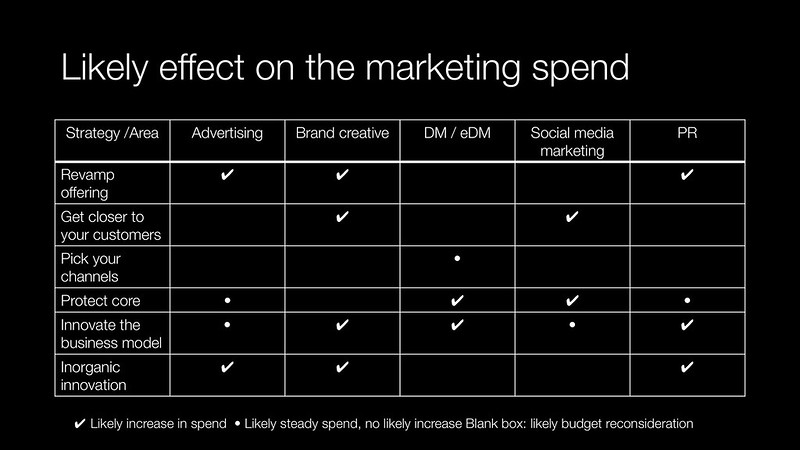
    Should the PR industry have hang-ups about its profession versus other marketing specialities? No public relations role in the marketing mix is clear and valid.

    In terms of account billings, public relations is still the junior profession compared to advertising, creative agencies and media agencies. The lower fees represent a greater degree of risk in outcomes for the brand than paid media.

    From a client relationship perspective, whether public relations role is as an equal discipline really depends what the client is trying to do. There is a propensity to use different marketing agency functions based on what the overall marketing strategy is looking to achieve.

    Zero-Based Budgeting

    Public relations agencies are not the sole source of expertise in generating ‘PR coverage’. In some respects many marketing agencies already fulfil a public relations role, but won’t describe it in that way. It tends to be attached to their social teams and might be called something like influence, content marketing or earned media. This tends to be in some of the media agencies at least. Ad agency creative if sufficiently emotive can foster talkability and social sharing – which is another form of earned media that is usually considered to be also public relations role.

    Historically Japanese advertising agencies like Dentsu have sold public relations as an integrated part of their advertising led programmes. The perception by western agencies has been that PR was thrown in for free like a plastic toy in a box of breakfast cereal. In reality the Dentsu Way, called cross marketing –  is a holistic, tightly integrated approach, though public relations was definitely the junior discipline.

    It would would be wrong of the industry to assume that they are the only experts in this space. I also believe that public agencies should have more to offer than generation of earned media, more on that later.

    A lot of PR leaders I’ve met don’t understand public relations role in the client’s marketing strategy and when it will make the biggest difference. I’ve never heard an PR agency leader turn around to a client and say ‘advertising or direct response marketing is more suitable for your needs’. Clients tend to believe that they need to support each initiative that they get budget for, even if the contribution that their efforts make are marginal. It shows that they have an ‘A-grade’ team spirit, but is harder to justify from a strategic point-of-view and may even devalue the currency of marketing communications-orientated PR in the business.

    It would be great if the CIPR could mandate PR leaders to read Sharp.

    • To the best of my knowledge the PR industry has never published campaign effectiveness research on a mass scale similar to the IPA’s  ‘The long and the short of it’
    • I don’t know if Sabres, CIPR or PRCA award entries have solid enough data for this?

    It would be great if the CIPR, PRCA or PRSA could make this happen.

    Planning in PR

    Frolich starts to get some of the points right about the fraught relationship between planning as a discipline when embedded in PR agencies. I would be far more aggressive and say a lot of PR senior leaders aren’t ready for it. Part of this is the generalist nature of public relations roles and also business structure within clients and agencies.

    Many PR agencies are run on very little capital. They’ve always had an asset light model and just been pure operating expenses. From a knowledge perspective you are seeing new hires being brought in at a more junior level than the people that they replace which will have a knock on effect throughout the industry.

    Securing funding for any kind of tooling beyond media databases is really hard when you’re working agency side.  That it’s just the cost of doing business in the industry nowadays struggles with a culture that tries to bill these back to a specific client. Which also explains why PR often struggles to present its ideas.

    I’ve known agencies being reluctant to subscribe to publications where their clients might get coverage or media monitoring services. Justifying social listening or SEO tools is really painful. I know, I fought that battle trying to get social listening tools into the business. It is nigh on impossible trying to get a WARC subscription. PR agency clients tend to value and pay for direct action tasks and reporting, not thinking, analysis, strategy or measurement. Having worked as strategist who has worked in PR agencies and other disciplines I ended up having to pay for some reports out of my own pocket when I was agency side and building up my own library of reports and presentations over time.

    This sole focus on direct action tasks probably explains the earlier points I made about agency leaders not turning around to a client and pointing out the alternative approaches they should be taking instead of PR to address a particular marketing challenge.

    William Gibson in his Blue Ant trilogy of novels (Pattern Recognition, Spook Country and Zero History), discusses PR as part of the plot. He enlightenedly considers PR beyond media relations. Instead he talks about its role mediating relations between an organsiation and its public. PR is considered by him to have its finger on the pulse of the zeitgeist. That should mean that planning is a greater fit than it is in reality. So an opportunity is there, but whether the industry can really step up to it en masse is quite another matter.

    Data and insights sharing between agencies of different working on the same project needs to improve. Often PR plans are done in isolation of planning process and IF YOU’RE LUCKY then recut to incorporate insights.