Category: online | 線上 | 온라인으로 | オンライン

The online field has been one of the mainstays since I started writing online in 2003. My act of writing online was partly to understand online as a medium.

Online has changed in nature. It was first a destination and plane of travel. Early netizens saw it as virgin frontier territory, rather like the early American pioneers viewed the open vistas of the western United States. Or later travellers moving west into the newly developing cities and towns from San Francisco to Los Angeles.

America might now be fenced in and the land claimed, but there was a new boundless electronic frontier out there. As the frontier grew more people dialled up to log into it. Then there was the metaphor of web surfing. Surfing the internet as a phrase was popularised by computer programmer Mark McCahill. He saw it as a clear analogue to ‘channel surfing’ changing from station to station on a television set because nothing grabs your attention.

Web surfing tapped into the line of travel and 1990s cool. Surfing like all extreme sport at the time was cool. And the internet grabbed your attention.

Broadband access, wi-fi and mobile data changed the nature of things. It altered what was consumed and where it was consumed. The sitting room TV was connected to the internet to receive content from download and streaming services. Online radio, podcasts and playlists supplanted the transistor radio in the kitchen.

Multi-screening became a thing, tweeting along real time opinions to reality TV and live current affairs programmes. Online became a wrapper that at its worst envelopes us in a media miasma of shrill voices, vacuous content and disinformation.

  • Of time and networks

    Time and networks are intertwined and have been forever. Communities have marked time in different ways. It used to be marked by the bells of a church or the clock on a local factory. At that time, it didn’t matter that the clock told the precise time, but that it was consistent. This meant that different ‘time zones’ existed in areas separated by little distance.

    The amount of reference time pieces expanded as mechanical clocks were installed in churches, farm estates and early factories. In the case of factories the change of shift was often punctuated by the blast of a fog horn or a steam powered whistle.

    I can remember this being the case even during my early childhood at the nearby Unilever factory. The change of shift signal marked my walk to infant school.

    Over the centuries canals sprang up throughout the country as the first mass transport link, facilitating the movement of heavy goods such as coal and iron ore in a more efficient manner. Canals were transformative, but the boats still only moved at the speed of the horse. Railways broke the ‘horse speed’ barrier.

    This was transformative because it suddenly shone a light on inconsistent time keeping across the country. Railway timetables couldn’t incorporate all the variations in time zones between stations, so it became the arbiter of accurate time.

    Over time radio and television played their part, audiences could set their watch by the start of key news programmes, for instance the time pips in the run into BBC Radio 4’s today programme or the Angelus chimes on RTE Radio  1.

    The telephone came into play when looking for an exact time (to reset a watch or alarm clock) outside the broadcast schedule.

    The popularity of mobile phone networks didn’t have as much of an impact as one would have thought. NITZ (Network Identity and Time Zone) was an optional standard for GSM networks. It has an accuracy in the order of minutes. A competing standard on CDMA 2000 networks used GPS enabled time codes that were far more accurate.

    Modern timekeeping for the smartphone toting average person goes back to NTP; one of the earliest protocols in for the early internet that was created some time before 1985.

    1

    Back in 2001 when I installed the earliest version of macOS (then known as OSX 10.0 ‘Cheetah’) the date and time settings made reference to Apple owned NTP servers that were used to calibrate time on the computer. This infrastructure has since provided time to Apple’s other computing devices such as the iPhone and the and the iPad.

    We are are now living on the same time. Time synchronisation happens seamlessly. We tend to only realise it when there is a problem.

    SaveSave

  • eSports discussion

    The rise of eSports as a form of entertainment is a popular discussion area in both media and technology. Brandon Beck is the co-founder of Riot Games (best known for League of Legends) on the rise of eSports from a cultural and business perspectives.  His ideas what online gaming future looks like; are interesting, if a little self-serving.

    eSports takeouts:

    • Interesting that Riot are trying to give players a better base to build their careers. How will this affect teams over individual player talent?  How long is their professional life? When do they burn out? What does post-eSports athlete life look like?
    • They acknowledge that competitive gaming will have a long runway to adoption rather than the hockey stick models predicted by financiers in this area. Traditional sports management professionals see eSports as a new opportunity.
    • Professional athletes come out of second and third generation gamers and parents who pursued traditional sports at a competitive level
    •  The new nature of competitive gaming has an exclusively young audience. The vast majority of content is streaming. The audience is cable cutters, which implies that they didn’t have traditional sports as a substitute content
    • Player access and the Asian ‘idol’ phenomenon seems to be very similar with ‘around game’ content. There is an immediacy to it. There is also a grey zone between the athlete and online influencers, I could see a crossover
    • I found it concerning that it revolves so much around China, given the rule by law approach to things that the Communist Party of China takes. It would take nothing to crush competitive gaming in China. Comments on the negative social impact of gaming doesn’t bode well

    More on professional online gaming here and more on Riot Games here. It will be interesting to see how Riot Games continues to develop under the ownership of Chinese technology company Tencent.

  • Jawbone + more news

    Jawbone

    Jaw-bone-d: Wearables biz Jawbone shuts down | The Register – pretty sad end for Jawbone. Jawbone was the wearables company that pioneered noise cancelling Bluetooth headsets. I had the good fortune to go on a work trip to San Francisco. While there I picked up an early Jawbone headset. At the time it was a retail exclusive with AT&T Mobile and weren’t available outside of the US. With the rise of Apple’s AirPods, surely this should have been Jawbone’s time to own BlueTooth headsets if it had been able to keep going and innovating?

    Business

    Chat app Kakao raises $437M for its Korean ride-hailing service | TechCrunch

    The Japanese Company Betting Billions to Prepare for the Singularity | Wired – I think that Softbank have overreached on the vision here

    Cision IPO – Great guns for brand situational awareness | Forrester – but it needs to do a better job with its brand and PR people

    Consumer behaviour

    Hong Kong women spend over HK$4,000 on beauty products | Marketing Interactive – I guess it depends on how you define beauty products

    Staring down internet trolls: My disturbing cat and mouse game – unremittingly grim

    Economics

    North Sea becomes burden on taxpayers | Business | The Times & The Sunday Times – this is down to lower oil prices and tax relief against investment (predominantly decommissioning platforms) which will accelerate over the coming years. This will squeeze the UK government hard in the face of Brexit

    FMCG

    发现新大陆 – amazing marketing for McDonalds’ spicy chicken wings

    How (FMCG) markets grow | Kantar World Panel – interesting read

    Gadgets

    Nokia Branded Phones to Get Zeiss Branded Cameras | Fortune.com – Nokia’s handset business getting the gang back together

    Nokia, Xiaomi sign patent sharing agreement | ZDNet – Nokia and Xiaomi will work together on optical communications solutions for data centers, IP Routing for the Nokia FP4 processor, and a data center fabric solution

    Alibaba Challenges Google, Amazon With New Echo-Like Device – Bloomberg – Interesting that they are using the Tmall brand rather than TaoBao

    Amazon Launches Customized Kindles With China Mobile | China Tech News – interesting deal with China Mobile. Jailbroken Kindles have been going around in China for years

    Media

    It’s the end of an era: Channel 18 cancels international format that served generations of L.A. immigrants – LA Times – a sad indictment of media economics

    Chinese site Weibo to ban ‘bad talk’ about Chinese affairs – CNET – not clear if this is an addition move on top of the recent regulations to clean up the web

    I Cannes | No Mercy No Malice | Scott Galloway | L2 – so much to read about here

    The Awful Truth Behind the Glamorous Facade of the Chinese Live-Streaming Host – not that different to modern record label practices or the Hollywood (and Hong Kong) studio system of the past

    Retailing

    Instagram and Nike Want to Show Fashionistas How to Shop – Bloomberg – really soon after the deal with Amazon

    Software

    US army spin-off GPU database bags $50m Series A funding • The Register – interesting use of GPU technology

    Technology

    China Is About to Bury Elon Musk in Batteries – Bloomberg – what’s this going to do to the price of lithium?

    Why the Future of Stuff Is Having More and Owning Less | Singularity Hub – but all the wealth will flow to the suppliers ie generation rent – its the first step on the way to serfdom

    How AI Boosts Industry Profits and Innovation by Purdy & Daugherty – Accenture white paper looking into the machine learning crystal ball and what it means for businesses (PDF)

    Azeem Azhar, entrepreneur | China will win AI race – China are also more focused on pragmatic usage of machine learning rather than flailing around like western startup eco-systems

    Crypto Miners Hated by VR Players as Graphic Cards Sold Out in China | NEWS.8BTC.COM – which gives you an idea of how much crypto currency mining happens in China now

    Apple is suspiciously interested in Fisker’s electric car – BGR – the Fisker Emotion appears to be a technical marvel, with a fast-charging system that enables the vehicle to charge up in just nine minutes. As we noted a few weeks back, the Emotion’s impressive battery system is based on supercapacitors using graphene as opposed to the more traditional lithium-ion batteries used in vehicles like the Tesla Model S

    Telecoms

    Bidders gear up for Li Ka-shing’s fixed-line network business | South China Morning Post – interesting no bid from China Telecom or any of the other Chinese SOEs. More telecom related posts here.

  • Cannes and VidCon outtakes

    Cannes and VidCon – I had the chance to read around a lot of the stuff around the events and listened to Ogilvy’s webinar. Here were the key things that struck me.

    There is blind faith amongst brand about the benefits of influencers and social.  I find this particularly interesting because it represents a number of challenges to the status quo:

    • This first struck me when I saw Heather Mitchell on a panel at the In2 Innovation Summit in May. Mitchell works in Unilever’s haircare division where she is director, head of global PR, digital engagement and entertainment marketing. I asked the panel about the impact of zero-based budgeting (ZBB) and the answer was ducked. ZBB requires a particular ROI on activity, something that (even paid for) influence marketing still struggles to do well
    • The default ethos for most brand marketers is Byron Sharp’s How Brands Grow: What Marketers Don’t Know. Most consumer brands are in mature categories, engagement is unimportant; being top of mind (reach and repetition) is what matters
    • Brands were looking to directly engage with influencers at VidCon with trade stands and giveaways at the expo. This was brands like Dove. Again, I’d wonder about the targeting and ROI

    Substitute ‘buzz marketing’ for ‘influencer marketing’ and this could be 15 years ago. Don’t get me wrong I had great fun doing things like hijacking Harry Potter book launches when I worked at Yahoo!, but no idea how it really impacted brand or delivered in terms of RoI. Influencer marketing seems to be in a similar place.

    Publicis and Marcel. Well it certainly got them noticed. There has been obligatory trolling (some of which was very funny). I tried to make a sombre look at it here: Thinking About Marcel (its about a nine minute read) – TL;DR version – its a huge challenge that Publicis has set itself. One interesting aspect to point out is the differing view point between WPP and Publicis. WPP has spent a lot of time, effort and money into building a complete advertising technology stack including advanced programmatic platforms and analytics.

    WPP hoped that this would provide them with an unassailable competitive advantage. The challenge is that the bulk of growth in online spend is going to Facebook and Google – who also happen to have substantive advertising technology stacks.

    I can’t help but wonder if this shaping is Publicis’ top line thinking? Scott Galloway posted a very sombre chart about this. If Google and Facebook hit their combined revenue targets this year, it will have a dramatic effect on the number of people employed in the major advertising groups.

    1707 - ad industry

    To put Galloway’s numbers into context, the projected number of jobs lost in the advertising industry  this year would be roughly the equivalent of every man and woman around the world currently employed at vehicle maker Nissan. And that’s just 2017.

    If you paid attention to the Marcel concept film you would have noticed that the client service director is partly displaced when a client uses Marcel to directly reach out to Publicis experts.

    If Marcel, just makes information easier to access internally; it could save the equivalent time  equating to almost 1,600 employees (out of Publicis’s current 80,000 around the world).

    People equate to billings as these marketing conglomerates are basically body shops in the way they operate. So it will adversely affect the value of the major marketing groups.

    If that isn’t grim enough, Galloway doesn’t even bother to take into account the Chinese ecosystems which is digitising at a faster rate than the West. China also has a longer history of platforms and clients being directly connected – cutting out the media agency.

    These changes in the advertising eco-system has huge implications about the erosion in brand equity over time. Amazon’s move to surpass other retailers also is about the erosion of brand power. Combine this with the increasing ubiquity of Prime and all brands start to look the same as private labels.

    Thankfully the disciples of Byron Sharp still realise that there is power (and lower CPMs) in using television as a mass-advertising medium which is why FMCG product still spend 90% of their budget offline.

    The best thing IPG, WPP, Omnicom and Publicis could do right now is spend a lot of money ensuring that every marketing and MBA student have copies of Mr Sharp’s books. If they haven’t been translated into Chinese, that might be an idea as well.

    SnapChat is in its difficult ‘second album’ phase. Back when music came on physical media and record labels invested in developing artists as a longer term proposition than a reality TV series there was the ‘second album’ phase. Artists often struggled to bottle the lightning that gave them a successful first album. They usually had the money and resources to throw at it, but it was hard to be a consistent performer.

    For example Bruce Springsteen only really became successful in the U.S. with his third album Born To Run – that level of record label support wouldn’t happen now.

    On one level SnapChat has matured. It had a big presence at Cannes and its Snap glasses displaced VR technology as the worn product. It has been under assault. Major content providers like the BBC are choosing Instagram’s stories over SnapChat’s offerings. Even Twitter is getting back in the picture. Ogilvy’s team at VidCon talked about how Twitter had been successfully engaging with influencers and offering them support and attractive content monetisation offers.

    SaveSave

    SaveSave

    SaveSave

    SaveSave

    SaveSave

    SaveSave

  • North Korea + more news

    North Korea

    North Korean Restaurants in China Close Amid Regional Tensions | Radio Free Asia – quality of food or China – North Korea politics? While both North Korea and China claim a close political kinship

    Business

    Nestle Targeted by Dan Loeb in Activist’s Biggest-Ever Bet – Bloomberg – Third Point up to its usual tricks, or something more?

    Consumer behaviour

    We Analyzed 100 Million Headlines. Here’s What We Learned (New Research) | Buzzsumo – probably the most depressing post on data driven content strategy in a while. (Rocks with head in hands whilst having no respect for audience)

    Culture

    The Vault Of The Atomic Space Age – amazing 20th century tech photography

    Design

    The Beautiful, Impossible Dream of a Simpler Smartphone | WIREDThe Apple Watch’s purpose (at least at first) was to quieten the demands of the iPhone

    FMCG

    Coffee Ripples – Home of the Ripple Maker – there is something soul destroying about this product

    Hong Kong

    Activist investor calls Hong Kong market rout | Reuters – network of mainland business people running a ‘pump and dump’ scheme on Hong Kong small caps market

    Ideas

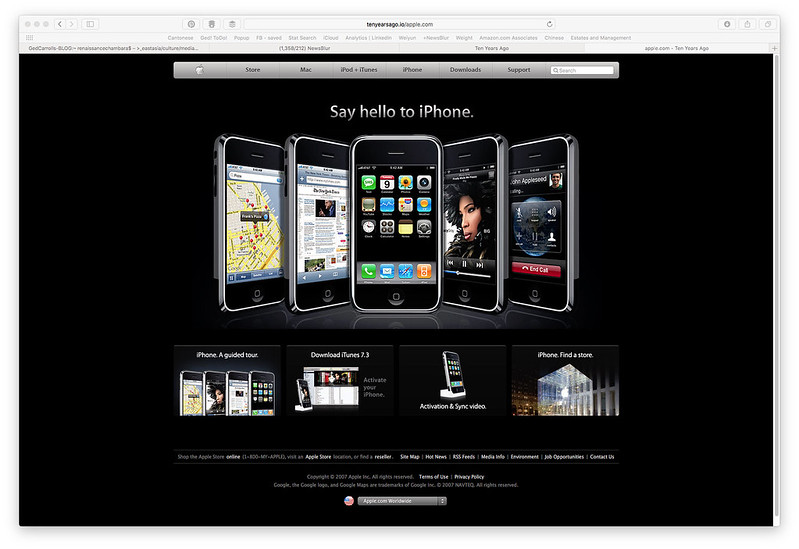
    The iPhone Was Inevitable – The Atlantic – interesting how much testing of concepts went into the iPhone. It also emphasises the idea of the technium

    Legal

    Ends, Means, and Antitrust – Stratechery by Ben Thompson – worthwhile reading with regards Google’s EU antitrust trouble

    Luxury

    London Luxury Home Values Fall 6.8% in Year Since Brexit Vote – Bloomberg – by the looks of this the luxury home market is splitting. The track funded by banking and related professions is in decline. But luxury homes funded by inward foreign property investment seems to have suffered less, if at all

    Media

    Facebook video ad viewability rates are as low as 20 percent, agencies say | Digiday

    Security

    Internal Memo: Sir Martin Assures WPP Staff That Everything Is Fine in Wake of Cyberattack | AdWeek – WPP’s love of Windows left so many people exposed. Insistance on proprietary encrypted USB sticks would make working from home harder

    The global ransomware attack weaponized software updates – The Verge – this is epic

    China’s New Cybersecurity Law: The 101 | China Law Blog – interesting requirements laid down for data protection including use of encryption

    Software

    WeChat Developer Error Codes | Grata – so handy for English-speaking  developers

    Twist is Slack without the annoying distractions | TechCrunch – more of a feature that Slack can replicate rather than an alternative app?

    Tencent OS Ceases Services This Week | ChinaTechNews – Tencent finally wrapping up its distribution of Android. With WeChat’s dominance the OS has become a burden rather than an asset

    Where Technology Meets Culture: Week 1 of Living in Beijing – not news to readers of this blog, but a great summary of the WeChat economy in action

    Technology

    Apple Should Buy IBM | Forrester Blogs – Forrester seems to have a far higher opinion of Watson than many people I know in the industry. This comment from Max Pucher shreds Colony’s argument: As an ex-IBMer, Apple afficionado and Machine Learning expert I could not diisagree more. Apart from the immense cultural clash there is no need to buy IBM to get Watson. Watson is a marketing stunt that sells a consulting package to create a custom ML setup. What won Jeopardy was a glorified full text search engine that can’t be used for anything else. Siri is not grand but a lot more powerful than Watson.

    With ML-Kit in the next Apple software releases it will empower the Apple ecosystem to use machine learning extensively and widely. With Watson ML needs 50 IBM experts to do some pattern recognition application. At Apple a million creative developers will jump at the opportunity to use the embedded power of audio, image and video recognition in the platform.

    Apple’s GPUs will play a significant role in that.

    IBM is all AI hype and no substance snd while buying IBM would possibly be good for current IBM customers, Apple would not gain anything. But it shows how good IBM is in that form of marketing. IBM did the same stunt with Deep Blue when Joel Benjamin won against Kasparov with the help of a machine … that wasn’t AI either …

    Moore’s Law’s End Reboots Industry | EE Times – really interesting analysis of slowing process in semiconductors affects other industries

    American Chipmakers Had a Toxic Problem. So They Outsourced It – Bloomberg – technology’s tabacco moment is already upon us