Welcome! I guess the first question that you have is why oprah time? Well in my last year of college I used to sit in the house that I shared with my landlord and write my essays whilst watching cable TV.
There I would be sipping tea, writing away and referencing from text books spread around me on the couch and coffee table. One of the programmes on the in the background was Oprah Winfrey. A lot of the show was just background noise. But I was fascinated by Oprah’s book club.
She’d give her take on a book, maybe interview the author. And then it would be blasted up the New York Times bestsellers list. This list appears weekly in the New York Times Book Review. Oprah’s book club was later emulated by other talk show hosts, notably the UK’s Richard Madeley and Judy Finegan.
On the high end you had Melvyn Bragg‘s South Bank Show when they profiled an author of the moment.
When I came to writing my own review of books that I’d read, I was was brought back to that time working on a sofa. Apple laptop in hand. It made sense to go with Oprah time.
You might also notice a link called bookshelf. This is a list of non-fiction books that I have kept. And the reasons why I have kept them.
If you’ve gone through my reviews and think that you’d like to send me a book to review. Feel free to contact me. Click this link, prove that you’re human and you will have my email address.
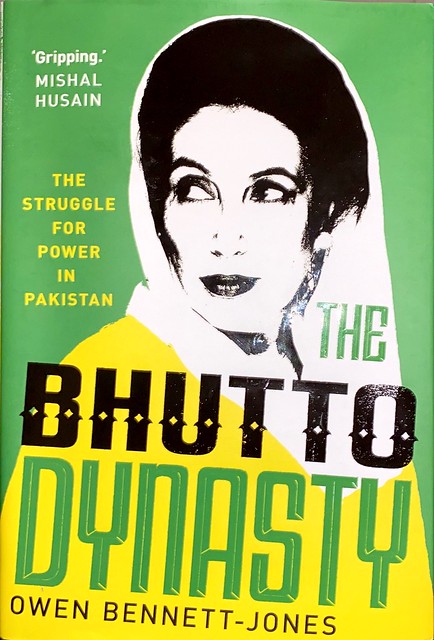
Before reading The Bhutto Dynasty I knew very little about Pakistan. The story of the Bhutto family is a story of fierce ambition with bursts of hubris. But it is also the tale of the moghul empire of pre-Raj India, British rule and post-colonial Pakistan.
The Bhutto Dynasty
The Bhuttos have been at the centre of Pakistan government. It is an interesting parallel to the Nehru-Gandhi family in India.
The author Owen Bennett-Jones has had access to the family and its wider circle of friends in writing this book. Combining that with a long time covering Pakistani current affairs for the BBC and you end up with an informative book.
The Bhutto family power base comes from being land owners and being able to rely on a block of local voters. The feudal nature of their power base was important before, during and after British rule. These votes were often achieved through means, rather like the British rotten boroughs.
A second aspect of their success was their ability to change and adapt. Bennett-Jones talks about how they adapted and thrived using the British legal system. They also shifted their allegiances to match where Pakistan was going. Being recognised for their support to the British Empire to supporting Muhammad Ali Jinnah. Or from founding a political party that engaged with China, to becoming a centre right party.
I would have liked to know more about the Pakistani effort to develop nuclear weapons. As an outsider, this was the biggest event since independence for Pakistan.
It was fascinating how different members of the Bhutto family consistently under-estimated rivals. This was usually because they had a blind spot for clerics, the uneducated and of lower social standing.
Zulfikar Ali Bhutto grossly underestimated his own choice for chief of army staff. General Zia went on to depose Bhutto and bring in ten years of military government.
He compromised on laws sought by muslim clerics and was surprised when they were back demanding more, instead of appreciating what he’d given them. His daughter Benazir Bhutto underestimated the risk of her religious opponents and was assassinated by suicide bombers prepared by the Taliban.
I found The Bhutto Dynasty as a good introduction to South Asian history; rather than just a family biography. There are a number of aspects that I would like to understand more about. In particular, the rise of extreme political Islam, the India – Pakistan conflict, Pakistan’s relationship with China and the Pakistani nuclear programme. More book reviews here.
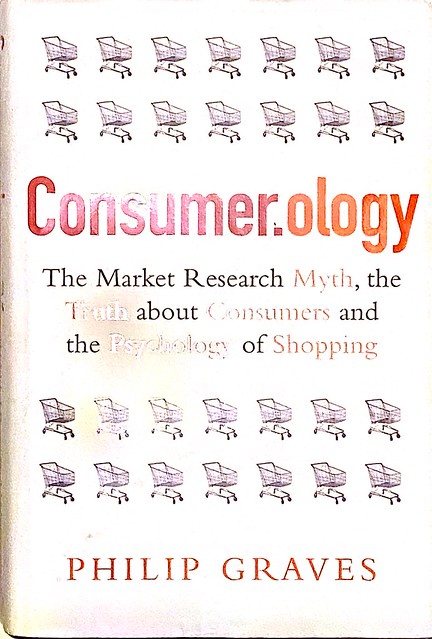
Consumerology taps into Phil Graves experience as a consultant on consumer behaviour.
In the book, he draws on experience in retail marketing and classic marketing case studies such as New Coke. These examples show the numerous ways in which marketing fails to understand consumers.
Much of the tried and true testing methods used make consumer marketing decisions have their own built in biases and affect the results that marketers use to base major decisions on.
AFECT criteria
In Consumerology, Graves recommends a set of criteria to assess any research project against. The more that the research project aligns with these principles, the less likely it is to be adversely affected by consumer or marketer bias.
A – Analysis of behavioural data. Does the research look at consumer behaviour or not? If it doesn’t look at some aspect of consumer behaviour, it isn’t valuable.
F – Where the consumers in the right frame of mind? Where they observed whilst in a retail experience, making a purchase?
E – Environment. What is the context of the content. Research that isn’t observational / behavioural in nature should at least be done where retail decisions happen. Environment is bound together with frame of mind.
C – Covert study. Being aware of being observed affects behaviour. Think about the use of close circuit TV and fisheye mirrors to try and prevent casual shoplifting.
T – Timeframe. Did the timeframe of the study match the timeframe that consumers would typically use themselves?
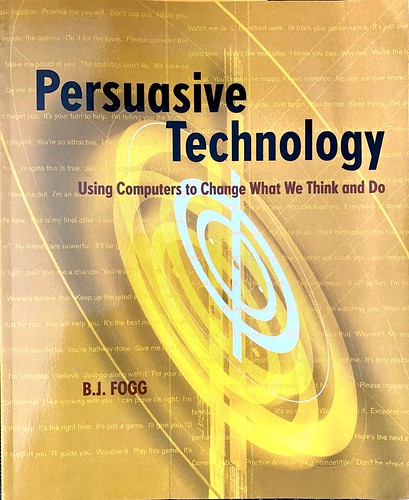
Persuasive Technology was published in 2003. It is still the bible for captology ( from Computers as Persuasive Techologies). Back when I was working inhouse at Yahoo!; copies of the book could be found on the desks of some product managers and designers. It has since gained a certain amount of notoriety. Questions are asked around the addictive behaviour of social network and gaming app users. Some consumers even find it hard to stop swiping dating apps.
Fogg realised that computers offered new challenges and opportunities. Persuasive Technology was written almost 20 years ago. How well does it now hold up?
Relevant content
Right from the start when Fogg starts going into the advantages of persuasive technology you can see the evergreen nature of the content.
Some of the content is quite prescient with a section on surveillance technology creating persuasion through observation. The comments on simulation are equally applicable to modern VR environments, which has been proven in the treatment of PTSD amongst combat veterans. The application ‘In My Steps’ (page 76) designed to facilitate empathy among doctors for cancer patients echoes through the patient centric work that pharma companies are currently funding.
Chapter 5 on computers as persuasive social actors is playbook for the way modern apps from freemium games to Tinder work effectively. If you don’t read anything else read this chapter.
Tired?
A cursory skim of the book would yield examples that are Windows Vista-era screenshots of crude applications. You have to remember that the book was written before mainstream social networks or the New York Times paywall. Back then, it was right at the end of the banner ad golden age in online advertising; surviving on ads was still considered an option for news media.
Whilst the context has changed around the web and the way that we use it; the examples are still illustrative. They’re worthwhile sticking with when reading though the book.
Misinformation
The modern issue of misinformation gets a relatively small mention. Fogg realised the impact that misinformation could have on future computer credibility. He felt that as computers lost their ‘aura, their mystique, their presumed credibility’. He thought that computing ubiquity would make computing credibility more complex due to purpose and form-factor.
He also worried about bad actors; though this largely seems due to hacker Adrian Lamo hacked the Yahoo! News content management system from his browser and was able to alter the quotes in stories. At the time subtly altering mainstream news stories was seen as the greatest risk
…Peter Sommer, an expert in computer crime at the London School of Economics, says that carefully changing information posted to a major web site could be far more serious.
“If it is done in a subtle way then this could spread misinformation,” Sommer told New Scientist. “It’s unfortunate that Yahoo! is the largest and most important portal in the world.”
Yahoo! is one of the most popular destinations on the internet. In June 2001 the site had more than 200 million visitors. Yahoo! takes news feeds from a wide range of news agencies and web sites.
Lamo says he was disturbed to have had access to the system during recent terrorist attacks on America, when internet news sites were in great demand.
“At that point I had more potential readership than the Washington Post,” Lamo told Security Focus. “It could have caused a lot of people who were interested in the day’s events a lot of unwarranted grief if false and misleading information had been put up.”
In some ways Fogg’s vision came true. The Macedonian fake news publishing during the 2016 US election wasn’t driven by bad actors; but ad revenue hungry teens. The effect was the same as Lamo’s Yahoo! News hack a decade and a half earlier.
Ethics
The thinking in Persuasive Technology was weaponised in various products and services. Yet, the book, was ethically driven by design. Fogg had a good understanding of how his work could be used by bad actors. He devoted a whole chapter to the ethics of captology and pointed out times when an act would be unethical throughout the book. Fogg starts off with ethics in the preface on page XXVI right before the acknowledgements section.
Chapter 9 goes into the various ethical pitfalls that may await the designer and the user. It’s interesting that many of the case studies focus on getting personal information out of children. Protecting children online has consistently been an issue since the start of the commercial web.
It is also interesting in this chapter that he emphasises the role of education in protecting future users from the unscrupulous.
Conclusion
Yes rereading Persuasive Technology was like taking a time machine back to the post dot com bust web. But the lessons to be learned are still the same. We might have more stylish web design and responsive pages; but we still have the same problems. Whether you work in digital transformation, user experience or content strategy, this book deserves a place on your bookshelf
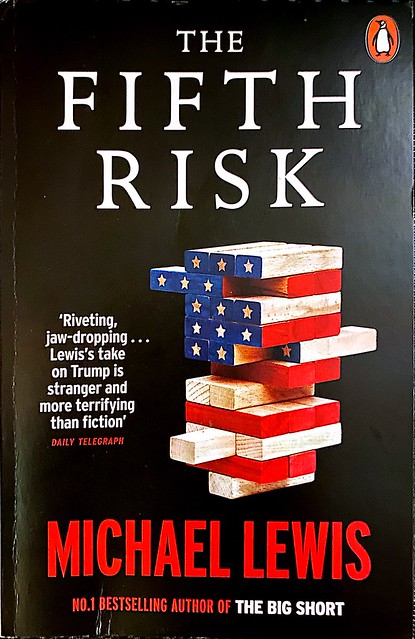
Michael Lewis’ The Fifth Risk is marketed as a Trump presidency book.
The Fifth Risk by Michael Lewis mass paperback cover.
The Donald
The Fifth Risk starts off by telling the story of Chris Christie. How he helped the future Trump administration organise a government in waiting. Christie and the team are let go. Trump was worried about spending money.
Given the revelations about Donald Trump’s finances in the New York Times; I can understand his desire to control cash flow. This goes some way to explaining the problems filling senior government places.
A second thing comes out in the first part of the book; Trump’s instinct to value personal loyalty. Which is fine; but doesn’t scale that well. That meant that people were often unsuitable for the jobs that they were given.
A final trait that came through was a massive root-and-branch concern against climate change.
So Lewis doesn’t say that much about the Trump administration that we didn’t already know. But that is only 30 percent of the book.
What the government does
The remaining 70 percent of the book tells the stories of different departments of the US government. The vital, complex roles that they play. He peels back the complex relationships between the federal government and the states. That interface builds in a lot of waste and inefficiency – to meet state political goals.
Lewis gets experts to explain how welfare payments work and why they’re needed. Or how departments like the National Oceanic and Atmospheric Administration and the Department of Energy benefit the country.
Lewis also covers what motivated some of the government service. TL;DR – from the new deal to the Kennedy administration young Americans felt that they could make a real difference. They felt inspired in a way that probably only clergy or military service personnel feel now.
Finally, touches on risks. The fifth risk that the Department of Energy expert talked about was programme management. This is where the name of the book comes from. How is programme management a risk?
If a department is managed by someone who doesn’t understand the area involved.
Realpolitik – NASA was for years a victim of pork barrel politics and the o-ring failure that happened on the Challenger disaster was a function of it
If an administration takes a short terms, or small government world view.
In praise of Keynesian economics
The examples in the book tear away at the popular narrative around big government. Of inefficiencies and long queues of rapacious welfare queens.
It shows all the things that the government does for the collective good. Things that the market wouldn’t be able to address. It also shows the hucksters involved in the markets. In particular calling out Accuweather’s founders Barry and Joel Myers. That Lewis hasn’t been sued by Myers adds to the veracity of his claims.
This is essentially a criticism of the economic orthodoxy that has governed both of America’s political parties for the past 40 years, since the Carter administration. In this respect, the educated reader would appreciate that it fires a shot across the bow of all parties. From Sanders and Biden to Trump.
Style
I was introduced to Michael Lewis as a writer, when I read Liar’s Poker in college. It is a deeply personal book, full of humour and self examination. In it, he provides the ley reader an insight into the financial services system. Unfortunately, that didn’t seem to have much impact as the financial recessions following the dot com boom and the housing crisis proved.
He then wrote a slew of books that owe a good deal to the new journalism style of Tom Wolfe. His writing covered sports, financial crises and politics. Some of the books were very of their time, such as The Future Just Happened, Boomerang and Panic!. Others like Liars Poker, are ageless. A couple of his books were made into films of the same name: Moneyball and The Big Short.
The Fifth Risk still feels like the classic Michael Lewis new journalism style. But it also feels like it has an eye on a documentary adaptation. In this respect he reminds me a lot of Ben Mezrich in term of his cinematic approach to writing.
Hidden Hand is written by two academics. Clive Hamilton is an Australian academic, who is currently professor of public ethics at Charles Sturt University in Canberra. Mareike Ohlberg is a senior fellow in the Asia Programme of the German Marshall Fund. Prior to that she worked for the German think tank; the Mercator Institute of China Studies.
Hidden Hand by Hamilton & Ohlberg (US hardback edition)
Hidden Hand interest piqued
Both of them are seasoned China watchers. China is a popular subject and Hidden Hand would have just gone into my Amazon wishlist but for the 48 Group Club. The 48 Group Club is a British China-orientated association that fosters cultural and social ties. It had threatened legal action over content that they alleged was incorrect or defamatory. My interest in Hidden Hand was piqued.
So What’s it like?
Hamilton and Ohlberg have pulled together an account of China’s relationships with various elites in countries around the world and intergovernmental bodies such as WHO. Having kept an eye on China for over a decade, little of the content was new for me.
What I found was new, was the the way it is woven together in a cohesive pattern of activity in the Hidden Hand. A sustained, pervasive bid for global influence on a scale that most people couldn’t imagine. And those that could imagine would likely be thought of as excessively paranoid.
One thing that immediately comes across is the depth of research that the Hidden Hand contains. The index and bibliography are a big chunk of the book. The facts come thick and fast, but delivered in a dispassionate manner.
The reframe
This book wouldn’t be as well received if it had been published 12 months ago. A split between Wall Street and manufacturing company CEOs, COVID and the steady drip of diplomatic clashes that China has had with western countries have reframed the view for Hidden Hand. Now you have an audience that is more receptive. They are more willing to take an objective, critical analysis of China rather than give them the benefit of the doubt like an errant teenager.
Missing answers
Hidden Hand tries to come up with starting points for answers. Holding elites accountable. Engaging members of the Chinese diaspora. Taking a multilateral stand. All of which are hard to do. There are changes happening to espionage related laws in the UK. The EU is taking a more policy-based approach and Trump administration officials have talked about US CEOs as being unregistered foreign agents. This is a long term battle, something that will go for decades.
The Wall Street CEOs will be hunkering down; hoping to out wait Trump. In Europe and the UK, the root and branch work required to inoculate their countries are not yet underway.
The final missing piece is understanding the first generation Chinese diaspora. In particular the way the communist party has successfully grafted itself into the very centre of what it means to be Chinese. And then thinking carefully about how to decouple that idea. It’s happened already in places like Taiwan (and young Hong Kongers), yet many first generation diaspora and older Chinese Malaysians are wedded to the idea.
I think that would take a lot more research. China must be doing some things right in order to get that level of belief. But there was obviously a problem with the opportunities that China offered. Otherwise why would they come to the West? It must have offered more advantages; how are they opportunities highlighted and put in conflict with the belief in party/ Understanding this will then help the work on protecting the liberal democratic system from infiltration, subversion and exploitation.
An example of that might come from Singapore, which managed to forge a distinct Singaporean identity, whilst still holding the best bits of cultural background. Though there are risks in trying to replicate the Singapore process. More China related content here and more book reviews here.