Category: oprah time | 書評 | 서평 : 文芸批評

Welcome! I guess the first question that you have is why oprah time? Well in my last year of college I used to sit in the house that I shared with my landlord and write my essays whilst watching cable TV.

There I would be sipping tea, writing away and referencing from text books spread around me on the couch and coffee table. One of the programmes on the in the background was Oprah Winfrey. A lot of the show was just background noise. But I was fascinated by Oprah’s book club.

She’d give her take on a book, maybe interview the author. And then it would be blasted up the New York Times bestsellers list. This list appears weekly in the New York Times Book Review. Oprah’s book club was later emulated by other talk show hosts, notably the UK’s Richard Madeley and Judy Finegan.

On the high end you had Melvyn Bragg‘s South Bank Show when they profiled an author of the moment.

When I came to writing my own review of books that I’d read, I was was brought back to that time working on a sofa. Apple laptop in hand. It made sense to go with Oprah time.

You might also notice a link called bookshelf. This is a list of non-fiction books that I have kept. And the reasons why I have kept them.

If you’ve gone through my reviews and think that you’d like to send me a book to review. Feel free to contact me. Click this link, prove that you’re human and you will have my email address.

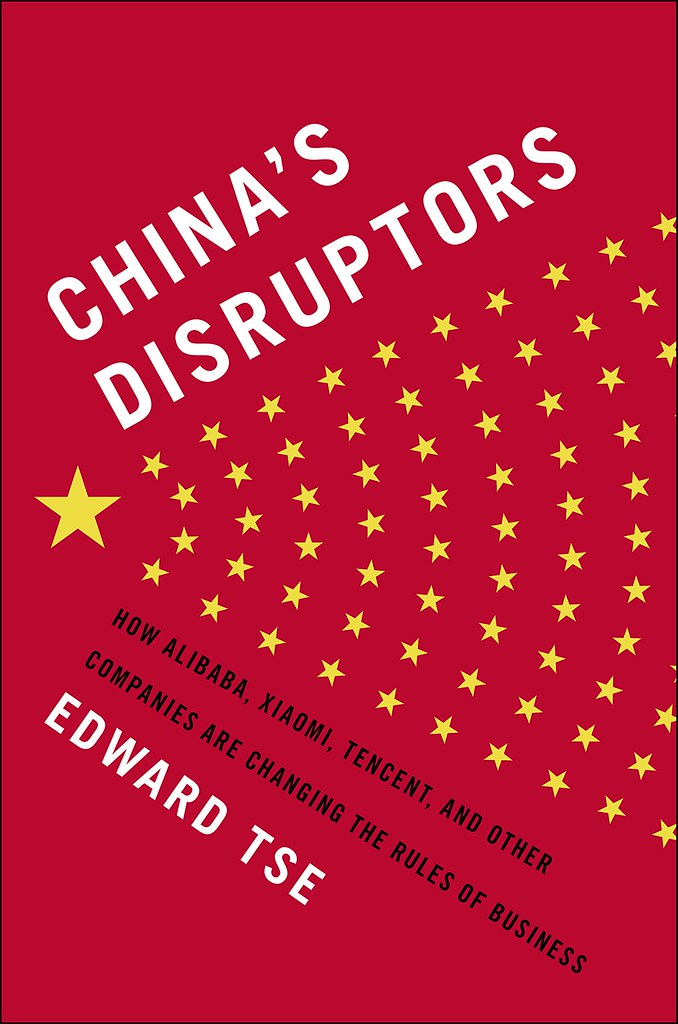
  • Chinas Disruptors by Edward Tse

    Reading Chinas Disruptors by Edward Tse is a great primer on how China’s enterprises are structured differently to foreign companies. The government / private relationship is a complex one. Tse does a good job at explaining it well. This alone is a good reason to read the book.

    Tse’s background as China based management consultant and academic provides him with a greater understanding of how the China’s entrepreneurs work, which he channels into Chinas Disruptors.

    Innovation

    His points about the equal but different status in Chinese versus Western innovation are well made and not given sufficient consideration in non-Chinese analysis of the country.

    reading

    At the time of publication of Chinas Disruptors, Premier Xi’s changes were only starting to take root and so one has to take Tse’s writing in that lens. He identifies some of the main reasons why Chinese companies have managed to grow, even where they haven’t had explicit government protection: notably eBay versus Alibaba. It is also noticeable that eBay failed in Japan as well.

    Tse didn’t cover how Baidu’s battle with Google in the same depth. Even before Google was banned; Baidu had become the market leader. Google didn’t do as good a job as it should have done indexing the Chinese web. The Chinese web was growing at a faster rate than even Google could have imagined. Google also struggled in other ideogram based language markets like Korea and Japan. This implies a weakness in their core search offering. Baidu has had only limited success outside Chinese language speaking markets.

    Optimistic viewpoint

    The author takes an optimistic view on the future of Chinese companies abroad. He thinks that Chinese approaches applied to foreign markets will win out. Yet one of the key aspects of Haier’s past success has been extreme localisation.

    As an outsider I detect a certain hubris and arrogance in some Chinese companies going abroad.

    Wolf culture

    Tse doesn’t explore the wolf culture at all. The wolf culture that has been fostered inside some of China’s most notable companies has toxic side-effects on employees and partners. Even within the company it can create a ‘them and us’ division that splits Chinese workers from their non-Chinese colleagues. This is much greater than the grain of sand in a shoe type irritation that you get between US and other western management structures. It’s even greater than the insiders / outsiders friction working in a Korean or Japanese firm.

    China acquiring abroad

    One of Tse’s examples: Chinese company Sany acquiring German concrete pump company Putzmeister now looks like a high water mark for Chinese acquisition of German technology and knowhow. Tencent buying into Reddit has seen a community pushback that is designed to push the buttons of an increasing assertive Chinese government.

    The complex amorphous nature of Chinese company structures, the directive nature of their relationships with the Chinese government and strategic nature of their products has created an equal and opposites reaction in foreign markets. Chinese state companies have had variable success in Belt and Road initiative projects. The service sector growth desired hasn’t kicked in yet as Chinese consumers still prefer to save in preparation for whatever future change throws at them.

    Western tire of Chinese tactics and populism rises

    There has also been an attitude change in western businesses who have had enough. They’re tired of the regulatory environment and non-tariff barriers being stacked against them. You also see a backlash against globalisation spreading across the western world which will adversely affect China going global.

    In conclusion, Tse’s work is an excellent primer, just bear in mind when you read it:

    • Edward Tse has a got a glass half-full perspective
    • The one constant in China is economic and social change

    More related content can be found here.

  • AngloArabia by David Wearing

    I got sent a copy of AngloArabia and was interested in having a read of it. I grew up at a time when the Gulf states influence grew through OPEC. I started my work life with a brief time in the oil and gas industry. Since then I have moved on through a number of iterations in my career.

    Currently reading

    The Gulf states sit in a peculiar AngloArabia part of British history that isn’t generally understood. Wearing goes through the history of the the area from the Trucial states attached to the British rule of India. And brings up to date regarding the UK’s role in the modern Middle East.

    The modern relationship between the Gulf states and the United Kingdom blurs the hierarchy between client states and their former colonial master. Oil and the OPEC oil crisis was the catalyst as countries got increased financial power and the UK became the number one Euro Dollar market.

    Lots of western countries have seen sovereign funds invest with a view to gaining influence. The UK is unique in terms of the role played by Gulf States who are bailing the country out. Without the support of Middle East money, the country would be overwhelmed by its current account deficit. This money has gone into property, the UK stock market, private equity investments and trophy businesses such as football clubs. The Gulf states are also responsible for a huge amount of consumption in the UK. The UK luxury market revolves around their consumption patterns.

    The implication is that the British economy and the UK government literally can’t afford for any of the Middle East monarchies to fall in an Arab Spring style revolution.

    The author David Wearing is a left of centre leaning journalist with wonkish credentials. As with any author, you need to ask yourself about his agenda. He has managed to write a relatively accessible book. More related content here.

  • To kill the truth by Sam Bourne

    To kill the truth is very much a book of our time. It explores the power of historical records, the alt-right and technology. The plot opens with a very current battle between ‘woke’ academia meets the polo-shirted, tiki torch-bearing far right. A former academic has gone to court in order to dispute our understanding of the slave trade and create a revisionist history.

    Historical records and accounts were picked apart to cast sufficient doubt on them. By using this legal standard record-by-record the mass of evidence is ignored. The truth becomes lies, rather like social political discussions over Brexit and Trump’s election.

    Untitled

    Then key establishments of historical record start to burn down around the world. Online repositories from websites to Google are brought to their knees by hackers. Into this mess steps a smart wonkish protagonist Maggie Costello. Maggie is tired of the political machine and gets pulled back in. Soon she suffers from online identity theft.

    Taking one side Costello’s gender for a moment. Costello feels familiar. This is partly because she is so similar to Dan Brown’s Robert Langdon and Tom Clancy’s Jack Ryan. Smart bookish heros who could see what the establishment couldn’t.

    The second parallel to Clancy’s work is that characters are secondary to the big ideas and technical wonders. And here lies the book’s achilles heel. Costello has obviously beeen developed as a smart vulnerable ‘woke’ hero. But she feels like a cardboard cut-out rather than a believable character. The androgynous nom-de-plume Sam Bourne hides the identity of Guardian journalist Jonathan Freedland. His wonkish credentials created a great high concept, but he hasn’t managed to create a character that we can root for.

    Enjoy the exploration of big contemporary issues, just keep our expectations low on the character development.

  • Things that I am reading at the moment

    Out of Control by Kevin Kelly

    Out of Control by Kevin Kelly

    I have been a subscriber to the US edition of Wired magazine for longer than I care to remember. We’re living in a different time now and the future that Wired features isn’t as thrilling as it once was. Kevin Kelly was one of the founding editorial team and still contributes. He also helped found The WELL and The Whole Earth Catalog. I like to revisit his 2010 book What Technology Wants every so often and have decided to delve into his back catalogue. I can remember skim reading Out of Control the first time around. Its a great read now that I am going more slowly, but like New Rules for the New Economy it informs as much with what it got wrong as what it got right. Technological progress has a weird pattern of looping around on several attempts before becoming an everyday product, so the ideas may have new life yet.

    How Brands Grow: Part 2: Emerging Markets, Services, Durables, New and Luxury Brands by Sharp and Romaniuk

    How Brands Grow: Part 2: Emerging Markets, Services, Durables, New and Luxury Brands by Sharp and Romaniuk. Part 1 is more famous for the impact it has had in consumer marketing. I have been working on a business-to-business project and have been thumbing through this, but probably not as enthusiastically as I should do. That reflects more on me than the book.

    To Kill The Truth by Sam Bourne

    To Kill The Truth by Sam Bourne. I received a galley copy of this book, it’s my current leisure read. Historians are being killed and historical records destroyed in the combustible environment of white nationalists and the alt left. The book is very now and its engaged me so far.

  • Most popular blog posts of 2018

    It’s that time of year again when I reflect on the things that I’ve done and what I can learn from the year. I wanted to get this out there whilst I still have a bit of respite from the holiday cheer. 

    In reverse order

    Reuse, re-edit and remix – the quality and impact of creative is a key question that is being asked at the moment. Marketers have finally woken up to the power of brand building as well as performance media. Which then begs the question what’s the minimum viable creative tweaks to effective creative that can be used?

    Apple – special event (September 2018) – trying to cut through the formulaic delivery of the company’s new products to understand what where the key salient points. I was surprised that this generated far more interest than a similar keynote at Apple WWDC which was much more interesting. 

    Enron and the net in 2000 – pre-Facebook the net was a much more decentralised place. Enron failed in their vision of a real time market for broadband, so I decided to work out what happened to some of their ‘partners’ at the time.

    Ramblings on consumption – this started off as a collection of disjointed notes I made whilst travelling to see the family in Ireland 

    Recommendations for a marketers bookshelf – you can’t dismiss the power of a good listicle. 

    This wasn’t the internet we envisaged – looking at the media of the 1990s we were promised an immersive visually stimulating interactive experience. Unfortunately we ended up with Instagramers and Facebook

    Throwback gadget: Bose Wave system – I still use a Bose Wave stereo due to the big sound that you get from a compact size. Its modular nature meant that it has weathered the iPod, DAB broadcast radio and internet streaming extremely well

    Jargon watch: zhuang bi (装b) – an exploration into Chinese l33tspeak. 

    Oprah time: Operation Elop – Nokia accounted for 25% of the Finnish economy at one stage and then spectacularly fell from grace, with the iconic phone business being sold to Microsoft. Yet the definitive history of what happened has never been licensed and translated by business publishers. I got to read a crowdsourced translation instead. 

    Things I’d like to see in 2018 – included in this list was innovation in smartphone experience (which we don’t have at the moment), a leaner web and critical thinking around the hype of crypto currencies. 

    My web toolbox – some of the tools that I was using in early July this year. 

    How to use RSS – with so many people now getting algorithmically selected, part of the solution is by going back to RSS and Atom feeds from trusted sites. So I threw together a guide to getting started with Newsblur

    The advertising industry post prompted by WPP’s 2017 financial results – how much of WPP’s difficulties are due to changes in the client and media environment versus WPP’s business?

    Social networks 10 years ago – 2018 will be looked back on in internet history as when the elites finally woke up to the dominance (ex-China) of Facebook, Google, Amazon and Apple. Looking back at 2008, it is hard to believe how much the social network eco-system changed

    Mercedes Benz China Syndrome – Chinese netizens are still jumping the Great Firewall to vilify western brands who reflect views that ‘offend the Chinese people’ – even when this content is aimed at non-Chinese audiences. Mercedes’ offence was an Instagram image with one of their cars and a quote from the exiled Dalai Lama. Dolce & Gabbana didn’t learn from the Mercedes experience. Mercedes and other brands saw the Chinese government get involved in what would be considered to be extra-territorial exceptionism. This mirrors and contrasts with the Chinese reaction to the Canadian arrest of Meng Wanzhou. The Chinese foreign ministry accused the US and Canadian governments of overreach. 

    Oprah time: Directorate S by Steve Coll – book review of Directorate S which discusses the complex relationship between the US war on terror and Pakistan

    Personal online brand – the perennial debate of should you own your own site or build your reputation on someone else’s platform?

    Out and about: Sicario 2: Soldado – I was so looking to this film and felt so disappointed when I got to watch it and was presented with a grand vision at the start that quickly fizzles out to a mediocre homage of the original, with one eye on building a franchise. 

    Dawns Mine Crystal by Yunchul Kim at Korean Cultural Centre – amazing art installation that I was fortunate to see. It moulded art and science as part of the Art @CERN project. 

    The influencers post – a post on the irrational exuberance associated with influencer marketing. I suspect that we’re close to peak influence.

    Chinese smartphone eco-system for beginners – I presume that its very Googleable – this post was inspired and featured a video on smartphones in China by Winston Sterzel earlier in the year. I then put accompanying background information to give it more context for marketers. China is changing a lot, one consequence of this is that Winston is looking to move to the US and visit China occasionally rather than live there, like he has been for the past decade.

    The long and the BBH of it – Binet’s The Long and the Short of it has been a strategists go to reference for a while. BBH pointed out the benefits of expanding the data set. However its easier to snipe from the sidelines rather than doing something meaningful about it.

    App constellations 2018 research – this built on research that I had done in 2014 and 2016. It was the most trafficked post for the first half of the year. It was also the post that took me the longest to research and I managed to lose my archive data file soon afterwards. I will revisit it, but will have to try and pull the data from these images for the basic numbers!

    Innovation: a few thoughts – this post came from the coalescence of many things that were kicking around in August and early September. My friend Nigel Scott had come up with some interesting research on venture capitalists; disabusing any illusion of science in their investment selection. You had ‘struggle porn’ being championed on LinkedIn; which made the wrong correlation between effort and innovation. Finally you have big technology companies with an inflated sense of their manifest destiny a la ‘software is eating the world’ and the hubris of Google, Facebook, Amazon, Tesla and Apple. I pulled ideas from across the board, borrowing a lot from Kevin Kelly’s concept of The Technium

    What if stories are brain code – storytelling is treated as a science within the creative  sector. The reality is that its based a pretty shaky base. Whilst the formulation of storytelling is suspect; psychological research indicates that stories are even more powerful than we previously realised. 

    Some data points

    30 percent of the top posts from the first half of the year made the cut through the whole of the year, which surprised me as I thought that they would benefit from additional ‘evergreen’ search traffic.  

    Slide3

    Slide4

    Lessons learned

    • There is still an interest in long form content and research
    • There was less of an interest this year in purely social platform based subject matter materials
    • Evergreen content doesn’t seem to work as well as previously