Ni hao – welcome to the Taiwan category of this blog. This is where I share anything that relates to the island of Taiwan, business issues relating to Taiwan, people from the island of Taiwan, or Taiwanese-specific culture. I don’t post that often about Taiwan but given its strategic location, vibrant culture and importance in global manufacturing I’d like to remedy that.
Taiwan has a range of cultural exports including music, but most of that is focused addressing a Chinese speaking audience. Many of China’s stars actually come from across the strait. Many Chinese factories are actually owned and run by Taiwanese companies with many managers and engineers crossing the straits to work. They were as responsible for the success and opening up as their Hong Kong brethren who moved their factories upstream along the Pearl river delta.
The Republic of China to give it its formal name has had a complex history, acting as a cradle of traditional Chinese culture that was destroyed and remade on the mainland under Mao Zetong. He was looking to build a new country, while Chiang Kai-shek was looking to preserve as much of an old country as he could. The island across the strait was like a seed bank ready to regenerate the mainland at some point in the future.
Often posts that appear in this category will appear in other categories as well. So if the Palace museum launched a collaboration with a brand that had great design chops and that I thought was particularly notable that might appear in design as well as Taiwan. Or if there was a new white paper from the government of Taiwan, that might appear in ideas and Taiwan. If there are Taiwanese related subjects that you think would fit with this blog, feel free to let me know by leaving a comment in the ‘Get in touch’ section of this blog here.
An interesting essay on the nature of scientific slow down that applies as much to applied innovation as well – Scientific slowdown is not inevitable – Works in Progress – The most popular version of the low-hanging fruit model is that we are picking fruit at a slower rate because the higher-up fruit are harder to get to. You can only invent fire, the wheel, or a flint axe once. This story says that declining research productivity is inevitable. The fact that we once saw increasing scientific progress is because we were continually increasing inputs: adding more researchers, more research tools and technology. But now research is getting so much harder that even this is not enough. But another explanation for falling innovation ‘yields’ is that we are getting worse at picking it, despite the progress in picking methods that has happened. We’ve handed in our stepladders for footstools, without realising it. Our recent decline in innovation vibrancy might be explained by ideas becoming inherently harder to find, but it may just as easily be explained by us becoming worse at finding them. – The scientific slow down is real and is occurring across disciplines:
Pharmaceutical research is taking longer and there is a patent cliff on blockbuster drugs
Each process change in semiconductors costs more money and takes more time
Software takes more lines of code
But the scientific slow down might also be down to problems with incentives. Technology executive and engineer Judy Estrin talked about the way ‘hard innovation’ is no longer invested in compared to ‘soft innovation’. Innovation itself has become financialised with blockchain being like a snake eating its tale. The scientific slow down could be as much related to the incentives and choices that drive research. The scientific slow down could also be down to the divorce between developing and making things. Silicon Valley is no longer making silicon. So it is harder to foster an eco-system to deal with scientific slow down.
China Will Be Deglobalization’s Big Loser by Minxin Pei – Project Syndicate – China was headed toward at least a partial decoupling with the United States well before Russia invaded Ukraine. And it has been seeking to ensure that this process happens on its terms, by reducing its dependence on US markets and technology. To that end, in 2020 China unveiled its so-called dual-circulation strategy, which aims to foster domestic demand and technological self-sufficiency. And yet, last year, China was still the world’s largest exporter, shipping $3.3 trillion in goods to the rest of the world, with the US its leading export market. In fact, overall trade with the US grew by more than 20% in 2021, as total Chinese trade reached a new high. Trade with the European Union also grew, reaching $828 billion, even as disagreements over human rights torpedoed a controversial EU-China investment agreement.
Cleaning Up Streetwear’s Act | High Snobriety – the European Commission are proposing new standards which would dictate how durable apparel would need to be in addition to bans on the destruction of unsold materials. This comes at a time when a cavernous dichotomy exists between the cohort of people who require their products to be sustainably minded and the growing number of consumers who succumb to the whims of fast fashion led by retailers like Shein mushrooming to a $100 billion valuation
Naked power politics is a challenge to the post cold war consensus. Russia’s invasion in Ukraine, like Ethiopia’s invasion of Tigray are two examples of naked power politics in action. Russia’s naked power politics approach isn’t new and was something that the Financial Times and others had been talking about for at least a decade and certainly since the invasion of Crimea.
In the case of Russia, uniting the west and drawing both Finland and Sweden into NATO shows that naked power politics can be counter-productive. Ethiopia seems to have fought itself to a stalemate after invading Tigray and then getting beaten back to Addis Ababa. Only close air support using drone from gulf states helped stave off a military collapse.
But naked power politics is also playing out in the uneven relationship between China and the European Union; despite the EU’s market power.
Even more so we can see naked power politics in China’s approach to Australia through trade.
Is Marcus Rashford working class? The answer depends on your age – New Statesman – “Younger people appear to identify membership of the upper class with power and social impact,” he said. “This reflects the social media which prioritises celebrity coverage by attention capital, rather than accent, schooling or parental occupation.” The findings also suggest that “class hierarchy is perceived by young people in the present tense, ie, the media and social media time that people have now: the more media time, the higher the class position,” Rojek added. “The historical relationship of class to ancestry may be waning. A ‘now perspective’, based in power, social impact and online recognisability, seems to be growing in importance.” This trend has been a long time in the making, he observed. “For many years, it has been evident to me that for most of my students ‘social media’ is ‘society’, ie, a source of belonging, community, identity and aspiration.” – this might be age related rather than cohort related
When Saying Gay Isn’t Good Enough | Adweek – The Walt Disney Company has been singled out by Florida Gov. Ron DeSantis for its opposition to Florida’s House Bill 1557, the so-called “Don’t Say Gay” bill. Recently signed into law, the measure prohibits discussion of sexual orientation and gender identity from kindergarten through third grade. The governor has vowed to revisit—and possibly rescind—Disney’s privileges and autonomy in the state. But even LGBTQ allies and activists haven’t been happy with how the entertainment giant has handled anti-LGBTQ legislation in Florida. – which brings the question of what is the role of brands in societal norming?
Xi Focus: Xi orders building world-leading spacecraft launch site-Xinhua – “Xi noted that Wenchang is the launch site of China’s new-generation high thrust carrier rockets and the bridgehead of the country’s deep space exploration. The launch site should continue to eye the frontier of global space development and the major strategic needs of China’s space industry, and comprehensively improve its modern space launch capabilities, said Xi. China is scheduled to complete the construction of its space station this year. Tianzhou-4 and Tianzhou-5 cargo crafts, as well as Wentian and Mengtian lab modules will be launched from Wenchang. Xi said the launch site should make meticulous efforts to ensure the missions’ full success.”
Old Enough: Netflix show sparks global debate on parenting and child safety | Sora News – its interesting because it shows how much of a high trust society Japan is versus the rest of the world and how far we have moved away from the ‘latch key‘ generations in the west that allowed women to go out to work. Although my Mum was a homemaker, I was still expected to look after myself if she had to go out or was visiting a friend. As an only child I was very comfortable in this trust being put in me. It was also the same for many of my school friends. The show is unbelievably cute. Read the explanation of Japanese culture on children before watching the hyper judgemental TV segment below.
The Death of Streetwear Culture is a Class Issue | High Sobriety – in its ‘80s and ‘90s heyday, by and large streetwear culture was driven by the kids from low-income neighborhoods in major American cities. The very term “streetwear” bears that notion—it’s a style born in the streets, in schoolyards, on handball and basketball courts, and on brownstone stoops. More often than not, streetwear heroes—athletes and rappers—came from the working class
Warner Bros. censors gay dialogue in Harry Potter movie for China release – CNN – the irony of this is that the Chinese internet is filled with homoerotic and even a lot of graphic homosexual content based around fan fiction from Sherlock to Harry Potter and even adaptions of Chinese literary classics where sword play takes on a vastly different meaning
In honor of Ramadan, meals appear on Tesco billboards after sunset – To mark the month of Ramadan — when Muslims refrain from eating and drinking between dawn and dusk — British supermarket Tesco turned to dynamic billboards. During the day, screens show four hands and a large number of empty plates and platters. Once the sun sets, food appears on the plates, just as Muslims start breaking their fast with an iftar meal. – nice bit of work by BBH that takes advantage of dynamic digital out of home advertising technology
REWE’s unmanned mini-marts bring daily groceries to rural Germany – German retail giant REWE is launching a new concept: nahkauf BOX. Operating under REWE’s nahkauf brand of neighborhood stores, nahkauf BOX is an unmanned, standalone convenience store that’s open 24/7. – this is similar to China’s automated convenience stores, but interesting that its aimed at rural villages lacking stores. I could see this shaking up rural Ireland as well
Security
Pentagon to meet top arms makers to discuss stepping up aid to Ukraine | Financial Times – fascinating detail from this. Ukraine has already had four years production worth of Javelin missiles or about a third of the US stocks. They had sent a quarter of their stock of Stinger missiles or about five years worth of production. The challenge will be scaling component manufacture, supply chain and system assembly
The Electronic Sheep Company was one of the startups that came and went during the last ‘metaverse boom’ or what was then called ‘virtual worlds’ back in the mid-2000s and early 2010s epitomised by Second Life.
When Nokia Pulled Out of Russia, a Vast Surveillance System Remained – The New York Times – Nokia said this month that it would stop its sales in Russia and denounced the invasion of Ukraine. But the Finnish company didn’t mention what it was leaving behind: equipment and software connecting the government’s most powerful tool for digital surveillance to the nation’s largest telecommunications network. The tool was used to track supporters of the Russian opposition leader Aleksei A. Navalny. Investigators said it had intercepted the phone calls of a Kremlin foe who was later assassinated. Called the System for Operative Investigative Activities, or SORM, it is also most likely being employed at this moment as President Vladimir V. Putin culls and silences antiwar voices inside Russia. For more than five years, Nokia provided equipment and services to link SORM to Russia’s largest telecom service provider, MTS, according to company documents obtained by The New York Times. While Nokia does not make the tech that intercepts communications, the documents lay out how it worked with state-linked Russian companies to plan, streamline and troubleshoot the SORM system’s connection to the MTS network. Russia’s main intelligence service, the F.S.B., uses SORM to listen in on phone conversations, intercept emails and text messages, and track other internet communications. The documents, spanning 2008 to 2017, show in previously unreported detail that Nokia knew it was enabling a Russian surveillance system. The work was essential for Nokia to do business in Russia, where it had become a top supplier of equipment and services to various telecommunications customers to help their networks function. The business yielded hundreds of millions of dollars in annual revenue, even as Mr. Putin became more belligerent abroad and more controlling at home. – SORM has been around in one form or another for almost three decades. It mirrors the surveillance system used by Sweden and GCHQ in the UK. The latest version of SORM is SORM-3 that uses deep packet inspection infrastructure. SORM seems to be based on a mix of Russian made infrastructure and equipment by the likes of Israeli vendor Cellebrite.
Trial of Australian Journalist in China on States-Secrets Charges Ends Without Verdict – WSJ – Cheng Lei’s detention in August 2020 coincided with a sharp downturn in diplomatic relations between Beijing and Canberra – this is likely to be better for Australia’s incumbent prime minister Scott Morrison as is shows progressive realism doesn’t work. That’s not so good for Chinese interests in Australia
Not an April Fool: Dyson announces apocalyptic filter-headphone combo | Ars Technica – if you told me that this was bought in the SEG Plaza in Shenzhen and was a fake Dyson product I would believe you. I don’t know why Dyson went there. Usually its product development is well-gated which is why its electric Range Rover analogue got shelved prior to going into production
Taiwan’s love motels are safe spaces for couples — Quartz India – Marco Hsiao, a private investigator, has frequented hundreds of love motels in an attempt to provide evidence of adultery for divorce cases—80% of his cases pertain to cheating spouses. He said the rooms are also used for drug deals, interviewing new workers entering the sex industry, and money-laundering meetings.
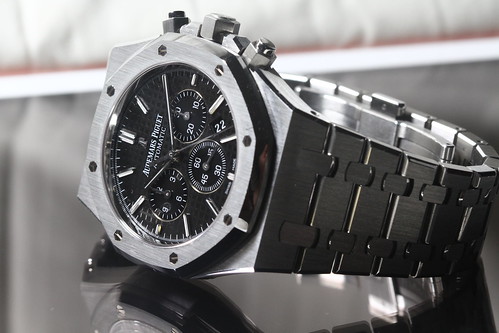
Russia Seized Millions of Dollars of Swiss Luxury Watches in Moscow – Russian customs service agents took millions of dollars of Audemars Piguet watches. Audemars Piguet had closed its boutique in Moscow. The Russians allege that Audemars Piguet was in breach of customs regulations. The reality is that its retaliation for Switzerland joining other countries in levying sanctions on Russia. In this respect its similar to the state-sanctioned theft of aircraft from Irish aircraft leasing companies. There are a few problems with these Audemars Piguet watches. The Russian market for Swiss watches in 2021, accounting for 260m Swiss francs (£212m) of shipments, according to the Federation of the Swiss Watch Industry; which puts the country in the top 20 acquirers of Swiss watches.
Audemars Piguet Offshore models are long sought after by watch collectors. The problem that Russia will have with the watches is the inability of them to be serviced. The company will have a record of the serial numbers involved and won’t service them when they come up for maintenance in a few years time. AP watches have a reputation for being great watches, but aren’t robust like say a Rolex in terms of their need to be serviced.
Russia seems to be pretty determined to have western sanctions on the country for a long time to come yet.
Geely questions future in Russia despite opening for China’s carmakers | Financial Times – Tu Le, managing director of Sino Auto Insights, noted that the Chinese carmakers are relatively inexperienced when it comes to maintaining a brand’s reputation in western markets. “They’ve never had to deal with these kinds of external pressures in how they were perceived by foreign consumers,” he said. “A lot of these companies, they’re going to have to do business in Europe, or they’re going to have to do business in the United States. If they seem too eager to fill that void [in Russia], I will bet you money it is going to have some backlash in those regions.”
Judy Asks: Are Europeans Ready to Pay the Price for Ukraine’s Sovereignty? – Carnegie Europe – Carnegie Endowment for International Peace – The grim truth is that many in the West would be ready to accept compromises over Ukraine’s sovereignty in order to stop the war. In countries neighboring Russia, there is a strong understanding that such compromises would seriously weaken our security, hence they are ready to pay a high price to avoid them. However, among Western experts and policymakers, assessments of the balance between different interests seem to vary. The thinking that some degree of accommodation of Russia’s interests might be needed to reach stability has not disappeared. This is a dangerous and misguided logic
Lanvin Group plans New York IPO in SPAC deal | Vogue Business – Lanvin Group, the fashion arm of Chinese conglomerate Fosun International which includes the French heritage label Lanvin, plans to list in New York in a SPAC deal, the second high-profile fashion firm to make the move since Ermenegildo Zegna late last year. Lanvin Group announced Tuesday it is combining with special-purpose acquisition company Primavera Capital Acquisition Corporation in a deal that values the group at $1.5 billion, according to an emailed statement. Lanvin Group expects to raise up to $544 million from the deal and from existing investors, and will use the funds to expand its portfolio, including future luxury acquisitions
A Chinese Nickel Market Mystery – WSJ – Market ructions amid war aren’t unusual. But the London Metal Exchange’s retroactive cancellation of nickel trades this month appears to be unprecedented. One question is whether the Hong Kong-owned exchange intervened to rescue a Chinese nickel tycoon. – the exchange is owned by the Hong Kong Stock Exchange
Sony and Honda reveal plans to jointly make and sell electric vehicles | TechCrunch – this might also explain why Sony’s ‘concept’ car seemed to have a lot of money put into it, to make it look like a finished product a couple of years ago. Sony and Honda’s EV venture is a lesson for corporate Japan | Financial Times – the FT makes a number of good points about the relatively junior role that Honda is taking in the endeavour and that Sony making a decision to go independent indicates that consolidation of vendors in the electrical vehicle space is far off. I expect that the Sony and Honda deal in this respect is partly the pressures driven by the amount of ‘dumb capital’ chasing electric and automotive vehicles.
Sony and Honda likely see their deal as an antidote to that pressure. There were also fair comments made about relative software expertise between Sony and Honda, however I would argue that there is still a need for stable underpinnings of the software from the likes of QNX. But in the critique of the previous motor industry partnerships isn’t fair. For instance, Yamaha has a long history of taking concepts and designs to Toyota for them to build them. The most iconic of which was the Toyota 2000GT. So in many respects Sony and Honda are working on similar heritage to others.
It is interesting that we haven’t seen a similar pairing to Sony and Honda between Samsung and Renault, given their Korean car assembly joint venture. It is also interesting that Apple has failed to secure a similar partnership to Sony and Honda in its car efforts so far.
China’s Two Traps by Keun Lee – Project Syndicate – China’s economic slowdown suggests, the next phase of its development is rife with challenges. The country risks being ensnared by two traps: the “middle-income trap” (the tendency of fast-growing developing economies to lose momentum once they reach middle-income status) and the Thucydides Trap (when tensions between an insecure incumbent hegemon and a rising power lead to conflict)
Why are Chinese students so keen on the UK? – BBC News – The initial attraction of Glasgow – as well as its solid academic reputation – to many was how the Victorian university buildings looked on the brochures, rather like Hogwarts from the Harry Potter films
How China’s Ambitious Belt and Road Plans for East Africa Came Apart – The Diplomat – Chinese actors typically approach BRI deals with two contradictory assumptions: First, the political leadership with whom they are dealing is either too weak or too venal to challenge contract terms that decidedly favor China; and, second, these same leaders will be strong enough to fend off resistance to ambitious infrastructure projects by opposition politicians and civil society groups while also mobilizing the financial resources necessary to sustain expensive, long term projects. – they expect the kind of smooth running process that they would have in China, but not surprisingly don’t get it
Chinese lenders squeeze African borrowers even harder | Financial Times – Chinese lenders are imposing even more stringent collateral requirements on low-income country borrowers than previously known as they seek to hedge risks from their extensive overseas development finance programme. Under a $200mn loan from China Eximbank for the expansion and modernisation of Entebbe airport, the Ugandan government is required to channel all revenue from the country’s only international airport into an escrow account, according to the contract obtained by AidData, a US-based research lab. The document highlights a long-running controversy over the loan to Uganda’s government, which damaged its relationship with the bank. And more here: China cobalt mine deal was ‘injustice’: my country did not get anything, ex-DRC leader says | South China Morning Post
Hong Kong
Chinese fitness app Keep files for Hong Kong IPO · TechNode – interesting that this is going ahead given the kind of data that Keep would have. One only needs to look at the opsec failures that Strava revealed of American forces in the Middle East and Afghanistan
The war in Ukraine is going to change geopolitics profoundly | The Economist – Japan, Singapore, South Korea and Taiwan joined in sanctions against Russia, as did Australia. The change of mood in Japan has been particularly striking. Over the past decades it has tirelessly wooed Russia, in part to counterbalance China but also in the hope of settling the problem of four northern islands seized by the Soviet Union. Abe Shinzo, the former prime minister, met Mr Putin 27 times, including a trip to an onsen bathhouse. Now, under Kishida Fumio, Japan has frozen the share of Russia’s central bank reserves held in the country and is urging fence-sitters to take a clearer stance against its former pal. The end of the cold war was never going to usher in perpetual peace. But the Ukraine crisis is giving new form to the possibilities for future conflict and ways in which it may be averted. It is raising the previously outré possibility of territory being stripped from a developed country by force. By bringing Russia and China closer together, it is putting a new burden on the system of American alliances that partially encircles them. It has started consolidating Europe’s belief in itself and its ideals, and may increase its willingness to fight for them; it may also be seeing Germany and Japan, a lifetime after their defeat in the second world war, taking on new martial roles – the military rise of Japan will be worrying for China
Ukraine conflict risks uncontrollable escalation of cyberwarfare – Nikkei Asia – When and if Russia, or some other advanced-hacking state, pulls these tricks against a better-prepared adversary, resulting in a tit-for-tat escalation that could quickly spin out of control. Given the historical weakness of digital security in much of the U.S.’s civilian infrastructure, notably the electric utilities and grid, we can imagine a situation in which Russia or China, or some other entity causes not just inconvenience but casualties, including deaths. What would the U.S. do then? If Russia took down electricity from Boston to Washington, New York to Chicago, the American people would get very, very angry. What would an American government do next? The U.S. has said, with strategic vagueness, that an attack on critical infrastructure, including digital infrastructure, could ultimately trigger a military response. Then what? In 1962, futurist Herman Kahn published “Thinking the Unthinkable,” pondering nuclear-war scenarios in ways that few of the people who had control over those civilization-killing weapons had ever considered. No one wanted to prevent nuclear war more than Kahn, in part because he understood what it would mean. We do not believe that nearly enough thinking about cyber-unthinkables is taking place today, nor the escalation scenarios that would bring them on.
Chinese telecoms giant Huawei has been helping Putin’s efforts to stabilise Russia’s internet | Daily Mail Online – Huawei, which reportedly has five research centres in Russia, is said to have ‘rushed to Russia’s aid’ to support its internet network in the face of the attacks. A report, which appeared on a Chinese news site but was later deleted, claimed that Huawei would use its research centres to train ‘50,000 technical experts in Russia’. – The Mail on Sunday is now covering the kind of stories that previously only featured on the English language pages of late lamented Apple Daily Online published out of Hong Kong.
Arm China CEO asserts semiconductor joint venture’s right to pursue an IPO independent from its SoftBank-owned British parent | South China Morning Post – “Arm has written to Chinese authorities that Arm China won’t survive without [the British firm’s] support,” Wu said. He indicated, however, that Arm China has already developed the capability to continue its operations separately from Arm in the UK. The stand taken by Wu in Arm China forms part of a larger effort by the country’s semiconductor industry to overcome US trade sanctions and build a world-class chip supply chain. The dispute with Arm has not slowed down its Chinese joint venture’s business under Wu. Last year, Arm China generated US$700 million in total revenue, including intellectual property licensing and royalty fees. Arm’s share in its China venture was about US$500 million last year, according to Wu. “Arm can’t afford to lose its share of revenue from the Chinese market,” Wu said. He indicated that the Chinese joint venture has hit all its goals – including revenue, net profit, and research and development spending – which were set five years ago. Wu said Arm China’s biggest contribution to the Chinese chip design industry was to open the company’s source codes to domestic customers, “giving them freedom to develop their chips and raise their capabilities to a global level”. He also said he was displeased by Arm’s decision in May 2019 to cease business with Huawei Technologies Co, following Washington’s decision to add the Shenzhen-based telecommunications equipment maker to the US trade blacklist. – I suspect Mr Wu is working on behalf of the Chinese government in ‘war by other means’