Category: technology | 技術 | 기술 | テクノロジー

It’s hard to explain to someone who didn’t live through it how transformation technology has been. When I was a child a computer was something mysterious. My Dad has managed to work his way up from the shop floor of the shipyard where he worked and into the planning office.

One evening he broad home some computer paper. I was fascinated by the the way the paper hinged on perforations and had tear off side edges that allowed it to be pulled through the printer with plastic sprockets connecting through holes in the paper.

My Dad used to compile and print off work orders using an ICL mainframe computer that was timeshared by all the shipyards that were part of British Shipbuilders.

I used the paper for years for notes and my childhood drawings. It didn’t make me a computer whiz. I never had a computer when I was at school. My school didn’t have a computer lab. I got to use Windows machines a few times in a regional computer labs. I still use what I learned in Excel spreadsheets now.

My experience with computers started with work and eventually bought my own secondhand Mac. Cut and paste completely changed the way I wrote. I got to use internal email working for Corning and internet connectivity when I went to university. One of my friends had a CompuServe account and I was there when he first met his Mexican wife on an online chatroom, years before Tinder.

Leaving college I set up a Yahoo! email address. I only needed to check my email address once a week, which was fortunate as internet access was expensive. I used to go to Liverpool’s cyber cafe with a friend every Saturday and showed him how to use the internet. I would bring any messages that I needed to send pre-written on a floppy disk that also held my CV.

That is a world away from the technology we enjoy now, where we are enveloped by smartphones and constant connectivity. In some ways the rate of change feels as if it has slowed down compared to the last few decades.

  • Oddpost webmail

    Before Oddpost

    When you think about Oddpost, you have to cast your mind back almost two decades in 2002, the web was a very different place. In order for applications to do anything they would have to refresh the whole page. You couldn’t dynamically edit a document with other colleagues like you can with Google Docs for instance.  Which made applications like time tracking, or updating the basket on an e-commerce site a bit of a pain.

    The catalyst for change for app like performance in the browser was a webmail client called Oddpost.
    Oddpost RSS aggregator

    Oddpost.com

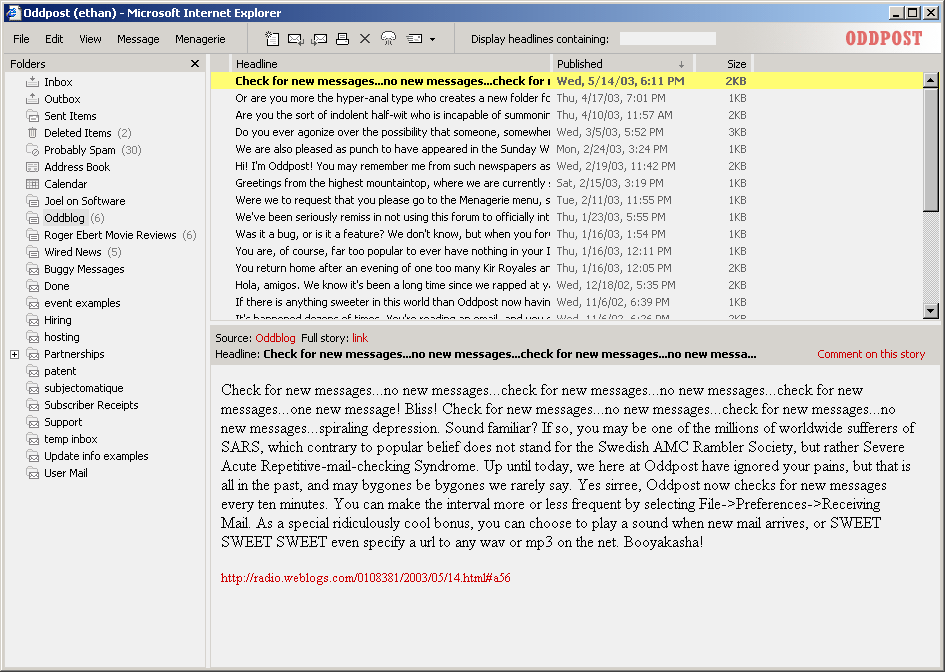
    Oddpost was different in a number of ways to anything else at the time. At first glance, it looked like a three pane desktop mail client, there was less navigation controls than your webmail interfaces at the time. Which heralded a very different design approach in subsequent web 2.0 companies. It is hard to articulate now, Gmail wouldn’t arrive for another two years and when it did it was invite only which meant that for the average Joe it took a while to come around. There was no download or application required to make it work (like a Java applet for instance). Oddpost, instead used technologies which are now humdrum, but a decade ago were the web equivalent of a revolution. Dynamic HTML, XML, and Simple Object Access Protocol (SOAP) allowed individual elements of a page to be updated that provided a desktop app-like experience.

    Design

    Oddpost’s design approach didn’t lend itself to advertising that would slow down it’s dynamic interface and its method of updating components of a page rather than the full page adversely affected the page view metric advertisers cared about at the time. Storage was more expensive than it is now, so it made sense that Oddpost was a paid-for product.  In return for your subscription of $30/year got you a whopping 30MB of storage in your email box and an integrated RSS reader (rather like mail.app with OSX or Outlook with Windows).  In addition to the unique interface Oddpost offered support for both POP3 and IMAP standards which allowed access over an email client. IMAP allowed you to keep the files on the system providing you with a standard view using the web interface, your own computer, PDA (using Bluetooth and your cell phone as a wireless modem) or early smartphones like the Nokia 7650 and Nokia 6600 which came out in 2003. I was unusual at the time in having an IMAP email account, the entry cost for this service was purchasing an Apple computer.

    Oddpost was rough around the edges. It would be another few years before the metal lid of an Apple laptop would be as common as it is now, so it wasn’t as much of an issue that Oddpost only worked on Internet Explorer (version 5 or better) for Windows. The search functionality only did the headlines of messages not the body text. The company was eventually acquired in April 2004 by Yahoo! as it looked to bolster its position as an email provider against the then new Gmail service.

  • H P security research + more

    H-P Security Research

    The mystery of North Korea’s cyber threat landscape | H P Security Research – interesting whitepaper by H P Security on North Korea’s cyber warfare capabilities (PDF) – Not the most sophisticated but clever use of more limited toolkits according to H P Security. More security related content here.

    China

    Hardware never sleeps in China’s most exciting city | Techinasia– Shenzhen, in some ways I am not surprised

    China factory sector growth slows | RTHK – interesting that this is the official figure rather than the more volatile and less representative HSBC PMI figure. No real steer on seasonality at play however

    Consumer behaviour

    Muhammad is the most popular boys’ name in the UK | Quartz – the perils of research-led PR can be seen in the way the data has been interrogated

    TED Talks Aren’t Making My Generation Smart – They’re Making Us Stupid | VICE – yep

    60-70% of global consumers are “very positive” about private label products, Nielsen’s report shows – interesting move. Retailers brands are now the promise of quality and FMCG are commoditised? May make feature based marketing like Colgate-Palmolive look much smarter in retrospect

    Media

    TV 3.0 is already here – I, Cringely – how do telcos get rewarded?

    How Flash Games Shaped the Internet – The Atlantic – interesting essay which also explains the challenges that Windows 8 faced with one experience to rule them all

    Skeletor Is Waging a Twitter Takeover of @Honda. Here Are the Best Moments So Far | Adweek – love it

    Rentrak Completes Acquisition of Kantar Media’s U.S.-Based Television Measurement Assets – PR Newswire – WPP gets significant minority share in Rentrak. Interesting that the shares are restricted

    Technology

    Samsung readies its first Tizen smartphone for launch in India – cheapens brand perception of Tizen, but also shows how much leaner its code must be. Unfortunately Samsung has altered the UI from Meego so its just the same as Galaxy phones

    Manufacturers’ interest in EL as light source starting to brighten | Asahi Shimbun – it depends on the use case, but very interesting

  • Shenzhen ecosystem

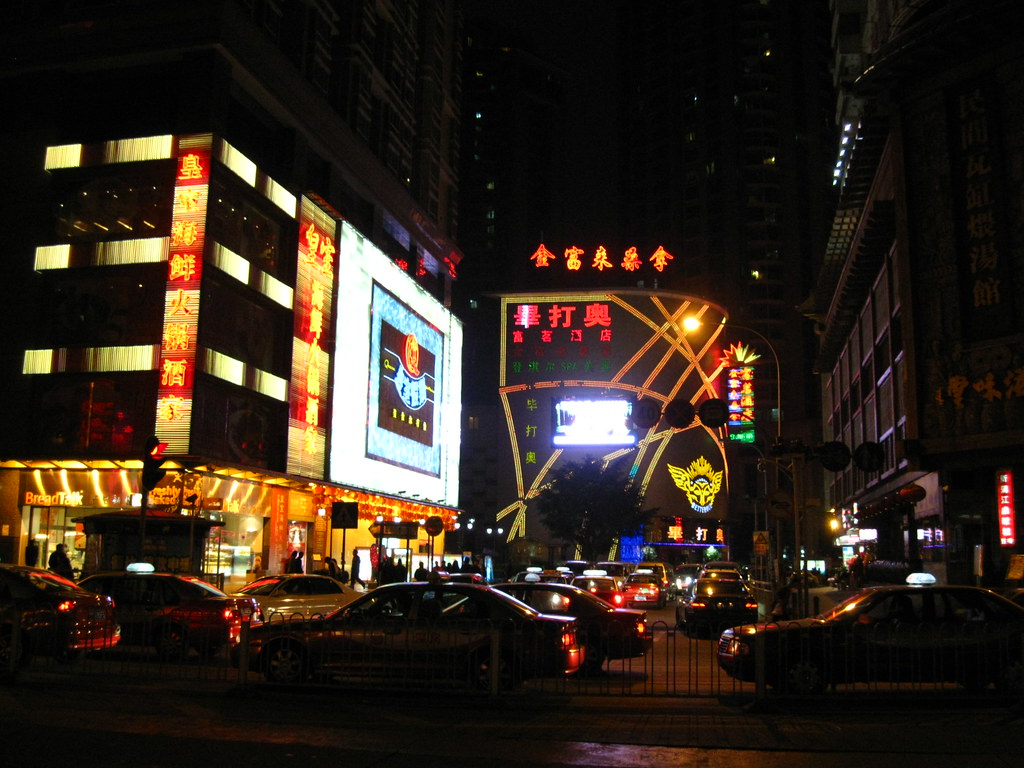
    It is hard to believe that the Shenzhen ecosystem was built over just a few decades. Just over 30 years ago China moved from a period of cultural isolation to gradually opening up to the commercial world beyond its borders. The place to naturally start this was in Guangdong province close to the then British colony of Hong Kong. A small fishing village grew to become the workshop of the world. The growth of Shenzhen was driven by investment from multi-nationals and overseas Chinese. One of the earliest industrial areas was called Overseas Chinese Town or OCT. OCT has changed from manufacturing to retail and offices for the creative industries in the former factory buildings.

    Hong Kong had built up capability and expertise in light manufacturing and clothing from the 1950s through the 1970s. It is still important for supply chain intermediaries. This was the ‘golden age’ of Hong Kong. This is how many of the Hong Kong oligarchs made their first fortunes; which they then invested overseas, in China and into the Hong Kong real estate market.

    Globalisation had started after the second world war. But the opening up of China threw it into overdrive. Hong Kong industrials moved manufacturing plants for clothing, shoes, toys, plastic goods and electrical appliances to China.

    They were joined by Taiwanese electronics manufacturers and then multinationals from Europe, America and Japan. Hong Kong clothing manufacturers provided China supply chain expertise to western retailers like Walmart.

    The Shenzhen ecosystem was built on manual production. The deft fingers of Chinese women workers allowed a lot more precision than Japanese pick-and-place machines. Which meant a lot more flexibility in manufacturing using the Shenzhen factories. You wouldn’t have an iPhone if you used pick-and-place robots on the production line.

    Electronics manufacturing

    At first, these companies were used to fatten the wallets of customers who took on the marketing and distribution of electronics in the West. The dirty secret about many PC and laptop designs was they were standard underneath. Then this cost saving was passed on to the customer as people like Dell went for close to lowest price operator based on a direct mail / online direct ordering and cut out the channel.

    Finally that wasn’t enough, and most of the laptop and PC resellers make no money. Instead the main people to profit from these sales were Microsoft which licensed it’s Windows operating system and Intel which provided the majority of compatible micro-processors capable of running Windows-compatiable applications. In the PC industry there is usually just two or three profitable manufacturers and one of them is Apple. Historically it was Dell, then Hewlett-Packard and now it is likely to have be Lenovo.

    Shrinking PC-esque computing power into the palm of one’s hand was inevitable with the rise of flash storage and Moore’s Law facilitating power-efficient processors. The challenge is battery technology, packaging and industrial design.  Apple pushed the envelope with suppliers. Hon Hai and other manufacturers installed hundreds of CNC machines to fabricate thousands of metal phone chassis. These radical changes in manufacturing capability were opened up to lower tier manufacturers raising the standard of fit and finish immeasurably over a few years.

    Now Xiaomi and Lenovo product handsets that have better build quality than many Samsung and HTC handsets. The performance is good enough (again thanks to Moore’s Law) and the handsets run the same applications. Sony, HTC and Samsung handsets look as marooned as Sony’s Vaio PC range in the Windows eco-system.

    Shenzhen’s ecosystem has been a great leveller of manufacturing and industrial design capabilities with Apple at the leading edge of what’s possible from an industrial design and materials technology.

    More information
    Shenzhen Government Online – this loads slow like they are phoning the pages in from 2002, but is informative
    The smartphone value system – An earlier piece I wrote about the challenges of the Android eco-system

  • FES watch + more things

    Who’s Behind the E-paper FES Watch? – Digits – WSJ – interesting the way Sony has become an internal VC operation. It makes sense since they need disruptive innovation and they still have smart people. they also need to allow their engineering talent to keep having an outlet for their creativity. The FES watch is a classic quirky Sony product that is very clever. The disappointing bit was hearing them working with an external product design agency on the FES watch. Especially given the internal industrial design capability to deliver iconic designs and a wider design language across product ranges. More design related content here.

    Tightening too frightening for UK | HSBC – interest rate increase and lower than expected economic growth

    Oh No They Didn’t: European Parliament Calls For Break Up Of Google | SearchEngineLand – inevitable but not sure it will make an impact, Google must have expected this?

    Maglev elevators are coming that can go up, down, and sideways | Quartz – I love this

    Flickr is about to sell off your Creative Commons photos | DazedTech entrepreneur Stewart Butterfield left the company in 2008, but says that Yahoo-ordained plan is “a little shortsighted”. He added: “It’s hard to imagine the revenue from selling the prints will cover the cost of lost goodwill”. It’s the equivalent of looking for pennies that may have fallen down a crack in the sofa. Flickr photos are already used in the online and offline media. They have also been used to train image recognition algorithms, both of which are allowed by the licensing. The prints seems like a cheap, low value move.

    Supermarket own-brands generate more than half of UK grocery sales | BrandRepublic – bad news for CPG brands. And bad news for brands in general, particularly when one thinks about how Amazon is building its private label lines across several sectors

  • 1 percent dominance + more things

    This is the proof that the 1 percent have been running the show for 800 years | Quartz – know your place serfs. Interesting long term research on the 1 percent. There is also research that shows that the descendants of Chinese landlords doing better. These would have been the pre-revolutionary 1 percent. This rise of Chinese landlords descendants occurred despite landlords being executed and their families persecuted in China during the Mao era. More economics related content here.

    Rescuing gadgets from the golden age of ‘Made in Japan’ | The Japan Times – inspiring and deeply saddening at the same time

    デザインアンダーグラウンド – ラジカセ・ヴィンテージ家電、オーディオの販売・修理 – Design Underground Factory restoring beautiful Made In Japan consumer electronics

    South Korea puts cost of reunification with North Korea at US$500 billion | South China Morning Post – and I bet it would go up from there due to corruption and security issues

    Recode Drops Comments | Recode – a blog without comments, also has implications for time on site, if I was an advertiser with them I would find this choice very curious

    Beefed up iPhone crypto will lead to a child dying, DOJ warned Apple execs | Ars Technica – the problem is that this has been discredited by experts a number of times and they keep trotting it out

    Technics To Launch FLAC Music Download Store Powered By 7Digital – hypebot – nice to see the name resurrected now about some decent pro-audio and DJ gear?

    Huawei: KRYDER STORAGE CRISIS is REAL and ‘we’re working on it’ | The Register – is the cause of Kryder’s Law shrinkage a move to SSD and lack of investment in disk science?

    Apple Releases Its Most Important Typeface In 20 Years | FastCompany – download the font, really nice

    ‘Qualcomm’s opportunities greater than challenges’ | RTHK – waiting for the second shoe to drop

    Samsung will make far fewer phones next year | GigaOM – reducing SKUs, tidying up the brand and extensions. I guess this also means less risk, innovation and the decline of their successful ‘fast failure’ model

    FB Techwire | Facebook – yet another way of wringing money out of businesses that do ‘over promotional’ posts

    Opera’s app store will replace Nokia Store on feature phones | GigaOM  – and on Symbian handsets

    Why Apple’s absurd valuation makes perfect sense | Quartz – it does seem insane to me….