Category: wireless | 無線 |무선 네트워크 | 無線

This blog came out of the crater of the dot com bust and wireless growth. Wi-Fi was transforming the way we used the internet at home. I used to have my Mac next to my router on top of a cupboard that contained the house fuse panel and the telephone line. Many people had an internet room and used a desktop computer like a Mac Mini or an all-in-one computer like an iMac. Often this would be in the ‘den’ or the ‘man cave’. Going on the internet to email, send instant messages or surf the internet was something you did with intent.

Wi-Fi arrived alongside broadband connections and the dot com boom. Wi-Fi capable computers came in at a relatively low price point with the first Apple iBook. I had the second generation design at the end of 2001 and using the internet changed. Free Wi-Fi became a way to attract people to use a coffee shop, as a freelancer it affected where I did meetings and how I worked.

I was travelling more for work at the time. While I preferred the reliability of an ethernet connection, Wi-Fi would meet my needs just as well. UMTS or 3G wireless data plans were still relatively expensive and slow. I would eventually send low resolution pictures to Flickr and even write a blog post or two. But most of the time I used it to clear my email box, or use Google Maps if I was desperate.

4G wireless services, started to make mobile data a bit more useful, even if the telephony wasn’t great


  • Animoca Brands + more news

    Animoca Brands

    Animoca Brands: How a big bet on blockchain and NFTs minted Hong Kong’s latest unicorn | South China Morning Post and more here The Sandbox developer Animoca Brands sees private valuation surge to US$5 billion amid metaverse, NFT frenzy | South China Morning Post – Animoca Brands has come up fast with The Sandbox. NFTs have become a bubble in Hong Kong. I was chatting to a good friend of mine who is now based in Shanghai. We talked about people we used to know who worked at various technology vendors. All are now involved in NFT businesses. The South China Morning Post has partnered with The Sandbox themselves. And then there is the speculation in metaverse property by Hong Kong’s oligopoly: Hong Kong property tycoons, brokers snap up virtual land in metaverse as valuations soar | South China Morning Post and deals like: CSOP AM launches metaverse ETF in Hong Kong | Financial Times 

    Animoca Brands is the face of a NFT bubble that feels curiously like the dot com era. Will there be a place for NFTs? Possibly. Will Animoca Brands be its Amazon or its Pets.com? I don’t know. But I feel queasy about the Hong Kong NFT wave that Animoca Brands are the poster child for. Particularly when on most other economic and societal metrics Hong Kong is running the other way; with a brain drain and economic decline.

    Beauty

    Omicron hits Wuhan, centered on cosmetics staff training – Global Times – centred around a training event by western beauty brand and multilevel marketing firm Nu Skin Enterprises – disclosure I used to work on the NuSkin brand in China and Hong Kong

    China

    Indian Tax Authorities Raid China’s Huawei, Triggering Protest From Beijing – WSJ

    Games changer: How China is rewriting global rules and Russia is playing along – European Council on Foreign Relations – Beijing and Moscow are unlikely to rush to each other’s aid during a military escalation, be it in Ukraine or over Taiwan. But the enabling environment of their mutual diplomatic support matters greatly

    Design

    Shedding some light on “dark patterns” and advertising regulation – ASA | CAP – “dark patterns” encompass a range of misleading advertising practices that have long been regulated under the CAP Code, and some of which reflect practices that are banned in all circumstances under consumer protection law.  The CAP Code has long applied to online advertising (including companies’ own websites), and many of the common “dark patterns” align with issues that the ASA is well-versed in regulating

    Economics

    UK risks spending more on defence equipment than it can afford, warns watchdog | Financial Times – damning NAO report

    Ukraine conflict will have a significant impact on Asia – Nikkei Asia – Look for the crisis to consolidate alignment among Asia’s democracies

    China Loosens New Mobile Payment Rules to Put Small Businesses at Ease – Caixin Global – the benefits of mobile payment oversight is going to mean less small and medium sized businesses fiddling their tax returns than currently happens

    Energy

    Tesla’s reverse on battery cells signals shift for electric vehicles | Financial Times 

    Wind Industry Warns EU to Take Urgent Action as China Rises – Bloomberg – wind industry will get screwed over just like solar and telecoms have been

    Ethics

    Ronn Torossian Admits To “Ethical Lapses” Amid News Site ControversyPRSA-NY’s board of directors unanimously voted to condemn Torossian and 5WPR in response to the story. “In addition to being a cowardly and blatant violation of PRSA’s Code of Ethics, Ronn’s actions are a stain on our profession and undermine our role as guardians of facts and integrity for those we serve. We strongly condemn his and his firm’s direct role in perpetrating disinformation while pretending to be a legitimate industry news site,” said PRSA-NY’s board said in a statement. Torossian is no stranger to controversy, having been criticized over the years for his aggressive PR tactics, and is taking steps to remain in the public eye amid this one. Doing that has included issuing two press releases since the story broke — one offering Torossian’s list of “PR Rules” and another with marketing podcast recommendations. – so the lesson is basically break the rules while you’re small, apologise with no repercussions when you get larger

    EU to punish rights abuses in supply chains, with forced labour ban to follow | South China Morning PostBloc will require large companies to ensure their supply chains are free of human rights and environmental abuses, with fines for failing to comply. But the issue of forced labour, particularly complex for firms active in China, is not covered by the EU, which will address it with a separate ban

    Depicting older people in ads – ASA | CAPCommunicating about ageing and older people in a positive way can help to tackle negative perceptions of ageing, and older people, but negative and offensive stereotypes about ageing and older people are still common. Using stereotypes about age in advertising may breach the CAP Code, and our guidance is designed to help advertisers ensure that they do not include offensive depictions of, or references to age in their advertising. – but is this really going to change in the ad industry when ageism is endemic from the top down in the industry – from hiring policies and representation to board level views held by the likes of Mark Read

    FMCG

    Advertising zero alcohol products – ASA | CAPMarketers should, however, take care not to mislead consumers by implying that a product contains no alcohol at all if it contains any. For some consumers, whether for health, religious, or other reasons, the presence of a small amount of alcohol may be material information and therefore required to be present with reasonable prominence. Although the ASA has not formally ruled on such a circumstance, marketers are best advised to take a cautious approach when marketing a drink that is usually alcoholic (such as a non-alcoholic beer) but has been adjusted to bring it below the 0.5% ABV threshold. For instance, we would strongly recommend that ads contain a reference to the ABV alongside any ‘alcohol free’ or similar claims. – interesting that the ASA felt the need to put this notice out

    Hong Kong

    Hong Kong to allow in doctors from mainland China as Covid cases overwhelm hospitals | Hong Kong | The Guardian – its also got an ideal opportunity to build up a DNA data bank of every Hong Kong resident which will help matching against debris from the 2014 and 2019 protests

    Ideas

    Lecturers admit self-censoring classes with Chinese students | The Times – Academics are self-censoring to avoid causing offence to students from authoritarian states such as China, a new report has said. Two thirds said they believed that academic freedom was under threat in higher education and more than two fifths felt the same about their freedom to select teaching content. The survey of 1,500 social science faculty members across a range of British institutions was conducted by academics from Oxford, Exeter and Portsmouth universities.

    Innovation

    Tencent-backed academic network to launch ‘open access’ journals | Financial Times 

    Startup Turns “Unrecyclable” Plastic Into Giant, Indestructible Construction Bricks it reminds me of Timbuk2’s lamitron experiment and might run into the same legal issues: Target Shuts Down Timbuk2’s Recycled-Plastic-Bag Messenger Bag Project « Mission Mission

    Japan

    Sony Ventures Corporation hits first close of its $215M fourth fund  | TechCrunch

    China temporarily detains Japanese diplomat | The Japan Times – interesting that China is manufacturing a dispute with Japan

    Korea

    Toronto bakery is burnt by a cultural appropriation feud | Financial Times – it is interesting to read about how Chinese cultural appropriation of Korean intangible national treasures has spilled over on to the western social networks. Naturally Vancouver seems to be at the centre of this maelstrom

    Luxury

    Sports car maker Lotus explores IPO options to fund global expansion | Financial Times

    Materials

    Chinese Researchers Uncover Massive Lithium Mine in the Himalayas | Sixth Tone – the Russians did extensive geological surveys and the US did a similar survey using a lot of satellite technology in Afghanistan and the nearby areas

    Easy aluminum nanoparticles for rapid, efficient hydrogen generation from water — Nano Magazine – if this can be commercialised; this has a huge impact for the nascent hydrogen economy

    Media

    Inside Facebook’s $10 Billion Breakup With Advertisers – WSJ – Apple’s privacy settings have affected e-commerce advertising on Facebook and advertising sales have dropped. It would be interesting to see if there was a geographic breakdown on this. If this is people like the Chinese online direct to consumer commerce and drop shippers, thats a big issue for Facebook. It already has issues with big brands in terms of ad quality, brand safety and skepticism over the reliability of Facebook’s ad metrics that is based on past behaviour

    Online

    Google Search Is Dying | DKB – interesting discussion on the Google search experience for early adopters. It is the kind of things that I have complained to friends about. It also shows the relative power of Reddit – which brings us back to the Yahoo! ideas around knowledge search circa 2005/6

    Retailing

    John Menzies accepts sweetened takeover offer | Financial Times 

    Security

    Attack on Ukrainian Government Websites Linked to GRU Hackers – bellingcat 

    Technology

    Intel in Israel: A Semiconductor Success – by Jon Y 

    Web of no web

    TikTok Wants to Avoid Facebook’s Mess. Its Corporate Culture Could Complicate That — The InformationTwo years ago, a team of TikTok employees in China—where the hit video-sharing app’s parent company, ByteDance, is based—were excited to show their colleagues in the U.S. a preview of some new features they’d been working on. But the Americans were troubled when they saw one of them, which would let TikTok users darken or lighten their skin tone—a feature the U.S. employees feared would spur the creation of culturally insensitive videos featuring blackface, according to three people with direct knowledge of the matter. In another meeting, the China TikTok team showed their American counterparts a different feature that used an algorithm to scan users’ faces and tell them whether they were “beautiful” or not, according to one person who saw the presentation. After some employees raised concerns about the features, TikTok decided against launching them in the U.S.

    Web3: A Map in Search of Territory

    China introduces state-backed NFT platform unlinked to cryptocurrencies | South China Morning Post

    Tencent-led project becomes first UN-approved standards initiative on NFTs, known as ‘digital collectibles’ in China | South China Morning Post 

    Tencent quietly updates QQ with Unreal game engine in possible metaverse move | South China Morning Post 

    Chinese firms scramble to register metaverse trademarks despite Beijing’s warnings of risks | South China Morning Post 

    China’s growing market for NFTs, metaverse could foster new money-laundering schemes, central bank official warns | South China Morning Post 

    China plans to accelerate blockchain development and adoption in push to become a world leader in the technology by 2025 | South China Morning Post 

    Meta shows ad agencies metaverse—it looks a lot like Snapchat | Ad Age 

    Wireless

    Telenor investors scrutinise Myanmar sale | Reuters 

  • Ghost ships + more news

    Ghost ships tankering black market oil to and from sanctioned countries around the world

    Tanker companies warn of rise in armada of ghost ships | Financial Times – older ships are being bought and then used for sanctions running as these ghost ships. Ghost ships have safety implications due to their age. Given that these ghost ships are operated on the down low, they won’t have the same maintenance and you don’t know how their sailors are treated. What’s also interesting is the economic data implied by the ghost ships. Looking at this article black market oil (excluding pirate ships stolen in places like the Straits of Malacca) shipped by the ghost ships fleet is running at about 10 percent of all oil consumed worldwide. The fleet of ghost ships must have suddenly increased if the supply of ships being sent to be scrapped has dropped in the way it has. How have the operators of ghost ships managed to short circuit the ship breaking business? How are the ghost ships avoiding the world’s largest navies and surveillance networks? Will the number of ghost ships continue to grow?

    Here’s a picture of Chinese tanker vessel, just to give you an appreciation of how big each of the ghost ships must be.

    Chinese Oil Tanker

    China

    The myth of Chinese supremacy – UnHerd 

    China’s Self-Defeating Economic Statecraft | Foreign AffairsObservers routinely worry that by throwing around its ever-growing economic weight, the country is managing to buy goodwill and influence. During the COVID-19 pandemic, Beijing has exploited its dominance of manufacturing supply chains to win favor by donating masks and now vaccines to foreign countries. And it has long used unfair state subsidies to tilt the playing field in favor of Chinese companies. – the lesson that China seems to take away is that bullying works. Until China sees that bullying doesn’t work it won’t listen

    Enemies of My Enemy | Foreign AffairsThe strongest orders in modern history—from Westphalia in the seventeenth century to the liberal international order in the twentieth—were not inclusive organizations working for the greater good of humanity. Rather, they were alliances built by great powers to wage security competition against their main rivals. Fear and loathing of a shared enemy, not enlightened calls to make the world a better place, brought these orders together. Progress on transnational issues, when achieved, emerged largely as a byproduct of hardheaded security cooperation. That cooperation usually lasted only as long as a common threat remained both present and manageable. When that threat dissipated or grew too large, the orders collapsed. Today, the liberal order is fraying for many reasons, but the underlying cause is that the threat it was originally designed to defeat—Soviet communism—disappeared three decades ago. None of the proposed replacements to the current order have stuck because there hasn’t been a threat scary or vivid enough to compel sustained cooperation among the key players – until now China’s belligerence in East Asia and wider

    What Does Yahoo’s Recent China Exit Mean for American Companies? / Digital Information World

    Consumer behaviour

    Why the experts are losing – UnHerd 

    ‘Lying flat’: Why some Chinese are putting work second – BBC Newsthere are young rural migrants in Beijing or Shanghai, who now realise “how far behind they are, in terms of being able to make enough money to buy a house, or compete with the city kids who grew up speaking English and wearing sophisticated clothing”. Dr Johnston explains some of this group may now be thinking of returning to their home towns and taking lower-paid jobs instead to be with their families. On the other side, there are the children of richer, successful parents who are not “as hungry as the super-achieving kids from poorer families”. Dr Johnston thinks China’s so-called “tiger” culture is an added barrier, where parents feel under intense pressure to help their child achieve, that school on its own is not enough

    How Chinese Nationalism Hit Nike, Adidas After Western Brand Boycotts | Bloomberg – makes sense to pay less attention to these consumers and be less beholden to their needs. This is multi-sectoral with it already playing out in FMCG sectors

    The Pandemic Changed Youth Culture in the Asia Pacific – What Does that Mean for Brands?“proactively making fundamental life changes to shape a new future in a post-pandemic world which will never be the same again,” says Vice Media. ‘The Next Chapter – Re-Emergence’ is the latest from VICE Media Group’s ongoing series of youth culture tracking studies which monitors behavioural change to forecast the future of culture. The online quantitative study of 1,740 Gen Z and Millenials was conducted via VICE, Refinery29, i-D websites and social channels in Australia, India, China, Japan, Korea, Singapore, Indonesia, Malaysia, Philippines, Thailand and Vietnam. – it looks like they expect to change how they work. If that means greater balance it might go down badly with Chinese and Vietnamese authorities who would be concerned that this looked like ‘lying down’

    America Is Focusing on the Wrong Enemy by Brahma Chellaney – Project Syndicate

    The Metaverse Might Have a Serious Sexual Harassment Problem / Digital Information World

    Culture

    The Paris Review – Ray Bradbury’s Unpublished Essay, “The Pomegranate Architect”

    Design

    EU is preparing to legalize a single port for smartphones and other gadgets 

    Economics

    Pandemic triggers exodus of older people from UK workforce | Financial Times – interesting that businesses aren’t adapting to these new dynamics in the workforce, much of what is in the article is also echoes in this US IBM case. IBM Execs Call Older Workers ‘Dinobabies’ in Age Bias LawsuitInternal emails show IBM executives calling older workers “dinobabies” and discussing plans to make them “an extinct species,” according to a Friday filing in an ongoing age discrimination lawsuit against the company. The documents were submitted as evidence of IBM’s efforts “to oust older employees from its workforce,” and replace them with millennial workers, the plaintiff alleged. It’s the latest development in a legal battle that first began in 2018, when former employees sued IBM after the company fired tens of thousands of workers over 40-years-old. One high-ranking executive, whose name was redacted from the lawsuit, said IBM had a “dated maternal workforce.” “This is what must change,” the email continues, per the filing. “They really don’t understand social or engagement. Not digital natives. A real threat for us.”

    Used Car Prices Are Now Up 40 Percent From Just A Year Ago 

    Which London-listed Russian firms could be hit by sanctions? | Russia | The GuardianUnder the most extreme scenario, companies operating in the UK, US or EU – including most of the world’s major financial institutions – could be forbidden from any transactions with sanctioned entities. That could mean the indefinite suspension of their shares, and an inability to issue new debt or shares in London. Asked whether the UK was likely to impose sanctions that would damage the interests of big British companies, Bernardine Adkins, a partner at the London law firm Gowling WLG, said: “I’ll believe it when I see it.” “The modern way of sanctions tends to be very focused, and they’re not sweeping to hurt the economy,” she added.

    Apple: Thief | No Mercy / No Malice – interesting perspectives on what a trillion dollar turnover looks like

    Finance

    When you count users instead of dollars, the NFT world is tiny | Financial Times and more on cryptocurrencies here as well: DSHR’s Blog: EE380 Talk 

    Hong Kong

    Norton Rose directs Hong Kong office to make China pivot | Financial TimesNorton Rose, whose biggest clients include HSBC and AIG, is the latest international business to reconsider its Hong Kong strategy. Both the Mandarin Oriental hotel group and Pernod Ricard have asked executives to move temporarily out of Hong Kong in response to strict pandemic restrictions. Bank of America is reviewing whether to relocate some of its staff to Singapore. The head of a large recruitment consultancy in Hong Kong said similar changes were happening at other global companies. “As expats retire they are most likely to be replaced by Mandarin-speaking people,” he said. “The old set-up of having a local team who speak Mandarin doing the deal, but the guy at the top is white, that will change across the board.” – Hong Kong refocusing on being just another city in China – Chinese banks’ Hong Kong ranks on track to outnumber global rivals | Financial Times

    Next China: Hong Kong Elections Uncertain as Covid Crisis Spirals – Bloombergthere was little surprise this week when Tam Yiu-chung, Hong Kong’s sole representative member of China’s top legislative body, suggested postponing the election. His logic was simple: Some of those who might run will be too busy dealing with the outbreak to campaign. If more voices begin jumping in with the same line, a delay could very quickly become fait accompli. – way before COVID got out of control there were no candidates putting themselves out there. Even self publicist CY Leung hadn’t throw his hat in the ring

    Innovation

    How France’s Largest Semiconductor Company Got Nationalized in Plain Sight

    An Apple Patent Reveals more work on a Folded Camera Lens that will advance Zoom Capabilities for iPhones – Patently Apple 

    Japan

    Denso joins TSMC’s Japanese wafer fab club eeNews Europe | EE News Europe – I can understand the strong imperative of Japanese supply chains being managed domestically

    Mos Burger mascot retires to make way for new character in Japan | SoraNews24 -Japan News – Mos Burger changes mascot. Interesting that they are changing rather than getting rid of a mascot as a fluent device

    Is Japan’s “Hai, Cheese!” photo culture becoming obsolete? | SoraNews24 -Japan News

    Korea

    Why Are Luxury Labels Cheaper Online? – The Chosun Ilbo (English Edition): Daily News from Korea – Business > BusinessAccording to Statistics Korea, purchases through overseas online retailers last year surpassed W5 trillion for the first time ever and surged 26.4 percent compared to 2020. Clothing and accessories accounted for W2 trillion of the total. The Korea Consumer Agency said a survey last year showed consumers here believe products are around 25 percent cheaper from foreign online retailers than in Korea. Yet importers insist they have no choice but to slap huge margins on goods due to high operating costs as well as tariffs and delivery fees. One staffer with a major importer said, “Department stores charge 20 to 30 percent in fees to sell our products, plus we have to cover advertising and store overheads.” But industry insiders say big businesses and department stores in Korea compete fiercely for exclusive import deals with foreign luxury brands, which ends up costing them a lot of money. They end up agreeing to unrealistic volumes and expensive advertising to bring in popular luxury brands and pass the cost on to the customer. Another reason is simply that demand seems insatiable, so people will pay whatever is asked. The head of a foreign luxury brand’s Korean branch said, “The market is changing in Korea and China where the more expensive products are, the higher the demand is. For instance, handbags must cost at least W9 million and coats more than W4 million to be considered a ‘luxury’ product. That means lower-tier brand prices are also rising.” 

    Axios Login – 1 big thing: Both sides gear up for tech antitrust showdown – bipartisan approaches to big tech are very different. Both believe that antitrust regulation is needed, but to solve very different problems.

    EU accuses China of ‘power grab’ over smartphone technology licensing | Financial Times

    Luxury

    Louis Vuitton to raise price tags as costs climb | RTÉ 

    ‘Golden visa’ lawyers call for UK to rethink blanket ban | The super-rich | The Guardian

    Marketing

    Novo Nordisk wins over doctors with AI email subject lines — and a human touch – Endpoints News

    in two minds right now – by Rob Estreitinho – Salmon Theory – on scamps in strategy

    Materials

    China’s Shenghe to pick stake in Australian firm Peak Rare Earths

    Media

    British company found to be making slick propaganda films for China | Telegraph Online

    China Reviews Don’t Look Up: “A sharp sword piercing the heart of the American people” – fascinating interpretations

    Musicians like Neil Young lack the market power to force Spotify’s hand over Joe RoganIt’s a simple case of gigantic supply and relatively limited distribution. As the world turns to music streaming, only a handful of global players led by Spotify, Apple and Amazon control the market. Five companies represent 80% of the global streaming opportunity. Now, turn that around and think about it from an artist’s point of view. Spotify currently has 70 million songs and adds an additional 60,000 each and every day. These stupendous numbers have two implications. First, even when an artist like Young pulls his music from the service there are literally millions of potential replacements to fill the gap in a listener’s playlist. Second, artists cannot fuck with any of the big distributors of their music, because losing access to 31% of the market is the difference between success and failure for many of the record companies that run these artists

    Online

    A Personal Take on the Facebocalypse | Phil Gomes 

    Foreign money funding ‘extremism’ in Canada, says hacker | Canada | The GuardianA hacker who leaked the names and locations of more than 90,000 people who donated money to the Canadian trucker convoy protest has said it exposed how money from abroad had funded “extremism” in the country. In an exclusive interview, the hacker told the Guardian that Canada was “not safe from foreign political manipulation”. “You see a huge amount of money that isn’t even coming from Canada – that’s plain as day,” said the hacker, who belongs to the hacktivist group Anonymous. The leaked data showed that more than 90,000 donations were made via GiveSendGo, with most funds appearing to come from Canada and the US. According to the data, individuals in countries including the UK, the Netherlands, Ireland and Denmark also donated. Amarnath Amarasingam, a professor at Canada’s Queens University and an expert in extremism and social movements, tweeted that of the 92,844 donations, “51,666 (56%) came from the US, 36,202 (29%) came from Canada, and 1,831 (2%) came from the UK.” US-based donations totalled US$3.62m, while Canadians donated US$4.31m, he added.

    Hong Kong rights group says website not accessible through some networks | Reuters

    UK Home Office demands Big Tech block ‘legal but harmful’ posts | Financial Times and interesting changes in California California to adopt UK-style child data law in global push against Big Tech | Financial Times

    US accuses financial website of spreading Russian propaganda | Yahoo Finance – accusation against Zero Hedge

    Didi to layoff 20% of employees 

    Meta, Google, other American tech giants face EU data blackout as ruling looms on their contracts to transfer vast amounts of user information to US | South China Morning Post 

    Hong Kong Arrests Singer Tommy Yuen on National Security Grounds, Restricts Internet | Variety – interesting that this got covered in Variety

    Retailing

    Want to buy an Ineos Grenadier? Here’s how | CAR MagazineIn some very rural parts of the UK, for example, we will partner with companies whose franchises are agricultural franchises – JCB, Massey Ferguson, those kind of franchises. They are next to auction centres and livestock centres. Their neighbours are NFU regional offices, that kind of thing. Because that is where the customers go and they live and they work.

    Exclusive: Chinese fashion firm Shein on Singapore hiring spree as it shifts key assets there | Reuters and more here Shein shifts parent firm to Singapore | Techasia 

    Security

    Poland Army adds new cyber component with offensive capabilities – The Record by Recorded Future

    TikTok Can Circumvent Apple and Google Privacy Protections and Access Full User Data, 2 Studies Say (Exclusive) 

    Digital sovereignty: Commission proposes Chips Act 

    Lost SpaceX internet satellites show the power of solar weather — Quartz 

    Mozilla warns Chrome, Firefox ‘100’ user agents may break sites | Bleeping Computer

    How a Saudi woman’s iPhone revealed hacking around the world | National Post 

    How Roblox ‘Beamers’ Get Rich Stealing from Children | Vice – basically hacking accounts and stripping the virtual goods for resale

    MACAU DAILY TIMES 澳門每日時報 » Cyberattacks knock out sites of Ukrainian army, major banks

    Chinese naval vessel aims laser at Australian surveillance plane | Financial Times 

    Taiwan

    Taiwan to change law to prevent ‘economic espionage’ by China — Radio Free Asia

    Technology

    Intel is betting $5 billion on old semiconductor technology — Quartz 

    EETimes – A Big Week for RISC-V 

    Telecoms

    Chinese MI6 informant gave information to MPs about Huawei threat | The Guardian

    Web of no web

    Video games’ future is more than the Metaverse: Let’s talk ‘hyper digital reality’ | Playable Futures | GamesIndustry.biz 

    The metaverse is just a new word for an old idea | MIT Technology Review

    Raph Koster’s real talk about a real metaverse | VentureBeat 

    How SoftBank’s costly bet on the ‘internet of things’ backfired at Arm | Financial Times – having been in meetings with ARM pre-Softbank acquisition, I wasn’t surprised that things went horribly wrong

    Beijing and Shanghai welcome the metaverse as economy slows – Protocol and this time there is state money going in so that there aren’t independent businesses a la Tencent, Baidu, ByteDance etc: Chinese state pumps money into metaverse stakes | Financial Times 

    Americans are embracing QR codes. But the FBI says be careful Axios 

    Why you can’t have legs in virtual reality (yet) – CNN 

    Metaverse’s userbase has grown up to 300,000 users per month / Digital Information World

    Wireless

    Motorola and Verizon Announced 5G Neckband For AR and VR Headsets 

  • Coinbase Super Bowl ad

    Coinbase advertises during Super Bowl

    On Monday afternoon, the buzz amongst my colleagues in New York was the Super Bowl from the night before. In particular the advertising and one advert by Coinbase sparked more discussions than others. The advert was divisive. Some people that there was something wrong with their smart TV which had triggered a dodgy screensaver. One person even first thought that the QRcode would take them through to a site that might explain whatever ransomware had hijacked their TV.

    They scanned the QRcode but it didn’t work properly. The reasons for it not working were twofold:

    • The contrast in the QRcode background and foreground wasn’t large enough for certain colours and so wouldn’t scan
    • The coinbase website fell over. This would be spun as unprecedented demand, but the reality was poor execution

    A game console style ROM screen revealed at the end that it was Coinbase. The management would likely pass the whole car crash off as growth hacking.

    Growth hacking

    Growth hacking as a term was attributed to a blog post by Sean Ellis back in 2010. But as a concept it goes back much further. A classic example of growth hacking could be considered to be FMCG staple of ‘buy one, get one free’ or BOGOF. The master of the growth hack was David Wallerstein came up with the idea of supersizing popcorn servings in the 1960s. Wallerstein came up with a behavioural change experiment as business idea based on the insight of that people might want to buy and eat more popcorn, but were simply ashamed of buying two bags at the cinema. Wallerstein was successful in his experiment. Wallerstein was appointed by Ray Kroc to the board of McDonalds in 1968 and then rolled out larger servings in McDonalds restaurants, if you’ve ever been asked if you want a ‘large meal’ with your burger Wallerstein was responsible. This created a whole range of products in restaurants and supermarkets called expandables, from large meals to multi-packs of products.

    A more recent example would be the signature on hotmail.com emails that encouraged whoever received them to get their own email address at hotmail.com. This was effective back when most people had a work or college email address and wanted a home account for personal communications like finding a new job. Gmail took a slightly different approach with an invite scheme that saw early adopters clamouring like they were trying to get in the door of Studio 54 on a Saturday night.

    The original idea of growth hacking is to try a small marketing tactic and refine it based on the feedback that you get. In reality that gets translated into poor thought out showy tactics focused on the short term. The reason for this is that test and learn is done over a short time period and doesn’t incorporate marketing science. The Coinbase advert was a classic example of this.

    Buzz marketing

    Growth hacking is influenced by a number of things. One of which was the concept of ‘scrappiness’ in start-up marketing.

    Startup scrappiness

    During the original dot com boom new online businesses wasted a fantastic amount of money on ineffective advertising. The most iconic example of this would be the pets.com sock pocket advert that featured in the 2000 version of the Super Bowl.

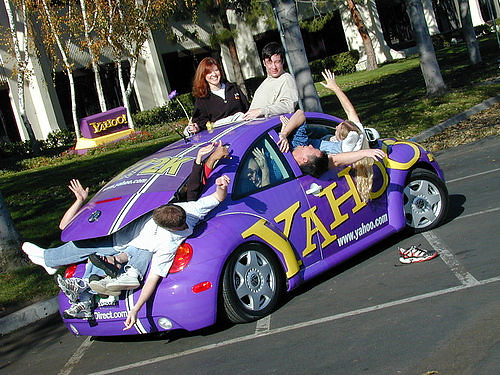
    Car with Yahoos
    Courtesy of Yahoo! Inc. Co founder David Filo is hanging from the rear of the car.

    You saw some businesses like Yahoo! try to do brand building advertising in a more cost effective way. This was known internally at Yahoo! as buzz marketing and in the US, it had its own team.

    Examples of buzz marketing included wrapping employees cars that had been volunteered in the Yahoo! brand. This was listed in the employee handbook as a free ‘perk’ of working at Yahoo!. There were some conditions like you had to keep the wrap on for year and a good behaviour clause.

    The world's first (only?) purple Zamboni

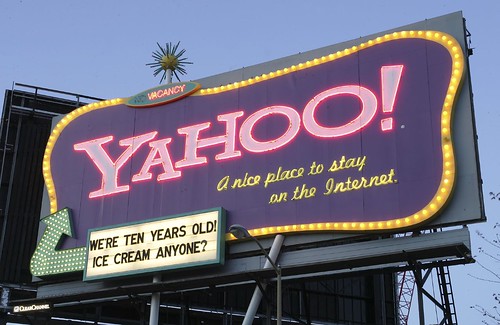
    There were also some sponsorships like the ice machine at the San Jose Sharks stadium and some high traffic billboards. Yahoo! used to have a billboard alongside the 101 freeway going into San Francisco and another in Time Square, New York.

    Our San Francisco billboard

    While the lesson of ‘go for business models that make financial sense’ seems to have been lost as we left the dot.com era further behind. The idea of ‘scrappiness’ stuck. It fitted with the wider concept of ‘struggle culture’ in entrepreneurship.

    In technology, marketing = sales

    On one level, the problem isn’t Coinbase but the technology sector. The truth is that for the most part technology companies don’t do good marketing. My hypotheses around the reasons for this are:

    • Technologists aren’t marketers. For the original technology firms, the products found their own market. Over time a salesforce was introduced and for complex products there might be pre-sales and post sales consultancy. They don’t really know much about marketing science. The sales funnel is the one ‘marketing model’ that managed to make it into Microsoft® PowerPoint® says a lot about the nature of this understanding.
    • To a technologist, every problem looks like a technology challenge. So the answer for great marketing is either in kludges aka hacks, like the Coinbase advert, or algorithmic in nature. And those algorithms are usually based on a poor understanding of marketing featured in the point above
    • Technologists think short term. Brands are transitory if you are looking to be bought out, or are built ‘organically’ in the hands of the victors (Oracle, Microsoft, Alphabet, Meta, Apple, Amazon, Tencent or Alibaba). So building a brand is an alien concept. Why build a brand in a world when you believe in disrupt, or be disrupted? Contrast that with the FMCG world where brands have considerably longer lives. The Nestlé Kit Kat chocolate bar is 86 years old at the time of writing. Procter & Gamble’s Bold washing powder (laundry detergent) is a spritely 57 years old. Baileys Irish Cream liqueur is 48 years old, as is the Mobil 1 range of synthetic engine oils, oil filters, chassis grease, transmission fluids, and gear lubricants. If we think of technology brands with that kind of longevity its likely to be the incumbent telecoms companies, Fujitsu, Hitach and IBM. At the younger end would be the likes of Verbatim, AMD, Intel, Oracle, Western Digital, Microsoft, Apple, Acer and Atari.
    • Disrupt or be disrupted creates delusion. If you believe in the disrupt or be disrupted manifest destiny of technology you probably believe that your ability to market is better than established brands that are actually marketing organisations

    I would guess that Coinbase marketers would tick at least some of these hypotheses. It probably doesn’t help that organisations who should know better are starting to buy into this ‘disrupt or be disrupted’ model.

    Cost of reach

    So, if you’re a technology company like Coinbase, who believes in disruption and ‘knows’ how to market better than marketers? The simple answer is that while digital has managed to get marketers to use its platforms, it has failed to offer the most competitive cost per reach. To achieve the same goals Coinbase would have had to spend an order of magnitude more on YouTube than TV to reach an equivalent audience.

    Brand building

    Finally the reason why the advert contrasted so sharply with the other content that ran during the Super Bowl was because everyone else focused on brand building rather than on brand activation. The reason why they are going for brand building is that the work will keep paying dividends for years. This is something that digital transformation doesn’t reflect well through its algorithms. The Coinbase approach was the equivalent of a TV ad that said click here.

    More information

    Find a Growth Hacker for Your Startup | Startup Marketing (July 26, 2010)

  • Rundle in Korea

    The rundle as a term was popularised by business academic Scott Galloway.

    Overvalued unicorns, by Scott Galloway

    It means ‘recurring revenue bundle’. In the technology world bundling meant concealing the real price and value of a product, and or maximising leverage from one industry into another. Here are two bundle examples:

    • Mobile carrier combined text, data and call plans were originally designed to make it harder to compare one carriers offering with another. That was supposed to reduce customer churn because it was like comparing apples and oranges, rather than voice minutes, cost per text or cost per MB of data used
    • Microsoft integrated its web browser in with its operating system Windows. This meant that life was appreciably harder for Netscape to build its web browser business. Web developers in large corporates optimised their websites for Internet Explorer. Western Mac users like me couldn’t use online banking. Korean Mac users couldn’t get online because they couldn’t verify their identity. Korean cybersecurity was based on a common identity platform that relied on Microsoft ActiveX – which got hacked by North Korea….

    Back to rundle

    Remember the ‘recurring revenue’ bit?

    The classic example of a rundle that Scott Galloway uses is Amazon Prime. A one-off annual payment made by Amazon customers for free postage. There are also some ancillary benefits such as content from the Amazon Prime Video service. But Amazon Prime has a secondary effect, Prime customers spend more with Amazon over a year. This made increased profits for Amazon and less profits for its competitors, further strengthening Amazon’s hand. By 2019, 82 percent of US households have an Amazon Prime membership.

    Another example would be Apple’s service businesses:

    • Apple TV+
    • iCloud+
    • Apple Music

    So what’s the Korea connection?

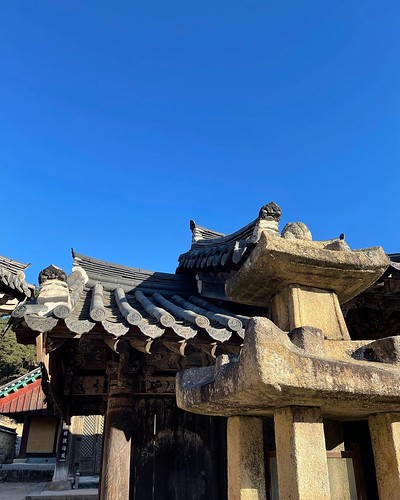
    korea temple

    The rundle in Korea story started with a flower market.

    The Seoul wholesale flower market. The first thing that you need to know about Korean flower sales is how small they are. Here’s a rough and ready industry comparison. On average per person, per market on an annual basis:

    • The UK sells about $150 worth of flowers per year, per person
    • Japan sells about $50 worth of flowers per year, per person
    • South Korea sells about $15 worth of flowers per year, per person

    The first week in January meant that the trade was starting to get back to normal. Imports of flowers from around the world had started up again as foreign businesses reopened from the Christmas break. This is when things started to go weird. Wholesalers claimed that an online-only mail order flower company was cornering the market across a wide range of flowers driving prices up. The company that they alleged was doing this was Kukka. According to their allegations, Kukka had managed to get a wholesalers licence so that the could bid directly on the spot market for flowers. There is some anecdotal evidence that this drove florists already operating on meagre margins into the wall.

    At the time, this story didn’t make the local Korean media. Why? There are a few hypotheses:

    • Korean journalists weren’t interested because Koreans don’t buy that much flowers
    • Korean journalists couldn’t get enough sources to make the story fly
    • Korean news media publishers tend to be leery of stories that involve large corporates. What the Koreans call chaebols, unless they can’t really ignore the story any longer

    So why would Kukka have allegedly done this now? A few changes happened at Kukka the previous year. At least one of the founders left, a new management team was put in place and Kukka signed up to be part of T-Universe in August 2021.

    SK Telecom's T Universe

    SK Telecom officially launched T Universe at the end of August last year with a number of subscription services. Think of T Universe as a platform for bundles. It encompassed a number of Korean and international brands into rundles:

    • Amazon Global Store: remember that Amazon Prime won’t cover buying items on Amazon Japan or US? Well for $7.20 per month Koreans can get an Amazon Prime like free shipping. Frankly that would scare the crap out of my bank manager, given the amount of vinyl records, Blu-Rays and books that I would be buying
    • Starbucks: unlike most of the rest of the world, Starbucks isn’t the cock of the walk in Korea. It has a range of fierce domestic and international competitors in Korea. Koreans are big coffee drinkers and pay more than people in the UK for their coffee to go
    • Paris Baguette: despite the name, this company is as Korean as Shin spicy ramen noodles. Think of it as falling somewhere between Pret a Manger and Paul in terms of its offerings.
    • AIA insurance: AIA is an American-founded Hong Kong multinational insurance and finance corporation. It is the largest public listed life insurance and securities group in Asia-Pacific. It formerly used to be part of AIG

    Kukka is also part of these subscription plans with consumer being able to get 9000 Korean won vouchers every month.

    SKT

    SK Telecom (or SKT as its often known) is a vast business in its own right and is part of an even larger group SK.

    SK or as it was originally known Sunkyong Group started off in textiles and then became vertically integrated from petroleum to polyester fibres. Now the business covers:

    • Construction: aka SK Ecoplant does a wide range of projects across oil and gas, chemical plants, power generation and infrastructure, environmental protection, industrial buildings, civil engineering and housing
    • Pharmaceuticals with a focus on drug discovery and development
    • Chemicals also known as SK Innovation. SKC specialises in making polyester films for LCDs and solar cells.
    • Energy from oil and gas to electric battery production
    • Telecommunications
    • Trading and services: loyalty schemes (similar to Tesco Clubcard or Nectar points), a wedding consulting firm and an IT services provider with a particular focus on mobile commerce products. Their US arm launched Google Wallet
    • Semiconductors. SK Hynix is the world’s third largest semiconductor manufacturer

    Even SKT on its own is vast in its own right

    • Mobile carrier
    • E-banking and mobile payments
    • E-commerce platform (Shopify analogue with a loyalty programme)
    • Nate online portal (think Google services but Korean)
    • Satellite communications
    • Broadcast networks
    • Cable TV and brandband
    • T-Map (an Uber like service in partnership with Uber)
    • Dreamus: the people who make the Astell & Kern music players beloved of digital hi-fi enthusiasts

    Market distortions

    SKT brings a number of strengths to the T-Universe rundle series.

    It already handles 100,000,000 customer service calls a year

    • A huge existing customer base
    • CRM software and marketing data-mining expertise
    • It has the scale to bring on a 1,000 (sales) consultants to just focus on growing and upselling T-Universe

    SKT also doesn’t care about margin at the moment, instead focusing on market making:

    “Instead of a profit margin, we are thinking about expanding customer services and believe that new business models will emerge in the process. Margin is not a priority at this early stage,” Ryu said.

    SKT executive Ryu Young-sang quoted in the Korea Times: SKT to boost commerce biz with subscription platform (August 25, 2021)

    All of which is likely to mean a bump in potential customers for flowers, that probably haven’t bought flowers previously. It is easy to see how this rundle could create a market distortion. For businesses like Starbucks and Paris Baguette this would mean reduced margins on higher foot traffic, nothing that they couldn’t manage.

    However in a smaller market scenario like flowers, things could get more interesting. Huge demand from new customers that Kukka would be obliged to fulfil at ANY cost, because being sued in a Korean court by a chaebol would be disastrous.

    Korean business environment

    Korea is a relatively unique business environment. A few large businesses drive the country. You can literally live a Samsung life:

    • Work at Samsung
    • Shop at Shinsagae
    • Commute in your Samsung car
    • Stay in a Samsung hotel paid for with your Samsung card
    • Watch entertainment from CJ on your Samsung TV, tablet or phone
    • Ensure your safety with Samsung insurance for your Samsung built apartment and should you feel ill go to a Samsung hospital

    Online brought additional pressure to large businesses. Internet giant Kakao moved from internet media and communications to taxi bookings and mobile payments. Korean banks feeling under threat have moved into online services. So it was only a matter of time for SKT to build its rundle series for consumers to pick and choose from. Unlike many businesses (Apple and Amazon) who have moved from a transactional to a hybrid transactional and recurring revenue model, SKT was always a recurring revenue model because of its sector. So the only way for it to grow would be to expand the number of sectors that it got recurring revenue from with its ‘subscriptions of everyday things’ in T-Universe. SKT and the flower industry (let alone Kukka) look like apocryphal story of a hippo and a chick sharing the same bed.

  • Handspring + more things

    Springboard a documentary on Handspring

    Handspring was a key part of my first agency job. It was the dot com era, Jeff Hawkins, Donna Dubinsky, and Ed Colligan had founded Palm Inc. and left after it was sold to 3Com. They then went on to make modular PDAs with the Handspring Visor – which tapped into the clear plastic designs pioneered by Apple’s iMac. And then they built the PDA with smartphone capability called Treo. 3Com had made a Palm device in 1999 that used the Mobitex mobile data network, which was more analogous to a two way pager with a limited walled garden of content a la vintage AOL. Palm’s version of the Palm PDA has a common connector that could be used to connect external peripherals, such as the OmniSky sled which converted your PDA into an internet connected smartphone.

    But it was Handspring who had the ‘heat’ and the wherewithal to provide a neat connectivity slot for its peripherals to sit in, providing a neater experience. Springboard is a documentary about Handspring

    Of course, the outcome of PDA based smartphones isn’t all sweetness and light as Scott Galloway shows with our modern mobile device usage.

    Myst

    Ars Technical are doing some great oral histories of games creation. This one on Myst is very close to my heart. What’s particularly interesting is how the game was developed at a moment in time with the transition to CD ROM media. This resulted in a huge leap forward in what the technology was capable of doing, comparable to the early web in terms of creative disruption. It also made me really, really miss HyperCard.

    Jimmy Wang Yu

    Taiwanese martial artist, actor and gangster Jimmy Wang Yu carved the way for Jackie Chan and Bruce Lee in Hong Kong cinema. This documentary on him is first rate.

    Windows

    Interesting CNBC documentary on the hegemonic position of Microsoft Windows in personal computers.

    Audi S1 Hoonitron and vehicles of Cyberpunk 2077

    Ken Block’s collaboration with Audi has produced some interesting material. Growing up in the 1980s, group B rallying held a fascination for me, so that’s what got me interested in the Block / Audi collaboration at first. But what’s interesting about Block’s prototype electric Audi Quattro S1 is the speed at which Audi is able to put together a prototype working car with modern technologies. All of which implies ever more opportunities for automotive customisation for customers and the potential for additive manufacturing at the luxury end of the market. Hoonitron does sound like a late 1970s Taiwanese or Korean copy of a Sony television set.

    While we’re on about car design, there is also this great video on the vehicles in Cyberpunk 2077. 14 out of 10 for pure style.

    Tudor Pelagos FXD

    Tudor have been on point in their marketing. Their new version of the Pelagos has some lovely design cues, even if its modern day association with the French navy is marketing fluff. PELAGOS FXD – more from the Tudor press room.

    Fake socialite

    A graduation project by an art student from the Central Academy of Fine Arts in Beijing did an experiment that has sparked a debate about class, inequality and the massive wealth gap in modern China. In the video you see her attempt to live 21 days for free in Beijing. She disguised herself as a socialite and slept in the halls of extravagant hotels and enjoyed free food and drinks. What surprised me is that the work hasn’t been suppressed and that she hadn’t been arrested. It also shows how Xi Jingping’s concept of common prosperity is designed to tap into a deep tension in society at the moment.

    Paper and glue

    MSNBC put together an amazing documentary on French street artist JR who does giant photo collages as street art. Here’s the trailer.

    https://youtu.be/7NmxynGAmrM

    Hong Kong Christmas

    Hong Kong’s relationship with Christmas is a complicated one. A substantial minority of Hong Kongers are practicing Christians. Until the opening up of China in the late 1970s, Hong Kong was a substantial supplier of toys, Christmas decorations and lights. And then there is the multinational community living alongside Hong Kongers, which brings the western commercialism of Christmas. For many Christmas is a ‘pre-lunar new year celebration, both are big on the colour red and the decorations for one used to bleed into the other in public spaces. So I thought the joy of this Christmas street market might appeal to readers here.

    https://youtu.be/Dpwm7nQGxcg