Blog

  • CMOs

    Premature obituaries of CMOs

    Almost 11 years ago business academic Dominique Turpin wrote an article describing CMOs as ‘dead’. Turpin worked at the IMD business school in Switzerland and the article was a classic bid for thought leadership.
    UN Women Global Innovation, Technology and Entrepreneurship Industry Forum
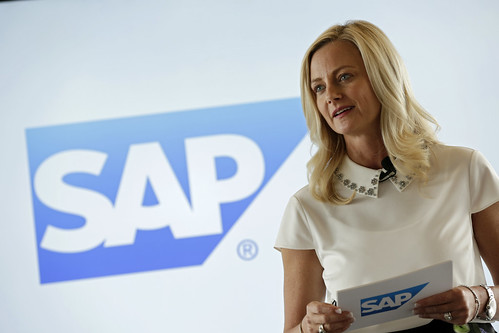
    Alicia Tillman, CMO at SAP AG until 2021, at the time of writing CMO at Delta Airlines

    It’s just the kind of thumb-stopping headline that drives readership of LinkedIn content where it was published.

     … the decline in the CMO’s influence is alarming, especially at companies that claim to put the customer first but in reality are product-driven.

    True, some companies have marketing in their DNA, especially firms that had a visionary founder with a great understanding of the customer. Examples include Ingvar Kamprad at IKEA or the late Steve Jobs at Apple.

    But these are exceptions. The norm these days is that the CEO sets the overall strategy, the R&D and innovation teams design the product, and the CFO determines pricing and departmental budgets. No wonder some CMOs feel unloved and are considering a career change

    Dominque Turpin – The CMO is dead (August 21, 2013)

    Turpin goes on to explain what he believes that there are four causes, that together result in no CMOs.

    • Most CMOs aren’t focused on planning and delivering customer value
    • Short-termism has meant that organisations have become CFO-focused – a la ‘Neutron’ Jack Welch’s perception of shareholder value, rather than a balanced scorecard approach
    • Marketing impact is hard to measure
    • Organisations lack a clear understanding of what marketing is

    Instead Turpin wanted to create a CCO role – chief customer officer. He saw that this role could sit with the CEO, the CFO or the former CMO. While the CFO as CCO might take the fuzziness out of marketing as Turpin put it, there would be a tension between their natural ‘ neutron Jack Welch’-nature and being customer-centric. What about the CEO? Turpin pointed out that they tend to come from engineering or finance. Both are efficiency focused disciplines with incremental short-term views. Again both are barriers to customer-centricity and would be largely blind to long term effects.

    3G Capital

    Move forward six years and a CFO-driven approach to running Kraft Heinz by 3G Capital saw a massive destruction of value some $15.4 billion from the $50 billion paid to buy out the business in the first place. The quarterly dividend got cut and shareholders filed lawsuits. The founder of 3G Capital talked extensively about the GE Way driven by Jack Welch as a key influence on their approach.

    Scott Galloway
    Scott Galloway

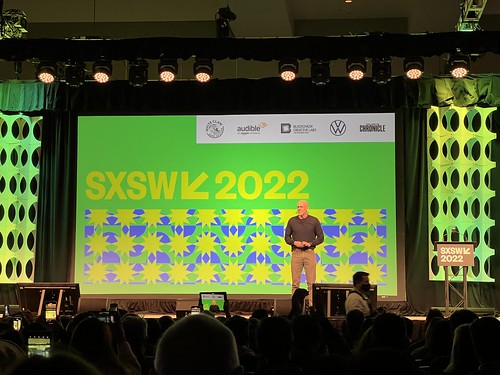
    Professor Scott Galloway is a serial entrepreneur who is provocative, interesting and often right.

    On CMOs Galloway said

    “If you’re the CMO that shows up and says ‘I need more budget so that I can do a brand identity study, can spend money on advertising and get invited to great conferences and hang out with people who are more interesting and better looking than me by spending media dollars that are less and less impactful’ then you’re like the second lieutenant in Vietnam — you’re dead in 18 months or less,”

    Scott Galloway

    There is a lot to unpack in that statement, but it doesn’t spell the end of the CMO or advertising.

    Pax Americana to Pax Australis

    In this post Galloway taps into a wider criticism that we’ve seen of American marketers over the past few years. When I was in college American professors and marketing thinkers set the tempo for the profession around the world. As Mark Ritson recently wrote

    In the 20th Century marketing was American. The discipline, the theories, the textbooks, and the approach. To arrive at Wharton in 1994 was to see a future that was not just untenable in the UK, it was one nobody back home was even aware of. Marketing was a decade ahead of anything in the UK. The American marketers I met, academics and practitioners, were so advanced it made my head spin.

    Mark Ritson – Effectiveness ignorance has left American marketing lagging behind the rest of the world (Marketing Week)

    Text books by the likes of Philip Kotler and David Baker, were perceived wisdom of old white academics. None of this thinking was evidence-based; beyond anecdotal successful case studies.

    One of the ‘secrets’ that marketers and CMOs at large FMCG companies like Mars, Proctor & Gamble, Kellogg’s and Unilever had was access to Australian based marketing science research. This was primarily via their long-term sponsorship of the Ehrensberg-Bass Institute in Adelaide, Australia.

    This body of research in turn shook up wider marketing thinking when Professor Byron Sharp published How Brands Grow. (There were other important works as well such as the UK based publications from the UK’s Institute of Practitioners in Advertising – notably The Long and The Short of it and Effectiveness In Context).

    While marketing outside the US was shaken up by the works of Sharp and Binet, the US continued onwards in its marketing the way it always had.

    Mark Ritson’s recent column on the state of American marketing caused international furore in the marketing community, despite Marketing Week being a UK-only publication. Ritson complained about American marketers lack of awareness about the importance of marketers effectiveness.

    This comment on Mark Ritson’s post sharing the article, while humorous has a lot of truth in it:

    Okay, okay. Stop throwing big words like vituperative and effectiveness at us simple-minded Americans. Sure, we handed the keys of marketing over to software engineers at the turn of the century. Maybe that led us to a fair bit of myopic strategery here in the very exceptional United States of America.

    Based on the comments I’ve read, when asked to define effectiveness the answer provided is essentially #IYKYK. Why let a golden opportunity to school American marketers on the wise ways of the world beyond our ample shores slip through your fingers?

    I don’t care if you call it Marketingwirksamkeit or efficacité du marketing, what matters is more than just numbers on the scoreboard, but how the points were won. Just the other day I was reading a scholarly piece on the effectiveness of meme marketing by the faculty of Griffith University in Queensland. It hit me. My American, effectiveness ignorance has blinded me. I now lag behind the rest of the world.

    Michael Simmons, Sendofy

    While the US obsessed over marketing technology, the rest of the world was attempting (imperfectly) to more knowledge about marketing efficiency and the marketing technology stack. Having worked in the technology sector, it was the last place I would have gone for marketing lessons. At best, marketing as a function was sales support.

    A case in point in this mis-application of focus was the relative performance of this year’s Super Bowl advertisements. I realise that this delve into marketing efficiency has at least made the case for a dramatic change in US-based CMOs. But not so fast, CEOs don’t think that their CMOs and marketing teams are performing that badly.

    CMOs: from the dog house to the boathouse

    American agency Boathouse have been doing an annual survey of CEO attitudes to marketing and their CMOs. The third edition of this survey was published in January this year.

    Some of the highlights of the report include:

    • CEOs identified what they want their CMOs and marketing teams to address: driving growth, market share/sales, differentiation, improving brand reputation, and “transforming company narrative.”
    • 49 percent of CEOs believe their marketing team is “best in class.”
    • 40 percent of CMOs are rated “best in class.”
    • One point I found quite interesting was that half of CEOs believe the short tenure many CMOs have “is a sign of success, not failure.”
    • CMOs’ perceived trust with C-suite stands at 43 percent and 41 percent with the CEO. This has doubled over the three years that Boathouse has been running this research project
    • In a bit of an odd note: CEOs believe CMO loyalty is growing, stating that “in a dramatic shift from 2021, the CEO’s perception of CMO loyalty is growing, [as] 8 in 10 CEOs perceive CMOs would take a bullet for them (up from 3 in 10 in 2021).”
    • 76 percent CEOs are “integrating A.I. into their organizations” and 90 percent believe that 90 percent of their CMOs are engaging with AI for the benefit of the company in areas such as “content, analytics (about two-thirds), and customer experience or research (half).”

    TL;DR CMOs don’t sound as if they will be disappearing in the next 18 months or so as Galloway believed.

    C-suite without powerful CMOs get punished.

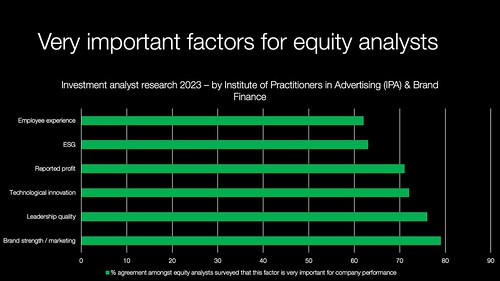
    You could argue that CEO are the ultimate arbiters of CMO success, failure and tenure. But the reality for public companies is the large investors who can vote the CEO of most companies out of office. The key influencer in this decision process is the equity analysts who sit within, or advise client organisations such as fund managers.
    equity analyst

    Even if CEOs don’t think that their marketing is important enough to have a CMO, their shareholders will. Equity analysts have indicated that they rate brand strength and marketing as more important than reported profit, or leadership quality.

    Given that most of the c-suite can’t speak or do effective marketing, they really need their CMOs. Companies like 3G Capital and Reckitt Benckiser have been punished in public markets for failing at marketing, despite operational and financial excellence. Unilever has been punished for its focus on ESG at the expense of brand building and is even under regulatory investigation.

    More information

    “You’re Dead In 18 Months Or Less”: Scott Galloway On The Future Of CMOs – B&T

    UPS’ Removal Of CMO Role Reveals The Real Problem Facing The C-Suite

    Boathouse CEO Study on Marketing and the CMO | Boathouse

    Fortune 500 companies are cutting CMO jobs | Fortune

    The Unspoken Truth About CMO Churn | AdWeek

    Marketers, investing in market research is not superfluous | Marketing Week

    Gartner Survey Shows 73% of CMOs Will Fall Back on Low Risk, Low Return Strategies for 2021

    9 recent CMO departures that point to the radical transformation of marketing | Marketing Dive

    Mark Read: CMOs have become too much like chief communications officers | PR Week

    Coca-Cola’s decision to scrap the CMO role for a CGO should begin to pay off anytime soon | Observations In Marketing | The Thinking Marketer

  • Brand clichés

    Brand clichés have been in the background of my career in agencies, all the way through. I am sure that brand clichés will continue long after my career is over.

    I started off writing copy for technology clients. Short pithy marketing copy and longer thought leadership pieces, opinion editorials and white papers.

    See 7 States from Rock City

    Back when I first started working on technology, media and telecoms brands we had a raft of clichés. These brand clichés were in the product and vendor descriptors.

    Broken technology marketing

    These weren’t the most sophisticated brand marketers. Marketing was sales support. There maybe some brand equity at the corporate brand level. But that was often down to user passion, rather than skilful brand marketing. You can still see that mindset at work in ingredient brands like AMD, Broadcom, Intel, MediaTek, NVIDIA, Oracle or SAP.

    marketers
    Created using Dall-E

    Part of this was down to history, marketers were often engineers who had been promoted out of pre-sales consulting. Their corporate and product communications was often run by people who were ‘vested’ having worked early on in the companies life in an admin role. A personal assistant or an office manager, probably with a liberal arts degree from a university or community college.

    The modern iteration of this dearth of marketing experience is the broken adtech space and a legion of growth hacker profiles on LinkedIn. Once you understand this broad brush picture of the technology sector the brand clichés start to make sense.

    Technology brand clichés

    Apple PowerCD

    A leading… – we compete in the following market for sector, but there isn’t anything to separate us from our peers. High fives happen in the office if we end up in the right part of the Gartner Magic Quadrant reports.

    Best – Someone somewhere said that they thought we were better than our competitors based on their particular view at that time. We’ve paid an analyst firm a large amount of money for digital reprints where they said it. We will give you this as PDF if you give us all of your personal information and opt-in to being in constant contact with our marketing automation application.

    Best-of-breed – we cobble together bits of technology from a number of sources, all of which are good. We usually have competitors who are vertically integrated and do everything reasonably competently in-house. It tells you more about market dynamics than it does about benefits. See ‘end-to-end’ used by vertically integrated businesses.

    … compatible – usually a hygiene factor in areas were there are clear open standards like email and web browsing. It used to be that back-in-the-day a peripheral that was Mac compatible would cost double the price of PC compatible products. USB was a major change in this. Where there aren’t open standards, then beware of ‘lock-in’ where you get bled dry by vendors, rather like the Mac users of old. A second aspect of compatability is where vendors built super-standards on top of the ‘open standards’. Adding additional features over the top, if they can get their client to adopt them it can increase lock-in without having to go to the hassle of creating a completely bespoke standard. For example, POP and IMAP email doesn’t support being able to delete an email after you’ve sent it, unlike sending email from and to a Microsoft Exchange email server.

    Cutting edge – will be obsolete, but not just yet.

    Disruptive – we have an incumbent competitor and we hope you’ll change for the sake of change.

    Enabler – we provide part of what you need, but we know that the majority of IT projects fail to reach the objectives that businesses have in mind. A classic example of this truth would be the NPfIT (national programme for IT) done by the NHS, Post Office Horizon project or most implementations from the likes of Autonomy to Adobe Workfront.

    End-to-end – usually followed by solution or solutions provider. This was trying to make a virtue out of vertical integration of the corporate parent (think about the way HP used to do everything from servers to printer paper), in a market that was likely orientated towards horizontal integration (a classic example would be Windows running on an Intel or AMD processor, or Google Android running on a MediaTek or Qualcomm processor). The reality is that it’s barely a feature, let alone a benefit.

    Fastest – the devil really is in the details of fastest. The measure of speed depends on what you want to measure. In technology real world speeds are difficult to capture and you can’t benchmark across systems. Way before Volkswagen’s Dieselgate scandal chip companies like Intel and Nvidia were routinely doing conceptually similar design tricks to recognise and optimise for benchmarking tests, often to the detriment of real-world use.

    First – this would be then followed by a really arcane descriptor. For example ‘Product X is the first tree-based database structure in cloud services that supports MUMPS database language instructions aimed at industry 5.0 applications’.

    Innovative – we spent money on design and putting things together. Appreciate it. Often used to support disruptive.

    … ready – usually this is about a technology that might be in the news but is years away from the standards being developed being ready for commercialisation, or the standards may not even exist. In 2023, we saw several blockchain based companies talk about their technology being metaverse ready. You can read here about how far away and uncertain that statement is. The reality is often that this is pure hype.

    Scaleable – it will work with more of our stuff. It might even work with other people’s products. If by any chance your business grows, we want to sell more stuff.

    Solution – a mix of web hosting, other vendors products, our products and consulting time as a kludge to make things work. Think of every collaboration in streetwear and luxury fashion that was a dog’s dinner – this is exactly the same, but in IT.

    The world’s leading… – this might be supported by either market share data for one quarter’s sales, or a number of analyst reports. Basically ‘a leading…’ but with a bit more confidence. Usually you will find that the brand has some visibility within their market sector and is likely considered. So when green tech company 1pointFive announced an agreement with the Boston Consulting Group (BCG) – BCG was described as:

     Boston Consulting Group (BCG), one of the world’s leading management consulting firms

    1PointFive and Boston Consulting Group Announce Strategic Agreement for Direct Air Capture Carbon Removal Credits

    Yes business people are likely to have heard about BCG, but that doesn’t mean that they would prefer to hire them over McKinsey, Teneo, Bain, Accenture etc.

    Value-added – a synonym for expensive and complex.

    Bland brand clichés

    Now the key ones I see, tend to be throughout the brand book. A good proportion of the reason why these have become brand clichés is down to over-use. In a world where brands are the above average equivalent of the children in Lake Woebegon.

    Authentic – we do what we say (most of the time). Unless it has implications for our bottom line. Often used interchangeably with principled and brand purpose. The latter two often look at higher order ambitions than the business.

    Dedicated – more about the focus of the business than the quality of the product or services. Through to the 1980s in western countries, there were companies called conglomerates which were a mass of disparate businesses. Originally they may have started off as looking to integrate businesses into their offering. So if you sold hardware to businesses, you might want to provide software that those businesses would want. You might help them put it all together, which then meant you had a professional services business. All of this doesn’t come cheap, so you might add a finance business to help them spread the payments rather than an overly expensive bank loan. All of a sudden you are a conglomerate. Being a conglomerate makes it harder for you to focus on what you do well. Being dedicated means that in theory you have that focus.

    Helpful – We do enough so that you will probably do business with us again.

    Passionate – we behave in a professional manner. Basically they weren’t the guy in the coffee shop I went to on Saturday, where he let us wait in a queue to be served while he finished rolling out five cigarettes. He then asked ‘what do you want?’. He demonstrated authenticity, but not dedication or helpfulness.

    Trusted – customers pay us for what we do. Some of them do this on a repeat basis.

    It’s even been spoofed in ‘The Bland Book‘ (PDF).

    That’s me for today, happy St Patrick’s Day to my fellow Hibernians out there.

    St Patricks Cathedral
  • Vicki Dutton

    Vicki Dutton (or Vicky Dutton) was a fashion pioneer. Dutton was married to an Irish-born British civil servant working under the first Lee Kuan Yew administration of a self-run Singapore. She was a Malay woman living in Singapore.

    Singapore

    Singapore was recovering from the Japanese occupation, but there were still a large amount of social and economic problems:

    • Poor housing and overcrowding
    • Unemployment
    • Poor labour relations
    • Organised crime

    These challenges also provide opportunity for some people. And so Singapore saw the start of a vibrant media and fashion industry.

    Bright lights, big city

    The Singapore of Vicki Dutton had been moving at a rate of knots and the only constant was change.

    Growth and peak

    What we think of as modern Singapore is a relatively recent construct. When Sir Stamford Raffles arrived on behalf of the British Empire in 1819, the population was about a 1,000-strong. Of which only a few dozen were ethnic Chinese. In the next five years the population grew ten-fold. Two years later and there were move Chinese than Malays due to migration. From the end of the first world war to the beginning of the second world war, Singapore actually declined in importance as the US and Japan rose to prominence.

    During the second world war, Singapore suffered horribly with the regimented Sook Ching killings taking place across Singapore and Malaya designed to eliminate resistance before it took hold.

    Remaking

    The second world war shattered the illusion of the British Empire in Asia, as its military might was taken to pieces by the army, navy and air force of Imperial Japan. But this opened up new possibilities for Singaporeans. Europeans were no longer a breed apart. This drove a re-examination of local traditions by Singaporeans.

    Post-war saw a rebuilding of lives and preparing for a Singaporean future. By 1959 Singapore was self-ruled.

    But this process brought turmoil including riots and communist terrorism. Singapore joined the newly created state of Malaysia, but a few years later was ejected.

    Re-examination of local traditions

    Vicki Dutton was a woman of Malay heritage married to an Irish man. She was cosmopolitan enough to move within the upper-echelons of Singapore society at the time. She had also travelled to Europe and had access to the latest trends coming out of events like London and Paris fashion weeks.

    In edition, the regularly contributed to Singapore’s fashion magazines as a writer.

    Dutton was able to model her own creations as well as having the talent to design and make them.

    While she did have privilege, she also held progressive views, commenting that locals could be as pretty and equally well dressed as Europeans. Their skin tone being similar to many Spanish people. She became famous in Singapore and beyond for blending local styles with western cuts. The cinched waist popularised by Christian Dior quickly found its way into Dutton’s work that then clothed the well-to-do of Singapore and beyond. Dutton was famous for interpreting the kebaya and the sarong for a fashionable look.

    Vicki Dutton’s creation made it to Paris fashion week, thanks to a Singapore government that wanted to promote the country and its nascent industries.

    Over time, Vicki Dutton’s contribution to Singaporean fashion was forgotten and only recently brought back to the attention of the public through Channel News Asia’s programming focusing on forgotten pioneers.

    You can even see Dutton’s influence in the work Pierre Balmain did in 1972 to create the iconic kebaya and sarong based uniform for Singapore Airlines.

    Tragedy of Pulau Senang

    Pulau Senang is today largely peaceful. As an island off the coast of Singapore it is now used as a live firing range by Singapore’s air force and their navy. The name translates to ‘isle of ease’. Back in 1960, the island served a very different purpose. A work camp for organised criminal gang members was set up by Vicki Dutton’s husband at the request of the Singapore government. This was supposed to serve a few purposes

    • Ease the over-crowding at Changi prison
    • Give criminals an opportunity to return to society
    • Provide useful skills

    The first few years of the camp was successful and apparently rehabilitated some 200 secret society members. Here’s what Reuters said about what happened on July 18, 1963:

    A BRITISH PRISON SUPERINTENDENT AND THREE GUARDS WERE HACKED TO DEATH AND 28 WARDERS WERE WOUNDED IN 30 MINUTES OF SADISM AND TERROR ON FRIDAY AFTERNOON IN THE SUN-BAKED PENAL ISLAND OF PULAU SENANG (ISLE OF EASE), TEN MILES FROM SINGAPORE.

    A HEAVY ESCORT OF POLICE TOOK DETAINEES AWAY FROM THE ISLAND AFTER MORE THAN 300 OF THEM WENT ON AN INHUMAN RAMPAGE. THEY GOUGED OUT THE EYES OF MR DANIEL S. DUTTON, THE SUPERINTENDENT, AND HACKED HIM SLOWLY TO DEATH WITH NATIVE GARDENING TOOLS. MR TAILFORD, HIS DEPUTY, WAS STABBED IN THE TEMPLE AND IS IN A SINGAPORE HOSPITAL IN A SERIOUS CONDITION.

    Detainees removed from island after prison riot – British Pathé

    One can only imagine the turmoil this must have caused. Dutton eventually left Singapore behind and lived for much of the rest of her life in the United Kingdom.

    Similar posts can be found here.

    More information

    A MODEL IN A SARONG AND KEBAYA DESIGNED BY VICKI DUTTON. (Singapore Press Holdings via the National Archive of Singapore) – although not identified in the photo caption. Vicki Dutton is modelling her own creation

    [VICKY DUTTON] [PRETTY MODEL, VICKY DUTTON, POSES IN SARONG | National Archive of Singapore

    PULAU SENANG RIOT – GRIEF-STRICKEN MRS VICKY DUTTON AT THE FUNERAL OF HER LATE HUSBAND DANIEL S DUTTON AT BIDADARI CEMETARY (Singapore Press Holdings via National Archive of Singapore)

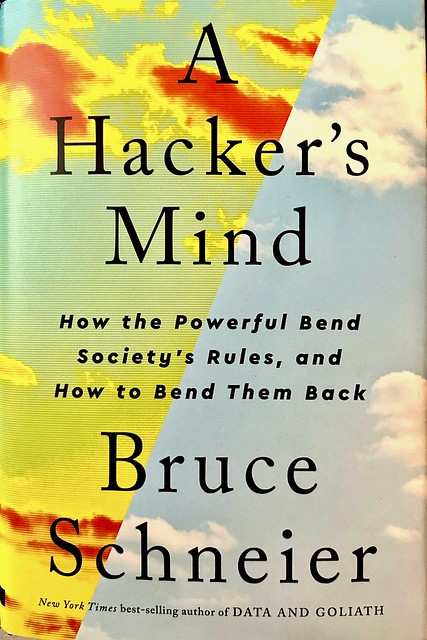
  • A Hackers Mind by Bruce Schneier

    I eagerly anticipated reading A Hackers Mind, being a long-time follower of Bruce Schneier’s blog. A Hackers Mind caters to the well-informed individual. Schneier commences by defining what constitutes a hacker, delving into the essence of hacking and its widespread prevalence.

    A hackers mind

    Subsequently, Schneier takes us on a journey into a hackers mind, guiding us through fundamental hacks targeting:

    • ATMs (automatic teller machines or cash machines)
    • Casinos
    • Airline frequent flier miles
    • Sports systems
    • Financial networks
    • The legal realm
    • Politics

    Through these examples, Schneier aims to illustrate the parasitic nature of hacks on the systems they target, offering various techniques to impede or render them unfeasible. In doing so, he makes a broader socio-political statement about how the very foundation of the economy and society is continuously ‘hacked’.

    The implication is that power lies in a hacker’s mind being applied to the systems that govern our lives. And that with the right mindset and ‘hack’ the ordinary person can turn the tables on those in power. 

    When this happens it makes great film or television. (A classic example of this would be ITV’s People vs. Post Office which told the story of postmasters combating wrongful prosecutions due to software defects. The reality was that in that particular case, it actually took the media coverage around the TV drama being shown to actually start moving the needle.) 

    Schneier in his book recognises that over time societies have evolved to become more equitable over time. He also attributes late stage capitalism to the hackers mindset, mixed with resources and technical capability in law or finance. The book is designed to wake the public up with a view to them also developing a A Hackers Mind and hacking the system back to equilibrium.

    It’s an interesting light read, but I think VR pioneer and author Jaron Lanier writes better books focusing on the inequities inherent in the intersection of technology, culture and society. A great example of this is his book Who Owns The Future?

    I don’t think Schneier gets close to inspiring his desired outcome with A Hacker’s Mind, but if you want something above the usual airport reading then it gets a thumps up from me, but it won’t be staying on my book shelf for me to re-read it at a later date. For more book reviews and recommendations go here. For recommendations of non-fiction books in particular go here.

  • Six hundred pairs + more stuff

    Six hundred pairs of Nikes in a custom-built house

    The six hundred pairs of Nikes are owned by a Japanese lady who now is head of marketing for Ugg in Japan. Previously she’d spent over 20 years in sales and marketing for Nike. Her house was designed around her shoe collection and the double height ceiling in the room to host the six hundred pairs is worth watching for alone. There are more than six hundred pairs. Some of the stories about the six hundred pairs of shoes are fascinating such as how Nike Air Max 95s were responsible for thefts and muggings in Japan.

    Tom Ford

    Everyone needs a Tom Ford in their life. From personal life hacks to interior design and grooming all in the space of a few minutes. This sounds as if the interview as done around about the time that Ford was bowing out of his fashion and beauty businesses.

    Gibbs SR toothpaste

    Along with Close Up and Aquafresh; Gibbs SR toothpaste was one of the toothpastes I remember most from childhood. Unilever bundled it eventually into Mentadent and it was quietly taken off the UK market in 2018.

    I didn’t realise that Gibbs SR toothpaste was the first advertisement shown on British television. UK law had changed the previous year allowing for commercial television. The creative behind the ad was Brian Palmer of Young & Rubican (now VML).

    So, I was listening to the Uncensored CEO podcast Jon Evans when he had Les Binet and Sarah Carter on. One of them mentioned that the above ad was tested recently and scored top scores. It might be novelty, but is unlikely to be nostalgia that drove this test score. What’s more interesting it that Y&R managed to get the creative so high performing decades before the kind of tools that we have now.

    Hyper-reality

    Keiichi Matsuda took what Apple would call spatial computing to its logical conclusion in this 7 year old film HYPER-REALITY. There are a number of clever aspects to it. Watch when the device reboots in the supermarket and the glyph wearing criminal who escapes identification by the system.

    In reality, hardware will restrict how useable that these products will be. Which is the reason why the Apple Vision Pro looks so cumbersome. More related content here.

    John Glenn

    Great interview with Mercury and Apollo programme astronaut John Glenn covering different aspects of his experience as an astronaut. We hear how astronauts became so involved in the engineering and safety aspects of the Mercury and Apollo programmes.