Blog

  • Silicon Valley corporate raiders

    The origins of Silicon Valley are new, even by American standards. Over the space of one life time the area below San Francisco around the Santa Clara valley went from apricot farms and orchards to urban development based around hardware (the silicon in silicon valley) and then on to campus design sites preferred by software companies.

    At the time of the PC revolution was kicking in, Silicon Valley rose to prominence in the public consciousness. This gave use the consumer side of consumer technology we live with today like iPhones and the MacBook Pro this post is written on.

    Over the space of this time, it wasn’t only the landscape that changed but the way we work and how entrepreneurship was rewarded. There were decades of unparalleled economic growth driven by companies firstly in hardware, then software and finally in networking and communications – the internet.
    Reagan_et_Thatcher
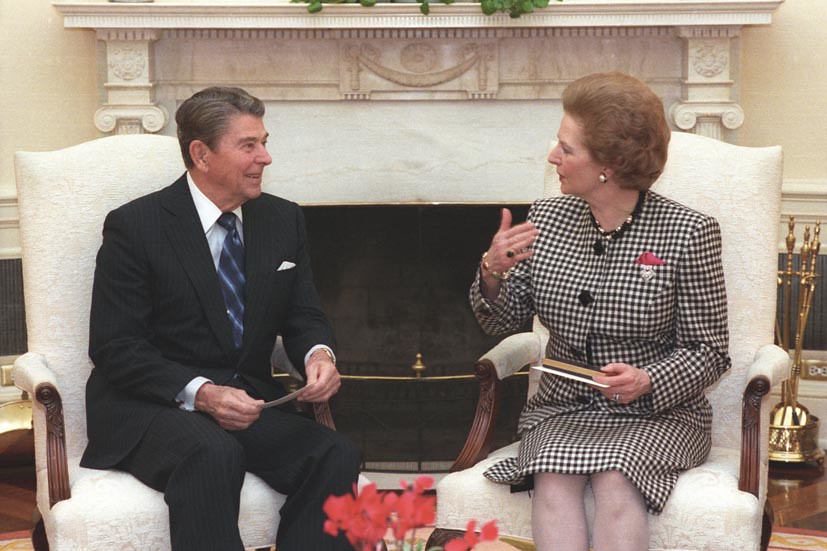
    During the early 1980s, America had Ronald Reagan as president. The manufacturing industry that had driven post-war prosperity in the country was suffering from global competition and businesses were under attack. This was the golden age of the corporate raider who destroyed businesses in the name of shareholder value. For example corporate raider Carl Icahn was considered responsible for the bankruptcy of Trans-World Airlines (TWA).

    By comparison Silicon Valley was in a spate of explosive growth. Computers and software were changing the way business operated. Spreadsheet software enabled the kind of models required for corporate raids on main street. Apple, Adobe and Aldus came up with the different components required for desktop publishing revolutionising design in the process.

    The fall of the Berlin Wall - November 1989
    The cold war ended and the Berlin Wall came down, corporate raiding ran out of steam as corporate lawyers began to construct effective barriers on behalf of besieged companies. Silicon Valley started a move away from ‘hard’ innovation to the soft innovation of gadgets, software and services. But that was fine, there where other places in the world who wanted to make the hardware components because of the jobs and wealth it created. The modern internet started to be built on Sun and Silicon Graphics servers connected with Cisco routers. The web was designed on the same Apple Macs that designed brochures.  Technology companies became media companies, retailers and super-fast courier companies. Wired magazine talked about the ‘new economy’.

    The industry was also riding on a one-time offer. Older computers that now ran the modern world had a ‘millennium’ or Y2K bug, which was a bonanza for business IT companies. A dot com bust dampened enthusiasm, cleared out some of the more egregious business models.  Out of the fire sales of Aeron chairs and Cisco Catalyst series routers paired with cheaper broadband came web 2.0 – where the web became a platform rather than just a catalogue.

    For many of the previous businesses in Silicon Valley growth slowed. Most business software looked like a solution looking for a problem. High-performance hardware could be cheaply replaced with more commodity priced boxes. Eventually for many people’s needs, hardware became a service that could be rented according to need. Business models were disrupted, sales dried up, licences weren’t renewed and advertising sales dried up.

    Enterprise software companies were hoovered up by private equity firms eager to leverage their steady cashflows to service debt from further transactions.

    Businesses like IBM and Nokia look like the TWA or Goodyear Tire and Rubber Company in the 1980s. The story of Yahoo! over the past six years looks like one corporate raider greenmail scam after another. Jerry Yang who has recently started to see his reputation rehabilitated was turned out of the company he founded by shareholders influenced by Microsoft and Carl Icahn. The subsequent replacement Carol Bartz supervised over a spectacular destruction in value at the company. Current CEO Marissa Mayer, like her peers at Apple and IBM faces constant corporate raideresque behaviour to leverage up and return money to shareholders as part of a share buyback.

    Microsoft who seemed to have used corporate raiders against its foes like Yahoo! now has activist shareholders on its board and is being forced to rejig its own business.

    Just what is going on?

    I think it it down to a confluence of different factors:

    • Technology has had a spectacular growth spurt in Silicon Valley but the growth has spread beyond the valley. Huawei is arguably one of the most important companies in telecommunications and internet infrastructure now. Just over two decades ago it was a small business selling secondhand company switchboards to the new businesses springing up in Shenzhen. Zhengfei Ren moved from selling equipment he sourced in Hong Kong to manufacturing it himself. Now the company makes everything from core network switches and submarine cables to smartphones, tablets and wearables. Shenzhen is full of companies like Huawei – some more successful than others. The most powerful names in silicon are also Asian companies TSMC and Samsung Electronics play a key role in the manufacture of non-PC style computers: phones, tablets and even televisions. It is often easier to name products that aren’t becoming ‘smart’ in some way
    • There isn’t the same willingness in the US to fund start-ups looking at smart innovation, instead the focus is on areas like social applications. Technology industry veteran Judy Estrin identified this as a key problem in her 2008 book Closing the Innovation Gap: Reigniting the Spark of Creativity in a Global Economy. There are serious technology challenges available that need to be addressed: the break down of Moore’s Law in semiconductor manufacture, commercially viable nuclear power and quantum computing to name but three
    • The technology has been demystified and is yet another industry. There isn’t that much difference between LVMH and Apple or Caterpillar and Oracle. Software as a service moved the buying decision on a number of products from the IT manager to the marketing manager or department head. Cheaper smartphones saw the rise of bring your own device (BYOD) policies. I sat in an old warehouse turned conference centre last week when Will.i.am announced off the stage that ‘Designing hardware isn’t hard, filling Wembley stadium, that’s hard’. Eco-systems from OEMs to Kickstarter have democratised and demystified technology businesses. And with this familiarity has come at least some contempt

    More information
    Closing the Innovation Gap: Reigniting the Spark of Creativity in a Global Economy
    Finding Alibaba: How Jerry Yang Made The Most Lucrative Bet In Silicon Valley History | Forbes
    Yahoo Stock Crashes As Alibaba IPOs – Business Insider
    Marissa Mayer’s day of reckoning at Yahoo is rapidly approaching | Quartz
    BlockBuster: Lyme Regis Sues Icahn, Accuses Sabotage – Barrons.com
    Carl Icahn 2.0: an icon of ’80s greed is back to shake up Silicon Valley | The Verge – 2 words: TWA, Yahoo!

  • Turnaround plan at Yahoo! + more

    Yahoo CEO Set to Refresh Turnaround Plan – WSJ – the turnaround plan sounds like desperate cost cutting. Yahoo! leadership have burned through a lot of runway and not made the best use of the company’s media assets. Mayer’s turnaround plan looked very much like Ross Levinsohn’s turnaround plan. The Levinsohn turnaround plan was in turn similar to pilot projects done when Terry Semel was CEO of Yahoo!

    Qatar to buy stake in HK department store operator | RTHK – interesting move getting them to buy a chunk of Sogo, probably because Macau is likely to pick up much of the growth in luxury sales

    LVMH: It May be Time for a Smartwatch – WSJ – not so sure that this is a good move, unless it is a fashion watch rather than a luxury item it could damage brands rather like the quartz lines did to luxury watches

    ISPs told to block fake luxury goods sales – FT.com – sounds like an inefficient game of whack-a-mole; they should go after the payments providers instead. That’s where the weak spot is

    App enables Chinese women to take selfies with sanitary pads – Mumbrella Asia  – uses the packs to activate an AR app allowing photos with the company mascot, but still WTF

    MediaTek, Acer working on smart surveillance solutions | WantChinaTimes – story about internet of things but the headline is telling…

    Sony’s plans to pull out of Chinese market an ‘open secret’ | WantChinaTimes – the big issue is that China is likely to be a good market for Sony’s high end consumer electronics products

    Uber fired a driver for tweeting mean stuff about them – douced

    Behold the awesome power of the spreadsheet, destroyer of worlds | Quartz – rather reminds me of the introduction to ‘Accidental Empires’ by Bob Cringely

    Old Technopanic in New iBottles | Cato @ Liberty – or why the government arguments for weak crypto are as much use as a chocolate teapot

  • On wearing a smart watch

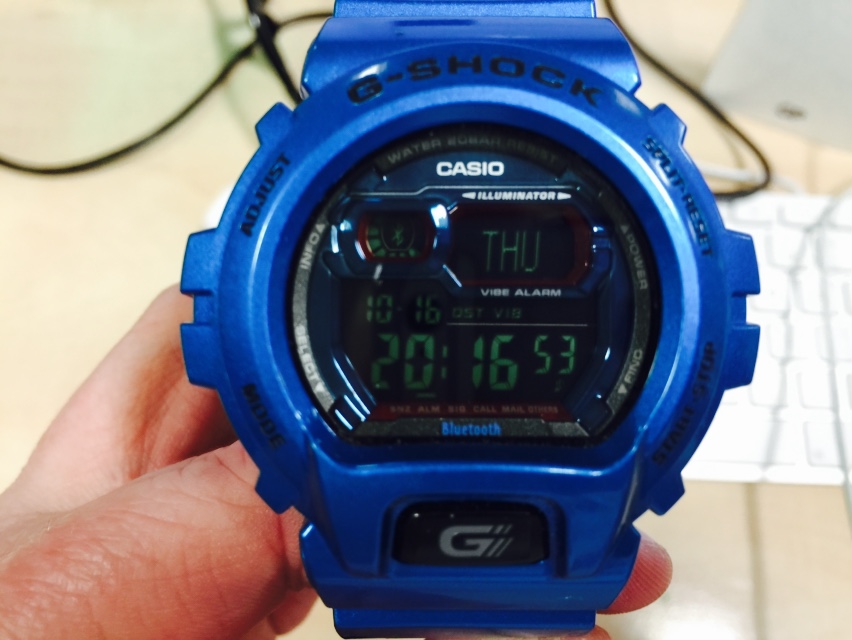
    At the beginning of the month I took the plunge and decided to buy a Casio G-Shock connected watch. After a week or of wearing a smart watch, I have a pretty good sense of the pros and cons of using it.
    Casio G-Shock Bluetooth

    The connection with the iPhone makes a major leap forward in the G-Shock experience. Using a G-Shock is rather like using an old computer system like a DEC VAX minicomputer, the experience is modal. Everything revolves around combinations of button pushes to get to the functionality of the watch. Realistically you can’t navigate this process while wearing a smart watch.  The manual is a quarter of an inch thick and the commands not exactly memorable. If you have clumsy fingers or are not paying attention you have to cycle through the complete set of button commands again
    g-shock modal nature
    The G+ iPhone application deals with every setting on the watch bar setting the time and date itself (which still requires a bit of button juggling).
    Untitled
    The achilles heel is battery life. Most of the facilities about the watch are about husbanding a relatively meagre lithium ion battery. What Casio’s engineers managed to achieve is imperfect but impressive. The battery life is the silent hand that ruled all aspects of the product design. In order to have a sealed in battery that lasted more than a day, Casio had to go with an old school battery. Out went modern G-Shock features such as the GPS module and atomic clock radio units used to provide accurate time based on location.

    Out too went the solar power option. Alerts seem to be polled every quarter of an hour for things like email. But then in this connected age, having a message to let me know that I don’t have email would be more noteworthy.

    This all had a number of effects:

    • The watch didn’t alert me to everything – that isn’t a bad thing. I do want my alerts to be consistent, so I shut down alerts from everything but Twitter, calendar and calls. I would have loved to have alerts for WeChat, SMS / iMessage messages, FaceTime and Skype calls but they aren’t on the programme (so far)
    • The watch did cure ‘phantom’ rings. I got to ignore ringtones out in public and at home unless my wrist shook. It also worked well when I couldn’t feel my phone vibrating in my Carhartt jacket
    • I remembered to take my phone with me on more occasions, the watch would vibrate if the Bluetooth link was broken

    The best bit of the phone for me was that it was still a G-Shock, it could be worn in the gym, the shower, whilst shaving, washing dishes or swimming. It is a watch for living rather than a Bluetooth-enabled human leash.

    More information
    On smart watches, I’ve decided to take the plunge

  • Ontheroof & things that made last week

    Russian crew ontheroof took their skills to Hong Kong, hacking one of the city’s iconic electronic billboards mounted on the top of an unfeasibly tall building. Ontheroof have attracted sponsorship from large corporates despite the illegal nature of their work. They’ve worked with brands like Huawei and Canon cameras.

    Their risk profile would preclude many western brands from collaborating with them. I was surprised that Canon did a deal with them.

    I wouldn’t be surprised if they were weren’t demonetised on YouTube due to their risky and illegal behaviour. Even if landlords were open-minded, their insurance company certainly wouldn’t be. It isn’t about getting ontheroof to sign a waiver; but all the unintended consequences:

    • They could fall off and hit someone
    • The building could be sued for damages due to the trauma of watching one of them fall of a building to their death

    If they used safety harnesses their content would lose its appeal as they are competition with other crews looking to ever more extreme footage.

    Not too sure if the swiftly added disclaimer would be enough to stop the lawyer letters coming through the letter box with this ode to Invisalign braces. When does parody become slander.

    Wee Scottish travel agent Thorne Travel put together a unique YouTube advert. I am guessing that it go nowhere near a legal team before it was uploaded on YouTube. Not too sure that they have permission from David Guetta for the soundtrack or Disney for the appearance of Mickey and Minnie Mouse – which probably explains why it got taken down. I thought that the N.W.A. soundtracked remix of the video was inspired. It also provided material for The Poke.

    The Poke have remixed some of their videos including a Halloween themed one with Michael Jackson’s Thriller the soundtrack and strategically placed pumpkins.

    Warner Brothers are pushing out to Western audiences Black Butler, a Japanese live action adaption of a Faustian manga tale. If you like anime like Death Note, you’ll like Black Butler.

    Finally, Agence France Presse put together a really good animation on how Ebola attacks the body, surprisingly it was hosted on DailyMotion.

  • Dan Catt + more things

    Rev Dan Catt | Conference Eaters – captures the dichotomy of conferences really well. Dan Catt compares the experience of conferences to religious services where the faithful gather.

    Brand Brain Britain! How Brits engage with brands differently across the regions | Weber Shandwick – interesting research on brand attitudes. More branding related content here.

    Huffington Post and Leo Burnett partnership | Marketing Interactive – in reality this line is being blurred all the time Vice Media etc

    ​How an FBI Informant Ordered the Hack of British Tabloid ‘The Sun’ | Motherboard – could the FBI be legally liable?

    Generation Flux’s Secret Weapon | Fast Company – interesting analysis of Chipotle

    Only 25% of iPad Users are aged 16-24 | Global Web Index – it makes sense given that the iPad is a discretionary purchase with adequate substitute products

    Slack is Killing Email | PixelBits – is it really? I think there is still a use case for email and a use case for less email

    Google’s Eric Schmidt: “Really, Our Biggest Search Competitor Is Amazon” – trying to spin their way out of European sanctions

    Microsoft And Salesforce Promise Windows, Office And OneDrive Integration | TechCrunch – hell froze over

    Saudis would accept lower oil prices | Hong Kong Economic Journal Insight – all about trying to raise barrier to entry for competitors

    The Cost of Living the Luxe Life Has Fallen — if You Live in Asia | TIME – softening property prices

    Ofcom | UK leads the way with new wireless technology trials – overly dramatic headline for white space trials

    How China’s ‘naked officials’ make the getaway|WantChinaTimes.com – since there is such an obvious behavioural trail shouldn’t card transactions and travel record patterns create ‘red flags’? Why do so many get through?

    Finland is in trouble, and it blames Apple for everything – Quartz – bit of an exaggeration but gives you an idea of how crucial Nokia was

    Singapore rail operator eyes UK minicab firm | Hong Kong Economic Journal Insights – interesting move. Is Addison Lee a technology company or a transport company?