The politics of Prada challenged what I knew about the luxury brand. I knew that Prada started off as a handbag company that then pivoted into apparel. I also realised that some Prada items probably borrowed from military clothing design and fabric technology, such as Prada’s iconic black Pocono fabric backpacks.
This is pretty common across Italian design with Stone Island CP Company being prime examples. If you would have asked me about the politics of Prada, I would have expected it to be part of the wider anarcho-far left hatred of all prestige brands.
I didn’t realise that Miuccia Prada’s clothing designs reflected her own left wing, pro-feminist politics. The connections of Prada with yachting has less to do with the politics of Prada and more to do with the passion of her husband and business partner Patrizio Bertelli.
One forgets how politics in Italy, had elements of the far left with the Communist Party and the Red Brigades pitted against reactionary right including the Propaganda Due (P2) masonic lodge and the Bologna central station bombing on August 2, 1980. The politics of Prada is by its nature Italian. More related content here.
Aimé Leon Dore x DJ Stretch Armstrong
Aimé Leon Dore got Stretch Armstrong in for a set playing sublime vintage soul 45s.
Scott Galloway on the intersection of economics and technology
Professor Scott Galloway on the intersection of economics, social trends, consumer trends and technology.
Iran-Contra affair
The Iran-Contra affair was how the president Reagan administration, specifically ‘rogue’ elements within it like Oliver North and John Poindexter, came to swap heavy weaponry with the terrorist sponsoring government of Iran in exchange for the release of American hostages, and how money from these deals came to be diverted to a secret and illegal war in Central America.
Sean Munger provided one of the best accounts of it that I have seen outside of the Congressional report.
The most Hong Kong thing I saw all week
HKIB News – a cable and online TV news channel featured a news story about the first trip of local bus company KMB’s electric double decker bus. At the bus stop was a mix of young and middle aged (mostly) male business enthusiasts. In Hong Kong, bus enthusiasts is much more mainstream in the UK. There are shops that sell die-cast scale models of buses in different liveries, so you can get an exact period-correct bus. Bus enthusiasm and the continued popularity of radio controlled car builds as mainstream hobbies were two distinctive aspects of Hong Kong culture for me.
Much of this is down to the limited size of Hong Kong and the public transport infrastructure. Generations of small children have enjoyed some of their happiest memories starting and ending with a bus trip. Buses are the first line of public transport. Hong Kong, (and Singapore) have a good number of young men and women for which it is the dream career. Which is remarkable given that these are part of the developed world and have a good education system.
Instead in the UK, you have a job that pays minimum wage that no one dreams doing.
MLM or multi-level marketing is where people who need to make money buy product from a company like Avon, Amway, Herbalife, Nu-Skin or Tupperware. Usually the franchisee doesn’t buy directly but through a contact. They may be a long way down in a chain of sellers, which means you end up with a pyramid scheme. Some have described the onboarding and seller communications as a cult. (Disclosure, I did a bit of agency work on Nu-Skin when I worked in Hong Kong, I got to see products, but not how they were sold).
Financial freedom
The real product of MLM seems to be hope. Discussing the downside of MLM at this time is important. Financial freedom is going to sound particularly appealing to struggling middle class households wrestling with the cost of living crisis and rising mortgage interest rates.
These videos by Sean Munger give a really good insight into Amway.
Ponzinomics
Robert Fitzpatrick’s self-published Ponzinomics seems to be the most cited book talking about the underbelly of MLM. Here’s an interview with him.
Soviet space programme
Enough time has gone buy for us to know how innovative the Soviet space programme was. Some of the innovations were dictated to them by limitations in production campacity. I came across these films about it.
And how Russian closed cycle rocket engines surprised NASA after the cold war.
I, Claudius
Robert Graves period drama novels I, Claudius and Claudius the God were remade in 1976 as a 13 part TV series. (The first two episodes are called 1a and 1b, presumably to avoid an episode 13, given that theatre as a whole is superstitious). In 1965, the BBC had done a documentary about the unfinished 1937 film version and had found bringing their version to television difficult due to production rights still tied into the 1937 production.
I, Claudius was considered to be a high water mark from point of view of audience viewership of more high brow material and latterly critics consider it to be one of the best TV programmes ever on British TV.
Hello Hong Kong
I received post from friends in Hong Kong and the package had a large sticker highlighting the Hello Hong Kong campaign which the government has been using to paper over the cracks left by its authoritarian pivot.
Hello Hong Kong mandatory sticker.
One part of me thought that ambient media such as the sticker might be a good side hustle for mail services everywhere. As I dug into it, I found out that the staff ‘had to’ put these stickers on the packaging and at least some of them were doing so reluctantly. At least some customers were reluctant for their packages to be ‘propaganda banners’ for the Beijing backed regime. Meanwhile 7/21 alleged government backed triad actions are still fresh in the mind of locals.
YKK
You don’t think about how YKK clothes zips work effortlessly, but this Asianometry documentary gives you insight into the Japanese zip manufacturer.
Starbucks Rewards as massive bank
I used to use the Starbucks pre-payment system back when I could use it in both the UK and Hong Kong, but a rupture came in when Starbucks removed its rewards scheme from stored value cards to an app. So I found this video by ColdFusion reframing the Rewards scheme as a large bank like pool of money more akin to PayPal’s float than Avios loyalty points.
Apollo project astronauts off the record
On everything from the context of Project Apollo through to their views on climate change.
Restaurant of mistaken orders
A Japanese pop-up retail project with restaurant servers who are suffering from dementia. I was sent the link by a friend of mine from Japan – the Restaurant of Mistaken Orders really brings the impact home.
LK99 is some sort of lead phosphate compounds called lead apatite with small amounts of copper in it. Apatites are a class of mineral, found in everything from marble to bone and teeth enamel. In marble and other rocks apatites tend to be clear but soft crystals. However, these apatites usually are made of calcium or potassium rather than lead.
The material was discovered by two people at Korea University in 1999.
What’s happened about room temperature semiconductors?
In March, a paper was put online by Korean researchers that proposed a theoretical model of room temperature semiconductors using LK99 as a material. A video was put online that is alleged to support a practical test of a room temperature superconductor.
The theoretical paper was formerly published at the end of April in a Korean journal.
In July, they put a paper online and submitted it for peer review claiming that LK99 had exhibited room temperature superconducting properties. EETimes Europe immediately picked up the paper and pointed out its current pre-publication, pre-peer review status. Early reactions to the paper from experts interviewed by Scientific American indicated a high level of skepticism.
Some claims about about LK99, such as the material’s structure have been verified but at the time of writing the substantive claims of room temperature superconductivity have not been replicated.
What’s a superconductor?
A superconducting material allows electricity to pass through it without resistance. This will also exhibit magnetic properties as a magnetic field occurs at right angles to a flow of electricity.
Superconductivity usually occurs at temperatures near absolute zero.
High temperature semiconductors
In the mid-1980s, IBM Research got everyone excited when it did foundational work on creating special materials that allowed superconductivity to happen at higher temperatures. High temperature superconductivity meant that you could cool the materials with liquid nitrogen, rather than having to use liquid helium. So still extremely cold and often also under extreme pressure. The most common high temperature semiconductors operate at up to -163 centigrade, or 100 Kelvin. The jump from semiconductors operating at -270 centigrade to -163 centigrade bought a lot of hope at the time that a boundless future was just in front of us.
Modern superconductors are used in hospital MRI scanners, which is where most people will get to see them. They are used in these machines to create powerful electro-magnets. High temperature superconducting materials have yet to be used widely in applications like this due to cost.
Potential uses
Cost effective superconductors operating at room temperatures open up a range of possibilities:
Much smaller and cheaper to operate hospital scanners
Improved efficiency for electricity generation and transmission
Improved electric vehicle performance such as practical magnetic levitation railways ushering in aircraft level speeds of travel
More efficient electric motors
Lower power consumption in electronic devices
Commercially viable nuclear fusion for power generation
Launching satellites via a rail gun rather than a rocket
Convention weapons of unimaginable speed and power
If this sounds too good to be true, it might be because it is; or we can’t conceive of the technology to do it successfully yet. Think about how unrealistic an iPhone would have seemed to the boffins of Bletchley Park in the 1940s.
If LK99 were real, it could herald in an exciting future.
Best case scenario, commercialisation takes a long time
Even if LK99 was proven to be a room temperature superconductor, it would take decades to make the technology commercially usable. For example, the forerunner of the modern lithium ion battery was invented by a researcher at Exxon in the early 1970s. They tried to commercialise the battery technology, but eventually stopped due to safety concerns. (Given that this was the 1970s, those safety concerns must have been real and reasonably harsh.)
The Exxon work was built on by multiple universities including Stanford. In 1983, a Japanese team at a joint venture company between Asahi Kasei and Toshiba built an initial prototype, which they then modified and came up with a prototype of a battery close to what we use today in 1985. Sony went on to commercialise the batteries in 1991 and the Asahi Kasei-Toshiba joint venture did so a year later. Sony introduced lithium ion batteries on their Sony CCD-TR1 consumer camcorder in 1991. This was a small (allegedly ‘passport sized’ but more like a stout paperback book to read on holiday) high-end machine at the time featuring Hi-8 (high-band 8mm video recording).
The Ericsson T28 cell phone was notable at the time for its use of a lithium ion battery when it launched in 1999.
Worst case scenario
LK99 adversely affects the reputation of Korea University, one of Korea and the world’s most foremost research universities. There is a lot at stake. You can find out more about materials here.
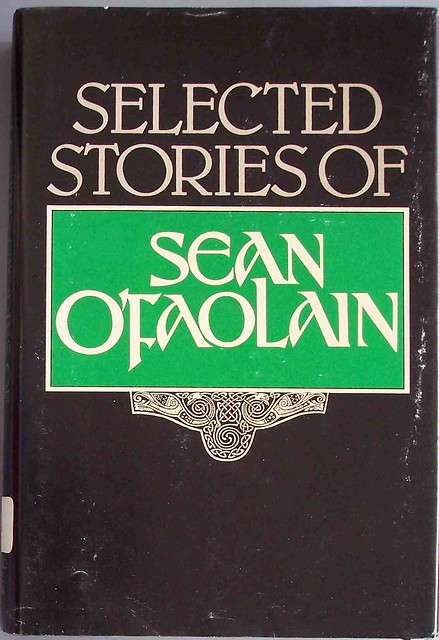
An interesting documentary from 1971 that explores the idea of ‘The Irish Race’ – it is one episode in a 10-part documentary series ‘We The Irish’. It features some of Ireland’s leading public thinkers at the time including Conor Cruise O’Brien and Seán Ó Faoláin. ‘Race’ as a term is more problematic now than back then as there were so few Irish people who weren’t white European looking as Ireland was a next exporter of people rather than welcoming inbound migrants until recent decades. Secondly, the Irish people were constantly having to establish their identity, culture, language and accomplishments in the shadow of their former colonial rulers.
Ó Faoláin an internationally famous short-story writer, a key part of the Irish arts establishment and a leading commentator and critic – a role played by the likes of Fintan O’Toole today.
The discussion about the Irish race was an essential part of decolonising the Irish identity; by emphasising Irish distinctiveness and salience rather than reinforcing racial superiority. A process that countries like Singapore and Malaysia would wrestle with in subsequent decades too.
Tracing The Irish Race
Ó Faoláin starts his discussion with the book Facts About Ireland that was published for over three decades by the Irish Government. The book itself is like a more in-depth version of the CIA World Fact Book profile on Ireland. It was available in souvenir shops up and down the country, my parents probably have my copy of the 1979 edition that I purchased from Salmon’s newsagent and post office in Portumna
O’Brien was part of the Irish elite. His father was a journalist for a Republican newspaper pre-independence and he married into the political establishment of the Irish Republic. But that shouldn’t take away from his achievements in the various facets of his career by turns was an Irish diplomat, politician, writer, historian and academic.
The series also marks a different kind of high brow factual television than we are used to seeing now.
The Case for a Hard Break With China | Foreign Affairs – U.S. theorists and policymakers ignored the potential risks of integration with an authoritarian peer. Globalization was predicated on liberal economic standards, democratic values, and U.S. cultural norms, all of which were taken for granted by economists and the foreign policy establishment – the arguments in the article are not new, what’s interesting is that they are being run in Foreign Affairs magazine and that should worry China
Tesla’s secret team to suppress thousands of driving range complaints | Reuters – Tesla years ago began exaggerating its vehicles’ potential driving distance – by rigging their range-estimating software. The company decided about a decade ago, for marketing purposes, to write algorithms for its range meter that would show drivers “rosy” projections for the distance it could travel on a full battery, according to a person familiar with an early design of the software for its in-dash readouts. Then, when the battery fell below 50% of its maximum charge, the algorithm would show drivers more realistic projections for their remaining driving range, this person said. To prevent drivers from getting stranded as their predicted range started declining more quickly, Teslas were designed with a “safety buffer,” allowing about 15 miles (24 km) of additional range even after the dash readout showed an empty battery, the source said – fundamentally dishonest
Six Bubble Tea Chains Plan IPOs in Bet on China Consumer Revival – Bloomberg – Firms with fast franchise growth not allowed to list onshore. Mixue, ChaBaiDao, GoodMe among firms weighing listings. Who is to say that these businesses won’t be like Luckin Coffee? If the Chinese government won’t allow them to list at home and they don’t want to list in Hong Kong, one has to wonder about the state of these businesses
A couple of things about this video. Major Australian TV network asked YouTuber ColdFusion to make this documentary. YouTubers are now competing against TV production houses for production briefs. Secondly, the video offers a positive take on how machine learning may impact healthcare.
JustoffJunction.co.uk – genius app for planning British motorway travel, the reason why you would care would be the inflated prices at motorway services stops
One of the biggest things that have impacted many British people has been overseas money that has resulted in soccer team acquisitions. There is a certain irony in someone like myself who isn’t that emotionally invested in sport writing about the impact of soccer team acquisions – but maybe my view from the outside in may get somewhere closer to the truth.
I worked on lacrosse brand Warrior’s foray into soccer and helped relaunch the New Balance offering in football. (It had previously made football boots in the 1980s and had English football team captain Bryan Robson as their spokesperson.)
I have visited major football stadiums in Ireland, the UK and Spain – but still don’t have an emotional connection to the game.
Changing landscape
Over my life I have seen football change as a pass time. Football was a decidedly working class sport with concrete floors on terraced stands with railings to lean on, clubs could pack in their fan base to watch a game standing up.
Roy of the Rovers
The sport was lionised in comics, notably football player Roy Race aka Roy of The Rovers, which ran from 1954 – 1993. It has been rebooted a couple of times, most recently by Rebellion, publisher of 2000AD and Judge Dredd.
https://flic.kr/p/2oHEYiX
Roy of the Rovers from 1977
It is no coincidence that most of the UK’s most prestigious clubs were in historic large working class population centres: Liverpool, Manchester, Nottingham, Leeds and Leicester.
John Moores to Delia Smith
For working class entrepreneurs, soccer team acquisitions and team ownership were a way of demonstrating their position at the acme of their community. John Moores – the scion of the Moores family who founded the Littlewoods empire based on the working class love of betting on football match outcomes. Moores then went on to set up a mail order retail company also called Littlewoods, which mixed a wide product range with payment by instalments.
From mail order Moores rolled out a network of value orientated department stores that catered to working class communities. To give you an idea of how ubiquitous Littlewoods was, everyone I knew at school had school shirts, trousers, jumpers and blazers from Littlewoods.
In 1960, Moores become a director and then sealed his place in Liverpool society by becoming chairman of Everton Football Club. From this achievement he became a freeman of the city of Liverpool in 1980 and received a knighthood ten years later.
via Wendy House
Delia Smith is as famous in the UK for her cookery as she is for her ownership of Norwich City Football Club. A school leaver without qualifications, Smith built up a reputation for cooking after the austerity of the post-war years when cooking had no longer been passed down from mother to daughter due to food rationing. This eventually garnered being published in newspapers and magazines, her own TV series, books, a sponsorship deal with Sainsbury’s and an online cooking portal.
Smith and her husband were not from Norwich, but had chosen to make their home there. They cemented their place in the community when Smith bought into the club in 1996, where she has a reputation as an impassioned owner.
“This is a message for possibly the best supporters in the world. We need a 12th man. Where are you? Where are you?”
Delia Smith broadcast on BBC Radio Norfolk during a match against Manchester City
Smith like Moores was never going to make a fortune from football.
Football is our religion
In their push for viewer subscriptions, British satellite pay TV provider Sky Sports ran an anthem advert that got to the core of the British relationships with their football team.
In the advert, actor Sean Bean reads a manifesto written by Leeds United fan, who also wrote, directed and produced the film.
Life
It can be difficult
You know that
We all need someone to rely on
Someone who’s going to be there
Someone who’s going to make you feel like you belong
Someone constant
It’s ectasy, anguish, joy and despair Part of our history Part of our country And it will be part of our future It’s theatre, art, war and love It should be predictable … but never is It’s a feeling that can’t be explained but we spend our lives explaining it It’s our religion We do not apologise for it We do not deny it They’re our team, our family and our life.
Barry Skolnick
If the football match is their service, then the football stadium is their church and their bible is the history of teams and and their gospel chapters individual player biographies. In Britain weddings, funerals and baptisms may happen in a church – but that’s about the limit of religious activities for many people.
Catalysts
Catalysts were in place for new types of soccer team acquisitions.
How to become a millionaire?
The perceived wisdom about owning a football team was encapsulated in a British joke:
How to become a millionaire? Be a billionaire and then buy yourself a football team
But that isn’t always the case. In America there was a class of investors who realised that owning sports teams with substantial media rights didn’t give regular dividends but did offer the opportunity of a big payout when exiting and selling the business on. People like the Glaser family and their experience with the Tampa Bay Buccaneers took their expertise to English Premier League football. Acquiring undervalued teams, maximising the value and selling them on. This hasn’t been without controversy with fans being openly hostile to the owners.
A new type of British entrepreneur tried the same thing, the exemplar being Mike Ashley at Newcastle United.
Hot media property
Remember when I said about owning substantial media rights? The media rights themselves were a catalyst to changing the business and driving soccer team acquisitions. 1991 was a seminal year in English football with the founding of the Premier League. It was a break top flight football needed. At the time stadiums were in need of refurbishment and fans facilities were in a poor state. There were security issues at matches due to organised crowd violence. The English were only recently allowed back into European inter-league competitions after bans due to hooliganism.
The Premier League allowed clubs to tap into funds to help rebuild stadiums and make nicer facilities. Knock on effects of this included a pivot towards middle class customers and corporate entertainment which affected the atmosphere in the stadiums, but made the matches more media friendly. This meant football clubs became more brand friendly and opened new commercial doors for sponsorships.
The world is watching
The rise of the Premier League also saw the rise of international media rights. Matches were broadcast around the world. Clubs suddenly found that they had a fan base half way around the world. English football tended to be more exciting to watch due to its playing style versus European clubs. It also attracted sports betting. One of the things that most surprised me travelling in Asia was running into fans not only of Liverpool or Manchester United but also lower profile clubs like Blackburn.
The renovation of stadiums meant that clubs were ready for tourism and their merchandise sold around the world. A Manchester United football shirt appeared in even more cities than an ‘Irish’ pub. The clubs became global brands, which attracted the interest of American investors who realised the opportunity that English soccer clubs offered.
Second wave buyers
Skilful investors in English clubs don’t make money in soccer team acquisitions and running the clubs, but in selling their team. The next tranche of investors to shake up English football were foreigners resident in the UK and looking to enmesh themselves in British society some of them like Alexander Lebedev managed to buy the Evening Standard newspaper, which instantly gave him influence. However there are more opportunities to own a top flight football team due to media consolidation, AND, you probably have more chance of making more money on exiting the investment.
Roman Abramovich
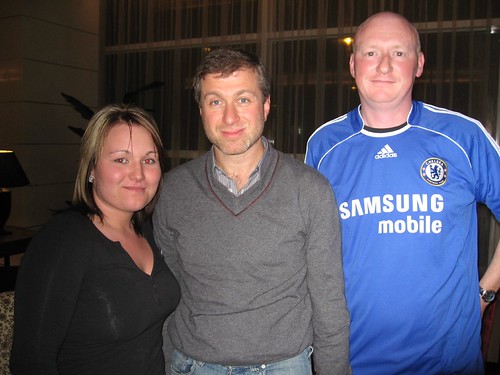
The exemplar for this second wave would be Russian business man Roman Abramovich who had made is money in the post-Soviet era from energy and aluminium processing. He went on to buy Chelsea Football Club, one of the most high profile soccer team acquisitions of the early 2000s, if not the past quarter century. Under his ownership the club went under the kind of development that American owners had looked to achieve, but on a world stage. His ability to spend also distorted the transfer market for football players.
By the end of the decade, a Europe wide set of regulations were brought into effect to try and reduce the distortion that second wave buyers and their soccer team acquisitions could bring to club competition called the UEFA Financial Fair Play Regulations.
Even as a high profile member of British society, Chelsea couldn’t provide the shield that Mr Abramovich needed to stave off suspension of his tier one visa allowing entry at will to the UK in 2018. It also didn’t stop the sanctions deployed against him, amongst other Kremlin-connected business people after the 2022 invasion of Ukraine.
Third wave of soccer team acquisitions
The third wave of soccer team acquisitions are from Gulf Cooperation Council member states:
Bahrain – Bahrain is unlikely to be doing any large soccer team acquisitions, though it has bought into second tier side Paris FC. It is a regional tourist destination for people in the Middle East and has built up a finance services sector that has a regional footprint. However it has relied on financial help from the Kingdom of Saudi Arabia
Kingdom of Saudi Arabia
Kuwait
Oman
Qatar
Their motivations are multi-pronged in nature:
Diversification of national wealth out of extracting oil and gas into assets that will continue to deliver returns after the oil runs out. In this respect they are no different to the sovereign funds of countries like Norway or Singapore
Media ambitions, Qatar already hosts the main service provider showing life professional football across the Middle East. Soccer team acquisitions could be thought of as vertical integration. For other countries, it could be seen as hedging against Qatar’s sports media hegemony
Increasing their soft power to improve their security status. This is also why Qatar hosted FIFA World Cup in 2022
Societal influence. The House of Saud have been the guardians of some of Islam’s holiest sites for about a century. Now they are the guardians of St James’ Park through their majority ownership via the Saudi government Public Investment Fund. This may give them a contingent to draw upon during difficult times in their relationship with the UK, particularly as Saudi oil becomes less important as an energy source. (Saudi oil will still be important as a chemical feedstock for every aspect of modern life including Tesla batteries, but hydrogen and electric power via alternative energy sources will reduce the impact of an oil embargo considerably.)
The outlier
Ryan Reynolds purchase of Wrexham is an anomaly. Soccer team acquisitions to build a media juggernaut are hard to do and Reynolds has shown he is uniquely creative with Aviation Vodka and Mint Mobile. He has managed to create a media property out of a lower league football team and bring pride back to a small North Wales town that hasn’t had much going for it since I was a child.
The club was community owned and has had a modest 2 million pounds invested in it since 2011. But it made great reality television in a healthy way. How long the halo of Hollywood lasts is a bigger question, but any attention given to the former steel making and coal mining town has got to be welcome.