Category: branding | 品牌推廣 | 브랜드 마케팅 | ブランディング

The dictionary definition of branding is the promotion of a particular product or company by means of advertising and distinctive design.

I have covered many different things in branding including:

  • Genesis – the luxury Korean automotive brand
  • Life Bread – the iconic Hong Kong bread brand that would be equivalent of wonder loaf in the US
  • Virgil Abloh and the brand collaborations that he was involved in
  • Luxury streetwear brands
  • Burger King campaigns with Crispin Porter Bogusky
  • Dettol #washtocare and ‘back to work’ campaigns
  • Volkswagen ‘see the unseen’ campaign for its Taureg off road vehicle
  • SAS Airline – What is truly Scandinavian?
  • Brand advertising during Chinese New Year (across China, Hong Kong, Singapore and Malaysia)
  • Lovemarks as a perspective on branding
  • BMW NEXTGen event and Legend of Old McLanden campaign
  • Procter & Gamble’s Gillette toxic masculinity ads
  • Kraft Mother’s Day campaign
  • Kraft Heinz brand destruction
  • Porsche Design in the smartphone space
  • Ermenegildo Zegna
  • Nike’s work with Colin Kaepernick
  • Counterfeit brands on Instagram, Alibaba and Amazon
  • Gaytime Indonesian ice cream
  • Western Digital
  • Louis Vuitton collaboration with Supreme
  • Nokia
  • Nike Korea’s ‘Be Heard’ campaign
  • Mercedes SLS coupe campaign
  • Brand collaborations in Hong Kong
  • Beats headphones
  • Apple
  • Henrion Ludlow Schmidt’s considerations of branding
  • Cathay Pacific
  • Bosch
  • Mitt Romney’s failed presidential bid
  • Microsoft Surface launch
  • Oreo Korean campaign
  • Chain coffee shop brands and branding
  • Samsung’s corporate brand
  • North Face’s brand overeach in South Korea
  • Mr Pizza Korean pizza restaurant and delivery service brand
  • Amoy Hong Kong food brand
  • Chevrolet Corvette ‘roar’ campaign promoting a build your own car service
  • Brands using politics + more

    Brands using politics as a trope. First up, Kelloggs Korea’s campaign for green onion flavour Chex breakfast cereal. They were allowing consumers to ‘vote’ for the president of Chex.

    In 2004, Kellogg’s Korea decided to hold a cute little promotional contest online: an “election” to decide “the President of Chex.” The two candidates were the delicious chocolate “Chekkie,” and the hideously green “Chaka.” Chekkie promised that if they won, they would find a way to add even more chocolate to Chocolate Chex, while Chaka promised to imbue the cereal with stinky green onions. One thing the adults at Kellogg’s were sure of was that kids hate, hate, hate green onions, so Chaka would be an easy fall guy, Chekkie would emerge victorious, and Korean customers would be so excited about Chocolate Chex that they’d purchase millions of boxes.

    The Takeout

    A Boaty McBoatFace-type polling disaster ensued. And it inspired this tremendously trippy ad.

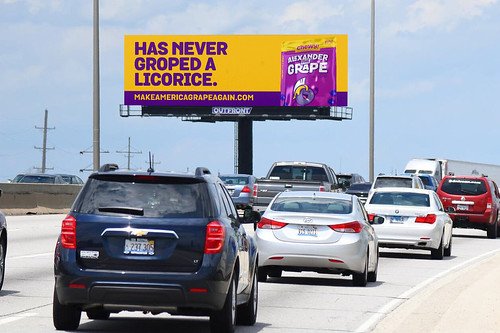
    The second brands using politics trope example was for a grape candy brand by Mann Sales Co. I still can’t work out if its a hoax, but it was doing the rounds on a few ad planning groups. There was an interesting dichotomy. People in the ad planner groups didn’t like it because it fell down from being politically incorrect on so many levels. I personally thought that it went too close to the bone. But then I was was too conservative versus the general publics interpretation of Poundland’s naughty elf campaign. A small unscientific straw poll of friends in the US saw the funny side of it.

    1908 Candy

    Mann Sales Co. and 1908 Candy

    Of course none of this is quite as bad as a time when I was working with Chinese clients. American colleagues used campaign marketing in democratic elections as the ultimate brands using politics as marketing trope.

    They cited the use of data by the first term Obama election campaign to show how their wonkish staff could aid the client’s marketing internationally and in China. It was all about how Chinese companies could learn from democracy.

    It was only when they came out of the meeting that I got to tell them that Twitter was banned in China. It was super awkward.

    On work doesn’t happen at work by Jason Fried. A key quote:

     some people might say email is really distracting, I.M. is really distracting, and these other things are really distracting, but they’re distracting at a time of your own choice and your own choosing. You can quit the email app; you can’t quit your boss. You can quit I.M.; you can’t hide your manager. You can put these things away, and then you can be interrupted on your own schedule, at your own time, when you’re available, when you’re ready to go again.

    Jason Fried
    Jason Fried at TED

    Musique Strategies – oblique and practical strategies for music – what happens when modern music production meats Brian Eno’s Oblique Strategies. This has been put together by Danny Taurus, one of the unsung heroes in UK dance music production. Back in the early 1990s he founded Dansa Records which put together some banging tunes. He’s revived the label and releasing new material from his new base in Los Angeles.

    I am not too sure where Apple was going with this working from home ad, but I suspect it was empathy and brand awareness. If you’re working from home, you’ll have experienced all of these challenges by now and know who your technical partners are. It is an entertaining six minutes though and sometimes that’s enough.

    Apple Inc.

    Finally, this video is a two-minute work of love featuring the sites and sounds of Hokkaido. It reminds me of the way Sergio Leone’s camera work as tightly linked with the music. In this video the edits and footage both move along with local sounds from Hokkaido, Japan.

    NEEDaFIXER on Vimeo
  • LONDON Advertising + more things

    My friends at LONDON Advertising have rolled out a TV and out of home campaign for themselves. Advertising and creative agencies usually market themselves. This might be:

    • Awards ceremonies
    • Search advertising
    • Public relations
    • ‘Thought leadership’ activities

    It is usually consumer brand clients, or those that want to promote their corporate brand (think Oracle or Vodafone) that do TV and out of home advertising. Which makes this campaign by LONDON Advertising rather unique. The principle behind it is relatively simple, what the tech industry calls ‘Eating your own dog food’. LONDON Advertising already does advertising for the likes of Mandarin Oriental – why not do the same thing for themselves? So they’ve done TV, OOH and social channel content. The idea is that spending on the dip allowed an enhanced share of voice.

    My favourite TV treatment has a voice over by Liam Neeson.

    LONDON Advertising campaign
    LONDON Advertising
    LONDON Advertising campaign

    Swiss duo Yello talk about how they produced ‘Oh Yeah’ – which then became famous as part of the soundtrack to Ferris Bueller’s Day Off.

    Georgia Tech looked to bio-mimicry when designing a robot to monitor at tree level the inhabitants and environment at Atlanta Botanical Gardens. The Slothbot prices energy efficiency over speed of movement.

    Cameron Paul was one of the first generation of beat mixers in San Francisco. San Francisco’s CBS affiliate eulogy manages to underplay his impact, but has some great archive footage. Cameron started DJing in 1970s San Francisco, when ‘personality DJs’ that got on the mic were the norm rather than someone who could mix.

    He founded his own DJ subscription service with exclusive mixes and had his own label. (More on those at Discogs.) His remixing skills helped break Salt n Pepa’s Push It. He probably doesn’t have the profile he deserves because his sound historically was closer to freestyle than house. Here’s Cameron talking about the art of DJing in this vintage recording.

    Talking of mixing, I have been listening to this mix by The Reflex for Kombini Radio which is tremendous.

  • Autopilot Whopper + more things

    Burger King’s Autopilot Whopper campaign reminds me of a lot of the classic work that Crispin Porter Bogusky have done for Burger King over the years. The Autopilot Whopper is based on the insight that Tesla cars machine learning powered vision system that helps with self driving function mistakes the Burger King logo for a Stop sign.

    https://youtu.be/A0cb7wZVFf4

    Autopilot Whopper entertaining with this schadenfreude around Tesla technology. And it also lands the message that the Burger King drive through is as good a place to stop as any.

    YouTube announced the winners of its 2020 YouTube Works awards. I would strongly recommend that any brand planners bookmark this in their browser and dip in on a regular basis.

    The one that really piqued my interest the most was Hulu’s campaign for live sports that tapped into a growing consumer cynicism around influencers. The sports linkage was using NBA basketball players as the influencers.

    The iconic Zero Halliburton briefcase stuffed with cash, that more money is thrown into as ‘Hulu has live sports’ is mentioned riffs on the old McDonald’s initiative. The McDonald’s scheme that paid rappers for name checks on songs and mixtapes. It also tapped into how consumers view influencers.

    Public Enemy came back when we most need them. Flavor Flav seems to have patched up his beef with Chuck D. Public Enemy have partnered with DJ Premier to capture the zeitgeist. Black Lives Matter, COVID19 and chaotic leadership feature in State Of The Union (STFU). DJ Premier’s product references earlier Public Enemy works scratching in sounds of early Public Enemy vocals in this track. The beat is more laid back than what one would expect from the Bomb Squad production team. But the Public Enemy fire in the belly is still there.

    The step chickens are a meme driven ‘cult’ that have sprung up on TikTok. More accurately they are a directed community. Here’s the founder on how they came about. Their heat has been parleyed in a community for a new app. From a product point-of-view, this means that something like TikTok could lose chunks of its user base IF the step chickens phenomenon was widely and successfully replicated. Given that it was a mix of smarts, happenstance and pure luck it isn’t likely: sorry brands.

    German China-focused think-tank MERICS had a thoughtful presentation put together on the Hong Kong national security law. The presentation focused on the impact for the financial services sector. But there similar lessons to be drawn for professional services (accounting, management consultancy, legal firms). And only for a a slightly lesser effect on the strategy and planning functions of creative agencies, or counsel based PR functions.

    On reflection, I would be concerned about how some of the creative briefs for China-focused campaigns that I have written would have faired against the Hong Kong national security law. Probably not that well.

    What immediately becomes apparent is the implications for quality research into companies and economics won’t meet international standards. Which means more fodder for the likes of Muddy Waters Research LLC. It likely indicates a conscious effort for China to decouple from the international financial system.

    The calculus behind the Hong Kong national security law seems to be that the Chinese government think yet another (internal) market for Chinese stocks will be a better deal than the traditional gateway to and from China Hong Kong has provided. I am not sure what this bet will mean. Shenzhen already has a robust stock market by Chinese standards; would China really need Hong Kong? Without the gateway role, Hong Kong would also find it harder to be the point of capital departure from China for high net worth citizens. Dampening capital flight would definitely hold some attraction to the Xi administration.

  • Space aliens + other things

    I didn’t want to talk about space aliens. Given that some people are currently beating up on network engineers and destroying 5G network infrastructure, this art project about space aliens and electro-magnetic radiation might be considered to be a bit close to the bone. Space Aliens are no longer visiting Earth due to an allergy to our cell phones – the storytelling neatly taps neatly into the cold war and X-Files peak of alien abduction and combines it with ambient music. Given the current conspiracies about 5G, it may get taken more literally than is good.

    Keep It Real Online is a great campaign by the New Zealand government highlighting the risk and appropriate action parents can take regarding online behaviour.

    Keep It Real Online – New Zealand government

    The online bullying themed video is really on-point, but all of them have real impact.

    YouTube channel Awkward Puppets has become active again over the past couple of months. Imagine if Sesame Street characters grew into awkward post-modern adults. The script writing on this is really on point

    Maybelline Launches ‘Spread Good Vibes’ COVID-19 Campaign in Thailand Branding in Asia | Branding Asia Magazine – a lovely bit of insight: that make-up and mutual social affirmation ‘good vibes’ will do wonders for how we feel during COVID-19. It also taps into Thai women’s love of beauty products. The execution was nicely done using augmented reality. The campaign was done by MRM for Maybelline-Thailand. Thailand has a great track record in really emotive advertising and these takes it into new mediums. More Thai-related posts.

    Maybelline-Thailand-Spread-Good-Vibes-Branding-in-Asia
    Maybelline-Thailand

    Ali Goldsworthy was on BBC Radio 4: Four Thought. She explained why campaigns which succeed by polarising people can cause long-term harm, and suggests ways we might tackle the resulting damage. Ali has written a book Poles Apart, that goes into these ideas in more depth.

  • Sophisticated card skimming & more

    Sophisticated card skimming in Mexico by a Romanian criminal gang was first highlighted by Brian Krebs. This documentary was produced by the Organised Crime and Corruption Reporting Project and features cybersecurity expert Brian Krebs. It is amazing how audacious this sophisticated card skimming scheme was.

    Sophisticated card skimming in Mexico with Romanian criminal gang.

    Adam and Eve DDB’s effectiveness expert Les Binet on COVID-19 and recommendations on marketing. Much of it is more common sense and nuanced consideration than just simple rules by other people. The key outtakes here compared to some of the stuff that I have seen coming out of Ogilvy Asia is the differentiation between supply-side driven recession and demand-side driven recession.

    Elders Corner is a documentary that focuses on the political context that Afrobeat exists and had been played in. It tells the stories of Nigeria’s musicians who pioneered the Afrobeat sound and the role of their music in society during a time of tremendous political upheaval.

    Asian brands really seem to have taken to Animal Crossing, with a Hong Kong eatery hiring a marketer to build their Animal Crossing presence. The Global Pride festival seems to be no exception to brands and culture going into Animal Crossing. The creator tools allows creative expression that works really well for Pride month celebrations.

    In the same week that Boston Dynamics released their ‘Spot’ robot, a Thai shopping mall are doing an interesting exercise in human computer interaction featured in the Singapore media Robot dog hounds Thai shoppers to keep hands virus-free – TODAYonline. I’d love to know if they managed to gather effectiveness data around this initiative. The only thing that surprised me about this was that it was a Thai shopping mall, rather than one in Singapore. It is much less creepy than the way China has used robots to educate people on COVID-19 and demand compliance.