My interest in business or commercial activity first started when a work friend of my Mum visited our family. She brought a book on commerce which is what business studies would have been called decades earlier. I read the book and that piqued my interest.
At the end of your third year in secondary school you are allowed to pick optional classes that you will take exams in. this is supposed to be something that you’re free to chose.
I was interested in business studies (partly because my friend Joe was doing it). But the school decided that they wanted me to do physics and chemistry instead and they did the same for my advanced level exams because I had done well in the normal level ones. School had a lot to answer for, but fortunately I managed to get back on track with college.
Eventually I finally managed to do pass a foundational course at night school whilst working in industry. I used that to then help me go and study for a degree in marketing.
I work in advertising now. And had previously worked in petrochemicals, plastics and optical fibre manfacture. All of which revolve around business. That’s why you find a business section here on my blog.
Business tends to cover a wide range of sectors that catch my eye over time. Business usually covers sectors that I don’t write about that much, but that have an outside impact on wider economics. So real estate would have been on my radar during the 2008 recession.
I spent a good deal of the week seeing the family. It was great to have homemade soda bread and finish off my Mum’s Christmas cake. Yes, you haven’t read that wrong, my Mum specialises in making rich fruit cakes for Christmas. They keep for a good few months afterwards.
A good deal of that was spent watching Homeland and assorted films with my Dad. This included Accident Man – a pretty accurate remake of the Toxic! comic book character from the early 1990s by Pat Mills (of 2000AD fame) and Tony Skinner. We didn’t watch them as a family for reasons that will become apparent.
For a brief period from March to October 1991; the UK comic scene had a darker, more anarchic publication than had been previously seen. Toxic! was originally designed to address failings in 2000AD magazine.
The film is so anachronistic in its nature that its audience will be niche. That doesn’t reflect on the quality of the action in the film. It features Ray Stevenson, Scott Adkins (you’d recognise hime host of Hong Kong and Hollywood movies) and Ray Park (who played Darth Maul). Adkins is a bit lean to play the titular character Mick Fallon, which is a surprise given his Boyka role in the Undisputed franchise. Adkins to his credit manages to make it all work.
Both the director and the script writer managed to skilfully blend the unreconstructed misogyny of 1991 with with the great ‘unawoke’ attitudes of a post-Brexit Britain.
Watching Wanted: Dead or Alive with Rutger Hauer shows how much the media portrayal of Islamic terrorism has changed over the past 30 years. The plot itself is a bit odd. Sex tape star Gene Simmons plays an Islamic terrorist looking to cause a Bhopal-type disaster as an act of revenge on the United States – where do you even start with that plot?
Hauer’s car has an early generation cellular phone and what seems like some sort of satellite navigation equipment with a monochrome CRT display.
Dated films weren’t the only things that I saw. The family car is still a Polo diesel that I helped them buy. Whilst I heard of a few people who had a Nissan Leaf; Merseyside is still firmly in the petroleum age. Most of the cars were a decade old on average and I didn’t see any obvious charging stations. Importation of secondhand cars from Japan is still a thing. Both J60 and J80 series Toyota Land Cruisers seem to have a loyal following.
I think that we must be pretty close to peak-vape. I was in a Wilkinsons store and wandered past the cough and cold medicine section. Wilkinsons is a discount retailer that does a mix of food cupboard staple grocers, household cleaning products and over the counter pharmacy products. A good analogue for Hong Kong readers would be 759 Store.
On the top shelf of the unit above cough and cold remedies was vape fluid and e-cigarettes.
Douglas Rushkoff | Present Shock Economies – great YouTube video which explains why Amazon is likely to be more trouble over time than Facebook ever will be. Well worth listening to during a lunch hour.
Finally Asian Boss had some great vox pop interviews with Beijingers about what they thought of Sesame Credit which is a financial and behavioural credit system being rolled out in China.
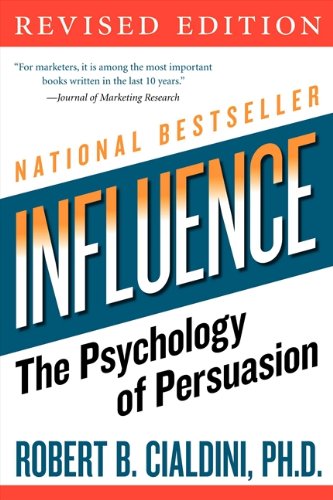
Cialdini’s Influence is now over ten years old and still stands up. It is a good guide on the psychology of why people say “yes”. The accessible style of Influence reminded of Douglas Rushcoff, or Malcolm Gladwell. Ok Malcolm Gladwell is a poor analogy, Cialdini’s work isn’t candy floss for the mind. This is deceptive as there is usually an inverse relationship between value and accessibility. Exceptions to this heuristic would be the likes of Sun Tzu – The Art of War.
Cialdini hasn’t been researched within an inch of its life in the same way Byron Sharp’s books have been.
Cialdini provides planners and strategists with starting points for customer experiences. The book isn’t a how to guide for digital journeys but provides first principles. Psychology is not channel-specific.
The Journal of Marketing Research described it as
…among the most important books written in the last 10 years.
The book’s style allowed me to pick it up and put it down, to fit in with my holiday schedule of train travel and family time.
Why should you have Cialdini’s Influence?
If your work includes marketing planning or strategy, your bookshelf should have this book. If you are thinking about customer interactions, this book outlines the first principles that you need
If you’re a consumer and want to know how you’re being sold to; read this book
If you want to get on better with people ( your kids or co-workers); buy this book
My copy is well-thumbed and stuffed with post-it notes around the edges as I go back and forth into it on a regular basis. More marketing related content here.
This Reid Hoffman video stands in sharp comparison to the Ayn Rand-loving frat-bro culture that seems to infect technology sector companies based in Silicon Valley. However Hoffman in his past has reflected at least some of their libertarian views.
However Reid Hoffman is cut from different cloth and represents a slightly older generation in the technology sector who pioneered the dot.com era.
He grew up in Berkeley, back when the technology sector was more hardware focused and Silicon Valley actually made micro-chips. Back then HP (now Agilent) and Techtronix made measurement equipment in the Valley and it was the centre of the cold war missile technology. The east coast from IBM in New York State to the Boston corridor represented a worthy adversary of Silicon Valley. The technology sector only opted to have Silicon Valley as its home during the move to personal computing.
eWorld
Hoffman worked at Apple on eWorld – an early way of connecting Macs to the nascent public internet. There was interesting ideas that came out of that at the time including work on object orientated programming. Apple later abandoned eWorld when they saw the ‘net taking off and instead collaborated with selected ISPs like ClaraNet and Demon in the UK.
Reid Hoffman later founded a prototype-social network and was part of the PayPal mafia before founding LinkedIn. The irony is that the PayPal mafia were ground zero for the current generation of technology company CEOs.
Reid Hoffman offers a more thoughtful considered viewpoint on the future of the technology sector.
How Technology is Shaping the Future of Human Society was filmed by the Aspen Institute.
China smartphone makers join hands on apps, pose threat to WeChat | Reuters – this effort by vendors to join hands on apps reminds me of work that Google did on ‘streaming’ apps as needed that went a bit quiet. Interesting that the manufacturers are willing to go against Tencent. In a mature market handset providers want a bite of services, but is there an advantage with brands to throw in with one or more of the handset eco-systems given their disparate app stores?
Yahoo Japan Plans To Launch Cryptocurrency Exchange Amid FSA Crackdown | ZeroHedge – interesting move by SoftBank. Yahoo! Japan brand is a strategic asset, yet Son-san is willing to risk it on cryptocurrency which I perceive to be a tactical play. I can’t see continued interest in consumer speculation on it in the longer term. More related content here
Dennis Yu on the Facebook debacle – Dennis is the chief technology officer Facebook marketing business called BlitzMetrics. If anyone knows their stuff its likely to be him
Sex Workers Say Porn on Google Drive Is Suddenly Disappearing – Motherboard – don’t assume that the contents of your Google Drive hasn’t been thoroughly examined by Google. Adult entertainment is merely the canary in the coal mine for Google Drive privacy. I would be very careful about using a cloud storage platform if you haven’t encrypted the entire folder as a bundle before uploading it. And don’t use Google Drive. More related content here.
Consumer behaviour
The unparalleled joy of writing with a fountain pen – and five beautiful pens to inspire you – Country Life – Among the obituaries of a former Conservative Minister a few years ago, there was one delightful snippet. A line in The Daily Telegraph described how, when she received the letter from Mrs Thatcher appointing her to the Lords, Lady Blatch initially believed it to be a hoax, because the letter was signed in Biro and she had been ‘brought up to believe that nobody who matters uses a Biro’.
Millennials: you will not be quite so special in the ‘futr’ | FT – could it be that millennials, the most scrutinised, criticised and debated generation of our time, were not that special any more? “Millennials are still important as a customer,” Ms Ganatra told me later. But there is now a “millennial mindset” that has nothing to do with age, she said. In other words, millennials may have been the first generation to have grown up in a digital world but the rest of us are catching on fast. People of all ages are now so used to shopping with a click or talking to a chatbot that retailers need to think about the needs and desires of all their customers, not just those born between 1981 and 1996 – or an artificial construct in terms of their digital uniqueness
Ideas
Cigarettes are the vice America needs | FT Alphaville – Cigarette smoking is essentially the anti-Facebook. While Facebook is a fundamentally misanthropic venture that pretends to be a community, smoking is a community activity for people who pretend to be misanthropes. The activity itself is fundamentally pro-social! It gives people reasons to interact with strangers (“got a light?”). And since it was banned indoors — undeniably a good choice — it gives people a reason to go outside and make idle small talk, all while pursuing a common activity. And unlike alcohol, cigarettes alone don’t often lead to property damage or missed days of work (paywall)
Study: Smart Speakers are Changing the Way We Select Products – interesting how this is impacting retail. FMCG brands in particular should be really concerned as this is far beyond what supermarkets could do with dodgy shelving layouts and look-a-like private label brands
Building for the modern web is really, really hard | O’Reilly – average website clocks in at 4MB with 100s of elements including 3rd, 4th and 5th party based interactions – which also explains page load times – and slow AF ad related technology such as trackers
Is Facebook Really Scarier Than Google? | Nautilus – worthwhile reading about the effect of Google – of course they both have an impact otherwise you wouldn’t advertise on it. The question needs to be does the utility justify the impact? I think search has a better case than a social network, but both have merits
Alex Stamos, Facebook Data Security Chief, To Leave Amid Outcry – The New York Times – Some of the company’s executives are weighing their own legacies and reputations as Facebook’s image has taken a beating. Several believe the company would have been better off saying little about Russian interference and note that other companies, such as Twitter, which have stayed relatively quiet on the issue, have not had to deal with as much criticism
Technology
China’s Huawei Technologies reshuffles board for first time since 2012 – I presume the reason why Mr Ren is getting back behind the wheel is that overall and smartphone revenue figures for 2017 was Huawei’s slowest growth in four years. I am not convinced that premium products will be the way forward when they are locked out of the North American retail system. I am also not sure why the management team at Huawei Mobile Devices hasn’t been refreshed
The Valley of Death: the students vying to be millionaires | Telegraph – In 2015 Oxford, the UK’s number one university for research, produced four spin-outs. Not per professor. That was for the whole university. The situation was not better elsewhere. Data on British university spin-outs is not in any publicly available league table. But it exists, via what’s called the HE-BCI survey (it stands for Higher Education – Business and Community Interaction). For 2015-16, Cambridge University recorded a total of two spinouts in the HE-BCI survey. Imperial College London, another of this country’s most vaunted research universities, listed three. Of 160 institutions, 59 officially produced no spinouts at all.