Category: design | 設計 | 예술과 디자인 | デザイン

Design was something that was important to me from the start of this blog, over different incarnations of the blog, I featured interesting design related news. Design is defined as a plan or drawing produced to show the look and function or workings of a building, garment, interfaces or other object before it is made.

But none of the definition really talks about what design really is in the way that Dieter Rams principles of good design do. His principles are:

  1. It is innovative
  2. It makes a product useful
  3. It is aesthetic
  4. It makes a product understandable
  5. It is unobtrusive
  6. It is honest
  7. It is long-lasting
  8. It is thorough down to the last detail
  9. It is environmentally-friendly – it can and must maintain its contribution towards protecting and sustaining the environment.
  10. It is as little design as possible

Bitcoin isn’t long lasting as a network, which is why people found the need to fork the blockchain and build other cryptocurrencies.

Bitcoin uses 91 terawatts of energy annually or about the entire energy consumption of Finland.

The Bitcoin network relies on thousands of miners running energy intensive machines 24/7 to verify and add transactions to the blockchain. This system is known as “proof-of-work.” Bitcoin’s energy usage depends on how many miners are operating on its network at any given time. – So Bitcoin is environmentally unfriendly by design.

On the other hand, Apple products, which are often claimed to be also influenced by Dieter Rams also fail his principles. They aren’t necessarily environmentally friendly as some like AirPods are impossible to repair or recycle.

  • Sohu returns + more news

    Can Chinese internet pioneer Sohu finally pull off a comeback after missing the mobile era? | SCMP.com – Sohu making a comeback has interesting parallels with Yahoo! in the west, but without the incompetent board and Carl Icahn. I suspect that the rejuvenation of Sohu will be a fruitless task as the internet doesn’t give second chances

    Anti-China Bonds Between Hong Kong and Taiwan Are Growing – The AtlanticThe year was 1984: China was in the early days of its economic rise and was experiencing one of its most politically free periods under Communist rule; Hong Kong was the booming financial hub and crown jewel of what remained of the British Empire; and then there was Taiwan, which was nearing the end of nearly four decades of brutal martial law. At the time, if you had wagered on which of those places would be the freest 35 years later, Taiwan would have had long odds…

    Huawei, the CSSA and beyond: “Latent networks” and Party influence within Chinese institutions – Asia Dialogue – well worth reading. It’s worthwhile treating United Front organisations and organisations like the CSSA as enemy agents. Not that all the members are hellbent on destruction of the west; but the Chinese government wields them in a similar way to the Soviet Union using trade unions and protest groups in the past

    WSJ City | Huawei dispute US cyber firms findings of flaws in its gear – but the findings mirror similar issues found by GCHQ that Huawei said could take years to correct

    Is Apple dead creatively? Campaign – I couldn’t have imagined Campaign asking this question even five years ago

    Mark Ritson: 5G is the latest hot topic on the bullsh*t roadshow | Marketing Week – yep that sounds about right (paywall)

    Music on the Move: Sony’s Walkman Turns 40 | Nippon.com – wonderful walk through Sony’s product history and cultural impact. More Sony related content here.

  • The Jony Ive post

    Looking back on the career of Jony Ive, its hard to believe where the company came from. When Steve Jobs returned to Apple he picked through much of Apple and didn’t like what he saw. He did see something in Jonathan Ive and the small cadre of product designers left at Apple.
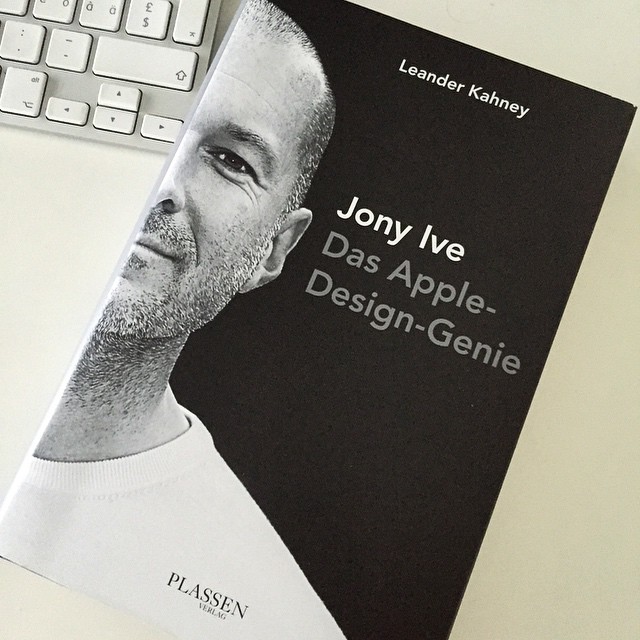
    Meine neue Bettlektüre. Jony Ive.

    Ive’s moving on from Apple some 27 years after he joined is a long innings. During that time Apple went from having a near death experience as a computer maker to selling luxury goods.

    Whilst Ive is one of the world’s best known product designers; he has had his fair share of failed products.

    • The Apple Cube
    • The Newton MessagePad 110

    I consider Ive’s body fo work as head of design at Apple to break down into three periods:

    The Candy Age

    ‘The Candy Age’ was about putting fun back into computers like the iMac. It was a break from Apple’s previous pseudo corporate product design such as the platinum or ‘Snow White’ design language. Around this time you had big organic forms that CAD and tough polycarbonate plastics made possible. From Silicon Graphics Octane and O2 workstations to retro styled Smeg fridges; fun was in.

    The Jony Ive led design team took the transparent prototypes that were usually used to see how products go together and look for things like pinched cables into production. This made a virtue of the innards.

    This provided clear differentiation between Apple and beige box PCs whilst still providing out of the box functionality of an internet appliance. It was this mix of timing and plug-and-play functionality that drove iMac and iBook sales as much as product design.

    This was when Apple started to move from being a ‘weird’ platform to a cool platform.

    Speaking of cool, Jobs pushed both the engineering and design team to keep the amount of cool fans in the devices to a minimum to reduce device noise.

    Pseudo Bauhaus

    Apple started to go from coloured translucent polycarbonate to white polycarbonate and metal. You see this in the second iteration of the iBook which went from looking like a funky toilet seat to a a clean white laptop design. The last generation PowerBooks and early MacBooks in aluminium alloys where a premium version. It gave use the iconic iPod earphones and the early iPod classic designs.

    There was a move to recto-linear shapes and details that were a nod to Dieter Rams work at Braun. During this time Ive was interviewed for the documentary Objectified and specifically stated that their products looked to embrace Rams’ ten rules of good design.

    Size Zero

    Apple was obsessed with size. There is an apocryphal story about Steve Jobs dropping a prototype iPod into a fish tank. He noticed that air bubbles came out of the case. Jobs jumped on this as proof that there was wasted internal space. What this story missed is the emphasis Jobs put on thermal performance.

    Motorola came out with two products in 2004 and 2005. One was the PEBL. The phone was rounded and smooth like a pebble – a tactile pleasure. The second was the RAZR, a phone that was broad and really thin for a feature phone. The RAZR was the more successful.

    We know that Jobs used the RAZR, he pulled his phone out on stage. You can see the influence of the RAZR in slim devices like the iPhone, the MacBook Air and the iPad.

    If Apple couldn’t make it thin, they made it small. That’s the reason why Apple went with the ‘waste paper bin’ Mac Book Pro. Being circular also cut interconnect distances in theory.

    The problem with size zero is that Apple designed itself into a corner:

    • Thermal management became an issue. As I write this my MacBook Pro is blowing up a hurricane. Apple’s Mac Pro line had to be redesigned from the ground up because the ‘waste paper basket’ design couldn’t handle the heat dissipation required for major machines
    • Minimalism to the point of commodisation. Because Ive reduced the phone down to resembling a thick sheet of class, it meant that differentiation through industrial design didn’t matter. Hence why its really hard to tell one phone from another
    • Environmental impact and repairability. Apple has to use special robots to disassemble iPhones for recycling. Apple AirPods are unrepairable and professional grade laptops can’t be upgraded post-purchase. On the MacBook Pro you have ultra slim keyboard keys that are intolerant of use

    Jony Ive leaves a mixed legacy behind at Apple. His departure gives the design team an opportunity to push the reset button and come up with a new design language for products moving forwards.

  • Mercedes 300D & things that made last week

    This video on the 1970s and 1980s Mercedes 300D is instructive in terms of the amount of work that was put into industrial design. What would now be called user experience in a more digital world. The Mercedes 300D was a workhorse of European taxi fleets during the 1970s and 1980s. They became a popular car in the developing world because they were so robust and there are still vintage car owners now who love them because of their design and engineering. When I close my eyes and think of Mercedes, this is the era that encapsulated the essence of Mercedes for me.

    Japan had a culture of non-fiction informational manga as well as the stuff that we’re used to seeing in the west. I’d not seen it done in anime before but ti works really well. Here is a short film made by the people that brought you Sailor Moon in the mid 1970s. It explains some of the incidents that form the base of UFO sightings and subsequent UFO conspiracy theories popular during the cold war.

    https://youtu.be/5k0Yz-iVxdY

    The social side of online computer games. Gaming like chat rooms and social before it brings together like-minded people. My cousin moved to Canada but keeps up with friends from college and home in Ireland over online gaming quests. But these people aren’t merely maintaining existing connections, but building new ones. What also becomes apparent is how detached many people are from their communities. Not just in major cities like London, but also small towns in Wales. More consumer behaviour related content here.

    Amazon is bringing Garth Ennis’ The Boys to the small screen. Karl Urban is a lean but less imposing Butcher and Wee Hughie ISN’T played by Simon Pegg….

    South China Morning Post’s Abacus channels The Pixel Boys to try and bring China’s tech giants to life for westerners: China Tech City | Abacus 

  • Politics of history + more things

    The Politics of History: Why Anniversaries Matter in China | Macro Polo – great reading

    Liu Cixin’s War of the Worlds | The New Yorker – interesting reading material about China and the US. Read this in concert with the Macro Polo article on the politics of history

    On the Mac Pro, the G4 Cube and Their Shared Vent Design – 512 Pixels – interesting breakdown on details. I expect the difference is down to the explosion in CNC capability unleashed by the iPhone

    Why PMI is doubling down on wooing Cannes | Marketing | Campaign Asia – feels like snake oil, disappointed to see Cindy Gallop participating in this, given her role in steering the moral compass of the ad industry

    Report: Chinese spend nearly 5 hours on entertainment apps daily | TechCrunchChinese internet users now spend an average of 4.7 hours on their handsets a day just for entertainment purposes, according to new data (in Chinese) collected by research firm QuestMobile. The number is up from the 4.1-hour average from a year ago. By ‘entertainment’, QuestMobile is counting services like e-reading, music streaming, online karaoke, video streaming, mobile gaming, live streaming, and of course, short videos that are taking the world by storm. The total screen time could be much higher given the country now prefers taking QR code payments instead of cash, not to mention eyeball time contributed by children using smartphones to do their homework and housewives searching for the best deals on ecommerce platforms

    Why Mazda is purging touchscreens from its vehicles | Motor Authority – really interesting from a UX perspective, I was surprised car companies hadn’t got to this conclusion faster

    100 Radical Innovation Breakthroughs for the future | European Commission – where the EU is likely to be placing big bets, a good read, better than the latest Mary Meaker analysis (PDF)

    “Six Stories of GORE-TEX Products Vol. 2”: ACRONYM | GORE-TEX Brand – interesting interview tie Errolson Hugh

    Huawei Testing Russia’s Aurora OS As Complete Android Replacement, Report Claims – this makes more sense than Huawei’s home brewed OS

    242 Year Old Birkenstock is Not Interested in Being on Fashion’s “Trendy Punch List” — The Fashion LawBirkenstock also turned down a collaboration with Supreme, which could very well be the buzziest streetwear brand in the world, with its bouncer-flanked stores and incessantly sold-out wares. “It was never about function for them, just logos,” Klaus Baumann, Birkenstock’s chief sales officer, speaking about Supreme, which regularly draws long lines of consumers outside of its store every week on Thursday when it “drops” new products, including collaborations. “These were not product people.” Birkenstock’s management is seemingly unimpressed by such antics.  Not mincing words Baumann states, “If I put a bouncer outside our doors on Saturday and regulate letting people in, I too could have a queue outside.” – more on luxury here.

    HOW TO PISS OFF A CREATIVE – BBH – epic

  • Gundam into Space + more stuff

    Japan Wants to Launch Gundam Into Space for the 2020 Tokyo Olympics – I am looking forward to the next Tokyo Olympics. Not for the athletics but everything else that the Japanese organising committee wraps around it. I mean if a Gundam goes into space, what’s next? Godzilla takes part in the olympic torch relay and hands off to Shotaro Kenada on his iconic bike?

    Challenging stereotypes has become a key trend in advertising recently. Part of it is down to the movements supporting diversity and LGBTQ communities. GS Caltex have chosen to challenge the stereotypes surrounding stepmothers in Korean society with this advert. These  were run on YouTube and distributed via online fairy tale platform “Iwing” and on Naver, a leading portal in Korea. You don’t need to speak Korean to understand the gist of where campaign was going.

    A bit of oil history for you. GS Caltex is a joint venture business between what was then GoldStar (now LG) and Caltex. Caltex was an joint international joint venture between Chevron (Standard Oil of California or SOCal) and Texaco. Both of which were part of the Seven Sisters of western oil companies who dominated exploration, production and refining until the 1970s.

    We’re starting to see an increased focus on craft in advertising after a decade of obsession with performance marketing to the detriment of brand. So now is as good time as any to revisit London agency CDP (Collett Dickenson Pearce) work on Hamlet cigars during the 1970s.

    I love this cheeky send-off and backhanded tribute that BMW gave Dieter Zetsche when he retired as CEO of Mercedes-Benz. In reality Mercedes-Benz and BMW have different brand attributes and strengths.

    IDEO has commissioned an oral history of itself as a corporate video. It covers their move from industrial design to the design of ideas.