FMCG or fast moving consumer goods sprang out of the mass industrialisation. Brands sprang up originally as a guarantee of quality. Later on as these brands needed to be promoted, we saw the foundation of the what we think of as modern marketing and advertising.
Today media and entertainment takes up an increasing amount of the household spend, as does housing, but FMCGs are a crucial part of their essential and disposable income spend.
They have nostalgia wrapped up in them, distinctive aromas, taste and packaging designs. From the smell of my Granny using so much Pledge on the TV that I was surprised it didn’t burst into flame to the taste of Cidona and texture of Boland’s Fig Roll biscuits in my mouth.
The sound of their advertising jingles was the soundtrack of my childhood. Digital advertising is largely rationale, it lacks the fluent devices that provide the centre to advertising and made FMCG advertising iconic. Fluent devices like the Peperami ‘Animal’, the M&M characters or the Cadbury Smash robots were embedded in deep marketing research. FMCG brands still sponsor the best research in marketing science.
I had the good fortune to work inhouse at Unilever and agency-side for their brands. I also managed to work on Coca-Cola and Colgate during my time in Hong Kong.
Hyundai have pushed out a campaign to teach British people how to pronounce the companies name properly. This is a well trodden path for foreign brands like Hyundai. My childhood featured ‘Nestle’s Milky Bars’ as the advertising jingle ignored the é at the end of Nestlé. I can only presume that it would be assumed to be too sophisticated for our palates rather than a playground staple.
More recently, I spent a couple of minutes coaching Arsenal footballing legend Ian Wright on how to say Huawei prior to him shooting some online video content for a smartphone launch. So I can relate to the challenge that Hyundai faces in gaining the correct pronunciation.
Getting the pronunciation right will allow Hyundai to use global English language assets, rather than having to do localisation. A small but important saving as it looks to compete for the UK and Irish electric car markets.
The advertising plays on the common pain-point of Siri and Google Voice failing to pick up on pronunciation in order to use humour to get Hyundai across correctly.
Older women and younger men relationships explored in this documentary. Prior to going to college in the mid-1990s I worked for a company that put coatings on materials to make stickers, stamps and labels. My boss there was a guy called Mark who married the PE teacher from school, once he’d finished his university degree. At that time Mark’s relationship was considered unusual in nature.
Design
Great film compilation of retrofuturist footage
Watching this film on the intersection of military clothing design and fashion reminded me of William Gibson’s Zero History novel.
New China-focused think tank staffed and advised by a number of prominent Hong Kong dissidents: China Strategic Risks Institute
Mainland Chinese visitors start to return to Hong Kong after Covid-19 restrictions lifted, but most tours low-cost and short stay, figures reveal | South China Morning Post – Tourism figures from February to this month show 86 per cent of tour trips from mainland China lasted one to two days and 54 per cent cost less than 500 yuan. Travel Industry Authority confirms it is investigating allegations of cigarette smuggling by mainland Chinese tour groups – it will be only a matter of time before the impact of this behaviour change ripples out to Hong Kong’s retail landlords and the luxury brands who have stores in the city. Hoteliers and the hospitality industry haven’t benefited from opening up the borders
Indonesia
Indonesia is an economic powerhouse in the making, but there are forces ripping away at its society that could leave it as inequitable as its neighbour Malaysia – which has been suffering from a brain drain and political stagnation. Indonesia like Malaysia before it seems to be coming under the sway of Gulf Arab traditions of Islam rather than the indigenous variant of the belief. Singaporean news programme CNA Insider did a good documentary on it all.
If we go back to 1949 Dutch economics Petrus Johannes Verdoorn came up with a law – the long run productivity generally grows proportionally to the square root of output. This law addresses the relationship between the growth of output and the growth of productivity. Faster growth in output increases productivity due to increased returns.
“in the long run a change in the volume of production, say about 10 per cent, tends to be associated with an average increase in labor productivity of 4.5 per cent.”
Causes of the Slow Growth in the United Kingdom Nicholas Kaldor (1966) Cambridge University Press
A heuristic called Vandoorn’s coefficient of 0.484 was found in estimates of the law following Vandoorn’s original publication. Nicholas Kaldor who made similar points as far back as 1960 in his work Essays on Value and Distribution. Kaldor built on Verdoorn’s Law observing that manufacturing was the best way of increasing output.
Slater, Walker Securities
The UK economic hole isn’t anything new. Back when I was a child we saw UK industry disappearing at about 1.5% of industrial capacity a month. The source of the destruction was apparent in the post war period, although manufacturing innovation had been underbanked and under invested for decades. Jim Slater and his financial vehicle Slater, Walker Securities was the harbinger of forces that unleashed the UK economic hole.
The State We’re In
Economics editor Will Hutton wrote the The State We’re In and I got to read it while I was in college. It caught the policy wonk zeitgeist of the future Blair administration – making the argument for long termism and manufacturing as a creator of wealth together with Keynesian economics.
Slow Growth Britain to Cool Britannia
Hutton wasn’t alone in his viewpoint but building on the expertise and experience. Wilfred Beckerman in his book Slow Growth in Britain: Causes & Consequences published in 1979 is a case in point. As you read these books the same points are made over and over again about what has become the UK economic hole. The discovery and exploitation of North Sea oil provided a sticking plaster from 1982 through to 1999. But production in UK oil and gas fields have been in decline since. Any economic productivity benefit provided to British industry through a massive shake out was transferred to unemployment relief. Secondly industrial eco-systems or ‘clusters’ as Richard Florida would term them in his work Who’s Your City? disappeared, causing the manufacturing base to lose critical mass. Any gains were largely spent by 1990. Manufacturing was a driver and a shock absorber for productivity related issues – this is important for the subsequent UK economic hole.
While Hutton was read by the future Blair administration they did little about it, due to the Augean task that confronted them.
Following the decline of manufacturing the UK, focused on financial services which turned toxic in 2006. There were additional smaller bets on professional services and the creative industry (remember pre-millennium awkwardness of Cool Britannia)? As an economic rational decision maker, I pivoted my career out of industry and into the creative sector – thankfully I was young enough to be able to do it. Many couldn’t and were trapped in low value services jobs or living on long term sickness benefits to massage unemployment figures.
Young tax-paying workers
The collapse of financial services saw the current productivity collapse and stagnation amplifying the long standing UK economic hole. Brexit could be seen as a wail of pain and anger. The reality was that being in the EU allowed cheaper skilled workers to move to the UK and use existing manufacturing plants for the likes of Cadbury’s and Unilever. So the UK benefited from young tax-paying Europeans, but lost out in terms of wage depression. Brexit severed that last gasp of productivity increases.
What is really driving ExxonMobil’s clean energy commitments? | Financial Times – the decades long algae biofuels programme failed. Back when I worked in the oil industry at the start of my work life, ExxonMobil had the best research and development / innovation team in the oil industry. They were way ahead of the likes of Shell or BP. The heuristic within the industry went something along the lines of: BP could find oil anywhere, Occidental could get a contract to drill anywhere, Shell could market any product successfully and ExxonMobil could out-innovate the rest of them.
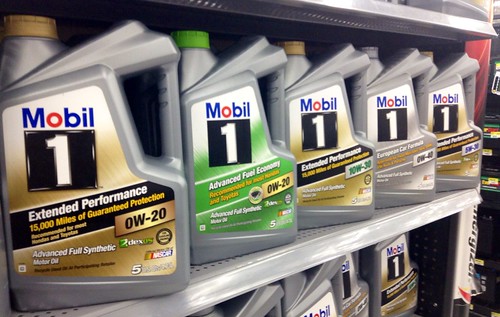
Mobil 1 oil on the shelf at a motor factors courtesy of Mike Mozart
For instance Mobil were decades ahead of everyone else with their Mobil 1 synthetic lubricating oil back in 1974. Castrol was processing petroleum oil and calling it synthetic, they were eventually caught out in 1998 – with Mobil winning a moral victory if not a court case. The point is that if ExxonMobil can’t get algae to work, I doubt any company can – energy desperately needs its semiconductor moment.
Talking about a semiconductor moment, one of the places where this would be really welcome would be green hydrogen. I had hoped that Ireland would be able to convert its wind power bounty into generating hydrogen by electrolysis as a way of moving and storing energy in a way that electrical batteries can’t match.
Only the Global-Health Emergency Has Ended – The Atlantic – “This virus is here to stay. It is still killing, and it’s still changing,” Tedros Adhanom Ghebreyesus, the director general of the WHO – the cadence of an emergency might be finished but there is still subtantial health risk. It has declined to ‘only’ the fourth most common cause of death…
Genesis G80 Electrified vs. BMW i4 M50 | MACAU DAILY TIMES 澳門每日時報 – the G80 is closer to a 7 series than the i4 which is somewhere between the 3 and the 5 series. Overall I would prefer to go with a Genesis given the reliability issues that BMWs have had for the past two decades.
The Disconnect on Undersea Cable Security – Lawfare – The fibre-optic submarine cable sector is a vital, but ignored, part of the world’s critical infrastructure. Many members of Congress and the U.S. government, see the risks to subsea cables quite differently than cable owners and manufacturers. Brookings Institute’s Joseph Keller examines this disconnect, suggesting ways that the policy community can protect and advance this critical industry.
Thailand
Thailand legalised cannabis and an industry boom occurred. A key part is trying to integrate and provide value to the country’s hospitality, tourism and travel sectors.
Elliott Management wrote this opinion piece on Apple and China: Apple is a Chinese company | Financial Times – interesting assessment of risk exposure with a focus on the Apple share price.
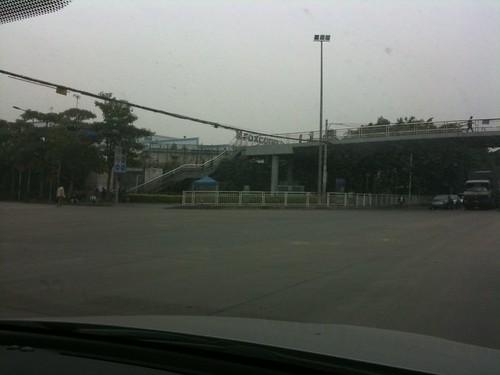
The Apple and China relationship started before China joined the WTO. Taiwanese contract manufacturers had built huge industrial sites in Shenzhen, China and later in other parts of China. The best known of which was the Foxconn plant in Shenzhen. Back in 2010, I was driven around the perimeter of the site, which went on for miles.
The only site that I had seen which would be comparable would be the Mercedes-Benz manufacturing site in Sindelfingen which is part of the Stuttgart metropolitan area. I spent part of my childhood and early adult life living next to a General Motors car plant, a shipyard and a couple of oil refineries, so I am used to scale of industry.
As Apple came back from a near demise in the mid-1990s, it needed manufacturing scale so the combination of Apple and China happened due to that. Over time the Apple and China relationship drove manufacturing expertise and new ways of doing business, such as using CNC machines at scale. Prior to Apple and China, smartphones were plastic mainly due to product engineering influenced by Nokia’s work on its feature phones.
Over time, the Apple and China relationship evolved. Chinese developers make up about half of the programmers making iPad and iPhone applications. Chinese component manufacturers replaced US, Korean, Japanese and European suppliers. Apple and China has become tightly entwined as Chinese manufacturers look to dethrone Apple at the same time.
Apple and China national security focus
China’s state and national security focus has spilled into the economic and social aspects of policy which has a high probability of reaching the Apple and China relationship. Apple already compromises on its privacy tenet in the way it handles China’s data. It actively supported China versus Hong Kong protestors – doing everything it could to disrupt the protestors self-organising tools.
China has shown that its ever expanding security considerations trump business so Apple and China may come to a rapid and disruptive break. Apple is trying to de-risk production outside China but it might be too little, too late. Apple and China are due for a relationship reset.
China’s assessments of Soviet Union’s collapse is very interesting as they offer a playbook of Xi Jinping thought
China’s ‘men in black’ step up scrutiny of foreign corporate sleuths | Financial Times – “It’s hard to attract capital if you can’t get a report from a global due diligence firm,” said one international services executive. That could run counter to the government’s efforts to revive animal spirits in China’s economy, consultants and investors said. “Maybe this is the intention,” said the head of one consultancy in Beijing, “to choke off investment and get the state to step back in, to stop the ability of investors to place bets.”
Xi Jinping Can’t Handle an Aging China | Foreign Affairs – less convinced this assertion is true, when we look at natalistic policies in authoritarian regimes such as what happened in Romania under Nicolae Ceaușescu with Decree 770 which was one of the strictest anti-abortion law at the time, or Nazi Germany’s breeding programmes
US Companies in China Grow More Pessimistic of Ties: AmCham Survey – Bloomberg – Some 87% of respondents to a flash survey taken last week said they were at least slightly pessimistic about US-China ties, according to the survey published Wednesday by the American Chamber of Commerce in China. That was 14 percentage points higher than the chamber’s previous poll. “Bilateral relations between the United States and China have substantially deteriorated,” said Lester Ross, chair of AmCham China’s Policy Committee. “It’s hard to see at this point when they will begin to improve — and this, of course, affects the ability of business to operate across borders.”
China Ratchets Up Pressure on Foreign Companies – WSJ – Business executives who have consulted with Chinese authorities say a central tenet of the effort is the desire to more tightly control the narrative about China’s governance and development, and limit the information collected by foreign companies such as auditors, management consultants and law firms that could influence how the outside world views China… Some foreign business executives say they worry the rewriting of the espionage law means that many topics, ranging from the status of Taiwan to China’s human rights record to technology such as semiconductors, are now becoming off limits in discussions with their Chinese counterparts. The recent trouble for foreign companies in China is drawing criticism in Washington. Rep. Mike Gallagher, a Republican from Wisconsin who chairs a congressional committee on the Chinese Communist Party, said in a statement Thursday, “Our business leaders need to take off their golden blindfolds and recognize that the recent police raids of American companies Bain and Mintz are not one-offs, but part of a long, proud tradition of exploitation.”.. The push is driven by a deepening conviction within China’s leadership that foreign capital, while important to China’s economic rise, isn’t to be fully trusted – if I was a brand planner in China or Hong Kong I would be very wary at the moment as this will spill over into agency life (paywall)
Longitudinal consumer behaviour change around increased empathy in western markets
A lot of this focus on the expertise in the ‘aspiration economy’ sounds like brands back in the early 1990s again. The kind of expertise exemplified by Nick Hornby’s novel High Fidelity or the characters Randall Graves and Dante Hicks in Kevin Smith’s movie Clerks.
The new industrial policy, explained – by Noah Smith – the speed and disruptiveness of China’s entry into the global trading system destroyed the career trajectories of large numbers of American workers and hurt the economies of whole regions. Second, U.S. complacency about the trajectory of Chinese politics, combined with a massive campaign of technological espionage, hastened and encouraged the rise of a new, hostile superpower. By the mid-2010s, only economists thought that free trade was still an unquestioned good, and the country wasn’t listening to economists the way it used to
Too Big to Challenge? | danah boyd | apophenia – the tech industry represents 9% of the U.S. GDP and only five Big Tech companies account for 25% of the S&P 500. Prior to Covid, most of the growth in stock market came from Big Tech. Now, as the U.S. economy is all sorts of wacky, Big Tech is what is keeping the stock market’s chin above water. In the process, Big Tech is accounting for more and more of the stock market – edited for brevity
The gender pay gap is not a myth, it’s math – it’s mostly not a discrimination story, it’s a parenting story. But more flexible employment is likely to be more of a discrimination story
Microsoft-branded mice and keyboards are going away after 40 years – this reminds me of when a new exec joined Bill Gates era Microsoft in the late 1980s/1990s. The company had unintentionally had in warehouses 3 years sales worth of Microsoft mice ready to sell. Their hardware with the exception of an ergonomic keyboard haven’t been great products that were superior to other technology companies
Interesting that even state broadcaster Deutsche Welle is complaining about the poor quality of modern German cars. Back in the early 1970s BMWs had a reputation as being clever fragile rust buckets, but the decline of Mercedes is far more dramatic in terms of quality. The decline seems to be in lock step with the globalisation of these companies and an increased focus on shareholder value.
Compare and contrast with older Mercedes cars across the Middle East and Africa.
Project MUSE – China’s Hong Kong Affairs Bureaucracy: Factional Politics and Policy Consistency – “From the perspective of factional politics, this article sheds light on the functions and operations of the Central Liaison Office and the Hong Kong and Macao Affairs Office (the “two Hong Kong offices”) throughout the history of the Communist Party of China (CPC), focusing on the 2013–22 period. The authors posit that the stronger the factional relationship between the top leader responsible for Hong Kong affairs and the heads of the two Hong Kong offices, the greater the policy consistency between the two offices and the central authorities on Hong Kong issues. This article uses text mining techniques to measure the degree of policy consistency between Chinese President Xi Jinping and the two Hong Kong offices from 2013 to 2022. In 2020, Xi appointed his protégés as directors of the two Hong Kong offices, thus regaining absolute control over Hong Kong affairs. Xi may further tighten his hold on Hong Kong in the future, thereby undermining the region’s autonomous status.” – Interesting aside: The Party and State Institutional Reform Plan (党和国家机构改革方案) unveiled in March established the Hong Kong and Macao Work Office of the Central Committee (中央港澳工作办公室) on the basis of the Hong Kong and Macao Affairs Office of the State Council. The latter has essentially become a Party body instead of a state body, and the arrangement is now “one organisation, two nameplates” (ie., two identities). – expect even further ratcheting of authoritarian measures in all aspects of Hong Kong life and economy
Culture and technology adoption’s effect on Japanese information design online. It reminds me of the early web portal designs were more like print newspapers.
Interesting that the Korean government is allowing these strikes to go ahead given the central role of Samsung in the country.
Luxury
Alibaba, Partners Fight Fraud and Root Out Counterfeits – Over 730,000 IP rights were under Alibaba protection by the end of 2022. 98% of IP takedown requests by rights holders were handled within 24 hours for the third consecutive year – I wonder what Amazon numbers look like for this?
I didn’t realise that Taiwan’s semiconductor expertise went back this far. DigiTimes has unprecedented access to the elder statesmen and experts on the early Taiwanese semiconductor industry
McDonalds CSR activities came up a few times over the past day or so I thought I would visit it. CSR stands for corporate and social responsibility. A few American PR executives that I have come across used not to like the S in the middle, which sounded like socialism. The idea was doing good to enhance brand reputation – generally it was a strategic function.
ESG operates at a higher level. CSR predates ESG as an idea. McDonalds CSR is interesting because of the tactical way it seems to be employed around what a couple of rules that I have noticed.
Children are always a good universal focus of McDonalds CSR, which is the reason why Ronald McDonald House is a common theme throughout the worldwide operations of McDonalds
McDonalds CSR is on the side of authority, hence its support for the Metropolitan Police when dealing with XR protests and Korean national service draftees. There is a risk that this could make its conduct in authoritarian countries more problematic
To be a poem. – from the Web Curios newsletter ‘is a digital poem by Alicia Guo – it’s infinite and self-generating, and I don’t quite know how it works or where it’s pulling the words from, but each time it’s different and each time it’s fragmented and magical and silly and poignant and confusing and beautiful and I would like this to be read forever by a choir of machine voices until the heat death of the universe please thankyou.‘
Online bookseller Book Depository is closing down with some three weeks notice. It wasn’t a topic at work and barely made a ripple amongst British friends. The Hong Kong part of my social media bubble shared the news and were sad about it. The company had been owned by Amazon since 2011. I used it for a few reasons:
Free postage anywhere. I have friends around the world and Book Depository was a good way of sending a gift book. It made the process of international gifting so much easier. I bought a set of books there as recently as last week. Many of the upset people on social media were from Australasia, Latin America, Eastern Europe and Asia
Getting hold of English books when I lived in Hong Kong. At the time I lived in Hong Kong there were a couple of nice chains that did English language books, but if I wanted something for my professional life or esoteric interests, then online made more sense. Dymocks, Eslite and the various independent stores would only get you so far. For everything else Book Depository helped out. This was partly down to book shops being a ‘lifestyle’ in Hong Kong and other parts of Asia. They carefully curate fiction but aren’t necessarily like the university book shops I spent my teens and twenties in
Arbitrage. Despite being owned by Amazon, there were a number of items that I bought where there was a price difference between Book Depository and their parent company
You could find a particular edition or format, with Amazon it could be a bit of a lottery
It isn’t full of tat like Amazon. Amazon Marketplace has been both a blessing and a curse. Amazon hasn’t done a good enough job curating Marketplace. I found Marketplace useful at the beginning, rather like a fixed-price eBay. Now its a dystopian retail experience littered with a substantial minority of counterfeit products and sub-standard garbage
Their ask the author section provided some interesting reading.
The brand
I always had it in my mind as ‘The Book Depository’ rather than Book Depository. It’s always the way I discussed it with other people. I had to go back and edit stray ‘The’s that slipped into this post.
Book Depository home page
Diminished ambitions
Book Depository is being closed by Amazon as part of cost cutting across its book and device categories. There is a certain irony in Alexa being in full retreat just at the time when LLMs were about to turn up. Alexa skills are likely to get loss in the subsequent withdrawal and LLM expansion. Book Depository helped plug gaps on the map where Amazon didn’t have native businesses. The decline of Book Depository implies an upper limit to Amazon’s global retail expansion.
Beauty bots drive R&D at Unilever’s £68 million facility | Vogue Business – The world’s highest concentration of robots doing material chemistry can be found at Unilever’s lab in North West England. Vogue Business gets a behind-the-scenes peek at the facility, which develops innovative products for brands including Hourglass and Living Proof.
Is China’s New Rocket Really Coal Powered? Deep Space Updates – April 2nd – YouTube – yes kerosene made from the kind of coal hydrogenation process similar to what SASOL used in apartheid-era South Africa. The National Coal Board had a pilot plant doing something similar during the late 1980s at Point of Ayr under what was called a ‘coal liquefaction plant‘. I used to know a few of the guys that had worked there previously. The plant had a number of experienced oil refinery technicians on the staff when it was running. The site was subsequently taken over and was where BHP Petroleum built their sour gas facility and brought natural gas ashore from the Liverpool Bay oil and gas field in the early 1990s. It also probably tells you everything you need to know about China’s climate related decarbonisation goals.
How the new generation of weight-loss drugs work | The Economist – the potential benefits of such drugs go beyond their ability to promote weight loss in individuals. By showing that molecular mechanisms hinder people’s attempts to lose weight, they show that gluttony is not to blame when people remain obese. That should slowly help to eliminate the stigma. Both weight-loss surgery and drugs are useful tools in the fight against obesity. But by changing the conversation these new drugs may remind health-system leaders that they need to do much more to encourage healthy lifestyles.
Hong Kong
‘Fair price, fine quality’: Hong Kong fast-food chains become go-to place for mainland Chinese budget tours | South China Morning Post – Established eatery chain Café de Coral was among those capitalising on the trend as it offered advance bookings for the tour groups, which have increased after the city fully resumed cross-border travel with the mainland earlier in the year. A Post reporter at 11.45am on Monday observed two mainland tour groups of about 30 people each being guided from their coaches and taken to Grand Waterfront Plaza, a shopping centre in To Kwa Wan, where they dined at the site’s Café de Coral outlet.
Online trolls are taking a toll in China – BBC News – In collectivist cultures such as China, those perceived as going against the norm tend to be severely punished, experts say. What makes it worse, they add, is a pervasive culture of shame. “A strong sense of collectivism in China can mean that cyberbullying, when perpetrated as a symbolic act of violence or aggression towards another in a public setting, may lead to drastic measures, such as suicide, to escape that sense of humiliation,” says K Cohen Tan, a vice-provost at University of Nottingham Ningbo China