I have a relatively small amount of health related posts on this blog at the moment. But it’s becoming an area that’s impossible to ignore. Health and wellness is becoming central to mainstream culture.
Anxiety and loneliness have sparked what is considered by many to be a mental health epidemic and a corresponding reduction in societal resilience.
High income countries were spending as much as 14 percent of government spending on health before the COVID pandemic. The number is likely to be even higher now.
According to an article in medical journal The Lancet, poor mental health cost the global economy approximately 2.5 trillion US dollars per year and this was expected to rise to 6 trillion by 2030.
It’s an area that can’t be ignored, because of the financial burden and size of market that the sector represents.
In 2020, during the COVID-19 pandemic a UN report said the following:
Psychological distress in populations is widespread. Many people are distressed due to the immediate health impacts of the virus and the consequences of physical isolation. Many are afraid of infection, dying, and losing family members. Individuals have been physically distanced from loved ones and peers. Millions of people are facing economic turmoil having lost or being at risk of losing their income and livelihoods.
The report went on to recommend solutions such as:
Crafting communications to be not only effective but sensitive to their impact on the mental state of the populous
Community events looking at cementing social cohesion
Extending tele-medicine to include tele-counselling for frontline health-care workers and people at home with depression and anxiety.
I started to look at trends in March 2020 and there was a singularity developing around innovation and technology in the area, together with some interesting cossumer behaviour trends. Young adults made up a sizeable chunk of telemedicine non-users and as resistors to public health initiatives. Their much vaunted ‘online literacy’ saw them fall for the same tropes and older audiences considered more gullible like pensioners and retirees in Facebook groups
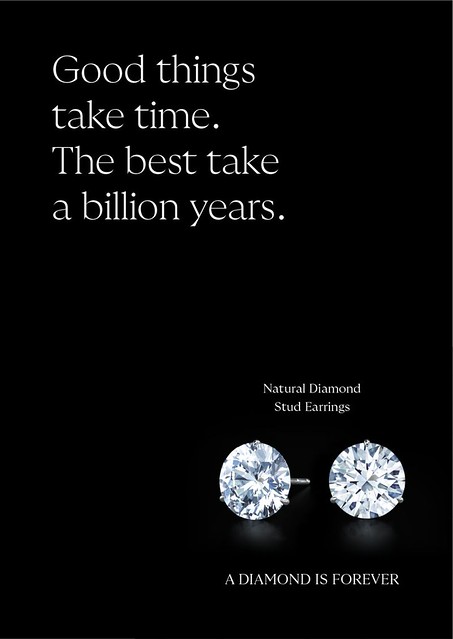
DeBeers have resurrected their tagline A Diamond is Forever. What’s interesting is that DeBeers is focusing the campaign only in China and the United States. Whilst the heritage of A Diamond is Forever may resonate with the American audience. I am less sure about how it might resonate for Chinese consumers.
While diamonds are a good store of value, the move towards guo chao – Chinese things for Chinese people is another dynamic that may affect receptivity.
Beauty
Gen X men prefer gently-scented bodycare products over heavily-scented ones | Mintel – Despite having body odour concerns, Gen X doesn’t go for heavily scented products as they have dry, sensitive and acne-prone body skin. Among Gen X, itchiness, excessive sweat and rashes concerns stood out from those of other consumers. They are also concerned with the odour associated with the result of sweat.
Welcome to the Anti-Woke Economy | The New Republic – A fledgling parallel economy has emerged on the right, hawking everything from coffee to vitamin supplements to anti-abortion protein bars. But can a business movement born of political and cultural grievance be viable over the long term?
An inconvenient truth: Difficult problems rarely have easy solutions | Behavioral and Brain Sciences | Cambridge Core – Individual-level interventions are often interesting and easy to implement, but are unfortunately ill-equipped to solve most major global problems (e.g., climate change, financial insecurity, unhealthy eating). Resources spent developing, pursuing, and touting relatively ineffective i-frame interventions draw resources away from the development and implementation of more effective s-frame solutions. Behavioral scientists who want to develop solutions to the world’s biggest problems should focus their efforts on s-frame (system level) solutions
Ideas
The AI and Leviathan series examining what it means if AI did actually change everything including extreme techopolarity.
Part 1 – institutional economics of an intelligence explosion
Dentsu launches paid search tool that uses AI to speed up creativity and optimization – Digiday – d.Scriptor — a new proprietary offering it’s developed to supercharge paid search, mainly in the area of ad copy development but also as a means to optimize and adapt execution. Dentsu is announcing the tool today, after pilot testing over the last several weeks. It’s meant to help with boosting the volume of creative messaging with an eye toward improved engagement rates, as well as to speed up the process of creative experimentation, and cut down on the time required to perform optimization tasks – the more variants that you cram into a Google Adwords programme the better a job it can do on optimising display based on what works. I spent a lot of time coming up with variants in spreadsheets to do this when I was freelancing
We’re Updating our Community Standards – Linktree – changes on conditions, particularly focused on sex work, presumably to cover themselves from US legislation. There are also restrictions on regulated sectors like vaping and alcohol
It says something about the time that we live in that digital abortion clinics is a normal phrase and that publications like Wired have to have rank the clinics on patient data security. Disclaimer: I lean pro-choice in my beliefs as I don’t have to make the kind of choices that many women have to. Secondly, the second order consequences of high risk procedures done the black market create new moral and ethical dilemmas.
Dystopian vibes
Matt M – Ghost In The Shell Stand Alone Complex
Five years ago, if you had said digital abortion clinics to me it would have brought to mind the darker recesses of the cyberpunk realms created in novels by William Gibson or Neal Stephenson’s Snow Crash, or the Ghost In The Shell series of manga and anime created by Shirow Masamune.
The reality is more banal and horrifying all at the same time.
How we got here
Legal and regulatory environment
Family planning clinics that provide terminations have been under regulatory attack since the US Supreme Court ruling on Roe vs. Wade gave American women access to abortion in 1973. Roe vs Wade was challenged repeatedly in court and upheld in rulings given afterwards. Some of these rulings narrowed the definition of what procedures could be conducted and when they could be conducted. In June 2022, the US Supreme Court overturned Roe vs Wade with its finding on Dobbs vs Jackson Women’s Health Organisation. Abortion was no longer considered a constitutional right, which then meant pregnancy terminations became governed by a myriad of state laws both for, and against abortions.
Some states went as far as to provide a legal shelter for their medical staff against legal measures out of state.
Pharmaceuticals
Historically, medicinal herbs and drugs used to induce an abortion risked causing kidney and liver damage. But we now have drugs available that can provide a much safer alternative. It’s these drugs that the digital abortion clinics rely on. The two most common are:
Misoprostol was developed in 1973. It’s used to induce abortions, but also has other uses including the prevention and treatment of both stomach ulcers and some forms of postpartum bleeding. It can also be used to induce labour during pregnancy.
Mifepristone developed in 1980, is typically used to induce abortions in conjunction with Misoprostol. It is also used on its own to treat high blood sugar levels in patients who also have hypercortisolism.
Femtech
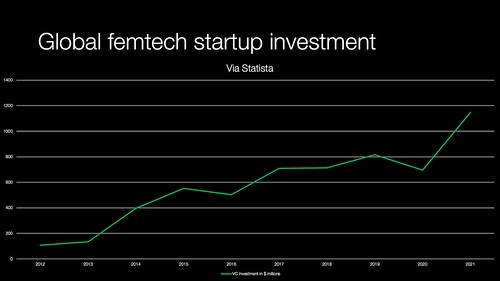
Femtech as a term has only been around since 2016, but investment in the area of women’s health related technology has been growing over a decade. A few things were driving this. The personal nature of smartphones as a device. The explosion in software tools that allowed you to write apps and the availability of wireless technology stacks that hardware easier to connect. Finally, countries like the US started working on data privacy standards in the health space which were very important.
2016 saw Nurx get funding for it to provide in-app ordering for birth control pills. So prescribing abortion inducing medications is a logical next step, in order to give women full control of their reproductive capabilities.
Telehealth
COVID-19 accelerated the normalisation of digitally mediated health services including telehealth consultations and digital abortion services are now exception. If a woman chooses to have an abortion, it’s a big decision and the popular apps covered by Wired seemed to have a wide variance of user experience / provision of care.
These clinics operate in different ways—some provide live video visits with doctors and nurse practitioners, while others offer asynchronous counseling—but many have experienced a record number of patient orders (and increased VC funding) over the past year.
Poli K. (August 21, 2023) The Most Popular Digital Abortion Clinics, Ranked by Data Privacy. United States: Wired magazine
Security issues
Those software tools that allowed apps to be written easily often included API calls that enable privacy infringing tracking. For instance, a byproduct of the software tools used to make LGBTQI dating app Grindr’s locative nature risked exposing precise location data of gay men. Which is of concern in more socially conservative environments. Women using some digital abortion clinics face similar challenges.
In US states, where the politicians thought that Margaret Atwood’s The Handmaid’s Tale was a how-to guide, rather than a societal warning; prosecutions in abortion related cases are using mobile data and search history.
Wired worked with the University of Texas privacy lab to grade the post popular digital abortion clinics on the degree of risk they posed to their patients.
The results were concerning and these problems can’t be mitigated through the use of a VPN or in-app settings.
Third-party data app sharing and data collection were used by the likes of Palantir to aid targeting people of interest in the global war on terror (G-WAT in security circles), and could be used in a similar way against women, if the state government were so inclined.
The Wired article that inspired this post here. More health-related content here.
Psychotherapy is using psychological techniques to to help improve:
Happiness
Mental wellbeing
Behaviours, beliefs and compulsions that might be holding someone back from achieving their full potential in life
It can involve sessions that are one on one, or be part of a group experience.
Psychotherapy in culture
American TV brought the emotional and mental anguish of life into its programming, for instance, this segment from from Thirtysomething.
The TV series Frasier put the profession front-and-centre with both Frasier and Niles Crane being psychiatrists by profession. It even brought up the subject of therapy for animals.
Hollywood has often looked to develop characters by showing them undergoing therapy.
Probably the most famous example is the relationship between Robin Williams as the therapist Dr. Sean Maguire and Matt Damon as his court-mandated patient Will Hunting in Good Will Hunting.
Over the past 20 years therapy as an activity has become much more mainstream in the UK. And this has been reflected in the media, such as this plot line from the critically-acclaimed BBC comedy series Fleabag, which shows how mental health and therapy have become part of modern middle-class life.
Age of anxiety
Elizabeth Wurtzel’s Prozac Nation was published in 1994; yet feels very now. At the time of publishing it turned the drug brand Prozac into a household name. The black and white cover photo of a vacant Wurtzel fitted very much into the grunge aesthetic. As did the authors tale of being a young American battling against depression. There was even a counter-movement over the years of writers who looked to provide alternatives to Prozac (and its peers like Paxil and Zoloft). Their solutions ran from potatoes, to Plato or God.
Moving forward some three decades and Wurtzel’s writing resonate with a generation battling anxiety and reshaping society around their angst.
Modern world events from wild fires and climate change seems to have created the conditions for a collective sense of hopelessness and grief. A 10-country survey with a sample size of 10,000 people aged 16 – 25 published in The Lancet found high rates of pessimism. 45 percent of respondents were said worry about climate negatively affected their daily life. Three-quarters of respondents believed “the future is frightening,” and 56 percent said “humanity is doomed.”
Roots of a crisis
Wurtzel’s generation too grew up with climate changes, the ozone layer, economic uncertainty due to globalisation and deindustrialisation. They watched the most dynamic economic power on the planet hit a brick wall with the Japanese economic miracle, the internet bubble and imminent global thermonuclear war.
Over the past half-century we’ve seen wealth flow to the richest while the middle class stagnates or shrinks.
So the stressors for anxiety that needs psychotherapy are neither new, nor are they unique. But they have uniquely manifested themselves creating a mass market for psychotherapy in different forms. Like generations of children before them they were brought up as individuals with an upbringing influenced by Benjamin Spock’s The Common Sense Book of Baby and Child Care which shaped childcare from the post-war era onwards.
Every family home didn’t have a copy of Spock on their shelves, but it shaped advice given out by medics, educators, social workers and the media.
Like previous generations in the late 20th century their upbringing was marked by a new mass medium. (Previous new mediums would be popular radio, teenage culture including rock n’ roll music, television (and its subsequent proliferation of channels) and the web).
The big generational difference is likely to be level of childhood exposure to risk. Children growing up in the 1960s through to the early 1990s would be familiar with the ‘latch key kid’. They would have played outside with friends, maybe held down a part-time job or even had a degree of personal mobility with a bicycle that they used to cycle everywhere. Playgrounds were fun, but didn’t have the safety measures of modern playgrounds, the playgrounds of the mid to late 20th century had rusty swings and hard concrete surfaces. The decline in ‘outdoor play’ in favour of play dates and electronic amusements was cited as a possible factor by authors Greg Lukianoff and Jonathan Haidt in their book The Coddling of The American Mind.
Lukianoff and Haidt’s suggested solution to this age of anxiety was to use a form of psychotherapy known as cognitive behavioural therapy to help boost mental resilience in children and young adults. There is a growing body of work that puts the blame on rising anxiety at the always-on nature of social media through smartphones.
The age of anxiety has mainstreamed a number of niche product categories from gadgets like fidget spinners to weighted blankets.
Rebranding psychotherapy
Going back to the explanation of psychotherapy that I started off with, one of the bulletpoints was ‘behaviours, beliefs and compulsions that might be holding someone back from achieving their full potential in life’.
A number of decades ago psychotherapy was seen to be something that tended to happen in hospital and the general thinking that a pill may provide the solution or at the very least a chemical cosh for the worst affected or most disruptive.
The more well-heeled may have seen a therapist in a consulting office. In other communities the role may have been played by the social worker, (in rural Ireland it might have been the local parish priest) or a marriage guidance counselling service. Developments of different psychotherapy techniques over the 20th and 21st century owe as much to philosophy as they do to our scientific understanding of the mind and neuroscience.
There are now a large amount of therapists and life coaches who have a wide range of certifications and experience addressing the behaviours beliefs and compulsions that might be holding someone back in their personal or professional lives.
The changing nature of psychotherapy
Technology and media are changing our relationships, the way we relate to each other and ourselves. Parasocial relationships are asymmetric in nature. Fans believe in an influencer who may not even know them. They supplement or replace friendships that would otherwise be in the fans life. These new forms of relationships can affect both the fan and the influencer when unrealistic expectations aren’t met. Exemplified by ‘Stans‘ in western culture.
Parasocial relationships
The kind of relationships that we have now are fundamentally changed. This is especially acute in culture. Influencers, and Asian idol culture mean that we’re much more invested in people we don’t actually know.
YouTuber Aini has covered how this relates to East Asian pop artist fan culture. In particular young men or women who are in idol groups. Parakin fans go to extreme lengths to support their idol and guide their career in what they believe is the best direction. Parakin fans in China have the idol fulfil a role in their own lives that would otherwise be unmet.
This is a world away from the model followed by Simon Cowell to Colonel Parker over the past 70 years of popular music.
The Timepiece Gentleman
A great example of parasocial relationship is playing out in the luxury watch collecting community at the moment. American watch dealer Anthony Farrer trading as The Timepiece Gentleman matched luxury watches with people who wanted to own them and took a cut off the top.
Something went horribly wrong and Mr Farrer owes millions of dollars to fellow watch dealers, investors and individuals whose watches he was selling on their behalf. Oisin O’Malley goes into how Farrer’s parasocial relationship with his audience engendered trust.
Farrer told his audience his own personal story, complete with his faults and failings
He brought the audience inside his business and how it operates
He demonstrated a successful lifestyle.
He was in their lives day-in, day-out. This meant that both industry professionals and consumers put more trust in Farrer than they should have. Farrer brought the formula of the Kardashian media empire to a formerly staid and overlooked retail sector.
The manosphere
Much has been shared about the manosphere and the Tate brothers in particular. But in the context of this post, I thought it was worthwhile exploring the role that Andrew Tate’s content fills in the lives of young men.
First Andrew Tate in his own words
You can’t slander me because I will state right now that I am absolutely sexist and I’m absolutely a misogynist, and I have fuck you money and you can’t take that away
Tate and his business partners offer content and services aimed at young men that ‘solve’ similar challenges to therapy (promising guidance on how to fulfil their full potential)
For better or worse, Tate sets an example for his audience. The audience are looking for confidence and certainty. Tate provides the answers to the audience through:
Social media accounts that promoted an “ultra-masculine, ultra-luxurious lifestyle.”
Training courses run by his Hustler’s University business on accumulating wealth and ‘male-female interaction’ to copywriting and cryptocurrency trading.
Virtual relationships through a web cam studio described as a total scam.
The ‘War Room’ private network that sits somewhere between group therapy, a subreddit and a secret society complete with business networking
Tate’s work has had an outsized impact in the media and classrooms of the UK. Something a Guardian journalist labeled the ‘Andrew Tate effect’.
Therapy AI
As machine learning and chat bots have become more prominent we’ve seen algorithm driven psychotherapy.
Telemedicine primed market
The market was primed for the rise of AI driven therapy sessions after platforms like MYNDUP connected people with therapists online or over a mobile app, as part of a wider boom in telemedicine. R/GA talked about telemedicine in terms of it being ‘a more human centred vision of health’ in their Futurevision report series. They saw a clear line of continuity between the kind of service and convenience we’ve received from Amazon and online banking to future telemedicine services.
Looked at from this perspective, why wouldn’t you want to have online, on-demand therapy sessions?
So we saw ChatGPT being used for ‘do-it-yourself’ therapy, alongside dedicated systems.
Dedicated systems like Wysa, Heyy and Woebot use ‘rules based AI’ which is easier to manage from a medical, legal and regulatory point of view.
Wearables are considered to offer an opportunity for more timely interventions.
TikTok quacks is a bit of a harsh label for TikTok content. The reality is that similar content to that turned out by various TikTok quacks appear on YouTube, Instagram and other social media channels. Quack and quackery are synonyms for medical false claims or a ‘snake oil salesperson’.
Social media not only spreads misinformation and false hope across a range of medical conditions, it allows the perpetrators to profit directly from their work. The rise of dodgy health businesses with commerce integrated into their social posts by the likes of TikTok (and Instagram) facilitates TikTok quacks.
Below are just some of the content currently exposing this intersection between health, wellness, beauty and dishonestly obtained profits.
Hong Kong’s corporate lawyers test boundaries as Beijing’s influence grows | Financial Times – legal practitioners, including corporate lawyers, are concerned the broadening scope of a sweeping national security law could jeopardise the independence of the city’s legal system, a legacy of British administration, as Beijing tightens its grip. “There is general concern . . . that people are not fully understanding where the boundaries lie,” said a senior corporate lawyer with a global firm who has worked in Hong Kong for more than two decades – not entirely unexpected and a great opportunity for Singapore
Digital materials look to use different geometry of materials to replace other materials with special properties like foams. It does this through 3d printed lattices.
Sweden Is Not Staying Neutral in Russia’s Information War | New York Times – The Psychological Defense Agency also raised political concerns when it was proposed, but its leaders have emphasized that mandate allows it to address only foreign sources of disinformation, not content generated in Sweden. The challenge is one facing all democracies that, as a matter of principle, decline to enforce official ideologies, allowing divergent points of view of what is true or false. “The government can’t control the truth if it’s going to be a democracy,” said Hanna Linderstål, the founder of Earhart Business Protection Agency, a cybersecurity firm in Stockholm, and an adviser to the International Telecommunication Union, part of the United Nations. “The government can’t control the truth if it’s going to be a democracy,” said Hanna Linderstål, the senior cybersecurity adviser of Earhart Business Protection Agency.
ChatGPT In Trouble: OpenAI may go bankrupt by 2024, AI bot costs company $700,000 every day – not terribly surprising, it’s computationally intensive and hard to monetise. Look at how Google and Facebook have looked to squeeze computing power per watt out of their data centres, along with squeezing cost per server right down as well – they did this to reduce operating costs versus income. ChatGPT hadn’t gone there on design and instead uses 10,000 plus servers based around power-hungry top-of-the-range Nvidia graphics processors
I wish gatekeeping was a thing back in 2005 and 2006 when I was working on the international launch of Yahoo! Answers. The problem that we had was getting people to contribute answers to questions. Gatekeeping and the exhortation to not gate keep is about sharing knowledge and opinions freely – an in real life version of what we saw in early social publishing. Ironically gatekeeping stands in sharp contrast to oversharing as a social faux pas. The kind of knowledge that concerns about gatekeeping is particularly opposed to is opinion based knowledge or NORA.
Now ‘your jam’ is no longer your jam, but instead offered up to be other people’s jam instead. Your individuality ready to be cloned at a moments notice. Will everything descend to being ‘basic’ or mainstream? Does it disincentivise possessing good taste?
What the Internet’s Use of ‘Gatekeeping’ Says About Power – The rise of “Don’t gatekeep” has reframed keeping things to yourself as a selfish act. But not everything is for everyone! And sometimes the act of sharing does more harm than good. I’m thinking of how Anthony Bourdain felt conflicted about sending droves of tourists to mom-and-pop restaurants. I’m thinking of gentrification and what happens when certain neighborhoods are positioned as hidden gems.
Study Times op-ed shoots down new policy options | Pekingology – translation from an article from the Study Times. Comments on infrastructure are particularly instructive in terms of the view point that they reflect: To debunk views such as “infrastructure overcapacity is wasteful,” “promoting infrastructure equates to taking the old path that’s inconsistent with high-quality development,” and “limited space,” it’s crucial to fully understand the role of infrastructure investment from a holistic perspective of national economic development. Infrastructure investment doesn’t only interact with the expansion of aggregate demand to stabilize economic operations, but also enhances macroeconomic efficiency, improves people’s living standards, and robustly supports high-quality development. Overall, there’s no issue of excessive infrastructure. On the contrary, there are areas that hinder the efficiency of the national economy and the improvement of people’s living standards. China’s per capita infrastructure capital stock only accounts for 20% to 30% of the developed countries, and public facility investments per rural resident are only about a fifth of an urban dweller, indicating potential for investment
McDonald’s Hong Kong and Kevin Poon “Coach McNugget Art World” Exhibition | Hypebeast – via Ian at Deft. This was to celebrate 40 years of the McNugget. McDonald’s have always done some smart cultural marketing work in Hong Kong (such as an McDonalds Big Mac themed issue of Milk magazine). Hong Kong seems like a natural home for these things, I remember activating a Coke Zero x Neighborhood collab while there.) But it isn’t only a Hong Kong thing, McDonalds has done some strong cultural marketing internationally as well: from the Cactus Jack happy meal to a bounty programme for rappers that namedropped McDonalds on their mixtape over the years. As my friend Ian observed this is at odds with their current UK positioning ‘ McDonalds is the perfect place for estranged parents to meet their kids for awkward conversations’. The implication in that McDonalds restaurants are a lower rent third space (than Starbucks or Costa) positioning. I have welcomed their value-priced coffee and breakfasts at the end of an all-nighter on a pitch or a long drive. But the UK’s the third space aspect loses all the joy that McDonalds manages to imbue in their children experiences – the treat, the birthday party, the expectation of picking up a much wanted toy in a happy meal. The child to adult disconnect in the experience is something cultural marketing like this can help bridge if done in the UK.
Hong Kong’s corporate lawyers test boundaries as Beijing’s influence grows | Financial Times – legal practitioners, including corporate lawyers, are concerned the broadening scope of a sweeping national security law could jeopardise the independence of the city’s legal system, a legacy of British administration, as Beijing tightens its grip. “There is general concern . . . that people are not fully understanding where the boundaries lie,” said a senior corporate lawyer with a global firm who has worked in Hong Kong for more than two decades
Daring Fireball: ‘Changes to U.K. Surveillance Regime May Violate International Law’ – As I see it, the most likely outcome is that the U.K. passes the law, thinking that the grave concerns conveyed to them by the messaging services are overblown. That the platform providers are saying they can’t comply but they really just mean they don’t want to comply because it’s just difficult, not impossible. And when it becomes law, the platforms will hand it off to the nerds, the nerds will nerd harder, and boom, the platforms will fall into compliance with this law. That’s what they think will happen. What will actually happen, I believe, is that E2EE messaging platforms like WhatsApp (overwhelmingly popular in the U.K.), Signal, and iMessage will stop working and be pulled from app stores in the U.K., full stop. The U.K. seems to think it’s a bluff; I don’t
Singapore
Money Laundering Bust Puts Foreign Wealth in Singapore on Notice | Asia Sentinel – if that occurred at the behest of the China then we’re likely to see flight overseas from Singapore. It’s also interesting that these raids have come soon after China arrested a Shanghai immigration consultant to get hold of their database of UHNWI overseas (predominantly in the US). They second question I had would be why Singapore would cooperate with China on this?
Software
Now is the time for grimoires – by Ethan Mollick – With the rise of a new form of AI, the Large Language Model, organizations continue to think that whoever controls the data is going to win. But at least in the near future, I not only think they are wrong, but also that this approach blinds them to the most useful thing that they (and all of us), can be doing in this AI-haunted moment: creating grimoires, spellbooks full of prompts that encode expertise. The largest Large Language Models, like GPT-4, already have trained on tons of data. They “know” many things, which is why they beat Stanford Medical School students when evaluating new medical cases and Harvard students at essay writing, despite their tendency to hallucinate wrong answers. It may well be that more data is indeed widely useful — companies are training their own LLMs, and going through substantial effort to fine-tune existing models on their data based on this assumption — but we don’t actually know that, yet. In the meantime, there is something that is clearly important, and that is the prompts of experts.
Trybals is a YouTube channel that features people from the less developed parts of Pakistan and asks their reactions about different aspects of the modern world. It’s an interesting bit of anthropology. In this episode the panel gets to try a VR experience.