 Its easy having worked in the media to lose touch with what happens in society. When I read in the FT on Saturday about Greggs the Bakers’ school breakfast clubs I was impressed and disturbed at the same time.
Firstly the disturbed bit, I went to school in a hardship hit area where many kids queued to get free school meals, I managed to avoid it myself as my Dad managed to keep working. The recession hit 80s I thought were long gone, its a lot easier to get work now. The breakfast clubs reminded me that the child poverty one associated with my parents day and before; despite family credit and new deal schemes designed to alleviate real poverty. It seemed like something one would have expected when there were the dark satanic mills and dank industrial landscapes portrayed in LS Lowry paintings and sketches where working-class people toiled on the edge of existence and children were at risk of catching rickets and got their shoes from a ‘boot club’. Instead of the dark satanic mills, there are now warehouses with zero hour contract employees. This isn’t even the old day wages suffered by construction workers and stevedores working day rates pre-containerisation on the docks.
If this carries on the political centre won’t hold with this level of poverty.
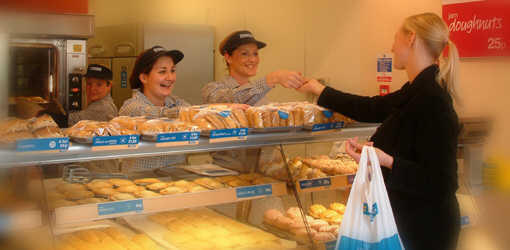
I was impressed by the way Greggs have taken positive steps to help communities deal with this by funding the food and equipment like toasters and having their own staff train volunteers who cater for the breakfast clubs. Breakfasts improve punctuality and help the children concentrate on their morning lessons, since many of them would not have eaten until lunch time. The campaign seems to be a text-book case of corporate and social responsibility activity. Apparently the scheme costs them in the region of 250,000GBP per annum and puts to shame the Big Food companies who have far more resources at their disposal and are in desperate need of far more goodwill. What do you think? More related posts here.
