Category: jargon watch | 術語定義 | 용어의 정의 | 用語の定義

Jargon watch as an idea was something that came from my time reading Wired magazine. I found that in my work terms would quickly spring up and just as quickly disappear. So it made sense to capture them in the moment.

The best way of illustrating jargon watch is by example. I came across the term black technology through mainland Chinese friends. One of the key things that Chinese consumers think about technology products is the idea of ‘black technology’. This makes no sense to your average western reader. It equates to cool and innovative.

The term itself comes from a superior technology featured in a Japanese manga series plot. As an aside the relationship between Chinese and popular Japanese culture is becoming increasingly attenuated due to Chinese nationalism.

What might be black technology this year might be humdrum in six months as the companies quickly catch up. Black technology is a constant moving target, but generally its sophisticated and likely has a cyberpunk feeling to it.

I keep an eye out for jargon like this all the time, hence jargon watch. I find this content in my professional reading and in the sources that I follow online. What makes something worthwhile to appear here is purely subjective based about how I feel about it and how much I think it resonates with my ideas or grabs my attention. A lot of British youth culture doesn’t make it because it doesn’t have that much of an impact any more beyond the UK.

  • Technopolarity

    Ian Bremmer at the Eurasia Group has been talking about Technopolarity throughout 2022 and has amped up the discussion in recent months.

    Bremmer’s hypothesis is that big technology companies and their leaders will create power structures that will challenge the powers of governments. I was reminded of the different ‘country franchises’ that populated the future America of Neal Stephenson’s novel Snow Crash. Snow Crash envisaged a Randesque libertarian hellscape with no power centre.

    The biggest technology firms are designing, building, and managing an entirely new dimension of geopolitics. In this new digital space, their influence runs deep, down to the level of individual lines of code. They’re writing the algorithms that decide what people see and hear, determine their economic and social opportunities, and ultimately influence what they think. Individuals will spend more time in digital space in 2022, at work and at home. Much of this time will be spent in the “metaverse”—an emerging, more immersive version of the web where all the problems of digital governance will be magnified. The metaverse (or more accurately, multiple metaverses) in turn will increasingly rely on economic systems based on decentralized blockchain platforms that governments are already struggling to control.

    Bremmer, I., Kupchan, C. (January 3, 2022) Risk 2: Technopolar World. United States: Eurasia Group.

    Aside from the power of the metaverse, Bremmer & Kupchan largely got things right. The Eurasia Group positioned technology giants along three axes. The degree to which the companies matched the following archetypes:

    • National champions.
    • Globalists.
    • Techno-utopians.

    In general, Chinese companies were national champions, while their American counterparts were predominantly globalists. The European Union has attempted and largely failed to bring a degree of control, curbing the excesses of technology companies.

    China has cracked down on companies that it felt was too big. The digital space itself has a Randian view of global leadership, ignoring the consequences and the responsibility of their power.

    Algorithms as destiny

    Bremmer’s initial thinking on technopolarity was focused on the role of algorithms underpinning online services. More recently, he has focused beyond platforms to look at the nature of ‘artificial intelligence’ and its ability to upend geopolitics.

    Emotional contagion

    As far back as 2012, Facebook had conducted a study in ’emotional contagion’ by altering the news feeds for 700,000 users and it was all completely legal. The feeds were changed to reflect more positive, or negative content – to see if seeing more sad messages makes a person sadder. The experimental subjects were not given any warning and their emotional state was by analysing changes in their language on the platform.

    And I am not even pointing out the effect that social media can have on its audiences in general without experimentation.

    Elon Musk’s Technopolarity

    Walter Isaacson’s biography of Elon Musk; brought the concept of Technopolarity to life. In the book Isaacson discusses decisions and actions that Musk made over the Ukraine war. Musk because of his personal concern about Russian escalation, disabled the Starlink service covering occupied Ukrainian territory to disrupt Ukraine’s military efforts including marine drones. So Elon Musk essentially made a decision that directly affected US defence efforts to support Ukraine. It could have even resulted in the destruction of American military equipment donated to the defence of Ukraine.

    Musk has had conversations with Vladimir Putin like he was a head of state and even the US government has been careful about how they deal with him.

    “Even though Musk is not technically a diplomat or statesman, I felt it was important to treat him as such, given the influence he had on this issue”

    Colin Kahl, former under-secretary of defense for policy at the Pentagon
    Starlink

    Kahl’s attitude to Musk is at odds to the fate of former Qwest CEO Joe Nacchio who went to jail after he was found to be a barrier to the NSA’s domestic surveillance plans, in particular the MAINWAY database. Nacchio was convicted of insider trading. Nacho’s successor also held outing after 4 years, discussions with the NSA went nowhere. A quick trawl of Twitter history would be enough to find evidence to put Musk on trial should the US government wish to do so. What’s happened to government power in the decades since Nacchio went to jail?

    The New Yorker went on to describe Elon Musk’s power as ‘shadow rule‘. Musk isn’t elected. He isn’t even responsive to his shareholders. His Twitter account is a testament to his mercurial nature.

    What’s more concerning for US government wonks is that Musk’s Tesla mega factory in Shanghai leaves him exposed to manipulation by the Chinese government. For instance, they could pressure him to turn off Starlink across the Pacific adversely affecting Taiwan, Japan, Australia and US forces in the region. The Ukrainian experience suggests that Musk would not hesitate to put American lives on the line, or see Taiwan handed over the horrific barbarity of Chinese invasion.

    More related content here.

  • Climate despair

    I started thinking about climate despair last month as I was researching my post on psychotherapy + culture.

    Depth of climate despair

    The driver was a research report that appeared in The Lancet in December 2021. Researchers surveyed 10,000 respondents aged between 16 – 25, in ten countries across the Asia Pacific region, North and South America, Europe and Africa. The respondents were drawn from Kantar’s LifePoints online research panel. Of those who started the survey less than 70 percent completed it. The gender split was slightly overweight towards males: 51·4% male, 48·6% female.

    The survey was developed by 11 international consultants with expertise in climate change emotions, clinical and environmental psychology, psychotherapy, psychiatry, human rights law, child and adolescent mental health, and young people with lived experience of climate anxiety. Which means that there was an incentive to come out with the findings they received and that may have biased the results. But the indications are clear in terms of direction around climate despair.

    Key datapoints supporting the sense of climate despair amongst respondents:

    • Survey respondents across all countries were worried about climate change (59% were very or extremely worried and 84% were at least moderately worried)
    • Over half of those surveyed reported each of the following emotions: sad, anxious, angry, powerless, helpless or guilty
    • 75% of those surveyed said that they think the future is frightening
    "C̶l̶i̶m̶a̶t̶e̶ ̶C̶h̶a̶n̶g̶e̶  We Change"
    Derek Read – “C̶l̶i̶m̶a̶t̶e̶ ̶C̶h̶a̶n̶g̶e̶ We Change”

    The report says:

    Distress about climate change is associated with young people perceiving that they have no future, that humanity is doomed, and that governments are failing to respond adequately, and with feelings of betrayal and abandonment by governments and adults. Climate change and government inaction are chronic stressors that could have considerable, long-lasting, and incremental negative implications for the mental health of children and young people.

    Hickman, C.,Marks, E., Pihkala, P., Clayton, S., Lewandowski, R.E. & Mayall, E.E. (December 2021) Climate anxiety in children and young people and their beliefs about government responses to climate change: a global survey. (UK) The Lancet Planetary Health

    The article then goes on to hold governments accountable for a moral harm on the young people. However, a good deal of the moral harm is also due to the way companies and NGOs actually talk about climate change.

    Anecdotal evidence from therapists interviewed by the New York Times suggests that climate despair tends to be more prevalent in young female patients that they see. However, this might be down to a young men being less likely to see a therapist than a young woman.

    Positive reinforcement

    This video from WARC features research why it is ineffective to play into the constant environment doom loop if we want action. A change in approach should start to combat the deeply entrenched feeling of climate despair.

    WARC highlighted research that positive environmental images motivate people to take action. The research paper in the Journal of Advertising Research is Are consumers moved by a crying tree or a smiling forest? Effects of anthropomorphic valence and cause acuteness in green advertising written by three Taiwanese researchers based on a number of studies, each with 35 – 50 participants.

    Research key findings

    The paper had four key findings:

    • When the environmental issue is considered a sudden disaster, negative anthropomorphism is more persuasive. 
    • By contrast, when the environmental issue is viewed as an ongoing tragedy, positive anthropomorphism results in a more favourable attitude, higher willingness to pay, and more money being donated. 
    • Consumers’ connectedness to nature serves as the underlying mechanism in this messaging. If this level of connectedness to nature is low, nonprofit organizations and companies must alter these perceptions by choosing a more appropriate anthropomorphic valence and cause acuteness in their green advertising.

    All of which seems to point to a possible challenge amongst both NGOs and companies over their inability to discern the difference between important and the most urgent elements. If collectively they can’t understand the categorisation, it’s no wonder that a significant minority of their audience slips into climate despair and is discouraged from taking a more active role.

    Secondly, working on consumer’s connectedness to nature is a major communications JTBD (job to be done).

  • Digital abortion clinics

    It says something about the time that we live in that digital abortion clinics is a normal phrase and that publications like Wired have to have rank the clinics on patient data security. Disclaimer: I lean pro-choice in my beliefs as I don’t have to make the kind of choices that many women have to. Secondly, the second order consequences of high risk procedures done the black market create new moral and ethical dilemmas.

    Dystopian vibes

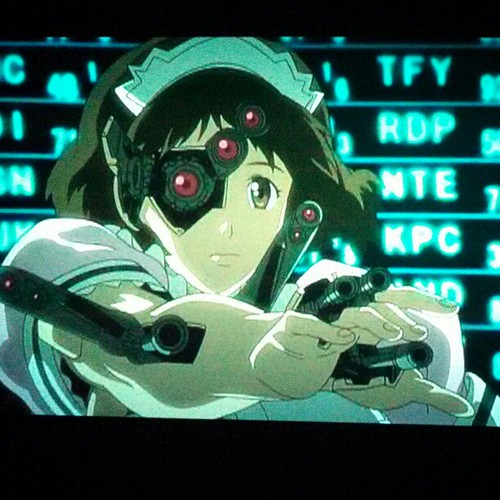
    Ghost in the shell: Stand Alone Complex
    Matt M – Ghost In The Shell Stand Alone Complex

    Five years ago, if you had said digital abortion clinics to me it would have brought to mind the darker recesses of the cyberpunk realms created in novels by William Gibson or Neal Stephenson’s Snow Crash, or the Ghost In The Shell series of manga and anime created by Shirow Masamune.

    The reality is more banal and horrifying all at the same time.

    How we got here

    Legal and regulatory environment

    Family planning clinics that provide terminations have been under regulatory attack since the US Supreme Court ruling on Roe vs. Wade gave American women access to abortion in 1973. Roe vs Wade was challenged repeatedly in court and upheld in rulings given afterwards. Some of these rulings narrowed the definition of what procedures could be conducted and when they could be conducted. In June 2022, the US Supreme Court overturned Roe vs Wade with its finding on Dobbs vs Jackson Women’s Health Organisation. Abortion was no longer considered a constitutional right, which then meant pregnancy terminations became governed by a myriad of state laws both for, and against abortions.

    Some states went as far as to provide a legal shelter for their medical staff against legal measures out of state.

    Pharmaceuticals

    Historically, medicinal herbs and drugs used to induce an abortion risked causing kidney and liver damage. But we now have drugs available that can provide a much safer alternative. It’s these drugs that the digital abortion clinics rely on. The two most common are:

    • Misoprostol was developed in 1973. It’s used to induce abortions, but also has other uses including the prevention and treatment of both stomach ulcers and some forms of postpartum bleeding. It can also be used to induce labour during pregnancy.
    • Mifepristone developed in 1980, is typically used to induce abortions in conjunction with Misoprostol. It is also used on its own to treat high blood sugar levels in patients who also have hypercortisolism.

    Femtech

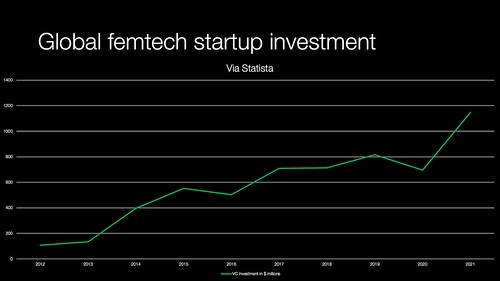
    Femtech as a term has only been around since 2016, but investment in the area of women’s health related technology has been growing over a decade. A few things were driving this. The personal nature of smartphones as a device. The explosion in software tools that allowed you to write apps and the availability of wireless technology stacks that hardware easier to connect. Finally, countries like the US started working on data privacy standards in the health space which were very important.

    2016 saw Nurx get funding for it to provide in-app ordering for birth control pills. So prescribing abortion inducing medications is a logical next step, in order to give women full control of their reproductive capabilities.

    femtech

    Telehealth

    COVID-19 accelerated the normalisation of digitally mediated health services including telehealth consultations and digital abortion services are now exception. If a woman chooses to have an abortion, it’s a big decision and the popular apps covered by Wired seemed to have a wide variance of user experience / provision of care.

    These clinics operate in different ways—some provide live video visits with doctors and nurse practitioners, while others offer asynchronous counseling—but many have experienced a record number of patient orders (and increased VC funding) over the past year.

    Poli K. (August 21, 2023) The Most Popular Digital Abortion Clinics, Ranked by Data Privacy. United States: Wired magazine

    Security issues

    Those software tools that allowed apps to be written easily often included API calls that enable privacy infringing tracking. For instance, a byproduct of the software tools used to make LGBTQI dating app Grindr’s locative nature risked exposing precise location data of gay men. Which is of concern in more socially conservative environments. Women using some digital abortion clinics face similar challenges.

    In US states, where the politicians thought that Margaret Atwood’s The Handmaid’s Tale was a how-to guide, rather than a societal warning; prosecutions in abortion related cases are using mobile data and search history.

    Wired worked with the University of Texas privacy lab to grade the post popular digital abortion clinics on the degree of risk they posed to their patients.

    The results were concerning and these problems can’t be mitigated through the use of a VPN or in-app settings.

    2023 app comparisons from a data security PoV

    Third-party data app sharing and data collection were used by the likes of Palantir to aid targeting people of interest in the global war on terror (G-WAT in security circles), and could be used in a similar way against women, if the state government were so inclined.

    The Wired article that inspired this post here. More health-related content here.

  • Gatekeeping + more things

    Gatekeeping

    I wish gatekeeping was a thing back in 2005 and 2006 when I was working on the international launch of Yahoo! Answers. The problem that we had was getting people to contribute answers to questions. Gatekeeping and the exhortation to not gate keep is about sharing knowledge and opinions freely – an in real life version of what we saw in early social publishing. Ironically gatekeeping stands in sharp contrast to oversharing as a social faux pas. The kind of knowledge that concerns about gatekeeping is particularly opposed to is opinion based knowledge or NORA.

    Now ‘your jam’ is no longer your jam, but instead offered up to be other people’s jam instead. Your individuality ready to be cloned at a moments notice. Will everything descend to being ‘basic’ or mainstream? Does it disincentivise possessing good taste?

    gatekeeper

    What the Internet’s Use of ‘Gatekeeping’ Says About PowerThe rise of “Don’t gatekeep” has reframed keeping things to yourself as a selfish act. But not everything is for everyone! And sometimes the act of sharing does more harm than good. I’m thinking of how Anthony Bourdain felt conflicted about sending droves of tourists to mom-and-pop restaurants. I’m thinking of gentrification and what happens when certain neighborhoods are positioned as hidden gems.

    Beauty

    Why Groupe L’Occitane may delist from the Hong Kong stock exchange | Vogue Business

    Consumer behaviour

    My Generation, by Justin E. H. Smith – captures a sense of now rather than a generation

    Economics

    Study Times op-ed shoots down new policy options | Pekingologytranslation from an article from the Study Times. Comments on infrastructure are particularly instructive in terms of the view point that they reflect: To debunk views such as “infrastructure overcapacity is wasteful,” “promoting infrastructure equates to taking the old path that’s inconsistent with high-quality development,” and “limited space,” it’s crucial to fully understand the role of infrastructure investment from a holistic perspective of national economic development. Infrastructure investment doesn’t only interact with the expansion of aggregate demand to stabilize economic operations, but also enhances macroeconomic efficiency, improves people’s living standards, and robustly supports high-quality development. Overall, there’s no issue of excessive infrastructure. On the contrary, there are areas that hinder the efficiency of the national economy and the improvement of people’s living standards. China’s per capita infrastructure capital stock only accounts for 20% to 30% of the developed countries, and public facility investments per rural resident are only about a fifth of an urban dweller, indicating potential for investment

    New analysis reveals how Porsche-VW ‘short squeeze’ distorted the stock market | The University of Kansas 

    Energy

    US airlines ally with farmers to seek subsidies for corn as jet fuel | Financial Times 

    FMCG

    Reckitt Benckiser: too many sterile quarters leave share price flat | Financial Times 

    McDonald’s Hong Kong and Kevin Poon “Coach McNugget Art World” Exhibition | Hypebeast – via Ian at Deft. This was to celebrate 40 years of the McNugget. McDonald’s have always done some smart cultural marketing work in Hong Kong (such as an McDonalds Big Mac themed issue of Milk magazine). Hong Kong seems like a natural home for these things, I remember activating a Coke Zero x Neighborhood collab while there.) But it isn’t only a Hong Kong thing, McDonalds has done some strong cultural marketing internationally as well: from the Cactus Jack happy meal to a bounty programme for rappers that namedropped McDonalds on their mixtape over the years. As my friend Ian observed this is at odds with their current UK positioning ‘ McDonalds is the perfect place for estranged parents to meet their kids for awkward conversations’. The implication in that McDonalds restaurants are a lower rent third space (than Starbucks or Costa) positioning. I have welcomed their value-priced coffee and breakfasts at the end of an all-nighter on a pitch or a long drive. But the UK’s the third space aspect loses all the joy that McDonalds manages to imbue in their children experiences – the treat, the birthday party, the expectation of picking up a much wanted toy in a happy meal. The child to adult disconnect in the experience is something cultural marketing like this can help bridge if done in the UK.

    Gadgets

    US Feature Phone Market Stages Comeback as Gen Z, Millennials Advocate Digital Detox | Counterpoint Research – the reasons are more diffuse than this article is letting on. People like my parents are being forced to get new feature phones by network upgrades. Some people can’t use a smartphone and then there is the digital detox brigade which spans generations, people who need tough phones AND people still needing second phones

    Germany

    TSMC’s New Fab in Germany – by Jon Y – focus around automotive just has Germany has been caught on the wrong side of the move to electric cars

    Chinese responses to Germany’s China strategy: Attack abroad, assuage at home | Merics

    Health

    Unravelling the Link Between Socioeconomic Status and Obesity | INSEAD Knowledge

    Hong Kong

    Hong Kong’s corporate lawyers test boundaries as Beijing’s influence grows | Financial Times – legal practitioners, including corporate lawyers, are concerned the broadening scope of a sweeping national security law could jeopardise the independence of the city’s legal system, a legacy of British administration, as Beijing tightens its grip. “There is general concern . . . that people are not fully understanding where the boundaries lie,” said a senior corporate lawyer with a global firm who has worked in Hong Kong for more than two decades

    The Great Dilution: Hong Kong’s Changing Population Mix | Asian Sentinel

    Hong Kong delays Jimmy Lai trial as police question woman linked to exiled lawmaker | Radio Free Asia

    Innovation

    FDA Largely to Blame for Physicians’ Misperceptions on Nicotine | RealClearPolicy

    Materials

    DARPA looks to monetise the Moon | EE Times 

    Media

    Artificial Intelligence Lawsuit: AI-Generated Art Not Copyrightable – The Hollywood Reporter

    Online

    What is dark social and why does it matter for your brand? – New Digital Age 

    ICANN warns UN may sideline techies from internet governace • The Register – move towards China’s vision of cyber-sovereignty

    Retailing

    Small retailers and fans step in as Nike refuses to make replica Mary Earps shirt | England women’s football team | The Guardian 

    Security

    US nuclear submarine weak spot in bubble trail: Chinese scientists | South China Morning Post

    New Supply Chain Attack Hit Close to 100 Victims—and Clues Point to China | WIRED and Dark Reading’s take: Chinese APT Targets Hong Kong in Supply Chain Attack 

    Daring Fireball: ‘Changes to U.K. Surveillance Regime May Violate International Law’As I see it, the most likely outcome is that the U.K. passes the law, thinking that the grave concerns conveyed to them by the messaging services are overblown. That the platform providers are saying they can’t comply but they really just mean they don’t want to comply because it’s just difficult, not impossible. And when it becomes law, the platforms will hand it off to the nerds, the nerds will nerd harder, and boom, the platforms will fall into compliance with this law. That’s what they think will happen. What will actually happen, I believe, is that E2EE messaging platforms like WhatsApp (overwhelmingly popular in the U.K.), Signal, and iMessage will stop working and be pulled from app stores in the U.K., full stop. The U.K. seems to think it’s a bluff; I don’t

    Singapore

    Money Laundering Bust Puts Foreign Wealth in Singapore on Notice | Asia Sentinel – if that occurred at the behest of the China then we’re likely to see flight overseas from Singapore. It’s also interesting that these raids have come soon after China arrested a Shanghai immigration consultant to get hold of their database of UHNWI overseas (predominantly in the US). They second question I had would be why Singapore would cooperate with China on this?

    Software

    Now is the time for grimoires – by Ethan MollickWith the rise of a new form of AI, the Large Language Model, organizations continue to think that whoever controls the data is going to win. But at least in the near future, I not only think they are wrong, but also that this approach blinds them to the most useful thing that they (and all of us), can be doing in this AI-haunted moment: creating grimoires, spellbooks full of prompts that encode expertise. The largest Large Language Models, like GPT-4, already have trained on tons of data. They “know” many things, which is why they beat Stanford Medical School students when evaluating new medical cases and Harvard students at essay writing, despite their tendency to hallucinate wrong answers. It may well be that more data is indeed widely useful — companies are training their own LLMs, and going through substantial effort to fine-tune existing models on their data based on this assumption — but we don’t actually know that, yet. In the meantime, there is something that is clearly important, and that is the prompts of experts.

    Style

    Where Streetwear and Tech Cross Paths: ASUS Vivobook X BAPE® – one of the more cynical collaborations that I have seen with streetwear brands

    Technology

    Deal to develop generative AI on quantum computer | EE Times – how will quantum computing affect a GPT type Bayesian model?

    Web of no web

    Trybals is a YouTube channel that features people from the less developed parts of Pakistan and asks their reactions about different aspects of the modern world. It’s an interesting bit of anthropology. In this episode the panel gets to try a VR experience.

  • London Watch

    The YouTube algorithm can take you into odd places, so it was with me and the London Watch. The watch collecting community is a global connected bunch of super passionate and and seriously nerdy people. It’s not the kind of stuff I would generally have bothered with. Watch collectors, particularly at the premium to luxury end of the scale have have started to talk about London (and by the implication, the rest of the UK) as hive of crime.

    Watch community YouTubers often do a wrist check to show what timepiece they have on. Usually you will see a luxury or cult timepiece. But I have started to notice a few videos talking about the presenters empty wrist as a London Watch. You can see it on this live stream by Paul Thorpe just after the 9-minute mark. He was doing the video from right by the Oxford Circus shopping area in Central London.

    The implication being that only going watchless or wearing a plain looking Casio is the right ‘watch to wear’ in Central London.

    Rolex GMT-Master II 116710

    Crime tsunami

    A random walk through Google News yielded these examples:

    It took seven years for YouTube celebrity Yianni to talk about having his watch taken in a violent robbery that occurred back in 2016

    My list of robberies isn’t exhaustive, but the constant drip, drip, drip of this news helped drive the idea of the London Watch.

    Staggering scale

    In October 2022, a luxury auction house ran a public safety campaign advising watch collectors to leave their pieces at home after they were alarmed by the Metropolitan Police’s own crime numbers. This came after the police tried and failed to assure Londoners and tourists over the summer. In April and May 2022, there was a 60 percent increase in high value watch robberies just in Central London with a 100 having been reported and investigated by the Metropolitan Police.

    Watch crime has been happening in European tourist spots as well such as Barcelona and Paris, but the UK seems to be particularly blighted. London based watch crime has even attracted the attention of US watch collector hobbyist site Hodinkee who featured it heavily in an article on the international view.

    Between January and July 2021 there were 377 reported watch thefts, according to the Met Police compared to 621 in the same period during 2022.

    Brazen watch robberies fuel shock rise in violent thefts in London ITV News

    Police have attempted to stop some incidents in progress, but the scale of the problem seems to be beyond their current capability and capacity.

    Possible contributing factors

    • Rich opportunity. London is an international city and hosts high net worth individuals from different countries all year round. Many choose to make it their home
    • Luxury watches get a good return for the thieves. Apparently a watch will net the thief half its face value when fenced. By comparison diamond or gold jewellery will fetch roughly 10 percent of its value. I was surprised by this as all high end watches have a traceable serial number, which would make it harder to pass on. Many are apparently stolen and shipped out of the country, though some end up for sale online
    • Thieves have very little chance of getting caught. The amount of incidents that are happening versus the amount of successful police investigations means that both watch and phone thefts are a low risk, lucrative option for thieves. Despite London have a large amount of CCTV systems, only a small percentage of the crimes are solved. Finally the police are under-resourced for the scale of the task they face

    The high level of violence involved is troubling and reason for it isn’t immediately apparent.

    What does the London Watch phenomenon mean?

    Impact on global tourism business. When Hong Kong’s South China Morning Post is running articles like Wearing your Rolex or Patek Philippe in Europe? Why you should be worried about London and Paris’ spikes in luxury watch theft – you realise that your city has a reputation problem with high spending East Asian travellers. The UK’s Daily Telegraph points out that the crime particularly targets the wealthy and tourists with impunity.

    Thieves seem to use social media research and spotters to find their mark. Many of these spotters work as staff in restaurants, hotels, bars and night clubs frequented by the rich.

    • Luxury sales will be impacted, this looks like the likely reason that auction houses are actively warning people in London about the risk and how to mitigate it through public information campaigns
    • Tourists are less likely to spend money in hospitality if they feel that some of the staff might be setting them up to be robbed
    • Tourists and business travellers are less likely to come to London, if they feel that the risk of violent crime is disproportionate

    For the time being, be sensible and stay safe out there by wearing a London Watch.