Category: luxury | 奢華 | 사치 | 贅沢

Over the space of 20 years, luxury changed enormously. The Japanese had been a set of new consumers for luxury, but in terms of numbers they hadn’t eclipsed the US as the biggest market for luxury.

China’s ascent into the WTO (World Trade Organisation) made a lot of business people and politicians a lot richer. China challenged the US in terms of luxury market size. On their rise, Chinese consumers changed a lot in their sophistication as they educated themselves on luxury consumption.

These new consumers picked up new traits such as wine drinking. This also meant that luxury goods became new asset classes as Chinese money looked to acquire only the best. Chinese culture in turn impacted luxury design. Chinese new year became more important than Christmas.

Then there was the second generation money. Young rather than old consumers. Consumers who were looking for something less formal, either because they didn’t wear anything but streetwear or they worked in the creative classes rather than the traditional professions and high finance.

The industry had traditionally avoided rap artists and R&B singers, now Jay Z and Beyonce are the face of Tiffanys and Fendi had collaborated with Rihanna.

They no longer wanted to have to wear a jacket and tie to have afternoon tea at the Mandarin. They took an eclectic look more attuned to the Buffalo Collective than Vogue Italia.

You had hybridisation with the street to create a new category of luxe streetwear in a way that also owes a debt to football casual terrace wear and the pain.

Now you have Zegna badge engineering approach shoes from alpine brand La Sportiva and Prada has done a similar thing with adidas’ iconic Stan Smith tennis shoes. Balenciaga with their Speed Sock looks like a mix between Nike’s flyknit football boots and the Nike Footscape sole.

As I have written elsewhere on this blog:

Luxury has traditionally reflected status. Goods of a superior nature that the ‘wrong sort’ of people would never be able to afford. Luxury then became a symbol that you’d made it. In Asian markets, particularly China, luxury became a tool. People gifted luxury products to make relationships work better. It also signified that you are the kind of successful business person that partners could trust. You started to see factory managers with Gucci man bags and premium golfwear to signal their success. Then when the scions of these business people and figures in authority were adults, luxury has become about premium self expression.

  • The North Face and Nike

    The North Face and Nike on marketing

    The North Face seems to have just peaked on its cultural moment in Korea. The North Face jackets are worn by all strata of society. Below is a Korean blog post that compares Its winter coats with different types of high school students as the brand has become so ubiquitous in South Korean school yards and on the backs of consumers during the winter months.

    The bottom of the blog post goes on to compare The North Face with the duffle coats worn by previous generation of school children in a mocking way.

    it is as much the winter uniform of the Korean salary man as his tie.

    The North Face sees itself as a technical brand rather than a true luxury brand, but the vast majority of its jackets don’t see the mountains and ski slopes for which they were originally designed. It has begun to treat itself as a premium brand with its purple label retro designs and different fabrics like Harris Tweed – currently exclusive to the Japanese market. But how can this be maintained if the brand becomes this overexposed?

    It is not a corner that it can easily get out of and technical innovation in the clothing design will be of limited use.

    North Face overexposure

    Part of the problem is the nature of Korean society itself which has a certain conformity to it. This means that once a trend picks up, it goes everywhere. But then because it goes everywhere it has a finite life. A small amount of tastemakers move on and the cycle begins again.

    The next winter jacket might be Canada Goose or Moncler.

    Contrast this with Nike: The Wall Street Journal has an interesting article about how Nike and Footlocker maximised revenue from the Jordan franchise through careful timing of limited product releases. More marketing related posts here.

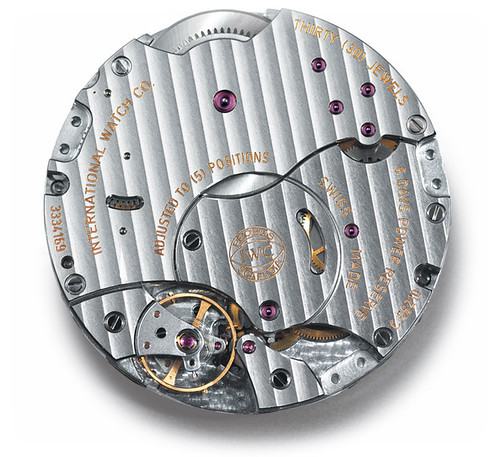
  • IWC 59210 movement

    Why does someone who spends his working day thinking about the future and all things digital care about the IWC 59210 mechanical watch movement? A modern quartz movement watch can be more accurate.

    An analogue watch has some advantages over a digital display in terms of legibility and the ability to see how much time one has until an appointment, but that can have quartz movement behind it.

    I like a mechanical watch movement because:

    • The movement of a good mechanical watch is an object of beauty in itself. The great watch companies take as much pride in making the insides look as beautiful as the watch exterior. It is rare to see that detail in the design of modern products outside those designed by Apple
    • You have a lifelong relationship with a mechanical watch. Companies like Rolex will service your watch for you every few years or so and will even refurbish it if necessary. Patek Philippe have used the same strapline in their advertisements for years: You never actually own a Patek Philippe. You merely look after it for the next generation. Good quality design is products that you will want to own until you wear them out, or they wear you out. It is also a good way towards creating more environmentally friendly products and I haven’t even got on to challenge of battery disposal…
    • Finally, I like to be able to know the time all the time. I wear my watch in bed, in the shower, in fact it only comes off if I find it getting in the way typing. Part of this comes from having done scuba diving when I was younger; your watch became part of you. I had a quartz watch and moisture got in stopping the watch dead. A friend had an automatic watch movement in a Seiko which had a little damp in but kept on going. Both of use eventually invested in good quality Swiss watches

    The IWC 59210 is a marvel of the watchmakers art. It holds up to eight days power when fully wound up and runs at 28,800 beats per hour which is a marvel for a mechanical device that small.
    IWC calibre 59210
    The IWC 59210 movement goes into the Portofino range of watches which have a case that is not as technical as the style of watches that I like, but make a nice dress watch if you like that kind of thing. More related content can be found here.

  • Gucci + more news

    Gucci

    Shenzhen sweatshop allegations force Gucci to act – FT.com – PR nightmare and management FAIL for Gucci. The Gucci story is unusual in that it affects service workers. Luxury in Asia requires a certain servility of service that I find uncomfortable and the Gucci story of long oppressive days for retail staff sounds emblematic of it. That its happening in the Gucci Shenzhen store doesn’t surprise me at all

    China

    China Favors Direct Investment to Create ‘New Blood’ in Europe – WSJ

    Maersk builds LatAm “reefer” factory | FT.com – because the cost of production is growing faster in China than Latin America

    Consumer behaviour

    What Wealthy Women Really Want – WSJ

    For Their Children, Many E-Book Fans Insist on Paper – NYTimes.com – the tactile arguments for toddlers are the same reason why I prefer print books

    Culture

    Alan Moore – meet the man behind the protest mask | The Observer – it was a nice literary tail for the Guardian to loop back with Alan Moore

    Paris Review – The Art of Fiction No. 211, William Gibson – interview with the cyber punk don

    Economics

    Housing prices fall in Chinese cities – FT.com – property developers and small businesses have been suffering

    Brussels warns on risk of UK double-dip – FT.com – UK economy stagnating and government’s deficit reduction strategy isn’t working according to a European Commission report – a deep and prolonged recession complemented by continued market turmoil cannot be excluded

    The way (not) to rein in the yen – FT.com A more aggressive quantitative easing programme, targeting 10-year government bonds instead of shorter maturities, would contribute more decisively to ease the pressure on the exchange rate. More importantly, it would also stimulate the largely stagnant domestic economy (paywall)

    The Long Haul to Capitalizing on Web Trends – Digits – WSJAccording to comScore Inc., almost 62% of the ads shown on Facebook in the July through September quarter came from advertisers that are not among the top 1000 digital advertisers in the U.S.; on Yahoo Inc., just 23% come from such small advertisers. These sorts of Facebook advertisers range from nail salons marketing to people who live a particular town, to recruiters targeting employees at a specific company – going down the long tail due to targeting ability, not great on context like Google local search though

    Ideas

    Information: Be careful what you signal | The Economist

    Possibility Is Thrust of 100-Year Starship Study – NYTimes.comin 10,000 years, the speed of humans has jumped by a factor of about 10,000, from a stroll (2.6 m.p.h.) to the Apollo astronauts’ return from the Moon (26,000 m.p.h.). Reaching the nearest stars in reasonable time — decades, not centuries — would require a velocity jump of another factor of 10,000

    Innovation

    Marubeni Launches 3D Printing Service — Tech-On! – interesting that it is aimed at making precision resin dies etc

    Japan

    Japan’s #1 Mascots: Kumamon, Bary-san, and Nishiko-kun | Japan Probe – Japan seems to have mascots for everything, kind of cool actually

    Japan Today | Toshiba to close three semiconductor plants

    Korea

    South Korea’s economy: What do you do when you reach the top? | The Economist – interesting economic profile on Korea

    Luxury

    Von Furstenberg to Chinese Women: Stop Chasing Men – WSJ

    The rise of quiet luxury: Understated chic that is very, very expensive. – Slate Magazine

    China’s Menswear Market (Quietly) Booming « Jing Daily

    Luxury’s anti-social (media) brigade | FT.com – variable adoption

    Brussels finally recognises luxury | FT.com

    Luxury Second-Hand Shops Spreading Like Wildfire In China | Jing Daily

    The moral of Dior’s numbers | FT.com – Galliano story didn’t affect Dior sales

    Media

    Secret documents reveal the flimsy case for Ofcom to give into BBC’s public TV DRM demands – Boing Boing

    Technology

    HP CEO: Apple will become market leader in personal computers | MacNews

    Wireless

    Nokia’s Microsoft Phones May Not Get Traction, Analyst Says – NYTimes.com – no USP, apart from a bucketload of advertising

  • CIC on China’s luxury market

    CIC who provide the IWOM set of reports and flakey tools (think Sysomos, Radian6 or Adobe SocialAnalytics for the mainland Chinese internet eco-system) have come up with an interesting report on online conversations around the Chinese luxury market. CIC is increasingly being integrated with GroupM. It will be interesting to see how CIC copes as China exerts increasing control over social and marketing data access.

    Key take-outs

    • They are motivated to buy luxury goods as a way to ‘show-off’ and most of the online conversations are around this subject. Status itself is a tool designed to engender trust in things like business interactions rather than self actualisation per se
    • The distribution system is complex with overseas purchasing and purchasing agents (presumably to avoid China’s luxury goods tax and for more choice) also a popular subject. For luxury brands it means that Chinese expansion needs to be tapped by also having presence in places like Hong Kong, Japan, Korea, Paris – France and the major cities of the US
    • Real-time reporting of runway shows initiated by the brands doing webcasts has been extended by netizens to their own platforms. Much of the commentary is similar to the social television interactions you used to see on early video platform Joost; and on Twitter during shows like The Apprentice or The Only Way is Essex (TOWIE)
    • Counterfeit – there was a significant group that own both counterfeit and authentic versions of a product because it is ‘interesting to mix and match usage between real and fake’. This is a really interesting brand interaction and raises the question: what if authentic isn’t authentic enough in terms of brand experience? This is something that I could see impacting the likes of Louis Vuitton. Gucci, Chanel and Hermes as they become over-exposed in the marketplace. One of the ways to approach this is to educate consumers on what luxury means: craftsmanship, heritage or being at the forefront of something (which may mean an intersection between streetwear and luxury)

    More related content here. More from CIC here.

  • Dealer chic

    If the working class and the lower middle class are worried about financial security with trends like extreme couponing; the upper-middle classes are also interested in the thrill of a good deal with the changing economic environment a distant secondary motivator. With this in mind Trendwatching talked about dealer chic; reading their profile its almost as if they are thinking about their lifestyle in business terms. Looking for:

    • Increased efficiency – getting more for less – the buzz of a bargain
    • Value add – provided primarily through an improved experience

    Dealer chic is supposed to be caused by a move towards perfect markets – the use of reviews and comparative pricing facilitated by the web parallels the kind of techniques that procurement professionals would use. It also echoes the promise of disintermediation that web 1.0 was supposed to bring use with the first generation of shopping comparison sites in the late 1990s

    A more worrying by-product of the dealer chic trend is that brands are increasingly commoditised and access to mobile devices have accelerated the consumer buying process by providing them with the necessary research and the opportunity for instant gratification – potentially having a micro-chunking time effect on the timings and tweaking of pricing strategies.

    It means that luxury goods are seen as an asset class. This will mean an acceleration in price appreciation, but in order for luxury brands to benefit they will need to get involved in running pre-owned platforms. They can add value in validating each and every item, for a commission. 

    The space won’t be uncontested. You have established players from eBay and Yahoo! Auctions to Japanese retail brands like Brand-Off are already in this space. The Japanese have built up a formidable opportunity

    More information

    Trendwatching | dealer chic – find out more about dealer chic and sign up for Trendwatching’s free email newsletters