Over the space of 20 years, luxury changed enormously. The Japanese had been a set of new consumers for luxury, but in terms of numbers they hadn’t eclipsed the US as the biggest market for luxury.
China’s ascent into the WTO (World Trade Organisation) made a lot of business people and politicians a lot richer. China challenged the US in terms of luxury market size. On their rise, Chinese consumers changed a lot in their sophistication as they educated themselves on luxury consumption.
These new consumers picked up new traits such as wine drinking. This also meant that luxury goods became new asset classes as Chinese money looked to acquire only the best. Chinese culture in turn impacted luxury design. Chinese new year became more important than Christmas.
Then there was the second generation money. Young rather than old consumers. Consumers who were looking for something less formal, either because they didn’t wear anything but streetwear or they worked in the creative classes rather than the traditional professions and high finance.
The industry had traditionally avoided rap artists and R&B singers, now Jay Z and Beyonce are the face of Tiffanys and Fendi had collaborated with Rihanna.
They no longer wanted to have to wear a jacket and tie to have afternoon tea at the Mandarin. They took an eclectic look more attuned to the Buffalo Collective than Vogue Italia.
You had hybridisation with the street to create a new category of luxe streetwear in a way that also owes a debt to football casual terrace wear and the pain.
Now you have Zegna badge engineering approach shoes from alpine brand La Sportiva and Prada has done a similar thing with adidas’ iconic Stan Smith tennis shoes. Balenciaga with their Speed Sock looks like a mix between Nike’s flyknit football boots and the Nike Footscape sole.
Luxury has traditionally reflected status. Goods of a superior nature that the ‘wrong sort’ of people would never be able to afford. Luxury then became a symbol that you’d made it. In Asian markets, particularly China, luxury became a tool. People gifted luxury products to make relationships work better. It also signified that you are the kind of successful business person that partners could trust. You started to see factory managers with Gucci man bags and premium golfwear to signal their success. Then when the scions of these business people and figures in authority were adults, luxury has become about premium self expression.
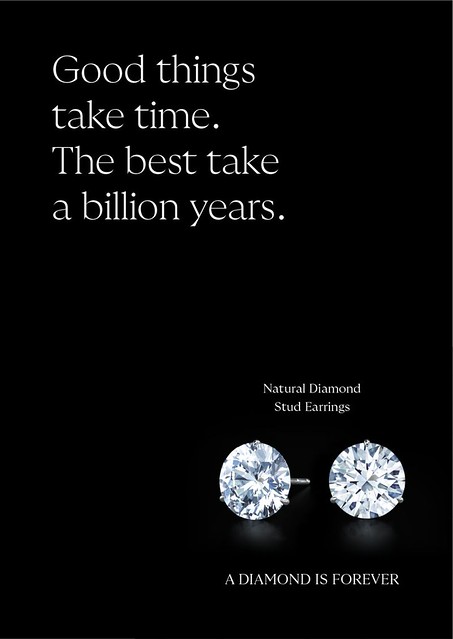
DeBeers have resurrected their tagline A Diamond is Forever. What’s interesting is that DeBeers is focusing the campaign only in China and the United States. Whilst the heritage of A Diamond is Forever may resonate with the American audience. I am less sure about how it might resonate for Chinese consumers.
While diamonds are a good store of value, the move towards guo chao – Chinese things for Chinese people is another dynamic that may affect receptivity.
Beauty
Gen X men prefer gently-scented bodycare products over heavily-scented ones | Mintel – Despite having body odour concerns, Gen X doesn’t go for heavily scented products as they have dry, sensitive and acne-prone body skin. Among Gen X, itchiness, excessive sweat and rashes concerns stood out from those of other consumers. They are also concerned with the odour associated with the result of sweat.
Welcome to the Anti-Woke Economy | The New Republic – A fledgling parallel economy has emerged on the right, hawking everything from coffee to vitamin supplements to anti-abortion protein bars. But can a business movement born of political and cultural grievance be viable over the long term?
An inconvenient truth: Difficult problems rarely have easy solutions | Behavioral and Brain Sciences | Cambridge Core – Individual-level interventions are often interesting and easy to implement, but are unfortunately ill-equipped to solve most major global problems (e.g., climate change, financial insecurity, unhealthy eating). Resources spent developing, pursuing, and touting relatively ineffective i-frame interventions draw resources away from the development and implementation of more effective s-frame solutions. Behavioral scientists who want to develop solutions to the world’s biggest problems should focus their efforts on s-frame (system level) solutions
Ideas
The AI and Leviathan series examining what it means if AI did actually change everything including extreme techopolarity.
Part 1 – institutional economics of an intelligence explosion
Dentsu launches paid search tool that uses AI to speed up creativity and optimization – Digiday – d.Scriptor — a new proprietary offering it’s developed to supercharge paid search, mainly in the area of ad copy development but also as a means to optimize and adapt execution. Dentsu is announcing the tool today, after pilot testing over the last several weeks. It’s meant to help with boosting the volume of creative messaging with an eye toward improved engagement rates, as well as to speed up the process of creative experimentation, and cut down on the time required to perform optimization tasks – the more variants that you cram into a Google Adwords programme the better a job it can do on optimising display based on what works. I spent a lot of time coming up with variants in spreadsheets to do this when I was freelancing
We’re Updating our Community Standards – Linktree – changes on conditions, particularly focused on sex work, presumably to cover themselves from US legislation. There are also restrictions on regulated sectors like vaping and alcohol
If you’re of a certain age, you might think that Suncity is related to Sun City in South Africa. Both are in the gambling resort businesses but I don’t think that either are connected. Sun City is part of a pan-African hotel and resort group headquartered in South Africa.
You might even remember remember the Artists against Apartheid song.
Suncity was associated with gambling junkets to Macau. The company is associated with Alvin Chau. Prior being sentenced to prison for 18 years, Chau was known as a philandering casino tycoon with a Malaysian-American mistress Mandy Lieu (劉碧麗).
Suncity Holdings was a Hong Kong listed investment company with:
Resort business in the Philippines
Hotels and gaming businesses in Russia
Consultancy for running hotels and resorts
Travel Agency and air chartering services
Property development
Shopping mall management
After Chau’s arrest, Suncity cut ties and shut down gambling rooms associated with Chau. Suncity then changed its name to LET.
The FT alleges that Suncity is also connected with online sports gambling, with services aimed at mainland Chinese. This is illegal in China.
The most shocking part of the FT’s video is The Gaming Commission (TGC) admitting that they didn’t want to disclose information as it would undermine trust in the ability of TGC to do its due diligence properly.
Australia’s daigou days done? | WARC – tightening regulatory standards and alternative employment are cited as two key factors by Asia News Network. I would also add increased national pride gau chao has changed the game for Chinese domestic brands
How Coach is using “expressive” luxury to connect with Gen Z | WARC – Heritage brands find themselves at a crossroads between preserving their historical roots and resonating with younger demographics. Tapping into influencer partnerships and cause-related initiatives are two ways to strengthen consumer engagement while simultaneously retaining a brand’s established culture.
Can Tokyo Fashion Week get back on track? | Vogue Business – The Japanese event is rebuilding momentum and simmering with fresh and unique talent, but hopes for international success are hobbled by insularity and pandemic lockdown aftereffects
Great manufacturing video showing 100% sports sunglasses being made. Interesting that they choose not to manufacture in China. 100% came out of the motocross scene in the US, back in the 1980s.
How dollar stores (especially Dollar General) have quietly conquered America. The documentary talks about how they’ve reduced their base costs and can work in sparse or very low income communities. If nothing else, this reminds of you of the scale in America’s mid-West.
The Apple Wonderlust event happened on September 12, 2023. The events timing fitted in with the two Apple events a year that we have grown to expect:
Worldwide Developers Conference – in June.
Autumn event in September / October.
Unlike when I started buying Apple products these events are no longer hosted at external conference centres but at Apple’s own conference centre as part of its campus. For the past decade and a half Apple hasn’t participated at wider trade shows, in the same way that the likes of Samsung or Microsoft would at CES.
Apple Inc.
Apple events from the late 1990s onwards built their reputation for being great live performances by Steve Jobs and the management team. COVID-19 seems to have allowed Apple to move to a pre-recorded keynote that the media and general public watch together either in person or streamed online, followed by the media being allowed to get hands on with the products.
This allows for a polished event presentation, all-be-it one that might be out of touch with its audience. More on that later.
Is wonderlust even a word?
A quick look at dictionaries offline and online kept bringing up results for wonderlust – the hankering to travel. That was until I hit Urban Dictionary that categorised wonderlust this way:
the desire to be in a constant state of wonder Joe had a serious case of wonderlust: he was bored of anything ordinary.
There were other definitions, but I think that they were outside the scope of where Apple wanted to go.
TL;DR
If you’ve bought an Apple product in the past three years there weren’t any ‘must buy’ products showcased in the Wonderlust event. Your iPhone and Apple Watch will still be good enough and benefit from this years upgraded OS. If you have a device over three years old then upgrading to the new products is worth considering.
Apple still hasn’t jumped on the folding screen bandwagon that Samsung has. Given that we don’t see question-and-answer sessions that Steve Jobs sometimes indulged us with we don’t know the definitive ‘why’ yet.
The meh moments
There was more to criticise in this Apple events than other recent ones.
USB-C as a benefit
The reality is that in order for Apple to sell in the European Union it has had to move the iPhone and AirPods to a USB-C connection, away from the the Lightning connector. Apple tried to play this off as an improvement that they’d made to their phones, but the reality is that it was a change forced upon Apple.
Cringeworthy ESG update
Part of the pre-recorded content was a skit where Mother Nature turns up at Apple HQ for a meeting with the team about improvements in their environmental record. The problem was that the film was out of touch with the audience and has been roundly criticised.
For five minutes, we had the same thing over and over. It might be about materials one moment and packaging the next, but it was a single gag stretched out too far.
It was stretched so thin that you could see the thinking behind it. Every single element was good by itself, and no one would cut anything.
But the result is that every single element was undermined by the repetition. And instead of Apple showing it was better than just sell-sell-sell videos, the result was that the sketch felt like padding in an event that’s like drinking tech data from a fire hose.
I do think it went on too long — the whole segment (sketch plus details) in fact was just 10 minutes long, not 20. But seemingly everyone, including me, felt like it lasted 20 minutes, which is never a good sign.
Recycled materials usage. There were also claims made about leather usage, but these only applied to Hermés straps sold within Apple’s own retail channels.
Taking plastic out of packaging. Apple has been minimising packaging by taking items out of the box (iPhone earphones, iPhone charger being two high profile examples). But now it’s taking plastic out of packaging as well. Its able to do this due to control of all aspects of its manufacturing process and packaging re-engineering. This is also pleasing to Apple shareholders. Given that Apple’s packaging is bought at scale, decreased materials usage and size means less risk of damage and reduced cost of manufacture & transport – any increased cost in design and packaging development will be amortised across millions of units. You see a similar benefit in Apple’s product materials as well such as aluminium laptop chassis.
Carbon offset for energy used not only in the manufacture of Apple Watch, but also throughout their expected life.
A move towards more ocean freight to reduce logistics carbon footprint, compared to air travel. This will have had a direct impact on the flexibility and responsiveness of Apple’s global supply chain, particularly custom specified products like non-standard MacBook Pro configurations.
Apple still has a lot of problems however and here are three of the biggest:
With the exception of the Apple Pro, Mac models can no longer be upgraded, which reduces reparability and product life.
AirPods can’t be repaired, only thrown away. This is a problem for the wireless earbud category in general, but Apple are a leading player in the market and can set the the tone in the market through innovation.
The very nature of Apple’s business could be considered to drive excessive consumption. In sharp contrast, one of the traditional reasons why one owned a Mac was that you got a computer that was useful for longer. I am currently using a couple of Apple Thunderbolt displays that are between 8 and 12 years old. Prior to the iPhone I was using Macs that may have been eight years old by the time that i parted company with them.
Incremental product improvements
The announcements would have felt like tweaks for consumers. Apple Watches got more powerful processors for the first time. The iPhone Pro titanium frame would marginally reduce the weight of the handset. Apple has previously used titanium in laptops between 2001 and 2003, so the material isn’t completely new to the brand. The camera can create video and photography with depth for the Apple Vision Pro. Camera performance with darker skin tones has been improved to match Google Pixel driven innovation. But battery life is ‘about the same’ as previous generations.
Many of the software improvements including live stickers are likely to be be in the iOS upgrade available to previous generations of phones.
Ok, so what if anything was interesting about the event?
There were three things that while they wouldn’t make me want to go out and buy a new device are still important developments, based on the direction that they are taking Apple products.
Service integration
Apple iPhone is moving beyond emergency satellite text services to breakdown care via satellite as well. It’s interesting that Apple is continuing to go beyond cellular. It is starting to look like the kind of differentiation Vertu used to enjoy with its single button concierge service. It supports the viewpoint that Apple is a luxury adjacent, if not luxury brand.
Mechanical engineering on the iPhone camera
Apple has managed to cram in a lens with an equivalent focal length of 77mm into the iPhone 15 Pro through a novel prismatic lens design. The device also uses a similar mechanism design to that used on Pentax DSLRs to compensate for device shake. The titanium frame probably provides additional rigidity for this system to work to its full potential. However the weight loss of the device might drive increased shake so there is a careful calibration in choices that the engineering team made.
On-device machine learning
The Apple Watch had redesigned silicon to move machine learning from the cloud or iPhone device on to the Watch itself. This improves response time, but also points to a move of taking large language model systems and neural networks out of the cloud and on to the device. Given that the watch also features ultra wideband wireless connectivity, it’s an especially interesting choice decoupling the watch from the iPhone.
I had this copy of Deluxe on my shelf for a while and finally managed got round to reading it. Deluxe – how luxury lost its lustre was written by Dana Thomas. Dana knows the subject that she’s talking about.
Dana Thomas
Dana Thomas is a Paris-based journalist who covered the fashion industry. Thomas started her journalistic career writing for the ‘style’ section of The Washington Post. For a decade and a half Thomas was a cultural and fashion correspondent for Newsweek in Paris. She has contributed to The New York Times, The New Yorker, The Wall Street Journal, the Financial Times, Vogue, Harper’s Bazaar and Architectural Digest. Deluxe is one of three books that she has written, the other is Fashionopolis, which focuses on the fast fashion industry and Gods and Kings covered the career of fashion designers Alexander McQueen and John Galliano.
Deluxe – How Luxury Lost its Lustre
In the introduction starts with a scatter gun approach. She bemoans Gucci and Burberry factory seconds on sale in China, revealing the global supply chain used by luxury brands now. She also criticises that luxury goods are used as currency by some sex workers from compensated dating to ‘returning gifts’ and pocketing the difference minus a restocking fee.
I get the sense that Thomas would like to see these companies remain small ‘secrets’ only known by a cosmopolitan cognoscenti, obviously including herself. What my younger peers would call ‘gatekeeping’ in a derogatory way.
Parasite singles
Most of Thomas’ ire focuses on Louis Vuitton early on. She describes Bernard Arnaud in unflattering terms and makes the globalisation of the brand sound like a mix of a happy accident and opportunity. Along the way she critiques the weakness of Japanese society’s love for luxury goods down to subtle social signalling and ‘parasite singles’ – young women living at home with their parents who spend their disposable income on luxury goods.
(The reality is that could be young people with a job in Spain or Italy either as east Asians and Southern Europeans tend to only move out of home to marry or to follow work or education.)
Japanese tourists took their luxury shopping abroad, taking advantage of duty-free shopping. It’s no coincidence that LVMH owns DFS (Duty Free Shopping) outlets across America and the Pacific rim. Some of the lessons that DFS and LVMH learned selling to Japanese luxury buyers, such last late closing, you can still see in showrooms across the Asia Pacific region.
Jumping from Japanese duty free shoppers in Hawaii, Thomas moves on to the connection between a generation of Italian designers and Hollywood. Richard Gere’s star power was as much down to his styling making him look the part by Giorgio Armani as it was to his considerable acting prowess.
From Hollywood, the book delves into the perfume operations of the design houses. It highlights how perfume formulation moved from being an in-house activity for design houses to being outsourced to a few specialists companies who work with a ‘creative brief’.
Quality issues
The area where I can agree most with Thomas is around the decline in quality of luxury goods. Deluxe approaches this from the different tactics that luxury companies have used to conceal their use of Chinese factories. However as Apple has shown, made in China doesn’t necessarily mean cheap or poorly made. Indeed, a decade and a half after Deluxe was written, we’re seeing local luxury brands displacing international luxury brands in the Chinese market for several reasons, usually explained using the term ‘guo chao‘.
Thomas estimates that there at least four factories in China who manufacture most of the luxury industry’s handbags and leather goods – alongside private label brands for department stores and supermarkets. I was surprised that even back in 2004, manufacturing in China only saved 30 percent of the bill of materials.
The book goes on to cover the cost cutting that has gone into luxury products, from clothes with cheap stitching, skipped tailoring such as no lining in jackets and dresses. Thomas highlights that these changes happened to allow luxury to go mass market. Luxury then followed customers out of the office or the salon into all aspects of their life including sportswear and ‘streetwear’. What my friend Jeremy calls the ‘Supremification’ of luxury.
The reliance on the mass market bought about two challenges in Thomas’ eyes:
Counterfeit products that are almost indistinguishable from the real thing by experts
Rockier finances for the large luxury corporates who are no longer sheltered from economic cycles by the continued spending of ultra high net worth individuals.
The future
Thomas left us with two parts to what we saw the future of luxury looking like:
The continued pursuit of emerging markets with India replacing China due to demographics.
The new luxury of industry specialists spinning off and creating new houses, because they were jaded with the existing business practices and structures. The book highlights Tom Ford; who recently gave up his label and sold it on in November 2022 to cosmetics business Estée Lauder and fellow fashion house Ermenegildo Zegna.
In summary
Dana Thomas’ Deluxe is a book of its time in the early to mid 2000s. Thomas clearly has some bias’ due to history with some of the protagonists, which is worthwhile bearing in mind. The historical part of the book is useful; but the luxury industry has moved on and in some ways the problems are now much worse. With those provisos in mind, I can recommend the book as a background read on the luxury sector.
The luxury sector was surprised by the acquisition of Bucherer AG by Rolex. Bucherer was founded in 1888 by Carl F. Bucherer. Over time, it grew to be a 100 store international network of watch and jewellery shops. In addition, the company owns a watch brand called Carl F. Bucherer. The chairman Jeorg Bucherer is the last of Bucherer family. His lack of a successor and the family’s close connection to the Rolex Foundation were given as a reasons for the sale.
Bucherer in Lausanne
Why should Bucherer sell?
Bucherer pivoting to a sale was surprising. Part of this is down both companies being private. Neither publicly disclose finances or appear regularly in the media. We don’t know if the offer came from Rolex or if Bucherer approached Rolex with a view to sell.
If Rolex made the first move
If it was Rolex that made the move, then saying no would put the 100+ strong Bucherer retail showroom network at risk. While Bucherer represents 5 percent of Rolex’ global sales. Rolex means much more to Bucherer; 53 of their stores are Rolex authorised dealerships and 48 are Tudor authorised dealers. Having a Rolex franchise increases footfall and likely boosted sales of other brands in Bucherer stores.
If Rolex were invited to make an offer
If, like it was claimed that Bucherer’s decision was down to the lack of succession, why did Bucherer conduct a lot of activity to grow its business internationally?
Bucherer has continued to expand its retail and service network. It reputedly spent up to $350 million buying US luxury watch retailer Tourneau five years ago.
The Carl F. Bucherer (CFB) watch brand has put a lot of effort in terms of expanding its watch line-up, which are made in its own factory in Lengnau, Switzerland. This watch range uses some movements that are based on La Joux-Perret or ETA movements and some which seem to be complete in-house designs that look to mirror the kind of horology that the likes of Patek Philippe are better known for. A good example of this is the minute repeater below.
Watch featuring their inhouse M3000 movement.
The watch making side of the business has continued to design innovative movements including novel technology designs.
The brand has worked on marketing its watches globally from a roster of Chinese and western actors as brand ambassadors, movie product placement including Deadpool 2 and the John Wick series. In 2018, they worked with JD.com to establish a watch brand-specific online storefront for the China market. Marketing activity continued through the COVID pandemic.
At the beginning of July this year they launched a new watch model: the Heritage Chronometer Celebration in rose gold.
This doesn’t sound like the brand was preparing for a sale due to a lack of family members to take over the reins. So why the sudden change?
Why should Rolex buy Bucherer?
Vertical integration?
Bucherer apparently counted for five percent of Rolex’ global sales, but had showrooms in strategically important markets like Geneva, London, New York and Paris.
Bucherer was the pioneer retail partner for Rolex’ CPO (certified pre-owned) programme; so their relationship was already very close. The programme was suspected to be rolled out for a number of reasons:
To try and deal with authorised dealers shortage of new Rolex stock, that had driven ‘watch flipping’ and allegations of corrupt sales practices at Rolex authorised dealers. If customers leave the authorised dealer network, Rolex loses control of the customer experience.
To allow Rolex additional profits from the inflated pre-owned watch market driven by pre-owned watch dealers catering to massively increased consumer demand.
More on the allegations of corrupt sales practices
While the CPO programme arrived just as the pre-owned watch market peaked (and at the time of writing its now at a two year low), it hints at the benefits to Rolex of having both circular and vertical integration.
Buying Bucherer potentially gives Rolex 100+ owned outlets. Why would Rolex want to own its retail outlets? Let’s go back to 1977 and a seminal event in the current luxury industry history. Madame Renée Vuitton asked her son-in-law to take over the family business. Henry Racamier got under the hood of the business and found that franchisees were making the bulk of the profits. So, slowly but surely Racamier set the business on the path to vertical integration. Racamier’s only business mistake was getting involved with Bernard Arnault, who took the Racamier formula and built LVMH into the giant that it is today.
Racamier, set a path that Audemars Piguet would eventually follow. Vertical integration would mean control and increased income for the Rolex Foundation.
For Rolex, owning its showrooms is not without risk. The reactive statements by Rolex that the brand shops would maintain their brand and management seems to be designed to placate Swiss competition authorities. What the subsequent integration into Rolex Group operations would look like may depend on regulatory concerns.
Swiss competition authority COMCO confirmed that was was analysing the deal. It accesses impact based on size and its possible effect to eliminate effective competition.
Bucherer is a sales agent for much of the luxury Swiss watch industry
Baum & Mercier
Bell & Ross
Blancpain
Bregeut
Bulgari
Cartier
Chopard
Frederique Constant
Girard-Perregeaux
Hublot
IWC
Jaeger LeCoultre
Longines
Maurice Lacroix
Montblanc
Omega
Oris
Panerai
Piaget
Rado
Roger Dubuis
TAG Heuer
Tissot
Ulysse Nardin
Vacheron Constantin
Zenith
Secondly, being a retailer and being a manufacturer is a very different business. If Rolex is going to learn about retail, it needs to spend years understanding Bucherer’s current business. Even then, there is no guarantee that it will follow the owned single brand showroom network model.
CPO and circular economy
The idea of the circular economy is now a big idea in the luxury sector and fits into the ‘Perpetual Planet’ tenet of the Rolex Foundation and at least part of the thinking behind the CPO programme. The idea is that a product can be serviced and or resold from its first owner to successive owners. This would require less new materials to be mined and less energy expended on the manufacturing process. The customer would end up with a product that is long-lasting and better for the planet.
Rolex watches like the 1960s era 5513 Submariner are still worn as everyday watches and will likely outlast you and I, if they are serviced once every five years and parts replaced on an as-needed basis. Secondly, there is a premium set on authenticity – vintage items that may have already lived an interesting life. You see this desire for authenticity from fashionistas thrifting to Rolex collectors prizing COMEX and military-issued models.
Finally, there is precedent for watchmaker participation in the circular economy; Richemont are already in the pre-owned market with their ownership of WatchFinder.
Avoiding a retail power shift?
Bucherer is the largest of independent privately owned Rolex authorised dealer networks. Rolex has about 2,000 outlets worldwide. If a rival or a private equity company bought Bucherer on its own, it wouldn’t be a big deal. But if the private equity buyer used Bucherer as a hub and bought up:
Wempe – which has a multi-country footprint (Austria, France, Germany, Spain, USA and the UK). Like Bucherer, Wempe is also a watch brand.
David Rosas that has a network of seven stores in Portugal.
Emperor Watch and Jewellery that has a footprint in Hong Kong, Macau, the Chinese mainland, Malaysia and Singapore.
You then have a private equity run authorised dealership network that would be a substantial part of Rolex Group sales and more likely to try and dictate terms to the watch maker. Often this doesn’t work, a classic example of this is how Phones4U went under after trying to dictate terms to the mobile networks. Regardless of whether Rolex fended this off or were enthralled by the dealer network, it would be damaging for the Rolex brand, its global reach and customer experience.
Realistically, Rolex dealers whilst profitable miss out on some of the things that private equity firms look for:
Huge cost-cutting potential – this might happen if you can scale to a dominant position in the Rolex dealership network and leverage it to get costs reduced. Stores tended to be staffed pretty lean already with Bucherer using one sales manager for three London showrooms. There would be limited scaling benefits for business functions.
Huge growth potential – maybe, but you’re still constrained by the nature of the luxury market and the complex eco-system of grey market and pre-owned specialists.
All of this would take time, likely longer than the 4 to 6 years that private equity investors typically look for their return. But that doesn’t rule out sovereign funds from the likes of the Gulf states.
Taking Bucherer off the table means that the notional private equity firm would likely need to buy a larger publicly listed partner like Watches of Switzerland. This would likely cost more on a store-for-store basis and be less attractive to private equity.
Watch servicing
Bucherer has provided Rolex with watch servicing capability through its retail network, which gives you the high level of trust that Rolex had in the brand. Having greater service capacity would be beneficial as waiting times can take as long as six months for a Rolex service. At best this is a secondary benefit for the Rolex organisation. Purchasing it would be beneficial to prevent it falling into the hands of LVMH who have increasing ambitions in watchmaking.
Manufacturing
Rolex is building three temporary manufacturing units, for use until its new factory comes online in Bulle, Switzerland some six years from now. This will be the fifth Rolex-owned factory in Switzerland. The Lengnau factory would their add to the existing manufacturing capacity or offer additional capability. Lengnau manufactures a range of movements and complications with COSC chronometer certification. The question would then be, what would Rolex do with the additional manufacturing capacity and how would it fit into the Rolex system?
In addition to manufacturing capacity, the brand brings innovation in movement design to the table from a novel balance wheel driving an automatic movement to a minute repeater movement.
if Carl F. Bucherer were kept as a separate brand it would likely benefit from being part of Rolex’ larger materials purchases from suppliers and transfer of process technologies to further improve its own manufacturing line. Scale has its advantages.
Rolex multi-brand strategy
Rolex has more demand than it’s prepared to supply for its own brand watches and the brand has been moved upmarket into the luxury space by management since the 2000s. Its second brand Tudor has been reinvigorated through the use of innovative watch materials and playing on both the Rolex and Tudor brands heritage. Tudor seems to be moving into Rolex’s classic brand positioning, while Rolex moves its price and positioning even further upmarket. But both of these brands sit firmly in the tool watch space, despite Rolex being available in precious metals.
Having a third brand would allow Rolex to move in a number of directions:
Have a brand that could slot in below Tudor, which the CFB Pratavi models could do.
Allow Tudor to go exclusively heritage in their design language. The CFB Pratavi models would represent a more contemporary looking alternative.
Go after the non-Rolex space of horological designs from the likes of Audemars Piguet, Blancpain, H Moser, Patek Philippe or Vacheron Constantin. Rolex hasn’t committed to going after this part of the market previously because of its Lexus-like reputation for reliability, even in their most expensive models. This could be done with the CFB Manero and Heritage ranges which have similar complications.
Rolex has shown for decades with the Tudor brand that it was prepared to take its time, so reinventing and repositioning another watch brand isn’t out of the question.
Watches of Switzerland
The long squeeze?
As news of the acquisition got out Watches of Switzerland (WoS) shares plummeted almost 30 percent. Rolex represents about 50 percent of WoS sales. So investors were concerned about the impact that this might have in the watch market.
What if Bucherer represented, just a first move by Rolex? What if Rolex wanted to get a readymade wholly owned global footprint. Buying WoS at a depressed price would provide the ideal footprint. Porsche very nearly succeeded in a buy out of Volkswagen in 2008 that riffed on this approach.
Like the Bucherer deal, it may receive competition scrutiny. However such an approach would likely face action from the Swiss regulator COMCO, even if the UK’s CMA didn’t step in.
A second reason not to do an intentional long squeeze on WoS is that it might attract institutional investment from deep pocketed hedge funds and private equity firms who previously wouldn’t have looked at WoS as a target, to build a dealer network and in turn squeeze Rolex.
Preference
Rolex wouldn’t need to get rid of Watches of Switzerland in order to do damage to the brand. Just the perception that Bucherer had a more favoured status for Rolex availability would be enough to adversely affect footfall to its showrooms.
This is something that could happen even if Bucherer remained an independently operated multi-brand watch retailer.