Over the space of 20 years, luxury changed enormously. The Japanese had been a set of new consumers for luxury, but in terms of numbers they hadn’t eclipsed the US as the biggest market for luxury.
China’s ascent into the WTO (World Trade Organisation) made a lot of business people and politicians a lot richer. China challenged the US in terms of luxury market size. On their rise, Chinese consumers changed a lot in their sophistication as they educated themselves on luxury consumption.
These new consumers picked up new traits such as wine drinking. This also meant that luxury goods became new asset classes as Chinese money looked to acquire only the best. Chinese culture in turn impacted luxury design. Chinese new year became more important than Christmas.
Then there was the second generation money. Young rather than old consumers. Consumers who were looking for something less formal, either because they didn’t wear anything but streetwear or they worked in the creative classes rather than the traditional professions and high finance.
The industry had traditionally avoided rap artists and R&B singers, now Jay Z and Beyonce are the face of Tiffanys and Fendi had collaborated with Rihanna.
They no longer wanted to have to wear a jacket and tie to have afternoon tea at the Mandarin. They took an eclectic look more attuned to the Buffalo Collective than Vogue Italia.
You had hybridisation with the street to create a new category of luxe streetwear in a way that also owes a debt to football casual terrace wear and the pain.
Now you have Zegna badge engineering approach shoes from alpine brand La Sportiva and Prada has done a similar thing with adidas’ iconic Stan Smith tennis shoes. Balenciaga with their Speed Sock looks like a mix between Nike’s flyknit football boots and the Nike Footscape sole.
Luxury has traditionally reflected status. Goods of a superior nature that the ‘wrong sort’ of people would never be able to afford. Luxury then became a symbol that you’d made it. In Asian markets, particularly China, luxury became a tool. People gifted luxury products to make relationships work better. It also signified that you are the kind of successful business person that partners could trust. You started to see factory managers with Gucci man bags and premium golfwear to signal their success. Then when the scions of these business people and figures in authority were adults, luxury has become about premium self expression.
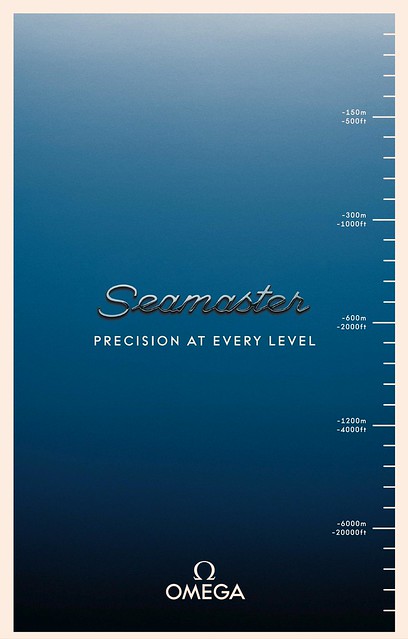
Plenty have already covered the OceanGate Titan implosion in more detail. I will not repeat that work but wanted to bring to wider attention how marketers have jumped on the bandwagon. The following advert appeared in the print edition of the Financial Times, placed by Omega watches promoting their Omega Seamaster Planet Ocean Ultra Deep series of watches.
‘Seamaster – Precision at every level’ next to a scale going beyond 6,000 metres.
Omega
I personally thought that the advert was too soon after the implosion for good taste. Although the watch community has seen a renewed interest in deep diving capable watches after the OceanGate Titan incident.
Young Japanese are craving fast fashion. What happened? | Vogue Business – it’s the economy stupid, luxury is less accessible. Secondly, much of the youth looks like Gyaru peaked in the early 2000s due to financial issues and things haven’t improved since. Shibuya subcultures were as dependent on the ability to spend as on youth creativity.
I was sparked to lead this post based on footage that I watched about a priest in South India with regards a robotic elephant. Robots in religion have taken off in both Shinto and Hindu ceremonies.
Japan
Academics have widely talked about how the Shinto-based belief system have aided Japanese societal acceptance of robots, in comparison to western society. Secondly, Japanese authors have been exploring what it means to be human and what kind of dilemmas and opportunities do robots and AI bring in a future society. Robots in religion are a natural extension of robots in society.
Buddhism leads the way
What’s less commented on is that Japan’s buddhist temples have been leading robots in religion. The reality is that many Japanese see Shinto and Buddhism as complementary in nature and get involved in both beliefs.
Japan has some unique religious challenges that are interlinked. Temples are struggling as less people are active in their religious practice, the factors for this decline is multi-factorial in nature.
A second challenge that as the population shrinks roles need to be automated. What started in factories is now impacting the food and beverage sector (vending machines and restaurant robo-serving staff), so it was only a matter of time that robots in religion would supplement the clergy.
India
In India robots in religion is about kindness and de-risking religious ceremonies. In South India elephants take part in religious ceremonies. However the conditions that elephants are kept in can be cruel in nature and even result in death. Secondly, elephants can unintentionally kill or injure people involved in a religious celebration. This report on NHK World shows how robots in religion have been adapted to Hindu needs.
Finally, the elephant robot is used in celebrations over a large geographic area and is easily transported around. Robots in religion are likely to make even more sense as India urbanises even further, as the benefits are amplified in the denser environment.
How confucianism, communism (in particular Stalin’s take on Leninism) and an accident of history has led to the nationalistic, fragile, insecure Chinese state with imperial ambitions we know today.
China’s ‘trinket town’ at heart of push for renminbi trade | Financial Times – Yiwu was one of the first cities in China to allow individual merchants to settle larger cross-border deals in renminbi. Most cities have an annual cap of $50,000. Given Yiwu’s reputation for cheap goods and flexible terms, helped by the fact that wholesalers do not pay either corporate tax or market rent, exporters have sufficient bargaining power to request settlement in renminbi. “When you have only one place to go to purchase something, the seller sets the terms on how transactions are settled,” said James Wu, a Yiwu-based furniture exporter who began demanding renminbi payments from Middle Eastern clients last year – the last quote is a great example of
Interesting video from NHK World on how temples are adapting to a lack of new attendees and priests. I am not sure whether this is down to demographic change or the secularisation of society
A Pokémon-Card Crime Spree Jolts Japan – WSJ – Japan has been staggered by a Pokémon crime spree. Stores are now paying for banklike security to ward off villains who go to extraordinary lengths, even rappelling down the side of buildings, to plunder Pokémon. Hosaka was working in senior care when he had the idea of opening a cozy card shop in the suburb of Machida where customers could mingle at tables. Instead, he says, the little cards, “have become like Rolex watches, gold, silver, platinum or used cars.” – It makes sense when you think of the cards being ‘real life NFTs’
Criminal Rolex Gangs and Traveling with Watches, Part I – WOE – crime affecting luxury consumption. Interesting that London is a crime centre is prominently name checked alongside Johannesburg, South Africa. This will impact luxury retailers, luxury travel and hospitality and auction houses
Luxury
Bay Area Lawsuit Alleges Man Spent $220,000 To Get A Watch He Never Got – there’s also the added complexity of Shreve recently losing its status as a Patek AD. The lawsuit brings some ten causes of action against Shreve, including breach of contract, intentional and negligent misrepresentation, fraudulent concealment, false promise, and unfair business practices, pursuant to California’s Unfair Competition Law – this was only a matter of time. Its the same in the UK
Ad agencies and clients clash: tension over transparency in fees, services | Ad Age – a talent shortage has left agencies without enough senior executives to service accounts. Combined, such factors contribute to what marketers see as an increasing lack of transparency. One executive who leads procurement across marketing and content for a major consumer goods company said the discounts and rebates that media agencies, in particular, get from a media buy have always been “murky,” but one area agencies have always been transparent in is breaking down their fees. The brand executive said auditors, working on behalf of the marketers, have previously been able to get agencies to disclose their margins, overheads and salaries without protest—it’s standard practice and allows clients to know they are being charged a fair price. But that’s starting to change, they said, having run into issues with getting shops to break down their fees in the recent agency review their company underwent
Media
This Year Next Year: 2023 Global Mid-Year Forecast – GroupM – calls the end of radio’s global growth story. Even taking into account streaming, WPP says that, globally, ad-supported audio has peaked. It will grow just 0.3% this year, says GroupM then “remain roughly flat over the next five years”. It’s about to join newspapers, magazines and broadcast television in a downward trajectory. GroupM also tackles the impact of AI on the industry. It reckons that within five years, the portion of “AI-enabled” advertising revenue globally will be worth $800bn. What is impossible to quantify is whether any of that is new money. Most likely, none of it. What is also impossible to quantify is just how dramatic the AI-driven reductions in cost of production will be. That sounds a relatively benign question until one realises that all those reduced costs are human jobs. GroupM identifies five key themes: Regulation (particularly around data privacy); connected TV (and an annualised 10%+ growth in the segment)’; AI “is likely to inform, or touch in some way, at least half of all advertising revenue by the end of 2023”; retail media to overtake TV by 2028; and “new business growth” (which sounds like the sort of thing an agency person would put in their predictions). Most importantly though, the GroupM outlook points to a more more significant factor. We’re at the end of a cycle that was defined by shifts between advertising channels, and then the disruption of Covid. “We are at an inflection point where the secular drivers of advertising growth above and beyond GDP growth are maturing, the pandemic upheaval is receding and the dynamic rise of digital advertising has slowed. This is the basis of our underlying forecast of mid-single-digit advertising growth over the next five years. However, the pervasive impact of AI on the world of advertising could change that.”
AI at Work: What People Are Saying | BCG – leaders love it, workers don’t. Businesses have only addressed the needs of leaders, which probably dialled up the anxiety with a sense that AI is something that happens to you and your career rather like a bad car accident
Beeper — All your chats in one app. Yes, really. – clients like Adium became less useful as Google and other services went away from common protocols and the IM giants AOL, MSN and Yahoo! disappeared. Beeper are trying to address this
The Threat of Decivilisation | Quillette – President Macron when having a Chatham House type discussion with sociology experts used the phrase processus de décivilisation – as a descriptor for the widespread civil and political unrest that has rocked France.
Rishi Sunak and Emmanuel Macron
On the face of it, decivilisation is an appropriate term if Macron believed that there was something rotten at the centre of French society. But the phrase decivilisation is problematic and Macron has been capitalised by French on the political left.
Renaud Camus
The crux of the left’s criticism is a work by the author Renaud Camus. Camus became famous writing a book called Tricks about a series of up to 45 stories (depending which edition you read) about one-night stands he had travelling around the world as a gay man in the late 1970s. Decades later Camus became more famous for his contributions to ideas of the far right, notably the great replacement concept in reaction to increased immigration in France from former French colonies. While these works were published in French they were summarised for English readers in his book You Will Not Replace Us!
In his works he describes the gradual takeover of France as decivilisation.
The left
The left drew a line between Camus work and Macron’s phrase and assumed that it was a way to build a bridge to the resurgent far right in France.
The reality is more complex. The degree of change in French society has driven backlashes in French society, in a similar way that Brexit and small boat immigration did in the UK. The problem for the left is that these reactionaries would have been natural constituents of the left. The left, like in many countries, instead has pivoted to degree educated urban dwellers, abandoning the workers to the far right.
Is French society really breaking down?
It’s hard to tell whether ‘decivilisation’ is really happening. Civil disturbances tend to happen during times of economic unrest and in the past has been a reset. There is a body of opinion who believe that social media has its thumb on the scales, driving things harder and faster without a countervailing force to help balance things out over time, like happened in previous decades.
Japan Rail Companies Limit Train Passes Due to Chip Shortage – these stored value cards also allow consumers to buy things in combinis as well as travel. They are similar to Hong Kong’s Octopus cards. What’s happening to the chips through? Japanese YouTubers have published advisory videos around the debacle for tourists to Japan. It seems to be a drive towards registration as much as anything else
Cigars are still a thing. This looks like a feature length video produced in conjunction between the YouTuber and a cigar manufacturer.
Marketing
Multi-factored reasons in nature why campaigns seem to be working less well. We know that as campaigns have become more digital, campaigns have been less effective and marketers being less confident in their campaigns. Interesting the way brand building on digital is danced around. The channels often dont work and measures are BS only a technologist would love.
Starmer’s Britain – Portland – Kier Starmer is considered to be the most likely prime minister after Rishi Sunak. In some respects this feels like 1996, all over again. The then Conservative government back then was buffeted by scandals such as the Arms to Iraq affair report, the BSE crisis and the slow drip of sleaze.
Depending when in 2024 the general election happens, we will have had 14 years of Conservative rule and the government has been dogged by scandal.
Rewind to 1996
Unlike Kier Starmer era Labour, back in 1996, Labour looked like a political party chock full of ideas. Will Hutton’s The State We’re In focused minds on what a future Labour government would look like and long term thinking. Tony Blair and the policy wonks around him seeded the media and academia around them with their new ideas. Blair even used a computer system to analyse Conservative parliamentary statements and gain the upper hand in prime minister’s question time.
Back to the present
Kier Starmer and the modern day Labour Party isn’t the Labour of 1996. There isn’t the buzz of modernity about them. There is no vision thing at the moment. They are defined by not being the tories. Public Affairs specialists Portland have tried their hand at kremlinology to paint a picture of what a Kier Starmer-led government is likely to look like, should it get into power.
A number of people who contributed were veterans of the Blair – Brown administration. They recognise that Kier Starmer and colleagues are likely to inherit a country with problems across the economy, public services and infrastructure. The Kier Starmer administration is unlikely to share the globalist viewpoint of Tony Blair, partly due to decoupling and partly due to Brexit.
All of which makes the Kier Starmer five missions for a Better Britain look like a pipe dream without several back-to-back terms in government.
Secure the highest sustained growth in the G7 – with good jobs and productivity growth in every part of the country making everyone, not just a few, better off.
Make Britain a clean energy superpower – to create jobs, cut bills and boost energy security with zero carbon electricity by 2030, accelerating to net zero.
Build an NHS fit for the future – that is there when people need it; with fewer lives lost to the biggest killers; in a fairer Britain, where everyone lives well for longer.
Make Britain’s streets safe – by halving serious violent crime and raise confidence in the police and criminal justice system to its highest levels, within a decade.
Break down the barriers to opportunity at every stage – for every child, by reforming the childcare and education systems, raising standards everywhere, and preparing young people for work and life.
Kier Starmer needs his own version of The State We’re In as just under 70 percent of the British public surveyed are neutral to being in disagreement about whether they understand the current Labour vision for Britain.
Can Chinese Payment Apps Gain Traction Globally? | ChinaFile – Chinese fintech companies and their super-apps will still revolutionize global finance. In this excerpt from his book The Cashless Revolution: China’s Reinvention of Money and the End of America’s Domination of Finance and Technology, Chorzempa explains why Chinese fintech has thus far struggled to gain a foothold in the international market, but will likely inspire other companies to replicate the fintech super-app model in their home countries
People too tired to lead healthier lifestyles, UK survey finds | Health | The Guardian – A survey has found that tiredness is why 35% of people don’t make the changes to their diet and physical activity levels that would help them close the gap between good intentions and concrete action. The results, from a YouGov poll of 2,086 UK adults for the World Cancer Research Fund (WCRF), illustrate the barriers many people face in their desire to adopt and stick to healthy habits. When asked what was stopping them from eating more healthily and exercising more often, 29% of men and 40% of women cited “feeling too tired”
The Lost Planet of Hong Kong | Newsroom – This just in from Hong Kong. Its chief executive has corrected the language of a journalist for asking a question at a press conference about the pro-democracy protests of 2019: “First of all, it is not [called] the 2019 protests. It is the black violence.” And: a 23-year-old has been charged under the Beijing-imposed national security laws for allegedly “intimidating the public in order to pursue political agenda”. He was attempting to stage a protest, otherwise known as a black violence. Also: a satirical cartoonist has been sacked after a government official complained about a drawing that mocked local elections, and his books were removed from libraries. When approached by the last signs of independent journalistic life in Hong Kong, the Hong Kong Free Press, the Leisure and Cultural Services Department commented, “Books that are suspected to potentially violate national security law will be immediately removed for review.”
Young women in South Korea are live-streaming their suicide attempts | The Economist – the South Korean government announced its fifth “Master Plan for Prevention of Suicide”. Mental-health check-ups will now be available every two years, rather than every decade. Beyond that, the plan proposes different approaches for the young and old respectively. (Over-70s have the highest suicide rates in Korea.) For women in their 20s and 30s who live alone, South Korea will make available more counselling and therapy
The Rise of Generative AI Large Language Models (LLMs) like ChatGPT — Information is Beautiful and How Kevin Kelly is using AI in his creative process | Dropbox Blog and Will A.I. Become the New McKinsey? | The New Yorker – as A.I. becomes more powerful and flexible, is there any way to keep it from being another version of McKinsey? The question is worth considering across different meanings of the term “A.I.” If you think of A.I. as a broad set of technologies being marketed to companies to help them cut their costs, the question becomes: how do we keep those technologies from working as “capital’s willing executioners”? Alternatively, if you imagine A.I. as a semi-autonomous software program that solves problems that humans ask it to solve, the question is then: how do we prevent that software from assisting corporations in ways that make people’s lives worse? Suppose you’ve built a semi-autonomous A.I. that’s entirely obedient to humans—one that repeatedly checks to make sure it hasn’t misinterpreted the instructions it has received. This is the dream of many A.I. researchers. Yet such software could easily still cause as much harm as McKinsey has
What actually represents good taste and good style was discussed in this old show from the 1970s, which makes an interesting perspective to reflect on.
Hyundai have pushed out a campaign to teach British people how to pronounce the companies name properly. This is a well trodden path for foreign brands like Hyundai. My childhood featured ‘Nestle’s Milky Bars’ as the advertising jingle ignored the é at the end of Nestlé. I can only presume that it would be assumed to be too sophisticated for our palates rather than a playground staple.
More recently, I spent a couple of minutes coaching Arsenal footballing legend Ian Wright on how to say Huawei prior to him shooting some online video content for a smartphone launch. So I can relate to the challenge that Hyundai faces in gaining the correct pronunciation.
Getting the pronunciation right will allow Hyundai to use global English language assets, rather than having to do localisation. A small but important saving as it looks to compete for the UK and Irish electric car markets.
The advertising plays on the common pain-point of Siri and Google Voice failing to pick up on pronunciation in order to use humour to get Hyundai across correctly.
Older women and younger men relationships explored in this documentary. Prior to going to college in the mid-1990s I worked for a company that put coatings on materials to make stickers, stamps and labels. My boss there was a guy called Mark who married the PE teacher from school, once he’d finished his university degree. At that time Mark’s relationship was considered unusual in nature.
Design
Great film compilation of retrofuturist footage
Watching this film on the intersection of military clothing design and fashion reminded me of William Gibson’s Zero History novel.
New China-focused think tank staffed and advised by a number of prominent Hong Kong dissidents: China Strategic Risks Institute
Mainland Chinese visitors start to return to Hong Kong after Covid-19 restrictions lifted, but most tours low-cost and short stay, figures reveal | South China Morning Post – Tourism figures from February to this month show 86 per cent of tour trips from mainland China lasted one to two days and 54 per cent cost less than 500 yuan. Travel Industry Authority confirms it is investigating allegations of cigarette smuggling by mainland Chinese tour groups – it will be only a matter of time before the impact of this behaviour change ripples out to Hong Kong’s retail landlords and the luxury brands who have stores in the city. Hoteliers and the hospitality industry haven’t benefited from opening up the borders
Indonesia
Indonesia is an economic powerhouse in the making, but there are forces ripping away at its society that could leave it as inequitable as its neighbour Malaysia – which has been suffering from a brain drain and political stagnation. Indonesia like Malaysia before it seems to be coming under the sway of Gulf Arab traditions of Islam rather than the indigenous variant of the belief. Singaporean news programme CNA Insider did a good documentary on it all.