Apple and China
Elliott Management wrote this opinion piece on Apple and China: Apple is a Chinese company | Financial Times – interesting assessment of risk exposure with a focus on the Apple share price.
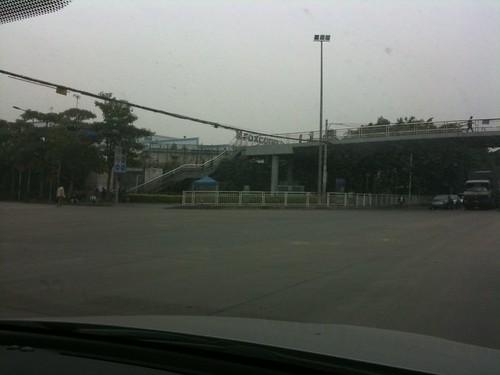
The Apple and China relationship started before China joined the WTO. Taiwanese contract manufacturers had built huge industrial sites in Shenzhen, China and later in other parts of China. The best known of which was the Foxconn plant in Shenzhen. Back in 2010, I was driven around the perimeter of the site, which went on for miles.
The only site that I had seen which would be comparable would be the Mercedes-Benz manufacturing site in Sindelfingen which is part of the Stuttgart metropolitan area. I spent part of my childhood and early adult life living next to a General Motors car plant, a shipyard and a couple of oil refineries, so I am used to scale of industry.
As Apple came back from a near demise in the mid-1990s, it needed manufacturing scale so the combination of Apple and China happened due to that. Over time the Apple and China relationship drove manufacturing expertise and new ways of doing business, such as using CNC machines at scale. Prior to Apple and China, smartphones were plastic mainly due to product engineering influenced by Nokia’s work on its feature phones.
Over time, the Apple and China relationship evolved. Chinese developers make up about half of the programmers making iPad and iPhone applications. Chinese component manufacturers replaced US, Korean, Japanese and European suppliers. Apple and China has become tightly entwined as Chinese manufacturers look to dethrone Apple at the same time.
Apple and China national security focus
China’s state and national security focus has spilled into the economic and social aspects of policy which has a high probability of reaching the Apple and China relationship. Apple already compromises on its privacy tenet in the way it handles China’s data. It actively supported China versus Hong Kong protestors – doing everything it could to disrupt the protestors self-organising tools.
China has shown that its ever expanding security considerations trump business so Apple and China may come to a rapid and disruptive break. Apple is trying to de-risk production outside China but it might be too little, too late. Apple and China are due for a relationship reset.
Beauty
In Vietnam the rising middle class sees Japanese and Korean beauty brands duke it out for the market. Korea is perceived to have an advantage due to hallyu entertainment including K-pop and K-dramas: Vietnam’s blooming skin care market attracts Japanese brandsーNHK WORLD-JAPAN NEWS
Sourcerie | Your Personal Beauty Counter – curated e-tailing
Business
🌆 Airbnb vs. hotels | Axios – AirBnB product offering is lacking compared to hotels and pricing is out of whack
India’s first iPhone maker is quitting amid Apple’s growing presence in the country | Quartz – what’s more interesting is the role Tata is taking in terms of engagement up and down the Apple supply chain rather than Wistron’s failure to cope with India. Taiwanese electronics business news site DigiTimes has its report here: India roundup: Taiwan-based Wistron reportedly to withdraw from India | DigiTimes
China
CSIS head tells MP Michael Chong that he and family were targeted by China – The Globe and Mail – Chinese influence operations and direct action in Canada
China’s assessments of Soviet Union’s collapse is very interesting as they offer a playbook of Xi Jinping thought
China’s ‘men in black’ step up scrutiny of foreign corporate sleuths | Financial Times – “It’s hard to attract capital if you can’t get a report from a global due diligence firm,” said one international services executive. That could run counter to the government’s efforts to revive animal spirits in China’s economy, consultants and investors said. “Maybe this is the intention,” said the head of one consultancy in Beijing, “to choke off investment and get the state to step back in, to stop the ability of investors to place bets.”
Xi Jinping Can’t Handle an Aging China | Foreign Affairs – less convinced this assertion is true, when we look at natalistic policies in authoritarian regimes such as what happened in Romania under Nicolae Ceaușescu with Decree 770 which was one of the strictest anti-abortion law at the time, or Nazi Germany’s breeding programmes
US Companies in China Grow More Pessimistic of Ties: AmCham Survey – Bloomberg – Some 87% of respondents to a flash survey taken last week said they were at least slightly pessimistic about US-China ties, according to the survey published Wednesday by the American Chamber of Commerce in China. That was 14 percentage points higher than the chamber’s previous poll. “Bilateral relations between the United States and China have substantially deteriorated,” said Lester Ross, chair of AmCham China’s Policy Committee. “It’s hard to see at this point when they will begin to improve — and this, of course, affects the ability of business to operate across borders.”
Counter-espionage law | Sinocism – huge impact for investors, auditors, due diligence specialists, analysts and even ad agency brand planners (paywall) and more from The Guardian here: China widens ‘already breathtaking’ scope to arrest foreigners for espionage | China | The Guardian – Authorities can swoop over anything they deem relevant to national security in toughening of law already used against expatriates or Chinese contacts
China Ratchets Up Pressure on Foreign Companies – WSJ – Business executives who have consulted with Chinese authorities say a central tenet of the effort is the desire to more tightly control the narrative about China’s governance and development, and limit the information collected by foreign companies such as auditors, management consultants and law firms that could influence how the outside world views China… Some foreign business executives say they worry the rewriting of the espionage law means that many topics, ranging from the status of Taiwan to China’s human rights record to technology such as semiconductors, are now becoming off limits in discussions with their Chinese counterparts. The recent trouble for foreign companies in China is drawing criticism in Washington. Rep. Mike Gallagher, a Republican from Wisconsin who chairs a congressional committee on the Chinese Communist Party, said in a statement Thursday, “Our business leaders need to take off their golden blindfolds and recognize that the recent police raids of American companies Bain and Mintz are not one-offs, but part of a long, proud tradition of exploitation.”.. The push is driven by a deepening conviction within China’s leadership that foreign capital, while important to China’s economic rise, isn’t to be fully trusted – if I was a brand planner in China or Hong Kong I would be very wary at the moment as this will spill over into agency life (paywall)
BMW Ice Cream Gate: Three Reasons Why A MINI Story Became A Major Incident | What’s on Weibo
Consumer behaviour
Longitudinal consumer behaviour change around increased empathy in western markets
A lot of this focus on the expertise in the ‘aspiration economy’ sounds like brands back in the early 1990s again. The kind of expertise exemplified by Nick Hornby’s novel High Fidelity or the characters Randall Graves and Dante Hicks in Kevin Smith’s movie Clerks.
Wearing masks: how to navigate your career as a working-class person | Dazed
Culture
Skepta and Jammer on their new house label Más Tiempo – The Face – post-grime?
Design
Hotel Booking Is a Post-Truth Nightmare – The Atlantic
Interview: Cyberphysical Architect and Artist Güvenç Özel at Coachella – COOL HUNTING®
An Interview with HAJIME SORAYAMA: A TALE OF ROBOTICS, CHROME, AND SEX — sabukaru
Bang & Olufsen launches the Beosound A5 sustainable portable speaker | Fast Company
Economics
The new industrial policy, explained – by Noah Smith – the speed and disruptiveness of China’s entry into the global trading system destroyed the career trajectories of large numbers of American workers and hurt the economies of whole regions. Second, U.S. complacency about the trajectory of Chinese politics, combined with a massive campaign of technological espionage, hastened and encouraged the rise of a new, hostile superpower. By the mid-2010s, only economists thought that free trade was still an unquestioned good, and the country wasn’t listening to economists the way it used to
Global Chip Sales Down 8.7% in Q1; March Sales Saw Uptick for First Time Since May 2022 – EE Times Asia – the worst of any global economic downturn is likely to be over soon
China’s top leaders say the economy doesn’t have enough ‘internal’ drive and a decline in foreign direct investment is becoming apparent too: China investment consensus cracks as politics fuel fears | Reuters
Reducing co-dependence on China
Energy
Interesting analysis by Scott Galloway: The Mother of All Pivots | No Mercy / No Malice
Ethics
Racism is not a design motif | Fast Company
Too Big to Challenge? | danah boyd | apophenia – the tech industry represents 9% of the U.S. GDP and only five Big Tech companies account for 25% of the S&P 500. Prior to Covid, most of the growth in stock market came from Big Tech. Now, as the U.S. economy is all sorts of wacky, Big Tech is what is keeping the stock market’s chin above water. In the process, Big Tech is accounting for more and more of the stock market – edited for brevity
The gender pay gap is not a myth, it’s math – it’s mostly not a discrimination story, it’s a parenting story. But more flexible employment is likely to be more of a discrimination story
Finance
Chinese Money Launderers Helping Mexican Drug Cartels | Asian Sentinel
China Is Cracking Down on Bankers. Here Are Some of the Targets. – The New York Times – but not because they are money laundering for the cartels, its political in nature
FMCG
A Shorter Tobacco Road: Cigarettes, Vapes Decline, Nicotine Pouch Sales Grow – while pouches are big in the US, vaping has taken off in Indonesia and Malaysia
France
Auchan’s Russian unit under corruption probe by French prosecutor | Financial Times – corruption in Russia? Is that even news?
Gadgets
The Flipper Zero: A Hacker’s Delight – IEEE Spectrum
Akai Pro unveil MPC X Special Edition | Sound on Sound magazine
Microsoft-branded mice and keyboards are going away after 40 years – this reminds me of when a new exec joined Bill Gates era Microsoft in the late 1980s/1990s. The company had unintentionally had in warehouses 3 years sales worth of Microsoft mice ready to sell. Their hardware with the exception of an ergonomic keyboard haven’t been great products that were superior to other technology companies
Germany
Germany’s China dilemma takes on a new urgency | Financial Times and Scholz’s new push for China port deal triggers row in German coalition – POLITICO. Germany’s relationships with authoritarian regimes are notoriously sticky, mostly due to its large corporates interesting being put ahead of the wider country.
Interesting that even state broadcaster Deutsche Welle is complaining about the poor quality of modern German cars. Back in the early 1970s BMWs had a reputation as being clever fragile rust buckets, but the decline of Mercedes is far more dramatic in terms of quality. The decline seems to be in lock step with the globalisation of these companies and an increased focus on shareholder value.
Compare and contrast with older Mercedes cars across the Middle East and Africa.
Health
The Quest for Longevity Is Already Over | WIRED
Hong Kong
Tax Revenue Down 5pc | HKIBC News – a mix of decline in house sales values affecting stamp duty, the income tax bump is interesting given decline in numbers of workers in Hong Kong. The stamp duty issue is reinforced here: More new homes than homebuyers in Hong Kong | The Standard
Project MUSE – China’s Hong Kong Affairs Bureaucracy: Factional Politics and Policy Consistency – “From the perspective of factional politics, this article sheds light on the functions and operations of the Central Liaison Office and the Hong Kong and Macao Affairs Office (the “two Hong Kong offices”) throughout the history of the Communist Party of China (CPC), focusing on the 2013–22 period. The authors posit that the stronger the factional relationship between the top leader responsible for Hong Kong affairs and the heads of the two Hong Kong offices, the greater the policy consistency between the two offices and the central authorities on Hong Kong issues. This article uses text mining techniques to measure the degree of policy consistency between Chinese President Xi Jinping and the two Hong Kong offices from 2013 to 2022. In 2020, Xi appointed his protégés as directors of the two Hong Kong offices, thus regaining absolute control over Hong Kong affairs. Xi may further tighten his hold on Hong Kong in the future, thereby undermining the region’s autonomous status.” – Interesting aside: The Party and State Institutional Reform Plan (党和国家机构改革方案) unveiled in March established the Hong Kong and Macao Work Office of the Central Committee (中央港澳工作办公室) on the basis of the Hong Kong and Macao Affairs Office of the State Council. The latter has essentially become a Party body instead of a state body, and the arrangement is now “one organisation, two nameplates” (ie., two identities). – expect even further ratcheting of authoritarian measures in all aspects of Hong Kong life and economy
Innovation
Costly sub-3nm investments challenging TSMC, others | DigiTimes and TSMC chips away at the competition with 2nm production set for 2025
Artificial Intelligence – Man not machine – Radio Free Mobile
Menta, Codasip join RISC-V 3D neuromorphic AI project | EE Times
Exclusive: Kleiner Perkins partner Wen Hsieh to launch TSMC-backed new fund -sources | Reuters
Air Force cracks open door on hypersonic ARRW, weeks after indicating it was shut – Breaking Defense
How The Once Elusive Dream Of Laser Weapons Suddenly Became A Reality
Ireland
Tánaiste to signal need to ‘de-risk’ links between Ireland and China – The Irish Times
Catholic Church launches vocations initiative | RTÉ
Japan
Culture and technology adoption’s effect on Japanese information design online. It reminds me of the early web portal designs were more like print newspapers.
Amazing bit of Japanese fandom
Japanese bid to make first commercial Moon landing ends in failure | Financial Times – problems in last 95 metres but still a tremendous private sector endeavour
Korea
Interesting that the Korean government is allowing these strikes to go ahead given the central role of Samsung in the country.
Luxury
Alibaba, Partners Fight Fraud and Root Out Counterfeits – Over 730,000 IP rights were under Alibaba protection by the end of 2022. 98% of IP takedown requests by rights holders were handled within 24 hours for the third consecutive year – I wonder what Amazon numbers look like for this?
“What do you think of special forces tourism”: Trending hashtag on Chinese social media “What do you think of special forces tourism” – not the kind of tourists that the destinations they are travelling to would want to have due to the low spend and little amount of time spent in the destination – but still all the problems of Chinese tourism
The crazy prices of Rolex watches
Sleep tourism: Snooze-focused luxury vacations are on the rise | Lifestyle Asia
Marketing
LG moves from feature selling to storytelling » strategy
Great career advice for strategists | LinkedIn
Plant Drop “Smart plants” by McCann London and McCann Health London – disclaimer this was done by the current agency that I work for
Materials
Stellantis secures battery-grade nickel and cobalt supply in Australia
Media
Media layoffs and bankruptcy: The current crisis was born of digital media’s original sin. | Slate
Once valued at $5.7 billion, Vice may now be headed for bankruptcy | Quartz
“The State of Influencer Earning” revealed the average cost of per post made by creators
The Drum | Unilever Is Rewarding People For Watching Its Sustainable Ads – which raises question about online video in terms of media channel effectiveness
The ‘Shein’ effect: Meta Q1 ’23 earnings boosted by Chinese retailers buying ads | CNBC
In Depth: Scandal-Ridden Chinese Soccer Gets in Foul Trouble Again – Caixin Global – you also see this in Chinese basketball
“Alexa Will Not Replace Us” Amazon Chronicles
Online
‘Counter-Strike’ map raises awareness of Putin’s brutality to Russians | Fast Company – there is a significant risk that the map will just reinforce beliefs. The Z contingent will revel it and the liberals will have it reinforce their views
Social relations mediated through online and the influencer – viewer relationship
The Case Against Momfluencers | WIRED
Tinder ignored Russia’s red flags for more than a year before finally breaking up | Quartz
Quality
IKEA Redesigns Its Bestsellers, Starting With the Billy Bookcase – WSJ – building already poor products down to a price
Retailing
ChatGPT and Retail: Reality, Hype, What’s Next, and How to Prepare
Amazon’s newest healthcare offering | IPG Health – disclosure, I work for a sister agency to YuzuYello
Security
FBI cites risk of Chinese hackers in request for additional cybersecurity funding – SiliconANGLE
China ‘Innovated’ Its Cyberattack Tradecraft, Mandia Says | Dark Reading
Samsung Reportedly Bans Use of Generative AI Tools – CNET – down to information leaks
Cyber hackers are attacking more companies than ever before
China’s ‘Evasive Panda’ Hijacks Software Updates to Deliver Custom Backdoor | Dark Reading
L3Harris to reply to FTC’s second request on Aerojet deal around June, CEO says – Breaking Defense
How surreptitious shipping is helping Russia | Financial Times
How to Spy on China | Foreign Affairs worth reading with this subject adjacent post on open source investigations The Challenges of Conducting Open Source Research on China – bellingcat
Software
Report describes Apple’s “organizational dysfunction” and “lack of ambition” in AI | Ars Technica
Taiwan
I didn’t realise that Taiwan’s semiconductor expertise went back this far. DigiTimes has unprecedented access to the elder statesmen and experts on the early Taiwanese semiconductor industry
Technology
Onsemi transformed into auto and industrial player ahead of schedule | DigiTimes
Sunshine is similar to the Siri philosophy of using machine learning
AI’s Hardware Problem – by Jon Y
Telecoms
John T. Chambers Talks Networking, Cybersecurity, and Simplicity – Nile, a network-as-a-service (NaaS) startup he co-founded with CEO Pankaj Patel – Chambers’ post-Cisco career
Ericsson and AMD strike Cloud and Open RAN agreement | EE Times
Web of no web
NYPD urges citizens to buy AirTags to fight surge in car thefts | Are Technica
First 5G RedCap test case validations | EE Times – they have gained approval for the industry’s first 5G New Radio (NR) reduced capability (RedCap) conformance test cases. – Big news for industrial and IoT use of 5G wireless
Wireless
European space companies launch bid for secure satellite network | Defence News

