Category: wireless | 無線 |무선 네트워크 | 無線

This blog came out of the crater of the dot com bust and wireless growth. Wi-Fi was transforming the way we used the internet at home. I used to have my Mac next to my router on top of a cupboard that contained the house fuse panel and the telephone line. Many people had an internet room and used a desktop computer like a Mac Mini or an all-in-one computer like an iMac. Often this would be in the ‘den’ or the ‘man cave’. Going on the internet to email, send instant messages or surf the internet was something you did with intent.

Wi-Fi arrived alongside broadband connections and the dot com boom. Wi-Fi capable computers came in at a relatively low price point with the first Apple iBook. I had the second generation design at the end of 2001 and using the internet changed. Free Wi-Fi became a way to attract people to use a coffee shop, as a freelancer it affected where I did meetings and how I worked.

I was travelling more for work at the time. While I preferred the reliability of an ethernet connection, Wi-Fi would meet my needs just as well. UMTS or 3G wireless data plans were still relatively expensive and slow. I would eventually send low resolution pictures to Flickr and even write a blog post or two. But most of the time I used it to clear my email box, or use Google Maps if I was desperate.

4G wireless services, started to make mobile data a bit more useful, even if the telephony wasn’t great


  • Beehives + more news

    Melixa | Innovative smart beehives for remote monitoring – beehives as smart cities for bees. I wonder if this is will do anything for colony collapse disorder (CCD) ravaging beehives around the world.

    Google combining Android and Chrome is bad for developers – Business Insider – my problem with tablets is their ‘lugablity’. I found the original iPad too big

    Microsoft has trapped its biggest partners between a rock and a hard place (MSFT) | BusinessInsider – “The Surface Book will have a harder time stealing away MacBook users,” says Linn Huang, an analyst for IDC. “The Apple brand has been sticky, and I don’t have much cause to think it won’t continue to be in the immediate future.” – whilst it might appeal to enterprise customers, it is also a big threat to existing Microsoft OEMs. There is a larger question about whether the touch interface is the right context for a lot of laptop work, which is one of the reasons why Apple has kept iOS and OSX separate despite their Darwin / BSD / Mach microkernel guts

    Why Windows XP Won’t Be Going Away Anytime Soon | Makeuseof – interesting challenge that Microsoft has in that its greatest competitor is is older products

    ‘Can’t hide it forever’: The model who became a meme – BBC News – I can’t see JWT coming out of this well

    Carrier DT Targets Startups After Europe Agrees Net Neutrality Rules | TechCrunch – inevitable based on the recent EU regulatory changes

    Nexus 6P Teardown – iFixit – interesting teardown, appalling repairability. More gadget related content here.

    Mead Johnson dives into parenting issues using WeChat | Marketing Interactive – influential parent campaign on WeChat

    BuzzFeed Press Blog – A cross-platform global network – interesting vision piece on the future of Buzzfeed by Jonah Peretti

    WeChat Still Way Ahead of Facebook | L2: The Daily – really good slideware on messaging platform

  • Black Friday Sale + more things

    REI to Close Stores During Black Friday Sale and Encourages Customers to Go Outside | Time – this is a smart more by REI on its Black Friday sale for a number of reasons. It is in keeping things on brand. It focuses purchases to their online channels. It also reels in Patagonia’s differentiator during the Black Friday sale of the Thanksgiving holiday season

    Oxford Professor Schools CalPERS: Contrary to Board Presentation, Private Equity is “Most Expensive Asset Class, By Far” – not terribly surprising results. CalPERS seems to be a basket case at the moment

    Google Reveals Its New “RankBrain” Artificial Intelligence System – interesting focus on complex queries by Google, presumably because there will be more clues in user context. But where will this leave experienced netizens who use Boolean search terms to refine their searches? Is Google enough of a utility to ignore early adopters, and could early adopters go elsewhere?

    IBM Opens the Door for Carbon Film NV Memory | EE Times – This latest work may well have solved the problems that have so far inhibited the development of carbon-based memory and opened the door to the possible use of oxygenated amorphous carbon

    SMARTPHONES: Smartphone Price Wars Claim More Suppliers ~ Young’s Business China – consolidation at component level likely to affect smaller phone manufacturers, but will it cause more sensible component pricing? More wireless industry related posts here.

    WPP reports 3.3% hike in net sales for Q3 but UK revenue growth slows – WPP attributed to a “softening” in advertising, media investment management (media buying), data investment management (market research and CRM) and healthcare – interesting that this vertical in particular is soft. Healthcare is usually much more resilient as a vertical market.  (paywall)

    Advertisers often don’t know what they are buying when talking mobile | Campaign – lack of context, intrusive formats and taking the piss on data connections (paywall)

  • The Google search post

    the Charles Arthur wrote an an interesting analysis piece on Google search business which I have linked to in the more information section called Google’s growing problem: 50% of people do zero searches per day on mobile.

    According to Fortune, Google search and display advertising counted for 90 per cent of Google’s revenue stream in 2014. By comparison Tencent makes just 17 per cent of its revenue from advertising; its revenue instead comes from payments  a la PayPal, premium accounts (brands pay for specialist facilities on WeChat for instance) virtual goods including gaming and stickers. Whilst Google has tried to diversify beyond advertising (payments, paid for content on YouTube, enterprise product sales), it has failed to change the balance of revenue. Any disruption of their Google search advertising unit represents an existential threat to their business.

    The key points in Charles Arthur’s article:

    • Consumers are using apps on smartphones rather than searching for a given services (which puts to rest the app versus mobile web argument mobile developers have)
    • This will have a more pronounced effect as the world internet population starts to level out next year
    • New internet users in the developing world may not be worth having (from a commercial perspective ‘An ad click from the US/Germany/Japan/Taiwan can be worth from 5 cents to $1 depending on the day/season, but clicks from China/India/Brazil/Vietnam are worth fractions of a penny to maybe 1 penny’

    Arthur’s assertions represent a huge change in consumer behaviour. Working for Yahoo! in the mid-naughties, we used to cite a Morgan Stanley quoted statistic that seven out of ten web journeys started with search. Search Engine Journal cites Forrester as the source of a claim that 93% of online experiences started with search.
    Mobile application is just one part of a wider change:

    • Google started to see a decline in the growth rate of search volumes to about 10 per cent a year, yet the amount content to be indexed continues to rise on a non-linear scale
    • Whilst the internet usage has been expanded by cheaper broadband with wi-fi and the rise mobile devices (both feature phones and smartphones) there hasn’t been a universal adoption of the open web. Yes smartphones have apps which disrupts the open web, but in places like Indonesia a lot of new feature phone surfing netizens don’t realise they are online and only go as far as Facebook
    • Amazon has risen as a wide ranging threat to Google. If you want to buy a book, many people’s evoked set is to go on Amazon. Amazon is not only an e-tailer but a vertical search engine across an increasing number of retail categories. Eric Schmidt claimed that about 30 per cent of purchase web journeys started on Amazon, that represents a significant lost opportunity for Google

    More information
    Google’s growing problem: 50% of people do zero searches per day on mobile | The Overspill
    10 Stats to Justify SEO | Search Engine Journal
    Is Tencent leading the way or lagging behind Facebook? | Walk The Chat
    In online search war, it’s Google vs. Amazon | Fortune
    Google’s Eric Schmidt: “Really, Our Biggest Search Competitor Is Amazon” | Search Engine Land
    Amazon Vs. Google: Understanding the buyer’s search engine | Wordtracker
    Millions of Facebook users have no idea they’re using the internet | Quartz
    Google Search Stats | Internet Live Stats

  • The return of Radio Rentals in the smartphone era

    I haven’t thought about Radio Rentals and its ilk in years. But I started to think of them again with this post. The idea came out of a couple of conversations that I had over the past few months.
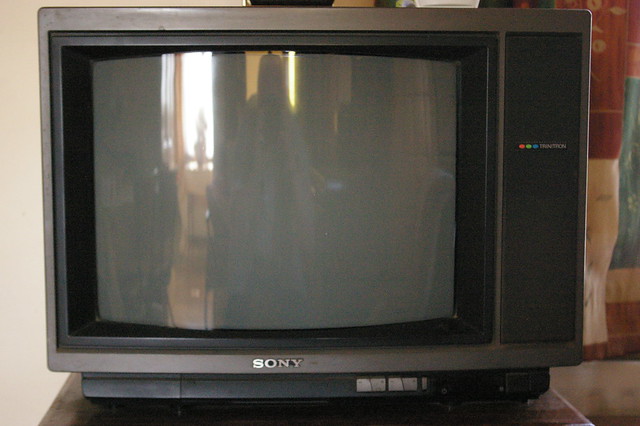
    Sony Trinitron TV

    What is Radio Rentals?

    Radio Rentals is one of a number of brands (Martin Dawes, Granada, Radio Rentals DER and Rumbalows), who used to rent TVs and video recorders. Globalisation made TVs discretionary items and technology made them more reliable.

    Maturation of the smartphone market

    As of February this year Apple was sitting on a cash hoard of 178 billion US dollars, most of which is kept outside the US to ensure it doesn’t get taxed. It has made the bulk of the money from the iPhone.  However the smartphone market is changing, the growth in mature markets is slowing down dramatically, as has smartphone growth in China. The growth in developing markets is being driven by smartphones priced so low that margins are razor thin. Things are so tight that component suppliers have gone under.

    Apple is at the premium end of the market but other players are trying to migrate in that direction to which means that the middle of the market and premium products are very similar in terms of industrial design.  So if one had a cheap source of capital it would be advantageous to come up with a way to stitch in clients and making it easier to onboard clients from the competition. Rather like the TV rental business of old.

    So when Apple launched the 6S range of handsets, this wasn’t much of a surprise

    Exclusively at Apple’s retail stores in the US, customers can choose their carrier and get an unlocked iPhone 6s or iPhone 6s Plus with the opportunity to get a new iPhone annually and AppleCare+ on the new iPhone Upgrade Program with monthly payments starting at $32 (US) and $37 (US), respectively.

    From a carrier point-of-view this presents a set of mixed blessings, it decouples the handset upgrade path from the consumer’s mobile carrier plan. On the one hand carriers no longer have to foot the high cost of iPhone purchases, but iPhone customers have less of an incentive to sign up to two-year contract with the likes of Verizon or Sprint which will make their cashflow less predictable in the longer term as consumers churn contracts and carriers will have get more creative with their contract incentives.

    We may see hybrid deals of content, voice minutes and data – rather like cable companies or BTVision. Of course, having those kind of OTT bundles has implications for for their networks and the likes of HBO are probably not likely to commoditise their product prices so that bandwidth and be saved from a downward spiral.

    Apple’s move has some advantages, but isn’t without risks:

    • Moving consumers to a lease model means a degree of predictable revenues
    • It provides with a modicum of control over the market for pre-used handsets, if they use it. This huge. Think about the roles that smartphones play in our lives for a moment; they aren’t just communications devices but give an idea of status and self expression as well. Just because cheap smartphones are for sale in the developing world doesn’t means that consumers don’t want the real thing. Apple could tap into a pre-existing informal market of channels to sell pre-owned smartphones into these markets and make their competitors hurt a lot more. It would effectively dig a trench between mid-market and premium handsets and force competitors to go to lower price points
    • It raises competitive barriers against competitors. Not that many competitors have the access to easy cheap money in order to finance this kind of scheme. If it could be done profitably by third parties; we would see the  likes of ICBC and the Bank of China setting up subsidiaries to finance Huawei phone purchases. There is little to no margin in the financing itself. For investors the opportunity cost wouldn’t be worthwhile.  Given its lack of profitability the leases can’t be securitised easily to palm the risk off on institutional investors – which was how the likes of MBNA grew their consumer finance businesses. Third parties would need to get involved in areas that aren’t their strength such as a superior supply chain and channel strategy to that held by the wireless carriers to bring down the cost per handset and ensure that the handset was available near the consumer. Apple doesn’t need to make a profit on the leasing business, it just needs to not make a loss

    The risks in this move are:

    • Increased amounts of handset repairs. Many consumers today put up with cracked screens rather than having them repaired due to the cost and inconvenience involved. Going to the leasing model puts all of that back on Apple. If a third party were  to attempt it, there would be a whole service network which they would need to build out
    • Leasing agreements like this will be a magnet for organised and disorganised crime. There will be small but significant loses of handsets from false address fraud to ‘fake thefts’, Apple will be facing the kind of persistent criminal problems that face catalogue retailers to credit card companies
    • What happens when the US economy tanks and Apple faces default payments on its handset leasing programme?
    • The strategy relies on consumers seeing a continued value in regularly upgrading their handset. What led to the demise of TV rental companies was: more reliable televisions with the move from discrete components to integrated circuits, real cost reduction of TVs as they became more popular and a lack of compelling reason to upgrade once they had a colour TV. When we think about smartphones, the cost of a handset is being reduced  (at least in the Android eco-system), they are generally pretty reliable – the weak points being the easily damaged screen and chemical life of the battery and there hasn’t been significant new use cases from successive generations of handsets

    More information

    CCS Insight cuts global handset forecast | TotalTelecom
    SMARTPHONES: Price Wars Topple Huawei, ZTE Supplier
    Apple Introduces iPhone 6s & iPhone 6s Plus

    More on Apple here.

  • AT and T & more things

    Contact AT and T’s CEO, hear back from his lawyer – LA Times – this sounds like a PR train wreck for AT and T. AT and T aren’t having their needs served by the lawyer’s conduct

    China—not online porn—is why Playboy is dumping nude photographs | Quartz – its all about licensed clothing and other products

    The world’s most popular app will soon be where you do your shopping, too | Quartz – geofenced Facebook ads anyone?

    I, Cringely Dell buys EMC and gets the corporate cloud for free – I, Cringely – on the money analysis by Bob Cringely

    IoT Net Gets Boost in Europe | EE Times – how will this affect Qualcomm et al?

    PC Sales Plummet in Q3 | EE Times – interesting decoupling between OS upgrade and hardware upgrade on the Windows eco-system

    Andy Rubin: AI Is The Future Of Computing, Mobility | EE Times – driven by data from IoT etc – there will be a need for machine learning analysis

    Laser surveys light up open data | Creating a better place – UK Environment Agency data, would probably be also handy for anyone with cruise missiles

    Luxury brand Marc Jacobs abandons Tsim Sha Tsui – mainland purchase down and high rents I guess. More luxury related posts here

    SMARTPHONES: Price Wars Topple Huawei, ZTE Supplier – Bottom line: The bankruptcy of a major component supplier to ZTE and Huawei is the latest sign of stress in the overheated smartphone sector

    Bankruptcies in China pose challenge for foreign creditors | SCMP – quite handy primer (paywall)

    DEXTER – Yahoo! Pipes worthy successor

    Twitter’s Next Hail Mary, Project Lightning, Has Arrived | Re/code – I think the key targets on this are Google News, Flipboard and Apple’s News functionality

    Google’s Search Boss Talks Surviving and Thriving in an App World (Full Video) – Amit Singhal says Google will not only survive the transition to mobile apps, but will thrive in it