Singapore film makers OGS put together an hour long documentary covering the last days of the Golden Mile complex. It was a mixed use development similar to the Cityplaza development that I lived in Hong Kong. The upper levels were apartments, above a shopping centre beneath. The complex was a fantastic brutalist design that served as a hub for the Thai expat community in Singapore. While the site will be redeveloped, rebuilding the community centred around the Golden Mile will be much harder to do.
Google Docs
Tim O’Reilly pulls together through this interview the best oral history that I have heard of Google Docs. O’Reilly was the right person to do the interview, given how he was at the centre of web 2.0 hosting the conference on the scene and even publishing the books that provided guidance to the relevant developer tools and programming languages.
Toyota Series 60 Land Cruiser
This is from a great Japanese YouTube channel that interviews local car owners, asking them about the vehicle that they drive, why they drive it and what they like about it. The test drives and details in each of the vehicles is amazing. This episode is about the Series 60 Toyota Land Cruiser. The vehicle is the point at which Toyota moves from small Jeep-like vehicles to a highly reliable but full-size SUV.
Hentai Land
A Japanese documentary showing the interface between cosplay and the manga art form. The documentary shows manga artists painting models as a form of performance art.
Play School
The BBC told the back story of Play School from the actors to the educational theory behind the seminal British children’s TV programme. It ran from 1964 to 1988. It went on to influence other shows like RTÉ’s Bosco.
Hong Konger Andrew Tse explained the complex history of Eurasians in Hong Kong and the role of compradores. Eurasians were the offspring of Europeans and middle Eastern Jews with local women.
During the 19th century, Hong Kong was segregated. Mixed race couples couldn’t marry. Eurasians didn’t easy fit in with either the Chinese community or westerners. This segregation also had its advantages. Information didn’t flow between the communities.
Eurasian families looked more towards the Chinese community and over time built up status within it.
The compradores were people who acted as an agent for foreign organisations engaged in investment, trade, or economic or political exploitation. They even helped finance deals when there was low trust. The compradore was a valuable person for western trading houses based in Hong Kong and the families built multi-generational wealth.
After the second world war, Chinese community understanding of English increased with education. China became closed off with the civil war and Hong Kong itself became a manufacturing hub. With the rise of Hong Kong manufacturing there would be a further decline in the need for compradores to help navigate business deals. Hong Kong also had the common law legal system for contract disputes. The compradore role faded away. Instead of becoming compradores, Eurasians worked within the major companies rising to senior positions. Mr Tse’s own career in the aviation sector is empirical evidence of their success.
They became prominent business people and philanthropists in their own right. The Tung Wah Group of Hospitals benefited from their philanthropy. Tung Wah Group of Hospitals is the oldest and largest not-for-profit organisation in Hong Kong.
Over time, mixed race marriage was no longer restricted and Hong Kong had its native-born entrepreneurs like Li Ka-shing to govern the old Taipan businesses like Hutchison-Whampoa.
A century after the Eurasian community had first formed in Hong Kong and became compradores their identity was still a sensitive subject. Peter Hall’s book In The Web that outlined this history was restrained from being published until after the death of certain prominent community members who didn’t wish to be ‘outed’ as Eurasian.
As a synopsis of the book puts it:
Peter Hall’s book, ‘In the Web,’ brings to light the mysteries that lay behind his family and the other Hong Kong Eurasian families intertwined with it. Because it attempts to lift the stone firmly left in place for over a century, this work will not be welcomed by those who prefer conjecture to be left to outsiders.
Hall himself came from a Eurasian background, was interned by the Japanese and worked for prominent property developer Hongkong Land.
The prominence of the Eurasian community has dissipated, for a number of reasons:
Some of them moved overseas, in common with many richer Hong Kongers in the run up to the handover.
Some family lines have became re-assimilated in the Chinese community.
Many of them died defending Hong Kong during the Japanese invasion.
Branding
Q&A: Juanita Zhang on How Chinese Brands Can Win Globally | Branding in Asia – One critical insight is the power of unapologetic differentiation, especially as Chinese brands move beyond the ‘outbound 2.0’ era. The initial wave of success often rode on e-commerce efficiency, providing commodity-level products and leveraging vast data insights. However, we’ve observed that many brands then dwell too much in ‘end-user insight,’ optimizing for existing demand rather than proactively building aspirational gravity. The brands that truly succeed don’t try to be all things to all people; they identify a unique, compelling value proposition and own it fiercely.
McDonald’s US sales drop by most since height of pandemic | FT – Kempczinski said his company had surveyed consumers in top global markets about their views on the US, American brands and McDonald’s.While there had been no change to public opinion on the McDonald’s brand, he said more people signalled they would be cutting back on buying American brands. The surveys also revealed an 8 to 10-point rise in “anti-American sentiment”, he said, notably in northern Europe and Canada.
The Death of the Amex Lounge: Why the Upper Middle Class Isn’t Special Anymore – There’s something happening to the upper middle class in the United States that no one is talking about. They are going through an existential crisis. I first noticed it at the airport. A line 20 people deep for the American Express lounge. Then, once you get inside, more lines for food/drinks and not an open chair in sight. Then I saw it in the housing market. I have friends with $10,000+ monthly mortgage payments on modest homes. Ten grand a month and they still don’t own a mansion. Today, buying a 3-bedroom apartment in Jersey City (where I live) would cost me anywhere from $9,300-$14,000 a month (all-in). I could rent the same unit for around $6,000-$7,000 a month.
Ethics
The 50something man has a PR problem | Influence Online – “Ageism is the last ‘ism’ we need to tackle. Anecdotally, I’m hearing a lot about the 50+ demographic struggling to find new roles because employers perceive them as being so old that they can’t learn new skills or that their tech isn’t up to scratch. All their knowledge is being lost – and because AI is replacing entry-level jobs – there’s a lack of new people coming in to learn from them. Acknowledging ageism exists would be a great start…”
Finance
Buy now, pay later, in debt forever? – The Face – or how generation Z credit rating is being impacted by Klarna, Affirm et al which are the digital equivalent of the ‘tally man’ of the early to mid 20th century. Reading all this reminded me of working at MBNA as a student and hearing people’s horror stories as they tried to transfer over scorecard debit to pay it down at a more rational rate.
The story of Nongfu water is the story of the wild, wild west of Chinese business. The health claims still shock me, despite everything I knew about the Chinese market.
What Is “Broke Man Propaganda?” | Cosmopolitan & Yes, it is classist to dehumanise ‘broke’ men | Dazed – “Poverty is not the fault of the poor,” she continues. “I find it very cruel to talk about John – a character who loves Lucy, a beautiful character being played beautifully by Chris – in such cruel terms as ‘broke boy’ or ‘broke man’.” She goes on: “I think that is a very troubling result of the way that wealthy people have gotten into our hearts [and convinced us] it’s your fault if you’re poor, or you’re a bad person if you’re poor. So, it doesn’t make me laugh, actually. It just makes me feel very concerned that anybody would talk about my movie and my characters [like that], and think about it in such classist terms.”
Poblacion is the old part of Makati, the central business district of Manila in the Philippines. I have been to Makati for work in the past and to my regret missed visiting Poblacion.
Otherwise Makati is full of anonymous office blocks, business hotels that look the same the world over and Starbucks coffee shops.
September 2025 introduction – (26) pick-and-mix edition
Where has the year gone? I am just thankful that we got a little bit of sun, given how fast and hard the autumn wind and rain came in this year. I am now at issue 26, or as a bingo caller would put it ‘pick and mix’.
When I was a child ‘pick-and-mix’ sweets were a way of getting maximum variety for the lowest amount of pocket money that I earned from chores. Woolworths were famous at the time for their pick and mix section, alongside selling vinyl records and cassettes. Woolworths disappeared from the UK high street during the 2008 financial crisis.
For Mandarin Chinese speakers 26 is considered ‘lucky’ given that it sounds similar to ‘easy flow’ implying easy wealth.
This month’s soundtrack has been a banging digital compilation put together by Paradisco and Disco Isn’t Dead featuring The Reflex, PBR Streetgang, Prins Thomas, J Kriv, Sergio Mendes & Brasil 66.
Right, let’s get into it.
New reader?
If this is the first newsletter, welcome! You can find my regular writings here and more about me here.
A post that took me too long to write about the favourite campaigns I had when on the jury of the PHNX awards.
I missed sharing a post I wrote last month that built on the work of Rob Estreitinho on ideas for being a good strategist.
Books that I have read.
I finished Moscow X by David McCloskey. (No plot spoilers). This is the second book my McCloskey after Damascus Station, which I read and enjoyed back in May last year. The book is like a more action-orientated American version of a LeCarré novel. The plot reminded me of LeCarré’s Single & Single and Our Kind of Traitor. McCloskey isn’t afraid to have strong female lead characters in his book.
Your Life is Manufactured by Tim Minshall. Minshall is a professor at Cambridge and heads up the engineering department’s manufacturing research centre. Because of his mastery of the subject area, he manages to provide an exceptionally accessible primer in terms of what manufacturing is, how it happens and what it means. More about it here.
Things I have been inspired by.
Election-winning opacity in influencer relations
I have been following Taylor Lorenz‘ work since she became the beat reporter for online culture and technology at the Business Insider. Her article for Wired magazine on how the Democratic Party in the US is working with paid influencers makes for an interesting read.
What would be the norm in the commercial world about influencer transparency where there is a paid relationship – isn’t happening in politics.
Ok, why does this matter? The reason why I think this matters is that people who do their time in the trenches of a presidential election campaign have a clear path into a number of American agencies.
‘I’ve have won a victory for X candidate and can do the same for your brand’ has been a popular refrain for decades in agencies.
I have been in the room when senior American agency people have tried to convince Chinese companies to buy their services based on their success in marketing a candidate in an election using western social media channels. There was no sense of irony when this was awkwardly delivered as a possible solution for domestic market campaigns to marketing teams in Guangzhou, Shenzhen and Shanghai.
Bad habits will be brought into agencies and sold on to clients.
Chart of the month.
Kim Malcolm shared a great report done by Zappi and VaynerMedia looking at The State of Creative Effectiveness 2025. Two charts piqued my interest. The change in distinctiveness of advertising by age cohort.
The overall emotion that an advert evokes by age cohort.
Causality of these effects aren’t clear. Empirically, I know that great adverts still put a smile on the faces of people of all ages and can change brand choice, even in the oldest consumers.
I had more questions than answers. VaynerMedia thought that the answer should be cohort-specific campaigns. I am less sure, since brands tend to better within culture as a common point of truth for everyone. Also, I don’t believe in leaping to a solution until I understand the underlying ‘problem’.
I could understand a decline in novelty as people gain decades of life experience and will have seen similar creative executions before.
Are the adverts lacking a foundation in strong cultural insights and cues that would resonate with these older audience cohorts?
What I did notice is a correlation with the age profile in advertising agency staff compared to the general public and the point at which the drop-off to occurs. But correlation doesn’t necessarily imply causation.
It’s concerning that advertising effectiveness declines in older audience cohorts as economic power skews older within the general population. This is likely to continue as millennials inherit wealth from their baby boomer relatives as they enter their 50s and 60s. Which makes the old marketer line about half of a consumers economic value is over by 35 seem hollow.
Things I have watched.
Ghost In The Shell Arise: Border 1 and Border 2. In the GITS storyline this is a prequel to the original film. It follows how the eventual team comes together. The technology looks less fantastical and more prophetic each time I watch it. The animation is still spectacular.
Ghost In The Shell Arise: Border 3 and Border 4. Following on from Border 1 and Border 2, this has Togusa and the Section 9 team following the same case from different ends – which eventually has Togusa joining Section 9 as its only unaugmented team member.
I bought up as many of the films I could in Johnnie To’s filmography after he criticised Hong Kong’s national security regulation in an interview, which was likely to be the kiss of death to his film career. I finally got around to watching one of his best known films PTU and the series of Tactical Unit films that came from the same universe.
PTU: One of the paradoxes of Hong Kong is the prevalence of triad and corruption dramas, compared to the real life which whilst not crime and corruption free is much more staid. Hong Kong is as different from its cinematic counterpart, as the UK is to Richard Curtis’ films. PTU like Akira Kurosawa’s Stray Dog is based around the search for a missing police pistol. PTU (police tactical unit) officers look to help out a detective from the OCTB (organised crime and triad bureau). While the film occurs over one night, it was actually shot over three years and is one of Johnnie To’s best known films. Shooting only at night, To provided the audience with a familiar, yet different, cinematic experience. The washed out colours of day time Hong Kong is replaced by vibrant signage and the sharp shadows defined by the street lighting. Officers walking with a street lamp lit Tom Lee music instrument store behind them, look like its from a John Ford scene in composition. Some of his tracking shots, due to the framing of photography and the distortions of the night give an almost Inception like feeling to the geography of Hong Kong streets, warping the horizon between buildings the night sky. PTU was successful internationally and then spawned, five further films from the same universe made in 2008 and 2009.
Tactical Unit: The Code was a one of a series of Tactical Unit sequels to Johnnie To’s PTU. In The Code several plot lines come together. The investigation of CCTV footage of officers beating up a triad , a police officer heavily in debt due to negative equity on his mortgage and a drug deal gone wrong. All this plays out in the Kowloon area of Hong Kong. When this film was made back in 2008, it would have been considered well done, but largely unremarkable. Nowadays it couldn’t be made as it would in breach of the National Security Law. The irony is that this film is available on the iQiyi streaming service from mainland China.
Tactical Unit: Human Nature loses some of the cinematic feel of PTU. It’s not as masterful a film , BUT, the convoluted threads of the plot and the great cast who are now completely comfortable in their characters make it work well.
Tactical Unit: No Way Out. No Way Out starts with an impressive screne shot in Temple Street market. The film explores the Temple Street area of Kowloon and organised crime links to everything from cigarette smuggling to drugs.
Tactical Unit: Comrade in Arms is the penultimate in the series from the PTU universe of films. You still have the main cast of Hong Kong veterans Lam Suet, Simon Yam and Maggie Shiu. Plain clothes officer Lo Sa has been demoted to wearing a uniform and both Mike Ho and Sergeant Kat’s squads are still patrolling the Kowloon side of Victoria harbour. This sees the stars leave their usual urban beat and go into the hills of the New Territories after bank robbers. Much of it occurs in daylight, which sets it apart from the night time beat of PTU. Nowadays it couldn’t be made as it would in breach of the National Security Law. The irony is that this film is available on the iQiyi streaming service from mainland China.
Tactical Unit: Partners. Partners is unusual in that it revolves around the challenges of the ethnic minorities that make up Hong Kong from romance fraud ensnaring filipina workers to discrimination against Indians and Nepalis. While some of the show happens during late on in the day, it still captures much of the night time feeling of the universe
2001 Nightsis a 3D anime. While I admire the ambition and the technical expertise that went into the models, the characters as CGI fall down and distract from the storytelling. Also it felt weirdly like Space 1999 – and not in a good way.
Her Vengeance is a Hong Kong category III revenge movie filmed in 1988 that 88 Films recently release on Blu Ray. It borrows from another Hong Kong film in the early 1970s and I Spit On Your Grave. Despite being an low budget exploitation film it features a number of notable Hong Kong actors, probably because it was a Golden Harvest Production.
I found the film interesting because its opening was shot at Stanley Ho’s iconic Casino Lisboa in Macau. This was unusual because Hong Kong had lots of nightclubs that would have been fine for the protagonists management role without the hassle of the additional travel and government permissions. So we get a rare late 1980s snapshot of the then Portuguese colony.
When The Last Sword Is Drawnis a classic chambara (samurai sword-play) movie. It tells the complex story of a samurai, who unable to support his family on his meagre income as a school teacher and fencing master, turns his back on his clan and leaves to find work in Kyoto. Once in Kyoto he becomes embroiled in the battle between the declining Takagawa Shogunate and the Imperial Royal Family during the 19th century. Whilst the film does contain a lot of violence, it is used as a backdrop to the humanity of the main character and battles he faces between providing for his family and doing the honourable thing.
The plot is told through the recollections of others and finishes with the samurai’s youngest daughter getting ready to leave Japan with her husband and set up a doctor’s surgery in Manchuria (China).
Useful tools.
Playing Blu-Ray discs on a Mac
I have a Blu Ray player in my home theatre that enjoy using in lieu of subscribing to Netflix, which allows to me to explore more art house content than I can stream. Macgo Mac Blu Ray Player Pro gives your Mac the software capability that Steve Jobs wouldn’t.
One final thing, if you prefer to use Substack, you can now subscribe to this newsletter there.
The sales pitch.
I am currently working on a brand and creative strategy engagement at Google’s internal creative agency. I am now taking bookings for strategic engagements from the start of 2026 – keep me in mind; or get in touch for discussions on permanent roles. Contact me here.
Ok this is the end of my September 2025 newsletter, I hope to see you all back here again in a month. Be excellent to each other and get planning for Hallowe’en.
Don’t forget to share if you found it useful, interesting or insightful.
Your Life is Manufactured is written by Tim Minshall. Minshall is the professor of innovation at the University of Cambridge. He runs the Engineering department’s manufacturing research centre, so has a mastery of his domain. This is immediately obvious from his book, which he manages to write as an exceptionally accessible guide to what manufacturing is, how it is done and hints at why it’s important.
Before getting into the book to understand why it was so popular, I had a number of questions about the book:
What was Your Life is Manufactured purpose as a book?
Your Life is Manufactured looked to demystify how stuff is made. The book whilst accessible is aimed at adults and older children. Minshall keeps things very simple, only once touching on subject matter knowledge name-checking Japanese academic Noriaki Kano‘s work with a very simplified explanation of some of the principles of the Kano model of customer satisfaction.
His explanation as to why manufacturing is important is basically because everything around us is made. He avoids the economic reasons including:
Increased economic productivity
Increased growth
Widespread employment for skilled workers
The national security adjacent area of resilience
All of which are very important, pertinent points for the UK. Minshall’s choices about what he left out of Your Life is Manufactured is as interesting as what he left in. Whilst the book deplatforms the romantic notions of many environmentalists, Minshall assiduously avoids political territories.
Why is it needed?
When I was a child, I remember other children in my primary school didn’t know that milk came from a cow. They had no idea what happened before the jug of milk appeared in the fridge of their local supermarket. Urban living had divorced many people from nature.
I spent a good deal of my time on a small holding in the west of Ireland as a child, so got to see a cow being milked and the creamery tanker taking away from the milk from the churn to be processed. For those who hadn’t seen this process, city farms started to spring up as educational aids giving a basic if romantic view of farming life.
But we all had an intuitive view of what manufacturing was. While it seems arcane now Unilever’s local factory used to blow a steam whistle signalling the changing of a shift across its large industrial site. It marked the time when I set out around the corner to infant school.
Early on Sunday morning, there was a sharp blast which signalled the weekly cleaning out of the boilers, steam and smoke bellowed into the sky followed by the distinctive smell of the boilers contents.
There were similar sirens at the local shipyards and at other factories. Ships carrying cargo would regularly sound their fog horns. Lorries trundled in and out of factory gates and along nearby roads.
Large factories like the Shell Stanlow oil refinery, the Bowater paper mill and the Vauxhall car plant held open days where workers would take friends and family around the plant showing them what it did and inspiring young minds. Years later, as a student, one of my jobs was running the visitors centre for a terminal that processed natural gas.
There was innate curiosity about how things were made. I still have my collection of ‘How It Works’ encyclopedia that I had as a child. My parents sold the original early 1970s part works series in a cardboard box that my Dad had collected and sparked my interest in the version I now have, which we upgrade to when I was still in primary school.
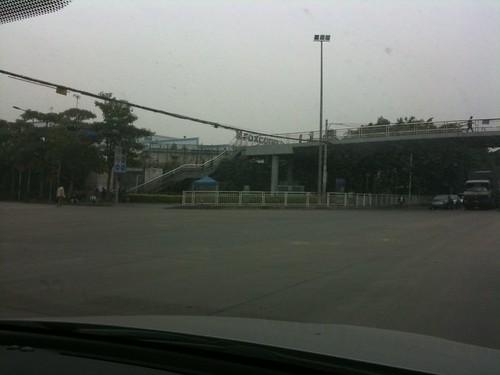
During my career, I have seen several manufacturing processes including a giant printing works in Shenzhen, the infamous Foxconn factory complex and Global Foundries Dresden semiconductor fab.
Now with globalisation and delivery to the door many children of all ages are completely divorced from the means of production. Your Life is Manufactured is a small step in what would need to be a larger process to ground the general public in manufacturing and why it’s important, yet fragile.
Overall thoughts
That Your Life is Manufactured is considered a business book of note, says a lot about how deeply the British people are separated from how things are made – and that’s a frightening thought. Minshall’s book is a good first step in opening up British minds about manufacturing and its requirement of a place in our society. It’s immensely readable and woke me up to the collective ignorance surrounding me.
Now that the awards have been announced I can share my PHNX 2025 favourites from the categories that I had a the good fortune to judge. It took me a little time to sit down and collect my thoughts. You can find the details of the Grand Prix winners here.
My PHNX 2025 favourites come from around the world. The categories are truly global in nature and you get work from a wide range of agency sizes. Partly because of my time in Hong Kong campaigns from Cathay Pacific and HSBC stood out for me when looking at PHNX 2025. This wasn’t out of a sense of mawkish nostalgia, but because I understand the cultural context and legislative issues lurking beneath the surface looking to sink a campaign for fear of ‘soft resistance’.
Cathay Pacific paraolympics
While Hong Kong has historically had a strong showing at the paraolympics , its para-olympians achievements hadn’t been seen in the past. Cathay Pacific used the new opportunities that generative AI tools allowed these moments to be recreated.
Cathay Pacific had the permission to do this advert because of its position in Hong Kong life. Cathay Pacific aka ‘CX’ is the nervous system that connects Hong Kong and Hong Kongers to the wider world. As importantly, CX also connects the Hong Kong diaspora to the home city. The airline’s loyalty card is the second most common card for Hong Kongers after the Hong Kong ID card.
HSBC – Hong Kong move forward
Hong Kong as a city has been through a lot:
The protests
The National Security Law and the social changes that came after it
COVID-19 lockdown
A battered economy
All of this piled on top of the co-opetition between the city and nearby cities from Guangzhou and Shenzhen to Macau and Singapore.
Move Forward tries to capture the Hong Kong commercial spirit, even as ‘Underneath the Lion Rock’ common identity dimmed and spread around the world.
HSBC took this concept further by using Tony Leung Chiu-wai ‘aka Little Tony’ as a brand spokesperson. Leung as a star is universally liked by Hong Kongers, from Marvel fans to Wong Kar-wai devotees like me. Leung embodies the ‘Lion Rock spirit’. He left school at 15 due to family hardship. Worked in everyman jobs like a salesman in an electrical goods store and built his career thanks the apprenticeship / talent development system that local TV station TVB ran at the time.
Midea white goods
In the 1980s and early 1990s this ad wouldn’t have been notable. It would have been considered a good advert, but not great. But it’s now 2025, Gym Shark clothing and Suri dental health adverts are soul-rotting. So the joy of seeing any craft and conceptual creativity in an advert makes this Midea spot notable.
https://youtu.be/ujpb1o-vlBU
If Diageo made white goods, this is what their campaigns would look like.
Limin’ with Gram
Of my PHNX 2025 favourites, Limin with Gram was my sole pick from the UK based on the categories that I was a jury member for. It warmed the strategist in me for the way cultural insights were applied to a health-related public service announcement style campaign.