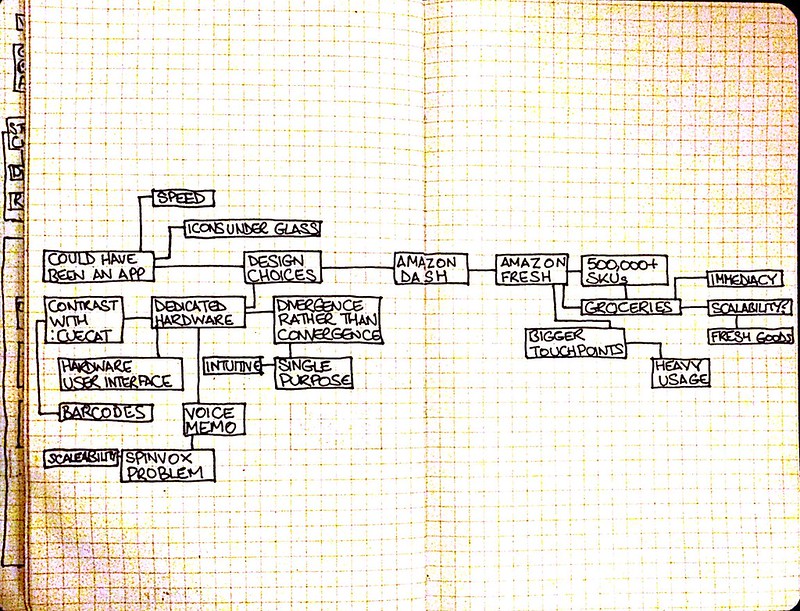
At the end of last week Amazon unveiled Amazon Dash: an accessory to aid ordering from its Fresh grocery service. Fresh promises free same-day delivery on orders of over $35 of more than 500,000 Amazon items including fresh and local products; including products from respected restaurants and coffee shops. It has been rolled out in three major US markets: San Francisco, Seattle and Southern California.
Fresh has a mobile application on both Android and iOS to aid in shopping – which makes the launch of Dash much more curious. Dash is a piece of dedicated hardware which implies a failing in terms of ease-of-use for the smartphone application. Amazon obviously thinks that Fresh customers will be heavy high-touch, high-value consumers in order to spend this much trouble engineering and manufacturing the hardware and supporting services to make Dash work.
Dash is a product that wouldn’t be out of place in a collection of Braun kitchen appliances. It’s hardware interface so simple it looks really intuitive.
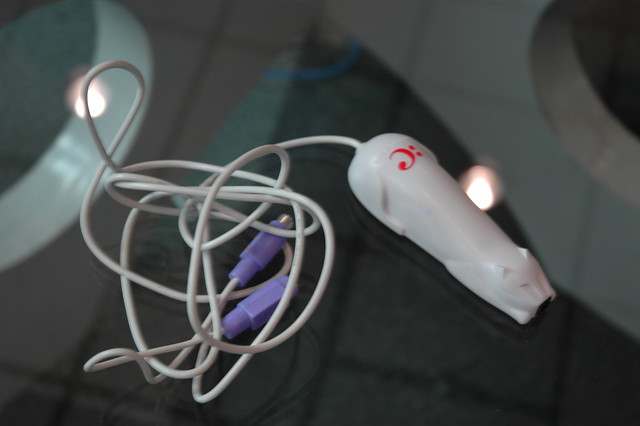
The Amazon Dash can be seen as part of a wider movement from converged general purpose devices to dedicated hardware. It is interesting to compare and contrast the Amazon Dash with the :CueCat; how just over a decade can make such a difference to a product. Back in 2000, Wired magazine sent out the :CueCat to US subscribers of their magazine. The :CueCat was a barcode scanner that allowed readers to augment the print content with a link to web content. Think a prehistoric QRCode. It didn’t work that well for a number of reasons. The codes were proprietary, partly due to consumer privacy requirements and intellectual property around barcodes. In order to use the :CueCat one needed to be connected to an internet-enabled PC via a wired USB or PS2 connection. Using the :CueCat was no easier than typing in a URL or searching via Google; a search engine on the ascendancy at the time. The :CueCat was a spectactular failing for the media industry looking to get to grips with digital media.
Moving forward to the Amazon Dash, the equivalent computing power of that desktop PC has been squeezed into a device that fits in the palm of your hand. Wireless connectivity provides a more flexible connection that removes contextual restrictions on the Dash compared to the :CueCat. The web extended computing so that the website and the PC or mobile device in a symbiotic relationship where it isn’t clear to consumers just were one starts and the other finishes.
The Dash takes inputs via a product barcode and voice memos. Despite the technology advances over the past ten years with the likes of Siri and S-Voice; there will likely be some sort of human intervention required to make these voice memos work. This is at odds with Amazon’s warehouse robot systems and lack of a human customer service face over a telephone line.
This voice memo challenge is not trivial, it was a contributing factor in SpinVox’s failure. The Fresh programme because of its logistical challenges will be hard to scale, and the economics of the Dash have to be carefully balanced between existing products that are repurchased via barcode scan and new or fresh products that would use the voice memo. Acquiring basket growth becomes incrementally more expensive. Over time the system may learn voice commands rather like Google’s old telephone-powered search; on the one hand local area focus is likely to limit dialect variations, on the other sample size maybe hard to scale to be statistically significant for machine learning. More related content here.
The web as we know it was built on a set of underlying technologies which enable information transport. Not all information is meant to reside in a website to be surfed or queried. Instead much of the information we need relies on context like location, weather or the contents of your fridge. Web technologies provided an lingua franca for these contextual settings and like most technological changes had been a long time in coming.
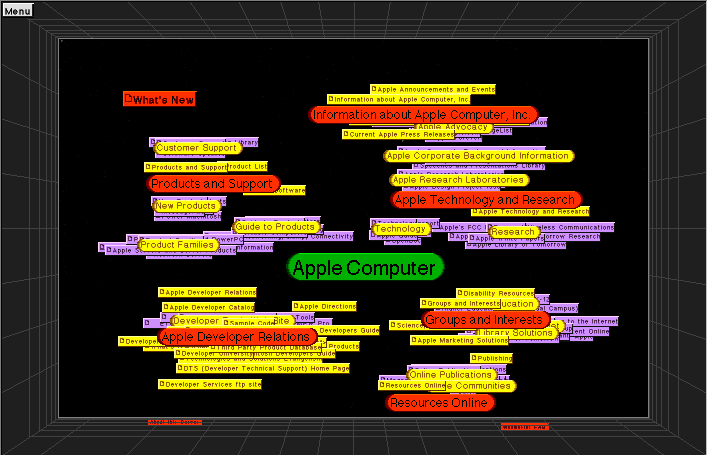
You could probably trace their origins back to the mid-1990s or earlier, for instance the Weather Underground published Blue Skies; a gopher-based graphical client to run on the Mac for the online weather service back in 1995. At this time Apple were working on a way of syndicating content called MCF (Meta Content Framework) which was used in an early web application called Hot Sauce.
Hot Sauce was a web application that tendered a website’s site map in a crude 3D representation.
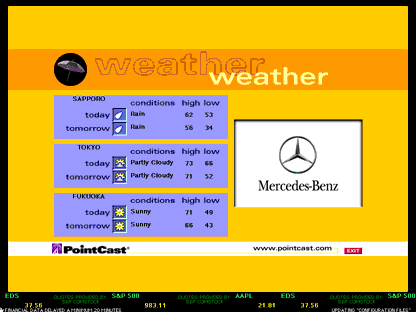
A year later PointCast launched its first product which pushed real-time news from a variety of publications to a screen saver that ran on a desktop computer.
The key thing about PointCast was it’s push technology, covered in this edition of the Computer Chronicles
The same year that PointCast launched saw the launch of the XML standard: markup language that defines a set of rules for encoding documents in a format that is both human-readable and machine-readable. This meant that there was a template to provide documents and stream information over the web.
Some of the Apple team responsible for MCF had moved to Netscape and worked on ways of importing content from various media outlets into the my.netscape.com portal; they created the first version of RSS (then called RDF) in 1999. The same year, Darcy DiNucci coined the term web 2.0; whilst this is associated with the rise of social networks, it is as much about the knitting of websites: the provision of services online, integration between websites taking data from one source and melding it with another using a web API formatted in an XML type format or JSON – which does the same job.
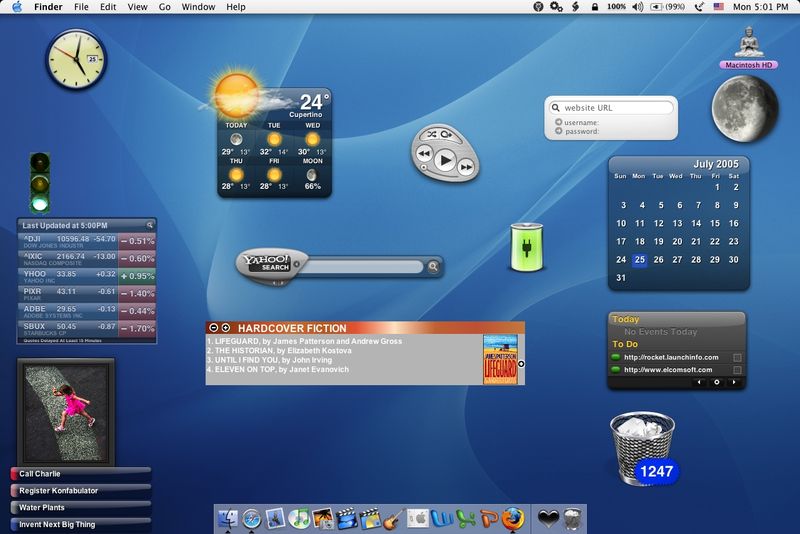
By the early noughties applications like Konfabulator (later Yahoo! Widgets) launched their first application to ‘put a skin on any information that you want’.
Major web properties started to license their content through APIs, one of the critical ideas that Flickr popularised was that attribution of the data source had its own value in content licensing. It was was happy to share photos hosted on the service for widgets and gizmos so long as users could go back through the content to the Flickr site. This ability to monetise attribution is the reason why you have Google Maps on the smartphone.
So you had data that could be useful and the mechanism to provide it in real time. What it didn’t have so far was contextual data to shape that stream and a way of interfacing with the real world. In parallel to what was being driven out of the US on the web, was mobile development in Europe and Asia. It is hard to understand now, but SMS based services and ringtones delivered over-the-air to handsets were the big consumer digital businesses of their day. Jamba! and their Crazy Frog character were consumer household names in the mid noughties. It was in Europe were a number of the ingredients for the next stages were being created in meaningful consumer products. The first smartphones had been created more as phones with PDAs attached and quicker networks speeds allowed them to be more than glorified personal information managers.
The first phone that pulled all the requisite ingredients together was Nokia’s N95 in early 2007, it had:
A good enough camera that could interact with QRcodes and other things in the real world
Powerful enough hardware to run complex software applications and interact with server-side applications
A small but legible colour screen
3G and wi-fi chipsets which was important because 3G networks weren’t that great (they still arent) and a minimum amount of data network performance is required
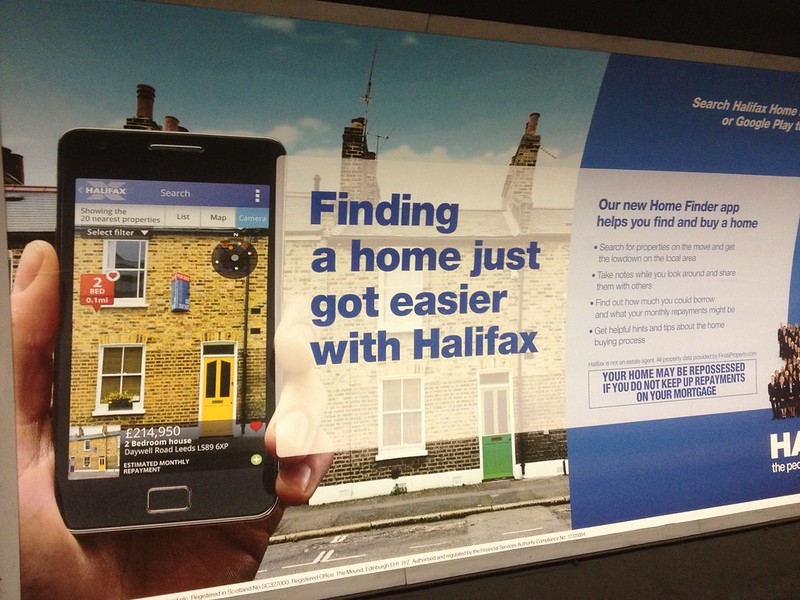
A built-in GPS unit, so the phone ‘knew’ where it was. Where you are allows for a lot of contextual information to be overlaid for the consumer: weather, interesting things nearby, sales offers at local stores etc
All of these ingredients had been available separately in other phones, but they had never been put together before in a well-designed package. Nokia sold over 10 million N95s in the space of a year. Unfortunately for Nokia, Apple came out with the iPhone the following autumn and changed the game.
It is a matter of debate, but the computing power inside the original iPhone was broadly comparable to having a 1998 vintage desktop PC with a decent graphics card in the palm of your hand. These two devices set the tone for mobile computing moving forwards; MEMs like accelerometers and GPS units gave mobile devices context about their immediate surroundings: location, direction, speed. And the large touch screen provided the canvas for applications.
Locative media was something that was talked about publicly since 2004 by companies like Nokia, at first it was done using laptops and GPS units, its history in art and media circles goes back further; for instance Kate Armstrong’s essay Data and Narrative: Location Aware Fiction was published on October 31, 2003 presumably as a result of considerable prior debate. By 2007 William Gibson’s novel Spook Country explored the idea that cyberspace was everting: it was being integrated into the real-world rather than separate from it, and that cyberspace had become an indistinguishable element of our physical space.
As all of these things were happening around me I was asked to speak with digital marketers in Spain about the future of digital at the end of 2008 when I was thinking about all these things. Charlene Li had described social networks as becoming like air in terms of their pervasive nature and was echoed in her book Groundswell.
Looking back on it, I am sure that Li’s quote partly inspired me to look to Bruce Lee when thinking about the future of digital, in particular his quote on water got me thinking about the kind of contextual data that we’ve discussed in this post:
Don’t get set into one form, adapt it and build your own, and let it grow, be like water. Empty your mind, be formless, shapeless — like water. Now you put water in a cup, it becomes the cup; You put water into a bottle it becomes the bottle; You put it in a teapot it becomes the teapot. Now water can flow or it can crash. Be water, my friend.
Lee wrote these words about his martial arts for a TV series called Longstreet where he played Li Tsung – a martial arts instructor to the main character. Inspired by this I talked about the web-of-no-web inspired by Lee’s Jeet Kune Do of ‘using no way as way‘.
In the the slide I highlighted the then new points of interaction between web technologies and platforms with the real world including smartphones, Twitter’s real-world meet-ups, the Wii-controller and QRcodes.
A big part of that context was around location aware applications for instance:
Foursquare-esque bar and shop recommendations
Parcel tracking
Location based special offers
Pay-per-mile car insurance
Congestion charging
Location-based social networking (or real-world avoidance a la Incognito)
Mobile phone tour guides
And that was all things being done six years ago, with more data sets being integrated the possibilities and societal implications become much bigger. A utopian vision of this world was portrayed in Wired magazine’s Welcome To The Programmable World; where real-world things like getting your regular coffee order ready happen as if by magic, in reality triggered by smartphone-like devices interacting with the coffee shop’s online systems, overlaid with mapping data, information on distances and walking or travel times and algorithms.
What hasn’t been done too well so far has been the interface to the human. Touch screen smartphones have been useful but there are limitations to the pictures under glass metaphor. Whilst wearable computing has been experimented with since the early 1970s and helped in the development of military HUDs (head-up diplays) and interactive voice systems, it hasn’t been that successful in terms of providing a compelling experience. The reasons for this are many fold:
Battery technology lags semiconductor technology; Google Glass lasts about 45 minutes
The owner needs to be mindful of the device: smartphone users worry about the screen, Nike Fuelband wearers have to remember to take them off before going and having a swim or a shower
Designs haven’t considered social factors adequately; devices like Google Glass are best matched for providing ‘sneak information’ just-in-time snippets unobtrusively, yet users disengage eye contact interrupting social interaction. Secondly Google device doubles as a surveillance device antagonising other people
Many of the applications don’t play to the devices strengths or aren’t worth the hassle of using the device – they lack utility and merit
That doesn’t mean that they won’t be a category killer wearable device or application but that they haven’t been put on the market yet.
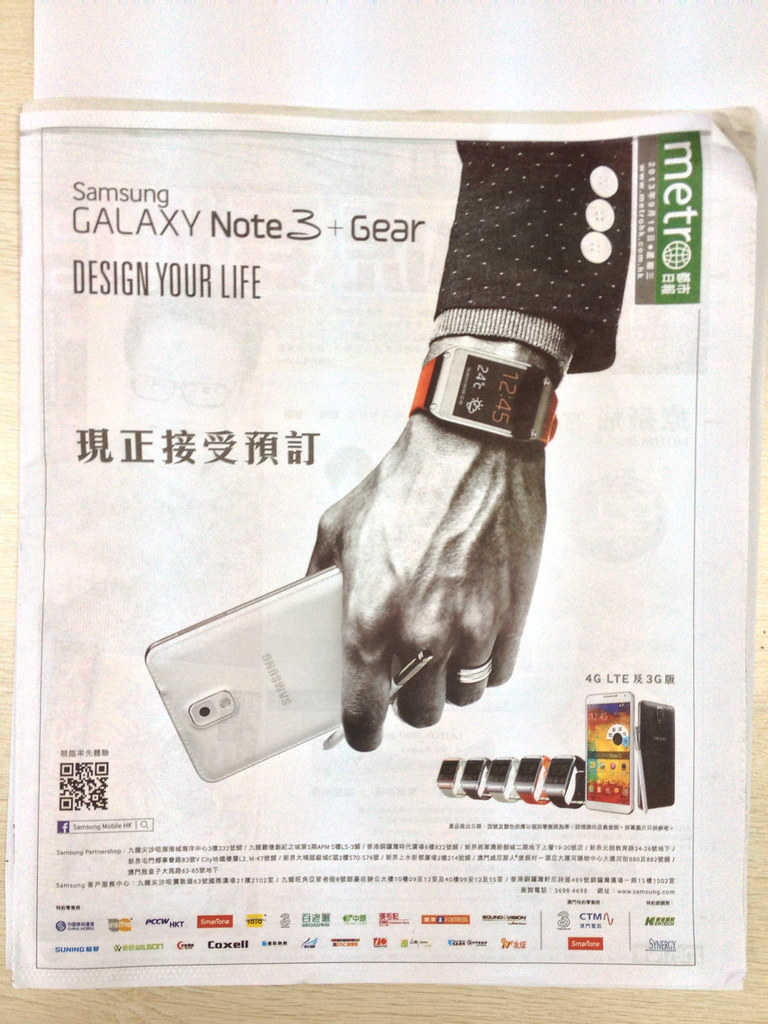
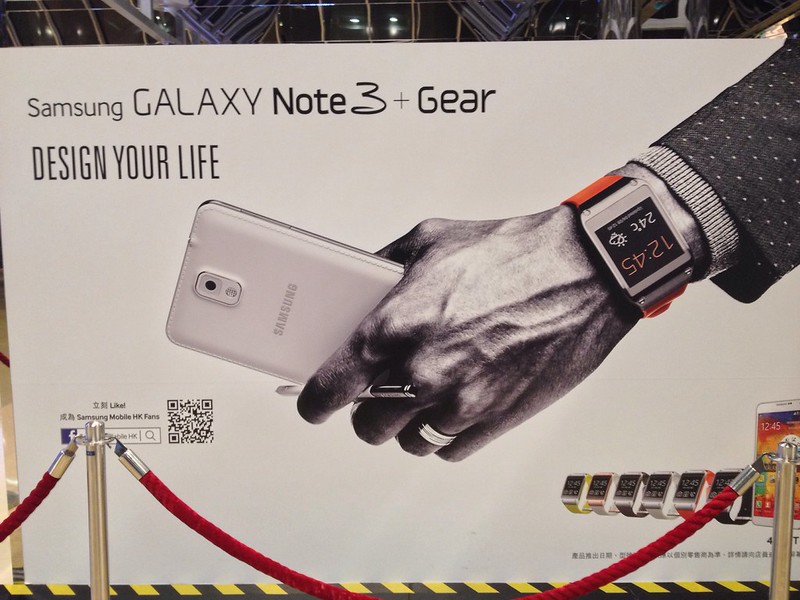
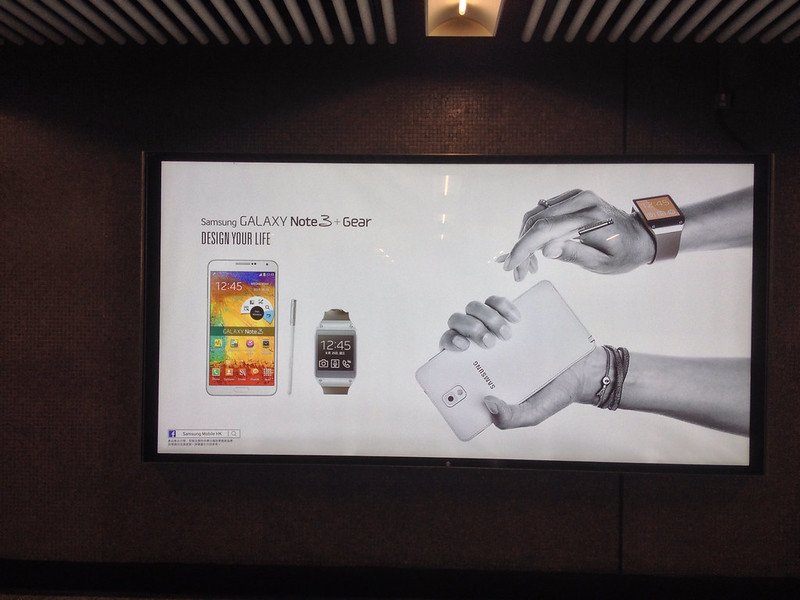
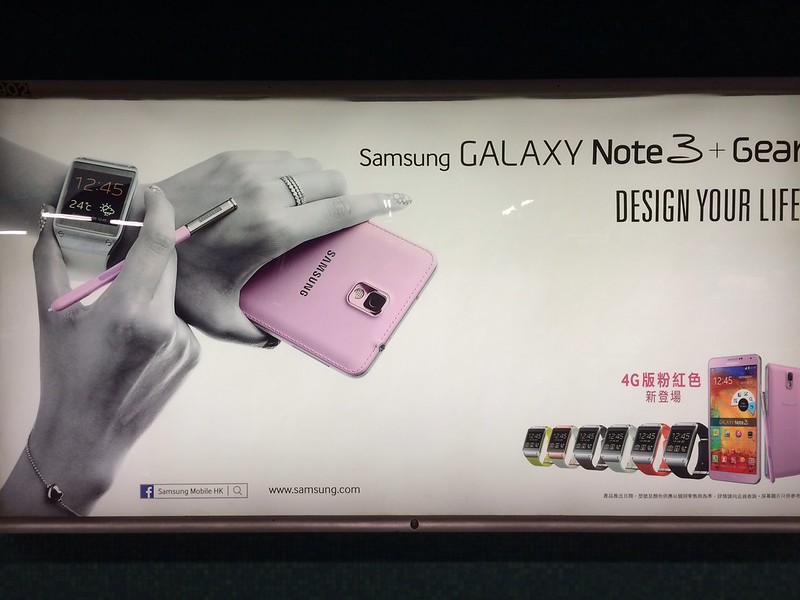
Samsung have been using pretty much the same imagery across print and out-of-doors advertising which not only features awkward wearables but manages to to makes the entire Galaxy suite of phablet, stylus and watch look awkward.
I first noticed it on the front page takeover of the free Chinese language paper Metro (HK edition). It makes no sense. The large size of the watch alone fulfils the awkward wearable criteria. But the stylus popped between the middle fingers hides the fact that it can actually be stored inside the Note series phablet. The vertical position of the hand is designed to maximise the portrait orientation of the ad space, but makes it look as this is how you would walk along with the devices.
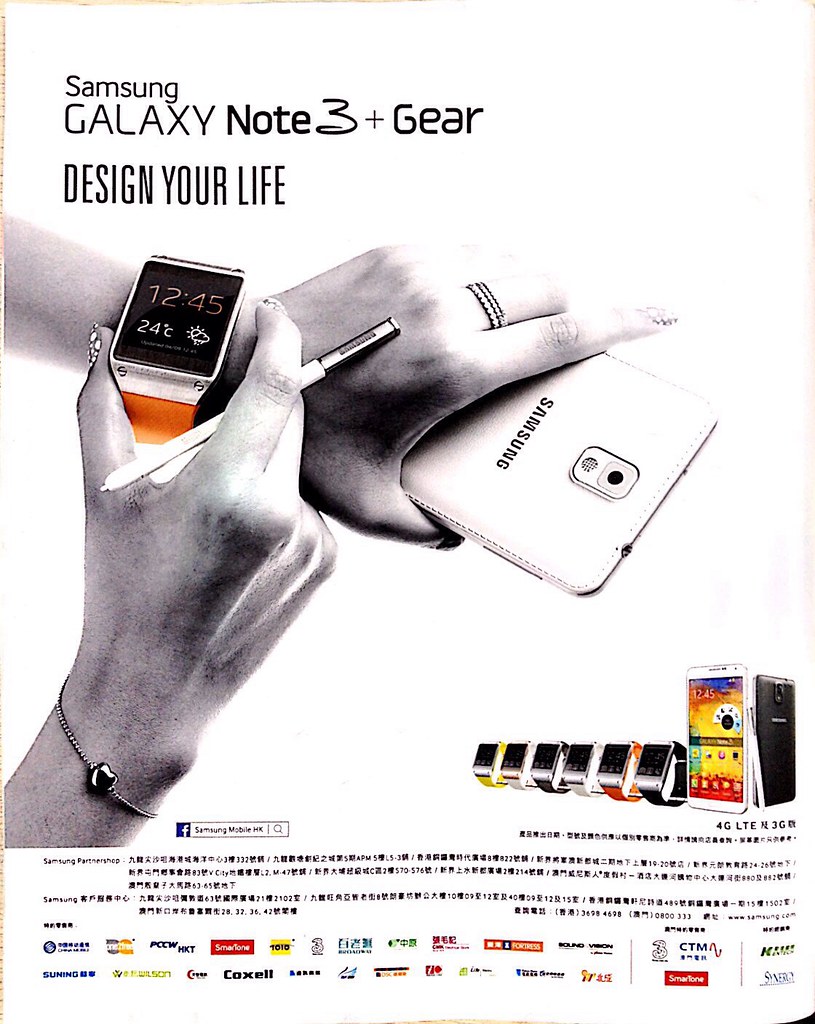
A lady version inside the South China Morning Post. If you were using a smartwatch surely you’d have stowed away the stylus? And the hand grip makes the Gear smartwatch look larger than a G-Shock emphasising awkward wearables as a concept.
Pop-up store in Cityplaza. The gentleman from the Metro advert image is moved through 240 degrees, he’s moving with purpose, but he’s still wearing awkward wearables.
MTR advert
I am not quite so sure what is going on in this picture. The screen on the Gear smartwatch fulfils that awkward wearables look. Too cumbersome to be truly glanceable as a device. I am also not too sure what the model is going to do with the back of the device based on her grip and the stylus position.
A lady version, this time with a pink phone, again on the MTR
Again this advert manages to destroy the user context of wearable devices. Part of it is trying to get the Palm like stylus of the Note series device in the shot but the result is an awkward wearables scenario. And the cliched pink device for a lady isn’t great either. More related posts here.
Hilton Worldwide Files for an IPO – Euromonitor International – interesting analysis of their business. Hilton Worldwide can trace its history back to a Texas hotelier in the early 20th century. It expanded to New York in 1943. Hilton Worldwide was one of the first users of computing with its centralised hotel booking system. It also pioneered the airport hotel with the first Hilton Worldwide airport property at San Francisco airport. Hilton Worldwide is being taken public by private equity company Blackstone.
Twitter makes IPO plans official: files confidential S-1, but expected value is about $14B — Tech News and Analysis – that this is a confidential filing means the company’s annual revenue is less than $1 billion. Usually when companies announce plans to go public, they have to file an S-1, the securities filing that companies use to provide details about their planned initial public offerings. Under the JOBS act of 2012, however, companies with less than $1 billion in revenue can file confidentially.
Wintel destined to eventually fail, says Acer founder – many downstream players moving to Google eco-system… For an ecosystem to have a chance of growing and staying strong, it must have leadership adopting strategies that allow all partners to earn profits. – Surprised Stan Shih was that blunt about their relationship with Microsoft
The inspiration for this post on Google Glass came from a conversation that I had with Ian Wood around this time last year and a twitter exchange that I had earlier this week with Excapite. We started off talking about what Tumblr meant to Yahoo! and what it meant in the broader scheme of things in the digital eco-system and the primacy of mobile device experience in the world now.
Nigel suggested that the future is likely to look like Google Glass, but that the current device is too early rather like the Apple Newton PDA. Part of the problem is a social one, the device usage is too conscious, so you have the ‘Glasshole’ phenomena as demonstrated by the white men wearing Google Glass tumblr account.
I suspect that the problem with Google Glass is partly one of execution rather like the HP-150 personal computer of the early 1980s. Why the comparison with a thirty-year old computer design?
Let me quote from chapter nine of Accidental Empires by Robert X. Cringely
The other problem with the HP-150 was what was supposed to have been its major selling point—the touchscreen, which was a clever idea nobody really wanted. Not only was it hard to get software companies to make their products work with HP’s touchscreen technology, users didn’t like it. Secretaries, who apparently measure their self-worth by typing speed, didn’t want to take their fingers off the keys. Even middle managers, who were the intended users of the system, didn’t like the touch screen. The technology was clever, but it should have been a tip-off that HP’s own engineers chose not to use the systems. You could walk through the cavernlike open offices at HP headquarters in those days without seeing a single user pointing at his or her touchscreen.
Funnily enough touch screens were tried again and again. They only seemed to sell in reasonable quantities when they were on devices that:
Didn’t have a keyboard (as standard) (PalmPilot, iPhone, iPad)
Didn’t try to do the kind of tasks that one would need a keyboard for. When one thinks about the the PalmPilot, the iPad and even the iPhone they are primarly information consumption devices
I think that the glance up display Google Glass has a level of social and user awkwardness similar to the touch display. Google are on to something, the use of sneaky applications that would provide the right information at the right time. But the very act of using the device is a big tell that is both distracting and takes away the social impact of the information provided.
If we think about the way similar displays are used in fiction:
The Terminator – it isn’t obvious that the data is being used as it is ‘in retina’ but cyborgs are really anti-social. In the first Terminator film, the posters showed the cyborg status information projected on to the inside of the Gargoyle ANSI Classics sported by Arnold Schwartzenegger
Jacking in to the ‘net in William Gibson’s sprawl series of novels have goggles and similar visual tools that augment the characters bodies; both of which detach the character socially as they go online or put them outside of the social norm with their artificial nature in the case of body augmentation
In real-life Zeiss and Sony’s personal cinema video goggle sets detach the user from their surroundings physically by concealing the eyes and psychologically by providing an immersive audio visual experience. So visual overlay may not be the best way of going about things.
When one thinks about the UN general assembly or news broadcasters, the participants get their cues via a discrete ear phone or assistant whispering within earshot. Sound may be a better way of providing sneak application information. However despite services like Siri the technology for audio input and output may not be there. At least in small discrete package with a reasonable battery life. More related content can be found here.