Category: culture | 文明 | 미디어와 예술 | 人文

Culture was the central point of my reason to start this blog. I thought that there was so much to explore in Asian culture to try and understand the future.

Initially my interest was focused very much on Japan and Hong Kong. It’s ironic that before the Japanese government’s ‘Cool Japan’ initiative there was much more content out there about what was happening in Japan. Great and really missed publications like the Japan Trends blog and Ping magazine.

Hong Kong’s film industry had past its peak in the mid 1990s, but was still doing interesting stuff and the city was a great place to synthesise both eastern and western ideas to make them its own. Hong Kong because its so densely populated has served as a laboratory of sorts for the mobile industry.

Way before there was Uber Eats or Food Panda, Hong Kongers would send their order over WhatsApp before going over to pay for and pick up their food. Even my local McDonalds used to have a WhatsApp number that they gave out to regular customers. All of this worked because Hong Kong was a higher trust society than the UK or China. In many respects in terms of trust, its more like Japan.

Korea quickly became a country of interest as I caught the ‘Korean wave’ or hallyu on its way up. I also have discussed Chinese culture and how it has synthesised other cultures.

More recently, aspect of Chinese culture that I have covered has taken a darker turn due to a number of factors.

  • Robots demoralise coworkers

    Faster Robots Demoralise Coworkers | Careers | Communications of the ACM – If you get the pace wrong would the effect of robots demoralise coworkers limit productivity? Is the future not robots augmenting coworkers, but replacing coworkers a more productive alternative. A Cornell-led team has found that when robots are beating humans in contests for cash prizes, people consider themselves less competent and expend slightly less effort—and they tend to dislike the robots – to be fair I’d expect to see something similar if the same person kept winning employee of the week. I know that workers on the line at Vauxhall in Ellesmere Port used to sabotage the robots on the line on a regular basis. This might phenomenon of robots demoralise coworkers be part of their motivation (along with laziness and malice)

    Flickr Cofounder Questions Tech’s Impact on Humans – WIRED – it’s easier to ask the big questions when you’ve made it and can reflect in the tech industry. These weren’t questions that we asked back in the day. More on Caterina Fake here.

    Marbridge Consulting – China’s February 2019 Domestic Handset Shipments Down 20% YoY14.51 mln mobile handsets were shipped in China in February 2019, down 19.9% YoY and 57.4% MoM, according to new figures released by the China Academy of Information and Communications Technology (CAICT), a department of China’s Ministry of Industry and Information Technology (MIIT). The significant month-on-month drop can be explained in part by the week-long Chinese Lunar New Year holiday towards the beginning of February. Of total shipments in February, 13.98 mln were 4G handsets, down 20.2% YoY, 37,000 were 3G handsets, and 0.49 mln were 2G handsets

    A Witch-Hunt on Instagram | Quilette – western PC culture seems to have more and more cases of it eating their own

    Aging Millennials Soothe Themselves With Childlike Fashions – WWD – to try and hang on to youth. The attenuation of youthfulness is a cross generational phenomenon. For instance middle aged dads the still buy streetwear rather than Superdry, skate and go to gigs.

    SXSW 2019: Virtual Cinema – JWT Intelligence – culture is still trying to adapt AR and VR. Whilst it has the energy of an early SIGGRAPH demo reel, I still think the storytelling aspect of things is struggling to find its legs

    Patrick Pruniaux: “There Truly is an E-commerce Potential for Horology” | Luxury Society – Kering haven’t been particularly good at using Ulysse Nardin as a brand in China, but they are rectifying it now. Kering are looking to tap into ‘new’ watch consumers who can’t spend Rolex money on a watch, this position now looks more tenable since Apple has stopped going for the luxury sector with the Apple Watch

    How to Create an Authentic Luxury Experience for Millennials | Jing Dailyif a luxury brand wants to entice today’s consumers, whether it’s in China or beyond, it needs to underscore its authenticity and relevancy. Powerful words, to be sure, but what does it mean to be authentic and relevant? For the moment, let’s start with the opposite. During many of my brand strategy sessions, I often hear the expression “they feel staged” when people describe brands that they would never buy. Needless to say, when brand feels staged, it is neither authentic nor relevant. The synonyms unnatural, deceived, cheated, and faked come to mind. In other words, a staged brand is bullshitt*ng their consumers.

    Louis Vuitton Has a Michael Jackson Problem | Intelligence | BoF – LVMH invested significantly in Virgil Abloh to elevate its menswear line. However, the potential failure of Abloh’s Michael Jackson-inspired collection—whether due to pulled items or lack of consumer interest—is unlikely to significantly impact Louis Vuitton’s overall revenue, as men’s ready-to-wear is a small part of their business. The real concern for Louis Vuitton is protecting its brand reputation, which remains strong unlike some competitors who have faced recent social media backlash. This is especially crucial now, as consumers are quick to criticize any perceived missteps.

    How What Goes Around Comes Around Is Attracting Millennials To Buy Vintage – US chain channels aesthetic of Japanese vintage shops

    You May Have Forgotten Foursquare, but It Didn’t Forget You | WIRED – interesting how Foursquare went from being useful (I use it as spatial bookmarking, so that I can return to new places that I like) to where 2.0 middleware with a bit of ad tech creepiness thrown in for good measure (paywall)

    Pinterest Files for an IPO: What Investors Need to Know | The Motley Fool – interesting for intent driven visual search if they can monetise it effectively on a global scale

    Great video of a Black Hat conference presentation on biometric identifiers.

  • The post about Weight Watchers & Kraft Heinz

    Two big consumer orientated companies: Weight Watchers and Kraft Heinz announced financial losses.

    1966 Food Ad, Kraft Foods, "Weatherproof Cookout" (2-page advert)

    Why is this significant?

    Consumer good marketing is in more turmoil than it has been for a long time. Millennial-led memes are changing the environment for consumer goods brands:

    • Authenticity
    • Natural trumps anything else for health
    • Body positivism

    There are also some structural and competitive issues:

    • Private label brand expansion; in particular Amazon
    • Online retailing disrupting traditional shopper marketing
    • Amazon’s advertising offering
    • Horizontalism
    • Subscription and delivery services
    • New product models

    Authenticity

    Authenticity is something that has become at the centre of culture. In a time when social channels and media have painted an artificial life and traditional marks of success are hard to attain ( like home ownership) experiences became important. It wasn’t enough for products to fill a need; they also need to have a story with heritage behind them. Brands have become started by ‘real people’ who’ve become influencers in areas such as make-up.

    The good news is that authenticity isn’t anti-brand, in fact the notion of credibility that you would have heard 20 years ago no longer has resonance. Naomi Klein’s No Logo or becoming a ‘sell out’ celebrity no longer resonate.

    The challenge of authenticity changes by category:

    • Processed food: considered not authentic by their synthetic nature, food delivery services and DIY meal packs act as alternatives
    • The move to beards has adversely affected shaving products, hence the Gillette pivot to women and Unilever’s bizarre adverts to encourage male body hair shaving
    • Beauty products: Authenticity has supported the launch of niche brands by influencers. This is rather different to the likes of previous brands like Gloria Vanderbilt | Murjani Corporation tie up to launch the first designer jean brand in the late 1970s

    Natural trumps anything else

    In the 1980s and 1990s we saw a take off in healthier foods from artificial sweeteners to margarines that have more beneficial properties in preventing heart disease. Butter and cheese were seen as unhealthy products. Jump forward to today. Sugar whilst not considered good, is considered a better product than artificial sweeteners. High fructose corn syrup is considered to be the great satan of sweetness.

    Now butter is back in. Margarine is losing market share year-on-year, which is the reason why Unilever divested its margarine business. Consumers looking for vegan options look towards nut butters and coconut oil. Polyunsaturate fats just don’t matter that much any more.

    TV dinners are losing out to recipe packs; where a set of fresh ingredients and a recipe are supplied to consumers instead of microwave heated processed meals. From Kraft Mac and Cheese to Uber Eats delivered macaroni and cheese.

    All of the brands, manufacturing process and supply chain prowess are problematic for consumer goods giants.

    Body positivism

    Consumers continue to flock to a fitness movement, that would be familiar to consumers in the 1980s. Health and fitness has become ever more professional with a fetishisation of high protein diets.

    In parallel to this has come along a move towards being more accepting of people regardless of their shape. This body positivism moves the dialogue away from weight loss and fitness as a health requirement to a broader lifestyle and mental wellness positioning.

    More realistic body shape models is reducing the social pressure on weight control and dieting. Working out is more about performance and strength in terms of emphasis. Again all of this impacts food formulations further.

    Body positivism means that a proportion of the population have ‘permission’ to indulge: which probably explains the popularity of comfort food like American diner fare and dessert restaurants.

    Private label expansion

    Discount stores like Aldi have gone from 2% of UK retail sales to over 7.5% last year. They focus on private label brands and only a third of the SKUs presents challenge to traditional grocery retailing. And brands already have had an uneasy relationship with mainstream supermarket private label brands that culminated in legal action like the Penguin | Puffin legal case back in 1997.

    One of the most amazing things about Amazon is how it has utilised its retailing data to target and launch a plethora of private label brands across sectors at a phenomenal pace.

    Horizontalism

    Over a decade ago now, I worked at a creative agency and we were asked to pitch by a new premium crisp (American English: potato chip) brand. They were similar to the Kettle Chip brand. The key difference was that they didn’t own the production facility. Their manufacturing partner was a private label manufacturer for supermarkets, but didn’t compete in the branded product space.

    The brand had worked with their manufacturing partner on new product development and were bringing their own marketing and branding expertise. All the big consumer companies have seen marketers get their knowledge and knowhow with them before moving off and forming these upstart brands. The brand managed to piggy back on someone else’s logistics channels.

    By comparison the likes of Mondelez have their own factories and logistics to reach their retail partners. Infrastructure provides quality and cost controls at scale but put restrictions on new category entry and new product development.

    That means that putting a product into the market takes time and costs more money to happen. Move forward ten years with Amazon and direct online sales becoming easier, you are seeing upstart brands taking advantage of horizontal services.

    It is similar to the business model that Nike rolled out in sportswear during the 1970s and how the computer industry changed as it moved into the PC age.

    Online retail disruption

    Originally it was only retailers that have had to deal with the move of consumer shopping online. Supermarkets have managed to turn their retail and warehousing presence into effective e-commerce delivery with varying degrees of success. Those that didn’t do well at it like M&S and Kroger have partnered with the likes of Ocado for the technological knowhow.

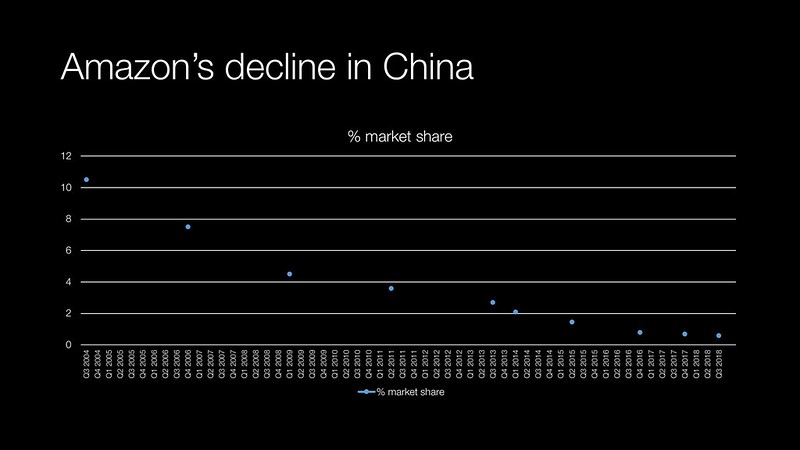
    Amazon has posed a threat to these retailers as the company has moved from not only being a rival retailer but a product search engine. Even stealing search volume from Google. Amazon has also rolled out private label products and proved itself to be a capable platform for new brands looking to launch consumer goods competing with the big brands.

    Add into this Amazon’s advertising business and the company seems to have greater king making marketing power than the traditional large supermarket chains.

    Uberisation of services has seen food delivery become a substitute product for home cooking changing consumer behaviour in a way that doesn’t favour consumer brands.

    Subscription and delivery services

    The speculation around the Amazon Dash launch hinted at the potential impact that subscription services could present to consumer companies. The classic model of Dollar Shave Club or Birchbox took the Book Club or Columbia House record subscription model. They moved it from direct mail campaigns and newspaper magazine direct response ads, to online and applied it to two very different consumer use cases:

    • Experimentation for highly engaged consumers in areas like beauty
    • Convenience for low passion products like razors

    These businesses have scared the pants off consumer businesses. Gillette has experimented with its own brand subscription service for razors. Unilever went out and bought Dollar Shave Club for a $ 1 billion valuation. They also failed to buy the Honest Company which sells baby products and household goods.

    The fear and sense of being displaced and disrupted by these new services is greater than their financial impact. It likely fulfils the nightmares that McKinsey and Deloitte presentations to the C-suite about digitalisation of business and disruption create.

    Weight Watchers & Kraft Heinz: making their tasks more difficult

    Kraft Heinz’ CMO had to deny that the company had under-invested in its brands. That statement felt eerily like the cliched moment when a football club chairman says on the record that the manager has their full support. Eduardo Luz has a tricky problem on his hands:

    • He admits that what the analysts have said is true and Kraft Heinz has underinvested in brands. That’s a CMO death sentence right there, spectacular fuck-up and unlikely to get work at another significant consumer goods company
    • Says that its a misconception that cost-cutting adversely affected brand investment. He is then relying on owner 3G Capital’s cuts to resurrect the business in the future. A 27% drop in market value is a big hole to fill for shareholders. Their approach is considered to have worked at Anheuser-Busch InBev and Burger King in terms of raising profits. 3G Capital are quite open about the fact that they use zero-based budgeting (ZBB)

    IF they are doing ZBB properly, this is what the annual plan process should look like:

    • Last year’s spend isn’t rolled over from a planning perspective – that’s the zero, essentially a blank sheet of paper. The idea is that there are no sacred cows
    • There is a research aspect to the planning
    • The plan is crafted promising a specific ROI and asking for a certain amount of investment
    • Senior management vet the plan and come back with two possible outcomes: plan approved, or pushback and ask for changes

    The benefits of ZBB

    • Efficient resource allocation by focusing on needs, requirements and benefits
    • Focus on operational efficiency
    • Can increase collaboration and co-ordination within the firm

    ZBB has its challenges

    • The benefits of brand advertising deliver ROI far longer than a year, so it doesn’t measure their full impact and isn’t optimised for brand building
    • Justifying every line item can be problematic for functions with intangible outputs like brand rather than direct response marketing
    • In a large company, there is likely to be an overwhelming volume of information to support the budgeting process
    • Time consuming

    That hasn’t stopped the likes of Unilever and Proctor & Gamble adopting it.

    If Luz thinks that ‘under investment’ in brands is a misconception. It seems reasonable to assume at least some of the following happened:

    • The research process didn’t take account of market changes and was probably focused at a brand level on operational efficiency rather than horizon scanning
    • The specific ROI promised was a misconception
    • There was inadequate training put in place to effectively plan and assess with ZBB
    • 3G Capital’s wrong-headed implementation of ZBB caused Kraft Heinz to focus on maximising the profitability of low growth areas through cuts and not focusing on investing sufficiently in (newer) high growth areas. These high growth areas are likely to be due to the kind of changing market dynamics outlined earlier in this post

    Kraft has struggled with low growth for over a decade which was the primary business reason for buying Cadbury – a higher growth business at the time that could also be used to take Kraft into new geographic markets. 3G Capital took on a serious challenge when they merged Kraft and Heinz.

    By comparison Weight Watchers seems to have had their eye on the horizon; they realised that body positivism had moved the goal posts on size and decided to refocus on health. But they thought that a rebrand rather than innovation was the way forwards. Weight Watchers weren’t fooling anyone except themselves with the move to WW and ended up with a declining subscriber base.

    But there are opportunities out there for them. Imagine if there was a Weight Watchers restaurant on Deliveroo providing healthy meals cooked just for you – as an extension of their supermarket product range? Or dietary advice and for those that want to bulk up and be everything that they can be that’s more cost effective than a dietician and more trustworthy than surfing cross fit forums?

    Instead they went from a brand that stood for something in the eyes of consumers, to something that was literally meaningless.

  • Legend of Old McLanden & things from last week

    BMW’s X7 advert about the Legend of Old McLanden has been cited as a piece of feminist advertising. I won’t spoil it for you watch the clip and you’ll see why.

    I think that its part of something different which has been less heralded: a return to craft in advertising. We’re starting to see a refocusing of marketing. Away from the shiny toys of ad tech and influencer networks back to advertising craft.

    The Legend of Old McLanden would fit comfortably with the golden age of TV adverts and I think that’s a good thing for brand building. Especially when we usually only see this kind of thing during the Super Bowl.

    I am a big fan of Visual Politik’s videos, but was unimpressed by this video on crypto currency. I get the attractiveness of a more decentralised internet, BUT I don’t buy into the cryptocurrency hype and believe that blockchain is at best a solution for niche problems.

    The video reminds me a lot about the techno-utopian opinions of the early web, P2P technologies etc. It has value, but it isn’t likely to be transformative in the way its implied.

    SK-II has a new instalment in its #changedestiny themed campaigns called ‘Meet Me Halfway’. This time they focused on the pressure that single Chinese women face during family gatherings for lunar new year.

    It follows on the SK-II marriage market makeover campaign done in 2016. More beauty related content here.

    Whilst many consumer brands have dashed into the influencer marketing space, it interesting that adidas have developed a contra-influencer content. It does

    Diesel’s ‘Be A Follower’ campaign took a similar line to this latest Adidas campaign.

  • Delete your direct messages + more things

    Even years later, Twitter doesnt delete your direct messages | TechCrunch – interesting possible GDPR risk for Twitter. I have cleaned out my public tweet feed as what you share is ephemeral. I could imagine people doing foolish things, but Twitter doesnt delete your direct messages and they could conceivably gathered by court order

    HSBC forex trading costs cut sharply by blockchain – executive | Reuters – low transaction rate, less than 4,000 transactions a day. This looks more like a niche case for blockchain rather than a panacea for fintech

    Why I’m Deleting All My Old Tweets | WIRED – I do it because the content is of a time and loses something out of context and the content is ephemeral. Who cares about my Merry Christmas into the ether of late 2007? I don’t.

    Angry over campus speech by Uighur activist, Chinese students in Canada contact their consulate, film presentation – The Washington PostPeople participating in the chat expressed disbelief that their government operated mass detention centers, saying they had not seen Chinese news reports about them. (The centers have been widely covered in international media, but many of these reports are censored in China.) (paywall) – Interesting for the mirror that it offers up to our own media eco-system and our reality

    Madison Avenue Makeover Insights | Holding Companies at a Tipping Point – interesting take on the advertising holding companies

    EU Elections: Will Populists Win or Have They Peaked? Bloomberg – great use of graphics in this reporting. More design related content here.

    Mastercard’s new “sonic logo” will play every time you make a purchase | Quartz – will this become annoying or will the branding lose its meaning in our world of point of sale beeps particularly in supermarkets and big chain stores?

    Nato Straps – 031CWZ011621w | OMEGA® – Omega have made a strap of synthetic spider silk which is calls BioSteel which is made by AMSilk – a German textile company

  • One Small Step + more

    I had to start with this short film ‘One Small Step’ I saw that’s right up there with Pixar in terms of its storytelling and craft. One Small Step is an amazingly inspirational film. The space theme reminds me of the retro futurism of the Soviet bloc in terms of visual style. The characters have a lovely airbrushed feel to them. Keep an eye out for this director and animator in the future.

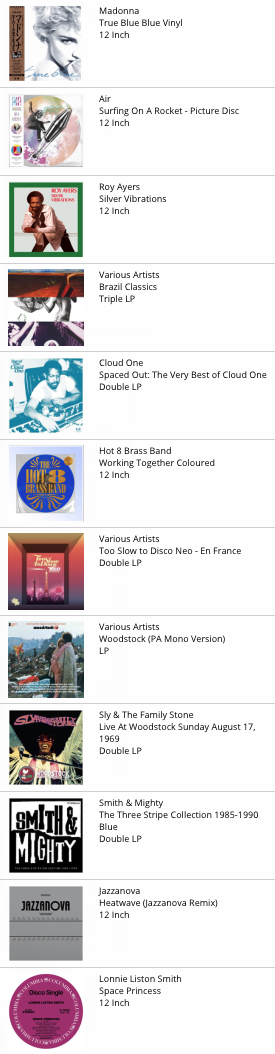
    I’ve been listening to this mix by Greg Wilson which contains his favourite edits and reworks from 2018. It is a beautiful set of tracks from a range of producers sympathetically rejuvenating classic tracks. It is more than ‘nu-disco’; Wilson imprints his usual eclectic style on the mix. More related posts here.

    If you’re doing anything in the international sphere on digital then bookmark this presentation: Digital 2019: Global Digital Overview — DataReportal – Global Digital Insights – I expect this will be in every strategists tool kit for creating client PowerPoint decks.

    Ken Block’s latest vehicle includes a huge intricate metal manifold made with additive manufacturing. Despite the voice over, this video about the manufacture of the manifold is very interesting. Ford engineers worked with  RWTH Aachen’s Digital Additive Production Institute, in Germany. Ford claims that it is the largest additive manufacturing metal part in a working vehicle. it is obvious that Ford is wondering how this could affect their manufacturing processes in the future, if parts can be created on demand.

    Cixin Liu’s short story The Wandering Earth has been adapted into a film that’s been released in China over the spring festival. The trailer looks immense but I don’t know if Liu’s work has been done justice through the film adaptation. Chinese cinema often manages spectacle but then fails on dialogue rather like George Lucas’ Star Wars scripts.