Category: design | 設計 | 예술과 디자인 | デザイン

Design was something that was important to me from the start of this blog, over different incarnations of the blog, I featured interesting design related news. Design is defined as a plan or drawing produced to show the look and function or workings of a building, garment, interfaces or other object before it is made.

But none of the definition really talks about what design really is in the way that Dieter Rams principles of good design do. His principles are:

  1. It is innovative
  2. It makes a product useful
  3. It is aesthetic
  4. It makes a product understandable
  5. It is unobtrusive
  6. It is honest
  7. It is long-lasting
  8. It is thorough down to the last detail
  9. It is environmentally-friendly – it can and must maintain its contribution towards protecting and sustaining the environment.
  10. It is as little design as possible

Bitcoin isn’t long lasting as a network, which is why people found the need to fork the blockchain and build other cryptocurrencies.

Bitcoin uses 91 terawatts of energy annually or about the entire energy consumption of Finland.

The Bitcoin network relies on thousands of miners running energy intensive machines 24/7 to verify and add transactions to the blockchain. This system is known as “proof-of-work.” Bitcoin’s energy usage depends on how many miners are operating on its network at any given time. – So Bitcoin is environmentally unfriendly by design.

On the other hand, Apple products, which are often claimed to be also influenced by Dieter Rams also fail his principles. They aren’t necessarily environmentally friendly as some like AirPods are impossible to repair or recycle.

  • Apple Spring Forward event

    Apple Spring Forward event

    I started this post a few hours after watching Tim Cook and company launch a number of product revisions  under the title of Apple Spring Forward. The most anticipated of which was the Apple Watch. I was in full Post Traumatic Apple Event Disorder mode. I have collated some of my thoughts about the event below and tried to order them into some sort of cogent narrative.
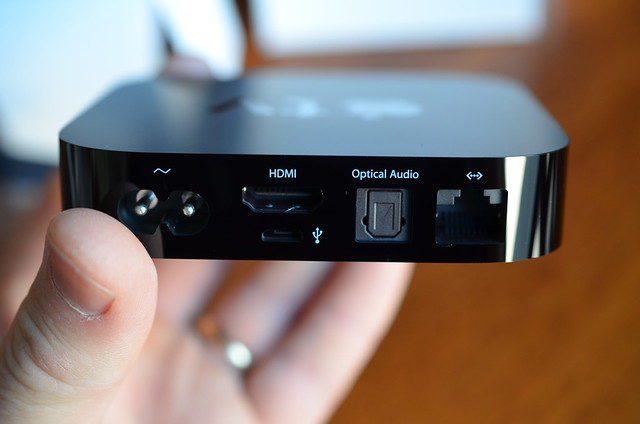
    Apple TV connections

    AppleTV

    The reduction of cost in Apple TV hardware at the Apple Spring Forward event was an interesting move. Apple has decided to go for market share rather than margin with the device and the incumbent HBO Now service might be just the catalyst to drive adoption. That Apple is leading with a HBO streaming service tends to imply that Apple has likely given up on trying to build its own ‘cable channel over IP’ offering. It does raise another interesting question about how other studios will want to handle their content in iTunes or via a an app similar to BBC iPlayer. Apple is passing on to consumers the cost benefits of using the older silicon design that powers the Apple TV. It also means that the Apple TV is the least powerful computer in Apple’s product range – including phones and tablets. The AppleTV is an egalitarian device rather a luxury brand product and a vote against widespread 4K adoption; unless the price discount is making room for a premium 4K capable device at a later date?

    Social Enterprise

    Apple’s moves at becoming a ‘social enterprise’ were interesting. For an organisation so polished at presenting itself to the outside world, the ResearchKit announcement and the case study with Christy Turlington felt awkward.  ResearchKit was delivered in a flat manner and didn’t explain how the product fitted in with Apple’s position on user privacy. Turlington’s appearance was like a particularly sycophantic Charlie Rose interview. There was a lot to talk about without having to ‘over-reach’ for celebrity endorsement.

    Apple needs to work harder picking the spokespeople to burnish its reputation, the nature of the projects and the deliver to be less cringeworthy. The very nature of the product and design story means that Apple already has a certain amount of implicit moral imperative and the company should be more in-tune with that.
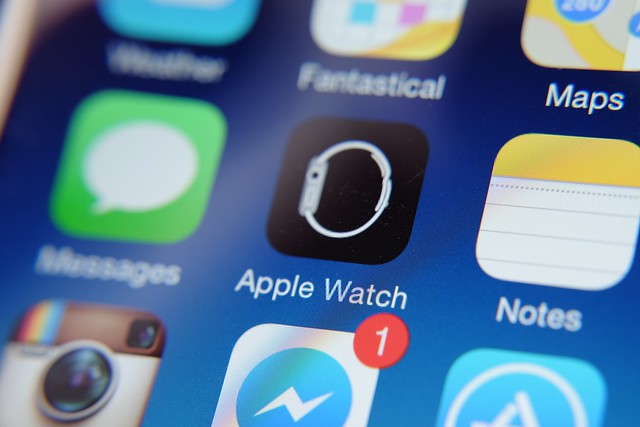

    Apple Watch app
    Apple Watch

    I am deeply conflicted by a lot of the discussions around the Apple Watch, for a number reasons:

    I haven’t used an Apple Watch, but watching others use it in the demos made me think that it is fiddly and dare-I-say-it: hard to use. It could be un-Apple in nature

    Scott Galloway points to the Apple Watch and describes Apple as having transitioned to a luxury brand. The Edition watch maybe a luxury product, but not all of the Apple product range are luxurious – the AppleTV at a new price point of $69 implies ubiquity. This maybe a specific choice to get scale for the media content that other luxury Apple devices need to function. Just in the same way that quality newspapers couldn’t survive solely on sales to luxury consumers. What does this mean for those Apple customers who use the the devices as professional or creative tools?

    Much of the debate revolves around what luxury consumers want by people who can’t afford to buy the Edition version of the watch. Do the kind of luxury shoppers who wouldn’t care about a $13,000+ watch have a smartphone, or a smart person to organise their lives? An astute reader of Popbitch will soon realise that the celebrity accessory to have is a personal assistant, not a bejeweled Vertu. Secondly, not being available is a luxury as privacy and time are the preserve of the reach in an always-on world

    Many of the more positive predictions depend on the Chinese luxury market. The luxury market is changing in China. Luxury goods are used as tools in China; if you look successful, you are more likely to be successful in a culture that relies on high-touch personal relationships to facilitate business. However, consumers are becoming more sophisticated and moving away from at least some of the gaudier products. The Middle East may be a more opportune market for Apple.

    A second use case in the Chinese luxury market is that of a compact storage of value for capital flight or making a payment. The culture of payments for favours is being clamped down on my the Xi administration which has been made visible by a 20%+ drop in luxury watch sales. I don’t know the way plutocrats would likely jump on the gold Apple Watch.

    ‘Apple Watch is just an iPhone remote control‘ Craig Johnson senior analyst at Piper Jaffray – heard on Bloomberg TV. ‘Luxury watches are a store of wealth, an Apple Watch isn’t‘. Which is probably true for many people on Wall Street, but may not true for the truly rich.

    Apple MacBook

    The MacBook carried the biggest dissonance for me and was arguably the biggest disappointment of the Apple Spring Forward event. For long time Apple customers, MacBook means entry level laptop. They used to come white polycarbonate shells that matched the iMac G4 and Apple eMac. Instead the MacBook seems to reflect status:

    • A price point above the MacBook Air, but less powerful and less adaptable
    • Good battery life, but underpowered for many tasks
    • Three finishes including a gold colour that screams status in the iPhone line
    • A single port which made many of geek friends freak out with anger. The morning after one of my friends posted on Facebook about the single port: I am still angry. I use a Retina MacBook Pro at work and suffer from a lack of ports for external drives (including an optical drive), Ethernet, a secondary display and a card reader for multimedia work. The MacBook has a single port which replaces the MagSafe with a USB connection. For business users or creatives the machine is gloriously impractical and destroys their investment in things like the Apple Cinema display. I currently an Apple TV and have tried to screen-cast over Wi-Fi to it for presentations, it doesn’t like video at all. When I travel I usually present, for business users who travel regularly like me the MacBook feels like a pig-in-a-poke. Is the MacBook then decided to be a luxury consumer device?

    The trackpad which is being rolled out across other Apple laptop models looked attractive to me. The next generation of keyboard seems to be less convincing. I suspect its attractiveness will be inversely proportional to your touch typing speed due to the lack of haptic feedback from shorter key travel.  Despite the price point difference, I suspect that the MacBook is actually designed to cannibalise some Apple iPad sales as an executive toy – I don’t know whether it will.

    That’s my take on the Apple Spring Forward event, but I would be interested on your take on it.

    More information

    Post Traumatic Apple Event Disorder
    On Smart Watches, I’ve Decided To Take The Plunge
    The Watch Post
    Size Zero Design | 厌食症设计
    Questions I Have About Apple’s Business | Apple 业务挑战
    CES Trends
    Waking from an Apple Watch hangover « Observatory
    New Apple Stuff and You | The Wirecutter
  • Robot nation in China factories +more

    China’s Factories Are Building a Robot Nation – Caixin – it is amazing how manual things like smartphone manufacture is. Apple moved production to China because pick and place ‘robotic’ automated machines had been used in phone manufacturer, but couldn’t handle the jewellery like manufacturing. Pick and place had been used in Japanese consumer electronics manufacturing since the early 1980s. We’ll see if the China robot nation works out in manufacturing. More related posts here

    Google and Apple may be forced to pay more tax in Russia | Gigaom – it makes sense

    Pablo by Buffer – Design engaging images for your social media posts in under 30 seconds

    Satya Nadella is cleaning up Microsoft’s ‘dirty little secret’ (MSFT) | Business Insider – the challenge is how do you give enough cloud away to encourage trial and adoption. It was easier with package software or OS where you just targeted C-suite and management consultants. I don’t think is necessarily that negative a story for Microsoft

    Vince Vaughn and Co-stars Pose for Idiotic Stock Photos You Can Have for Free | Adweek – genius collaboration with iStockPhotos

    Fund that hasn’t picked a stock in 80 years beats 98pc of peers | SCMP – Voya Corporate Leaders Trust Fund

    What Is the Future of Chinese Trade? | Yale Global – interesting analysis of the Chinese economy

    Brands must target digital strategies to local culture in Japan | Luxury Daily – great insights from L2

    China manufacturing shrinks again in Feb. | WantChinaTimes – partly down to the timing of spring festival

    Chinese shoppers are angry that their luxury Japanese toilet lids are made in China | Quartz – which says a lot about ‘brand China’ for its own consumers

    AirCloset is a subscription fashion box startup with a twist | Techinasia – interesting wear-and-return model

    Panasonic Developing ‘VR Goggles’ – Nikkei Technology Online – interesting that they can be worn as glasses implying a major reduction in weight in comparison to competitors

  • Ogilvy social trends + other things

    Ogilvy social trends

    Marshall and James delivered their Ogilvy social trends presentation on a webinar. Included in the Ogilvy social trends presentation is

    • Disposable / transient content
    • Brand banter
    • Sub-dividing communities using greater ad targeting
    • Twitter zero as the organic reach on the platform plunges towards zero
    • Platforms battle for video dominance
    • Rise in privacy facilitating services
    • Digital and identity are blurring the lines between aspiration and self actualisation

    Here is this year’s Ogilvy social trends presentation:

    Vintage logo design

    Flickr user Eric Carl has put together an amazing album of vintage logo design from the 1970s and they are truly splendid in monochrome. They are like set of post modern mons – the iconic symbols that Japanese clans used to represent themselves. They also feel timeless rather than trend driven.

    Great to finally see something we’ve been working on for a good while break cover. I have been working on a global website redesign and digital strategy for the Family Brands unit at Unilever. This is their worldwide margarine (and related cooking ingredients including cream analogues) product portfolio of products. A second project that I have been involved in is a set of adverts that will be rolling out globally. This is debuting in Mexico. Unfortunately, I couldn’t enjoy it as the new, new thing beckons.

    New Balance China like New Balance Japan seems to move to its down design language.

    I had fallen out of touch with podcasts since the demise of Lawrence Staden and Stephen Bell’s ‘Loz n Belly’ weekly commentary on economic issues a few years ago, but got hooked again when I was introduced to Studio 360’s American Icons programmes. If anyone has any recommendations for good financial and economic podcasts let me know in the comment box below and will give them a whirl.

    I thought it was just my perception that OS X had slowed down somewhat over the past couple of iterations, but this video gave me some food for thought.

    I am just a sucker for fractals. I spent far too much time in college in front of a Mac 7500 and a colour monitor going deeper and deeper into a Mandelbrot set, so this video really resonated. Play it on full screen, sit back and enjoy

    I have a boundless fascination of mechanical watches and this teardown of a Rolex Submariner brings home the miracle and beauty of their mechanical engineering. Rolex do slow and steady innovation in their movements. They also use a high degree of automation in the manufacture of their parts – all of which is done on-site. Rolex keeps is assembly process largely secret, but likely involves a high degree of precision assembly automation that would be more impressive than even Hon Hai Electronics efforts in China. You can take your Apple Watch and shove it. You can see more luxury related content here.

  • What does technology adoption really mean?

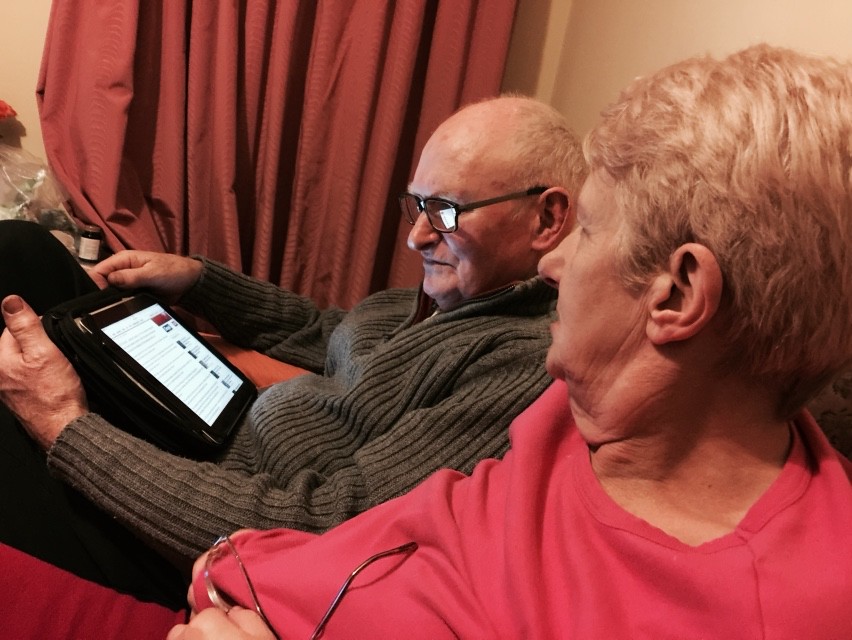
    I ended up giving a lot of thought about the concept of technology adoption and what it really means. I have been spending a bit of time with the family over the Christmas period as the Carroll family CTO. Reading some of the statistics out there about technology adoption got me thinking whilst I was doing my role as CTO.

    In my role as family CTO I had my work cut out for me. My first task on Christmas morning was to recover their Apple ID so that the iPad could be used effectively.
    Old 2.0

    Their mobile communications needs pose a far thornier problem for me and I have been given some thought to my parents and their battered feature phones.

    The problem that I have is that its getting increasingly difficult to get them the kind of phone that they want:

    • Focused on voice
    • Really simple-to-use SMS
    • Good haptic feedback (just like what real buttons do)
    • Something that can be easily locked
    • Something that can be obtained SIM-free
    • Something that is physically robust
    • Something that I can troubleshoot easily

    It is a tough call. I have been down this route before. I gave them my old Palm Treo 650 a number of years ago and it got them thinking about digital photography, but it failed as a phone. It’s failures were:

    • Being too complicated
    • Providing too many choices
    • Having too confusing a keyboard

    The software was also buggy as hell, but I could trouble shoot any problems they had from my memory of using it a few years before they got their hands on it. The Treo 650 eventually gave up the ghost as the family digital camera, to be replaced by the iPad. My friends who have managed to get their parents using Weixin/WeChat on a mobile phone are not particularly good case studies for what I need to do. There is an absolute unwillingness to have phones with a data package: it is hard for them to understand the vagaries of the mobile phone company tariffs; email is something that they can pick up at home. They never hit the wall on their data allowance from the ISP so it never occurs as a consideration to them.

    There is also something about the iPad which means it is accepted as something different to a complex smartphone device and more accepted despite the similar pictures-under-glass interface.

    Instead a market stall provided a Samsung feature phone with a late Series 40-esque interface which pushes the envelope in terms of my Dad’s comfort level using it. Meanwhile my Mum soldiers on with an old Nokia. My immediate gut reaction is to go to eBay and pick up something like the Nokia 225 or a Samsung Solid Immerse GT-B2710 for the both of them.

    I know other people who have faced similar conundrums and have gone with a Windows Phone (it fails my spec because I wouldn’t be able to troubleshoot it for them), but the tiles front page presents what could be a senior-friendly experience in their eyes.  The shy and retiring Tomi Ahonen got hold of some Nokia data looking at phone activations and was both astonished and angry. Roughly a third of Nokia Lumia phones which went out form the factories were never activated. His theory was that a combination of high handset failure rate, unsold inventory from the messy switch over to Windows Phone 8 and possible channel stuffing might be involved.

    I don’t know what might justify a 26 million handset short fall, but I could imagine an appreciable amount of them might be due to people using a smartphone as a feature phone. Not having a data plan, being perfectly happy for a phone to be a phone. Is a smartphone still a smartphone if its used as a feature phone?

    Extending this analogy further, a large amount of ‘smart TVs’ are now being sold and being touted as the new, new thing in terms of internet eyeballs. Web TV isn’t particularly new as an idea, Combining the web in a TV format has been going since at least the mid-1990s when Steve Perlman founded what would later become MSN TV.

    We know that a large amount of homes are buying TVs that are smart, but how do they use them? Are they just using them for the delivery of Apple TV like services; a cable box over IP or are they doing ‘lean forward’ activity one would expect of a smart TV like email, Facebook updates and the like?

    I suspect most smart TVs are video delivery mechanisms and that’s pretty much it, are they then really smart? All of this may sound like semantics, but they could feed into the decisions of advertisers, in terms of platforms and creative execution. They are also likely to feed back into product management in the the consumer electronics sector, where TV makers enjoy (if thats the right word) razor-thin margins.

    From an information security point-of-view, how would you explain to smart TV owners with ‘dumb TV’ usage patterns that their set may be at risk of being hacked and how they should spend money to protect themselves. A worst case scenario maybe a Sony Bravia (or other manufacturers for that matter) bot army of TVs may never be shut down because consumer apathy to the perceived security risk.

    More related posts here.

    More information
    Bizarre Stat of the Day: Microsoft (and Nokia) have only achieved 50M Lumia activations? Seriously? Out of 76M shipments? What happened to the other 26M? Seriously! Tossed into garbage by retail? | Communities Dominate Brands