Category: innovation | 革新 | 독창성 | 改変

Innovation, alongside disruption are two of the most overused words in business at the moment. Like obscenity, many people have their own idea of what innovation is.

Judy Estrin wrote one of the best books about the subject and describes it in terms of hard and soft innovation.

  • Hard innovation is companies like Intel or Qualcomm at the cutting edge of computer science, materials science and physics
  • Soft innovation would be companies like Facebook or Yahoo!. Companies that might create new software but didn’t really add to the corpus of innovation

Silicon Valley has moved from hard to soft innovation as it moved away from actually making things. Santa Clara country no longer deserves its Silicon Valley appellation any more than it deserved the previous ‘garden of delights’ as the apricot orchards turned into factories, office campus buildings and suburbs. It’s probably no coincidence that that expertise has moved east to Taiwan due to globalisation.

It can also be more process orientated shaking up an industry. Years ago I worked at an agency at the time of writing is now called WE Worldwide. At the time the client base was predominantly in business technology, consumer technology and pharmaceutical clients.

The company was looking to build a dedicated presence in consumer marketing. One of the business executives brings along a new business opportunity. The company made fancy crisps (chips in the American parlance). They did so using a virtual model. Having private label manufacturers make to the snacks to their recipe and specification. This went down badly with one of the agency’s founders saying ‘I don’t see what’s innovative about that’. She’d worked exclusively in the IT space and thought any software widget was an innovation. She couldn’t appreciate how this start-ups approach challenged the likes of P&G or Kraft Foods.

  • WWDC 2015: you know the Apple news, but what does it mean?

    I watched the introductory keynote to Apple’s Worldwide Developer Conference (WWDC 2015) with my colleague Ed. The overall take was one of ‘is that it?’. Though it is worthwhile acknowledging that even Apple can’t do miracles all the time.

    I thought that it was worthwhile picking through the announcements at WWDC 2015 to see what they mean.

    With OS X, it was like some of Apple’s earlier releases like 10.2 ‘Jaguar’ which was a discernible step up in performance and stability in comparison to 10.1 ‘Puma’ or 10.6 Snow Leopard in comparison to 10.5 Leopard. It gives Apple an opportunity bed in the flat design of Yosemite, make third party application development easier and improve performance across the OS. (As an agency person, the idea of more powerful integrated development tools that would provide a better performing user experience on iOS and OS X was interesting). The name El Capitan implies a a derivative relationship to Yosemite. (Yosemite is the national park and El Capitan is a granite monolith at the north end of the park).

    There has been tightening up of the interface design, which Apple’s own news releases allude to:

    Mission Control®, the quickest way to view all open windows, has a cleaner design so you can find the window you need even faster.

    Apple has also looked at improving internationalisation of the operating system with new Japanese and Chinese system fonts and improved keyboards. Announcements at WWDC 2015 kept building on Apple’s increasing focus on markets outside the traditional western ones. This is a trend that I expect to see continue over time with additional focus on Korean, Indian and southeast Asian markets

    Part of the improvements in services like Spotlight were part of the ongoing war of attrition with Google. Pinned sites and performance improvements in Safari where aimed at Google Chrome.

    At each step of the announcements Apple was at pains to emphasise its efforts in providing users with privacy. Apple genuinely believes that privacy is a point of differentiation, not just amongst developers, but also amongst consumers living in a post-Snowden world.

    Preparing for a programmable world

    The services put into OS X (and across iOS) try to be smarter and anticipate the needs of a user. Natural language search in Spotlight has similar aspirations to the kind of experience Facebook aimed for when it launched its Graph Search functionality in 2013.

    These are baby steps to position Apple products as the front door of a programmable world, ‘a web of no web’ where device intelligence behaves as if it understands user intent like a good valet.  In the improvements of iOS 9 Apple was much more explicit in describing its aims:

    Siri features an all-new design in iOS 9, contextual reminders and new ways to search photos and videos. Proactive assistance presents the most relevant information without compromising users’ privacy and suggests actions at a particular moment — even before you start typing — automatically suggesting apps to launch or people to contact based on usage patterns, and notifying you when you need to leave for appointments, taking into account traffic conditions. iOS 9 can even learn what you typically listen to in a certain location or at a particular time of day, so when you plug in headphones at the gym or hop in the car before work, it can automatically display playback controls for your preferred app.

    These baby steps at WWDC 2015 towards a programmable world are important, mainly because the Apple Watch is currently a solution looking for a problem and would make much more sense in the context of a programmable world. Looking at the Apple search interface on iOS 9, Foursquare’s area exploration app looks particularly vulnerable as search seeks to recommend coffee shops and the like in the immediate area surrounding the user.

    If one looks at the things Apple is doing in home automation and wireless payments it is all about producing a frictionless process needed for a programmable world to happen. And iOS and OS X hint at the next stage of trying to build in intelligence (at least in small increments). There is a tension between the privacy positioning and being useful in a programmable world which requires interaction and real time data exchange with the world around you. WWDC 2015 only hints at how that might play out.

    Apple Pay

    Apple Pay is most interesting when one considers it as part of a wider play by Apple to reduce the processes that act as friction in a programmable world. Despite the high profile launch, it hasn’t taken off in the US as dramatically as anticipated by pundits. It’s expansion to the UK is likely to be a steady slow burn. It will be interesting to see if Samsung’s phone payment system due in the autumn (fall for our American readers), will do a better job of moving payment technology along. The feature of being able to use your iPhone as an Oystercard substitute in an emergency on Transport for London has a certain amount of appeal that would be balanced against the likelihood of being mugged for the phone depending on which tube station you are using. My home station of Mile End is likely to be a laggard for just that reason.

    The News app

    The News app on iOS take direct aim at Flipboard, which is hardly surprising given Flipboard’s previous overtures to the likes of Samsung in the past, offering media access as a differentiator on the Android platform. Apple’s News Format™ challenges responsive web design and provides publishers with alternative to full-scale app development. The curation engine behind News app could be as important in the future as Techmeme, Hacker News or Google News are today – which makes it important to communications professionals as a distribution channel for coverage and own brand content. It is only like to be power news junkies who are likely to stick withn RSS readers like feed.ly or Newsblur.

    Apple Music

    I won’t comment on the cringeworthy Dad dancing that happened on stage, or the cliched advertisement Apple showcased. Apple Music service was a clever mastery of marketing over technology. Whilst the keynote was going on my colleague James had been persuading his mobile carrier to raise his monthly data package up to 15GB in order to cover his streaming of music. It was with this in mind that I thought about Apple’s new mobile application. It was interesting that streaming was positioned as a mobile app only thing, in stark contrast to to the likes of Spotify, Pandora and Soundcloud which provide desktop streaming (which is important for the millennials that I work with).

    The interface reminded me initially of the Chinese app: Doumi which goes to show that this isn’t just about Apple versus Spotify and Pandora, but Apple against a range of services throughout the world. What the K-pop and Mando-pop playlists are like will be as important as whichever ‘hottest band in the world’ Zane Lowe latches on to this week. WWDC 2015 presented a very white liberal middle class view of what good music is with the launch of Beats 1 – a clone of BBC Radio 1 FM which is available around the world for free thanks to the British TV licence fee.

    The curation feature felt a bit like back to the future for iTunes which used to have artists curate their favourite songs in a playlists of tracks that you could purchase, and users like you could share lists of tracks curated around genres or ‘special moments’ as Jimmy Iovine called it, like commuting, exercising or setting a mood in your home. In the office, this curated list will have to compete with Spotify, random play on my iPod and YouTube playlists depending on how the mood catches us.

    The social aspects of Apple Connect were interesting as an assault on Bandcamp, Soundcloud and a plethora of services which allow musicians to build up social and email contact databases. I am not convinced Apple will give musicians the same ability to build a listener relationship programme in the same way.

    A second part of Apple Connect is if it will allow labels or brands to build profiles? In certain genres of music where the artists may have several or shifting identities, have profiles build around labels that have a certain sound or producers and remixers would be more important. Brands such as Starbucks and Battersea Dogs Home have used music curation effectively in the past as part of their marketing campaigns, will Apple Music provide a similar opportunity?

    More information
    Apple Announces OS X El Capitan with Refined Experience & Improved Performance | Apple Press Info
    Facebook Announces Its Third Pillar “Graph Search” That Gives You Answers, Not Links Like Google | TechCrunch
    In the Programmable World, All Our Objects Will Act as One | Wired
    Apple Previews iOS 9 | Apple Press Info
    Apple Announces News App for iPhone & iPad | Apple Press Info
    Introducing Apple Music — All The Ways You Love Music. All in One Place. | Apple Press Info

  • Macau gaming revenue + more

    Macau gaming revenue

    Macau Gambling Revenue Continues to Drop – WSJ  – A little over a year ago, in February 2014, Macau gaming revenue rose 40%. Now it is regularly falling by around that much (paywall) – Macau gaming is alleged to be a vehicle for money laundering. Even if that wasn’t the truth about Macau gaming, it still remains a tempting vehicle for capital flight from China. At the moment Macau gaming is even bigger than the gambling mecca of Las Vegas

    FMCG

    P&G; Always Mobile App: BackMeApp – really smart application by P&G to market Always sanitary towels

    Ideas

    Azeem’s Exponential View – Revue – great email newsletter. Azeem has ben involved with a number of start-ups including Peer Index. In his newsletter Azeem covers a mix of deep future gazing with concern about climate change. He has a particular focus on  the carbon economy as a distinct area within his newsletter

    Innovation

    The scientist who designed the fake interfaces in “Minority Report” and “Iron Man” is now building real ones – interesting link on the feedback loop between science fiction and technology

    Ford Redefines Innovation in Aerodynamics, EcoBoost and Light-Weighting with All-New Ford GT Carbon Fiber Supercar | Ford Media Centre – some of the design choices in this is very interesting. More design related content here.

    Media

    Yahoo to Let Brands Fact-Check Its Viewability, Fraud Numbers | Advertising Age – I presume that this is due to pressure from large consumer brands only willing to pay for true views

    WPP’s Bessie Lee: PR Industry Must Embrace Technology In China | The Holmes Report – calling Blue Focus a PR group is like calling WPP a PR group. PR needs to do technology better, but other disciplines already own that part of the client relationship. China has even faster change going on

    Engineering Director Lars Rasmussen Leaving Facebook To Co-Found A Music Startup | TechCrunch – a long time Googler who developed Google Maps and worked in search at Facebook. Interesting move

    Yahoo just threw investors a bone: It’s hiring advisors to figure out what to do with Yahoo Japan (YHOO) – the bigger question is what to do with what’s left surely?

    Google, Microsoft and Amazon pay to get around ad blocking tool – FT.com – as well as Taboola – the annoying content remarketing network

    Online

    David Cameron wants to block porn but the EU won’t let him | Dazed Digital – the UKIP vote will be torn over this one. More online related content here

    Bradley Horowitz Says That Google Photos is Gmail for Your Images. And That Google Plus Is Not Dead… — Backchannel — Medium – Bradley is brilliant, this does feel like trying to reinvent flickr, it would be a shame if this did kill flickr

    Retailing

    Audi to Test Plan to Deliver Amazon Packages to Drivers’ Trunks – NYTimes.com – so thieves will know that there is a master key, which will give them an incentive to find it. More related content here.

    Software

    Above Avalon: The Apple and Google Battle Has Changed – good long read on the dynamics between Apple and Google. Apple and Google cooperate because Apple has richer, more valuable customers than Google based operating system products. 

    Technology

    Russian ‘Uber for Boobs’ Start-Up Tittygram Sees Business Boom | Moscow Times – you could not make this up <holds head in hands in despair at industry>

  • Tech trends myopia in ideas

    Tech trends event at The Churchill Club

    The Churchill Club recently had their annual Top 10 Tech Trends event in Silicon Valley. This was the 17th time that they had their event. It’s a great bit of content to have on in the background. The collective opinions in the panel bought up concerns for me with a consumer behaviour myopia exhibited around tech trends in Silicon Valley.


    Cognitive behavioural therapy

    A classic example was some of the very smart things said about wearables and health monitoring in the session. There was skepticism expressed for some very valid social behavioural reasons – if one looks at Facebook, consumers generally share only the good things in their lives, with the notable exception of life events, such as the death of a family pet. Stephen Waddington even describes his behaviour on Facebook as ‘cognitive behavioural therapy’.

    So people really into fitness are far more likely to employ self tracking than couch-dwellers.

    Quicken problem

    Self tracking was described as a ‘Quicken Problem’. Quicken allows US consumers to easily complete their tax returns – a universal problem, yet is only used by five per cent of the population for various reasons.

    All of this is very valid stuff of its self, but what happens if it isn’t only consumers making the decision?

    Self tracking tech trends

    My reservations about self tracking technologies are well recorded, to quote myself from Stephen Waddington’s Brand Vandals

    Self-tracking adds massive amounts of data to your personal data pool and social graph and raises huge privacy concerns that users need to be cognisant of

    A number of the key points that I made in my conversation with Stephen was not about consumers using their self-tracking data but how the data could be used to recalibrate car insurance, home insurance (based on absence from home) and health insurance based on activity and risky behaviours.

    Let’s look at a specific type of self tracking, the car insurance black box. Aviva (Norwich Union) trialled the use of telematics to set car insurance premiums on a monthly basis as a type of continuous assessment. It looked at factors such as:

    • When the car was used, nighttime driving was considered to be risky behaviour
    • What distance was covered, charges were on a per mile basis
    • Car location (particularly when cross-tabulated with crime statistics)
    • Speed
    • Braking data

    In IBM Research’s case study, Norwich Union envisaged that black boxes would allow it to sell insurance to consumers that drive less often. Norwich Union dropped the pilot in 2008, apparently due to a lack of consumer interest, but resurrected the car insurance black box when the European Union ruled that charging for car insurance on the basis of gender was illegal. Presumably the needed some other form of actuarial data instead of whether the driver was a female or not. This is just one example where consumer behaviour didn’t drive  product innovation that wouldn’t be accounted for in the tech trends discussion.

    Credit ratings were driven by the need for businesses to mitigate risks, direct (rather than operator) dialling on a telephone was developed to help reduce the manpower required to run telecoms networks. Night safes and ATMs (automatic teller machines) were about providing services without staff. The US airline tradition of baggage charges came from shareholder pressure not consumer demand yet is worth hundreds of millions of dollars a year.

    The point at the end of the day is that opportunities for venture capitalists are broader than meeting consumer needs and wants.

    More information

    Brand Vandals by Stephen Waddington & Steve Earl
    AA launches black box car insurance | Guardian
    Norwich Union heralds new Pay As You Drive insurance – Aviva Media Room Archive
    Norwich Union Insurance Telematics Pilot – Pay As You Drive Telematics trial of usage based motor insurance by Volker Fricker of IBM Research – (PDF)
    Aviva Telematics Insurance Review | Telematics.com – Norwich Union (now Aviva) abandoned telematics insurance a number of years ago and is now reinstating it

    More related content here.

  • Corporation tax + more things

    Amazon to begin paying corporation tax on UK retail sales | The Guardian – it is good to see that Amazon is paying corporation tax. But the thing no one is asking is how does this affect businesses that might have ‘global accounts’, for instance Ford, Colgate and HSBC’s relationship with WPP? Does this mean that clients will suddenly start getting bills on a per country basis for corporation tax rather than in one place? What happens when different tax authorities have different views on what is earned where?

    Why We Have an Oversupply of Almost Everything (Oil, labor, capital, etc.) | Our Finite World – some interesting economic data in here

    The Savoy opens take-away eatery to provide entry point to dining | Luxury Daily – interesting that The Savoy feels the need to do local ‘sampling’

    Huawei launches ‘internet of things’ operating system – FT.com – Paywall

    [1501.02876] Deep Image: Scaling up Image Recognition – interesting machine learning paper from Baidu

    Interview: How did an ex UX designer get 50k WeChat fans? – interesting article and plan

    What will happen to Silicon Valley when demographics strangle the global economy | VentureBeat – this isn’t necessarily as bad as this article makes out mainly because many VCs are sitting on more money than they can invest anyway

    The Blogging Dead: WeChat’s ‘zombie relationship’ invasion|WantChinaTimes.com – sounds like a classic dunbar number problem, but it is interesting that they consider it to be WeChat specific

    Integrated Intelligence: IWC Connect – Luxury News – interesting wearable concept, they seem to have deliberately avoided the mistakes made by others (including AndroidWear and Apple Watch. Still not convinced however. More luxury related content here.

    Seymour M. Hersh · The Killing of Osama bin Laden · LRB 21 May 2015 – I am not surprised, but the damage that this does to US is huge, particularly the body politic. I recommend reading this critique of Mr Hersh’s critics – The media’s reaction to Seymour Hersh’s bin Laden scoop has been disgraceful – Columbia Journalism Review

  • Nokia N900

    This throwback gadget the Nokia N900 comes from before Nokia decided to go with Windows Mobile as its smartphone operating system. It had started to develop Maemo as a successor operating system to Symbian Series 60. Meamo was a Linux kernel based mobile operating system which owed its heritage to the Debian Linux distribution.

    The N900 was the first phone which showed Nokia’s ideas in developing an alternative to the Android and iPhone eco-systems. Symbian was a powerful operating system, with true multitasking but there were issues that just tidying up the UI and introducing capacitive touch wouldn’t address.  For a mature operating system, I had to reboot my Nokia phones surprisingly often, basic apps like the address book didn’t work if you had over a thousand contacts – so most sales people out there.

    The predecessor of the Nokia N900 was the 770 internet tablet which was launched back at the end of 2005, which was the iPad before the iPad.
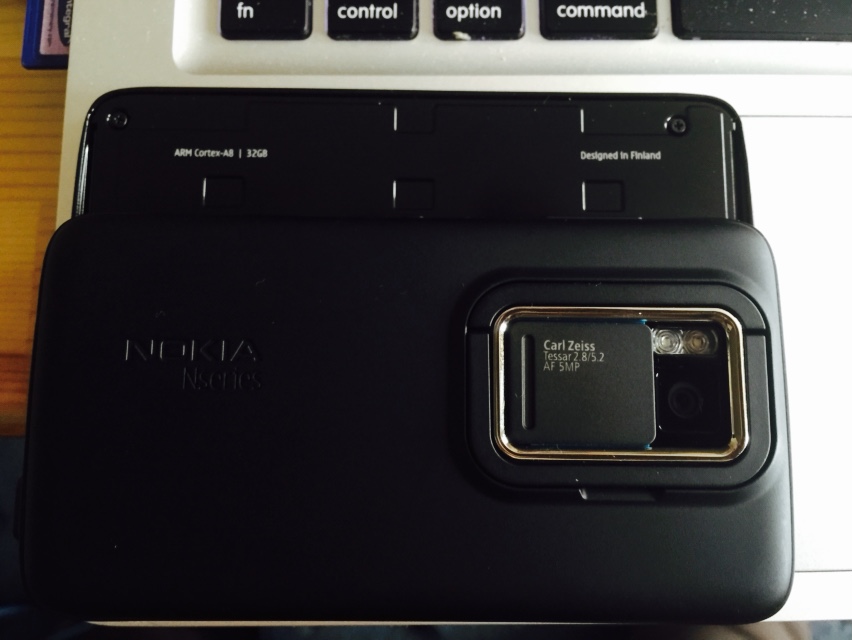
    Nokia N900
    Trying to trial this device is a bit hard as it relied on web services such as an app store that no longer exists. Secondly it offers an experience comparable to an Android or iPhone powered by a processor that is several generations older, so you have to make allowances for the fact that the Nokia N900 can feel slow at times.
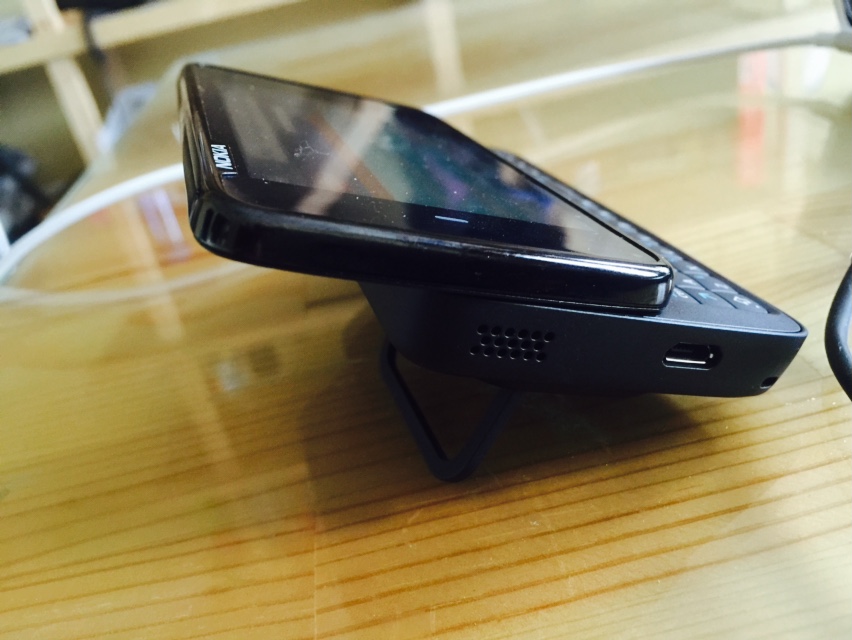
    Nokia N900
    Let’s start with the industrial design. The phone is relatively thick, partly due to its keyboard and replaceable battery design feels good to hold.

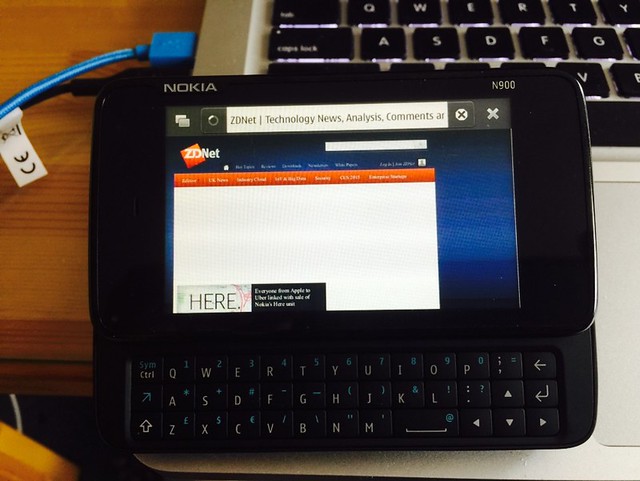
    The Danger Sidekick-esque slide-out keyboard which would be handy for the world of OTT messaging services like WhatsApp, WeChat and LINE. It isn’t a full keyboard like the Nokia E90 Communicator that I used to own but it is more usable than say a Blackberry Bold. The keyboard feels solid and stable.
    Nokia N900
    The camera surround on the back has a stand that pops out for when you want to use the phone to watch content or as a glorified desk clock.

    The dialler on the phone is easier to use than the iPhone and did what it came on the tin – its slight gradient feels like Apple pre-iOS7. Nokia’s HERE mapping service was responsive, it seems to be the one thing on the phone still supported.
    Nokia N900
    Nokia’s Mozilla-based browser still works and provided an experience similar to modern smartphones, but slower (this is partly due to the processor inside the phone).

    Now the Nokia N900 stands a testament to lost potential, the following Nokia N9 and N950, looked like polished products. Stephen Elop saw things differently and despite the Nokia N9 selling well in the few markets that he allowed it to sell, put the company on its fateful relationship with Microsoft. Presumably Elop and his team felt that they couldn’t sustain the innovation of Maemo, which would have required a move to Qualcomm processors away from Intel. Nokia had backed WiMax rather than LTE with Intel, so the company was on the wrong foot. The decline is now a matter of well recorded history with Microsoft having eventually taken over a much diminished phone business. Some of the N9 team went on to build Jolla – a small phone company that built a smartphone and tablet to showcase their SailfishOS operating system. It remains to be seen if other phone manufacturers will launch products using it. But it does offer consumers outside North America a more secure option to an Android handset. More gadget related content here.