Category: london | 倫敦 | 런던 | ロンドン

Why London?

First of all I live in London, I put down my roots here because of work. Commuting from the outside towns into the city takes a long time. People only tend to do that when they don’t have to come in every day or getting their kids into a good school is important for them.

Secondly it is an area distinct from the rest of the UK, this is partly down to history and the current economic reality. It is distinct in terms of population make-up and economic opportunity. London has a culture that is distinct from the rest of the UK, partly due to its population make-up. Over 30 percent of the city’s inhabitants were born in another country. From music to fashion, its like a different country:

  • As one women’s clothing retailer once said on a news interview ‘The further north you go; the more skin you see’.
  • The weekend is a huge thing outside the city. By comparison, it isn’t the big deal in London. The reason was that there were things you could enjoy every night of the week.
  • You can get a good cup of coffee
  • The city was using cashless payments way before it became universal elsewhere in the country
  • The line has extended into politics. London opposed Brexit. London, like other major cities it is one of the last holdouts of Labour party support in the 2019 UK general election

London posts often appear in other categories, as it fulfils multiple categories.

If there are London subjects that you think would fit with this blog, feel free to let me know by leaving a comment in the ‘Get in touch’ section of this blog here.

  • Populism & more in 2019

    At a macro level, the world is in a pretty strange place at the moment. Populism is at the centre of uncertainty across many countries in terms of political direction, macro economics, technology and consumer uncertainty.
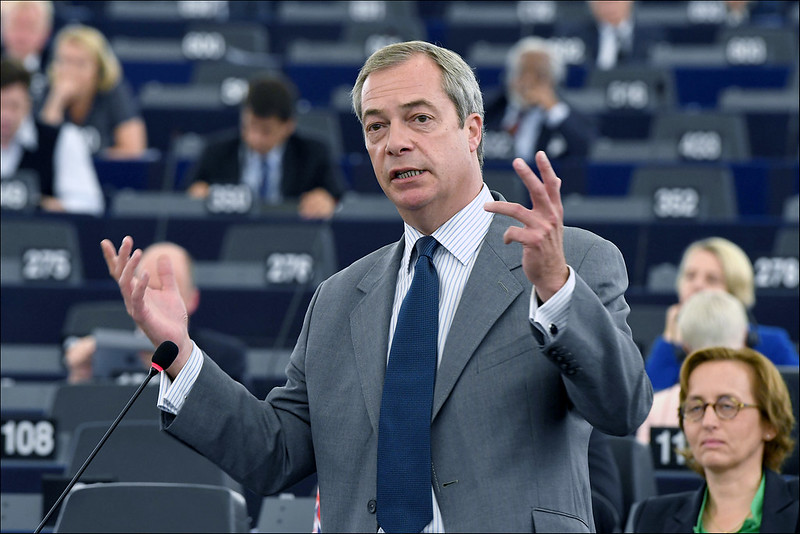
    2016 State of the Union debate

    Populism and nationalism is on the march: Duterte in the Philippines. Trump in the US. The German right wing populism leaning political party AfD is shifting the Overton window in Germany. The yellow vests in France and the UK is channeling anger into political activism along fringe party lines providing an opportunity for populism. The UK has seen a rise in far right grassroots media mirroring the rise of The Canary and similar publications on the left both of which fuel different forms of populism. The Russians don’t need to do it as the populism and divisive politics is homegrown. The Queen’s speech called for unity in the country and the UK government’s Prevent anti-radicalisation programme has more far right cases than Islamic extremists. Even China has been gradually moving to a Han nationalism as part of its more forceful foreign policy. India and Pakistan have both seen a rise in sectarian politics. This has impacts in terms of foreign trade and economic growth. We are already seeing domestic brands rising in China and India; we may see a decline in brands and product SKUs in the likes of the UK – all of which will impact advertising budgets. At an agency office level; the chilling effect of nationalism is going to affect the movement of talent on both client and agency side. It’s hard to articulate the atmosphere of an agency that I was working in the day after the Brexit vote without using the word bereavement. I know people in my family and peers who are moving away. Over time this will impact culture and creativity. It is hard to remember but back in the 1970s the UK was much more parochial and less multi-cultural than it is now. Everyday things we take for granted like good food were much poorer experiences.

    There are so many variables in play we don’t know where populism and divisive politics is going, but there are dark possibilities to the government ‘by the seat of their pants’ which seems to be prevalent.

    Cryptocurrency and block chain: We’ve seen a wide range of crypto currencies decline in values this year. What are the factors might drive a recovery? Why would there be a spike in demand? I don’t know what that ‘X factor’ would be. I suspect that experiments in block chain such as verifying online media spend to prevent online fraud will start bumping up against the limitations of the technology. Blockchain has a relatively low transaction rate compared to legacy payment systems. Decentralisation still isn’t as good as an Oracle database or a mainframe a la the traditional banking system. Some applications just make no sense.

    From Farm to Blockchain: Walmart Tracks Its Lettuce – The New York Times – is a classic example of technology for technology’s sake. How much lettuce would Walmart be selling day in, day out? That data has to be collected across a complex supply chain. Secondly, its a privatised centralised blockchain which negates the technical benefits of Blockchain and makes me wonder why IBM weren’t selling in Db2 or Oracle high transaction speed relational database on a z-series mainframe. It’s announcements like this that makes one wonder if blockchain has jumped the shark.

    Virtual reality hasn’t seen the level of adoption that was predicted. The problem is no longer one of technology hardware (lets ignore battery life for a little while) but content. VR changes the way stories are told and experienced, it makes it hard to build brand experiences and compelling content. Microsoft has managed to build a community of early adopters in Altspace – a Second Life type environment. Augmented reality (AR) has been sporadically adopted and Apple has been putting a lot of work into building creator tools, but the decline of Blippar. Magic Leap’s demo film for its partnership with Cheddar doesn’t currently look like a compelling AR application to me. It does mirror, anecdotal evidence that suggests the most common use of VR is to replicate a big TV experience in a small space through the Netflix application.

    https://youtu.be/xjYE-joYjQs

    If 2017 and 2018 were the years when ad fraud became the bête noire of marketers, 2019 might see harder questions asked of influencer marketing practices. The move from influencers to micro-influencers was down to cost per reach and engagement. The move to nano-influencers implies a similar kind of shift again. Yet it seems to be largely taken on blind faith by marketers at the moment that influencers are good thing. I think many of the challenges that influence marketing faces when I wrote about them earlier are still valid. One question that I haven’t seen seriously considered by marketers is when you’re in a culture where ‘selling out’ has moved from being shameful to gen-x; to a badge of validation in the space of a decade that has to change the value proposition that influence brings? As a marketer the possible answer to that question worries me.

    The focus on ad fraud might be partly responsible for a slight resurgence in the realisation brand advertising is valuable. Performance advertising is about the now, brand advertising is all about sowing acorns that are reaped for decades to come. As a concept it’s easy to grasp at an empirical and research driven level. But when marketers typically stay in a role for a short time, the now becomes of outsized importance. They have to make an impact and then plan their exit strategy in what’s typically a three year cycle. Brand is hard for FMCG (fast moving consumer goods) brands to take on board as they see channel and shelf disruption from the likes of Amazon and Ocado. They have experimented with the direct sales model a la Birch Box and Dollar Shave Club, but that will only work with certain products. Consultants selling disruption are selling chaos; clients hedging against black swans often miss where change isn’t happening – consumer behaviour doesn’t change at the speed of PowerPoint. I’ll leave the last word on digital disruption to Mark Ritson.

    It’s hard to get emotional or feel any of the romance of news media from a home page, but the paper edition carries with it the great cultural power of journalism. Print editions will become the ‘couture’ offering of the news brands – loss-making but important assets for building and retaining authority and influence over the market

    Mark Ritson, The story of digital media disruption has run its course – Marketing Week 

    Validation of traditional media can be seen all around us. Amazon printing catalogues, online brands having flagship stores. Underground and out of home adverts for e-commerce businesses surround me as I go about my daily life in London.

    Stories with everything – I don’t know whether the recent trend of every social platform having a short form video function that disappears a la ‘stories’ is a wider socio-cultural trend or the constant carousel of changing formats as part of a ploy to keep users engagement rate up. For established platforms there is little to be lost by throwing new features agains the wall and seeing what sticks.

    I’ve omitted talking about 5G as it will take more than a year to get up and running. It won’t be clear what its application is until we start to see how effective the network is in practice. Gadgets like fold out phones won’t fundamentally change the pictures under glass interface used in smartphones for the past decade or so. Their impact may be exaggerated due to their high cost that consumers will bear one way or another.

    I realise that these are a series of random thoughts but would be interested to know what you think. Feel free to comment below.

  • On the sofa: The Man from Mo’Wax

    The documentary The Man from Mo’Wax was something that I’d been looking forward to watching for a while. James Lavelle made his name as the guy at Honest Johns who was the go to guy for Major Force Records releases. Major Force was a Japanese hip hop label that featured the likes of

    • Hiroshi Fujiwara
    • Takagi Kan
    • Masayuki Kudo
    • Milo Johnson (who was part of the pre-Massive Attack group The Wild Bunch)
    • “Tycoon” Toshio Nakanishi
    • Scha Dara Parr
    • Ishida Yoshinori

    These were the people who influenced 

    • Bomb The Bass’s first album Into The Dragon
    • The subsequent trip hop movement
    • Japan’s streetwear scene (Goodenough, Fragment) which has a continuing impact on the global streetwear scene

    Lavelle’s impact before Mo’Wax was huge. His column that had the Mo’Wax name and identity was huge. Mo’Wax the record label in its tunes and championing the designs of Swifty and Futura’s art have been hugely influential. Lavelle was the tastemaker that drove BAPE before the Americans like Pharrell Williams got hold of it. He did things in collectable figures and fashion that other labels still haven’t done. Surrender was a great streetwear label. The first UNKLE album was brilliant. 

    But he lost it; drugs and self indulgent projects that burned money and credibility. He was sufficiently narcissistic to document his life two decades before social media, which is the reason why you have a lot of warts and all material that has elements of Spinal Tap. Lavelle lacked the introspection and self examination in the documentary to make a real turn around. It ends up coming across as a two-hour pitch video for James to take part in a pop star re-invention on VH-1 a la Remaking Taylor Dane. The Guardian’s review summed up Lavelle and The Man From Mo’Wax really well. 

    …from superstar DJ to rock bore

    Cath Clarke, The Guardian (August 30, 2018)

  • Smooth jazz & things that made last week

    I tried to keep the crazy in the week under control listening to smooth jazz. However the week has been just as insane as last week. Huawei’s Meng Wanzhou is out on bail, but Donald Trump cast a shadow on the whole process by a saying that he was quite prepared to use her freedom as a pawn in his trade dispute with China. Telling China that the rule of law is malleable isn’t a good move from a strategic point-of-view. Suddenly everything is negotiable, which incentivises bad actor behaviour. 

    As for Brexit, the words of Danny Dyer still ring true:

    Who knows about Brexit? No one has got a fucking clue what Brexit is… You watch Question Time, it’s comedy. No one knows what it is. It’s like this mad riddle…

    Danny Dyer, Good Morning Britain – ITV (June 28, 2018)

    How smooth jazz originated and took off

    How habit-forming products are made by Nir Eyal. This is all pretty dark and illustrates how modern apps are and web services are made habit forming.

    There are a series of Christmas themed adverts at the moment that riff on Christmas animation The Snowman by Barbour and Irn Bru’s original and belated sequel ad.

    Uber has got into the Christmas spirit by putting a limited amount of toy themed cars out on to the streets of Paris.

    Matt Farah’s Watch and Listen podcasts is one of the better YouTube channels out there. Their interview with Jean-Marc Pontrué, the CEO of Panerai is a level of insight that you wouldn’t normally have. One key observation is that Richemont has turned SIHH into a fan event for their brands as other houses have withdrawn. It is part of a wider more engaged attitude that Panerai takes with its fans compared to the likes of Rolex. I think that its a smart move as luxury is still about experiences.

  • Dawns Mine Crystal – Yunchul Kim

    Dawns Mine Crystal is an exhibition on at the Korean Cultural Centre between now and November 3, 2018. I was invited to a preview of it. The title Dawns Mine Crystals a reference to the material world and its intersection with symbols and metaphors.

    Thanks to Korean Cultural Centre @kccuk in London for invite to preview Dawns Mine Crystal exhibition by Yunchul Kim #contemporaryart #londonart

    Dawns mine crystal reminds me of science fiction from the mid-20th century, vacuum tube based electronics and the Russian film Solaris. The chromed ray gun type appearance reminded me of everything from vintage Flash Gordon, art deco object d’art, Americana and 1950s science fiction like The Day The Earth Stood Still. I also thought about my Dad who used to visit electronics junk shops when I was a small kid that would be full of everything from valve driven circuits to wartime radar components.

    The form and function of devices had a beauty to them like vintage fighter planes or the silver cathedral like structures of the chemical and petrochemical industries. I thought about Solaris when I stared into the swirling liquid surfaces of some of the installations, like storm clouds rippling across an alien planet.

    It is well worth going to see, Mr Kim merges the world of art and science together in a way that is mesmerising and entertaining. It is unsurprising, given the works link to Arts at CERN, that the art pieces have a very scientific bent to them. The works will be part of a bigger exhibition that will tour venues in France during 2019 and 2020.

    Be sure to catch it at the Korean Cultural Centre before it finishes. The Korean Cultural Centre does a really good job of curating exhibitions by Korean artists and promotes the works of Korean film makers with regular screenings at the centre.

    Mr Kim is a Seoul-based artist, composer and founder of Studio Locus Solus in Seoul. He’s exhibited in German, Spain, China and the United States. More related content here.

  • The future starts here & other things this week

    I had an amazing opportunity to see the V&A exhibition The Future Starts Here as a preview. The Future Starts Here is a collection of 100 objects that the V&A think might be indicators of the near future. smart appliances to satellites, artificial intelligence to internet culture, this exhibition brought together more than 100 objects as a landscape of possibilities for the near future.

    This includes

    • Smart appliances
    • Autonomous sailing ship
    • Micro-satellites
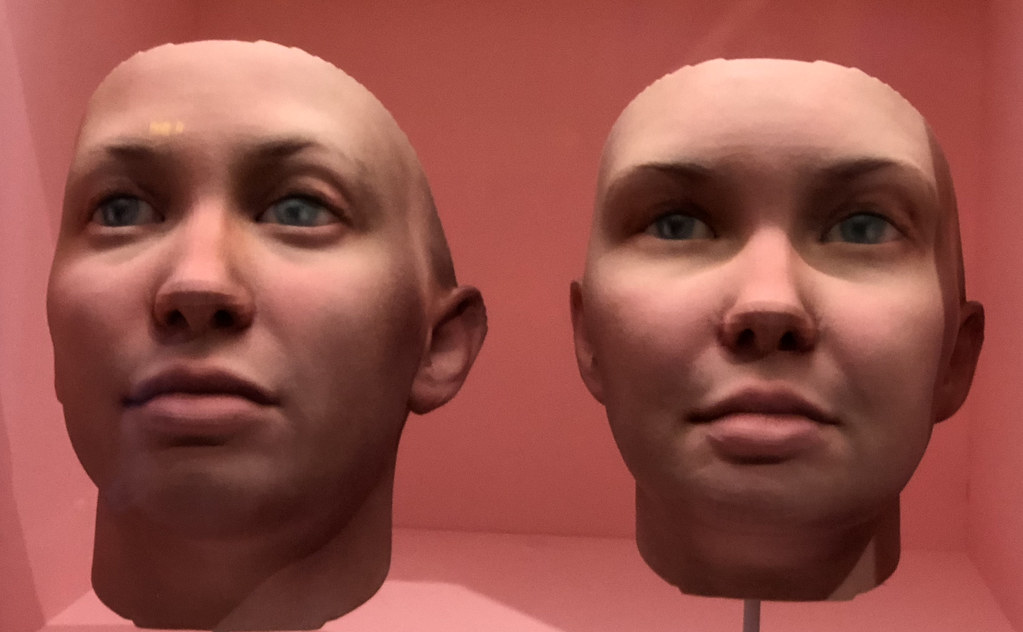
    • 3D face scanned sculptures
    • Masdar City, the world’s first carbon-neutral, zero-waste city, Foster + Partner

    faces

    The local Unilever business in Hong Kong did their own version of a Dove advertising campaign. What’s interesting is how it differs in tonality from the usual Dove work.

    ‘Appreciate don’t adjudicate’ is very local. Cantonese is laden with puns and symbolism. It is a fluid living language (despite the efforts of the Communist Party of China). Or as Campaign Asia put it:

    The campaign is “by locals, for locals” and because Cantonese is famously colloquial and fond of wordplay, the use of Cantonese lingo is expected to resonate with the audience.

    Over 100 sony aibo robot dogs get their own funeral in japan – so much here on human robot interactions and a meditation on the metaphysics of quality. This contrasts with the horror that greeted demos of Google Duplex.

    I am a big fan of Eno’s Oblique Strategies so this was right up my street: The Quietus | News | WATCH: Brian Eno Installations Talk

    Interview with JJ Connolly, the Author of Layer Cake and Viva La Madness – YouTube – great interview with JJ Connolly of The Layer Cake. I particularly like his description of his creative process. More related content here.