Category: luxury | 奢華 | 사치 | 贅沢

Over the space of 20 years, luxury changed enormously. The Japanese had been a set of new consumers for luxury, but in terms of numbers they hadn’t eclipsed the US as the biggest market for luxury.

China’s ascent into the WTO (World Trade Organisation) made a lot of business people and politicians a lot richer. China challenged the US in terms of luxury market size. On their rise, Chinese consumers changed a lot in their sophistication as they educated themselves on luxury consumption.

These new consumers picked up new traits such as wine drinking. This also meant that luxury goods became new asset classes as Chinese money looked to acquire only the best. Chinese culture in turn impacted luxury design. Chinese new year became more important than Christmas.

Then there was the second generation money. Young rather than old consumers. Consumers who were looking for something less formal, either because they didn’t wear anything but streetwear or they worked in the creative classes rather than the traditional professions and high finance.

The industry had traditionally avoided rap artists and R&B singers, now Jay Z and Beyonce are the face of Tiffanys and Fendi had collaborated with Rihanna.

They no longer wanted to have to wear a jacket and tie to have afternoon tea at the Mandarin. They took an eclectic look more attuned to the Buffalo Collective than Vogue Italia.

You had hybridisation with the street to create a new category of luxe streetwear in a way that also owes a debt to football casual terrace wear and the pain.

Now you have Zegna badge engineering approach shoes from alpine brand La Sportiva and Prada has done a similar thing with adidas’ iconic Stan Smith tennis shoes. Balenciaga with their Speed Sock looks like a mix between Nike’s flyknit football boots and the Nike Footscape sole.

As I have written elsewhere on this blog:

Luxury has traditionally reflected status. Goods of a superior nature that the ‘wrong sort’ of people would never be able to afford. Luxury then became a symbol that you’d made it. In Asian markets, particularly China, luxury became a tool. People gifted luxury products to make relationships work better. It also signified that you are the kind of successful business person that partners could trust. You started to see factory managers with Gucci man bags and premium golfwear to signal their success. Then when the scions of these business people and figures in authority were adults, luxury has become about premium self expression.

  • Scratching + more things

    History of scratching

    A brief history of scratching | FACT magazine – a great piece on scratching but skips over many of the greats prior to Q-Bert et al such as Mr Mixx, Cash Money, DJ Supreme and DJ Pogo. Scratching went through massive changes from the mid-1980s to the mid 1990s. Q-Bert et al were standing on the shoulders of other scratching innovators

    Consumer behaviour

    Researchers reveal millennials will take a 25,000 photos of themselves in their lifetime | Daily Mail Online – lifeblogging or qualitative ‘quantified self’?

    Bill Drummond (of The KLF) fame did this really good talk about how the iPod (and you could add smartphones) have changed our relationship with music

    Marketing

    Tic-Tac have put together a great tie-in with local Hong Kong independent musicians and music festival Clockenflap (Hong Kong’s answer to Glastonbury). Budding artists can submit their own video with a chance to play at Clockenflap.

    FutureDeluxe did this great bit of CGI work for the adidas X Primeknit football boot.

    Media

    Cross Device Tracking Creates New Privacy Concerns, FTC Says | Advertising Age – “They do this under the veil of anonymous identifiers and hashed P.I.I. [personally-identifiable information], but these identifiers are still persistent and can provide a strong link to the same individual online and offline,” Ms. Ramirez said, in language that challenges the typical rhetoric from companies that track consumers.”Not only can these profiles be used to draw sensitive inferences about consumers, there is also a risk of unexpected and unwelcome use of data generated from cross device tracking” (paywall) – interesting that cross device tracking is seen as a ‘new privacy concern’ rather than an established one. This delay between regulatory attention and development is why cross device tracking companies have such an advantage over governments and consumers

    TBS is giving eSports its mainstream moment with new weekly program – Digiday – interesting move, US media following normal practice in Korea

    Retailing

    Here’s where teens shop as old favorite stores go extinct | Fusion – Malls still are super important to teen culture as physical spaces you can go to hangout without parents

    Security

    From Radio to Porn, British Spies Track Web Users’ Online Identities | The Intercept – basically you have no privacy, presumably this would allow them to zoom in on Tor users at some point?

    Software

    Google faces new US antitrust scrutiny, this time over smartphones – CNET – the US antitrust scrutiny could turn to action that would  fragment Android distributions quite dramatically… More Google related content here.
  • Social relationship platforms + more

    Most Marketers Don’t Use Social Relationship Platforms | Forrester  – I am not that surprised, social relationship platforms such as Hootsuite’s user experience isn’t exactly intuitive. They’re hard to use for the teams that I have worked with on campaigns and their pricing policy isn’t transparent. Instead it’s more like feeding your wallet through a salami slicer. Also with the changes in social platforms, social relationship platforms make less sense

    End of the Line? Messaging app in big trouble as active user growth stalls | Techinasia – really?

    Flipboard’s Fanfare Fades as Executives Exit, Sale Talks Stall – Bloomberg Business – the writing was on the wall with Flipboard back when I ran into some of their people in Seoul a few years ago

    Inside Innoway, China’s $36 million government-backed startup village – in just two years, Beijing city planners transformed a no-frills walkway in the city’s northwest into a symbol of China’s internet ambitions

    Mossberg: The Apple TV gets smart | The Verge – wait for the next version basically

    Hong Kong is the happiest place in China, according to WeChat posts – Hong Kong is home to the happiest people in Greater China, closely followed by Taiwan

    The Architecture of Communication: The Visual Language of Hong Kong’s Neon Signs | NEONSIGNS.HK 探索霓虹 – great article on decoding Hong Kong signage design

    (in)visible (de)signs | Designs that often go unnoticed – architecture of communication: the visual language of Hong Kong’s neon signs

    A movement in the making – Dupress – some nice slide ware on maker economy

    IBM to Buy Weather.com, But Not the Weather Channel – NBC News – surprised this didn’t happen sooner. Great case study for IBM, surprised if AccuWeather doesn’t receive offers after this

    The Cheapest and Most Expensive Places to Live in Luxury in Asia – WSJ – the cost of living in luxury has come down in Mumbai making the Indian financial capital the cheapest place in Asia to live it up, according to a new report that examines the price of top-end goods and services

    BMW Icons Guide. – I like the thought put into the icon design

    Taxi groups unite to fight Uber with $250m start-up – FT.com – interesting meta taxi app (paywall)

  • MANifeste + other things

    Hermès MANifeste is a short motion graphics based video aimed at their menswear collection

    Hermès MANifeste has got an Eames or Rand feel to it. It is full of clean mid-century modern imagery with icons that would have been in the library of every letterpress and hot metal print works prior to digitisation. This gives the animation a clean masculine feel, that doesn’t feel too old world or conservative. Which is different to the way many male consumers might see Hermès.

    The Project Apollo archive on Flickr gives us access to all the NASA photography from the project. What people don’t appreciate is how comprehensively Project Apollo and the moon landings were documented

    The Spirit of Buffalo video by Dazed Digital featuring Jamie Morgan and Neneh Cherry is a documentary about the Buffalo Collective who influenced the way modern streetwear is styled. The centre of the Buffalo Collective was Ray Petri, who pretty much invented the stylist as a modern concept in the fashion industry. Petri partnered with photogaphers Jamie Morgan, Mark Lebon and Cameron McVey. Models included Barry and Nick Kamen, Naomi Campbell and 13 year old Felix Howard in the iconic Killer picture taken by Jamie Morgan. You can blame Buffalo for the whole Pharrell Williams look which borrows from late 1980s London.

    More content on the buffalo collective here.

    (1) 香港警察 Hong Kong Police | Facebook – acts as lightning rod for the divisions in society made apparent during the Occupy protests, but its also very surreal. Full disclosure: I ran training on social media for the Hong Kong civil service including what they call the disciplined services (this included the police, government flying service, emergency ambulance service, prison service, customs and immigration). The people that I came across were smarter than whoever is managing this page.

    A great remix by The Avalanches which has been on heavy rotation during my dipping into Soundcloud

  • Mac vs PC + more news

    Microsoft and partners revive Mac vs PC ads — without mentioning Mac – CNET – This is all a bit odd. If you’re going to do a competitive comparison you have to mention the competition. That and the humour was why the Mac vs PC ads worked. Not mentioning them looks like Voldemort like fear in this context. Yet the ads seem to be run more like a PR campaign where you don’t mention the competitor. More Microsoft related content here.

    Taking Stock With Teens – Fall 2015 – US only research, OTT video increase is no surprise, what is how far Hulu has fallen

    The subprime ‘unicorns’ that do not look a billion dollars – FT.com – Michael Moritz calling out unicorn businesses due to their risks, negative sentiment to Silicon Valley boom. No big deal except that Moritz is a former journalist who knew the likes of Steve Jobs well. He then moved to Sequoia Capital and funded businesses like Google, Yahoo!, PayPal and Zappos (paywall)

    Is Tencent leading the way or lagging behind Facebook? | Walk the Chat

    The CEO of one of South Africa’s largest mobile networks thinks Whatsapp is a freeloader | Quartz – interesting that WeChat clocks in at 7% usage for South Africans

    HKMA warns banks about security loopholes with NFC credit cards – the Hong Kong Monetary Authority (HKMA) ordered banks Monday to conduct a thorough review of the security of their credit cards

    Hong Kong Luxury Stores See Worst “Golden Week” Ever – overly dramatic but interesting

    New-media firms shift attention to TV  – online a training ground for media mainstream?

    The DraftKings Crash | Slate – Nevada gaming laws may make Overseas expansion a ‘do or die’ requirement

    Lenovo nixed idea of selling Microsoft’s Surface Pro tablet – CNET – interesting that HP and Dell will sell it

    Why mass market VR won’t come soon | GigaOM – assuming you have to run at 4K, HD would be good enough and the content could be immersive but passive like film rather than games. More on web of no web experiences here.

    WSJ: NX could launch in 2016, will be Nintendo’s most powerful console ever – this is a high risk play given how the last console did

    IBM Allows Chinese Government to Review Source Code | WSJ – (paywall)

  • Louis Vuitton Series 3 exhibition, 180 Strand, London

    Having been involved in a number of events over the past couple of years where creative digital work intersected with experiential marketing I was keen to look at Louis Vuitton Series 3 exhibition before it closed.

    Burberry tends to get the plaudits for digital experiences in the luxury sector and they do a lot of interesting work. Louis Vuitton’s initiatives like an online service that allows ladies to personalise their bag a la Nike ID.

    I found it interesting that Louis Vuitton’s approach seems to have been guided by exclusivity not being the same as accessibility. There was a wealth of helpful staff, you were positively encouraged to take your own pictures – again unusual for a luxury brand, many prefer to give you content that upholds their standards.

    A few touches that I really liked at the Louis Vuitton Series 3 exhibition

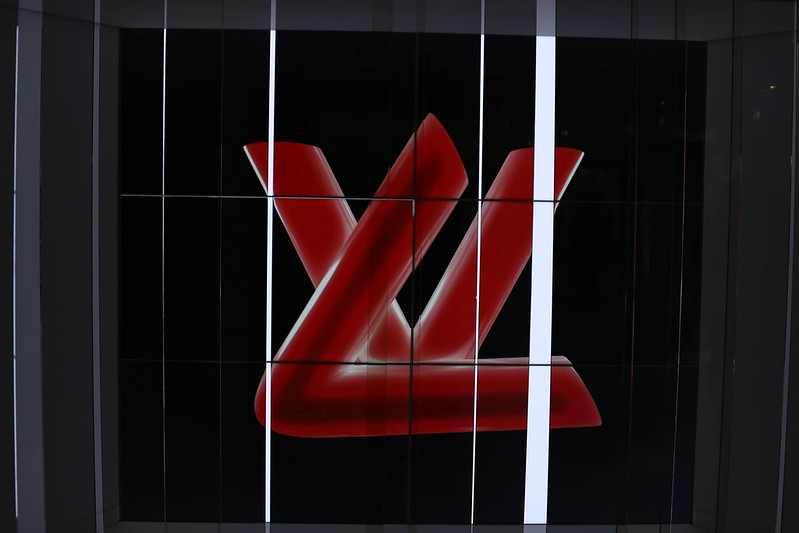
    #LVSeries3 Louis Vuitton Series 3 exhibition, 180 Strand, LondonLV logo motion graphics at the start of the exhibition, no real surprise right? What the designers did was remove the polarisers from the LCD screens so that the screens are apparently blank. The polariser is laid out in vertical strips at different distances and widths from the screen. This gives a kind of lenticular effect when you walk past it. This modern logo morphs through matrix-like digital noise and on to the more traditional LV design.
    #LVSeries3 Louis Vuitton Series 3 exhibition, 180 Strand, London
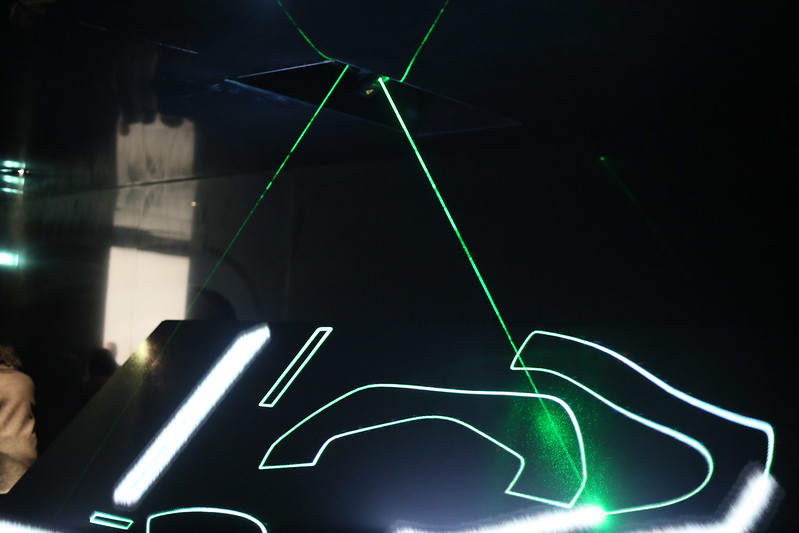
    It seems absurdly simple, but the idea of using projecting mapping techniques on a flat LED screen to emphasise how Louis Vuitton products are cut from a common material before being assembled was clever. Just because you have projection mapping technology at your finger tips means that one often looks for complex shapes like building fronts rather than a flat panel.
    #LVSeries3 Louis Vuitton Series 3 exhibition, 180 Strand, London
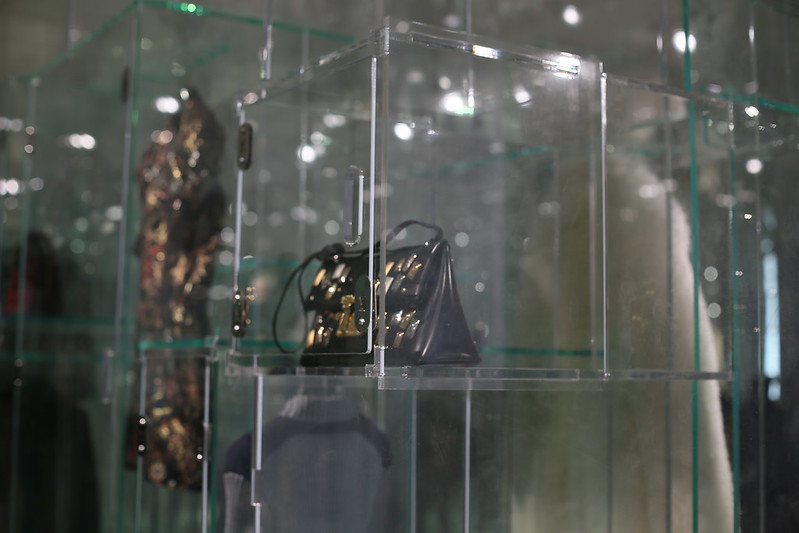
    The glass bins got the balance right between protecting the product so that it doesn’t look grubby from being over-handled, whilst still making it accessible and tactile rather than a museum experience.