Category: technology | 技術 | 기술 | テクノロジー

It’s hard to explain to someone who didn’t live through it how transformation technology has been. When I was a child a computer was something mysterious. My Dad has managed to work his way up from the shop floor of the shipyard where he worked and into the planning office.

One evening he broad home some computer paper. I was fascinated by the the way the paper hinged on perforations and had tear off side edges that allowed it to be pulled through the printer with plastic sprockets connecting through holes in the paper.

My Dad used to compile and print off work orders using an ICL mainframe computer that was timeshared by all the shipyards that were part of British Shipbuilders.

I used the paper for years for notes and my childhood drawings. It didn’t make me a computer whiz. I never had a computer when I was at school. My school didn’t have a computer lab. I got to use Windows machines a few times in a regional computer labs. I still use what I learned in Excel spreadsheets now.

My experience with computers started with work and eventually bought my own secondhand Mac. Cut and paste completely changed the way I wrote. I got to use internal email working for Corning and internet connectivity when I went to university. One of my friends had a CompuServe account and I was there when he first met his Mexican wife on an online chatroom, years before Tinder.

Leaving college I set up a Yahoo! email address. I only needed to check my email address once a week, which was fortunate as internet access was expensive. I used to go to Liverpool’s cyber cafe with a friend every Saturday and showed him how to use the internet. I would bring any messages that I needed to send pre-written on a floppy disk that also held my CV.

That is a world away from the technology we enjoy now, where we are enveloped by smartphones and constant connectivity. In some ways the rate of change feels as if it has slowed down compared to the last few decades.

  • Snowden revelations + more things

    Looking back at the Snowden revelations – A Few Thoughts on Cryptographic EngineeringThe brilliant thing about the Snowden leaks was that he didn’t tell us much of anything. He showed us. Most of the revelations came in the form of a Powerpoint slide deck, the misery of which somehow made it all more real. And despite all the revelation fatigue, the things he showed us were remarkable – this is such a good read. I suspect that the level of surprise expressed is mostly a US thing. I was disappointed, but not shocked by it all. Back in the day the NSA used to publish one of the best guides to ‘hardening’ macOS – documents that they no longer seem to host online. The Snowden revelations were nothing new. I grew up in Europe when:

    • GCHQ were tapping all of Ireland’s overseas telecoms and data traffic via the Capenhurst tower. Having lived in the neighbourhood of Capenhurst during the 1980s and 1990s, this was well known but only confirmed in the media in 1999
    • The ECHELON network was hoovering up microwave, fax, satellite and telephone calls

    After Duncan Campbell’s lifetime of work, the Snowden revelations are part of a decades long pattern of behaviour. Admittedly the US’ rivals will be up to the same things and worse.

    Luxury watch maker Patek Philippe and Leagas Delaney launch new Generations campaign – Marketing Communication News – the most interesting aspect of this to me is the way its looking to address a younger audience. Secondly, if you look at the background with the plants and rain its moved the look and feel to more tropical than their previous campaigns that were northern European in feel. (It was actually shot in Italy). Because? My guess, China. Younger rich people due to second generation wealth. Two children reflecting the recent law changes around family size in the country

    Is the era of the $100+ graphing calculator coming to an end? | The Hustledon’t feel too sorry for Texas Instruments: over a 20-year period, TI set out to manufacture demand by making its calculators mandated classroom tools. The company established partnerships with big textbook companies that integrated TI-specific exercises (complete with screenshots of buttons) into classroom curricula. It sought approval for standardized test use from administrators like the College Board. And every time a competing tech innovation came along, it lobbied to maintain its perch atop the parabola. According to Open Secrets and ProPublica data, Texas Instruments paid lobbyists to hound the Department of Education every year from 2005 to 2009 — right around the time when mobile technology and apps were becoming more of a threat. The company campaigned against devices with touchscreens, internet connection, and QWERTY keyboards” – hate the game, not the player etc. etc.

    Snap Detailed Facebook’s Aggressive Tactics in ‘Project Voldemort’ Dossier – WSJ – which is being used in an antitrust investigation. No real surprises for anyone who has followed Facebook over the years. This negates Facebook’s main defence of ‘if it wasn’t us, it would be China’

    The Dark Side of Techno-Utopianism | The New Yorker – the sub heading ‘Big technological shifts have always empowered reformers. They have also empowered bigots, hucksters and propagandists

    New York in 1984 was the time, and the place, dance music became a culture – Features – Mixmag – great write up, the only thing missing is a name check for the Latin Rascals, Cutting Records and the Freestyle scene

    Jason Dill HYPEBEAST Magazine Interview | HYPEBEAST – great interview, partly due to the car crash of journalist interviewing technique

    Parenting’s New Frontier: What Happens When Your 11-Year-Old Says No to a Smartphone? – Voguemy son had decided three things about smartphones. 1. They’re infantilizing, a set of digital apron strings meant to attach you to your mother. (He was onto something there.) 2. They compromise a boy’s resourcefulness because kids come to rely on the GPS instead of learning Scout skills. 3. They make people trivial. This final observation bugs me the most, because he still expresses it whenever he sees me jabbing at my own device: “Texty texty! Emoji emoji!” And when I play my word games, he shouts, “GAMER!” That hurts. In short, my son says, he doesn’t want a phone because he wants to be free
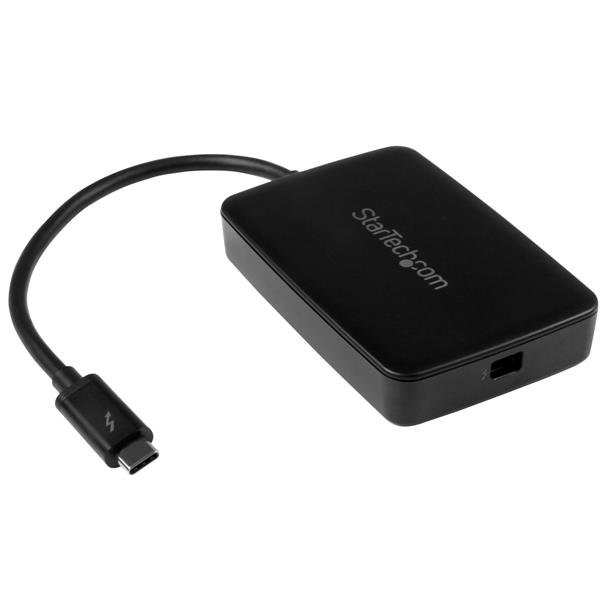
  • I like: StarTech Thunderbolt 3 adapter

    I like the StarTech Thunderbolt 3 adapter, or to give it its full name: StarTech.com TBT3TBTADAP Thunderbolt 3 to Thunderbolt 2 Adapter.

    Like many people who have bought a new Apple laptop recently. The move to USB-C / Thunderbolt 3 has been extremely disruptive. I spent a fortune on new accessories. One thing I wasn’t prepared to do was throw away my Belkin hubs and Apple Cinema monitors. I tried Apple’s own Thunderbolt 2 – Thunderbolt 3 adapter; and it worked inconsistently. One day I would switch on my computer and the monitor or hub wouldn’t work. For apparent no reason, on a seemingly random basis.

    StarTech ThunderBolt 3 to ThunderBolt 2 adapter

    StarTech are a Canadian company who have been involved in unsexy, but necessary parts of the technology and video industry. Their focus is purely on interconnectivity of different video display standards. Whilst they aren’t a well known brand like Logitech or Belkin, there are probably some of their products used by your office sys.admin. They used to make a well respected Thunderbolt 2 hub, that didn’t seem to ship to the UK. So in desperation I decided to give their adaptors a chance. 

    Let’s get the negative aspects about them out of the way first. They are bulky, with the electronics coming in a case about the size of a stack of playing cards, rather than a small pack of chewing gum like Apple’s own convertors. They’re in a shade of dark grey only a sys.admin could love. 

    But once you get over these cosmetic issues you get a product that just works. It is ironic that I had to go to a non-Apple supplier to get this most Apple of attributes. I can wholeheartedly recommend these convertors. 

    More on my trials and tribulations with USB-C / Thunderbolt 3 here.

  • By innovation only. Yet another iPhone launch

    Apple’s September 10 event ‘By innovation only’ marked the autumn season of premium smartphone launches. It is also a bellwether of what we can expect from the technology sector.

    Mark Twain’s ‘History doesn’t repeat itself, but it rhymes’ fits especially well in the smartphone business. From a consumer perspective Apple’s 2019/20 iPhone range is basically the same phones but with more camera features. Other vendors are going to come out with handsets with more camera and 5G modems.

    All of them are going to be trapped in the same pictures-under-glass metaphor. The smartphone industry as a whole (with the iPhone as bellwether) is trapped in its own version of groundhog day.

    5G? Not so fast

    Whilst 5G sounds good on new handsets, there’s five points to consider:

    • Early generation handsets for a new wireless standards tend to have poor battery lives
    • 5G phones are only as good as 5G networks
    • There aren’t applications to make use of 5G networks
    • A lot of mobile usage happens on home or other wi-fi networks. 5G is competing with your home broadband connection rather than your patchy cellular connection
    • 5G isn’t really about smartphones

    When you see all launches (like this picture from the Huawei Mate 30 launch); just remember the five points above and process the slick technology spin through this lens.

    5G competition isn't cellular its wi-fi on smartphone

    In Huawei’s case they’re basically launching very pretty €1,000+ 5G Mi-Fi hotspots with point-and-shoot camera functionality, since they’re an Android phone without access to Google services. The Porsche Design variants come out at closer to €2,500 – ideal for bored, but patriotic 土豪.

    Price inelasticity

    Apple’s iPhone X and XS models tested the the price elasticity of premium smartphones. The market spoke. This year’s prices have stayed the same rather than increasing. You could argue that the value proposition has increased through a year’s worth of bundled services. Of course, its only worth anything if you use the services.

    Differentiation through services

    Seven years ago I was sat in a hotel restaurant in Seoul and overheard Flipboard going through a pitch they wanted to deliver to Samsung. Samsung eventually tried out Flipboard and free content subscriptions to help sell the Galaxy S3.

    Apple decided to build their own free subscription model based around streaming video. This is to:

    • Differentiate its new devices from competitors
    • Provide a recurring revenue stream from iPhone users with older devices
    • Utilise the massive data centres that Apple has been building for the past decade

    Built to last

    The use of superior materials has resulted in iPhones lasting longer. Add this to pricing and for many people, their first iPhone is a pre-owned iPhone. They are handed down in families or to older relatives. This has built Apple a large user base. The big question is whether they can turn this footprint into services.

    There is a tension between new phone sales in a saturated marketplace, versus a growing base of service users.

    More information

    Apple Live Event: Apple Cuts Prices for Sales, New Subscribers – Bloomberg 

    Apple Event: Upgrades, Upgrades, Upgrades – Tech.pinions 

    The iPhone and Apple’s Services Strategy – Stratechery by Ben Thompson 

    Apple is making its iPhones last longer. That’s a good thing | Macworld 

  • Jeremy Renner store + more stuff

    The Jeremy Renner store – this must be the 21st century equivalent of the celebrity infomercial on cable TV: @ Amazon.com. The Jeremy Renner store is interesting because it’s an odd choice of celebrity. More on Amazon here.

    Amazon UK 2

    Nike China with Weiden + Kennedy did these great basketball-themed adverts

    Laundry Musical. Procter & Gamble invented the soap opera back during the great depression as sponsored radio serials. They were instrumental in building P&G as a brand powerhouse. Riffing on the theme P&G Philippines launched the first ‘laundry musical’ with Broadway star Lea Salonga.

    It is hard to explain how musical Filipino culture is. Wherever Flipinos are as a community, there is music. In Hong Kong they do group singing and dance routines. Music has been a huge export for the Philippines. You go to bars around the world and there will be a Filipino band who can pivot from hard rock to soulful R&B standards.

    Filipinos make up most of the bands on cruise ships too, which isn’t surprising given the amount of recruitment for the shipping industry that goes in the Philippines from sailors to engineers.

    TBWA\Chiat\Day’s Lee Clow on the making of Apple’s Think Different campaign. Chiat\Day still have this campaign as their calling card a quarter of a century later. The opening statement that technology is not a substitute for an idea is something that feels more relevant now. It is also interesting seeing the creatives working on MacOS Classic.

    Apple used the creative process as a way to showcase the creative hardware and software used on the campaign

    • Microsoft Word
    • Quark Xpress
    • Adobe Photoshop, Illustrator and Acrobat
    • AVID non-linear professional video editing
    • Claris eMailer – which was an email client similar to mail.app on macOS now. I had never used it, as I was using Netscape Communicator at the time

    Irish department store Brown Thomas launches its first brand anthem film

  • Worrying debt + more things

    WSJ City | Young Chinese Spending Creates Worrying Debt – looks like a credit bubble waiting to happen. Worrying debt in terms of personal credit doesn’t create economic value in the same way that government debt on infrastructure does. Chinese corporates also have worrying debt also has shades of bubble era Japan about it. Since consumer spending is driving China’s 6 percent growth, what would happen if the credit bubble burst?

    Farewell to Those Days of Wrestling With Fate
    Busy Chinese city life

    A European Perspective on Boeing’s 737 MAX Debacle: An “Existential Crisis” for a National Champion | naked capitalism – Boeing’s Crashes Expose Systemic Failings – fascinating Spiegel article of which this pulls out the highlights

    BangBros Acquires, Shuts Down PornWikiLeaks Site | AVN – this is about trying to stem the flood of doxxing that has beset performers in the adult entertainment industry and their families

    Big Brands ‘Acting Like Startups’​ – A Potential Red Flag | LinkedIn – one for companies in FMCG space like Unilever to read. It points out the flaws in ‘disruption porn’ pedalled by McKinsey Digital and Accenture

    WSJ City | Trans-Pacific Tensions Threaten US Data Link to China – also likely to affect Hong Kong as a financial centre and base for cloud network hosting

    YouTube to adjust UK algorithm to cut false and extremist content | Technology | The Guardian – censorship. Interesting that there will be concern about China yet we’ve stepped on a slippery slope

    Big brands turn to big data to rekindle growth | Financial Times – this makes me worry about the internal future state of research in large consumer companies

    bellingcat – Amazon’s Online Bezos Brigade Unleashed On Twitter – If you’ve worked on Amazon social you might want to take it off your CV after reading this…

    Nicolas Roope: “A different design language is taking over”The challenge is how brands can adapt their propositions. Architecture demonstrates the formality of this new direction: what is now a series of gestures and actions that may or may not be involved in the surface will be critical to the success of the project. How do these buildings respond to the urgent requirements of energy use reduction and waste reduction? How do they perform as stories in hyperconnected environments where reputations are established in social media? Think Instagrammable hotel rooms…

    The Economist | China’s thin-skinned nationalists want to be loved and fearedZoe hit the jackpot. Over a million netizens responded to her poll, posted on Weibo, the country’s largest microblog platform, asking what followers think of foreign brands that “insult China”. Her timing was impeccable. Her survey surfed waves of patriotic indignation crashing over the Chinese internet, heightened by puffs of windy outrage in the state media. To give you an idea of how ridiculous it can sometimes be:

    Big Blue Open Sources Power Chip Instruction Set – a really interesting opportunity opens up for a fully open source rival to ARM

    Member Research: Away vs. Rimowa – 2PM – I’ve been a long time RIMOWA fan, but the pilot case I like has been discontinued

    Mediatel: Newsline: Millennials finally get to neg someone else – gen-z seen as workshy egotists by gen-y

    Beyond Techno-Orientalism: An Interview with Logic Magazine’s Xiaowei R Wang