Category: web of no web | 無處不在的技術 | 보급 기술 | 普及したテクノロジー

The web of no web came out of a course that I taught at the La Salle School of Business at the University Ramon Llull in Barcelona on interactive media to a bunch of Spanish executive MBA students. The university wanted an expert from industry and they happened to find me by happenstance. I remember contact was made via LinkedIn.

I spent a couple of weeks putting together a course. But I didn’t find material that covered many of things that I thought were important and happening around us. They had been percolating around the back of my mind at the time as I saw connections between a number of technologies that were fostering a new direction. Terms like web 2.0 and where 2.0 covered contributing factors, but were too silo-ed

So far people’s online experience had been mediated through a web browser or an email client. But that was changing, VR wasn’t successful at the time but it was interesting. More importantly the real world and the online world were coming together. We had:

  • Mobile connectivity and wi-fi
  • QRcodes
  • SMS to Twitter publishing at the time
  • You could phone up Google to do searches (in the US)
  • Digital integration in geocaching as a hobby
  • The Nintendo Wii controller allowed us to interact with media in new ways
  • Shazam would listen to music and tell you what song it was
  • Where 2.0: Flickr maps, Nokia maps, Yahoo!’s Fireeagle and Dopplr – integrated location with online
  • Smartphones seemed to have moved beyond business users

Charlene Li described the future of social networks as ‘being like air’, being all around us. So I wrapped up all in an idea called web of no web. I was heavily influenced by Bruce Lee’s description of jeet kune do – ‘using way as no way’ and ‘having no limitation as limitation’. That’s where the terminology that I used came from. This seemed to chime with the ideas that I was seeing and tried to capture.

  • Swytch & others at Mobile Monday demo night

    I just got back from Mobile Monday’s demo night ran at the Thistle Marble Arch featuring Swytch, Quiztix, Mylo, Viewmaker, Pronto and Adsy. This evening’s event used the facilities of an Informa-ran telecoms conference: Service Delivery Innovation Summit. I missed the start of the event so my notes probably miss part of the applications on display.

    Swytch – multiple mobile numbers on an application, these numbers could be different country codes and not only allowed calls but messages too. The Swytch application is basically a VoIP client rather than a soft SIM. There are other similar services especially in Africa, at the moment the founders think that their USP is the provision of access multiple UK mobile numbers, but I am not sure Swytch is  defensible. I don’t want to even go there with potential use cases

    Quiztix – Q&A game on both Android and iOS, because of its focus on venues as a metaphor for different game levels a couple of people were interested in reskinning it for brands. The most interesting thing for me was the way that they used advertisements to level-up within the game – increasing ad engagement.

    Mylo – was a classic millenial application that helped facilitate splitting bills in house share. The application collects billing data from suppliers including Sky. Ovo Energy. Payment of one’s share could be done by PayPal. They admitted that at the moment they had no business model.

    ViewMaker – location-enabled AR application that allowed a user to show & publish geotagged content. The business focus was to be infrastructure for other application or brands who wanted to publish their own data. They didn’t currently have a plan to overlay information from other sources such as Foursquare, Flickr or Google Maps at moment. One thing surprised me in the Q&A session was that clients not interested in indoor positioning yet.

    Pronto – A Deliverance-type food service with some key differences. Instead of it being a web interface, Pronto relies on GPS for location. Secondly they have a really simple menu, in order to allow two-second ordering and swifter delivery. The menu doesn’t change very often which is great if you are an ‘eat to live’ person. The application recently launched in Italy and is coming to London soon. Apparently a reliable set of delivery drivers is a problem because of the piece rate / zero-hour contract nature of the work they aren’t necessarily as reliable to showing up as one would like.

    Adsy  is mobile or PC platform to create mobile applications that reminded me of a  simple HyperCard set – but no scripting for fuller functinoality. They are handy for building catalogues, or a card-based personal site and can be embedded like a Slideshare or YouTube clip.  It was deliberately kept simple and non-technical to appeal to teens – which was interesting given that most CMOs think of teens as master hackers…

    IFS – IFS has its own innovation lab and they demonstrated a working prototype of wearables driving business efficiencies – business notifications to wearables, logistics etc from ERP system. Think of a smart watch as a pager. I think that most of the interesting aspects of this was the connectivity with the legacy systems. Given the current lack of compelling use cases for smart watches this could be interesting due to the provision of glance-able data.

    OpenTRV – TRV is a thermostatic radiator valve. They wished to use technology to control temperature localised within a house radiator by radiator. The current model by the likes of Nest or Honeywell relying on one centralised thermostat per house controlling a boiler was considered to be a broken model. They are aiming to lower the cost of their smart TRV 10 pounds per unit.

    More wireless related content here.

  • First Apple Watch impressions

    I was underwhelmed by the Apple Watch wearable product. It is impressive what they have done, but from a product design point of view the case looks cumbersome rather like a slightly better Samsung Gear. The use of haptics was one of the smarter things that I saw in the demonstration and the use of emoji as an essential ‘social lubricant’ borrows heavily from Asian mobile usage of stickers on the likes of LINE, KakaoTalk and WeChat.

    Looking at the demonstrations, I still think that the use case for a wearable still isn’t there for mainstream consumers. The use cases for haptic communications for instance were downright creepy and I wasn’t convinced by the cloud of spots interface. The fitness app and workout apps were similar to products from the likes of Suunto and Polar or the miCoach app by adidas for a smartphone. There needs to be more general purpose apps, then the Apple fitness option might be able to drive out the fitness sector.

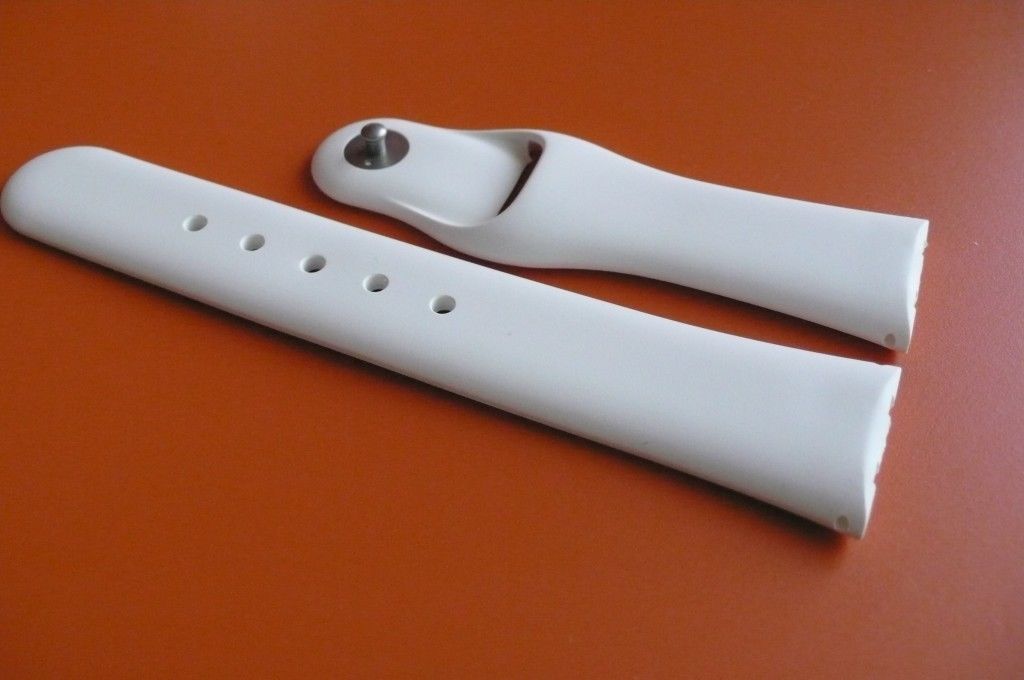
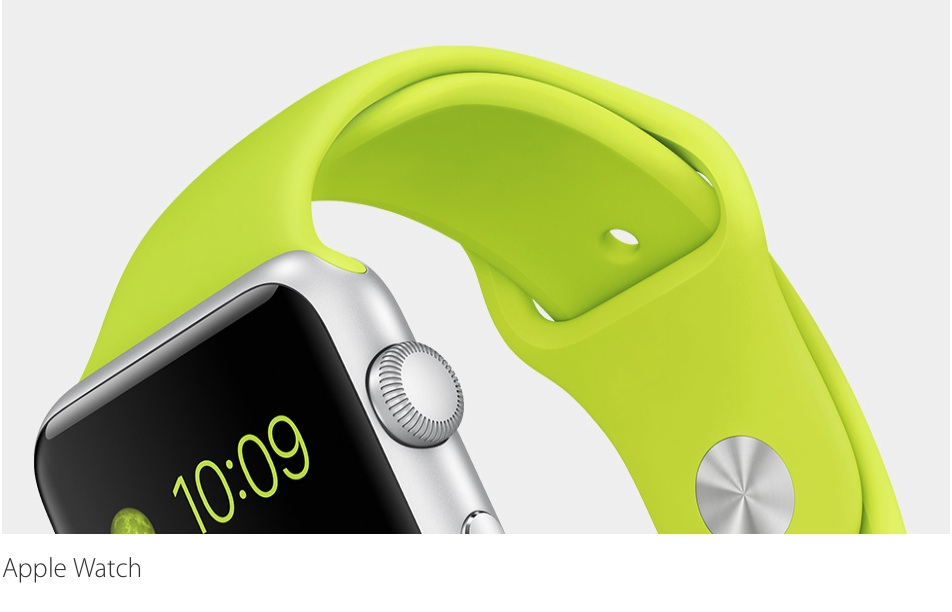
    In terms of the industrial design, I was particularly interested in the strap. Apple has borrowed a distinctive looking catch and strap connector  from one of the strap designs from the now defunct Ikepod Watch company co-founded by Marc Newson who recently joined Apple’s design team.

    Ikepod Megapod strap
    ikepod

    First Apple Watch strap. This probably explains why Marc Newson was brought on board as part of Jonny Ive’s team; as the Ikepod strap was something that he had designed back in the mid to late 1990s. You can see it on the Hemipod watch design here.
    applewatch

    While the case shape looks suspiciously like a homage to H Moser, I think that luxury brands won’t be particularly concerned, at least at this first Apple Watch, lets hope that future iterations prove me wrong. More on design here.

  • Dual class listings + more things

    Don’t change listing rules until lawyers have to change theirs | South China Morning Post – interesting take on dual class listings. Not viable unless there are other protection measures in place like class-action lawsuits and contingency fees – which makes sense when one thinks about how Facebook, Google and Alibaba have gamed the dual class listing system in the US against shareholders. I am surprised that dual class listings hadn’t come into Hong Kong earlier to support control of local businesses by their oligarch family founders. I can understand why dual class listings would be attractive to the kind of mainland companies now looking to list in Hong Kong (paywall)

    ‘Closest thing China has to a presidential debate’: face-off between two geeks over a mobile phone | South China Morning Post – not too sure how much good this did either brand, but it did seem to provide good entertainment. I would love to see Richard Yu of Huawei do one :-)

    Wakie.com — Social Alarm Clock – I really like the idea of this, plays to the dynamics of sleeping through an alarm whilst becoming wide awake from a call

    Lessons to be learned from Yahoo’s native ads | VentureBeat – interesting op-ed by an OutBrain executive

    Fujifilm just one of several struggling manufacturers jumping into medicine | Japanese Times – it used to be that Japanese companies were pointed in the direction of markets by a government ministry, it is interesting that they are all now flocking towards healthcare

    Charting the rise of Generation Yawn: 20 is the new 40 – Telegraph – I heard a similar thing about gen-x, particularly around apparent apathy for causes. Don’t believe it, generations aren’t amorphous: for every hippy there was a young conservative in the boomer generation

    Fast-moving consumer goods market saturated in China | WantChinaTimes – bad news for Procter & Gamble, Colgate-Palmolive in the FMCG space. It is in these kind of circumstances where local brands will break out

    Technohyperbole | The Economist – takes on Gartner’s hype curve

    Apple To Developers: No Selling HealthKit Data To Advertisers – does this mean that marketers can’t use the data for other things? For instance, pre-screening for insurance premiums or weight loss classes?

    Beijing Scientists Replace A Boy’s Vertebra With A 3D-Printed Bone — The First Surgery Of Its Kind – titanium used, so I suspect sintered metal powder rather than a printing process

  • Nearables

    Before we think about nearables; lets go back a few years. Back in the day shops and businesses where digitised using RFID tags that covered everything from lose prevention in shops and libraries (shop lifting to you and I) to providing payment systems like the Octopus and Oystercard. RFID tags are passive devices with a small amount of information on them; electromagnetic waves from a reader ‘powered’ them allowing the data to be read. In essence RFID is rather like the magnetic strip that used to be on the back of credit cards, bank deposit books and on some passports.
    My Oyster card for LDN & my Octopus card for HKG
    Estimote’s Wearables product takes the RFID tag and asks what could be done if the tag became active, self-powered. It is compliant with Apple’s iBeacon standard using low-powered Bluetooth LE radio transmissions to interact with a smartphone.

    Estimote defines the nearables as:

    … a smart, connected object that broadcasts data about its location, motion and temperature.

    The information that nearables can provide can be dynamic, based on simple sensors included in the electronics package. At the moment nearables in sticker form cost some $33/unit and a default battery life for three years.

    This initial version of nearables might be of interest for high value package tracking, like a consignment of vintage wine, fragile museum pieces or high end cigars.

    Although this seems like limited technology at the moment, imagine what improvements could be brought in over future evolutions of it. If I had been told about this in my 20s, I would have thought that nearables came out of the wild imaginings of a James Bond film or similar. Now its aimed at high end supply chain management and logistics.

    More related content here.

    More information
    Nearables are here, introducing Estimote stickers | Estimote Blog

  • Domain registrars + more things

    Anti-Piracy Lawyer Wants Domain Registrars to Silence Critics – interesting approach to the takedown to use domain registrars as a reputation management tool. Governments occasionally take this approach when dealing with websites based overseas, but its rare for a non-state organisation to try and manipulate domain registrars like this. It will be interesting if boutique shops like Consulum or San Frontieres start using domain registrars in this way.

    Android Fragmentation Report August 2014 – OpenSignal – looking at this gives an idea of the kind of challenges devs face

    WPP shares rise as profits come in ahead of forecast | City A.M. – as usual Sorrell’s business forecasts are more interesting than the results.

    The fashion case for mobile phone covers – FT.comKeely Warwick, contemporary accessories buyer at Selfridges, which has increased its investment in phone and tablet cases by 30 per cent for autumn/winter 2014, says tech accessories are one of the store’s “most rapidly expanding categories” – are cellphone cases the new affordable luxury alongside make up and perfume? Back when I worked on the Palm V there was also luxury cases back then: Jean-Paul Gaultier, Mulberry, Coach et al (paywall)

    The Rise and Fall and Rise of Virtual Reality (The Verge) – this feels more like a Wired magazine piece than a Verge piece, interesting nonetheless

    Behind Bold Designs, A Thin Skin: Zaha Hadid Sues Publisher For Defamation | Co.Design – this could be the architectural PR home goal equivalent of the McLibel trial

    The story behind the shrinking ranks of Goldman partners – Quartz – shrinking partners as it tries to cut its cloth to suit the new size of banking

    Kay Tye, Maryam Shanechi, and Other Pioneering Young Technologists | MIT Technology Review – its a shame that there isn’t great industrial designers in the group, but some great technologies

    Facebook Assault on Google’s DoubleClick Coming This Fall – The Information – (paywall)

    Adult Women Now Make Up Half of All Gamers, Outnumber Boys Under 18 Years Old – Gamers gonna game. – which moves gaming back to where it was when Atari made consoles. I wonder if the proportion of men over 30 playing games is still as high as it was

    Tony Alva Interview / Slam City Skates Blog – interview with one of the pioneers of skateboarding

    Smart wristbands gaining traction for site-specific payments and passes | JWT Intelligence – Disney showed the way, though it could be considered to be an evolution of the likes of Octopus and Oyster cards

    Jolla boss says mobile innovation has stalled | Marketing Interactive – stalled probably isn’t the word that I would use, I would say that we’ve hit a lull in mobile innovation and that innovation in general is ‘lumpy’ More related content here.

    The Internet of Things will be vulnerable for years, and no one is incentivized to fix it | VentureBeat – keep your home dumb

    Chinese internet censors target collective activities more than sensitive subjects, says Harvard report | South China Morning Post – implications in this for crisis monitoring

    Why John McAfee Is Paranoid About Mobile | Dark Reading – probably a reason why the US Government is now investigating stinger usage

    Most smartphone users download zero apps per month – Quartz – it kind of makes sense once I find something I tend to stick with it, am sure my app downloads would be below one a month now unless something with compelling utility comes a long. But then I don’t game

    Sony selfie camera pictures leaked ahead of launch | BGR – interesting idea. I know some people who have a Chanel perfume bottle shaped iPhone case so the look and feel makes sense. Would they use this alongside an iPhone though?

    Amazon China to Deliver Foreign Products Directly — China Internet Watch – Amazon is less than 3% of Chinese e-tailing

    Promiscuous media: News needs to go where the people are, not the other way aroundMedia companies like BuzzFeed, NowThis News and Fusion are increasingly creating content that is designed to live on other apps and services rather than just including links to their websites. – Web 2.0 model repeated with attribution being the important thing since that will bring people in to then see advertising