Blog

  • Is Brexit bad for Europe + more

    Judy Asks: Is Brexit Bad for Europe? – Carnegie Europe – Carnegie Endowment for International Peace – interesting take on Brexit from a US perspective. Is Brexit bad for Europe focuses on the EUs role on the world stage including regional and global security. According to my reading of Is Brexit bad for Europe there looks to be opportunities to grow in defence research and development and upgrade the economic performance of the EUs smaller nations.

    5G Deployment State of Play in Europe, USA and Asia | European Parliament ITRE Committee – interesting snapshot on 5G adoption across the EU (PDF)

    Microsoft worked with Chinese military university on artificial intelligence | Financial Times – US worried about dual use of the technology (paywall)

    Toyota will put Tundra, Tacoma trucks on a single platform, report says – Roadshow – interesting that Toyota is embracing the Volkswagen Group approach to vehicle engineering. I didn’t realise that Toyota no longer sells the Hilux in the US, apparently its because it isn’t big enough

    Panda TV’s demise makes way for gaming giant Tencent to dominate live streaming too | SCMP – China’s Twitch goes under, leaving Tencent to dominate live streaming too. This reinforces the oligarchy running China’s online sector from financial services and e-tailing to gaming and media

    DJ Craze: “Sync is your friend… embrace technology” – News – Mixmag – wow, controversial. This is the reformation of the DJ world. The problem with these things is that once people know the button is there new DJs will skip the valuable learning process of beat mixing

    Facebook ‘morally bankrupt pathological liars’, says NZ privacy commissioner – AdNews – 5 I’s pattern starting to emerge on Facebook. You take this stance with the UK’s proposal to treat social networks as publishers and Australia’s daft views on crypto. There are lots of reasons to criticise Facebook, but this isn’t one of them. Instead its cynical pandering to the populist political peanut gallery. More related content here.

  • Chinese typing + more things

    The complexity of Chinese typing. Chinese typing relies extensively on predictive text technology. It is even more problematic that Chinese people are forgetting what some characters look like. The idea of memory trade-off is interesting. It is also worthwhile considering when one thinks about Chinese internet behaviour and the popularity of gaming (because chat can be a pain)

    Meet Liam. He has 5000 Instagram followers, but no pulse. | Campaign AsiaNikuro is Japan’s first male virtual influencer. A 3D computer-sculpted head mapped onto to a live-action body, he seeks work “in the fields of music, fashion, and entertainment, where he will be involved in the production of a wide range of content as a multimedia producer”, according to the company, which also mentions using AI to create innovative content – digital influencers won’t misbehave, have a me too moment or be arrested for a criminal offence.

    An amazing looking Mac-based desktop phone. This was an Apple prototype from 1993. Eventually things went the other way and phones were integrated into computers. This was from back when people were starting to think about VoIP services and Novell Networks integrated telephony solutions. And that’s before we even get to smartphones.

    The quaint industrial case design is classic early 1990s Silicon Valley chic. You can also see aspects of the thinking of General Magic’s connected devices in this computer. More design related posts here.

    Kantar Media has done some qualitative research on consumer attitudes to marketing, media and advertising. You’ve got three reports that are free to download: Dimension 2019 | Kantar 

    Finally: TODAYonline | LVMH shares hit record high as China demand boosts luxury group – luxury is still on a bit of a screamer in China. And this is despite economic growth halving year on year since Premier Xi took power, a clampdown on corruption and gift-giving.

  • Automata Eve launch

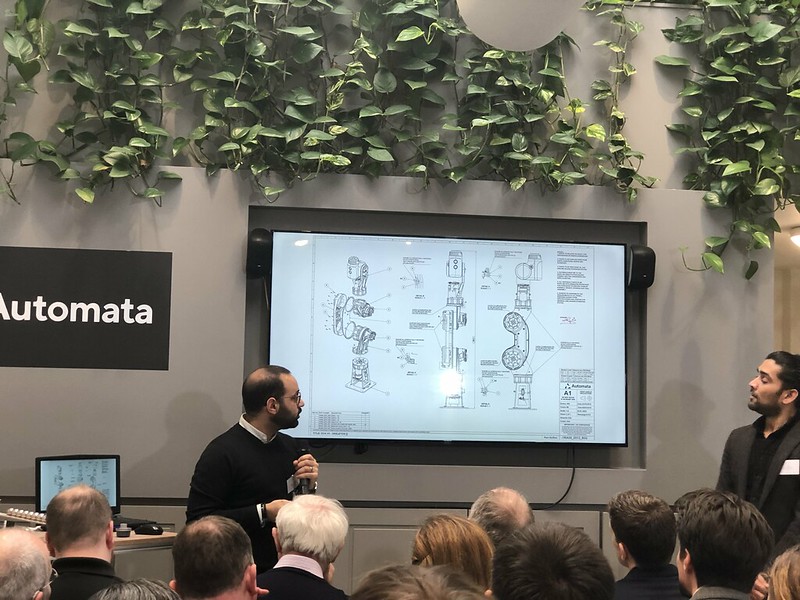
    Automata Eve launched the other week and I got to go along to their headquarters just off the Pentonville Road to find out more.

    Untitled

    Automata Eve first impressions

    At £5,000, the Automata Eve sits at a weird place in robot manufacture. It’s an expensive hobby device or a lightweight industrial product. Automata freely admitted that they sit somewhere between the £1,500 hobbyist kits and starter industrial models that are £20,000+ excluding arm tools, programmable control units and everything else required.

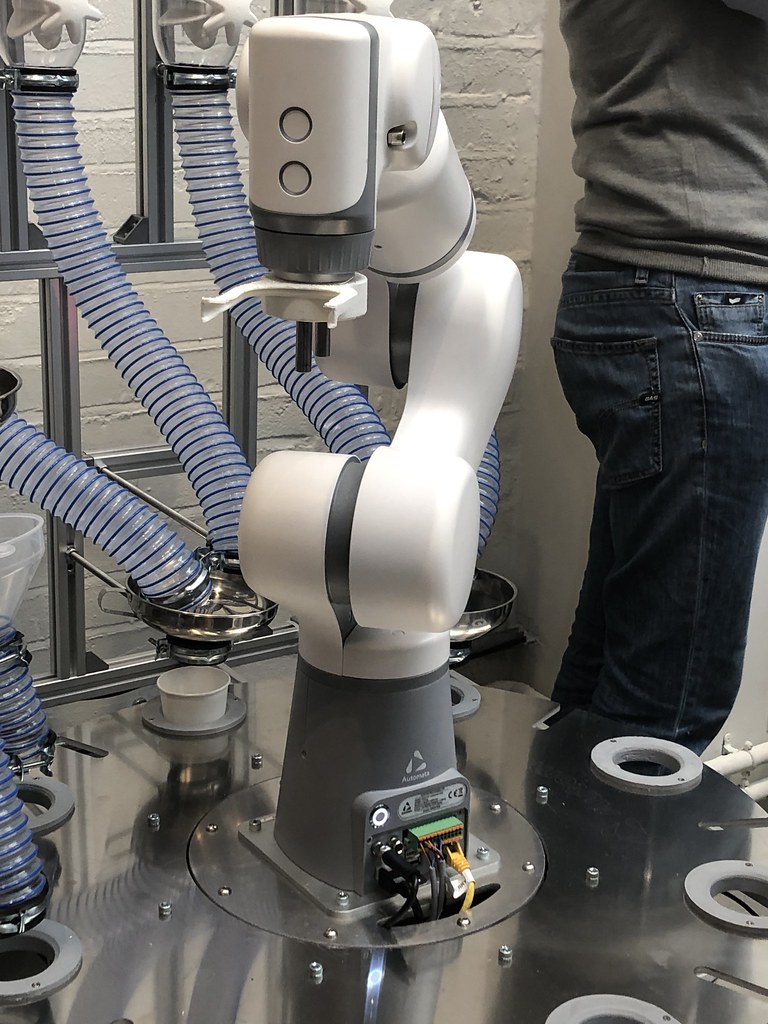
    Automata Eve human friendly product design reminded me a bit of early Apple Macs. Their very product design sophistication made them look like ‘toys’ in the eyes of IT departments. Automata’s Eve is an equally polished appliance as robot and it might take a bit more effort to have it taken seriously in light industrial roles.

    Eve even has a lopsided Picasso-esque face with two buttons on the top of the arm in a vertical manner.

    Untitled

    Maybe it needs a different colour palette of heavy plant yellow or yellow and black diagonal stripes better telegraph its industrial credentials.

    The shadow of Brexit

    Brexit afflicted sectors such as food preparation seem to be some of the people who have started to explore using Automata and rivals already. The companies realise that it will hard to get further workers from the likes of Stoke on Trent or Sunderland working on sandwich production lines. Robots are part of their plans to replace labour who decide to leave the UK. Automata assemble their robots in the UK, but their supply chain partners are half way around the world in Asia.

    Pain is the mother of invention

    The founders story reminded me a lot of the way that machine learning projects have historically been sold into clients by creative, digital and advertising agencies.

    They used to work for Zaha Hadid Architects and had used algorithmic design. This gave Hadid’s work abstract yet organic lines. So when they were looking to use a series of interlocking panels, they expected that these could be mass-made and bent by robotics.

    A bit like strategy and client services teams in agencies they over-estimated the capability of technology; in their case industrial robotics.

    That plan didn’t go too well. Which got them interested in why there weren’t light industrial robotics. A good number of years later and the Automata Eve was born.

    Industry robotics industry structure

    What really surprised me was how industrial robots essentially use the same components and innovation tends to happen in the software instead. For instance industrial robots use a compact way of strain wave gearing.

    Only a few companies make the components. This means that the industry is very horizontally structured like the PC or smartphone industries relationship between processor and software manufacturers.

    Robots are already accurate enough to get rid of workers who don’t care

    One of the case studies used in the presentation was about an industrial electronics company who replaced a human work station that did some pretty basic soldering.

    For reasons that one could assume to be a lack of work ethic. By contrast Foxconn, seems to have failed in its efforts of using robots for smartphone assembly. The reason is that they require a high degree of dexterity, rather like a watch maker. Robots still struggle with very accurate placement, but a lot of low volume manufacturing tasks don’t necessarily need the same level of accuracy.

  • UN Huawei + more things

    UN Huawei must be given equal opportunity to bid for 5G business | total telecomHoulin Zhao, secretary general of the International Telecommunications Union, told reporters from Reuters that 5G security remained of paramount importance but that there was no evidence to suggest that the use of Huawei’s network equipment should be restricted – the hasn’t read the UK government report on Huawei security flaws – the coincidence that Mr Zhao is Chinese is overlooked in the article. This also ignores issues around Huawei software engineering across its product range of network equipment with extensive backdoors built in that Huawei refuses to remove. The UN Huawei statement highlights the declining trust in UN bodies that have undergone state capture by China. More related content here.

    Apple’s Computer Vision Team is working on using Depth-based Touch Detection for Games & Virtual Keyboards – Patently Apple – depth based touch detection is important beyond the Minority Report style virtual keyboard interface. It could allow Apple engineers to design completely new ways of processing locative and contextual information mapped on the real world. It also means that we’re likely to be doing embarrassing gestures in the future. We will be closer to the idea of a web-of-no-web where the boundaries between the real world and the digital world are blurred and in some cases merged.

    Burger King under fire for ‘racist’ Vietnamese chopsticks ad | The Drum – really surprised Burger King made this mistake so close after the Dolce & Gabbana China debacle. One key consideration is that Yum Brands China that owns Burger King and KFC in China is a completely separate business. So Burger King might not be a truly global learning organisation. This happened in one of Burger King’s smallest markets – New Zealand is which is probably why it managed to sail under the radar of global brand vetting until it was too late.

  • A Shadow Intelligence by Oliver Harris

    I was given a galley copy of A Shadow Intelligence to read.

    TLDR: version of my review is that its a thoroughly modern spy thriller.

    The protagonist Elliot Kane is a British intelligence officer who has returned from Saudi Arabia to London. He is sent a video of himself in a room that he’s never been talking to a man that he doesn’t know. Harris takes the reader on a spy story that takes place in the Central Asian republics between China and Russia.

    It is a thoroughly modern book:

    • Addressing the confluence of interests between government and businesses going abroad that had long driven policy and actions in Africa and the Middle East. But is now driving along the Silk Road with the expansion of China’s Belt & Road Initiative and the quest for oil and mining
    • Privatisation of military, cyber and intelligence capabilities. We know have a private intelligence and military industrial complex. Edward Snowden worked for Booz Allen & Hamilton. Palantir do data analysis for intelligence, as does Detica for the UK. SCL Group ran outsourced psychological warfare programmes for western militaries and supported political interference in the developing world
    • Technology including modern information warfare over social media channels, fake news and deep fake videos. Even pretty crude efforts at the moment drive effective disinformation campaigns, deep fake video and audio completely undermines what the nature of truth is.

    Kane comes across as a jaded, human bookish character more George Smiley than James Bond. Harris did his research really well. He brings alive the locations and the main characters.

    If I had one criticism it would be that the end felt a bit rushed, rather like the author was trying to exceed a word count. Despite this I am happy recommending A Shadow Intelligence as a good leisure read. More book reviews here.