Blog

  • April 2024 newsletter – no. 9

    April 2024 newsletter introduction

    Welcome to my April 2024 newsletter which marks my 9th issue. We managed to make it through the winter and the clocks moved forward allowing for lighter evenings in the northern hemisphere.
    Strategic outcomes

    The number nine is full of symbolism in a good way. In Chinese culture it sounds similar to long-lasting. It was strongly associated with the mystical and powerful nature of the Chinese dragon. From the number of dragon types and children to the number of scales on the dragon – which were multiples of 9. You have nine channels in traditional Chinese medicine. In Norse mythology there are nine worlds and Odin the all-father hangs on the tree of life for 9 days to gain knowledge of the runes.

    Social media-related cognitive dissonance

    A couple of conversations with people, spurred me to write this next piece.

    I know it’s obvious and common sense, but it needs to be said occasionally. This time last year, I was on a Zurich work trip, providing support to a teammate running a workshop for a client who viewed the agency as the least worst option. We did good work and built temporary rapport, we got insight about the wider client-side politics at play. It was the classic example of the complexities involved in agency life and Lord knows we already have enough internal politics in our own shops to deal with.

    The photo I shared on Instagram at the time gave no clue to what was happening, serving as a reminder to consider the curated nature of social feeds when scrolling through.

    April work trip to Zürich

    New reader?

    If this is the first newsletter, welcome! You can find my regular writings here and more about me here

    Things I’ve written.

    • Fads versus real trends
    • A quick guide to jargon used in pharma marketing.
    • What my answers to Campaign’s a-list questions would look like.
    • Boutique e-tailers and why the multi-brand luxury retail sector has gone from boom to bust.
    • Very Ralph and other things – Ralph Lauren’s world building abilities and how others from a cancer patient or overseas migrant workers have bent the world to their needs, or made a new one.

    Books that I have read.

    • There are a few books that I revisit and the March 1974 JWT London planning guide is one of them. In many respects it feels fresh and more articulate than more modern tomes.
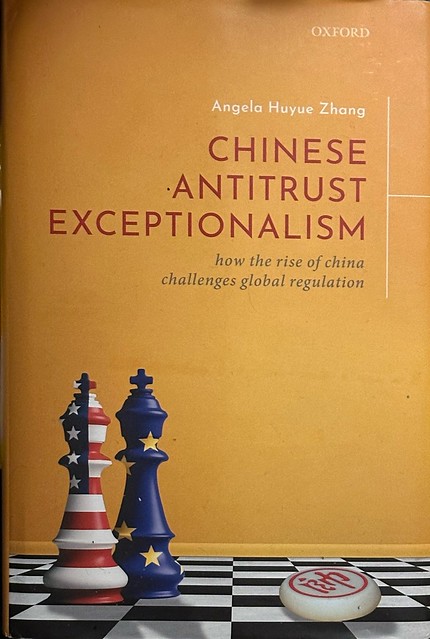
    • Chinese Antitrust Exceptionalism by Angela Zhang sounds exceptionally dry to the uninitiated. But if like me, you’ve worked on brands like Qualcomm, Huawei or GSK you realise how much of an impact China’s regulatory environment can have on your client’s success. Zhang breaks down the history of China’s antitrust regulatory environment, how it works within China’s power structures and how it differs from the US model. What becomes apparent is that Chinese power isn’t monolithic and that China is weaponising antitrust legislation for strategic and policy goals rather than consumer benefit. It is important for everything from technology to the millions of COVID deaths that happened in China due to a lack of effective vaccines. Zhang’s book won awards when it first came out in 2021, and is still valuable now given the relatively static US-China policy views. Given the recent changes in Hong Kong where she lives, we may not see as frank a book of its quality come out of Hong Kong academia again on this subject matter.
    • Van Horne and Riley’s Left of Bang was recommended by a friend who recently left military service. It codified and gave me a lexicon for describing observations of focus group dynamics and observation-based shopper marketing. Probably of bigger value to people more interested in the analytical side of behavioural science is the bibliography – which is extensive.

    Things I have been inspired by.

    Sustaining a sustainable brand

    Kantar do a good webinar series called On Brand with Kantar. I got to watch one of them: Why consumers ignore brands’ sustainability efforts. Consumers are reticent to trust in brand’s sustainable efforts. Kantar’s recommendation is to stay the course and continue to demonstrate real sustainability. Kantar’s work complemented System 1’s Greenprint US-orientated sustainable advertising report. There is a UK-specific version as well with half a dozen ideas for marketers published in partnership with ITV.

    Media platform trends

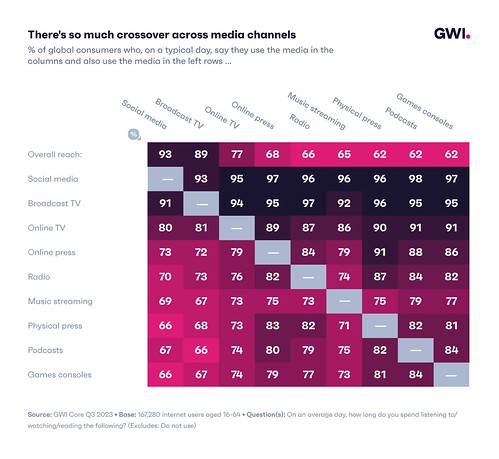
    GWI released their 2024 Global Media trends report. GWI takes a survey based approach to understand consumer media behaviour.

    • Broadcast TV still commands the greatest share of total TV time, despite Netflix, Amazon Prime Video and a plethora of other streaming platforms from Criterion to Disney+.
    • Survival/horror players are most excited about gaming luxury collabs, whether or not luxury brands are equally excited about survival or horror gamers is a bigger question.
    • Games console ownership has halved in the past ten years. This surprised me given how many of my friends have a Switch or PlayStation 5. It probably explains why Microsoft is focusing on being a publisher rather than on platforms as well.

    Japanese online media spend

    Dentsu published a report looking into 2023 Advertising Expenditures in Japan. A couple of interesting outtakes.

    • They focused exclusivity on internet advertising, which gives you a good idea on where they want the balance of media spend to go, rather than necessarily the right tool for the right job. Yes digital is very important, BUT, we live in a world were we are wrapped by and consume layers of digital and analogue media.

    We can see from GWI data that this viewpoint is likely to be still excessively myopic in terms of media due to offline – online media linkages. This is likely to be even more so in Japan that still has a more robust traditional media industry.
    There_s_so_much_crossover_across_media_channels
    • Internet advertising reached a new high, despite being a couple of years after the Olympic games were hosted in Tokyo. (Media spend when a country hosts the olympics tends to be skewed that year upwards).

    One thing I would flag is that this report is based on surveying people across the Japanese advertising industry and built on their responses. So there maybe some biases built into that process. Overall it’s a fascinating read.

    Social media engagement benchmarks

    RivalIQ published their 2024 Social Media Industry Engagement bench report, download it to get the full details. Three things that struck me straight away:

    • Macro-level decline across platforms on engagement rate, which matches the trends that Manson and Whatley outlined ten years ago in their Facebook Zero paper for Ogilvy Social.
    • If brands didn’t need enough reason already to reduce exposure to Twitter, the falling engagement rates on the platform add additional reasons. Overall video seemed to underperform on engagement compared to photos.
    • One thing leaped out to me in the industry verticals data, if you are looking to reach student age adults, why not consider collaborating with higher education institution social media accounts rather than influencers?

    Shocking health outcomes

    The Hidden Cost of Ageism | A Barrier to Innovation & Growth | Future Work – sparked a lot of discussion with its implications on workplace practices, particularly within the advertising sector. What was less discussed but more important was the implications of ageism related biases on healthcare treatment.

    Under-treatment or Over-treatment: Older adults may receive less aggressive treatment options or are overtreated because of age-related biases, rather than based on individual health needs and preferences.

    Dismissal of Concerns: Healthcare providers might dismiss older patients’ health issues as inevitable parts of ageing, potentially overlooking treatable conditions.

    Age-Based Prioritisation: In some cases, age influences the allocation of healthcare resources, with younger individuals being prioritised over older ones, assuming they have more “life worth living.”

    The Hidden Cost of Ageism | Future Work

    MSNBC News in the US did a report on what it called a ‘Post-Roe underground’ echoing the underground railroads to free slaves in the Southern states and the Vietnam war era draft dodgers who escaped north to Canada. This time it is to help women access abortion pills or procedures in other states or Mexico.

    MSNBC

    My friend Parrus hosted a talk on World Health Day, more on that here, the key takeaway for me was not trying to replicate developed market solutions in developing markets. Instead think about how it could be reinvented. Thinking that could be extended beyond health care to consumer goods, telecoms and technology sectors as well.

    Luxury market shake-up

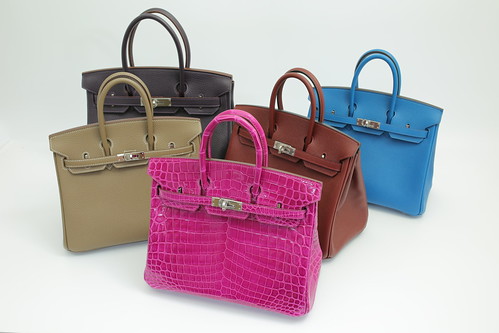
    Business of Fashion covered a US court case where two women brought a lawsuit against Hermès, alleging purchase of its sought-after Birkin bag is dependent on purchase of other products and is an “illegal tying arrangement” that violated US antitrust law.
    5D3_1690

    Hermès is more vulnerable than other brands because it owns its retail stores. The case, if successful could have implications far beyond the luxury bag-maker. For instance, how Ford selected prospective owners for its GT-40 sports cars, or most Ferrari limited edition for that matter.

    While we’re on the subject of luxury, LVMH are rerunning their INSIDE LVMH certificate which is invaluable for anyone who might work on a luxury brand now or in the future. More here.

    Morizo

    Toyota are on a tear at the moment. They correctly guessed that electric cars were too expensive at the moment and focused hybrids as a stepping stone to electric and hydrogen fuel cell production. They have also successfully use the passion for driving in their products and their marketing. The Toyota GR Yaris was a result of Chairman Akio Toyoda instructing engineers to make something sporty enough to win the World Rally Championship and affordable.

    He also outed himself as a speed demon who went under the nom de plume of Morizo.

    Quebec

    For many English speakers one of the most dissonant experiences is being confronted by a language you can’t speak. It’s part of the reason why ireland managed to become the European base of companies like Alphabet and and Intel. So I was very impressed by this campaign by the Quebec government to attract visitors and inbound investment.

    Things I have watched. 

    I watched Mr Inbetween series one in March and managed to work through series two and three this month. I couldn’t recommend them highly enough as a series. They just keep building on each other.

    Over Easter, I revisited some old VHS tapes my parents still had and rediscovered the Christopher Walken science fiction horror film “Communion.” It epitomizes its era, with alien abduction narratives emerging during the Cold War and permeating popular culture from “Close Encounters of the Third Kind” to “The X-Files,” tapering off after 9/11. “Communion” demonstrates how effective editing and minimal special effects can heighten tension and emotion. Despite the film’s incredulous premise, Walken delivers a fantastic performance.

    Modesty Blaise” is from a time when comic book adaptations were uncommon in cinemas. This 1966 adaptation of the 1960s comic strip shares stylistic similarities with “Barbarella” and stars a young Terence Stamp. I received a tape copy from a friend who was attending art college at the time. The depiction of the computer as a character with emotional reactions in the film feels contemporary, echoing the rise of virtual assistants like Siri and ChatGPT, despite being portrayed as a mainframe. It is interesting to contrast it with Spike Jonze’s movie Her made 50 years later.

    Useful tools.

    A lot of the tools this month have been inspired by my trusty Mac slowly dying and needing to get my new machine up and running before my old machine gave out.

    Time Machine

    Apple’s native backup software, Time Machine, serves as a personal sysadmin for home users. Regular backups are essential. If a crucial document disappears while you’re working on it, Time Machine, coupled with a Time Machine-enabled hard drive, allows you to retrieve earlier versions of the document, potentially saving your sanity in critical moments.

    Microsoft Office

    I prefer the one-off payment model over Office 365 services. I use Apple’s Mail, Contacts, and Calendar apps instead of Outlook. While Office is available for just £100, which is reasonable considering its features, I still prefer Keynote over PowerPoint for creating presentations.

    Superlist

    Many of you may recall Wunderlist, which Microsoft acquired, but much of its original charm was lost in the transition to Microsoft To Do. Superlist is a reboot of Wunderlist by the original team, this time without Microsoft’s involvement. It’s available on iOS, macOS, and the web, catering to both individual and team task management needs.

    https://youtu.be/2MzzbRhYlSA?si=04eBXH-MqKLpX2bN

    ESET Home Security Essential

    I used to rely on Kaspersky, and while I generally like their products, I have concerns about the potential influence of the Russian government. Therefore, I switched providers. ESET has a strong reputation and offers better Mac support than F-Secure. I can recommend their ESET HOME Security Essential package.

    Amazon Basics laptop sleeve

    I use a various bags depending on my destination and activities. Over the years, I’ve found that Amazon Basics brand laptop sleeves work well for my machines. They’re often among the cheapest options available and tend to outlast the computers they protect. 

    Laptop camera cover
    Cover on Mark Zuckerberg laptop camera! You must have to follow this:-

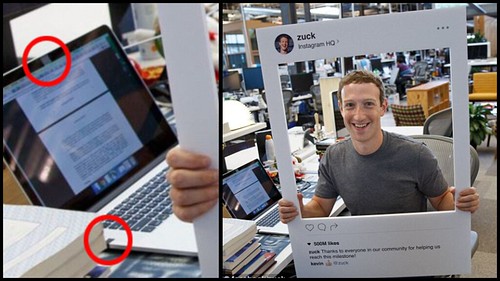
    The photo of Mark Zuckerberg’s laptop with tape covering the camera raised awareness about privacy. Webcam privacy covers, such as a sliver of plastic that slides across, are ideal as they allow your laptop to close fully. A pro tip is to use a red LED torch to clearly locate your camera when applying the stick-on cover.

    Protective case and keyboard cover

    I’m a big fan of clip-on polycarbonate shells to protect my laptop, as they provide a better surface for the stickers that personalize my machine over time. You don’t necessarily need a big-name case. The one I have came with a keyboard cover that works well. Anything that prevented Red Bull, coffee, or croissant flakes from getting under my keys is worth doing.

    Screen protector film

    The screen protector film provides great protection and is easy to apply and clean, even for beginners like me. I’ll update you if my opinion changes.

    The sales pitch.

    I have enjoyed working on projects for PRECISIONeffect and am now taking bookings for strategic engagements or discussions on permanent roles. Contact me here.

    More on what I have done here.

    bit.ly_gedstrategy

    The End.

    Ok this is the end of my April 2024 newsletter, I hope to see you all back here again in a month. Be excellent to each other and enjoy the bank holiday.

    Don’t forget to like, comment, share and subscribe!

    Let me know if you have any recommendations to be featured in forthcoming issues. 

  • Very Ralph and other things

    Very Ralph

    Very Ralph is a documentary that celebrates the career of Ralph Lauren. What’s interesting is Lauren’s lack of expertise in fashion and design. Instead Very Ralph captures Lauren’s childhood ability as a stylist and art director to eventually create a Ralph Lauren world. Very Ralph became a descriptor of a style and a lifestyle. It’s a very unique way of brand building that you usually see from the likes of Muji rather than many luxury brands.

    Polo Ralph Lauren

    If Apple could have a ‘Very Ralph‘ moment their role in luxury tech would be cemented beyond the Mac and the iPhone. Charlie Rose’s seminal interview with Ralph Lauren is also worth watching.

    Living wake

    A generation before me in Ireland, living wakes were a thing. Usually it was when a member of the family was migrating to the United States, Canada or Australia. Michelle ‘Mike’ Ng’s living wake was because she had state four cancer. The film is an emotional rollercoaster.

    Miss Goddess of Beauty

    A lot of what keeps Hong Kong (and Singapore for that matter), is the hundreds of thousands of domestic helpers who run middle class households. They cook, care for the elderly, clean the homes, do the shopping and bring up the children. While being cheery and sociable people they largely remain unseen and unheard; except for Sundays when they congregate in public spaces.

    Despite the western view of beauty pageants as objectifying women by MEN, Miss Goddess of Beauty is different. It allows these women to to be seen and creatively express themselves. The entire event is organised by the community of domestic helpers. Although the ladies are predominantly Filipinas, there is at least one Indonesian participant in the pageant – a solidarity built on a shared experience in Hong Kong.

    Quentin Tarantino on going to see The Matrix

    Tarantino recalls how the TV spots, rather than reviews or word-of-mouth drove the viewership of The Matrix. The power of advertising to build a world that excited the heck out of the audience before they saw the movie.

  • Chinese Antitrust Exceptionalism

    Chinese Antitrust Exceptionalism by Angela Zhang sounds exceptionally dry to the uninitiated. Zhang is a senior legal academic who works at the University of Hong Kong, which until recently got a front row seat to China disputes with both the European Union and the United States. Given the recent changes in Hong Kong where she lives, we may not see as frank a book of its quality come out of Hong Kong academia again on this subject matter if it was viewed to fall under the purview of ‘state secrets’. With the new security law that has come in, definitions have been left deliberately vague and wide-reaching.

    Chinese antitrust exceptionism

    So why is Chinese Antitrust Exceptionalism of interest?

    If like me, you’ve worked on brands like Qualcomm, Huawei or GSK you realise how much of an impact China’s regulatory environment can have on your client’s success. Around the time I worked on one client, they were shamed on the evening TV news and some of their staff disappeared for questioning by the authorities. They then reappeared months later looking haggard and worn out. It is new important for everything from technology to the millions of COVID deaths that happened in China due to a lack of effective vaccines.

    Zhang breaks down the history of China’s antitrust regulatory environment, how it works within China’s power structures and how it differs from the US model. The rise of antitrust was as much down to bureaucratic politics of the Chinese government.

    What becomes apparent is that Chinese power isn’t monolithic and that China is weaponising antitrust legislation for strategic and policy goals rather than consumer benefit.

    Zhang talks about how regulatory hostage taking and public shaming was a tool of the regulatory authorities from early on.

    The book then looks at foreign reactions to Chinese government from EU investigations to current US-China trade restrictions and discusses how China weaponised its regulatory frameworks making ‘hostage taking’ trans-national in nature.

    Last of it’s type?

    Zhang’s book won awards when it first came out in 2021, and is still valuable now given the relatively static US-China policy views. More on Chinese Antitrust Exceptionalism here. More book reviews here.

  • Boutique e-tailers

    The luxury sector is undergoing a transformation, and nowhere is that more apparent than in the world of boutique e-tailers. I am of a generation that grew up with boutiques, carefully curated fashion looks from multiple brands.

    Farfetch_8
    TAKA@P.P.R.S

    Exclusive

    As a child, my Mam would get me jumpers as I grew up from different small stores like this. To this day, the ultimate compliment she would give any item of clothing was that it was ‘exclusive’.

    As I started buying my own clothes I pivoted between sports shops for my footwear, Ellis Brigham for layers, Caran D’Ache – a menswear boutique in Birkenhead at the time for jeans and ‘going out’ clothing. (Having known the owner/manager quite well, I suspect that the store was named after the Swiss writing instrument company, rather than the pseudonym of French satirist Emmanuel Poiré). This was where I got my first down jacket (by Naf Naf), Oshkosh B’gosh dungarees and Champion sweatshirts. At the time Ellis Brigham was a sea of Polartec and Gore-tex with no down jackets in sight.

    I started venturing further afield and went to Quiggins in Liverpool, Affleck’s Palace in Manchester and what’s now the Victoria Quarter in Leeds. I’d also started coming down to London with friends to find brands I couldn’t get at home.

    Famous high-end boutiques like Browns built a reputation for championing up and coming womenswear designers like Hussein Chalayan and Alexander McQueen. They also helped the likes of Ralph Lauren, Jil Sander and Calvin Klein start seeing in London. At their best boutiques moved culture as curators and taste makers. I got my love of American workwear from Caran D’Ache and Japanese streetwear from the late lamented Hideout which was just off Golden Square.

    Department stores were the first aggregators of boutiques with a mix of single brand and multi-brand concessions under one roof. Brands like Selfridges, Harvey Nichols, Isetan, Lane Crawford, Mitsukoshi, Neiman Marcus, Saks Fifth Avenue, SEIBU and Shinsegae.

    These established businesses have their place, indeed LVMH owns a number of selective retail businesses like DFS (often known as T Galleria), Le Bonne Marché and Starboard Cruises. So multi-brand distribution has a place in the luxury retail mix. Over time the premium department store brands and LVMH’s select retail brand would both have boutique e-tailers within their brands providing an omni-channel experience.

    In the run up to COVID, multi-brand retail counted for 57 percent of luxury sales, management consultancy Bain expect this to decline to 36 percent of luxury sales by 2030.

    Online

    Online continues to disrupt retailing over a quarter century after it landed. The first casualties were book stores and music stores. Twenty years ago, one of the most enjoyable activities that I did in my spare time was rifling through record store shelves, digging for surprising or elusive vinyl records, CDs and DVDs.

    Some of the places were I did this are long gone, like Tower Records in Piccadilly Circus. On the flipside, new businesses sprang up to be online first, or online only. Amazon started as a book store and eventually became the modern-day equivalent of the Sears Roebuck catalogue.

    Luxury was no exception and a variety of dedicated boutique e-tailers sprang up:

    • Matches
    • MyTheresa
    • Net-a-Porter
    • YOOX
    • Farfetch

    In the same way that mobile operators were the key determinators of whether mobile phone shops were successful, luxury brands had the whip hand over multi-brand boutiques. Phones4U died when its relationships with EE and Vodafone came to an end. The FT article The implosion in luxury ecommerce implied a similar pivotal moment between Farfetch and Kering, but with Farfetch managing to sell itself to Korean e-tailing business Coupang instead of going into administration.

    One brand / one store

    Luxury brands have looked to gain more control over their customer experience and get closer to the customer overall. This has seen many brands open single brand stores. Up until the 1980s, Louis Vuitton sold mostly through department stores, now it’s mostly through its own brand channels. Some brands like Audemars Piaget, now only sell through their own single brand showrooms.

    The big name department stores continued to hold a position in the marketplace due to their own brand power, even while smaller mid-market stores in provincial cities folded.

    Over time, brands extended their shop front into the online sphere. This was done once two things were able to happen:

    • An all-up online and offline view of a given customer and CRM systems allowed this to happen. This wasn’t for efficiency reasons to go online only, but to provide an omnichannel service to match customer’s omni-channel lifestyles.
    • Getting this all-up view will also help with future EU legislation moving towards a circular economy.
    • The ability to provide a high level delivery experience for online purchases. This mattered less with fragrances than it did with watches and handbags. High security logistics providers like Ferrari were able to provide this to the main luxury brands.

    One small chink of hope for multi-brand stores is that single brand stores may be forced to either change business practices, or insulate themselves from legal action via authorised dealerships. A court case brought by two women against Hermés in the US claims that having to buy other products to get a crack at purchasing a Birkin bag is a violation of antitrust laws.

    The obligation to buy other products first, is what the women claim is an ‘illegal tying arrangement’ which is why Hermés might be in violation of antitrust laws. Other brand who have authorised dealers rather than their own showrooms are less likely to be at risk.

    Compressed middle-class

    One of the first things that I learned when doing LVMH’s INSIDE LVMH certificate was that the bulk of luxury purchases are made by the middle classes.

    Robert Gordon’s Rise and Decline of American Growth outlined how the middle classes in America (but also many other western countries). Income inequality, automation and globalisation drove a stagnation and decline in middle class numbers, even as the number wealthy increased.

    Globalisation elevated a new middle class in Asian countries like Japan, Korea, Hong Kong, Taiwan and Thailand. Energy drove middle class growth in the countries surrounding the Persian gulf and Nigeria. Louis Vuitton opened their first show rooms in the US in 1914, in Japan in 1978 (though department stores had been selling their products for years). The first Korean shop opened in 1984 and China eight years later.

    Over the past few decades this was compensated by new middle classes growing. They don’t necessarily have the earning power of a middle class westerner, but the purchasing power level may vary considerably. So a middle class consumer in a country like Thailand, Malaysia or Singapore might have more disposable income than someone in the UK.

    Japan’s middle class quickly reached stagnation due to the lost decades of economic growth after their 1989 asset bubble. Korea has gone through a similar challenge, it has seen raised consumption, but recently this is driven by household debt rather than prosperity.

    China

    Quantity is a quality of its own, which is a reason why Chinese consumers have been so important to luxury brands since the early 2000s when China joined the WTO and its economy took off. Once there was even a small growth in middle class numbers that represented a big increase in global luxury sector sales. The decline in economic growth due to the property sector bubble has dampened luxury sales to China. It is not only about the decline in ability to purchase, but also the decline in being seen to purchase western luxury goods.

    This less conscious consumption started early on during the Xi administration’s desire to combat corruption and aspire to a more equal society. Gifting declined. Economic decline accelerated this Chinese macro-trend.

    COVID and after

    COVID changed consumption. Money that would have previously been spent on experiences such as restaurant meals or travel transferred into things. Both single brands and boutique e-tailers got a lift in this environment. But a wider economic effect is still working its way through the economy. This effect is known as the bullwhip or Forrester Effect.

    This resulted in a number of economic distortions:

    1. Partial shutdown – Consumers no longer went to work or high traffic retail hotspots. Non-essential workers didn’t go to work. Logistics systems buckled under the weight of packages and luxury businesses diverted production to support medical needs such as LVMH’s perfumes businesses making hand sanitiser.
    2. Unusual increase in demand – Home working drove an increase in demand from media consumption and home improvement to buying more stuff from all that money they saved from not going out.
    3. Supply chain disruption – Air cargo prioritised medical supplies while existing stock sat in empty shops.

    All of this disruption which drove inflation, this reduced demand as consumers had less to spend.

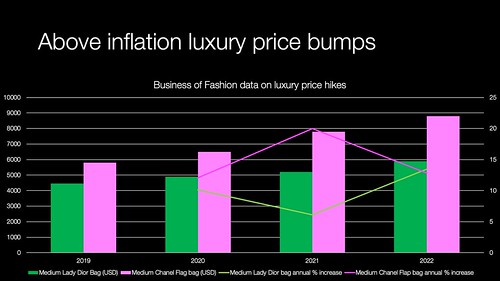
    Above inflation price bumps for luxury goods

    Luxury brands focused on their inflation proof ultra-high net worth customer base and raised prices to compensate for the reduction in sales volume. The fight for that reduced volume pitched multi-brand boutique e-tailers against their suppliers and the results weren’t pretty.

    Boutique e-tailers are going to the wall, or consolidating to weather the fiscal storm until such time as middle class consumers can start spending aspirationally again.

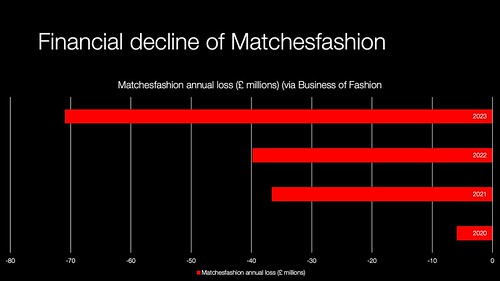
    Some of these businesses can’t be saved. Matchesfashion, which was bought out by Frasers Group didn’t have much chance.

    Financial decline of Matchesfashion

    You can find similar posts here.

    More information

    The implosion in luxury ecommerce | FT

    Case Study | Selling Luxury to the 1% | BoF

    Matchesfashion axes half its staff after going into administration | FT

    Harvey Nichols staff face redundancies as it eyes return to profitability – Retail Gazette

    LVMH-Backed Luxury Watch Site Hodinkee Cuts a Fifth of Jobs – Bloomberg

    Who Gets to Buy a Birkin Bag? | BoF

    The Rise and Fall of American Growth: The U.S. Standard of Living Since the Civil War (The Princeton Economic History of the Western World) by Robert J. Gordon

    Canada Goose is cutting 17% of its corporate staff | Quartz

    What’s up with 10-year-old kids in Sephora? Why the question itself is driving controversy | CBC News

    US Luxury Purchases Fell 15 Percent in February, According to Citi Credit Card Data | BoF

    Why Frasers Group Shuttered Matchesfashion | BoF

  • Campaign a-list questions

    Campaign recently published their a-list questions, go and check them out. Campaign is the default trade journal of the advertising industry, though you would be surprised how many agencies don’t have a subscription. I featured in a number these kind of features earlier in my career in Campaign sister publications and rivals. I was often pulled in because friends had suggested me.

    Here’s my take on the Campaign a-list questions below. It is a mix of the frivolous and the serious.

    Define your past year in three words.

    Eventful, emotional, grateful.

    • Eventful: a lot of projects happened and a number of projects didn’t happen at a very late stage, I lost a couple of good friends – one of whom to complications related to lupus.
    • Emotional: a number of highs and lows throughout the year.
    • Grateful: for the friends that I have made, most of whom have been professional connections, some long-standing.

    What brand will you be unable to live without in 2024?

    ‘Unable live without’ is a very first world problem related question. My workflow depends on the Apple eco-system. I use a MacBook Pro, a brace of vintage Apple Cinema displays and an iPhone. Brands that I am particularly appreciative of include HailMary magazine, Lipton Hong Kong café-style milk tea and Amazon Fresh online grocery shopping.

    Who or what lights up your life?

    • Friends and family.
    • Intellectually-challenging work.
    • Culture: I love museum exhibitions, galleries and arthouse cinema.
    • Reading.
    • Travel.
    • Music and my hi-fi.
    • Good coffee and baked goods.

    You can bring back a TV show from the past – which one?

    Maybe The Wire, a remake of John LeCarre’s Smiley books (huge fan of the BBC adaptations and the Tomas Alfredson film) or a new season of the Korean drama Stranger? I let my Netflix subscription lapse recently as I wasn’t watching that much on it and Netflix moved their payment system outside the Apple eco-system. Instead I have been buying the odd Blu-Ray or DVD here and there. Recent purchases included:

    It’s 2034 and AI is in charge. What are you pleased to see?

    Thoughtfully designed co-operative tools based on locally run apps using AI techniques rather than climate-unfriendly data centres. I hope that AI will be adapted to make workflow better so that we can do more with less drudgery.

    If you were a TikTok star, what audience would you serve?

    I have played with various AI tools. TikTok has lots of tightly-held opinions, but a dearth of quality information sources. I could see a niche for a channel that uses a virtual presenter to delivery high quality news analysis or education on the principles of a given subject, complete with links to high quality sources so that the viewers could educate themselves further.

    Cats or dogs?

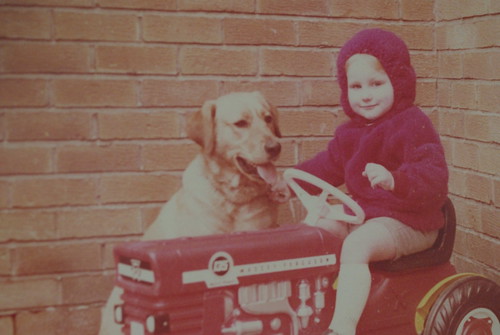
    I grew up with dogs. We had a yellow labrador through my formative years to age 11 or so. We’d moved to a different neighbourhood and the new neighbours threw a chicken carcass over the fence and that killed him.

    Young Ged rollin' with the big 'dawg

    Later on my parents had a couple of Jack Russell terriers. I spent time on the family farm where my Mam grew up and befriended the working dogs there that were from the collie family. Before my time, the farm also had a couple of cats to keep down the vermin population, at least one of which my Mam doted on as a child and still talks about.

    I also spent time with turkeys, hens, sheep, a pig, a pony, a donkey and numerous cattle. At the moment I wouldn’t have either a cat or a dog as a pet, see work/life balance question below.

    What is the one bit of work advice you use the most?

    In strategy, I have been finding with recent projects I have had to invoke Twyman’s law: “Any figure that looks interesting or different is usually wrong”.

    What is your work/life balance secret?

    I admit, I don’t succeed in achieving work life balance. Work tends to win out. Things tend to go high-speed or nothing. Trying to take out blocks of me time for self-care after a project, is the closest I get to it.

    What is the first thing you do to tackle a business problem?

    Listen carefully.

    You are hiring the person who will one day have your job – what do they need to know?

    The value of hard work and learning. I would prefer to hire for ‘heart’, work ethic and curiosity. They need to find their own path or journey, that works for them.

    How would your answers to the Campaign a-list questions look like?