I got a chance to watch the Vintage Tomorrows documentary the other evening. It was interesting that it had a range of practitioners such as William Gibson and Bruce Sterling in it. Cory Doctorow gave some of the explanations of the culture. There were a number of things that Vintage Tomorrows just scratched the surface on:
How can steam punk be decolonised? Steam Punk is based on a new-liberal society that thrived on child exploitation and had colonisation at its centre. Add to that is the fact that steam punk is the very essence of Stuff White People Like.
There is a question about the reductive dismal nature of science fiction, a theme that William Gibson has reflected on at length.
The relationship between our own convergent technology path and gadgets. This also brings in the control that people feel with hardware that they can build. There was aspects around specialisation that wasn’t touched up on, but its into this as well.
I thought that Vintage Tomorrows didn’t reflect more on Victorian originators of science fiction like Jules Verne beyond a name check. I would like to have heard more about William Gibson and Bruce Sterling’s take on things.
I felt that there was a huge opportunity missed in not getting Neal Stephenson on camera to discuss steam punk on Vintage Tomorrows.
With Yoon’s Election, It’s Time for China to Rethink Its Korea Policy – The Diplomat – China remains – at least in the short to medium run – South Korea’s preferred trading partner, with the country being Seoul’s largest export-import partner, over the United States, by a substantial margin. With slowing growth rates, uncertainty over the real estate sector, and declining demographics in China as looming challenges on one hand, and surging inflation and protectionist amplification of domestic industries in the United States, neither China nor the U.S. presents itself as the natural, exclusive economic partner for Seoul in the long run. More promising, perhaps, would be the exploration of expanded options and connections between South Korea and emerging markets such as Vietnam and India, as well as the European Union. Yoon centered his campaign around the allegations that the present regime has been too economically dependent upon China
Xerox PARC spins out predictive maintenance for IIoT – eeNews Europe – The Xerox Palo Alto Research Centre (PARC) has an iconic place in the history of the electronics industry, developing the ideas behind such innovations as the computer mouse, Ethernet and laser printing. But with Xerox waning in influence in the digital age and a focus on software and services, PARC as a subsidiary since 2002 has perhaps struggled in its open innovation role of custom R&D services. One area where it has been innovating is the Industrial Internet of Things (IIoT). It has now launched new venture to commercialize predictive maintenance technology that reduces unplanned downtime in industrial manufacturing operations. – ok this undersells the work that Xerox PARC did in software, operating systems, distributed services, user experience and networking, but the introduction of Navity is very interesting. There are certain limits to this for instance production lines that depend on several machines will still need scheduled maintenance
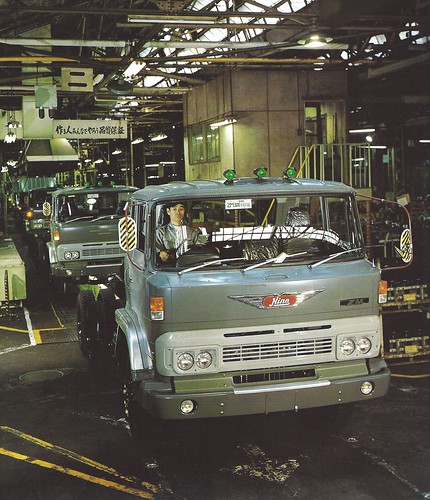
Hino Motors is a car and truck manufacturer best known for its iconic Hino trucks. It started its convoluted origin story spinning out of manufacturing company owned by Tokyo Gas.
Before there was Hino trucks, there were a small amount of half tracks and armoured personnel carriers made for the Imperial Japanese Army. After the war Hino got into the truck business and for a brief while also made cars. The pretty Hino Contessa coupé showed potential, but becoming part of the Toyota group saw Hino focus on commercial vehicles under its own name.
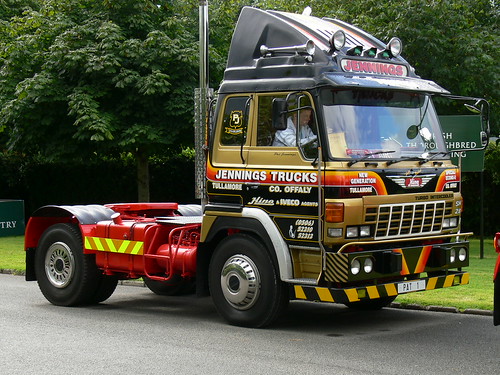
Hino trucks with their winged logo marked my childhood in Ireland. Hino trucks pulled palleted loads on taunt liner trailers, shipping containers and flat bed trailers of hay. The supermarket delivery wagons, the bakers lorry, skip deliveries, ready mix and the dairy picking up milk from my Uncle’s farm were all using Hino trucks. The distinctive unblinking three green lights on the roof of oncoming Hino trucks stood out of the total darkness of rural Irish roads.
I had Robert ‘Pino’ Harris to thank for making Ireland the Hino trucks capital of Europe at the time. And his Hino trucks success story is one of a singular focus on relationships and customer service.
Adidas ousts China chief as sales suffer after consumer boycott over Xinjiang | Financial Times – Allison Malmsten, sportswear analyst at China-focused consultancy Daxue Consulting, said that since the boycott, Nike and Adidas have ceded their top position on ecommerce apps such as Alibaba’s Tmall. In their place, local online retailers have promoted Li-Ning and Anta, making the “competition a lot stiffer”.Jonathan Cummings, Asia-Pacific president of brand consultancy Landor and Fitch, said that after years of market dominance, Adidas and Nike were being challenged by “cheaper domestic brands that have become stronger”.Adidas generated nearly a quarter of its sales in the Greater China region in the first half of last year, the bulk of which came from mainland China. – it will be interesting to see where adidas will try to go in China and whether they feel it is worth riling western customers to arrest their decline in China
The rising costs of China’s friendship with Russia | Financial Times – When the Russian invasion of Ukraine started two weeks ago, Jane Yan, a senior executive at a machine parts maker in eastern China, says she was not too worried about the impact. After all, buyers in Russia and Ukraine accounted for less than 5 per cent of the company’s overseas sales last year. But as the full ferocity of the Russian onslaught started to become apparent, the outlook shifted dramatically. Important clients in countries such as Poland and Germany cancelled orders with the Zhejiang-based company. “A Munich-based client said ‘it feels terribly wrong to send money to a country that is tolerating war in Ukraine — sorry’,” said Yan, who asked that her employer not be identified. She added that inquiries from European buyers have also fallen sharply since the conflict started. “I hope the war ends as soon as possible.” – I wonder how prevalent this consumer boycott actually is of Chinese products?
Culture
Why disco will never truly die — Quartz – interesting, but full of American privilege, but no love for producers like Giorgio Moroder, Luxxury, Dimitri from Paris, Late Night Tuff Guy or The Reflex
Ideas
How factory robots lead to human deaths – Futurity – “For decades, manufacturers in the United States have turned to automation to remain competitive in a global marketplace, but this technological innovation has reduced the number of quality jobs available to adults without a college degree—a group that has faced increased mortality in recent years,” says lead author Rourke O’Brien, assistant professor of sociology at Yale University.
“Our analysis shows that automation exacts a toll on the health of individuals both directly—by reducing employment, wages, and access to healthcare—as well as indirectly, by reducing the economic vitality of the broader community.”
Since 1980, mortality rates in the United States have diverged from those in other high-income countries. Today, Americans on average die three years sooner than their counterparts in other wealthy nations.
EACH NEW ROBOT PER 1,000 WORKERS LED TO ABOUT 8 ADDITIONAL DEATHS PER 100,000 MALES AGED 45 TO 54 AND NEARLY 4 ADDITIONAL DEATHS PER 100,000 FEMALES IN THE SAME AGE GROUP. Automation is a major source of the decline of US manufacturing jobs along with other factors, including competition with manufacturers in countries with lower labor costs, such as China and Mexico.
Previous research has shown that the adoption of industrial robots caused the loss of an estimated 420,000 to 750,000 jobs during the 1990s and 2000s, the majority of which were in manufacturing.
Can Intel out-design Apple in terms of chips? I think that is certainly possible, possibly even extremely likely
Can Intel compete with Apple on process? Possibly soon, if they managed to partner with Samsung or TSMC. Certainly in the longer term if Intel’s process engineers get their mojo back, or they continue to partner with TSMC or Samsung
Roundtable: A Brutally Honest Conversation on the Metaverse – Web 2.0 Is about the individual/the corporation, and Web 3.0 is about the collectivist statement, or the community / collectivist environment, in some ways. – interesting that there is a whole piece missing about web 1.0 being about personal and organisation publishing and communications. Web 2.0 being a web of data and creativity
3G graduation sees DoCoMo celebrating 3G wireless services and how they fitted into consumers lives. While DoCoMo has its service running for another couple of years, rival Au has shut down its 3G network this year. The ‘Graduation’ in 3G graduation is used in a similar way to how US technology companies use ‘sunset’ as a euphemism for shutting down a service.
In sectors outside technology like the 3G graduation film, the term graduation is signify an artist leaving an idol group. Japanese Idol groups like AKB48 and Morning Musume mirror the interchangeable team nature of Puerto Rican boy bandma Menudo. Like Japanese idol groups, Menudo appeared in adverts for big brands like Pepsi and McDonalds across Latin and South America (including Portuguese speaking Brazil). They even appeared in a Pepsi ad that ran in the Philippines. They also did two TV specials. Japanese idol groups contain pop stars with the following characteristics:
a type of entertainer marketed for image, attractiveness, and personality in Japanese pop culture. Idols are primarily singers with training in acting, dancing, and modeling. Idols are commercialized through merchandise and endorsements by talent agencies, while maintaining a parasocial relationship with a financially loyal consumer fan base.
When members leave the group due to contract violations, ageing out, or wanting to build a career of their own, they ‘graduate’. Like the 3G graduation film idols share an association with school imagery.
https://youtu.be/dKxjw3YntBk
Kit-Kat anime advert
Nestlé Kit-Kats are popular in Japan. They are especially popular during exam time. The reason for this is that the Japanese pronunciation of KitKat, “Kitto Katto,” sounds similar to the phrase “Kitto katsu,” which means “I believe you will win/you can do it.” The homophone nature of Kitto Katto meant that Kit-Kats became a good luck charm, with people having them or giving them as gifts for big days such as school entrance exams or even job interviews.
This explains why this anime advert directed by Naoko Yamada is around the theme of “Kikkake wa Kit Kat de,” or “Kit-Kat Creates the Chance,” and has a school related setting.
This is apparently the first of what promises to be a series of adverts being done by Yamada for Kit-Kat.
Modern car mechanical design
For someone who hasn’t bought a car in 25 years, hearing about how unreliable BMWS and Mercedes cars have become is a bit of a shock. I have driven hire cars and am aware that cars are now heavily reliant on computers. What I hadn’t realised was how cheap mechanical parts had become under the hood. The reason why they had been engineered down to a price, was to allow for the price of all the new electronics that make up the car driving experience now.
I started my work life off in a corporate research lab were we were developing a way of making a plastic manifold cover for a small Ford of Europe engine. This engine was destined for the Ford Fiesta and the first Ka if we had managed to get everything to work. The idea was that the engine would be a sealed unit. When it needed to be replaced it would undergo a factory recondition, or would be recycled. This was about reducing environmental impact, without impacting profits. But looking at some of the parts going into these cars now, I am shocked.
More in this video here.
Amazon luxury watch copies
Amazon is a den of iniquity in terms of shoddy products and fakes. German watch YouTuber shows the variety of watches that steal the design language of watches from the likes of:
Nomos
TAG Heuer
Breitling
Rolex
Audemars Piguet
Patek Philippe
All of these come in at about $100 price. It is interesting how the Chinese factories turning these watches out have managed to get their way around the brand police. Finally, I am surprised to see Chinese manufacturers relying on a cheap, but reliable Seiko movement for the most part. Which is probably down to the weird deficiencies in Chinese engineering that means that you don’t see Chinese made rollerball pen refills.
The amazing design of the jerry can
Great video by a Scottish YouTuber who covers why the jerry can was such a clever product design and the history of the fuel container. I did not realise that they were tested in the Spanish civil war. More here.
NFTs and Ralph Bakshi’s animated adaptation of The Lord of The Rings
The problems with NFTs. NFTs sprung out of the move to decentralised finance or cryptocurrency. NFT are smart contract linked artefacts. These were seen as a panacea for creatives to make money during COVID. This video is an interesting discussion on NFTs, and uses the analogy of investors buying real estate that drove the 2008 mortgage crisis. The crypto-economy has many of the same drivers.
The guy who made this video also did a really good exhaustive history of Ralph Bakshi‘s The Lord of The Rings film that preceded Peter Jackson’s The Lord of the Rings trilogy by a couple of decades, and the BBC’s radio adaptation by a few years. I am a fan of all three, but am in no doubt that Peter Jackson’s film in some places is a shot-for-shot copy of Bakshi’s film and borrows dialogue from both Bakshi and the BBC.
Sony and Honda reveal plans to jointly make and sell electric vehicles | TechCrunch – this might also explain why Sony’s ‘concept’ car seemed to have a lot of money put into it, to make it look like a finished product a couple of years ago. Sony and Honda’s EV venture is a lesson for corporate Japan | Financial Times – the FT makes a number of good points about the relatively junior role that Honda is taking in the endeavour and that Sony making a decision to go independent indicates that consolidation of vendors in the electrical vehicle space is far off. I expect that the Sony and Honda deal in this respect is partly the pressures driven by the amount of ‘dumb capital’ chasing electric and automotive vehicles.
Sony and Honda likely see their deal as an antidote to that pressure. There were also fair comments made about relative software expertise between Sony and Honda, however I would argue that there is still a need for stable underpinnings of the software from the likes of QNX. But in the critique of the previous motor industry partnerships isn’t fair. For instance, Yamaha has a long history of taking concepts and designs to Toyota for them to build them. The most iconic of which was the Toyota 2000GT. So in many respects Sony and Honda are working on similar heritage to others.
It is interesting that we haven’t seen a similar pairing to Sony and Honda between Samsung and Renault, given their Korean car assembly joint venture. It is also interesting that Apple has failed to secure a similar partnership to Sony and Honda in its car efforts so far.
China’s Two Traps by Keun Lee – Project Syndicate – China’s economic slowdown suggests, the next phase of its development is rife with challenges. The country risks being ensnared by two traps: the “middle-income trap” (the tendency of fast-growing developing economies to lose momentum once they reach middle-income status) and the Thucydides Trap (when tensions between an insecure incumbent hegemon and a rising power lead to conflict)
Why are Chinese students so keen on the UK? – BBC News – The initial attraction of Glasgow – as well as its solid academic reputation – to many was how the Victorian university buildings looked on the brochures, rather like Hogwarts from the Harry Potter films
How China’s Ambitious Belt and Road Plans for East Africa Came Apart – The Diplomat – Chinese actors typically approach BRI deals with two contradictory assumptions: First, the political leadership with whom they are dealing is either too weak or too venal to challenge contract terms that decidedly favor China; and, second, these same leaders will be strong enough to fend off resistance to ambitious infrastructure projects by opposition politicians and civil society groups while also mobilizing the financial resources necessary to sustain expensive, long term projects. – they expect the kind of smooth running process that they would have in China, but not surprisingly don’t get it
Chinese lenders squeeze African borrowers even harder | Financial Times – Chinese lenders are imposing even more stringent collateral requirements on low-income country borrowers than previously known as they seek to hedge risks from their extensive overseas development finance programme. Under a $200mn loan from China Eximbank for the expansion and modernisation of Entebbe airport, the Ugandan government is required to channel all revenue from the country’s only international airport into an escrow account, according to the contract obtained by AidData, a US-based research lab. The document highlights a long-running controversy over the loan to Uganda’s government, which damaged its relationship with the bank. And more here: China cobalt mine deal was ‘injustice’: my country did not get anything, ex-DRC leader says | South China Morning Post
Hong Kong
Chinese fitness app Keep files for Hong Kong IPO · TechNode – interesting that this is going ahead given the kind of data that Keep would have. One only needs to look at the opsec failures that Strava revealed of American forces in the Middle East and Afghanistan
The war in Ukraine is going to change geopolitics profoundly | The Economist – Japan, Singapore, South Korea and Taiwan joined in sanctions against Russia, as did Australia. The change of mood in Japan has been particularly striking. Over the past decades it has tirelessly wooed Russia, in part to counterbalance China but also in the hope of settling the problem of four northern islands seized by the Soviet Union. Abe Shinzo, the former prime minister, met Mr Putin 27 times, including a trip to an onsen bathhouse. Now, under Kishida Fumio, Japan has frozen the share of Russia’s central bank reserves held in the country and is urging fence-sitters to take a clearer stance against its former pal. The end of the cold war was never going to usher in perpetual peace. But the Ukraine crisis is giving new form to the possibilities for future conflict and ways in which it may be averted. It is raising the previously outré possibility of territory being stripped from a developed country by force. By bringing Russia and China closer together, it is putting a new burden on the system of American alliances that partially encircles them. It has started consolidating Europe’s belief in itself and its ideals, and may increase its willingness to fight for them; it may also be seeing Germany and Japan, a lifetime after their defeat in the second world war, taking on new martial roles – the military rise of Japan will be worrying for China
Ukraine conflict risks uncontrollable escalation of cyberwarfare – Nikkei Asia – When and if Russia, or some other advanced-hacking state, pulls these tricks against a better-prepared adversary, resulting in a tit-for-tat escalation that could quickly spin out of control. Given the historical weakness of digital security in much of the U.S.’s civilian infrastructure, notably the electric utilities and grid, we can imagine a situation in which Russia or China, or some other entity causes not just inconvenience but casualties, including deaths. What would the U.S. do then? If Russia took down electricity from Boston to Washington, New York to Chicago, the American people would get very, very angry. What would an American government do next? The U.S. has said, with strategic vagueness, that an attack on critical infrastructure, including digital infrastructure, could ultimately trigger a military response. Then what? In 1962, futurist Herman Kahn published “Thinking the Unthinkable,” pondering nuclear-war scenarios in ways that few of the people who had control over those civilization-killing weapons had ever considered. No one wanted to prevent nuclear war more than Kahn, in part because he understood what it would mean. We do not believe that nearly enough thinking about cyber-unthinkables is taking place today, nor the escalation scenarios that would bring them on.
Chinese telecoms giant Huawei has been helping Putin’s efforts to stabilise Russia’s internet | Daily Mail Online – Huawei, which reportedly has five research centres in Russia, is said to have ‘rushed to Russia’s aid’ to support its internet network in the face of the attacks. A report, which appeared on a Chinese news site but was later deleted, claimed that Huawei would use its research centres to train ‘50,000 technical experts in Russia’. – The Mail on Sunday is now covering the kind of stories that previously only featured on the English language pages of late lamented Apple Daily Online published out of Hong Kong.
Arm China CEO asserts semiconductor joint venture’s right to pursue an IPO independent from its SoftBank-owned British parent | South China Morning Post – “Arm has written to Chinese authorities that Arm China won’t survive without [the British firm’s] support,” Wu said. He indicated, however, that Arm China has already developed the capability to continue its operations separately from Arm in the UK. The stand taken by Wu in Arm China forms part of a larger effort by the country’s semiconductor industry to overcome US trade sanctions and build a world-class chip supply chain. The dispute with Arm has not slowed down its Chinese joint venture’s business under Wu. Last year, Arm China generated US$700 million in total revenue, including intellectual property licensing and royalty fees. Arm’s share in its China venture was about US$500 million last year, according to Wu. “Arm can’t afford to lose its share of revenue from the Chinese market,” Wu said. He indicated that the Chinese joint venture has hit all its goals – including revenue, net profit, and research and development spending – which were set five years ago. Wu said Arm China’s biggest contribution to the Chinese chip design industry was to open the company’s source codes to domestic customers, “giving them freedom to develop their chips and raise their capabilities to a global level”. He also said he was displeased by Arm’s decision in May 2019 to cease business with Huawei Technologies Co, following Washington’s decision to add the Shenzhen-based telecommunications equipment maker to the US trade blacklist. – I suspect Mr Wu is working on behalf of the Chinese government in ‘war by other means’
Its really hard to get your head around the situation playing out in Ukraine. One of the best set of videos that I have seen to try and make sense of what’s going on in Ukraine is done by Chris Cappy. He admits in the last video that his jocular tone is a way of dealing with the horror of it all and his analysis seems to be on point. I have embedded his Ukraine related videos here:
Beyond the horror playing out with Russia’s invasion of Ukraine; what will be some of the global impact of the Russian invasion of Ukraine?
I have put down some thoughts on the effects of Russia’s invasion of Ukraine into three buckets:
Short term effects
Medium term effects
Long term effects
Short term effects
Bread riots and inflation
The invasion of Ukraine will disrupt the country’s wheat harvest. Ukraine is responsible for 10% of all global wheat production and is a major exporter.
Developing world consumers are already suffering from the rise in food prices. This might be felt especially hard in the Middle East, where the price of bread is often subsidised by the government to help prevent riots. It was one of the factors that drove the ousting of former Egyptian president President Hosni Murbarak as part of the Arab spring series of movements.
There have been past bread riots in other countries like Algeria and Jordan at a time of massive civil disturbances. One of the first impacts of Russian actions in Ukraine may play out with disturbances in the developing world.
Russia is also a wheat exporter, but ironically won’t benefit from the price rise due to long term contracts that it has with China. China previously leased land responsible for 5 percent of wheat production in Ukraine. China had also invested in Ukrainian pork farms.
Oil and gas
The impact on global oil and gas prices has been immediate. Oil prices had been high anyway as the oil industry ramped up and tried to match post-COVID shock supply chains struggle to get back in sync. Sanctions on Russian oil have been implemented by oil traders faster than western governments have implemented them. Taking Russia out as a supplier is likely to drive western customers in a number of directions in the medium and long term. In the short term we may have power and heating shortages. Russia currently doesn’t have pipeline capacity to ship oil and gas to China in the kind of volumes that would compensate for reduced Western demand. So you might see some of that oil being shipped in sanctions busting tankers, again the challenge would be finding ‘ghost boats’ that have capacity.
Western inflation versus China inflation
China has probably worked out the calculus of products that it loses in the short term, versus long term products from Russia as a pariah state at below global prices as Russia won’t have a choice. So we can expect China to benefit from lower inflation inputs than other countries in the short to medium term. It will be inputs from oil and gas to wheat or titanium foam. This gives some Chinese businesses a comparative advantage versus their competitors, particularly western countries.
Western European concerns about energy, particularly running into winter are acute and energy transformation to lower carbon options will take time.
Russian inflation
The rouble has dropped in value by 30 percent as soon as sanctions went in. So one would think that the effect on inflation would be immediate. But you also have multinational companies withdrawing from Russia. In the short term, many products from fast moving consumer goods to clothing and home furnishings will quickly no longer be available. Even smartphone sales of Chinese brand smartphones have plummeted, which gives you and idea of what western sanctions don’t do, the plummeting rouble will do instead.
Many of these multinational companies will no longer be manufacturing in Russia either, which will create a decrease in both supply and demand. So the impact on short term inflation may take a while to become clear. It is likely to impact unemployment as well.
Russian banks and the central bank are extremely capital constrained which will not only affect monetary policy but providing sufficient credit to keep businesses going. What you will see is a brain drain of the educated and the talented as they don’t really have a future at home. Which is why Russian’s have been paying €9,000 for a railway ticket from St Petersburg to Helsinki. Talented Ukrainians are either engaged fighting the Russian army in Ukraine, are internally displaced in western Ukraine or have already left the country.
If Russia goes to martial law then all bets are off in terms of financial damage because that would likely be the least of government’s concerns in terms of maintaining other aspects of control.
Medium term effects
CHIPS Act & strategic capability
The US has looked to promote domestic semiconductor manufacturing through government investment. However inert neon and krypton gas, which is used in the semiconductor manufacturing process is supplied by Ukraine. Russia and the Ukraine were responsible for half of all global production of these gases. This will impact US national security and development of semiconductor manufacturing as a strategic capability.
Neon mirrors shortages of critical materials for western countries that will impact high technologies and engineering using performance materials. Western countries will have to think about how they update their own strategic capacity to make these materials. This covers a wide swathe of materials including:
Lithium – something that Ukraine has large deposits of
Industrial and jewellery grade diamonds.
Uranium
Titanium foam. Titanium foam is the raw material that titanium alloys are made from. Currently two out of the top three producers are China and Russia. Given what has happened with Russia, the risk calculus will change around China.
There has been a steady tempo of voices on the need to have strategic capability in critical areas like lithium and rare earth metals. This will likely be mirrored by China with its five year plans. The degrees of will to achieve strategic independence will dictate the amount of time that it takes to implement.
Innovation
Being cut off from western capability will place two problems on Russian innovation:
Access has been cut off to critical resources. Yandex has already expressed concern on how this will affect their business.
Over time, access will be reestablished through extraordinary means, but will incur additional costs. So Russian innovators might be able to acquire foreign critical materials with enough money. These will have to be funnelled through front companies in third countries in places like China and the Middle East. This is effectively a tax on Russian innovation.
Russia has some semiconductor capability, but it is way behind modern manufacturing, so it relies on foreign manufacture.
This all means Russia will be an ideal market for Chinese vendors. Huawei has already been helping Russia with their networking and information security needs. Other Chinese vendors will end up dominating other aspects of Russian technology from automation to smartphone apps. Over time Russia will fall behind and end up being a supplier of raw materials and source of skilled labour for Chinese enterprises. Having a Russian version of WeChat and Weibo with similar censorship would be attractive to the Russian government.
Russia is already behind in semiconductor manufacture, but it might be helped by China’s similarly sanctioned semiconductor companies. Russia has been trying to get self sufficient in products like computer servers, but Chinese chips will be seriously behind the chips that they’ve already had made in Taiwan.
Russia will probably do everything that it can to shield its defence industry from impact. Not only in support of its policy aims, but its one of the few value add sectors where Russia is a peer with China. Otherwise post-Ukraine, Russia’s negotiating position with China would be more akin to China’s relationship with sub-Saharan African countries or Sri Lanka.
Maintenance
Most of the civilian Russian aircraft fleet is of Boeing and or Airbus aircraft. The only access to maintenance parts will be the ones that they have on the shelves. Over time Russia might be able to reverse engineer and manufacture at least some parts. Electronics may prove harder. However Russian aircraft no longer have the amount of destinations that they can fly to with passengers or air freight, so they can likely cannibalise much of the fleet for spare parts. And since the majority of the aircraft are leased from Irish companies, there will be little blow-back that the Russian government would be bothered about at the moment.
Maintenance will also need to be done on trains and the railway network, oil and gas extraction equipment, manufacturing production lines and even hospital medical equipment. A similar mend and make do approach will likely be needed for all these sectors, which will slow down economic activity and make it harder to climb out of recession.
Rebuilding
If the second Chechen war is anything to go by, rebuilding Ukraine will be a very costly endeavour that will need to be bankrolled by either Russia or the west. As the west found out in Iraq, winning the war is the easiest and cheapest part. Rebuilding and trying to a puppet government in power with an insurgency funded by western citizen direct contributions and government funding could be a real challenge. As would trying to integrate Ukraine into Russia. Even the most draconian of measures have a high financial cost as well as societal and moral related issues.
Footage has also indicated that Russia will need to rebuild its military apparatus. The tyres were rotting off Russian and Belorussian vehicles for the want to proper care and maintenance programmes. In preparation of a future conflict with NATO, or further down the line China, Russia couldn’t afford to take those kind of losses. Wars are a shop window for the defence industries and this won’t be doing any favours for foreign sales of Russian armed vehicles, anti-aircraft systems or aircraft.
The performance of equipment in Ukraine is in sharp contrast to the veneer of professionalism and technical excellence shown by Russian forces operating in support of, and on the ground in Syria.
Russia will need to replenish ammunition supplies, maintain or replace artillery barrels and replenish field rations. Word will get around about the poor state of field rations. It will need to revamp its approach to logistics and supply chain management because everything that I listed was entirely preventable. All of this rebuilding will be challenging if Russia faces a sustained insurgency. China spends more on internal security than it spends on external facing military. NATO estimates that Russia would need to have a minimum 400,000 soldiers to maintain control of Ukraine. If Russia followed the same density of soldiers to population that it had in Chechnya, it would need 4 million soldiers.
There are some terrible options to consider:
Cull a proportion of the population, Russia is already a pariah state after all. Ignoring for morality of this for a moment which would be a huge issue in Russia, we know that this would represent tremendous logistical challenges as it did for Nazi Germany. But former Russian leaders, notably Josef Stalin killed a lot of Ukrainians including starving many of them to death and Mr Putin has proved himself to be a student of history
Internal exile. Stalin exiled the Cossack community of Crimea to Siberia. It decimated social cohesion and the ramifications of this exile is still felt by the Cossacks. Russia could do this to portions of the Ukrainian people. This would present a logistical challenge and an economic burden on Russia. If Russia thinks that sanctions are bad now, either of these two options would make current economic decline sound like paradise.
Paying for rebuilding will be challenging, if Russia manages to hold Ukraine, it might be able to exploit its rich natural resources like lithium deposits. But these will be sold at a considerable discount to the likes of China or India. We are unlikely to see Russia as a serious player in the lithium ion battery market.
Russian recession
When you take jobs, economic activity and capital flow out of an economy a recession will be inevitable. Many of the jobs that Russia will lose will be in middle class sectors including management, banking, the professions and business services. No matter what these companies do to try and mitigate the impact on their former staff, the impact will be felt economically in Russia.
Add to that the obliterated economy in Ukraine that might be dragging Russia down even further.
Over the longer term Russia will be selling their export products at a discount due to fewer customers and a more expensive route to market. So it will be harder for Russia to climb out of recession.
Reshaping of supply chains
Russian oil and gas has previously focused predominantly on selling oil and gas to Europe and Turkey and will be covered with sanctions. It will take a while to make alternative pipeline capacity to go east to China. Previously Russia has made use of foreign LPG terminals. Presumably these will cut access to transport by sea for Russia. Liquified natural gas tankers are expensive and Russia’s largest domestic LPG terminal is on the wrong side of the world, just down from St Petersburg on the Gulf of Finland. This would be the equivalent of drinking a venti mug of coffee with a teaspoon.
Russia has been experimenting with shipping some LPG by train to Northeastern China. In terms of helping finance future projects, China isn’t likely to fund LPG projects that would give Russia to foreign markets other than itself. This would be one of the first areas where we see Russia clearly as the junior geopolitical partner beholden to China. So a gas pipeline to China is likely to be the preferred route to market.
Russia is in a slightly better position with oil. its easier to ship by sea and for the right price, Russia could find customers beyond China.
Consumer sanctions busting
Russia will have already started thinking about sanctions busting, but doing this in a big way will take time, money and planning. At a consumer level, Russians will be looking to safeguard wealth through portable assets that are liquid, or can be easily made liquid. This means foreign currency, crypto-wallets, luxury watches, diamonds and precious stones. There has already been a run on the rouble at Russian banks as citizens look to obtain foreign currency and Russia has implemented capital controls on people leaving the country.
Cybercrime
It’s only a matter of time for Russia to tap its cyber criminal community and state hackers to come up with a source of foreign currency to help the Kremlin. These will be more capable than what North Korean state hackers have historically being doing. Ransomware payments will likely come over cryptocurrency. The problem with cryptocurrency is that the exchanges are becoming increasingly centralised, so criminals will be playing cat and mouse with the likes of Binance. The cryptocurrency sector in Hong Kong may be more fruitful. The COVID quarantine situation and regulatory uncertainty in Hong Kong won’t deter Russians keen to launder crypto into foreign currency and access to the global financial system.
Finance
Russia will try to get around foreign payments through a number of ways. Asianometry have done a really good exploration of this topic and I figure that you could do with a video break in this dystopian discussion of Russia and Ukraine. We have seen Russian banking systems sign up with Union Pay, which has limited acceptance in the west (usually big department stores that rely on the Chinese tourist trade like Selfridges in London and Brown Thomas in Dublin).
Long term effects
At the moment there isn’t a clear off-ramp for sanctions against Russia. One might see softening of sanctions in the developing world, for Russian products at the right price. The longer that sanctions remain, the harder it will be for Russia to regain its global economic standing once they are lifted. Russia hasn’t been a trusted partner at the best of times due to systemic corruption. Systemic corruption will be further fuelled as the country falls under Chinese influence, there won’t be a need to meet ESG driven checks and balances. It will face sustained cynicism in the west with regards its motives and will increasingly become less relevant.
In addition it will be locked into draconian financial deals with China which would make it harder to kick start the Russian economy. Globalisation will have created alternatives for its higher value goods, so will need to rely its commodities. It will be a third line supplier for strategic materials like industrial diamonds, uranium or titanium because of the trust deficit.
Russia declining, China rising
Russia is already struggling for relevance in the Russian Far East. The economic gravity is moving away from Russia towards China. Chinese companies are leasing farm land and forestry. Russian financial distress will encourage this trend much faster. The Russian Far East is part of an ‘unfair treaty’ between Russia and China during the 19th century. While China tries to keep a lid on the discussion about this, it is on the radar of Chinese nationalists. The question of Russian sovereignty will come up at some point and Russia won’t be able to secure any foreign support.
China will be Russia’s banker of last resort and given that the yuan isn’t transferrable, Russia won’t be able too disconnect at a later date. China will use favourable pricing to get hold of Russian resources, Russian expertise and privileged market access. All of this will come at the expense of Russian businesses, entrepreneurs and the Russian taxpayer.
Russia will have been cleared off the map for sporting events, an area that China attaches great importance to for national pride.
The fall against China will transform the China-Russia relationship in a coercive way, similar to what we have seen China do with African countries.
Sanctions busting
Taking apartheid era South Africa as an example. South Africa was able to buy arms from East Germany, despite the communist state’s support of the ANC. Chinese arms were purchased by South Africa and used to equip their allies fighting in Angola. If the price is right, Russian arms will still be sold abroad. We know that North Korea has serviced and refurbished Soviet-era equipment like T-55 tanks for a long time and Iranian arms pop up across the developing world including medium range missiles and drones. So there will be customers there for Russia, at the right price. What we might end up seeing is that Chinese arms are seen as ‘more premium’ due to superior technology. Russian private military contractors will be used to earn foreign currency, wherever there is money on the table.
We can expect Russia to be able to obtain at least some material that it considers to be vital to its needs and there will be some strange bedfellows involved. This might be through convoluted and more expensive means. Countries that fully supported Russia in the UN are pariah states anyway, so they would be of limited use as conduits. But they are likely to be customers for Russian exports. For instance, North Korea could be enjoying more oil at a lower price, if the rail link across the Russian border would be able to handle a long tanker train. Or if Russian ‘ghost tankers’ manage to do transhipment.
So they may use third parties countries that abstained from the UN motion
Algeria, Equatorial Guinea and Iraq. Russia presents an arbitrage opportunity for these countries. If Russia is desperate for foreign currency reserves, these countries could buy Russian oil at less than their own cost of production. Perform an offshore ship-to-ship transfer or fake paperwork for a full tanker and sell Russian oil as their own. Russia would be losing money this way but it offers an opportunity to get hold of foreign currency.
China is going to be Russia’s leading economic and development partner. This is likely the key conduit for foreign products into Russia. However, where China is restricted in key areas such as technology, Russia will need to look further afield.
Bangladesh and Pakistan. Pakistan has a lot of experience in sanctions busting and used to build their nuclear weapons programme over the past number of decades. It also has an ambivalent relationship with western countries, although its tight relationship with China might make its willingness to help Russia have limits.
Bangladesh and Pakistan are the number two and number three countries in ship breaking. When Russia needs ‘ghost tankers’, being able to buy ships that are due to be scrapped will be the easiest way of doing this. Having ships pirated in the straits of Malacca by corrupt Indonesian military or Filipino Islamic terrorist groups would be a higher risk, less reliable source of ‘ghost tankers’. If Russia wants to sell oil or arms, it will need access to shipping. Ghost ships are already estimated to represent about 10 percent of global oil tanker capacity. Prices have already been rising for older ships due to be scrapped prior to the Ukraine invasion as the demand for ‘ghost ships’ had increased.
South Africa and India. India and South Africa are long-time partners of Russia in the diamond trade and would be likely called upon to help Russia get its diamonds on the global market. India is responsible for most of the diamonds cut globally. Its diamond businesses also have a crisis of credit. Both South Africa and India are part of the Kimberley Process. Both of these factors make them ideal countries to launder Russian diamonds through if the price is right.
The United Arab Emirates is in a unique position. It is an established Russian trading partner with an established Russian community and the kind of financial sector infrastructure to help build an offshore shell game to hide Russian sanctions busting. It has many of the benefits of London in terms of expertise, but none of the ESG related problems that ‘Londongrad‘ now has due to the invasion of Ukraine.
Cultural impact
Russia feels that it is linked culturally much more closely to the west in terms of music, literature and even sports. This will be unprecedented, even during the cold war, there were cultural and sports exchanges. Being cut off from these exchanges had a huge impact on apartheid-era South Africa. It is likely to impact how Russia sees itself, the sense of isolation due to its pariah status will be palpable. I can’t see Russia pivoting to China in those areas, they have too little in common from a cultural perspective.
The rich and powerful who enjoy a global cosmopolitan lifestyle will feel this impact in a very acute way, the middle classes will also feel the impact but will be equally concerned with their reduced financial status.