Category: design | 設計 | 예술과 디자인 | デザイン

Design was something that was important to me from the start of this blog, over different incarnations of the blog, I featured interesting design related news. Design is defined as a plan or drawing produced to show the look and function or workings of a building, garment, interfaces or other object before it is made.

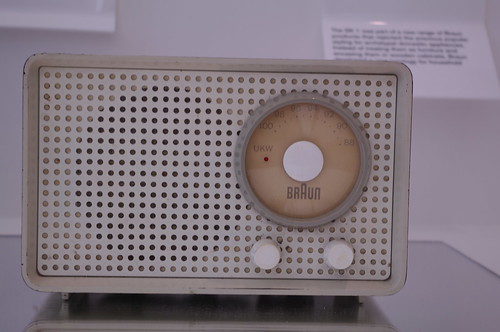
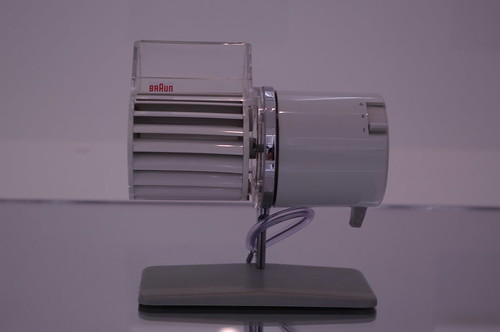
But none of the definition really talks about what design really is in the way that Dieter Rams principles of good design do. His principles are:

  1. It is innovative
  2. It makes a product useful
  3. It is aesthetic
  4. It makes a product understandable
  5. It is unobtrusive
  6. It is honest
  7. It is long-lasting
  8. It is thorough down to the last detail
  9. It is environmentally-friendly – it can and must maintain its contribution towards protecting and sustaining the environment.
  10. It is as little design as possible

Bitcoin isn’t long lasting as a network, which is why people found the need to fork the blockchain and build other cryptocurrencies.

Bitcoin uses 91 terawatts of energy annually or about the entire energy consumption of Finland.

The Bitcoin network relies on thousands of miners running energy intensive machines 24/7 to verify and add transactions to the blockchain. This system is known as “proof-of-work.” Bitcoin’s energy usage depends on how many miners are operating on its network at any given time. – So Bitcoin is environmentally unfriendly by design.

On the other hand, Apple products, which are often claimed to be also influenced by Dieter Rams also fail his principles. They aren’t necessarily environmentally friendly as some like AirPods are impossible to repair or recycle.

  • Hublot + more news

    Hublot

    Han Han & Hublot Launch Official Microblog, Announce Limited-Edition Watch – Jing Daily – Chinese consumers used to focus on the classic Rolex and Omega watches. But consumers are becoming more adventurous is an opportunity for Hublot. The more iced out versions beloved of sportsmen and rappers would also fit in with the tu hao or ‘new rich’ less sophisticated money. Hublot tu hao customers would come from lower tier cities or mining areas. Hublot is ‘new’ watch company that was only founded in 1980 and is owned by LVMH

    Consumer behaviour

    Asian demography: The flight from marriage | The Economist

    Design

    Natural scrolling: Why did Apple change the way we scroll? – Slate Magazine – cunning behavioural lock-in

    Economics

    Governments Can Create Jobs And Returns By Investing In Groundbreaking Infrastructure | Fast Company – like super-fast railways and broadband networks, classic Keynesian / New Deal economics

    Ideas

    Riots and books: Remember when books were worthy of burning? | The Economist

    Innovation

    Nanodiamond transistors and house-sized computers are coming | ExtremeTech

    Korea

    South Korea to abandon “real name” internet policy – Boing Boing

    Legal

    Phone hacking: Met use Official Secrets Act to demand Guardian reveals sources | The Guardian

    Luxury

    Bye-bye Brioni women’s wear | FT.com – Brioni becomes a men-focused brand like Zegna and Dunhill

    Daimler Seeks Fix for Maybach Brand – WSJ.com – only shifted 200 units last year (paywall)

    10 Things You Might Not Know About The Chinese Luxury Market « Jing Daily – interesting results but no transparency on methodology / accuracy

    Media

    The revival of vinyl: Back to black | The Economist

    Retailing

    Chinese Tourists Behind Korea’s Anticipated “Foreigner Only” Duty Free Shops « Jing Daily

    Software

    Verizon CEO: A Third Mobile Platform Will Emerge In The Next 12 Months | TechCrunch – interesting that Verizon think it could be any one of Samsung’s Bada, RIM’s QNX-based OS or Windows Phone. Doesn’t say much for the Nokia – Microsoft tag team that they haven’t FUD’ed the others out of the water yet

    Technology

    Koomey’s law replacing Moore’s focus on power with efficiency | ExtremeTech

    Wireless

    Apple and Samsung’s symbiotic relationship: Slicing an Apple | The Economist

  • Apple StyleWriter II

    Why I had an Apple StyleWriter II printer

    The mid-1990s were a transitional time for me. I moved from Merseyside to go to college in Huddersfield. Holiday time meant that I did the whole thing in reverse. I needed a printer set up that was light, portable, reliable and provided high quality prints for college assignments and job applications. Costco had opened in Liverpool, so I had access to good quality ‘Conqueror’ paper and needed a printer that could handle it.
    Apple StyleWriter II
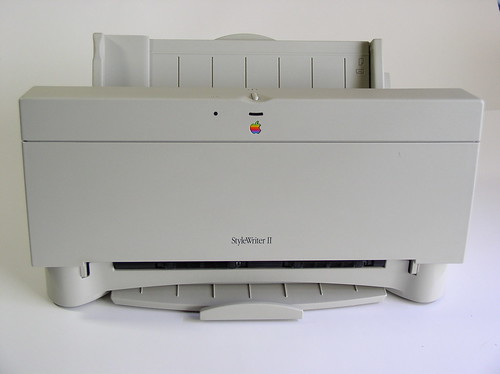
    For the princely sum of 130 GBP I settled on an Apple StyleWriter II. The printer came in a ‘platinum’ grey plastic colour that was slightly different to the beige boxes that passed for computing equipment back then. It had a detachable paper feeder and a front hatch that allowed you to access the printer innards it was simplicity to look after.

    LocalTalk interface

    The Apple StyleWriter II connected to my Apple PowerBook via a mini DIN socket and cable which Macs used as serial ports back then. It printed presentation foils with special acetate sheets, and printed three pages a minute at 330 dpi resolution (or about as good as the average office laser printer). Its cartridges were an easy to find variety of Canon cartridge which was a boon compared to trying to get print jobs done on-site at the university computer facilities and print bureau.

    It handled mail-merges from ClarisWorks with aplomb and printed on envelopes as happily as the paper. It didn’t break ever.

    The machine could be disassembled into a compact unit. I even took the printer on my travels to see family in Ireland so that I could continue on with my work and on a trip to Boblingen in Germany; where I printed out extra copies of documents I was likely to need and put together a series of notes from each days interviews that I had with a large American technology company.

    Rise of USB

    In fact, the only reason why I no longer use it is that Apple moved to USB and stopped making drivers for the printer. I couldn’t replace it with a new version as Steve Jobs took Apple out of the printer business; refocusing the company and its product line to try and stem the huge business losses that the company was making in the late 1990s.

    Looking back over the decade and a half; printers haven’t functionally moved on that much. You only need so much speed out of a home printer and the technology in them hasn’t moved at the same space as the computers themselves. I now have a relatively rarely used Konica Minolta colour laser printer and shudder to think how much the likely cost of the new toner is likely to be; in fact I may just replace it instead. The colour laser was a welcome break from a number of HP and Canon printers which were bulkier than the StyleWriter II and seemed to break surprisingly soon after the 12-month warranty gave out. More related content can be found here.

  • Aspiration of flight

    Inter-city rail services increasingly define themselves in terms of comparison to airlines. Take for instance the Chinese attendants recruited for the countries new Beijing-Shanghai ‘bullet-train’ route. The 403 women inductees look like classic air stewardess material and have gone through a similar kind of polishing process. The Chinese describe these attendees as ‘high-speed sisters’ 高姐. Find out more at the Shanghaist

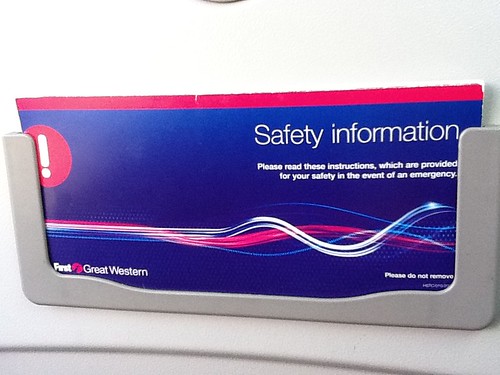
    In the UK, you don’t have to look far for the aspiration of flight, rows of seats where you are not facing people are called ‘airline-style seats’ on the online ticket booking service and First Great Western even have gone to the trouble of recreating the airline safety card attached to the seat and a little fold-down drinks table.

    Virgin Trains have provided an integrated points system with other aspects of their business including Virgin Travel and Virgin Atlantic – their airline. Thankfully the airline doesn’t have the kind of odours that its train toilets seem to have, even when spotless. 
    Aspirations of flight
    The problem is that the actual experience isn’t like an airline in most cases, its bumpy and lurches from side-to-side on older parts of the track. At least Virgin has its Pendolino trains that lean into a turn and smooth out the side to side movement. On occasion Virgin’s tilting trains can make the walk to the buffet car like a simulation of being under the influence. And the overall ambiance of trains in the UK, if it did meet the aspiration of flight standard is generally more Ryanair than Singapore Airlines. 

    Instead of aping airlines with an aspiration of flight, why not emphasis what the trains don’t have like laborious security checks and having to spend hours in the crap department store concessions that now pass for airside lounges in the UK? More related content can be found here

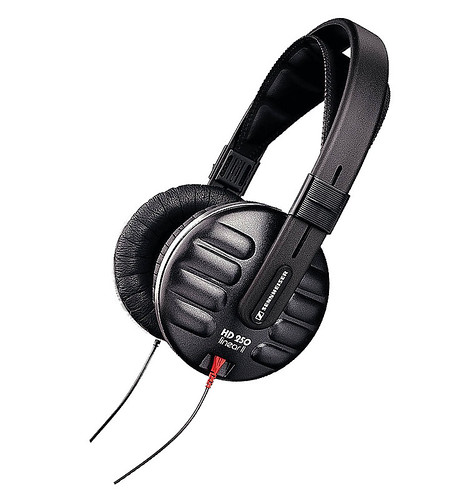
  • Sennheiser HD250 II Linear headphones

    The Sennheiser HD250 II Linear came from a time before Dr Dre and Lady Gaga had their own headphone lines. Quality headphones were dominated by German and Austrian companies. The three companies were AKG, Beyerdynamic and Sennheiser. These companies had a number of things in common: their headphones were very well made, sounded amazing and many of the parts were user serviceable.

    Sennheiser, AKG and Beyerdynamic now

    AKG designs haven’t changed that much (because they don’t need to), but the company has moved production from Austria to China since it is now part of the Harman conglomerate of audio equipment. The main difference that I have noticed is that the plastic mouldings aren’t as good as the Austrians used to do.

    Beyerdynamic is still a German family-owned business that keeps making technological progress. They have still managed to keep on building headphones to the same high standard it always has done. The most recent headphones that I bought were a set of Beyerdynamic DT150s. They look crude, but are robust, well-made and sound great.

    Sennheiser like Beyerdynamic is still family-owned but taken a more fad-centric attitude to it’s headphone design. Its HD25 and HD25-SP models hark back to HD414 which was originally sold back in 1967. Most of the rest of the designs take their cues from the Sony and Technics headphones from the late 1990s onwards.  I have a set of HD25 headphones but they aren’t my favourite Sennheiser set, I tend to wear them when I am traveling as they are pretty space efficient.

    Sennheiser have been on a role since the HD414 in 1967, by the time the early 1979 came around Sennheiser bought out the game changing HD420 with a modernist design. These were noticeable for their great comfortable headband, lightweight, great sound and value for money. The problem was that they were ‘open’ in design. That means that they allowed other people to hear your music and could easily hear ambient noise from your surroundings. Eventually they created a closed version of these headphones and tweaked them to come up with the Sennheiser HD 250 II Linear.
    Sennheiser HD 250 II Linear headphones
    These headphones are big, but don’t look bulky. They are aesthetically pleasing which is more than you can say for their peers back in the day or even now. I have worn them all day without any discomfort or sweatiness. Pretty much every part is user replaceable making them ideal as a long term purchase (and environmentally friendly to boot).

    The rivals

    I’ve worn most of the rival headphones to the Sennheiser HD250 II Linear:

    • Sony’s MDR-7506 are loud and reliable. Which is why they are popular in APAC and amongst many people in video
    • The AKG K270 are comfortable and light, but sound less accurate than Beyerdynamic’s DT150.
    • Beyerdynamic’sDT100 and DT150 are great headsets, but they feel bulky. The sound is pleasant accurate but doesn’t have the space and detail of the Sennheisers
    Sennheiser HD250 II Linear pros and cons

    Sennheiser HD250 II Linear headphones have an open sound more like listening to loudspeakers. They are still insulated enough for DJing and being a good citizen on public transport. They are very accurate allowing you to hear flaws in digital sound sources. For instance iTunes on my Mac and my iPod sound clipped with a slight metallic quality and the bass sounds thin; even when compared to CD. (I use an old HHb CD-Recorder player based on the old Pioneer ‘turntable’ CD mechanism and a Technics SLZ-1200 as my primary CD players). Vinyl sounds warmer and more rounded. It does make me wonder how digital dance music can become without decent bass response but that’s a whole other blog post.

    There are some aspects of the Sennheiser HD250 II Linear that are an acquired taste from a design point-of-view. They have a straight cable rather than a coiled ‘telephone’ style cable. I prefer the coiled cable design but some people find that it pulls so its a matter of personal preference. The cabling design is a simple ‘Y’ design rather than running around inside the headphones like the HD 25. However this means that they are easy to service and there is less to go wrong.

    Sennheiser, if you get to read this article please bring the HD250 II Linear model back, or at the very least keep making spare parts for them and keep the parts readily available to consumers. More related content here.

  • Palm Vx

    When I started agency life I still had a trusty Filofax that had my contacts I had built up from DJing, working in the oil industry and being in college written in barely legible text on address sheets or plastic sheets stuffed with business cards. It had a reassuring heft to it like it contained both the old and new testaments of the bible. In my first 12 months working at the agency, my contacts were further swelled by journalists, suppliers, clients and colleagues stuffed into two Rolodex frames and 99 numbers on the SIM of my then new Ericsson PF 768 mobile phone.In addition to all this, I also had built up a database of over 200  industry contacts on ClarisWorks running on my by now ancient Apple PowerBook. This presented me with the kind of problems that businesses sorted with CRM software. A second problem that I had was making all this data portable. The solution to all this was the Palm Vx.
    Palm Vx
    The only device that was compatiable with my Mac was the Palm series of devices and flush with cash from my first year’s bonus. I got myself a Palm Vx from Expansys. In many respects despite its lack of an always-on wireless connection, the Palm Vx was the benchmark I have in mind when I look at smartphones.

    At its core the smartphone lives or dies by its personal information manager and its ability to sync with your computer for your contacts and calendar. When I used a Palm Vx, I never had the machine brick when I loaded too many contacts on to it, it never endlessly duplicated or corrupted contacts and it didn’t freak out when you scheduled events more than three months ahead.

    Unfortunately the same can’t be said for subsequent devices I owned including Palm’s Treo 600 and 650 phones, or the succession of Nokia devices I owned up until my E90 communicator gave up the ghost and went to the great Carphone Warehouse in the sky.

    The Vx was primitive, which was one of its main strengths:

    • Its screen which showed 16 types of grey was easy to view in direct sunlight
    • It’s electroluminescent backlight allowed you to view it in a darkened room and still have enough battery left to last you a week
    • It didn’t have an app store, but then there wasn’t any productivity sucking software and you could find new applications with your search engine of choice
    • It had to use a stylus for all but the most basic items on the resistive touchscreen, but Palm’s original single stroke handwriting called Graffiti once you got the hang of it is faster to use than the soft keyboard on my iPhone. Unfortunately a long-running patent dispute that went on until 2004 meant that Palm had to move to the inferior Graffiti 2 based on a product called Jot
    • It did allow you to sync your desktop PC’s inbox with your device so you could go through your email on the commute home, but you wouldn’t be bothered by the always connected aspects of push email. Push technology was a big thing then so if you got tired of clearing out your inbox you could read highlights from Wired.com or CNBC via the AvantGo service which sucked in content via your PC that you could then browse through offline at your leisure; in many respects an RSS reader before RSS became well-known
    • Location-based software before GPS was a subscription service called Vindigo that provided recommendations on restaurants, clubs and bars, and shopping. It also had maps that provided turn-by-turn instructions from a look-up table of  directions and was updated by syncing via serial port or USB connected cradle
    • Wireless connectivity was an IrDA infra-red port which was pathetic. I once tried to use it in conjunction with my Ericsson phone to surf the web but it was too much effort to keep both of them lined up. It was perfectly fine though for exchanging business cards electronically. I remember being at a Red Herring conference during the summer of 2000, demoing Palm devices and spent half the time beaming business cards with consultants and lawyers. It involved a curious ritual akin to an animal courtship display where two people would hold their devices in front of each other and move them closer or apart until their contact details had been exchanged. But it seemed to work better than any solution since. Moo cards are now my common currency of information exchange instead

    It was the industrial design of the Palm V and Vx that feels the most prescient parts of the product in many respects. Some of the decisions in this were forced on the designers by the hardware specifications. Palm used to use AAA batteries in their earlier devices and held the OS and resident apps in ROM. ROM was expensive at the time so the V and the Vx had everything in RAM which meant that there always needed to be a power supply which meant they had to use a lithium-ion battery. Since the battery wasn’t designed to be user serviceable the case was hot-glued together. This allowed the industrial designers to make the device much thinner so that it could be slipped into a set of jeans or a shirt pocket and weighed in at a paltry 114g, some 20g lighter than my iPhone without its case.

    The need for a ‘picture frame’ around the screen provided the designers with a way of making the device feel nicer in the hand by making it have rounded edges. It wasn’t that far off the iPhone in terms of size, but felt nicer to hold. When I first got my iPhone 3GS the device felt too wide in my hand. The product design encouraged premium brands like Burberry and Jean Paul Gaultier to make Palm V cases (which is a bit nicer than the silicone rubber jacket most people have on their iPhone. I used to have a slider case by a company called Rhinoskin made out of laser cut titanium plate that was indestructable.

    At the bottom of the Palm V and Vx was a connector that Palm continued to use on the M500-series devices. This connector meant that lots of companies made great accessories. A company called OmniSky sold a GSM modem that the PDA slotted into, ThinkOutside made the best folding keyboard I have ever used, again using the connector at the bottom to connect with the PDA. I once wrote a by-lined article on the train back from London to Liverpool without any at seat power and with both the keyboard and the Palm Vx slipping into my jacket pocket when I reached Liverpool Lime Street. Something I just couldn’t do with the iPhone due to its greedy battery life and the bulky keyboard accessories currently available.

    Looking back on it, the Palm Vx was the high point of of Palm the company. Missed technological opportunities, numerous management issues, poor quality product and software engineering together with wider market technological progress meant that the company and the PalmOS developer eco-system was a shadow of its former self by the the time the company was sold to HP.