Category: gadget | 小工具 | 가제트 | ガジェット

What constitutes a gadget? The dictionary definition would be a small mechanical or electronic device or tool, especially an ingenious or novel one.

When I started writing this blog the gadget section focused on personal digital assistants such as the Palm PDA and Sony’s Clie devices. Or the Anoto digital pen that allowed you to record digitally what had been written on a specially marked out paper page, giving the best of both experiences.

Some of the ideas I shared weren’t so small like a Panasonic sleeping room for sleep starved, but well heeled Japanese.

When cutting edge technology failed me, I periodically went back to older technology such as the Nokia 8850 cellphone or my love of the Nokia E90 Communicator.

I also started looking back to discontinued products like the Sony Walkman WM-D6C Pro, one of the best cassette decks ever made of any size. I knew people who used it in their hi-fi systems as well as for portable audio.

Some of the technology that I looked at were products that marked a particular point in my life such as my college days with the Apple StyleWriter II. While my college peers were worried about getting on laser printers to submit assignments, I had a stack of cartridges cotton buds and isopropyl alcohol to deal with any non catastrophic printer issues and so could print during the evening in the comfort of my lodgings.

Alongside the demise in prominence of the gadget, there has been a rise in the trend of everyday carry or EDC.

  • Zuckerberg to testify + more news

    UK parliament’s call for Zuckerberg to testify goes next level | TechCrunch – while taking action to get Zuckerberg to testify is a good thing. It is a pity that the UK didn’t show similar gumption when dealing with the Kraft Foods CEO with regards the Cadburys takeover. Would it be that hard for Zuckerberg to just avoid the UK all together?

    Xiaomi to sell smartphones in UK through Three | Technology | The Guardian – Huawei will be getting worried; especially as Xiaomi has a reputation for making high-specification innovative phones at a lower price point. Xiaomi has been providing good quality handsets for a while and this is the kind of springboard that they need into western markets

    ‘Forget the Facebook leak’: China is mining data directly from workers’ brains on an industrial scale | South China Morning Post – Workers outfitted in uniforms staff lines producing sophisticated equipment for telecommunication and other industrial sectors. But there’s one big difference – the workers wear caps to monitor their brainwaves, data that management then uses to adjust the pace of production and redesign workflows, according to the company. The company said it could increase the overall efficiency of the workers by manipulating the frequency and length of break times to reduce mental stress.

    WhatsApp Co-Founder Leaving Facebook’s Board Amid User Data Disputes – The New York Times – The announcement followed disagreements between Mr. Koum and Facebook’s leaders over the use of people’s data and the social network’s attempts to weaken encryption. Officially he just wants to relax and collect vintage Porsche 911’s with air-cooled engines. More related content here.

    McDonald’s admits app adoption rates are ‘pretty low’ but it will keep investing in mobile | The Drum – not terribly surprising when one thinks about macro trends in app usage and adoption

    How China Leapfrogged Ahead of the United States in the Fintech Race | PIIE – poor infrastructure, lack of access for MasterCard, Visa, Amex, Diners Club etc. Low value of Chinese note denominations

    Eavesdropping on the deep | MBARI – I found it very soothing to listen to with all the white noise

    NightWatch | Subscription – gutted that KGS no longer provide this newsletter it has been a great resource

  • Tony Kaye + more things

    Director Tony Kaye happy to be working and out of ‘Hollywood jail’ | The Drum  – He says that a story arc doesn’t really matter in six seconds. “I think you can throw anything at it, as long as it’s quite clear what it’s for. If you’re working under 20 minutes, in my opinion, you don’t need any structure. You can be as fragmented or as crazy as you want.” – Tony Kaye was a legend in the advertising world, creating some of the most iconic adverts of the 1980s and early 1990s. His Hollywood debut was American X, a brilliant provocative film with the troubled production. This saw Kaye go to the ‘Hollywood jail’ of the title where he could not get work in the film industry.

    Hackers stole a casino’s database through a thermometer in the lobby fish tank – Business Insider – “It’s probably one area where there’ll likely need to be regulation for minimum security standards because the market isn’t going to correct itself,” he said. “The problem is these devices still work. The fish tank or the CCTV camera still work.” – it’s Neal Stephenson’s Snow Crash in real life. The internet of things is now an under assessed security vector. In the right hands, a lot can be done with very little computing resources and computers have become pervasive in nature.

    An Apology for the Internet — From the People Who Built It | New York magazine – this just scratches the surface, but is an interesting read

    The Finns who refuse to give up on Sailfish OS | Engadget – given the challenges that ZTE faces. Jolla with Sailfish OS would be an ideal technology stack on their foreign handsets, particularly if they can do an English language version of the Yandex app store. That way they won’t have to localise all of their offerings as a replacement for Google Mobile Services (GMS) layer in Android. More related content here.

  • Discussion on voice interfaces and services

    Interesting discussion on the use of voice interfaces and services. There is a certain amount of cheerleading involved in the talk; but that is to be expected with vendors in the room. If found it interesting that one of the panelists; Sam Liang of AISense moved out of where2.0 services and into voice. because location is a great gateway to lots of rich contextual information and voice is desperately in need of context and by extension user intent.

    It is interesting to get a perspective on the organisations involved in the discussion on voice interfaces:

    • SRI International
    • Amazon
    • Microsoft
    • AISense

    All of them seem to be well behind where the telecoms voice services managed to get to like Orange’s Wildfire.

    Key takeouts from this:

    • 50,000,000 voice devices to ship this year (2018). A total installed user base of 100,000,000 (presumably excluding voice interfaces on smartphones)
    • AISense is looking to build in voice biometrics that would prompt you about who a person is. Privacy implications are profound
    • The panel struggled to articulate an answer to privacy concerns beyond ‘services need to build trust’ and transparency
    • Information security and hacking wasn’t a point of discussion; which surprised me a lot
    • Context still seems to be a huge issue, I think that this is a bigger issue than the panelists acknowledge. Google still struggles on user intent, without adding the additional layer of understanding voice. The biggest moves seem to be ‘social engineering’ hacks, rather than improvements in technology
    • Amazon and Microsoft don’t have plans for advertising services on voice (at the moment)
    • We’re very far away from general purpose voice services
    • Work has only started on trying to understand emotion
    More information
    • Orange’s Wildfire and The Register on its shutdown. Wildfire’s problem seemed to be a failure of marketing more than anything else. We haven’t seen anything else like it. Even Siri is only scraping over the ashes of the work done on Wildfire 15 years ago
    • Google’s published research on speech processing. What becomes apparent from looking at the list of research is how basic the current state-of-the-art currently is
    • Stuff that I have written that touch on context dependent services
  • BBC World Service + more news

    BBC Blogs – Technology & Creativity Blog – Shifting gear with the BBC World Service – interesting opportunities for developers, this mirrors the expansion of Chinese and Russian media internationally. The BBC World Service has also had its funding disrupted in a manner that make it more political. The long term impact of this bias is likely to damage the BBC World Service as a soft power tool

    Apple manufacturer Foxconn just bought iPhone accessory maker Belkin – great move for Foxconn. Foxconn now gets a number of consumer brands including Linksys and can make better Apple accessories faster based on their knowledge of Apple production – if they can maintain secrecy

    What Supreme and streetwear say about fashion today — Quartzy – really nice history write up

    The Oral History of Stüssy: Part 1 | Complex – great background on how the Stüssy brand was built, but with feeling compared to modern day streetwear

    I, Cringely The real problem with self-driving cars – I, Cringely – a meditation about everything that’s wrong in the product process for current day Silicon Valley

    Louis Vuitton’s new men’s designer Virgil Abloh is known for streetwear, not high fashion — Quartzy – A new generation of consumers is emerging with different values and desires than previous buyers of high-end goods. Instead of spending their money on fancy suits, young shoppers are dropping hundreds of dollars on items like logo tees and sock sneakers. As clothes continue to move away from formality, brands from Berluti to Balenciaga are adjusting their wares accordingly – with younger Asian consumers as the growth market of the luxury sector the two worlds are merging. Its only been four decades in the making

    Fwd to CEO: THE MOST VALUABLE BUSINESS TOOL EVER INVENTED – BBH – the fact that this would have to be said to the CEO says a lot about what’s wrong in boardrooms now

    Alibaba to set up Thai logistics centre, extend deepening investment in Southeast Asia | South China Morning Post – interesting how Alibaba is expanding internationally

    Chinese tech firm that once vowed to disrupt Tesla and Apple faces delisting under pile of unpaid debt – the LeEco train wreck continues, at the moment it looks unsolvable unless the government gets more involved

    Sensor Supplier to Self-Driving Uber Defends Tech After Fatality | Bloomberg – it is interesting how the legal ramifications of this will shake out

  • Bose Wave Music System – throwback gadget

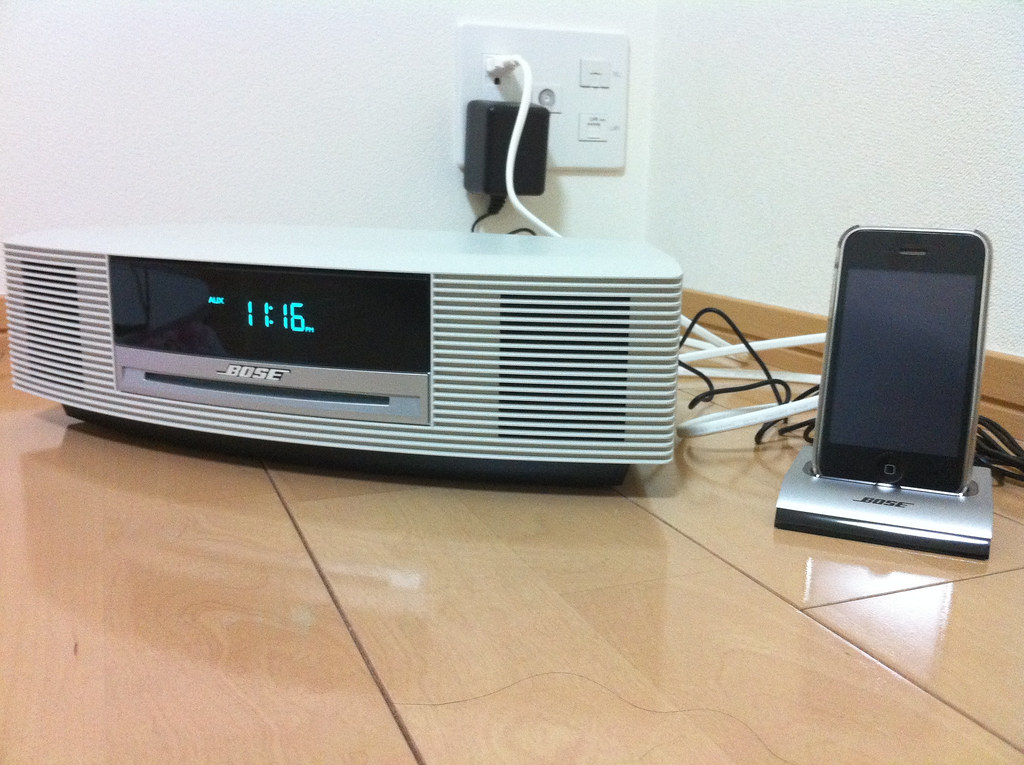
    It is a little disingenuous to call the Bose Wave Music System a throwback gadget, mainly because Bose still makes it. It would be reasonable to call it a design classic. There are benefits to picking up a 2006 model Bose Wave Music System, rather than paying the premium of a new device.

    BOSE Wave music system専用iPod接続キット

    Bose Wave System timeline

    The original Bose Wave System was launched back in 1984; this was back when Sony was king due to the Walkman, digital wasn’t really on the horizon with the Discman only launching same year. The Acoustic Wave 1 (AW1) was a new take on the boom box radio that was ubiquitous in households and workplaces at that time. The AW1 featured a cassette deck and a two band radio.

    Eight years later digital finally arrived when Bose switched out the cassette for a top-loading CD player instead.

    In 1993, the Bose Wave System shrank from about the size of a medium sized boom box to something about as tall as an iPod Classic but featured radio only and was called the Wave Radio.

    Five years later a slot loading CD player was integrated. In 2004, the CD player also accepted MP3 based discs and Boselink connectivity.

    Boselink

    Boselink is unique in consumer electronics in terms of the expandability it allows. It was originally designed as a communications protocol for multi-room sound systems, but is also useful for connecting modules that extend the functionality of the basic Bose Wave System. Compatible accessories include:

    • Multi-CD drive
    • Soundlink – playback of music which is streamed to the device over Bluetooth
    • DAB module – UK-only adapter allowing reception of digital radio as well as AM and FM signals

    Bose also offered an iPod kit, which charges your iPod Classic and plays back the music. There is a replacement remote for the Bose Wave Music System which integrates basic iPod playback controls.

    Vintage over new

    The key benefit of a vintage Bose Wave System over a new device is the display. New devices have a back lit LCD display which wash out and aren’t as legible as the vintage vacuum fluorescent displays.

    VFD

    Secondly, you still enjoy the ‘big box’ sound created by the diminutive size of the Bose Wave Music System. They use use a folded waveguide, which is a series of passages from the speaker driver to the speaker grill. This attempts to replicate sound from larger systems. Bose claims the waveguide “produces full, clear stereo sound from a small enclosure by guiding air through two 26” folded wave guides.” The design of the wave guides has changed minimally over the years.

    My casual listening at home is based on two systems. A 12 year old Apple iPod Hi-Fi A1121, which works as a centre speaker for my TV when I need it. It takes audio in via TOSLink and gives a better sound than most sound bars that I’ve listened to.

    I use a Bose Wave Music System of a similar age to the iPod Hi-Fi with the DAB module connected via BoseLink and iPod adaptor as my go to radio around the house. It is the default provider of background music and up to the minute news. It provides a better sound than most of its newer BlueTooth enabled competitors. It wins out over the Apple iPod Hi-Fi, because of its ability to play digital radio and hide out of the way on book shelf.

    I then use a dedicated hi-fi for serious music listening of CDs and vinyl records.