Category: ideas | 想法 | 생각 | 考える

Ideas were at the at the heart of why I started this blog. One of the first posts that I wrote there being a sweet spot in the complexity of products based on the ideas of Dan Greer. I wrote about the first online election fought by Howard Dean, which now looks like a precursor to the Obama and Trump presidential bids.

I articulated a belief I still have in the benefits of USB thumb drives as the Thumb Drive Gospel. The odd rant about IT, a reflection on the power of loose social networks, thoughts on internet freedom – an idea that that I have come back to touch on numerous times over the years as the online environment has changed.

Many of the ideas that I discussed came from books like Kim and Mauborgne’s Blue Ocean Strategy.

I was able to provide an insider perspective on Brad Garlinghouse’s infamous Peanut Butter-gate debacle. It says a lot about the lack of leadership that Garlinghouse didn’t get fired for what was a power play. Garlinghouse has gone on to become CEO of Ripple.

I built on initial thoughts by Stephen Davies on the intersection between online and public relations with a particular focus on definition to try and come up with unifying ideas.

Or why thought leadership is a less useful idea than demonstrating authority of a particular subject.

I touched on various retailing ideas including the massive expansion in private label products with grades of ‘premiumness’.

I’ve also spent a good deal of time thinking about the role of technology to separate us from the hoi polloi. But this was about active choice rather than an algorithmic filter bubble.


  • 50 things that make me happy

    Pat Law published her list of 50 things that make her happy, which reminded me of a list I made back in November 2008 on things that made my day. Why 50 tings that make me happy?  The 50 is a challenge and a limitation in the writing of this post. Like Pat, I am not from Bhutan and maybe the wrong person to write about happiness, but what the heck. So this is where I started in coming up with my 50 things in no particular order:

    1. When someone gives their seat up on the tube for an elderly person or pregnant woman. Its a nice reminder that although civic society is on its knees, it isn’t dead yet. Saying that I once offered to give up my seat and the woman attempted to hit me, it seems she was just fat rather than pregnant – but don’t let that put you off being civic-minded
    2. Hallowe’en. Hallowe’en is my favourite holiday of the year. Its celebration doesn’t start in August like Christmas does in most supermarkets, it finishes the following day. It’s has the kitsch of Christmas trappings, but without the expense. Oh and settling down with a bag of popcorn to watch The Exorcist and The Crow is more fun to watch than an epsiode from the James Bond movie franchise and White Christmas
    3. A sunny spring day on Thurstaston Hill. Spring on the Wirral has an immense sense of energy, a sunny day lying on Thor’s Stone watching the clouds coming in from Liverpool Bay like a candy floss armada sailing over the Wirral
    4. Knowing that I love and am loved
    5. Getting to watch St Helens Saints winning games. Rugby league was once described by an Australian writer as a working-class opera and St Helens have been one of the most successful teams in recent years. I only really gained an appreciation of rugby league during my time at college in Huddersfield. Despite the poor performance of the Huddersfield Giants, the town had league in its bones – The George Hotel by the train station being the birthplace of rugby league. Unfortunately I don’t get to see them as much as I would like and the sport still doesn’t get the coverage that it deserves on television
    6. Fly New Balance kicks, my current favourites are the MT580 which I have in various colour-ways
    7. Stussy tops and my US naval aviator jacket
    8. Flying business-class with Cathay Pacific – they won’t go on strike, the food is decent and there is bound to be a couple of films on the entertainment system that I haven’t seen and are worth watching
    9. My MacBook Pro
    10. My iPhone once I discovered the Mophie Juice Pack
    11. Getting to put on my favourite flannel shirt. This shirt is an old workshirt from back when I worked in the oil industry that has been washed a huge number of times, making it unbelievably soft and giving it a faded check pattern that would be at home on My Name Is Earl. After putting this on, you can understand why grunge took off as a style – I know that my Australian colleague Nick Osborne thinks that this is a classic Bogan-style
    12. Getting to watch For A Few Dollars More. No matter how many times I see this film it still gives me an immense amount of pleasure to watch it. It is not as grand as Once Upon A Time In The West and not as well known as The Good, The Bad and The Ugly, but it has probably the best performances of Lee Van Cleef and Clint Eastwood together on screen
    13. Watching pretty much any Wong Kar-wai film, but I have a particular soft spot for 2046 and In The Mood for Love
    14. Getting some time on my decks. Whilst many DJs have moved on to MP3s and CD players there is nothing quite like the tactile experience of mixing with vinyl records. Being able to read the track by the changes in the grooves, the sensation of low frequency sounds and the feel of cueing a heavy vinyl platter are unique
    15. Eating a slice of freshly cooked soda bread. Unlike yeast bread, I prefer to let the soda bread cool properly first and then tuck in.There is something about the whole tactile experience of eating soda bread with a thin scrape of butter and honey or as a side to some Galtee black pudding and white pudding
    16. A warm autumn day with haze so thick you can smell it
    17. Looking out on Victoria Harbour from the Harbour City branch of Starbucks
    18. My Cuisinart coffee machine in action
    19. Motorway driving at night with The Orb’s Adventures Beyond The Ultraworld or The KLF’s Chillout album on the stereo
    20. Finding myself in an airport on the far side of the world and being able to find a good newspaper stall, and have the time to sit down and read a copy of the Irish Independent or The Examiner
    21. Wondering around the Science Museum with my Dad and have him tell me about the different equipment in there and the machines that he has come across in his 50 or so years in engineering from lorry engines, to ships pumps and industrial motors
    22. Pottering around Gosh Comics and discovering a new graphic novel author. Forbidden Planet feels too much like a supermarket in many ways, whereas Gosh feels like the independent vinyl record shops that are rapidly disappearing from Soho
    23. Watching a good film in a decent cinema, despite all the technology there is still nothing quite the big screen. I love the passive entertainment of the cinema – very un-tech of me I know, but its true
    24. Waking up on a Sunday morning and hearing it raining outside whilst I am tucked up in bed
    25. Taking time out to listen to Sunday Miscellany
    26. The mid point in 50 things that make me happy: Hong Kong-style milk tea though its pretty hard to track down a good cup even in Chinatown, London. Caffiene and condensed milk mean that all the main food groups are covered
    27. Eating with friends in the Tsui Wah restaurant chain
    28. The smell of a turf fire
    29. Getting a new watch
    30. Taking a really great picture, mainly because it’s due to serendipity rather than any skill on my part
    31. Buying vinyl records, I love rifling through the trays at Phonica in Soho, it breaks my heart that great shops with knowledgeable shop assistants like Anthony Cox at the former Flying Records in Soho have been replaced by vegan fast food joints, wine bars and hedge funds
    32. Tripped out visuals like SIGGRAPH CGI shorts
    33. Reading the print editions of Wired (US edition) and Monocle magazines
    34. Shopping at a 7-Eleven in East Asia when the jetlag won’t let me get to sleep – its something about the colourful packaging design, retina-toasting lighting and junk food that they sell which fits in with the disconnectedness I feel
    35. The half-awake feeling you have when your duvet feels like you are wrapped in cotton wool
    36. Walking around Liverpool Metropolitan Cathedral. Its a weird mix of space station and holy place. The light through the stained glass is spectacular
    37. Touch typing on a decent keyboard. How people are supposed to cope with the modern rubbery keys on Apple’s defaults keyboards now I have no idea. How the hell does a keyboard make you happy? I feel at one with the machine, I become less conscious of my own typing. The same goes for using a Kensington Expert Mouse rather than a conventional ‘hockey puck’ or trackpad
    38. Enjoying a modern art exhibition with someone knowledgeable so that you can discuss what you’ve seen
    39. Oil refineries at night, they way they are lit up like fallen down Christmas trees. I love asian cityscapes like Hong Kong island and Tokyo for the information overload and the intricate lights
    40. Going to sleep to the sound of a washing machine, sends me straight off, the white noise seems to give me interesting dreams as well. No idea why
    41. The night sky on  a clear summer night at my uncle’s farm so I can see the delicate star structures
    42. The feeling of smugness that I get after I have cleaned the house from top-to-bottom
    43. Buried in a good book whether its Neal Stephenson, William Gibson, a business book, graphic novel or an old counterculture text
    44. Sitting on my sofa and doing nothing after I have come in from a great night out. I tend to enjoy warehouse and squat parties now more than clubs in London at the moment. Think its the music and the vibe
    45. Finding a really great piece of design, whether its a cool piece of software, website, my Mystery Ranch backpack or accessible product design (like the Red Bull ring-pull with the bull cut out)
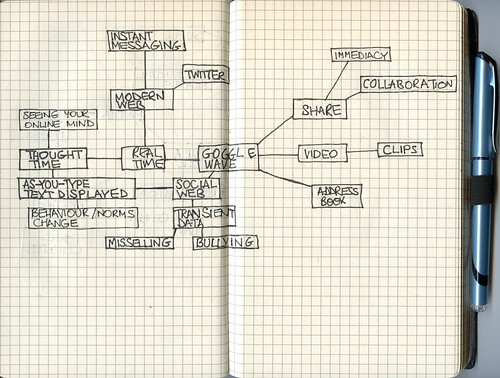
    46. Finishing a blog post, particularly if I have been using the post to think a concept out fully. I will often mind-map it in my moleskine as well
    47. Seeing my ideas make a difference, whether its to a clients business, changing the outlook of a course or conference attendee or having someone come up and discuss something articulated on here
    48. Winning an eBay auction, paying less than I had intended to
    49. Going to a really good thought provoking event like LIFT or some of the Barcamps
    50. This has felt like a marathon of a post! The final item in my 50 things that make me happy: when I interact with a bureaucracy and things turn out alright with little-to-no effort

    You’ve heard about the 50 things that make me happy, what would be the 50 things that make you happy?
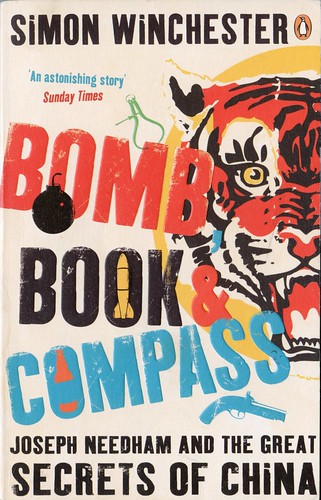
  • Bomb, Book and Compass: Joseph Needham and The Great Secret of China by Simon Winchester

    Bomb, Book and Compass

    Simon Winchester’s Bomb, Book and Compass delves into the history of science and innovation. The old adage of the victor writing history applies not only to wars but also the history of innovation and science. Everything you were taught in school about the history of science is likely to be wrong. It usually having a European focus; from the Greeks and Romans to the Italian-based renaissance via the wisdom preserved within the monasteries of Europe during the dark and early medieval ages.

    Book, the book and the compass

    The Chinese, in comparison, were seen as inscrutable and cunning rather like the Fu Manchu character of Sax Rohmer’s novels but less sophisticated than their European counterparts. This diacotomy helped assuage the consciences of empire-builders who had designs on the riches of the Chinese market, from bringing away silk and porcelain to finding a ready market for Indian-grown opium and laying the foundations for the modern-day heroin trade.

    Up until the European’s arrived China was the world’s largest manufacturer, counting for about 30 per cent of the economic activity by value in the world. This time of weakness is what the Chinese refer to as the century of shame, which was finally laid to rest when they claimed back Macau in 1999.

    Joseph Needham

    Bomb, Book & Compass is the story of Cambridge biochemistry professor Joseph Needham and his quest to find the real truth behind the history of science and China’s role within it, he did this during the chaos of the second world war, when he had the chance to get at the documentary evidence.
    He then spent the rest of his life curating and writing material for a vast series of books Science and Civilisation in China. These books were not only a historical record that put China closer to the centre stage position that they deserved in science, but also put the country on a more even standing with the ‘civilised world’ restoring or enhancing its reputation. In some respects Needham’s work could be considered to be the largest unpaid (in that China didn’t pay for it) corporate reputation campaign in the annals of public relations.

    Bomb, Book & Compass is a compelling read, by turns adventure, travelogue and political intrigue. I would recommend it, if nothing else for the very human portrait it paints of Joseph Needham as a man of great intellect and passion, but also a man with some very human failings. More book reviews here.

  • Heirloom Design

    Saul Griffith in a presentation he gave as part of the Long Now Foundation talked about the environmental impact of our stuff. The possessions that we own make up about a quarter of our lifetime carbon footprint. The way to reduce this is to have stuff that lasts longer, and that we want to keep longer. From this came the idea of heirloom design.

    IMGP0699.JPG

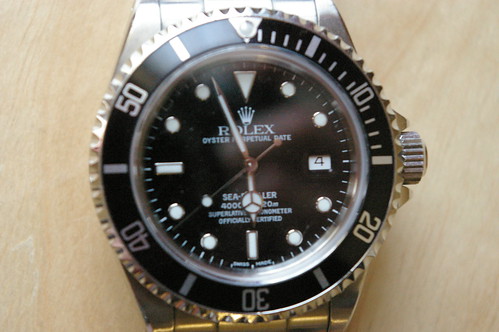
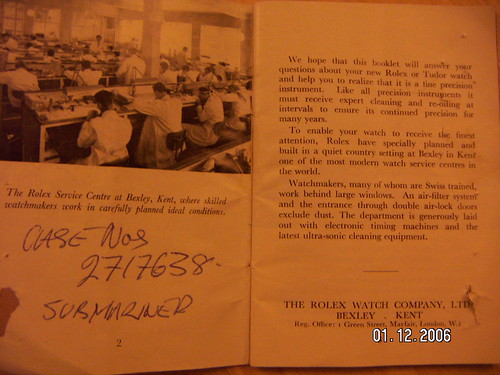
    It isn’t new, Sotherby’s and Christies have made very good businesses selling old stuff, Patek Phillipe talks in advertisements as the watch-owner not actually being the owner but the custodian to pass the timepiece on to the next generation and Rolex has an excellent reputation for taking lifelong care of watches it sells.

    1.JPG

    So its a new framing of an old idea, it has been adopted by some eco-conscious businesses such as Howie’s Hand-Me-Down range: a set of bags and a jacket that are so well made and so durable that you want to keep them for their natural life. The examples that are given are a Montblanc pen and a Rolex watch; both of which require considerable upfront investment as well.

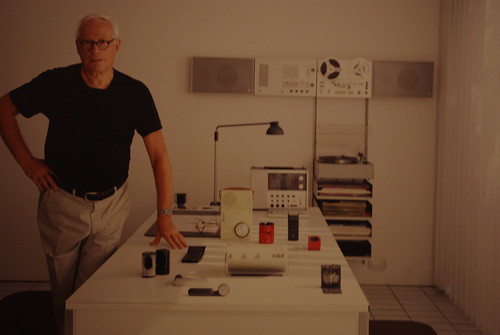
    Dieter Rams

    However design also has a case to play in this: look at the prices on eBay for a genuine Charles Eames recliner, or any of Braun’s consumer electronics offerings; classic cars fetch a far higher premium than their newer, more sophisticated cousins because of their styling.

    A second factor comes into heirloom design: design for servicing. Pretty much every part on my Technics turntables are replaceable, contrast this with the Denon DVD player I had which I had spent similar money on, yet the manufacturers couldn’t repair as they didn’t have the parts; or my Nokia E90 communicator which would have cost more to repair than two new Nokia E-series phones. Nokia’s Vertu phone range with their over-engineered cases and dealer-replaceable future proof guts may be the way forward.

    The personally most ironic thing for me is that my Dad has bemoaned the quality with which things have been made for the past 30 years and is a staunch believer in progress through industry may finally have something to agree with the environmentalists on.

    A number of brands practice heirloom design already but don’t shout about it:

    Suggestions from a quick poll I did on Twitter included

    • Bialetti with their user serviceable coffee pots
    • Caterpillar
    • Timberland
    • BMW – they certainly have the service network and they have built up a reputation for having a good build quality
    • Kenwood – the shortwave radio and communications manufacturers
    • TAG (presume they meant TAG Heuer) – not too sure that I would agree with this one, or some others suggested such as Apple, Panasonic and Sony; at least in their consumer goods especially with Panasonic doing away with the 1200 series of turntables
    • DEWALT
    • Dyson
    • Le Creuset
    • Mag Instrument Inc. (Maglite torches)
    • The North Face
    • Stanley Hand Tools
    • Aga
    • Herman Miller – particularly the Aeron chair
    • Cyrus Audio
    • Stokke prams, car seats and other stuff for early childhood
    • Tumi luggage

    Kudos in no particular order to Ruby Quince, Ana Mangahas, Becky McMichael, Stephen Holmes, Tom Wynne-Morgan, Robin Clark and Abigail Harrison for their heirloom design suggestions.

    Which brands do you think represent great heirloom design? Feel free to leave a comment. More design related posts here.

  • Who is your city? by Richard Florida

    Richard Florida is famous for his works on the rise of the creative classes. Who is your city? is an exploration into how clusters develop wrapped up under the guise of a self-help book. The book was recommended by a friend to mine who has been studying architecture and urban design. Florida looks at the characteristics of different cities (predominantly in North America) and explores factors that attract people at different life stages. You can see similar patterns in China around the rise of Shenzhen as a new city in the space of a few decades, or the way London draws talent from across the rest of the UK across various creative services.

    Flordia provides some of the starting points to the age-old regional planning question ‘How do we make another Silicon Valley in <insert region name here>?’ by listing some of the factors involved. There is an interplay between planning and organic effects. Korea is currently facing these challenges as it tried to have Sejong City meet its full potential

    Unlike many books he hasn’t fallen into the classic bad science trap that correlation and causality are the same thing. For instance: whilst no two neighbouring countries with a McDonald’s restaurant may have gone to war, that doesn’t make Ronald McDonald a prime candidate for the next United Nations secretary general.

    The book is interesting in the way that a Malcolm Gladwell book is interesting; I would prefer for Richard Florida to surface more of the modelling and research that went into Who is your city. The book is a serious academic piece of work that is devalued by reducing it to dinner party talking points. The section of questions at the back seem logical enough for someone thinking about relocating, there is no rocket science in them. At the end of it, I was left wondering how much utility did Who is your city? have for the average European or Asian reader? More book reviews here.

  • Google Wave

    The office that I work in has been abuzz about Google Wave and Becky has been gently badgering me to air my thoughts on it. I have been reluctant to give a definitive judgement on it, as I believe that like Twitter; it’s true utility may not become apparent until there are a critical amount of users on it.

    It used to be that device manufacturers created a gizmo but the software on the device was the killer application (for instance the Apple II and VisiCalc, the Macintosh and Aldus PageMaker or the iPhone and 60,000+ applications), with the web the utility and the killer application is the network of people on there.

    Google Wave001

    Google Wave does herald some changes in the web which may require consumers to alter their behaviour.

    But we’re getting a bit ahead of ourselves, what is Google Wave anyway?

    Wave is a personal communications and collaboration tool. Say what? Google has looked trying to innovate by bringing together elements of different tools which are currently used by the members of the public to varying degrees: e-mail, instant messaging, wikis, and social networks.

    When you use it, the bits that are immediately obvious are the instant messaging platform and the ability to share video clips.  The interface isn’t as easy to use as other Google products like GMail so its questionable whether it will eventually find widespread consumer adoption in its present form. It is interesting in that it shows Google’s thinking about web communications.

    The biggest aspect from my perspective is the move from the real-time web to what I term the ‘thought-time web’. When you are typing via instant messenger you don’t display your message until you press return on a conversation. With Wave people can see your message as you type, if you’re like me you work out the structure of what you’re going to say in the dialogue box, editing as you go with cut and past. So having this transparency on your message creation may not be that good an idea.

    With Wave you would have to use another editing programme and cut-and-paste into the Wave dialogue box in order to get the same functionality in message writing. this means that they can jump in at any point in the conversation and it also means message trails will become less meaningful as you can’t see the order in which responses happen against each other in the same way as IM.

    A secondary aspect to this is what I think of as transient data. Think about it in terms of these two hypothetical scenarios:

    • A vulnerable 12-year old is taunted by members of her class who write in a message of hateful language about their weight or colour and then cut-and-paste homework-related dialogue in over the top and hit the return key. The abuse happens in real-time with no apparent evidence that the child can point to in order to get aid from parent or school
    • A consumer is looking for information about a camera, the customer services representative types in the specification of the model that the consumer wants at a too-good-to-be-true price and then cuts and pastes and presses return on a completely different, less favourable offer for the same price. The consumer doesn’t have a leg to stand on

    Contrast this with the current culture of email and Facebook where is there is an evidence or document trail that the victim can use for recourse. The social aspects of thought-time communications a la Google Wave haven’t been fully understood yet and society’s way of dealing with the challenges are likely to take years to iron out.