Legal is defined as everything connected with the system of law within a country or area. The definition Law is a system of rules created and enforced to regulate behaviour, usually it belongs to a country or an area.
Online and innovation have often evolved way in advance of laws and the legal system’s ability to cope.
The emphasis that different systems have produces a number of challenges. China’s systems are locked down under their view of cyber sovereignty to avoid a contagion of western ideas. Yet they and other authoritarian regimes treat the open western systems as a battle space to destabilise other countries and attack their critics.
The US system favours free speech over privacy, which directly clashes with European values. Much of these European values were shaped in the aftermath of having lived under Warsaw Pact era authoritarian regimes.
There is a clash of the ages undertaken over ethics and power and what’s legal. The law offers up more questions and ethical traps than answers. It’s into this legal morass that my posts tend to land, usually at the point of intersection between ethics, the law and technology.
When I started using the web I believed that it was a unique extra-legal space similar to what John Perry Barlow outlined at the start of the ‘web’ as we now know it. The reality is that the net has already been staked out by businesses that look rather similar to the robber barons of the gilded age. Authoritarian regimes found it surprisingly easy to bend to their will and now sell their expertise around the world.
Is Open AI the equivalent of Sir Hiram Stevens Maxim? Maxim invented the Maxim gun. A belt fed machine gun that helped colonial powers grab territory in the scramble for Africa. It was reputedly used by one British official to help clear game from land that was soon to be put to farming use in Kenya. Later on it was used by both sides in the Russo-Japanese war and World War 1, due to Maxim’s business associate Sir Basil Zaharoff.
Investors are betting that Open AI will have a similar role in the battle shaping out between tech giants over generative machine learning related processes.
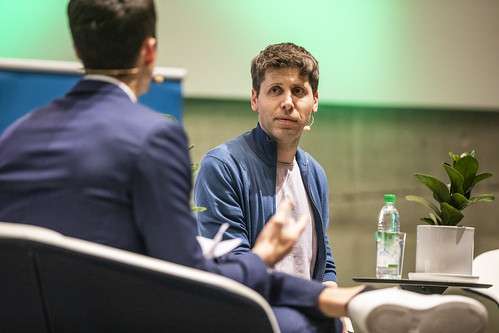
Sam Altman of Open AI
When a company that has issues with making profits can raise money at a valuation of $85bn, it becomes abundantly clear that investors in generative AI have taken leave of their senses
I can understand the argument that Richard Windsor is making with this argument. While others might point out how dominant funding drove Amazon’s present-day monopoly, there are other precedents like Netscape, General Magic, Uber and WeWork that others can point to.
There are bigger questions about whether the LLM approach is in itself a limited model to pursue? If so, Open AI could look more like when IBM bet the farm on Josephson Junctions. The use of synthetic data implies that LLM scaling might already be at its limit. Nvidia looks like a better bet from this angle despite its own extremely high valuation.
Brand purpose has a lot of issues, but it’s worthwhile bearing in mind the kind of marketing Unilever was pushing out prior to buying fully into the concept. These efforts came to light from social sharing about the the British ‘vulgar wave’ that contextualised Russell Brand.
Unilever Heart Brands UK
While China’s ads skewed conservative compared to the UK’s vulgar wave of 1997 – 2012, this Axe (Lynx in the UK and Ireland) ad isn’t exactly on brand purpose. The spokesperson in the advert is Edison Chen. At the time Chen was a star in Hong Kong’s entertainment circles. But getting involved in street fights and a leaked hard drive full of pornographic images of girlfriends he dated meant he withdrew from the industry. Now he is better known for owning streetwear brand CLOT.
Dove Sparks Boycott Calls Over New Partnership—’Never Buy Them Again’ | Newsweek – controversial question, but have Unilever gamed out that conservatives are more likely to use Irish Spring or similar products over Dove? I suspect that there might be something in the semiotics of cleanliness in this. African Americans by contrast might have challenges like ashen skin that would benefit from soap that cleans and moisturises, hence the popularity of shea butter based products.
Hong Kong
Architect Demi Lee on Kowloon’s Walled City. The comparison with the idea of rhizome was very interesting.
Ideas
Demi Lee’s video on how elements of cyberpunk are leaking into our current reality.
I was sparked to lead this post based on footage that I watched about a priest in South India with regards a robotic elephant. Robots in religion have taken off in both Shinto and Hindu ceremonies.
Japan
Academics have widely talked about how the Shinto-based belief system have aided Japanese societal acceptance of robots, in comparison to western society. Secondly, Japanese authors have been exploring what it means to be human and what kind of dilemmas and opportunities do robots and AI bring in a future society. Robots in religion are a natural extension of robots in society.
Buddhism leads the way
What’s less commented on is that Japan’s buddhist temples have been leading robots in religion. The reality is that many Japanese see Shinto and Buddhism as complementary in nature and get involved in both beliefs.
Japan has some unique religious challenges that are interlinked. Temples are struggling as less people are active in their religious practice, the factors for this decline is multi-factorial in nature.
A second challenge that as the population shrinks roles need to be automated. What started in factories is now impacting the food and beverage sector (vending machines and restaurant robo-serving staff), so it was only a matter of time that robots in religion would supplement the clergy.
India
In India robots in religion is about kindness and de-risking religious ceremonies. In South India elephants take part in religious ceremonies. However the conditions that elephants are kept in can be cruel in nature and even result in death. Secondly, elephants can unintentionally kill or injure people involved in a religious celebration. This report on NHK World shows how robots in religion have been adapted to Hindu needs.
Finally, the elephant robot is used in celebrations over a large geographic area and is easily transported around. Robots in religion are likely to make even more sense as India urbanises even further, as the benefits are amplified in the denser environment.
How confucianism, communism (in particular Stalin’s take on Leninism) and an accident of history has led to the nationalistic, fragile, insecure Chinese state with imperial ambitions we know today.
China’s ‘trinket town’ at heart of push for renminbi trade | Financial Times – Yiwu was one of the first cities in China to allow individual merchants to settle larger cross-border deals in renminbi. Most cities have an annual cap of $50,000. Given Yiwu’s reputation for cheap goods and flexible terms, helped by the fact that wholesalers do not pay either corporate tax or market rent, exporters have sufficient bargaining power to request settlement in renminbi. “When you have only one place to go to purchase something, the seller sets the terms on how transactions are settled,” said James Wu, a Yiwu-based furniture exporter who began demanding renminbi payments from Middle Eastern clients last year – the last quote is a great example of
Interesting video from NHK World on how temples are adapting to a lack of new attendees and priests. I am not sure whether this is down to demographic change or the secularisation of society
A Pokémon-Card Crime Spree Jolts Japan – WSJ – Japan has been staggered by a Pokémon crime spree. Stores are now paying for banklike security to ward off villains who go to extraordinary lengths, even rappelling down the side of buildings, to plunder Pokémon. Hosaka was working in senior care when he had the idea of opening a cozy card shop in the suburb of Machida where customers could mingle at tables. Instead, he says, the little cards, “have become like Rolex watches, gold, silver, platinum or used cars.” – It makes sense when you think of the cards being ‘real life NFTs’
Criminal Rolex Gangs and Traveling with Watches, Part I – WOE – crime affecting luxury consumption. Interesting that London is a crime centre is prominently name checked alongside Johannesburg, South Africa. This will impact luxury retailers, luxury travel and hospitality and auction houses
Luxury
Bay Area Lawsuit Alleges Man Spent $220,000 To Get A Watch He Never Got – there’s also the added complexity of Shreve recently losing its status as a Patek AD. The lawsuit brings some ten causes of action against Shreve, including breach of contract, intentional and negligent misrepresentation, fraudulent concealment, false promise, and unfair business practices, pursuant to California’s Unfair Competition Law – this was only a matter of time. Its the same in the UK
Ad agencies and clients clash: tension over transparency in fees, services | Ad Age – a talent shortage has left agencies without enough senior executives to service accounts. Combined, such factors contribute to what marketers see as an increasing lack of transparency. One executive who leads procurement across marketing and content for a major consumer goods company said the discounts and rebates that media agencies, in particular, get from a media buy have always been “murky,” but one area agencies have always been transparent in is breaking down their fees. The brand executive said auditors, working on behalf of the marketers, have previously been able to get agencies to disclose their margins, overheads and salaries without protest—it’s standard practice and allows clients to know they are being charged a fair price. But that’s starting to change, they said, having run into issues with getting shops to break down their fees in the recent agency review their company underwent
Media
This Year Next Year: 2023 Global Mid-Year Forecast – GroupM – calls the end of radio’s global growth story. Even taking into account streaming, WPP says that, globally, ad-supported audio has peaked. It will grow just 0.3% this year, says GroupM then “remain roughly flat over the next five years”. It’s about to join newspapers, magazines and broadcast television in a downward trajectory. GroupM also tackles the impact of AI on the industry. It reckons that within five years, the portion of “AI-enabled” advertising revenue globally will be worth $800bn. What is impossible to quantify is whether any of that is new money. Most likely, none of it. What is also impossible to quantify is just how dramatic the AI-driven reductions in cost of production will be. That sounds a relatively benign question until one realises that all those reduced costs are human jobs. GroupM identifies five key themes: Regulation (particularly around data privacy); connected TV (and an annualised 10%+ growth in the segment)’; AI “is likely to inform, or touch in some way, at least half of all advertising revenue by the end of 2023”; retail media to overtake TV by 2028; and “new business growth” (which sounds like the sort of thing an agency person would put in their predictions). Most importantly though, the GroupM outlook points to a more more significant factor. We’re at the end of a cycle that was defined by shifts between advertising channels, and then the disruption of Covid. “We are at an inflection point where the secular drivers of advertising growth above and beyond GDP growth are maturing, the pandemic upheaval is receding and the dynamic rise of digital advertising has slowed. This is the basis of our underlying forecast of mid-single-digit advertising growth over the next five years. However, the pervasive impact of AI on the world of advertising could change that.”
AI at Work: What People Are Saying | BCG – leaders love it, workers don’t. Businesses have only addressed the needs of leaders, which probably dialled up the anxiety with a sense that AI is something that happens to you and your career rather like a bad car accident
Beeper — All your chats in one app. Yes, really. – clients like Adium became less useful as Google and other services went away from common protocols and the IM giants AOL, MSN and Yahoo! disappeared. Beeper are trying to address this
I spent part of the bank holiday weekend reading and finally managed to tuck into designer Bruce Mau’s signature book MC24. For those that haven’t heard of him Bruce Mau is a Canadian designer and academic. He founded a brand design agency: Bruce Mau Design which is now part of marketing combine Stagwell. His Massive Change Network (MCN) is in the transformation business similar to Stewart Brand’s Global Business Network (acquired by the Monitor Group now called Monitor Deloitte) and The Long Now Foundation. The philosophy of Bruce Mau and feels like it had been lifted from an amalgam of TED Talks. Bruce Mau believes in a sustainable future with techno-optimist bent to his views.
Bruce Mau, like Robert Greene has principles that seem to contradict each other. Publisher Phaidon have wrapped the hard back cover of the book in an iridescent satin fabric that a photograph doesn’t do justice to. Regardless of whether you think the book is a self-help bible, your creative muse, an objet d’art or something nice to thumb through on a Sunday afternoon Bruce Mau and his book MC24 are ideal.
China
Where China is beating the world – by Noah Smith – interesting article, although it lacks some nuance about Chinese development, consider it a starting point that you can explore in more depth from, rather than the full story
I have alluded to the impact of China’s new espionage law. VisualPolitik has pulled together a good video on how it’s being interpreted by multinationals, policy wonks and politicians. It will have precisely the opposite impact that China would like it to have on its economy.
Consumer behaviour
How many Britons agree with Andrew Tate’s views on women? | YouGov – so much in this. You also need to think about bias in questions, that its done online and the ‘you can think it, but you shouldn’t say it’ aspect of how Tate supporters might think about the questions
Interesting debate on how the ‘evangelical bloc’ has evolved over time from being primarily theological to being primarily political in nature.
How doctors buy their way out of trouble | Reuters – When federal enforcers alleged in 2015 that New York surgeon Feng Qin had performed scores of medically unnecessary cardiac procedures on elderly patients, they decided not to pursue a time-consuming criminal case. Instead, prosecutors chose an easier, swifter legal strategy: a civil suit. Qin agreed to pay $150,000 in a negotiated settlement and walked free to perform more cardiac surgeries at his new solo practice in lower Manhattan. Qin faced no judge or jury. He did not admit to wrongdoing. He maintained his license to practice. What’s more, neither Qin nor government officials were required to notify patients who purportedly were subjected to vascular surgical procedures they didn’t need. Those included fistulagrams to spot issues like narrowed blood vessels or clots, and angioplasties to open clogged coronary arteries. Within months of the settlement, a registered nurse working for Qin at his Manhattan practice alerted authorities that something seemed amiss. The nurse, who ultimately turned whistleblower, alleged to federal prosecutors that the surgeon was performing unnecessary procedures on patients, mostly elderly Asian and Black immigrants whose care was covered by the public programs Medicare or Medicaid. Prosecutors indicted Qin in 2018 on a felony count of fraud, which carried a maximum sentence of 10 years in prison. But in 2021, in a deal brokered behind closed doors, prosecutors dropped that charge in favor of yet another civil settlement, court records detailing that agreement show. Once again, Qin kept his New York license to practice with no restrictions; a restricted license is one of the few ways the public can learn that a doctor has been disciplined for bad behavior. Qin agreed to pay a total of $800,000 in annual installments ending in December 2025, deposited with the U.S. Department of the Treasury. As an added penalty, he was banned from billing public health programs until February 2025
Their inability to live up to the past German reputation for quality
Chinese manufacturers at the low-end
German automobile makers struggles with software
Japanese and Korean car manufacturers challenging the luxury end of the market. I would rather have a Lexus LX than a G-Wagen. At the moment Lexus have had to shut down the list on the LX they are that oversold
Hong Kong
chanhiu design – really nice graphic design. I love their project reflecting on Hong Kong-made knock-off toys familiar to Hong Kong children as well as European children – where these toys turned up in markets during the 1960s through to the early 1980s. More here: Chan Hiu explores Hong Kong’s playful past – The China Project
Cayman Islands fights attempts by Singapore and Hong Kong to lure Asia’s wealthy | Financial Times – the sharp uptake of Singapore vehicles versus Hong Kong vehicles is very interesting – an order of 10x magnitude greater. Interesting implications for Hong Kong’s wealth management business and China’s efforts to prevent capital flight from Greater China. It also implies that Hong Kong hasn’t been as successful at attracting foreign funds for investment in China. So the Hong Kong pivot towards the Middle East investor makes sense.
Apple expanding supplier base in China, Southeast Asia, and India – the number of manufacturing facilities/locations of Apple’s top 200 suppliers grew in 2022 in China, Japan, Thailand, Malaysia, the Philippines, and India. However, manufacturing facilities/locations in the US and South Korea have dropped from 72 to 62 and 42 to 36, respectively. The latest list shows that Apple’s supplier base in South and Southeast Asia is growing amid Apple’s diversification move. Meanwhile, Apple keeps expanding its reliance on China, a sign that Apple is likely to prepare for a decoupled global manufacturing ecosystem. Due to Apple’s change of methodology, disclosing only “locations” instead of “facilities,” the numbers of certain geographies, including Taiwan, cannot be compared historically. For example, Apple said that TSMC had five “facilities” globally in 2021 but had three manufacturing “locations” globally in 2022. The methodology change led to fewer listed manufacturing locations of Apple suppliers in Taiwan, from 72 to 41
Elliott Management wrote this opinion piece on Apple and China: Apple is a Chinese company | Financial Times – interesting assessment of risk exposure with a focus on the Apple share price.
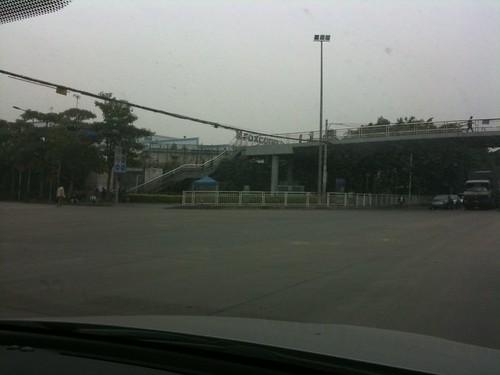
The Apple and China relationship started before China joined the WTO. Taiwanese contract manufacturers had built huge industrial sites in Shenzhen, China and later in other parts of China. The best known of which was the Foxconn plant in Shenzhen. Back in 2010, I was driven around the perimeter of the site, which went on for miles.
The only site that I had seen which would be comparable would be the Mercedes-Benz manufacturing site in Sindelfingen which is part of the Stuttgart metropolitan area. I spent part of my childhood and early adult life living next to a General Motors car plant, a shipyard and a couple of oil refineries, so I am used to scale of industry.
As Apple came back from a near demise in the mid-1990s, it needed manufacturing scale so the combination of Apple and China happened due to that. Over time the Apple and China relationship drove manufacturing expertise and new ways of doing business, such as using CNC machines at scale. Prior to Apple and China, smartphones were plastic mainly due to product engineering influenced by Nokia’s work on its feature phones.
Over time, the Apple and China relationship evolved. Chinese developers make up about half of the programmers making iPad and iPhone applications. Chinese component manufacturers replaced US, Korean, Japanese and European suppliers. Apple and China has become tightly entwined as Chinese manufacturers look to dethrone Apple at the same time.
Apple and China national security focus
China’s state and national security focus has spilled into the economic and social aspects of policy which has a high probability of reaching the Apple and China relationship. Apple already compromises on its privacy tenet in the way it handles China’s data. It actively supported China versus Hong Kong protestors – doing everything it could to disrupt the protestors self-organising tools.
China has shown that its ever expanding security considerations trump business so Apple and China may come to a rapid and disruptive break. Apple is trying to de-risk production outside China but it might be too little, too late. Apple and China are due for a relationship reset.
China’s assessments of Soviet Union’s collapse is very interesting as they offer a playbook of Xi Jinping thought
China’s ‘men in black’ step up scrutiny of foreign corporate sleuths | Financial Times – “It’s hard to attract capital if you can’t get a report from a global due diligence firm,” said one international services executive. That could run counter to the government’s efforts to revive animal spirits in China’s economy, consultants and investors said. “Maybe this is the intention,” said the head of one consultancy in Beijing, “to choke off investment and get the state to step back in, to stop the ability of investors to place bets.”
Xi Jinping Can’t Handle an Aging China | Foreign Affairs – less convinced this assertion is true, when we look at natalistic policies in authoritarian regimes such as what happened in Romania under Nicolae Ceaușescu with Decree 770 which was one of the strictest anti-abortion law at the time, or Nazi Germany’s breeding programmes
US Companies in China Grow More Pessimistic of Ties: AmCham Survey – Bloomberg – Some 87% of respondents to a flash survey taken last week said they were at least slightly pessimistic about US-China ties, according to the survey published Wednesday by the American Chamber of Commerce in China. That was 14 percentage points higher than the chamber’s previous poll. “Bilateral relations between the United States and China have substantially deteriorated,” said Lester Ross, chair of AmCham China’s Policy Committee. “It’s hard to see at this point when they will begin to improve — and this, of course, affects the ability of business to operate across borders.”
China Ratchets Up Pressure on Foreign Companies – WSJ – Business executives who have consulted with Chinese authorities say a central tenet of the effort is the desire to more tightly control the narrative about China’s governance and development, and limit the information collected by foreign companies such as auditors, management consultants and law firms that could influence how the outside world views China… Some foreign business executives say they worry the rewriting of the espionage law means that many topics, ranging from the status of Taiwan to China’s human rights record to technology such as semiconductors, are now becoming off limits in discussions with their Chinese counterparts. The recent trouble for foreign companies in China is drawing criticism in Washington. Rep. Mike Gallagher, a Republican from Wisconsin who chairs a congressional committee on the Chinese Communist Party, said in a statement Thursday, “Our business leaders need to take off their golden blindfolds and recognize that the recent police raids of American companies Bain and Mintz are not one-offs, but part of a long, proud tradition of exploitation.”.. The push is driven by a deepening conviction within China’s leadership that foreign capital, while important to China’s economic rise, isn’t to be fully trusted – if I was a brand planner in China or Hong Kong I would be very wary at the moment as this will spill over into agency life (paywall)
Longitudinal consumer behaviour change around increased empathy in western markets
A lot of this focus on the expertise in the ‘aspiration economy’ sounds like brands back in the early 1990s again. The kind of expertise exemplified by Nick Hornby’s novel High Fidelity or the characters Randall Graves and Dante Hicks in Kevin Smith’s movie Clerks.
The new industrial policy, explained – by Noah Smith – the speed and disruptiveness of China’s entry into the global trading system destroyed the career trajectories of large numbers of American workers and hurt the economies of whole regions. Second, U.S. complacency about the trajectory of Chinese politics, combined with a massive campaign of technological espionage, hastened and encouraged the rise of a new, hostile superpower. By the mid-2010s, only economists thought that free trade was still an unquestioned good, and the country wasn’t listening to economists the way it used to
Too Big to Challenge? | danah boyd | apophenia – the tech industry represents 9% of the U.S. GDP and only five Big Tech companies account for 25% of the S&P 500. Prior to Covid, most of the growth in stock market came from Big Tech. Now, as the U.S. economy is all sorts of wacky, Big Tech is what is keeping the stock market’s chin above water. In the process, Big Tech is accounting for more and more of the stock market – edited for brevity
The gender pay gap is not a myth, it’s math – it’s mostly not a discrimination story, it’s a parenting story. But more flexible employment is likely to be more of a discrimination story
Microsoft-branded mice and keyboards are going away after 40 years – this reminds me of when a new exec joined Bill Gates era Microsoft in the late 1980s/1990s. The company had unintentionally had in warehouses 3 years sales worth of Microsoft mice ready to sell. Their hardware with the exception of an ergonomic keyboard haven’t been great products that were superior to other technology companies
Interesting that even state broadcaster Deutsche Welle is complaining about the poor quality of modern German cars. Back in the early 1970s BMWs had a reputation as being clever fragile rust buckets, but the decline of Mercedes is far more dramatic in terms of quality. The decline seems to be in lock step with the globalisation of these companies and an increased focus on shareholder value.
Compare and contrast with older Mercedes cars across the Middle East and Africa.
Project MUSE – China’s Hong Kong Affairs Bureaucracy: Factional Politics and Policy Consistency – “From the perspective of factional politics, this article sheds light on the functions and operations of the Central Liaison Office and the Hong Kong and Macao Affairs Office (the “two Hong Kong offices”) throughout the history of the Communist Party of China (CPC), focusing on the 2013–22 period. The authors posit that the stronger the factional relationship between the top leader responsible for Hong Kong affairs and the heads of the two Hong Kong offices, the greater the policy consistency between the two offices and the central authorities on Hong Kong issues. This article uses text mining techniques to measure the degree of policy consistency between Chinese President Xi Jinping and the two Hong Kong offices from 2013 to 2022. In 2020, Xi appointed his protégés as directors of the two Hong Kong offices, thus regaining absolute control over Hong Kong affairs. Xi may further tighten his hold on Hong Kong in the future, thereby undermining the region’s autonomous status.” – Interesting aside: The Party and State Institutional Reform Plan (党和国家机构改革方案) unveiled in March established the Hong Kong and Macao Work Office of the Central Committee (中央港澳工作办公室) on the basis of the Hong Kong and Macao Affairs Office of the State Council. The latter has essentially become a Party body instead of a state body, and the arrangement is now “one organisation, two nameplates” (ie., two identities). – expect even further ratcheting of authoritarian measures in all aspects of Hong Kong life and economy
Culture and technology adoption’s effect on Japanese information design online. It reminds me of the early web portal designs were more like print newspapers.
Interesting that the Korean government is allowing these strikes to go ahead given the central role of Samsung in the country.
Luxury
Alibaba, Partners Fight Fraud and Root Out Counterfeits – Over 730,000 IP rights were under Alibaba protection by the end of 2022. 98% of IP takedown requests by rights holders were handled within 24 hours for the third consecutive year – I wonder what Amazon numbers look like for this?
I didn’t realise that Taiwan’s semiconductor expertise went back this far. DigiTimes has unprecedented access to the elder statesmen and experts on the early Taiwanese semiconductor industry
Interesting talk on how distrust in media skews to more right wing voters in the US. Gallup have tracked distrust in the media over time amongst Americans. The Poynter Institute is a respected media research organisation and has done a lot of work on media bias which affects and partly explains distrust in media. Distrust in media is also fuelled by rumours and conspiracy theories according to research by Louisiana State University. While identifying conspiracy theories is well understood, distrust in media continues.
Consumer behaviour
Interesting podcast by the Wall Street Journal on how retirement is something older people put off due to finance, ennui of retirement and the longer lifespan. It is interesting how technology is enabling avoidance of retirement and it even has its own hashtags #neverretire.
I have touched on earlier posts on the rail origins of the barcode, here’s a great documentary on the Kartrak.
Japan
Early 1940s adaptation of the 47 Ronin story. The 47 Ronin is something that really happened in 1703 and is known in Japan as the Ako incident (赤穂事件). The protagonists were seen as examples to be emulated in terms of dedication, honour, loyalty, persistence and self-sacrifice.