Over the space of 20 years, luxury changed enormously. The Japanese had been a set of new consumers for luxury, but in terms of numbers they hadn’t eclipsed the US as the biggest market for luxury.
China’s ascent into the WTO (World Trade Organisation) made a lot of business people and politicians a lot richer. China challenged the US in terms of luxury market size. On their rise, Chinese consumers changed a lot in their sophistication as they educated themselves on luxury consumption.
These new consumers picked up new traits such as wine drinking. This also meant that luxury goods became new asset classes as Chinese money looked to acquire only the best. Chinese culture in turn impacted luxury design. Chinese new year became more important than Christmas.
Then there was the second generation money. Young rather than old consumers. Consumers who were looking for something less formal, either because they didn’t wear anything but streetwear or they worked in the creative classes rather than the traditional professions and high finance.
The industry had traditionally avoided rap artists and R&B singers, now Jay Z and Beyonce are the face of Tiffanys and Fendi had collaborated with Rihanna.
They no longer wanted to have to wear a jacket and tie to have afternoon tea at the Mandarin. They took an eclectic look more attuned to the Buffalo Collective than Vogue Italia.
You had hybridisation with the street to create a new category of luxe streetwear in a way that also owes a debt to football casual terrace wear and the pain.
Now you have Zegna badge engineering approach shoes from alpine brand La Sportiva and Prada has done a similar thing with adidas’ iconic Stan Smith tennis shoes. Balenciaga with their Speed Sock looks like a mix between Nike’s flyknit football boots and the Nike Footscape sole.
Luxury has traditionally reflected status. Goods of a superior nature that the ‘wrong sort’ of people would never be able to afford. Luxury then became a symbol that you’d made it. In Asian markets, particularly China, luxury became a tool. People gifted luxury products to make relationships work better. It also signified that you are the kind of successful business person that partners could trust. You started to see factory managers with Gucci man bags and premium golfwear to signal their success. Then when the scions of these business people and figures in authority were adults, luxury has become about premium self expression.
Is Time Running Out for the Swiss Watch Industry? – WSJ – low-end part of the Swiss Watch Industry threatened by digital disruption but not the higher end. The status of higher end brands of the Swiss Watch Industry will fit in with aspirations and drop culture that has merged streetwear and luxury
Business
Positive acceptance: a reinterpretation of Japanese ‘millennials’ | Analysis | Campaign Asia – 78% are disinclined to save money, meaning big-ticket items like houses, cars or even holidays are low on the agenda. While young people have rarely ever been enthusiastic savers, Harris suggested this could be an unconscious effort to resist “inevitable life changes that they don’t necessarily want”—i.e. responsibilities that make them less flexible.
Royal Bank of Scotland CMO David Wheldon: More marketing will go in-house – Digiday – I’m not sure there was ever a bygone era when agencies enjoyed a great relationship with the top of the house, but what the consultants have now is the C-suite relationships, a deep understanding of technology and a deep understanding of the digitization of our services. It’s not too much of a leap for them to think they can help with the advertising part of that mix
The Number of Counterfeits Seized in the U.S. Grew by Almost 10% Last Year — The Fashion Law – “The merchandise category with the highest number of seizures continued to be apparel and accessories, resulting in approximately 15 percent of all seizures in FY2017.” These products included both trademark infringing and counterfeit luxury products, including those posing as Louis Vuitton, Gucci, Chanel, and Hermes, are routinely some of the most heavily copied
What Siri creator Norman Winarsky thinks of Apple’s Siri now — Quartz – not terribly surprising. Norman Winarsky is now a partner at a number of Silicon Valley venture firms. Whilst he is better known in business space now as a lecturer on business, entrepreneur and VC, he is an academic at heart.
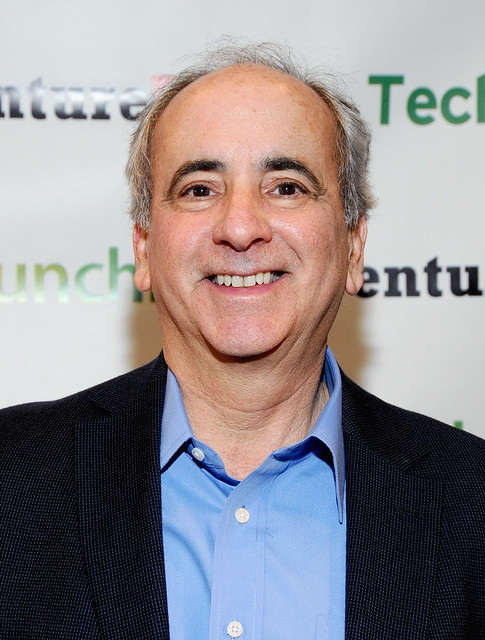
Norman Winarsky via the TechCrunch account on Flickr
Norman Winarsky studied and eventually ended up with a doctorate in mathematics. He started his private sector career at RCA Research (RCA’s answer to Xerox PARC or IBM Research), he had a career there for a number of decade as that moved through various owners. Eventually it became the east coast campus of SRI. Norman Winarsky went on to help found the SRI process for spinning off businesses and technology licensing. He was a co-founder of one of those businesses: Siri – that was bought by Apple. It will be interesting to see if Norman Winarsky has another high impact idea in him moving forwards. More related content here.
That’s the key finding from an analysis of regional and global agency deals by global marketing management consultancy Trinity P3 and Mark Ritson
Alibaba rival JD.com posts first annual profit as a public company | TechCrunch – The company’s fiscal profit was helped by a surprise $35 million profit in Q1 and a lucrative Q3 quarter in which it posted a RMB 1 billion ($151 million) profit thanks to its own efforts on Single’s Day, China’s online shopping bonanza. The company posted a RMB 909.2 million (US$139.7 million) loss for Q4, but that marked a 28 percent decrease year-on-year.
While Alibaba has a higher profile — with enormously profitable quarters — JD.com has quietly built out its e-commerce by expanding into financial services, offline retail and more
Consumer behaviour
This Chinese billionaire felt lost in US without WeChat, mobile payments | South China Morning Post – The chairman of Legend Holdings, the controlling shareholder of Lenovo, said China was now comparable to Japan and ahead of the US in terms of mobile internet technology, digital content and innovative business models.“If you haven’t stayed abroad for a long time, you might not understand [the difference],” said Liu, citing his recent experience in the US. His insights give credence to how Chinese technology companies have cultivated a hi-tech universe so large that it exists almost exclusively on its own – sustained by the country’s 1.4 billion people – but cut off from the rest of the world by Beijing’s Great Firewall, which blocks content not approved by the government. – the problem is that Chinese systems are ‘Galapagos’ technologies
BlackBerry suing Facebook for patent infringement | CNBC – “Blackberry’s suit sadly reflects the current state of its messaging business. Having abandoned its efforts to innovate, Blackberry is now looking to tax the innovation of others. We intend to fight,” Facebook general counsel Paul Grewal said – you see Facebook has sucked the blood out of other businesses for too long. I have little sympathy with them in this suit. It will be interesting to see how robust BlackBerry’s patents are and whether it would be cheaper for Facebook to pay them off or buy the business outright. The question is who is next after Facebook in Blackberry’s legal sights?
Luxury
Balenciaga is Putting its Money Where its Logo-Covered Hoodie Is for F/W 2018 | The Fashion Law – garments on the brand’s runway bore a phone number, +33156528799, which turns out to be Balenciaga’s “new hotline.” Call the number and you can answer a 20-question survey, inquiring about your age, primary language, height, and shoe size, as well as your favorite form of transportation, type of music, season, taste (your options are: Bitter, Salty, Sour, Sweet, or Umami), and so on.
A way for Balenciaga to better understand its customers? Maybe. Considering that the message is ends with the following note: “Thank you for taking the time to answer our questions. All data will be erased now,” I, for one, am guessing this is more interactive experience than fact gathering mission. If we have learned anything over the past several years, it is that “experiences” are everything to the modern-day consumer – I can imagine a choir of marketers howling in a symphony of pain about this
Meet the billionaire millennial pouring money into British fashion… and she’s only 27 | Telegraph Online – ‘My generation has completely different shopping habits,’ says Yu. ‘People born in the 1960s and ’70s buy into established brands such as Dior and Chanel. For them, it’s about showing status and where they fit into society. But my generation isn’t into logos – it’s not cool, it’s too obvious. [And] we prefer to shop online. We’ve become very interested and hungry for young, emerging designers.’
P&G’s Marc Pritchard calls for ‘fewer project managers’ at agencies as he vows to destroy ‘maze of complexity’ – “For media, data and analytics is enabling us to bring more media planning in-house, replacing multiple layers,” said Pritchard. “When it comes to buying, our purchasing people can negotiate with the best of them, so we’re doing more private marketplace deals in-house. And if entrepreneurs can buy digital media, why can’t the brand team on Tide, Dawn and Crest be entrepreneurs and do the same? They can, and they will.”
He explained that P&G wants and needs brilliant creatives, and will invest in such talent. But “creatives represent less than half of agency resources, because they’re surrounded by excess management, buildings and overhead.”
Media
Time for news to fight back | The Australian – Mark Ritson arguing that that agencies may be pushing clients into digital media because it can result in greater commissions for the agencies — in some cases almost 3 times greater than for traditional media (paywall)
Retailing
Smartphone users are spending more money each time they visit a website – Recode – The amount of money people spent per visit to online retailers has increased 27 percent since the beginning of 2015, according to new data from Adobe Analytics. Meanwhile, the length of smartphone website visits has actually declined 10 percent
Silicon Valley Is Over, Says Silicon Valley – The New York Times – In recent months, a growing number of tech leaders have been flirting with the idea of leaving Silicon Valley. Some cite the exorbitant cost of living in San Francisco and its suburbs, where even a million-dollar salary can feel middle class. Others complain about local criticism of the tech industry and a left-wing echo chamber that stifles opposing views. And yet others feel that better innovation is happening elsewhere – like Shenzhen? I think a lot of the problem with Silicon Valley is that it doesn’t build hardware any more. Bright people are mobile for the right pay, what you can’t easily do is the kind of commercialisation and manufacturing speed as a feedback loop like you see in Southern China
May braced for Unilever decision on headquarters | FT – Unilever: ‘stichting’ up a move to the Netherlands, which would make sense. 100VE is a leased building, its overcrowded and a number of the people there were contractors like me. The team that I worked in had already upped sticks to the Netherlands with the roles moving but not many of the people were redeployed, let go or didn’t have their contracts renewed
Millennial insecurity is reshaping the UK economy – interesting impact – not moving out of region to take a job like I did when I had a degree affecting productivity and entrepreneurship. One could see how Brexit will exasperate things further. It doesn’t imply that there will be a corresponding youthquake to overturn it at a later date
The Case Against Google – The New York Times – the problem with Found’em and the way the story was started is that it came off a bit cray cray a decade ago when it first popped up. They weren’t cut from the same cloth as Silicon Valley wunderkinder. That and they looked like Microsoft finger puppets. You had the SCO vs. Novell court case over the future of Linux at the time and there was evidence of Microsoft’s finger prints all over it (via Wikipedia): “On March 4, 2004, a leaked SCO internal e-mail detailed how Microsoft had raised up to $106 million via the BayStar referral and other means. Blake Stowell of SCO confirmed the memo was real. BayStar claimed the deal was suggested by Microsoft, but that no money for it came directly from them. In addition to the Baystar involvement, Microsoft paid SCO $6M (USD) in May 2003 for a license to “Unix and Unix-related patents”, despite the lack of Unix-related patents owned by SCO. This deal was widely seen in the press as a boost to SCO’s finances which would help SCO with its lawsuit against IBM” – And at the time if it had the taint of Microsoft involvement that overwrote any Google wrong. People seem to have forgotten the Judge Jackson trial and what an evil sack of shite Microsoft was shown to be. It would have been really hard sell to the media
Unilever threatens to pull ad spend from platforms that ‘breed division’ – “Consumers don’t care about third-party verification. They do care about fraudulent practice, fake news, and Russians influencing the US election. They don’t care about good value for advertisers. But they do care when they see their brands being placed next to ads funding terror, or exploiting children.”
“They don’t care about sophisticated data usage or ad targeting via complex algorithms, but they do care about not seeing the same ad 100 times a day. They don’t care about ad fraud, but they do care about their data being misused and stolen.” – It is good that both Procter & Gamble and Unilever are independently taking much the same line with media companies and agencies through ad spend. The downside is that Unilever have partnered with IBM to build blockchain technology that will help verify their ad spend
European businesses expect UK soft Brexit, Survey suggests | FT – 2,500 senior executives in the UK, France, Germany and Spain found that a majority of companies believe that Britain’s future relationship with the EU will maintain principles such as the free movement of people and oversight by the European Court of Justice. (paywall) – they should be more cautious
Algorithmic arrangements: an interview iwht Tom Quisel, former CTO fo OkCupid | Logic magazine – as with many startups, using really advanced algorithms ends up being a second-order optimization. Often, the more effective thing is just to work on getting the user experience right. It’s much easier to do user experience improvements that make larger differences on the dynamics and the site
Foxconn unit to cut over 10,000 jobs as robotics take over- Nikkei Asian Review – up to 75% of production will be fully automated by the end of 2018. Most of Innolux’s factories are in Taiwan. Tuan’s pledge came a few days after Foxconn Chairman Terry Gou said the company would pour in some $342 million to overhaul its manufacturing process by using artificial intelligence. (paywall) – I am skeptical abut how far this push for robotics can go.
It is worthwhile reading this thread by Steven Sinofsky all the way through
1/ Apple has a software problem. Here’s how it plans to fix it. https://t.co/dJaikfRhs7 via @markgurman // Let’s take a step back and talk about the broader context and product development at scale. Lots follows…
I’ve noticed new counterfeit accounts popping up on Instagram over the past few months. Below is screenshots taken from one example account focused on The North Face as a brand.
Interesting photoshoot shots probably re-grammed from the brands marketing materials or a magazine shoot. Looking at these pictures they maybe from marketing materials aimed at the Japanese market. Why Japan? It makes live easier for the counterfeiters in a number of ways
The sites are likely built by people who read Chinese as their first language. That means that a lot of Japanese writing is somewhat intelligible to them
Japanese marketing teams tend to do better photoshoots
Japan has a reputation for Japan market only exclusive products that are more attractive than those sold in Europe. The North Face’s Purple Label and Black Label lines started out as Japan market exclusives
When you move from the Instagram account and go through to the site to buy your items….
You come through to a great convincing looking site design. Only the URL (northfacew.com) and the artificially low prices give away the counterfeit nature of the goods on sale. For customers that aren’t as sophisticated Facebook now has its classifieds section. Think Gumtree but inside Facebook. That provides a great opportunity for your more traditional local sellers of snide goods.
Here’s a second example of counterfeit product on Instagram. This time they are counterfeit versions of A Bathing Ape (BAPE) streetwear label and their iconic shark head hooded top.
This time they are selling the products through Amazon merchants accounts. While Amazon would kill to have premium and luxury streetwear brands like BAPE and Supreme on their website. That isn’t going to happen due to these brands embracing the ‘drop’ model of limited product disruption.
Instagram has a lot of heat from brands, but this could turn very quickly when they realise that Instagram can be a facilitator of counterfeit products sales. This could shimmy a lot of brand advertising on Instagram
Look at how Alibaba and eBay have been vilified in the past. The Amazon merchant scheme like eBay should be doing more against these vendors, which are predominantly small to medium sized Chinese companies. If this was 30 years ago, these goods would have been coming from similar companies in Thailand and South Korea.