Category: marketing | 營銷 | 마케팅 | マーケティング

According to the AMA – Marketing is the activity, set of institutions, and processes for creating, communicating, delivering, and exchanging offerings that have value for customers, clients, partners, and society at large. This has contained a wide range of content as a section over the years including

  • Super Bowl advertising
  • Spanx
  • Content marketing
  • Fake product reviews on Amazon
  • Fear of finding out
  • Genesis the Korean luxury car brand
  • Guo chao – Chinese national pride
  • Harmony Korine’s creative work for 7-Eleven
  • Advertising legend Bill Bernbach
  • Japanese consumer insights
  • Chinese New Year adverts from China, Hong Kong, Malaysia and Singapore
  • Doughnutism
  • Consumer Electronics Show (CES)
  • Influencer promotions
  • A media diary
  • Luxe streetwear
  • Consumerology by marketing behaviour expert Phil Graves
  • Payola
  • Dettol’s back to work advertising campaign
  • Eat Your Greens edited by Wiemer Snijders
  • Dove #washtocare advertising campaign
  • The fallacy of generations such as gen-z
  • Cultural marketing with Stüssy
  • How Brands Grow Part 2 by Jenni Romaniuk and Byron Sharp
  • Facebook’s misleading ad metrics
  • The role of salience in advertising
  • SAS – What is truly Scandinavian? advertising campaign
  • Brand winter
  • Treasure hunt as defined by NPD is the process of consumers bargain hunting
  • Lovemarks
  • How Louis Vuitton has re-engineered its business to handle the modern luxury consumer’s needs and tastes
  • Korean TV shopping celebrity Choi Hyun woo
  • qCPM
  • Planning and communications
  • The Jeremy Renner store
  • Cashierless stores
  • BMW NEXTGen
  • Creativity in data event that I spoke at
  • Beauty marketing trends
  • Kraft Mothers Day marketing
  • RESIST – counter disinformation tool
  • Facebook pivots to WeChat’s business model
  • Smartphone launches
  • The basics

    The current economic climate will help re-define the basics for many people.

    Since I was a child supermarkets and shopping experiences have been richer and presented consumers with progressively more choice. During the last recession of the early 1990s supermarkets created own brand products that offered cheaper alternatives with the exact same quality as own brand products.

    No Frills

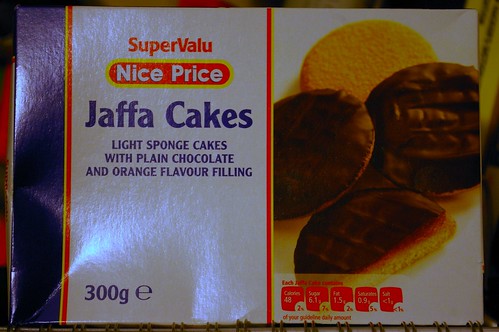
    A second own-brand phenomena was own brand products that fulfilled basic needs but did away with superfluous packaging and were best seen as ‘fit for purpose’: the No Frills supermarket own brand pioneered by Kwik Save is a classic example of this category. Sainsbury has their version called Sainsbury Basics. So by the time the economy picked up again choice had been increased even further. These brands moved away from, or redefined the bare essentials, for instance recently in Sainsbury’s I have noticed basics including filter coffee and Jaffa Cakes.

    SuperValu Nice Price Jaffa Cakes

    When I left university in the late 1990s, I got a jump on other candidates that worked for the same temping agency as me by having an alphanumeric pager that allowed me to be more responsive to the agency – getting better roles because it was easier for them to find me. Over the next ten years mobile phones became ubiquitous to the point where even homeless people and crack addicts have one.

    It is pretty much the same story with internet access. I used to go over to a cyber cafe in Liverpool near James Street station to check the email in my Yahoo! account every Saturday. Although I had bought shareware Mac software online via Kagi whilst at university, I made my first modern e-commerce purchases via Boxman during my lunch break in the office when I moved down to London. It is hard to imagine that prior to Freeserve in the UK, even dial-up home internet access was largely the preserve of the middle classes in the UK. In contrast, now fixed and mobile broadband has become ubiquitous with mobile broadband connections costing as little as 5GBP a month at the time of writing.

    I get the sense that we have reached a golden age of what basics means, and that golden age will last an uncertain amount of time as environmental and resource concerns kick in. Resources as diverse as food products, oil, copper and water are all under pressure; together with rise of a huge middle class in the developing world basics are going to be more expensive and some items will come off the list as compromises are made. Globalisation will no longer just be about competition to supply products and services, but also about consumer competition to demand goods.

    What does the basics look like to you? How will it change by economics, increasing awareness of personal carbon footprint and environmental impact? More retailing related content can be found here

  • Cyprus notes

    I spoke earlier this week at an eTourism Forum in Cyprus. It was my first time on the island. It is an interesting mix of contrasts:

    • The main language is Greek, but everyone speaks English
    • Everyone drives on the leftside of the road and the even the road signs look British
    • The island has a series of micro-climates with snow on the mountains when I was there and a pleasant 20 celsius down nearer the sea

    I spoke and participated in panel discussions over two days. You can find my presentation on Online Reputation Management and the Personalised Web. It was good opportunity to catch up with some old friends and make some new ones including: John Horsley founder of the Marzar social network, Gerd Leonhard media futurist, Richard Sedley of cScape, Andrew Gordon,  Theodoris Koumelis of Travel Daily News and Dr. Natasa Christodoulidou of UNLV. The conference was enthusiastically hosted by Petros Mavros of Avantless on behalf of The Cyprus Tourism Organisation.

    The audience were enthusiastic and eager to learn about what online marketing techniques could do for their businesses. It struck me that there was more demand than there was the local web and design talent to address it, though some of the attendees seemed to already have a sophisticated understanding of search marketing techniques.

    What became apparent was the unequal nature of market power. The local businesses needed to reset the balance between themselves and the large tour groups that had traditionally brought travellers to the island.

    Large tour groups immense market power was used to screw these businesses into the ground on price. Cyprus even needs to import its own drinking water, so a downturn in the economy would be disastrous.

    Whilst I had been there on a professional basis, I wouldn’t mind going back during the winter or spring as a tourist to sample some of its more cultural aspects. More related content can be found here.

  • Authority beats leadership

    I had been thinking about authority versus thought leadership for a while and my interest in it got reignited over lunch with Wadds just before Christmas. We were discussing the pros and cons of sharing expertise on a blog or other social media, particularly when it comes to marketing and marketing communications disciplines.

    On the one hand, its giving your competitors (in the professional and the career sense) a leg-up. That expertise could be used for competitive advantage so I may want to hide my light under a bushel. I could then enshrine this expertise as a business process or service mark and leverage this in competitive situations. This assumes that I am smarter than everyone else online, which of course is complete hogwash: Mrs Carroll didn’t raise no fool, but she’s also aware of my limitations.

    The secondary consideration is that if I have this business process or service mark, how would the man in the street know the real power of it vis-à-vis competitor offerings? You are are in a ‘he said. she said situation’.

    Chances are I am not that much smarter than everyone else, but considerably smarter than some people (yeah and modest too.)  So kicking out ideas via this blog or other channels is way of having them picked, poked and prodded: kind of like peer review in academia but with only ten per cent of the politics and none of the corduroy jackets with leather patches or the reek of cheap pipe tabacco. Sharing ideas negates any leadership advantage that I may have, but does help to build authority.

    Authority is about trust which is more substantive than anything competitive leadership could have given me. Trust would be further enhanced by successful delivery.

    In addition, sharing ideas freely means that I don’t need to think about all areas all the time because I can build upon the thinking that other people have done elsewhere; I benefit from reviewing and critiquing commons content as well as adding to the body of the commons.

    Moving thinking forward allows the industry as a whole to grow and helps spur demand in clients once they understand what is possible.  At a time when over half the clients for online PR choose agencies from other disciplines to develop strategy and execute campaigns growing the collective opportunity has never been more important. More related content can be found here.

  • Wired Style Guide

    I was looking through my first edition copy of Wired Style guide – Principles of English Usage in the Digital Age edited by Constance Hale and it struck me that many of the sections in the book were also maxims for bloggers and those involved in social media.

    Hale isn’t a technologist or a staffer at Wired. Instead she is a journalist’s writer. She has run conferences for mid-career journalists and a writing retreat. Beyond her website I am not too sure how qualified she was to prognosticate on the digital age for the Wired Style Guide. 

    Wired Style Guide sleeve

    So I decided to convert these titles from the Wired Style Guide into the maxims I had imagined:

    • Voice is paramount – a blog is a deeply personal thing and the challenge at first is finding your ‘blog voice’. This takes time to establish. It needs to be true to yourself and have enough cojones to express your opinions
    • Be elite – In the words of Wired: “Shared knowledge connects the writer and the reader. It forms the bridge from the type on the page (or the screen) to the deeper meanings and nuances for words”. This comes down to seeking knowledge, knowing your readership and the norms of the subcultures that they belong to. Even if you don’t belong to a community act like you do
    • Transcend the technical – there is so much written about the technical aspects of the web, be prepared to get beyond that at the end of the day it is people like you that social in social media
    • Capture the colloquial – So much of what makes a community is the informal lexicon that is particular to them. Think about Twitter in the course of a couple of years we now have the Fail Whale, twitterati, twitterverse, RT (re-tweet). Capturing this colloquial language in your writing helps to put your work in the midst of your readership subculture
    • Anticipate the future – Whilst we are more likely to get predictions of the future wrong, it also makes great copy. If you are going to anticipate the future, think about the things that are unchanging in life: the need for self-expression or the need to belong being two unchanging requirements for people in general
    • Screw the rules – Rules are made to be broken and knowing when to break them. Going against rules or expectations is a great way to inspire creativity – gorillas don’t really play the drums
    • Grok the media – The style guide defines grok as “A verb meaning to scan all available information regarding a stiuation, digest it and form a distilled opinion.” Being a ferocious reader of blogs, books, papers and the mainstream media makes you a better blogger. And even if it doesn’t, you’ll at least be better informed
    • Go global – Global village used to be a cliche that would be bandied around before globalisation made middle-class people think that their future is under threat, since then an international outlook has taken on a more sinister tone. However looking at international trends: from mobile marketing in South Africa to social networking in Japan allows us to better understand how technology and culture interact and increases the likelihood of being able to anticipate the future

    More on similar books to the Wired Style Guide here.

  • Search engine optimisation for PRs – a place to start anyway

    Ok, I am not going to bother touching on the obvious questions like whether PR agencies have a place in search engine optimisation, or have a place at the marketing table at all anymore? Given my recent ‘29 not-very-technical things that every PR person should know‘ post, I thought a quick post on search engine optimisation and public relations may be called for. I am going to keep this really simple and focus on the press release.

    Oohgle

    First of all, lets talk about key words. Key words are the words that people would use to find your web page. So if you were looking for this blog key words could be “Ged Carroll” and “renaissance chambara”. From a client perspective, web links and key words are the two best ways to improve a clients search results and to help develop their online reputation. Search optimised press releases are the single easiest way to provide fresh, relevant content that can generate links. There is a number of tools available to help work out what these need to be for a given media release.

    Google AdWords keyword tool
    Google Suggest
    Google Trends
    Microsoft’s adCenter Labs keyword forecast
    Trellian’s free search term suggestion tool
    Wordtracker’s free keyword suggestion tool
    I’d also recommend that you have a read around some content that Tim Hoang produced as a good SEO keywords for PRs primer.

    Creating a successful search optimised release breaks down into three steps:

    Create the press release – write for the media and influencers that the release was designed to influence, as well as the search engines, ok let’s be honest here: Google. Thinking about the headline: include at least one relevant key word phrase that people search for. Mention the keywords of focus for the release within the first paragraph, so none of the ‘Acme Inc. a leading end-to-end solutions provider of blah blah blah.’

    Distribute it in search friendly places. From a linking perspective, many press release distribution companies allow you to include keyword-rich anchor text in links. These links should be directed to specific URIs within the client web site that have content that supports this keyword phrase. Many distribution services allow you to tag (label) a press release with keywords that you’d like to have this release associated with.

    Many companies offer varying levels of service for distribution and all of them have their different strengths and weaknesses:

    Publish the release on the client web site. I know it seems obvious, but don’t forget to publish all these on your clients’ own web site. You have just gone and created some fresh relevant content and it would be a shame not to use it.

    What’s next? How about talking to your client about social media releases or for sufficiently important releases running a short-term search engine marketing (SEM) campaign to support a release until Google has a chance to index it?